
IP#254 David Scott – The Love That Made Mother Teresa on Inside the Pages with Kris McGregor – Discerning Hearts Podcast
About this episode
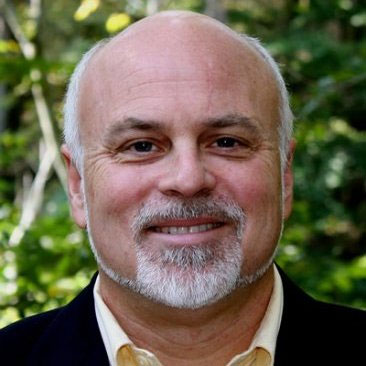
David Scott – The Love That Made Mother Teresa on Inside the Pages with Kris McGregor
In this episode, Kris McGregor and David Scott discuss his book The Love That Made Mother Teresa. Mother Teresa’s life reveals that God is love, not in abstract terms but through tangible works of mercy. Anecdotes highlight her care for the sick, the dying, and the forgotten, showing love expressed in small but profound acts. Scott notes that her childhood—marked by her mother’s openness to the poor—helped shape this vision, and her vocation was further clarified through her “call within a call.” Mother Teresa’s “little way,” akin to St. Thérèse’s spirituality, demonstrated how holiness is lived through daily acts of generosity rather than grand gestures.
The book explores her toughness and courage, her kinship with figures like Dorothy Day, and the hidden sufferings she endured, including spiritual darkness. Scott frames her witness as God’s response to a century dominated by ideologies that devalued the human person—she embodied a “revolution of love” that countered worldly powers. Her legacy continues through the Missionaries of Charity and her enduring example of Matthew 25 lived out: feeding the hungry, comforting the afflicted, and recognizing Christ in those most difficult to love. The takeaway is simple yet demanding: to “do little things with great love,” allowing even small sacrifices in everyday life to transform hearts and the world.
You can find the book here.
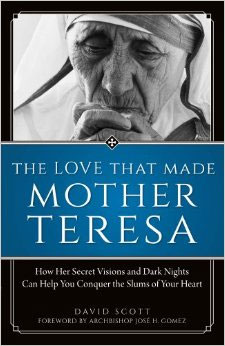
About the Book
The countless sweet photos of her smiling at babies showed Mother Teresa to be a single-minded advocate for the poor. But she was a woman with a will whose strength has been matched by few souls in history. Mother Teresa broke death’s stranglehold on the poor of Calcutta, and she showed us how to conquer the sin and darkness in what she called the “slums of the hearts of modern man.”
Part biography and part spiritual reading, these pages bring to light little-known stories from Mother Teresa’s life that will help you to grow in your love of God. You will learn her approach to reading Scripture, what enabled her to persevere through agonizing nights, and the remarkable — some would say mystical — events that led her to start the Missionaries of Charity.
In considering Mother Teresa, her private visions, and her secret sufferings, David Scott has discovered scores of early episodes and chance encounters that point to later, larger meanings. These remarkable patterns, he suggests, show that Mother Teresa’s life was choreographed from above, as if a divine script had been written for her from before her birth.
In these pages, you will meet for the first time the Mother Teresa who challenged the ancient Goddess of Death and became the first saint of our global village. You will read her long-secret letters describing the dark nights of her soul. The woman you will meet is one that God Himself sent to you as a clear sign that despite pain and suffering in our lives and in our world, God’s good love will prevail . . . beginning in the slums of our hearts.
We are all called to holiness, and the saints are sent to us as “real life” examples of God’s love. With Mother Teresa as your guide, you’ll learn how to follow God’s call and find holiness in a world marked by the shadow of death and growing indifference to God. Indeed, you’ll learn how to be an everyday missionary of Christ’s love in the ordinary activities of your daily life.
About the Author
David Scott is the current Vice Chancellor of Communications in the Archdiocese of Los Angeles and former Editor of Our Sunday Visitor. Scott has published several books, including studies of Blessed Teresa of Calcutta and Dorothy Day. Hundreds of his essays and articles have appeared in journals and periodicals throughout the world, including the Vatican newspaper, L’Osservatore Romano, as well as National Review, Commonweal, Crisis, Inside the Vatican, National Catholic Register, Washington Report on Middle East Affairs, Beliefnet.com and elsewhere. Scott holds a master’s degree in religion and scripture from Pittsburgh Theological Seminary.
Get every episode summarized
Each time Discerning Hearts - Catholic Podcasts publishes, we email you a written briefing from the transcript — the topics, who appeared, and any specific claims, with the ad reads skipped.
Email me new episodesFree for 3 shows. No card needed.
Hosts & guests

Transcript ready
342 searchable segments. Every word is indexed and playable.
Full transcript
Discerning Hearts - Catholic Podcasts — IP#254 David Scott – The Love That Made Mother Teresa on Inside the Pages with Kris McGregor – Discerning Hearts Podcast. Machine-transcribed; use the interactive transcript above to jump the player to any line.
DescerningHearts.com presents Inside the Pages, Insights from today's most compelling authors. I'm your host, Chris McGregor, and I'm delighted to be joined by David Scott, who is a Los Angeles-based scholar, writer, and editor with a special interest in religion and culture. His essays and reporting have appeared in the Vatican newspaper Lot of Zervatori Romano, as well as the National Review, Commonwealth, Crisis, Inside the Vatican, National Catholic Register, U.S. Catholic, and many others. His books include The Catholic Passion, Rediscovering the Power and Beauty of the Faith, Praying in the Presence of the Lord with Dorothy Day, and Weapons of the Spirit, the selected writings of Father John Hugo, co-written with Mike Aqualina. He currently serves as Vice Chancellor for Communications for the Archbishop of Los Angeles. For David Scott, we go Inside the Pages of, the love that made Mother Teresa, how her secret visions and dark nights can help you conquer the slums of your heart, published
by Sophia Institu Press. The countless sweet photos of her smiling at babies showed Mother Teresa to be a single minded advocate for the poor. She was a woman with a will whose strength has been matched by a few souls in history. Mother Teresa broke death's stranglehold on the poor of Calcutta, and she showed us how to conquer the sin and darkness in what she called the slums of the hearts of modern man. Part biography and part spiritual reading. These pages bring to light little known stories from Mother Teresa's life that will help you grow in your love of God. He will learn her approach to reading scripture, what enabled her to persevere through agonizing nights and the remarkable, some would say mystical, events that led her to start the missionaries of charity. In considering Mother Teresa, her private visions and her secret sufferings, David Scott has discovered scores of early episodes and chance encounters that point to later larger
meanings. These remarkable patterns he suggests show that Mother Teresa's life was choreographed from above as if a divine script had been written for her from before her birth. We are called to holiness, and the saints are sent to us as real life examples of God's love. With Mother Teresa's your guide, you will learn how to follow God's call and find holiness in a world marked by the shadow of death and growing in difference to God. Indeed, you'll learn how to be an everyday missionary of Christ's love in the ordinary activities of your daily life. We now begin our discussion with David Scott. David, thank you so much for joining me. Yeah, it's great to be. I want to be with you, Chris. I love this book. The love that made Mother Teresa how her secret visions and dark nights can help you conquer the slums of your heart.
Absolutely wonderful. David, I have to say, you know, I immediately it jumps out to me that understanding of the nature of God, that God is love. St. John tells us that. And Mother Teresa showed us what it looked like, didn't she? Yeah, yeah, absolutely. And that was it. There's an anecdote I tell right at the start of the book where she's cleaning this woman who she's found on the street. She's got, she's got sores. She's filled with infection and Mother Teresa kind of takes her up, that's cleaning those wounds and talking to her. And the whole time the woman is very upset. She's screaming at Mother Teresa and shouting at her and she says, you know, why are you doing this? Mother Teresa says, because my God wants me to, and she says, who is your God? She says, you know, my God, my God is love. And that's the name of God and the most beautiful name of God. And of course for us love translates into mercy and tenderness, even for people who are
hard to be merciful and tender to. So since we're mating God's image, we're made to love. And those are very simple. The least of Mother Teresa had the day they made her who she was. What I love so much about you're writing, David. And in particular about this book, it reminds me of something that Father Thomas DuBay said once that if you really want a good theology book, look at the lives of the saints. And in particular, when it comes to Mother Teresa and the way that you've put this book together, it's not just a biography of her life, but it is what it looks like when faith begins to bud and then to bloom. Yeah. And in that sense, it's probably no different than any life with a saint, but Mother Teresa was a saint from our times, I think. You know, it's harder for us to get a handle on what Saint Francis was like.
It's much easier to see Mother Teresa before us. You can front of the same issues, you know, a worn piece of justice and truth. But the reality of poverty and people in need right in front of us. So when we see her respond, we see in a way that it's not difficult for us to respond the same way. And in fact, that's how Jesus would have us all respond. We don't know much about her childhood, do we? Nothing at all, really. Just a couple of stories that kind of slipped through. But we know enough, I think, to know that she had some tragedy in her life. Her father died under a kind of mysterious circumstances. And you know that her mother had a powerful influence on her life. And her mother, even though her mother was left a single mom with kids to raise, she always seemed to have poor people at her table for dinner. They were never described as such or anything from Mother Teresa, but she remembered that
even though they were poor, even though her mother was struggling, she opened her door to other people who were less good for standing than she was. So I think that made a big impact on her. I think it bears noting that often used term that saints make saints. The story that you tell of how Mother Teresa, once she is sister of Loretto, she has her school, she writes home from India saying, I'm very happy here. I've got, I'm teaching, I'm doing everything. And her mother becomes alarmed, doesn't she? Yeah, yeah, her mother just said, in a gentle but firm way, remember what you became a sister for and you became a nun because of the poor. And at that time, this is before Mother Teresa, you know, became Mother Teresa, as we know, she was teaching it a kind of a well to do school for young women in India. So her mother set her back on track, but again, it wasn't until she felt a real calling
from Jesus that she followed that, but in a way, her mother was foreshadowing what our Lord would tell her. Isn't it interesting that as you bring forward in that beginning of chapter 2 about the saints? That it's only in the Catholic faith, really, that we have real men and women that we hold up as the holy. Yeah, and I think, you know, again, without getting too theological about it, I think there's part of that is the image of God in a very simple way, right? We're made in the image of God. And so Jesus comes as the perfect God and the perfect man to show us, you know, what we were meant to live for. And so the saints really lived that out and they're very, very limited again. We don't see Jesus walking among us, even though he's here, but we, the saints, give us real live examples of what Jesus would look like. She became so associated with Trez the little flower.
And yet she never really talked about her, but she lived her, didn't she? I mean, her teacher. Yeah, I think so. She made sure that people understood that she took her name for that. But again, after that, you never knew why she did that, but those of us, you know, Saint Teraz, you know, know that the little way was exactly what Mother Teresa lived. You know, she would, you know, she's most associated with expressions like do everything, even the littlest things with great love and those will have its impact on the world that we can't even imagine. So that is the little way, you know, of course, Teraz never, she lived her little way within a content, never, never outside those confines. So Mother Teresa showed us how that was supposed to be lived in the world. If you don't mind, David, I'd like to read a paragraph from the book that I just cherish
this. It said, you had said that in a century of total war and mass movements of violent social engineering, God sent us a saint, not only who sweated the small stuff and told us that the road to heaven was paved with it. It was as if he had decided the last thing we needed was one more greatly forward, one more manifesto for the creation of a new kind of man. God sent us a saint who preached a new kind of crusade, a little revolution of love. That is, that's so powerful when you think about it because I think we need her even more in this century where we don't have the chaos and the explosions and the things that are happening are more hidden but probably more deadly. Yeah, I think, again, that kind of the thing that I think makes this book unique is an
attempt to understand what God was trying to say to us with Mother Teresa. When you look at the time she lived in, it was a time of big stuff where people thought they could take over the world. Half of Europe was under the control of the Soviet Union, including her home country of Albania. The other half we were fighting for here in the United States. It began to be a powerful technology and it made the human person rather little. So many millions of lives were sacrificed to these big ideas like communism, like imperialism and she told us that in the middle of all of this, the way you and I treat each other, the way we love in our families, that those things are the things that really matter. And to me, that's a clue into God, the way God works because when you think about it,
who were Mary and Joseph? They were small, insignificant people who never made their names into a history book. God spoke to them, chose to send His only Son into the world through them. And history was changed by an event that happened on a night where two very real people struggled to know, where am I going to give birth to this child and that child changed the world. It's never written in a history book. It's not part of the lives of the great people of Rome, but it changed the whole world. And I think we can still change the world in ways we have no idea that we'll be doing. We'll know it in heaven. It's an awkwardly expressed thought, but I think that's part of what Mother Teresa was trying to show us. I hope that makes sense. It does. I think she exemplifies that. I think is she pointed out in the book that she didn't seek the limelight, but the light
sought her. Yes. It is true. She was just doing what she was doing in Calcutta and whether we had ever paid attention or not, she would have kept doing it. The fact is that through fortunes of history or providence, whatever people choose to describe it, we did come to know her. And she had a huge influence on us. She would exhort us to forget ourselves. Not that we weren't of value as children of God, but not to lift up ourselves as the idol of worship. Is that a fair statement, do you think? Oh, yeah. And again, again, look at our culture. Our culture is very niche-centered. It is just do it. The slogans we have in our culture are in the advertising shows us that it should be all about us. Me making myself happy, me making myself feel good, whether it's with a great taco or
a beer or whatever. It's about my pleasure and my feeling and my self-expression. And even the new social media, it encourages a creation of this self that we put out. I put my best face forward on Facebook. It's not to diminish the good that we can do with those technologies and those media, but the point is it's all centered on us. But when we really look at what makes us happy, what makes us feel fulfilled at the end of the day, it's when we give ourselves and when we lay down ourselves like Jesus did like the saints that was her message. We'll return to inside the pages in just a moment. Did you know that Deserning Hearts has a free app where you can find all your favorite Deserning Hearts programming? Father Timothy Gallagher, Dr. Anthony Lillus, one senior John S. of Deacon James Keating,
Father Donald Haggerty, Mike Aqualina, Dr. Matthew Bunsen, and so many more. They're all available on the free Deserning Hearts app. Over 3,000 spiritual formation programs and prayers all available to you with no hidden fees or subscriptions. Did you also know that you can listen to Deserning Hearts programming wherever you download your favorite podcasts like Apple podcasts, Google Play, iHeart Radio, Spotify, or even unottable, as well as on so many other worldwide platforms? And did you know that Deserning Hearts also has a YouTube channel? Be sure to check out all these different places where you can find Deserning Hearts Catholic Podcasts dedicated to those on the spiritual journey. Show your support for Deserning Hearts by liking and leaving positive reviews on your favorite streaming platforms such as Apple Podcasts, Google Play, Spotify, and more. With a collection of insightful podcasts led by renowned Catholic spiritual guides such
as Father Timothy Gallagher, Munsenior John S.F., Dr. Anthony Lilis and more, Deserning Hearts is your gateway to a deeper understanding of Deserning Life's mysteries and growing deeper in your relationship with Christ. Your likes and reviews not only affirm the value these podcasts bring to your spiritual journey, but also help others discover the guidance and inspiration they seek. Share your thoughts, spread the word, and be part of a community that's committed to elevating hearts and minds through meaningful conversations. Your feedback fuels our mission to help others climb higher and go deeper in their spiritual growth. Like, review, and let your voice be a beacon of life for fellow seekers on this spiritual journey. We now return to Inside the Pages. We were talking with David Scott about his book, The Love That Made Mother Teresa. David, I can't help when reading this of thinking of our Holy Father Pope Francis and his attempts
to get us to live out that Matthew 25. She is the great catechist of living out Matthew 25, isn't she? Absolutely. And one of the things that Pope said early on, it struck me was if you want to know how to live, read the Beatitudes. If you want to know how we will be judged, read Matthew 25, and that's a beautiful way to live. And it really does describe the life of the saints and especially Mother Teresa. In Matthew 25, you know, the reality of our Lord in the people we meet every day, and especially the people who are the hardest to love, that's where we encounter Christ. That's the meaning of Matthew 25, and she showed us that every day. You help us to remember that she fed the hungry. She gave comfort to the lepers and the handicapped, and found loving homes for orphans. But she also did something that is really quite the standout,
is that she helped people to die. That was a huge part of her ministry, wasn't it? Absolutely, too. Yeah. And again, think about our culture as we age, you know, the baby boomers are experiencing now, those of us sort of a little younger experiencing. We are all in this experience where we're going to have parents who are going to get older and need our help in their sickness. And so long ago, before this, at the beginning of the century, she was dealing with people that had no one to help them die. In the culture of poverty, that often happens, right? It's between people get older and they've lost their children or something, but she was there to help them die. And those are really forgotten people, and it's really a work of mercy. But it's, again, I think something that has a lot to teach us in our culture. Well, in some ways, I think the experience of our nursing homes now, I hate to say this,
in the United States has become, maybe this is overly dramatic, I'm not sure, but they've become our modern day leprechaulonies where it's so much easier just to place people there and then maybe visit them occasionally while they suffer alone in beds. And it's difficult to love those who are right here in our own community or in our own family and helping to deal with their needs as opposed to the idea of I want to help the poor, I want to help them. But what about the ones that are right here where we're planted? And that's the saying that you bring for us as well to remember. Yeah, no, she was right. I mean, we all, you know, it's easy to write a check to help starving children somewhere else. It's much, much harder, you know, I'll just put it into my own reality. It's much harder when my youngest son comes home from school and he has something to tell
me and I feel like doing something different. It's harder to listen. She would say to lonely us than the poorest people are the people right around us and what they're, what makes them feel poor and unwanted is our lack of attention, our own inability to get out of our comfort zones or our selfishness and say, yeah, I'm going to sit down and I'm going to listen to what he has to say today or we do it with our spouses, we do it. It's so easy to be selfish. Those are all areas where we need to love more. But we all say, gosh, I love, you know, I love humanity. I love the poor. I'm going to write a check for those things and we have to start writing our own homes. In a very real way, it's all about relationship for her, isn't it? She lived out relationship, which is at the heart of the Trinity, which is love. Yeah, there's big theological truths being lived out in her life in a very simple way. If God is love, then the whole relationship we
know in the Trinity is a relationship of love. Father loves the Son, Son loves the Father and the love that unites them is the Holy Spirit. And she showed that, so if we live in the image of God, that's our whole experience, should be experience of love here on earth. She wasn't necessarily during her lifetime known to be a woman who for many people gave the warm fuzzies. I mean, she was tough, wasn't she? An old, now, Satan, heaven, an old priest friend of mine. When I was working on the book, he said to me, he said to me, remember, remember to make sure people understand Mother Teresa was a tough old bird and maybe laugh. He was right. He met with her, but she did not suffer fools. She loved in the most tender and compassionate ways, but she also knew the seriousness of life and she wasn't going to be pushed around to get
things done. And so you got a fight for the people you love and she did that. It reminds me of women who were contemporaries of her, Catherine de Hueck-Dorothy Day. Again, these women, they were tough. And their response demanded, you know, hearts that were open and loving, but also wills that were made of steel in very real way, don't you think? Yeah, I agree. I think, Dorothy Day and Mother Teresa should be in the same category. Catherine Dordy, a little different, but they both, all of them were really strong women, and then should be models for women today. It's one of the jobs I think we have in the churches to make sure people remember them. Dorothy Day personally had a huge impact on my life through her writings. I never knew her, but I wonder if this next generation knows who Dorothy Day was,
and even if they know who Mother Teresa is, you know, except as a kind of a symbol of something, you know, that they really understand how Mother Teresa is, not if we get farther and farther away, you know, 20 years almost, since her death. Isn't it interesting that for women like Dorothy Day and Mother Teresa that they would also have this great love for the Eucharist, a great devotion to the blessed sacrament and adoration, and yet it would be said that they, in their heart, they would have that long loneliness in some ways. I mean, they wouldn't necessarily have, I went back, you know, to go back to that reference of the interior worm fuzzies all the time. And I think maybe we think that because they were, you know, they're all they were sweet and they're older women and and at their motherly figures, but yet inside their hearts ached. Yeah, yeah, to follow Jesus was not
a career path for either of them and it's not for any of us, but they were made to experience some suffering that I, you know, I hope I never have to experience, but the long loneliness is what, you know, Dorothy Day called it the kind of the dark night is what the Mother Teresa called it, but God asked them to set out on the journey and they both felt that call, they answered that call and they both suffered for the call because it was, there were not a lot of consolations in their lives, you know, they, it's not like at the end of a long day, Dorothy Day or Mother Teresa went home and in prayer, God said good work, you know, in fact, Mother Teresa had long periods where she never felt like her prayer was even being answered by God. And again, he left her in that darkness so that, you know, what a test of her love. So again, those are things we learned after she died. We never knew that while she was alive, what we saw was her faith and and it's now that we know
it's a great lesson for all of us because we all have dark nights, you know, prayers that go on answer, then we wonder why and, you know, and we feel like we're not rewarded for the good works we do. There's a lesson in all that for us. And we wonder why I think of her great devotion to the Immaculate Heart of Mary and how that heart marries heart. Sometimes she didn't understand why. I mean, whether it's why her why her son would leave her the three days and be found later in the temple or even at the, I would imagine even during those times when he's crying out, Father, why have you abandoned me? She stood there and I don't doubt in her heart. She struggled to understand why some too, but there's a faithfulness that endures, doesn't it? I, you know, that's, I think that's the message for us is to greater and lesser degrees. We all have those struggles, but the
the only thing that makes those struggles mean anything is Christ and the cross and the promise that suffering has meaning and Mother Teresa showed that to us in a in a great way. And again, it, you know, she wasn't she wasn't doing this on her own. She was doing this by the example of Mary, her heart was pierced, our lady's heart was pierced, the sword to watch her own son die. Mother Teresa had to be thinking about all that, that stuff. She never talked about it. She never said I'm having struggles or anything like that. She just kept up doing what she did and she showed us this great example of service. She traveled the world and went to so many different countries and there are some places she could not go. I mean, China, for example, and other places where her heart ached to go to the poor of those regions. I would think that that legacy that she has left with those missionaries of charity, her, her spiritual daughters, that one day they too may
sometime be able to get into those corners of the world where the poorest or the poor need them. Yeah, you hope so. But then again, the example of what she did, which she's a kind of a worldwide state, why do we recognize so we don't know what good she's already doing in China, even without a physical presence or Korea. And some of these places that were Christianity has to be lived underground. We know that her example, we again, we'll know at the end of time, but her example has ripple effects all over the world. I'm convinced of that. Well, David, I am so happy that the love that made Mother Teresa, this wonderful book by Sophia, that the book that has now been published by the Sophia Institute Press is available for those to receive and to help us grow, but also to be given to others is another wonderful,
catacetical expression of what love looks like, what it can be, and how we can live it. Well, thank you. That's a beautiful summer of what I hope we were doing in the book. Any final thoughts, David? Well, if anybody listening, you know, wants to know one way to live what Mother Teresa taught us, it's that beautiful expression that she had, do little things with great love. It's a great resolution to give yourself every day, and and it's a lot easier to say than it is to do. I think that's probably it. David Scott, thank you so very much. Thank you, it's beautiful to be here. With David Scott, we've gone inside the pages of the love that made Mother Teresa, how her secret visions and dark nights can help you conquer the slums of your heart. To learn more about this
book or to obtain a copy, go to SophiaInstitute.com, the website for its publisher, SophiaInstitute Press, or you can find it at any fine Catholic bookstore. To hear and or to download this discussion along with many others, go to discerninharts.com. This has been a production of discerninharts.com. I'm your host, Chris McGregor, joining me next time for Inside the Pages, Insights from today's most compelling authors.
More episodes
More from Discerning Hearts - Catholic Podcasts

St. Hildegard von Bingen Novena – Day 6
Discerning Hearts - Catholic Podcasts
Sunday of the Twenty-Fourth Week in Ordinary Time – A Time of Lectio Divina for...
Discerning Hearts - Catholic Podcasts
St. Hildegard von Bingen Novena – Day 5
Discerning Hearts - Catholic Podcasts
Saturday of the Twenty-Third Week in Ordinary Time – A Time of Lectio Divina for...
Discerning Hearts - Catholic Podcasts