Loading...
About this Episode
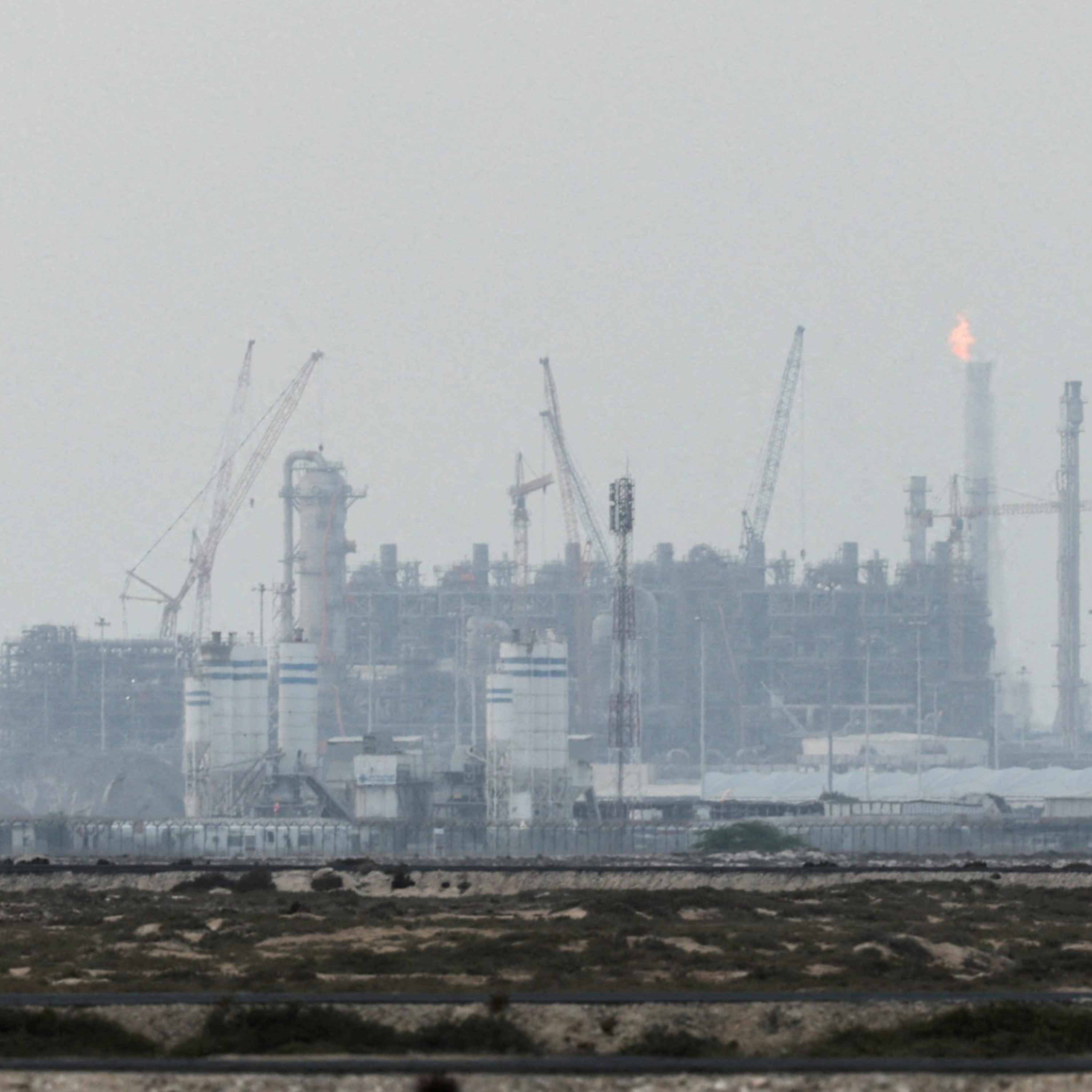
Qatar's state-owned petroleum company says an Iranian ballistic missile attack on its main gas complex at Ras Laffan has caused widespread destruction. Several Gulf states were attacked by Iran after its largest gas field South Pars was hit in an Israeli strike. President Trump has warned Iran not to launch further attacks on Qatar, or face a "massive" response from the US. He said Iran's gas field had been attacked by Israel - not the United States. But he said the US would "blow" it up if Tehran continued to retaliate.
Also: America's top spies tell a Senate committee that after almost three weeks of war, the Iranian leadership remains largely intact - contradicting President Trump's framing of the war as a success. Five members of Iran's women's football team return home after their silent protest in Australia. How Artificial Intelligence is changing the recruitment process for jobs. And the maths behind why some clothes keep coming back into fashion.
The Global News Podcast brings you the breaking news you need to hear, as it happens. Listen for the latest headlines and current affairs from around the world. Politics, economics, climate, business, technology, health – we cover it all with expert analysis and insight. Get the news that matters, delivered twice a day on weekdays and daily at weekends, plus special bonus episodes reacting to urgent breaking stories. Follow or subscribe now and never miss a moment. Get in touch: [email protected]
Hosts & Guests

Transcript
This BBC podcast is supported by ads outside the UK.
Investing with Schwab is like a hike with endless trails that get you to the same beautiful sunset.
Go solo with self-directed investing. Choose a guide with full service wealth management.
Or take stops along the way, with trading, automated investing and planning for college or retirement.
Schwab gives you the map and the gear, all in one place.
No matter which trails you take, you can invest your way with Schwab.
Puerto Rico is having a moment of global attention.
As companies reshore and rethink supply chains, they're choosing a U.S. jurisdiction operating
under federal law with competitive tax incentives designed for long-term growth,
not culture or business. Culture and business.
Puerto Rico. It's not what's next. It's where.
Visit investpr.org forward slash business.
This is a global news podcast from the BBC World Service.
I'm Uncle Deci and in the early hours of Thursday the 19th of March, these are our main stories.
Iran attacks energy facilities across the Gulf after the country's largest gas field is hit by
Israel. America's top spies testify that after almost three weeks of war, the Iranian leadership
remains largely intact if weakened. And Iran's women's football team returns home to an uncertain
future after protest and asylum bid in Australia.
Also in this podcast. I mean the old process was you fire off a CV, wait four weeks and then
here yes or no. But now you get a chance to get AI to replicate a face-to-face interview.
We explore job hunting in the age of artificial intelligence.
The U.S. and Israel's war with Iran has entered a new and volatile phase.
After Israeli missiles fell on the world's biggest natural gas field on Wednesday.
Tehran promised to respond and within hours it launched its own missiles into Saudi Arabia,
the United Arab Emirates, and Qatar. The move prompted strong criticism from President Trump,
who warned that any further retaliation would result in U.S. military action,
threatening to blow up the Iranian gas field. A Middle East correspondent Sebastian Usher is
following developments from Jerusalem. He told Nick Miles why the attack on the South
Mars gas field was so significant. It provides around three quarters of the country's natural gas
production. Now that's all pretty much consumed domestically because of sanctions etc.
And so it has a real knock-on effect if that were to be put out of action, which is not what's
happened. But it would seriously impinge even further on the regime's ability to meet the needs
of its people, who even before this conflict started, were already in dire financial
straits. I mean, one of the key reasons that they went out onto the streets to protest back in
January, I mean, Israel just to say hasn't officially confirmed this, but I mean, Israeli media
here is quoting sources saying 100% that Israel carried out the attack. And they're also kind of
breathing these sources that this was a warning shot to Iran. It wasn't taking out the facility,
but it was essentially saying, sure, this is what we could do if there's no movement from your side.
No movement from Iran, apart from the fact that it has been responding in kind, doesn't it?
Yes, I mean, immediately said that it would mount attacks on a number of key oil installations,
gas installations of its Gulf neighbors, that's Qatar, Saudi Arabia, the UAE, Saudi Arabia said
four missiles were directed towards Readd. It's capital and that they were all intercepted.
People heard very loud booms above them. The first time that this has happened in Readd during
this conflict. And more significantly in Qatar, again, they are saying the authorities there,
but about five missiles were fired towards them or intercepted but one. And that hit the
rise Lafan industrial city. Now that is actually key to Qatar. It's where it's liquid natural gas,
main production facility is Qatar is the main supplier of this around the world. And it's
actually key to its extraordinary wealth. But it is important to say that a lot of what Qatar would
normally be doing, the operations there have been suspended for a couple of weeks now.
So it may not have an immediate, huge knock on effect. But of course, it's a real signal of how
much further this could escalate. Sebastian Asha. And since we heard from Sir Qatar State
Energy Company has confirmed that gas facilities at its main site have been hit by another round
of rockets overnight. It said they'd caused fires and further significant damage.
Global oil prices have surged again after that attack on South Paz. The market volatility is
affecting people around the globe in how much they pay for petrol and everyday goods. China is a
big importer of oil from the Gulf, including Iran. So how concerned is it? Our correspondent in
Beijing is Laura Bicker. China is not feeling the shock of this war like many others may be doing.
And that is because China has been stockpiling oil since around January. So it does have enough
oil considering it's the biggest consumer of oil in the world. It imports more crude oil than
any other country. It has about three to four months of stocks to go through. So then there is
the case when you look at how many business ties China has right across the Middle East. And
that is where China will be concerned. China is trying to export its way out of economic trouble.
And the way it does this is trade. So it needs all of those shipping lanes, all of those connections
to come through the street of Hormuz. China will be concerned thinking of its own interests when
it comes to this conflict whether or not it will spread, whether or not it will affect its global growth
and whether or not it will affect its overall economy in the long term. What you were saying there
about the concern being about stability, that was very much mirrored wasn't it by people that you
spoke to on the streets of Beijing? What what do they tell you? It's quite rare to hear Chinese voices
but they were eager to speak to us because this is a source of concern for them.
I reckon if the war escalates to nuclear level, it may trigger for the world war. The China
Iran relationship is a strategic partnership. No matter what decision the Chinese government
and military make, we as Chinese citizens will support it. Many people worried about this
China, we should support for the peace. We want to protect our own development and to keep our
economy in improvement our normal life should not be impact by the war.
Chinese people are worried about their own interests and their own kind of cost of living
and that's why they're worried about this war spiraling out of control and that's why stability
is so important to them. So a stable economy is hugely important but what about diplomatically
there are obviously opportunities here in a time of conflict? So I think when it comes to
Washington, there's always been this view that Iran and China are very close. The reality is
that alliance, if you want to call it that, is mostly transactional from China's point of view.
When it comes to China and the US and this great global struggle, I think China will see a huge
opportunity here. Globally, what you've seen since January is a parade of world leaders coming to
do deals with China where you see a President Xi who is now looking like a tower and a beacon of
stability in comparison to Washington and that is music to Beijing's ears. That is what they've
hoped for all along. Is it the case do you think that the longer this goes on, there are more benefits
for Beijing than there are are problems? For China, the geopolitical benefits are certainly there
but for President Xi, the economy is all. I think when it comes to whether or not the party will
continue to have faith of them, the people will continue to have faith of them, all of that depends
on the economy. I think in the long term, China will want this wrapped up.
Laura Bicker speaking to Nick Maus, and we have more on this on our YouTube channel,
search for BBC News on YouTube, and you'll find global news podcast in surprise, surprise,
the podcast section. There's a new story available every weekday. As the US Israeli war in Iran
continues, divisions within the Trump administration are becoming starker. On Tuesday, the US
counterterrorism chief resigned, saying he could no longer support the White House policy.
On Wednesday, America's most senior spies appeared before a Senate committee and were asked whether
they could confirm President Trump's assertion that Iran had been weeks away from producing a
nuclear bomb. Here's a Democratic Senator John Ossoff from Georgia, pressing the National Intelligence
Director Tulsi Gabbard on what was known ahead of the first strikes on Iran at the end of February.
Was it the assessment of the intelligence community that as the White House claimed on March
1st, there was a, quote, imminent nuclear threat posed by the Iranian regime? Yes or no?
Once again, Senator, the intelligence community has provided the inputs that make up this annual
threat assessment. You won't answer the question. The nature of the imminent threat that the
president has to make that determination based on a collection and volume. You're here to
be timely intelligence that he is provided with. You're here to be timely, objective, and independent
of political considerations. Exactly what I'm doing. No, you're evading a question because to provide
a candid response to the committee would contradict a statement from the White House.
Senator John Ossoff and Tulsi Gabbard there, while I asked our Washington correspondent,
Bert Debussman, whether the hearing had provided clarity on the conflicting intelligence assessments.
There was very few answers as to the Trump administration's actual rationale for war and whether
the intelligence community gave an assessment that supported it. I thought it was very notable in
a written statement that was published online, Tulsi Gabbard, the Director of National Intelligence.
She said unequivocally that in last year's strikes on Iranian nuclear facilities,
those facilities were obliterated and Iran had made no effort to kind of rebuild that
manufacturing capacity. That's directly contrary to what the Trump administration said in the
days immediately following the beginning of Operation Epic Fury, and she didn't actually say it
verbally in the committee hearing, which kind of led to accusations that she was covering for
the Trump administration. She also made the assertion that only the president can really make
the assessment whether Iran was or wasn't an imminent threat, but many lawmakers, and I think
large portions of the American public would argue that that's precisely what the intelligence
community is for to make those assessments and pass them to lawmakers in Washington. So it was
quite combative at times, and I think there's very few questions that were actually answered
to a degree that it's kind of settled the public debate about this war.
Questions also, whether everybody's singing from the same him sheet. The intelligence
officials said that the Iranian leadership remains largely intact, which is an assessment that
clashes with President Trump's framing of the war and how, in his words, how strong and successful
they are and how much they're winning. Certainly, and I think that's the other main question is,
the Trump administration has had kind of shifting justifications for why this war began and what
led up to it. I think also it's very notable that in Joe Kent, the former counterterrorism advisor
who resigned yesterday, he said that the intelligence assessment did not prove that Iran was an
imminent threat and that there was very little room for debate. I think most Americans would feel
more comfortable if there was at least a debate about whether a military campaign is a good idea
or not, at least internally within the White House, but in his view, that didn't happen. And
certainly nothing that Tulsi Gabbard said or John Rackliffe, the director of the CIA kind of
seemed to back up the Trump administration's rationale for launching this war, which there's
really quite heated public debate, not only in the American public, but I think increasingly we're
seeing that among Trump's own supporters. So so cracks are starting to form, would you say,
in the Trump administration and across the mega base because it's not been a popular war,
a lot of that core supporter base do not want war and they want the focus to be on
US domestic policies. Certainly, I think a lot of at least a significant chunk of Trump's
mega base was very drawn to his promise on the campaign trail that the United States
wouldn't become involved in protracted conflicts overseas or any sort of messy regime change
exercise. And I think the resignation of Joe Kent, the counterterrorism advisor, he kind of
solidified that viewpoint for a lot of people. This is a man who has four years been a staunch,
staunch Trump supporter. He very much kind of embodied a certain mega mindset in terms of foreign
policy and avoiding those sorts of wars in which he himself had a very distinguished war record.
And then in his interview this evening with Tucker Carlson, he kind of made the argument that
Israel had pushed the US to war and he used the Trump administration's own comments from
Secretary of State Marco Rubio, for example, that Israel informed the US it was going to strike
and therefore the US felt compelled it had to strike as well. So I think certainly especially
when there's very public figures who are kind of darlings in the mag, a magosphere, as some would
call it, such as Mr. Kent, whose wife also was kind of regarded as a war hero. She was killed in
Syria. When a figure like that starts to verbalize those sorts of concerns about the way the US
military is being used and why and the justifications for this conflict, I think that's something that
will spread at the very least of very heated debate among Trump's own supporters,
whether this war actually serves them and serves that America first agenda that they were promised
on the campaign trail. Bad debusement reporting from Washington. As a US and Israel were launching
their air attacks on Iran, the country's women's football team were in Australia taking part in
the Asia Cup. When the Iranian national anthem was played ahead of kickoff, the players refused
to sing along and that defined gesture led to a state broadcast presenter labeling the players
as wartime traitors. As a result, the Australian government offered the team humanitarian visas,
which initially 17 members accepted, but heavy pressure from the Islamic regime led five of the
seven to withdraw their asylum claims. The team has now arrived back in Iran to wait what could
be an uncertain future. Nassim Kadem is a journalist with the Australian Broadcasting Corporation ABC
and has been following the Iranian team's progress. We've seen posters come out that suggest that
they'll be celebrated when they get home, but what I would say is just watch what happens thereafter,
so there might be a big celebration, there might be a big song and dance. I know our players have
come home, but what happens thereafter. We also have to keep in mind that the reason they went back
is a lot of the diaspora that I've spoken to journalists in Iran, international, a form of football
player have said these players who wanted to stay but then changed their minds were basically being
played voice messages from family members in Iran who were under threat that the intelligence
arm of the IRGC was threatening the families you know to pressure them to tell these players to
return home. So you know with all this going in the background you have to question whether what
happens publicly is in sync with what happens privately under this regime. Yeah because there's a lot
of speculation that they could face arrest or be banned from playing football in the future or
representing Iran in the future. Exactly and then there's also I mean look these are things that
we'll never know but a lot of athletes that have in the past sort of taken a stance against the
regime in solidarity with protesters have gone missing there's been accidents you know so there's
all sorts of things that go on and we don't we don't know exactly kind of what happens but
people mustn't forget that what these women did when they were in Australia this act of not
singing the national anthem this is a really massive thing and it's why Iranian State TV then ran
a segment calling them traitors and basically saying they you know in wartime conditions they
should face a revolutionary court and be brought to justice for what they've done things like that.
So you know have to understand that it is in the regime's eyes a major a crime for them for what
for that small act what we see as a small act is a massive massive act of solidarity with the protesters.
ABC is Nasim Hadeb. Still wants to come. We quantified the length of dresses,
hemlines, waistlines and necklines and we were able to show that fashion actually does come back
every 20 years. The mass behind style trends.
Doing taxes the old way meant handing everything off and just hoping things were moving but now
you can feel confident your taxes are being handled right with into it turbo tax now you match with
a turbo tax full service expert just upload your documents right in the app and boom they take it
from there start to finish you've got a dedicated expert working your return they check every deduction
and credit to help you get the best possible outcome so you can feel confident you're getting every
dollar you deserve and now you're not guessing what's happening you're seeing it happen. Turbo
tax gives you real time updates on your experts progress while you go about your day run errands
grab a coffee live your life you're always in the loop and if a question pops up you got unlimited
expert help at no extra cost even on nights and weekends during tax season taxes are finally transparent
easier and handled visit turbo tax.com only available with turbo tax full service experts real time
updates only an iOS mobile app and amica insurance we know it's not just about where you're going
but who you go with that's why we work even harder to protect what matters most
and as a mutual insurance company we're built for our customers and prioritize your needs
amica empathy is our best policy visit amica.com and get a quote today
yeah
decisions made in Washington can affect your portfolio every day but what policy changes should investors
be watching Washington wise is an original podcast from Charles Schwab that unpacks the stories
making news in Washington right now and how they may affect your finances and portfolio
listen at Schwab.com slash Washington wise that's Schwab.com slash Washington wise today's episode is
sponsored by nerd wallet smart money podcast ever google a money question and end up 12 tabs deep
with 12 different answers this podcast is your shortcut back to clarity
nerd wallet smart money podcast breaks down financial decisions with a team of trusted
journalists they explain the why behind decisions like investing home buying and choosing credit cards
with clear research backed insights no jargon no misinformation make your next financial move
with confidence follow nerd wallet smart money podcast on your favorite podcast app
you
European leaders have warned that an expanded Israeli ground offensive in Lebanon could lead to
devastating humanitarian consequences. Israel recently issued evacuation orders all the way to
the Zahrani river almost 40 kilometers into the country on Wednesday Israel said it destroyed
two bridges crossing the Latani river which it said was being used by the Iranian backed
Hezbollah group to transport fighters and weapons Lebanon says nearly 970 people have been killed
since the latest round of fighting broke out over 1 million people have been forced out of their
homes where a Davies reports from number tier a region where civilians have been told to leave
and where the consequences of staying behind can be fatal this is a part of southern Lebanon where
Israel has now expanded its exclusion zone so that too many people in this town of Zifta
but we're now at the site of an explosion a missile strike last night there were
three shops here we're not clear how many people were here at the time but they're all saying
that no warning was given before this building was hit no there was no warning it suddenly hit
but didn't explode for five more minutes there is no one here related to a political party we are
all civilians we aren't affiliated with anyone we've now been stopped from filming and recording by
not Hezbollah but Amal who sometimes are pretty close to Hezbollah or whatever reason they clearly
don't want us filming and recording here it's pretty kinetic round here I mean there's lots of
explosions that we've just heard another boom in the distance and now walking across the road
buildings all around here have taken hits from Israeli air strikes many of them are destroyed or badly
damaged we were just sitting here together we thought the area was safe because most of the people
have evacuated there is no one here then the missile hit there have been so many rocket attacks
missile strikes here the Israelis have told everybody to leave why why you stay here there is
nothing here for the Israelis to hit our rockets or weapons this building is mostly empty they are
just doing this to harm us we were upstairs the hospital and we had sirens that came running down
this was an air strike about 12 minutes further south along the road from the hospital where we are
there's one injured person as you can hear behind me being treated now
it's obviously really stressful for the medical staff here as well we don't know the extent of
this man's injuries but a nurse has just come out of the room clearly quite emotional because of
what she's having to deal with in there we're trying to deal with all this is Hassan Fakir he's the head
of the civil defense unit here in the Nabatir region another air strike going off that's exactly
what the east guys are having to deal with he said in the strike last night near the headquarters
eleven of his own crew were injured they're not being targeted directly but it's clear they're in
danger yesterday the building right next to the civil defense headquarters only about 10 meters
away was targeted and destroyed eleven of our team members were injured staff and volunteers
you've seen the damage to our station but this does not lessen our determination the Lebanese army
the Lebanese police and the civil defense they're not belligerence in this conflict but they're
clearly also victims we've seen what has happened to the civil defense headquarters several members
of that unit were injured in that Israeli air strike and also now a group of police have just
come in here one of them is very very distraught it looks like one of her colleagues has been caught
up in an air strike we don't know what his condition is but it's clear that the emergency services
are victims of this war we're a davis reporting from southern Lebanon across the world these can be
tough times if you're looking for a job especially as a young graduate with low levels of economic
growth in many countries it's not unusual to find many times more candidates than vacancies an
artificial intelligence is changing the game on both sides of the recruitment process our business
editor Simon Jack has been speaking to job seekers and hiring companies in London one big challenge
these days is getting past a machine to get a job Bivanna Chilikuri is practicing her interview
skills with a simulated employer for when she has to talk to a computer which will screen her job
application for real it did get a little robotic throughout the process of applying Bivanna Chilikuri
is a third year business student at Queen Mary University and has applied for over a hundred jobs
and been rejected every time there were moments actually where I applied and I got a rejection in
less than two minutes which is really really horrible a flat rejection within that short period of time
makes you feel that this is not a human being looking at this definitely I think that's where most
of the students kind of can tell that I'm Denny Meshwell I'm the CEO of the adiccogrew the boss of one
of the world's biggest recruitment companies acknowledges the process can get demoralising people
need to send on average like sort of 200 applications to get a job offer what AI brings is scale
before you would reach out to 50 people and out of that you would select one so you would have 49
possibly frustrated okay now if you reach out to 500 countries you create 499 people frustrated
so I'm here in central London part of the morning commuter crush and for many young people that's
the golden ticket a place at one of these palaces of commerce around me and employers are
inundated with hundreds sometimes thousands of applications for every place one reason why companies
are turning to AI to screen to sort to shift to be the gatekeeper to get into these places companies
like top law firm Mishkonda Rare the law firm is piloting a video AI chatbot to screen applicants
Tom Wickstead Mishkonda's early careers manager said they received over 5,000 applications for
just 35 jobs candidates are using AI to write more application forms so we've seen an explosion
of applications over the last four years I mean the old process was you fire off a CV wait four
weeks and then here yes or no but now you get a chance to get AI to replicate a face-to-face
interview so you get to go into far more detail and much more personalised experience for the
candidates can the process tell if the candidate has used AI we can detect where and it potentially
has been used and we take that into account when we're reviewing those applications but ultimately
we're not going to turn someone down if we think that they've used AI to help them write some of
their answers Buvana says she understands why companies are using more AI and why candidates
are fighting back I don't blame the companies right they're getting flooding amounts of applications
but it is coming to a point where the students are now getting lazy so they're like okay if
you're going to screen with AI I'm going to apply with AI I don't blame them either I think it's
just a situation everyone's trying to figure it out Adeco's Deni Mashuel has some advice for both
sides what needs to happen and what companies have to be conscious of is to inject the AI
smartness at the right moment in the process so that you compliment the efficiency of AI with the
judgment the human touch of people I'll business editor Simon Jack reporting finally as baggy low
rise trousers replace the skinny jeans once a staple in every core kids wardrobe we're now
witnessing a cardinal rule of fashion in action clothing trends repeating themselves and mathematicians
have actually calculated the fashion cycle Emma J. Darla from Princeton University let this
study we collected a database of about 35,000 images of women's dresses the oldest dress in their
databases from 1869 and the latest goats till 2022 and what we were really interested in is looking
at this question of does fashion come back and trying to see if we could prove that this is true
was just a perception so we quantified the length of dresses hamlines waistlines and necklines
and we were able to show that fashion actually does come back every 20 years some people suggest
that it would be because of a generational gap I also think that it has to do with the rate of change
that's acceptable to us per year so for something to be fashionable it needs to be different from last
year but also of course dresses can only be so short or so long and because of that it's going to
start to oscillate and we think that's maybe what sets this 20 year period but it's definitely
less clear than it has been in the past starting in the 1980s the mid 1980s there's been really an
increase in the diversity of styles that women are wearing so instead of having one dominant style
that almost all women would wear there's many skirts, meaty skirts, ankle length skirts,
floral length dresses you name it it's coming back. Professor Emma J. Dela from Princeton University
and that's all from us for now if you want to get in touch you can email us at global podcast
at bbc.co.uk you can also find us on x at bbc world service and you can use the hashtag global news pod
and don't forget our sister podcast the global story which goes in depth and beyond the headlines
on one big story. This edition of the global news podcast was mixed by Masoud Ibrahim Kael
and the producer was Stephanie Zacherson and the editor is Karen Martin I'm on good
aside until next time goodbye.
This episode is brought to you by Intuit Quick Books Bill Pay growth is the goal
but the paperwork is a trap if your accounts payable feels like a second job you're doing it wrong
enter Quick Books Bill Pay reduce manual data entry automate your approvals and track 1099s
in one place no more chasing signatures no more spreadsheet headaches just control over your
cash flow and a back office that actually scales automate your accounts payable today at quickbooks.com
slash bill pay terms apply money movement services are provided by Intuit Payments Inc licensed
as a money transmitter by the New York State Department of Financial Services