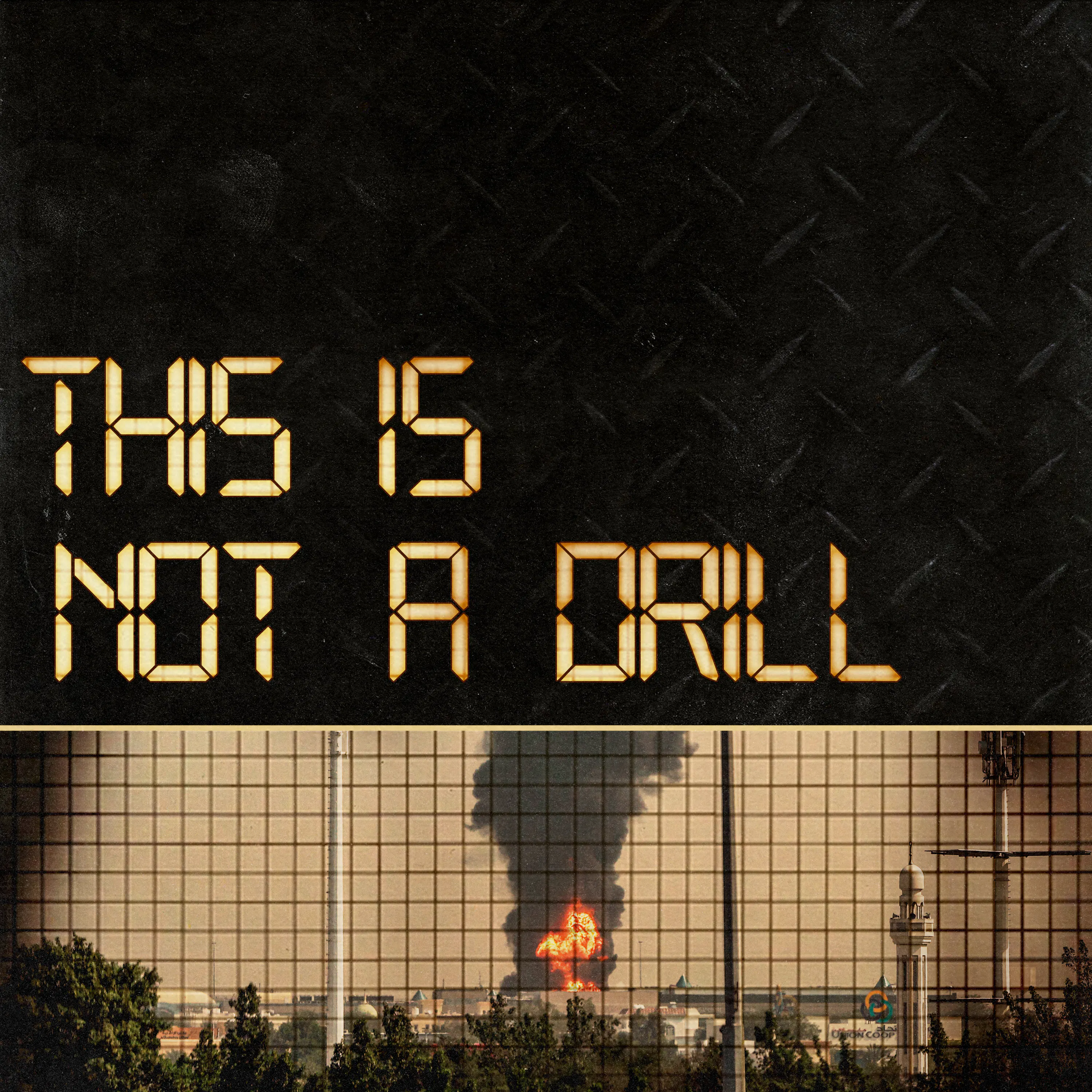
Iran vs. the Gulf – Is there any going back to normal?
About this episode
Get every episode summarized
Each time This Is Not A Drill with Gavin Esler publishes, we email you a written briefing from the transcript — the topics, who appeared, and any specific claims, with the ad reads skipped.
Email me new episodesFree for 3 shows. No card needed.
Hosts & guests

Transcript ready
350 searchable segments. Every word is indexed and playable.
Full transcript
This Is Not A Drill with Gavin Esler — Iran vs. the Gulf – Is there any going back to normal?. Machine-transcribed; use the interactive transcript above to jump the player to any line.
The decision by the United States and Israel to attack Iran, as we hear in endless news bulletins, has affected all of us around the world, and it disrupts economies, creates problems for world trade, aviation shipping, and oil supplies. But beyond the casualties in Iran and Israel, other neighboring countries that wanted no part in this conflict have been attacked too. The United Arab Emirates, Saudi Arabia, Qatar, Bahrain, Oman, and elsewhere are all counting the economic cost and being forced to defend themselves. Donald Trump's public statements and perhaps his ultimate war aims remain confusing at best, but what is clear is that the entire Gulf region is undergoing a profound change to ensure the security of its citizens, maintain international relationships, and protect the economies of some of the most prosperous countries on Earth. In this edition we want to discuss the damage this war is doing to the security, stability
and prosperity of an entire region on which we depend for much of our energy and which has also become a magnet for rich expatriates and business people from all over the world. I'm Gavin Esler, and this is Not a Drone. To talk is through the dangers and disruption that is spilled over from Iran to the entire Gulf region. I'm joined by Alison Minor, Director of the Project on Middle East Integration at the Atlantic Council. Alison, it's very good to talk to you. Thanks Gavin. Glad to be here today. Alison, can we begin with discussing a bit about how the countries of the Gulf region look upon their bigger and powerful neighbor, Iran? Yeah, the Gulf countries have always understood that Iran poses one of the most serious threats
to stability in the region, and we've seen in earlier years Saudi Arabia and the UEE, in particular, attempt to take a more confrontational stance with Iran. Both these countries were not happy with the nuclear deal that President Obama negotiated with Iran during his term, and in particular, they were concerned that that deal never dealt with the issue of Iran's missile program or its destabilizing behavior with proxies. We saw these countries trying to confront those threats up until around 2019 when we saw the last uptick in confrontation between Iran and its Gulf neighbors, and at that point, we really had a moment of reflection from Saudi Arabia and UEE realizing that how bad things could get if that confrontation escalated into a full-on regional war, and that's when we saw those countries in particular attempt to pivot towards de-escalation with Iran. And a lot of those fears, back from 2019, have been justified based off of the war that we're seeing now and ingest how dramatically it's impacted the Gulf and their national
security. So the other Gulf countries have adopted a different stance, particularly Oman. Their policy of attempting to be friends to all and enemies to none has always meant that they've embraced a level of cooperation with Iran, but we've seen even Oman with friendly relations with Tehran get hit as part of this war, so really just emphasizing the fact that as this escalation happens, it's impossible for any of the Gulf countries to escape the blowback. I wonder how significant, if at all, religious differences are between these various countries. There's Sunni Arab neighbors, the UAE, and Saudi Arabia, and the shears effectively in Iran. I know it's slightly more complicated, but that's a big difference, isn't it? Is there a kind of religious competition as well as a nationalistic and an economic one? There is a religious component, but I would say it's more between extremist versions of Islam and more moderate versions of Islam. Of course, the majority of the populations that are getting hit by Iran are Sunni Muslim,
but there are some Shia populations there. And just being Shia does not make you a supporter of Iran, just being Sunni does not make you an opponent of Iran, and we've seen, through Iran's access of resistance, that Sunni Shia divide, break down a little bit, of course, Hamas is a close partner of Iran, and they are not Shia. Even the Houthis in Yemen practice a very, very different version of Shia Islam than is found in Iran. So I think of it less as a Sunni Shia conflict and more as competing visions of Islam and how it operates in society today. Can we move on to what's happening now and start with the UAE? Why have they become such a target for Iran's retaliation against the American and Israeli attacks? It's been a big question on people's minds. The UAE, particularly the first couple of weeks of this war, we're facing more attacks than any other country, including Israel, who is, you know, of course, part of the campaign against Iran. And I think this is based off of a number of factors, number one proximity.
The UAE is one of the closest Gulf countries to Iran, so Iran is able to target the country quite easily without exhausting. It's more sophisticated weapons by, number two is vulnerability. The UAE economy is really based on this idea of Dubai in particular, but the UAE as a whole, as a hub for movement, movement of goods, movement of people, movement of money. And to do that, it needed to be an oasis of stability in the Middle East. And so Iran knew that that made the UAE quite vulnerable to attacks. So that ruptured that image of Dubai as a safe haven. And, you know, if they've sought to have maximum impact in what they view as an existential war, the UAE just provides a particularly compelling target for them. And you know, I think the third is also in part due to the UAE's relations and its stance, you know, both represents a contrast to Iran. It's also a country that has normalized relations with Israel.
And you know, these things stand in direct contrast to the ideology being exported by the Iranian regime. We talk a little bit then about how badly the UAE in particular, but also the other nation Saudi Arabia, Qatar, Bahrain, and so on and all that have been affected by this. I mean, there was one report a few days ago, so it's probably well out of date, but so the Iran had launched 314 ballistic missiles, 1,672 drone attacks and 15 cruise missiles. This is according to the UAE's ministry. I mean, this is absolutely terrible for people who may be go to work or live in skyscrapers in the UAE, for example. No, it's the psychological impact is hard to capture. You know, these are not countries that are used to running to bomb shelters. Those don't exist in places like Dubai. And so just that kind of terrorizing impact that drone strikes in particular can have because of their ability to obeyed air defenses is quite impactful on these populations, even if the actual damage to civilians is not necessarily catastrophic.
But yes, the tally of missile and drones strikes continues. We haven't seen the same pace as the early days of the conflict, but Iran is maintaining dozens of missile and drone attacks each day to various countries across the Gulf. We've seen an uptick recently against Saudi Arabia who had not fared quite as badly as some of the other Gulf neighbors. But the impact goes beyond the psychological, of course, in terms of the economic impact. It's been huge. You know, shutting down oil and gas production in some countries, significantly reducing it in others. Saudi Arabia and the UAE have both sought export opportunities that don't rely on the Strait of Hormuz. So I've been able to maintain some production, but we've seen oil production cuts of, you know, estimates ranging from six to 10 million barrels per day. So a significant chunk of global oil production being impacted. And, you know, while a lot of these countries are not wholly dependent on oil and gas for their GDPs anymore, it's still a significant chunk in the other activities that these countries do rely on.
Like we've talked about tourism, air travel, and just the movement of goods, trade, and shipping, and logistics, that's all being impacted too. So the economic consequences of this are going to reverberate for years. How effective are the military forces of those Arab countries that we're talking about? And I mean, the Royal Saudi Air Force is supposed to be incredibly well equipped, isn't it? It's got advanced their 15s, Eurofighters, and so on. And I think the UAE is quite formidable, too. Yes. You know, both the Saudi Arabia and the UAE have become more battle-tested in recent years, participating in U.S. military engagements in the Middle East, and then with the Saudi led coalition, Warren Yemen, and they are major military spenders, Saudi Arabia ranks among the top biggest military spenders globally. So there's capability there. There's certainly significant assets. But I think the question when you're looking at the current campaign against Iran, we're already seeing the U.S. and Israel conducting heavy airstrikes against Iran.
And it's not clear what the value add would be of Gulf countries getting involved in those. That's very interesting. Has there been much coordination, a united front from the Gulf countries, and what are the calculations going on as to whether actually to join the U.S. and Israel in strikes against Iran? No, that's a good question. I think we saw very strong solidarity from the Gulf countries and the immediate wake of Iran's attacks on the Gulf. And we're starting to see now some of the fishers that do exist among the Gulf countries re-emerge both fishers that have nothing to do with Iran. We saw the Saudi U.E. rift that escalated in December of last year between these two previously very close partners, but also fishers over how to deal with Iran. We mentioned a little bit about Iran's different attitude towards Iran compared to its neighbors. But I think that those fishers will only continue to intensify unless there's a serious effort
from the Gulf countries to put aside their differences and recognize that they face a common threat right now, which is a tough order. In terms of the calculation for getting involved, again, I think there's significant risks right of Iran further intensifying attacks and targeting sites that are even more vulnerable. We've seen limited Iranian attacks against desalination plans, but if those were to intensify, that's an existential threat to these water scarce Gulf countries that would really hit at the heart, not just of their economies, but of civilian well-being and survival. So Iran could ratchet up this conflict further against the Gulf countries if they were to engage militarily. And as I said earlier, the benefit, the value add that they would provide of getting involved in these attacks is just relatively limited, given the already intense and highly capable U.S. and is really strikes against Iran. I think we are seeing notably some shifts in the Gulf pastures.
The Wall Street Journal is reporting that Saudi Arabia is now allowing greater use of its bases in Saudi territory for U.S. operations and also that the UAE has begun to crack down on some of the shadow Iranian financial activities in Dubai that were long, a really important part of Iran's attempt to evade U.S. and other Western sanctions against the country. So I think there are these other non-kinetic lovers that Gulf countries can take advantage of as they seek to counter the threat. There's been a lot of talk in the newspapers and television about the straight of horror movies. We might get to that in a moment, but Bahrain itself is quite vulnerable, isn't it? Because it's also, there's a big American presence there and presumably in Iranian eyes, that's a target. Yes, Bahrain hosts the fifth fleet, so the U.S. naval presence in the Gulf.
And it's also compared to its Gulf neighbors, not as wealthy. And it hosts a more diverse population, so of the countries experiencing popular protests back in 2011 as part of the Arab Spring, Bahrain was one of the few countries that really witnessed that because of some of this disagreement among its populations about the manner of the country and the way it's being run. And that includes large Shia populations in the country as well, so between both its greater economic vulnerability and greater potential unrest between its population, Bahrain does stand out as a uniquely vulnerable country to some of them when we think about the longer term consequences that this conflict could have on stability in the region. Oman, you mentioned before, and they tried to be a friend to all, and that hasn't worked. How important do you think Oman might be in this conflict, however? Will they have to choose sides, or can they continue in some ways and on this broker,
because they have been attacked? They have been attacked a few different times, and this is coming despite messaging from the Omani government, particularly the foreign minister, that has been quite conciliatory towards the Iranian regime and critical of U.S. and Israeli operations. We even saw the Omani's welcome, the appointment of a new supreme leader in Iran and congratulate Shabah Hamani on his appointment. So Oman's in a difficult position. It would like to continue being a mediator as it was prior to this war, but given how deeply the Gulf has been dragged into this conflict, and Oman's difficulty in managing with its other Gulf neighbors had approached towards Iran, it puts it in a tough position. I think that's probably why we've seen other negotiators emerge reports of Pakistan getting involved, potentially, and upcoming indirect talks in Egypt as well. Oman is just a little bit too close to the center of activity now to be an effective mediator.
And just one other point, you mentioned Houthis earlier. Houthis, Hisbalah, and also Hamas and Gaza. I mean, are they either opting out or too weak or under such pressure, particularly Hisbalah at the moment in southern Lebanon? So we've seen Hezbollah get involved in the conflict quite early on, launching attacks across the border into Israel, and now being dragged into a very intense conflict with Israel, conducting both strikes deep into Lebanon, including in the capital bay route, and launching offensive on the ground inside of Lebanon, and with recent reports that they might actually expand the land that they control along the border inside of Lebanon. This is clearly Israel's attempt to, as they say, try to take out Hezbollah for good and weaken it for good after their operations. Last year, significantly hobbled the grill. Hamas is more focused on the, we still have the Gaza Peace Plan in play here, and attempts
to move that forward, they're faltering, those conversations continue, so I think Hamas is more focused on that internal situation, the groups that we have seen are, get more involved, or some of the Shia militant groups in Iraq, who have been conducting attacks, particularly on U.S. sites in the country. The Houthis, they clearly stand out as one of the most formidable members of the Iranian Axis of resistance. You know, their big leverage now is that they could shut off commercial traffic through the Babel Mendev and the Red Sea, as they did in response to the Gaza War back in 2023 and 2024, and that's particularly consequential now with the Strait of Hormuz effectively shut off or flows to most traffic, we've seen the Saudis rely on the Red Sea to maintain their oil exports, and so if the Houthis were to start jeopardizing traffic through the Red Sea, it could cut off that one minor lifeline that Gulf countries have been able to use for continued oil production.
Could we talk a bit about the consequences, which whatever the final outcome seem to be relevant? One is that the United Arab Emirates have very successfully diversified beyond oil to tourism and finance and so on. It welcomes people who've got money, some say they're trying to avoid taxes in their homeland, but that's perfectly legal. They promise stability, and isn't that the problem for the UAE? For example, Abu Dhabi police have reported that more than 100 people of various nationalities have been detained for filming sites and events and disseminating inaccurate information. You can see why they're sensitive, but that does not necessarily make you want to go to set up shop there. No, it's a difficult proposition. We've seen a lot of people come out in defense of the UAE and Dubai in particular as this global hub where people of all nationalities can come in mingle, and there's a certain amount of rallying around the flag, even though most people who live in Dubai are not actually
Emirati nationals. I think we've seen, again, that rallying around the flag affect, but at the same time, I do think that the UAE is going to be struggling to restore that vision of an oasis of stability for years, and that that will dampen some economic, if not all, economic activity and investment. For quite some time, and I think that gets us into the longer term questions about how the Gulf countries will seek to manage, I think what some are calling, a wounded tiger, whatever remains of the Iranian regime and the wake of this war, how they will deal with that threat, and how they will deal with the fact that the Iranians have created an effective new normal with the Strait of Hormuz, and we could see continued more low-level threats against traffic through the Hormuz, and dampened traffic for years, just like we've seen through the Babel Mende, even though the Houthis have not conducted attacks on shivers in the Red Sea for months now, we still see reduced traffic through that maritime
choke point because of the risk appetite of shivers. One of the things I've heard talked about rather quietly when I've visited the region is that if Iran gets a nuclear weapon, perhaps Saudi Arabia will want one too, and that's the problem, isn't it? That's really at the heart of this because you don't want a nuclear conflict between two neighbors who don't particularly like each other. No, that's been a dynamic for years. The Saudis have made it clear that they don't want nuclear proliferation in the region, but that if it happens, they will feel the need to defend themselves as well. I think frankly speaking, the Iranian nuclear program was impacted by the 12-day war last year, last summer. The prospects for getting that up and running again in the immediate term are dampened. Neither this war nor the 12-day war definitively dealt with the highly enriched uranium and the technical expertise that continues to reside
within Iran, but we're not at the kind of near outbreak period that we were prior to the 12-day war, so I think it does give us potentially some more breathing space on development of an Iranian nuclear weapon. At the same time, this current war could harden the resolve among leaders in the Iranian regime of this belief that they need a nuclear weapon to deter against the threat of future wars of this nature. I also wondered about the diplomatic question. It's not long since the UAE signed the Abraham Accords with the US and Israel, and there was talk of the Saudis also doing it. So how much of these attacks by the US and Israel affecting those relationships? I think that it's definitely forcing serious conversations between the US and the Gulf countries about the nature of their security partnership, and this is both relates to the pace and breadth of supply of US weapons and munitions to Gulf countries, but also
the question of consultation. I think that's a big part is that these Gulf countries feel consulted before the US launches or Israel launches major military activities in the region that obviously put these countries on the front line. I think we will need to see closer strategic partnership between the Gulf countries, operational partnership between the Gulf countries and the US in order to maintain the level of US military access that we've enjoyed in the past. At the same time, I think this conflict has reinforced to Gulf countries that there is no replacement for the US. The US supplied air defenses have been remarkably effective at defending against particularly Iranian missiles and into a certain extent Iranian drones, and no one else is stepping in. It's not as if Russia or China are coming to their aid here quite the opposite, in fact. So I think that we could see the Gulf countries attempting to explore some more diversification of their partnerships. We've seen them embracing European partners with the French sending significant assets to the Gulf to put at their
disposal, and also greater attempts from the Gulf countries to learn from Ukraine's variants, particularly in dealing with the drone threats. So I think we can see some diversification there, but there's just no space for the Gulf countries to completely abandon the US partnership. I think with Israel, it becomes a bit more complicated. I think there's still an understanding that Israel is a part of the region. At the same time, there's deep frustration with some of Israel's policies, whether that is the strike that Israel conducted on Doha last summer against Hamas personnel inside Doha, or continued Israeli policies in the West Bank and Gaza, in their posture on the Palestinian issue. So I think you'll see Gulf countries continue to seek to navigate that. It won't be complete abandonment of some of the coordination that's already been happening in some cases over it, in some cases, quiet and behind the scenes. But I think that one of the concerns that the Gulf
countries will be dealing with is this idea that Israel will seek to establish itself as a hegemon in the region, especially if Iran emerges out of this more weakened. That is a concern that some in Gulf countries are expressing, and I think the Israelis will need to do their own part to reassure their Gulf neighbors that they have a vision for a more peaceful, stable, middle-east, where they can't all cooperate and demonstrate that they're really invested in that regional integration in the same way that they were with the signing of the Abraham Accords. Has a lot of the optimism of just a couple of years ago gone? I mean, there was a prospect of continuing negotiations with Iran. There was a sense that things are a bit moving forward. We're getting beyond these age-old differences, and maybe there could be peace, and that's all gone. I do think we'll be seeing the reverberations of this conflict for decades in the region. I think that even before this war broke out, we were seeing pretty tectonic shifts across
the Middle East, and some of those were positive, and some of those were negative. But I think it would be too simplistic to paint everything with a single brush. Now, we look over to the other side of the Middle East at Syria, where we continue to see a very fragile transition process under BahraShara that did away with the extreme instability and degree to which Syria was fomenting unrest across the region. That remains a fragile, but a positive step forward for the region. I will say that as we discussed at the beginning of this podcast, there were tensions brewing between Iran and its neighbors for decades now. One watcher of the Middle East said that this is the war 47 years in the making, and it's just now come to a head. I think that it's possible that we will see positive outcomes out of this, but it will probably take years. It will be a long process to renegotiate exactly what
the balance of power looks like in the wake of this war. In just a final thought, if I may, I know this is very difficult to predict, but there's the old general Kulimpowl rule, pottery barn rule, if you break it, you own it, and in a sense, President of the United States has decided to break it. I'm not going into the reasons for that, but does that mean there will inevitably have to be a very serious United States commitment to this region for many years ahead? So it's difficult to predict what this US administration will do. If you had asked me a year ago, if President Trump would ever launch a major war in the Middle East, I would have said no. That's exactly what he campaigned against. But I think this Trump has certainly proven to be different than President Trump during his first term. I will say, though, that nation building is something that just seems to run so deeply against President Trump's worldview, and certainly attitudes across the Republican Party that I think the more
likely scenario is that this war ends, the US seeks to disengage, and it will be other countries in the region who are left trying to pick up the pieces. Yes, because they're not going anywhere, are they? Exactly. That's part of it. Alison, thank you very much for your insights and wisdom. Alison Miner, their Director of the Project of Middle East Integration at the Atlantic Council. And thanks for listening to us at This Is Not a Drill. I'm Gavin Esler. Goodbye. Thank you listeners for joining us on This Is Not a Drill. And a special thank you to everyone who helps us to make this podcast by supporting us on the crowdfunding platform Patreon. With small, monthly contributions from listeners like you, we can carry on bringing you some of the most difficult and important stories facing us today, speaking to leading experts and reporters on the ground across the world. As little as three pounds a month
helps us to keep you in the know with behind the headlines reports on key flashpoints around the world. Your support will be hugely appreciated. Just search Patreon. This is Not a Drill or follow the link in the show notes to find out more. Craving the coffee flavor you love. But without the caffeine, Kachava's got you covered with their newest coffee flavor. This all-in-one nutrition shake delivers bold, authentic flavor, crafted from premium, decaffeinated Brazilian beans with 25 grams of protein, 6 grams of fiber, greens and so much more. Treat yourself to the flavor and nutrition your body craves. Go to kachava.com and use code news. New customers get 15% off their first order. That's KAC, H-A-V-A.com code news.
More episodes
More from This Is Not A Drill with Gavin Esler

America against the World Part 4 – The New Normal?
This Is Not A Drill with Gavin Esler

America against the World Part 3 – Who will fill the Power Vacuum?
This Is Not A Drill with Gavin Esler

America against the World Part 2 – Is Washington pulling the world apart?
This Is Not A Drill with Gavin Esler

New Mini-Series – America against the World – Part 1: There are No Rules Any Mo...
This Is Not A Drill with Gavin Esler