Loading...
news
Is there a link between political violence and leaders’ rhetoric?
About this Episode
There have been three incidents of political violence in the last two weeks — an attack on a synagogue in Michigan, a shooting at Old Dominion University and an attempted attack on anti-Muslim protesters outside the New York City mayor's residence. We discuss whether there are any common threads among these attacks and what role leaders can play in lowering the rhetorical temperature.
This episode: senior White House correspondent Tamara Keith, domestic extremism correspondent Odette Yousef, and congressional correspondent Barbara Sprunt.
This podcast was produced by Casey Morell and Bria Suggs, and edited by Rachel Baye.
Our executive producer is Muthoni Muturi.
Listen to every episode of the NPR Politics Podcast sponsor-free, unlock access to bonus episodes with more from the NPR Politics team, and support public media when you sign up for The NPR Politics Podcast+ at plus.npr.org/politics.
To manage podcast ad preferences, review the links below:
See pcm.adswizz.com for information about our collection and use of personal data for sponsorship and to manage your podcast sponsorship preferences.
NPR Privacy Policy
This episode: senior White House correspondent Tamara Keith, domestic extremism correspondent Odette Yousef, and congressional correspondent Barbara Sprunt.
This podcast was produced by Casey Morell and Bria Suggs, and edited by Rachel Baye.
Our executive producer is Muthoni Muturi.
Listen to every episode of the NPR Politics Podcast sponsor-free, unlock access to bonus episodes with more from the NPR Politics team, and support public media when you sign up for The NPR Politics Podcast+ at plus.npr.org/politics.
To manage podcast ad preferences, review the links below:
See pcm.adswizz.com for information about our collection and use of personal data for sponsorship and to manage your podcast sponsorship preferences.
NPR Privacy Policy
Hosts & Guests

Transcript
This message comes from Total Line and More.
College Basketball's biggest tournament is here,
and watch parties are underway.
Shop Total Line and More in-store or online to get ready today.
Spirits not sold in Virginia and North Carolina.
Drink responsibly, be 21.
Hey there, it's the NPR Politics Podcast.
I'm Tamer Keith. I cover the White House.
I'm Odette Yusa. I cover domestic extremism.
And I'm Barbara Sprint. I cover Congress.
There have been three targeted attacks in just the last week and a half.
All considered political violence to classified as acts of terrorism.
It's a toxic stew, and today on the show we'll try to understand
what's leading to a dangerous atmosphere in this country.
And what role political leaders could play?
Odette, let's start with these attacks.
Remind us of what we know about these three incidents.
Yeah, so the first was two Saturdays ago, Tam.
There was an attempted attack on anti-Muslim protesters
outside the mayor's mansion in New York City.
Two young men have been charged with providing material support for a
terrorist organization, ISIS.
They allegedly both made statements to the effect that they were inspired by ISIS.
And then on Thursday, there were two attacks.
One of them was at Old Dominion University in Virginia,
where a man, according to the FBI,
yelled Allahu Akbar before opening fire.
He was killed at the scene.
Previously, though, this man had served prison time after pleading guilty
to providing material support for ISIS.
And so this and the New York attack are both being investigated as acts of terrorism.
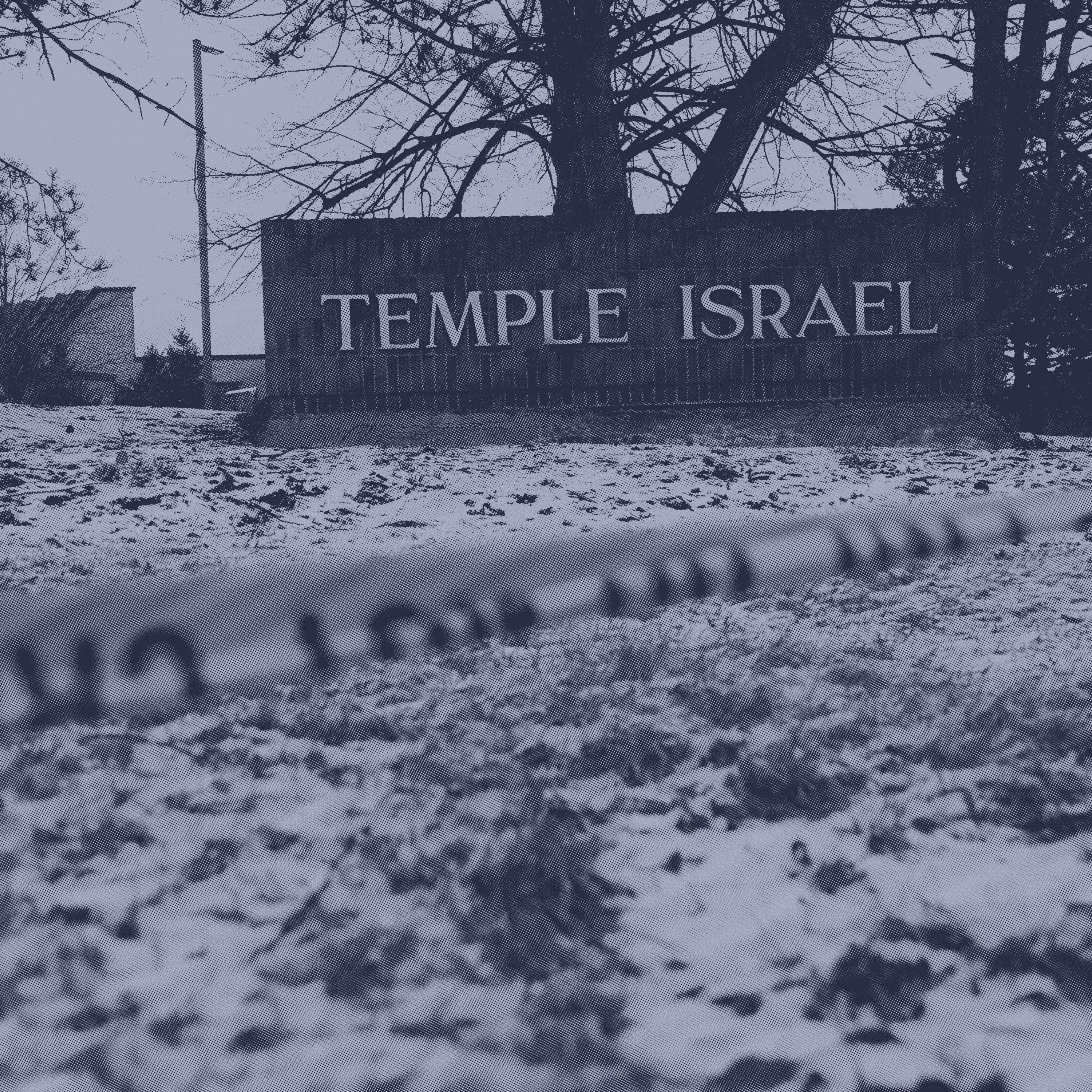
And then the third attack was on a synagogue in Michigan.
That's right, in a suburb of Detroit at Temple Israel.
And there a naturalized Lebanese-American citizen
opened fire and crashed his vehicle into the building.
He died by suicide.
And investigators haven't stated a motive yet, Tam,
but we do know that he had family who were killed in an Israeli air strike in Lebanon
a couple of weeks ago.
According to Israel Defense Force, one of his brothers who was killed was a Hezbollah commander.
Yeah, and I think that there are still a lot of questions there.
Yeah, and I have a question on that friend.
Oh, that all three of these attacks happened, obviously,
when the US is still at war with Iran.
I'm curious to what degree you think that the war is contributing to the violence
that we've seen this last week?
Yeah, I think it's really important to take each incident on its own merits.
And so far, the only indication of a possible link may be in that synagogue attack.
For the other two, there just isn't any indication yet of anything like that.
But overall, the conflict in Iran has most immediately raised the threat concern
for the Jewish diaspora and especially for Jews in America.
You know, right when the conflict began, the Department of Homeland Security issued a
security bulletin basically about this to law enforcement partners and to Jewish community partners.
But I do want to step back a bit because, you know,
the environment that Jews in the US have been facing has actually been worsening
for the better part of a decade.
And I spoke about that with Eric Fingerhut.
He heads the Jewish federations of North America.
And I want to share with you some of what he told me.
This is not new since the operation epic fury the war in Iran.
This is not new since October 7, 2023.
This has been going on now for years in our community.
Go back to October 27, 2018, when you had the most violent attack on Jews
in the history of the United States of America and Pittsburgh in Squirrel Hill, Pennsylvania.
And that was, you know, at the tree of life synagogue in Pittsburgh.
And, you know, of course, that was the year after the deadly white supremacist gathering
in Charlottesville where young men with teaky torches marched at night, chanting Jews will not replace us.
And so, you know, that intolerance has been growing even before these foreign entanglements.
And it was growing because of an increasingly tolerant environment for anti-Semitic white
nationalist views in the US.
And it feels, you know, kind of even silly to have to point this out.
But given what the internet is showing, I think that to add to Odets point here about the broader
environment, I mean, the perpetrator of the attack on the synagogue in Michigan, given what Odets
shared about the, is really strike and living on that killed some of his family members.
I've seen things kind of on the internet in the darker corners, sort of using it as an explanation
or a justification of why he did this.
And it feels again, kind of silly to have to state this.
But like, it is objectively nonsensical and anti-Semitic to take the actions of the Israeli government
and attack American Jews at a place of community or worship.
And so, sad to even have to say that, but it does feel like it's worth saying.
And obviously, temple Israel is not a branch of the nation of Israel.
I laugh at this because I'm sure that folks have seen a clip going around the internet of someone
saying that because it had Israel in the name of the temple, it is tied to the state of Israel,
which I think shows sort of an ignorance, a lack of understanding, temples have had the word
Israel in them for far longer than the creation of the state of Israel.
But it is something I'll say that has been latched onto for extremist organizations overseas
or the state of a run that have been wanting to incite this kind of violence in the U.S.
They are using the conflict to create more propaganda that they're putting out there on social media platforms
to incite people to attack synagogues or other Jewish institutions or just generally carry out
attacks in America.
Yeah, I was going to ask you if the experts you're talking to have any sense of what's
contributing to this rise in anti-Semitism, this feeling that it's everywhere right now.
Yeah, I mean, so the foreign conflicts absolutely playing into it and then we've already
mentioned, you know, sort of rising, you know, homegrown white nationalist sentiment that's been
happening for about a decade now. But there's another really important component which is
that over the last year or so tech companies have greatly pulled back on content moderation.
And so the kind of stuff that you're seeing now on mainstream platforms that used to get rid
of this stuff, you know, platforms like Facebook, Instagram, and TikTok, you are seeing groups
like ISIS or al-Qaeda actually putting extremist propaganda on mainstream platforms,
reaching so many people. You're seeing threats against the Jewish community more commonly
on those platforms. You know, I was speaking with Michael Masters who runs the secure community
network, which is they do threat monitoring and safety training for Jewish institutions across
North America. And he said that since the conflict in Iran began, the number of threats against
the Jewish community have gone up 95%. And so this permissive atmosphere as well on social media
because of the pullback on content moderation is also factoring in here. Can I just ask you,
you said it's over the past year or so, why has there been a pullback on content moderation?
So some of it is because of the politics of right now. It's been quite clear that the Trump
administration is sour on content moderation. You know, they have argued that it has led to
conservative voices being canceled. And so since the signals out of D.C. are, you know,
not in favor of content moderation, I think that's partly explaining the pullback on it.
But I think also tech companies are just interested in AI now. And so I think there's just been
a redirection of resources. And of course, AI is also producing large amounts of imagery
that is contributing to the mood out there and making social media all the more toxic.
All right, well, we're going to take a quick break and we'll have more in a moment.
And we're back. And I want to turn the conversation now to the role that political leaders might play
in lowering the temperature or not. And Barbara, you've reported on a rise in anti-Muslim speech
coming from members of Congress. Tell us what you found. Yeah. And to be clear, like this has been
brewing for some time, but it has, it really ratcheted up in the last week. Last Monday,
incidentally, right as House Republicans were meeting for their annual retreat in Florida,
Andy Ogles, a Republican from Tennessee House member, Post-Jonex, Muslims don't belong in
American society. Pluralism is a lie. And this is not the first time that he has trafficked in
that kind of language. He gave a speech last December where he said America is and must always be
a Christian nation. But what was interesting to me over the course of this week was that
a lot of Republicans actually stayed silent on the issue. There were a few who doubled down,
Brandon Gill of Texas said, no more Muslims immigrating to America, Randy Fine, who's had
Islamophobic tweets in the past has said, we need more Islamophobia, not less. Andrew Clyde of
Georgia, no more Islamic immigration, denaturalized, deport, repeat. And so there was a subset within
the Republican conference who doubled down on Ogles rhetoric. And then there was a large amount
of people in the Republican conference who didn't say anything at all. And I asked, they were not
in the hallways this week because they were in Florida. So I couldn't ask them in person, but I
emailed every Republican office. I think I got four notes back. And two of them were sort of like
bland statements about the First Amendment. One was straightforward, this is offensive to my
Muslim friends and community and constituents. And the other from Andy Harris said Americans are
going to have to deal with radical Islamic terrorists. And now we need to talk about leadership,
because Speaker Mike Johnson was asked about this at a press conference in Florida. And his
response was sort of an answer to a question that wasn't asked. There's a lot of energy
in the country and a lot of popular sentiment that the demand to impose Sharia law on America
is a serious problem. That's what animates this. I mean, he's speaking to a broader trend here
when he's talking about there's there's this you know, animating force in the country pushing
back against Sharia law. Sharia is a religious framework that guides Muslims conduct. And
officials are invoking Sharia law to suggest that Muslims are trying to impose their religious
practices on communities within the United States. Sharia cannot supersede the U.S. Constitution,
but it just kind of speaks to what I see is sort of like a using Sharia law is something to
scare people. And it provides kind of like a cover for bigoted language for people to say,
you know, Muslims don't belong here. And no doubt we've now seen millions of dollars spent on
campaign ads that include discussion of Sharia law. Can you put this moment into some context for us,
this rhetoric about Sharia law? Yeah. And I think it's really important to recognize that
we have moved beyond this just being in our political rhetoric now. This is now part of policy.
You know, we have seen executive actions that have targeted Muslims specifically. We've seen
travel bans during the previous Trump administration that were largely focused on restricting
the number of people from Muslim majority countries from coming to the U.S. We've seen the president
demonizing Somali Americans in Minneapolis and the violence that actually ensued there when
Minneapolis became the focus of anti-immigrant crackdowns. And so this is in the political rhetoric
but it is also increasingly in our policy. And I think, you know, the thing is that every time there
is a violent attack by somebody with allegiance to ISIS or to Iran, it is sadly cannon fodder to
those who are involved in the project of dehumanizing Muslims. And that in return ends up working
to the benefit of groups like ISIS. You know, when when people here are talking about Muslims in
this country as the enemy, that's what extremist organizations overseas can use to say, you know,
see you're not one of them come join us. We accept you and you should view America as the enemy. So
it is a cycle that kind of keeps like feeding itself and we should all be concerned because
when these attacks happen, any of us could be in the wrong place at the wrong time and a victim.
Yeah. And even if all of these end up being sort of lone wolf attacks, they add up to a feeling
of instability in the country. And it ultimately undermines democracy. I mean, that's what we
should also all be concerned about is that when any faith is under attack, that is fundamentally
undemocratic. This does take me back to a very different time after the 9-11 attacks. President
Bush, a Republican, the president at the time, less than a week after that attack, went to a
mosque in Washington, D.C. to send a signal that going after Muslim Americans wasn't the answer.
Islam is peace. These terrorists don't represent peace. They represent evil and war.
It's part of a longer speech that he gave that I think we tend to forget. And there are parts that
I think are really important. He talks about Muslims being part of America and the contributions
that they make to society as doctors and lawyers and how they need to be treated with respect.
And he has a line about like in our anger, we can't forget that we need to treat our fellow
Americans with respect. He talks about women who cover their heads being afraid to go outside
and how that is inherently not an America that he wants to see play out.
I also would say that there has always remained an element that has demonized Muslims in America.
And I think that that is why we are seeing the Sharia panic, for example, that you were talking
about Barbara, like that stuff is getting relitigated. It was never completely resolved. And the
element that was behind it back then, we're seeing those same people now coming up to congressional
subcommittees to provide testimony. The role and the civic life of Muslims in the United States,
that is not something that has been normalized completely within the conservative movement here.
There's the Trump factor too in all of this. And I think in large part why I felt like I was
seeing sort of like a doubling down instead of a distancing from some of these comments
that Ogles made this last week is because the Trump playbook, which so many Republicans are
adopting now, is never apologize. It's not in your interest to back down. And like you can
weather whatever storm it is, if you just say it loudly enough and keep on carrying on.
And even that can be contrasted not even going all the way back to the comments that President
Bush made. But in 2019, Steve King, then a member of the House Republican from Iowa, gave an
interview in which he questioned why the terms white nationalist and white supremacists were
considered offensive. And there was widespread condemnation, not just by leadership, but by rank
and file Republican members. And he was stripped of his committee assignments, one of them only
tangible punishments that you can get as a member of Congress. And so I just think that even within
those six or seven years, you're seeing a big difference in the way that people are responding
to their colleagues saying something of this nature. And I think we could also draw back to the
conversation about social media. And the fact that we are all sort of existing in tight bubbles
and are seeing very specific information. And there isn't the same sort of collective
conscience in the United States that there was 10 years ago, 25 years ago.
There's not a lot of nuance in our conversations these days, you know? Like a lot of the Republicans
that I saw were tweeting about, you know, the in the aftermath of the attack at Old Dominion.
And like that is a frightening attack, you know? And there are questions I think that people have
about how someone who previously pled guilty to providing material support to ISIS could go out
and commit another crime like that. But to then broad brush that into sweeping comments on an
entire face and an entire people, it's far beyond inappropriate. It's dangerous, as Odette said,
and everyone should be concerned about that. It was interesting to read the latest annual report
that the Council on American Islamic Relations put out a couple of weeks ago, which documented sort
of the rising Islamophobic atmosphere in the United States. And they had a term that they used
for just exactly what you were talking about, Barbara, which is collective punishment.
You know, one person from a community does something wrong. And then suddenly there's a travel
ban from an entire country. And so, you know, I think every American should be really worried about,
you know, the possibility that we may be existing at a time when collective punishment is the way
we're making policies here. And we're going to leave it there for today. I'm Tamara Keith. I cover
the White House. I'm Odette Yusef. I cover domestic extremism. And I'm Barbara Sprint. I cover Congress.
And thank you for listening to the NPR Politics Podcast.
Support for NPR and the following message come from Warby Parker, the one-stop shop for all
your vision needs. They offer expertly crafted prescription eyewear, plus contacts, eye exams,
and more. For everything you need to see, visit your nearest Warby Parker store or head to WarbyParker.com.
At this year's Oscars, one battle after another took home the award for Best Picture,
Michael B. Jordan won for Lead Actor, and the telecast had plenty of jokes at Timothy Shalamet's
expense. Listen to a recap on pop culture happy hour via the NPR app or wherever you get your podcasts.


