About this episode
This Is Uncomfortable is made possible by:
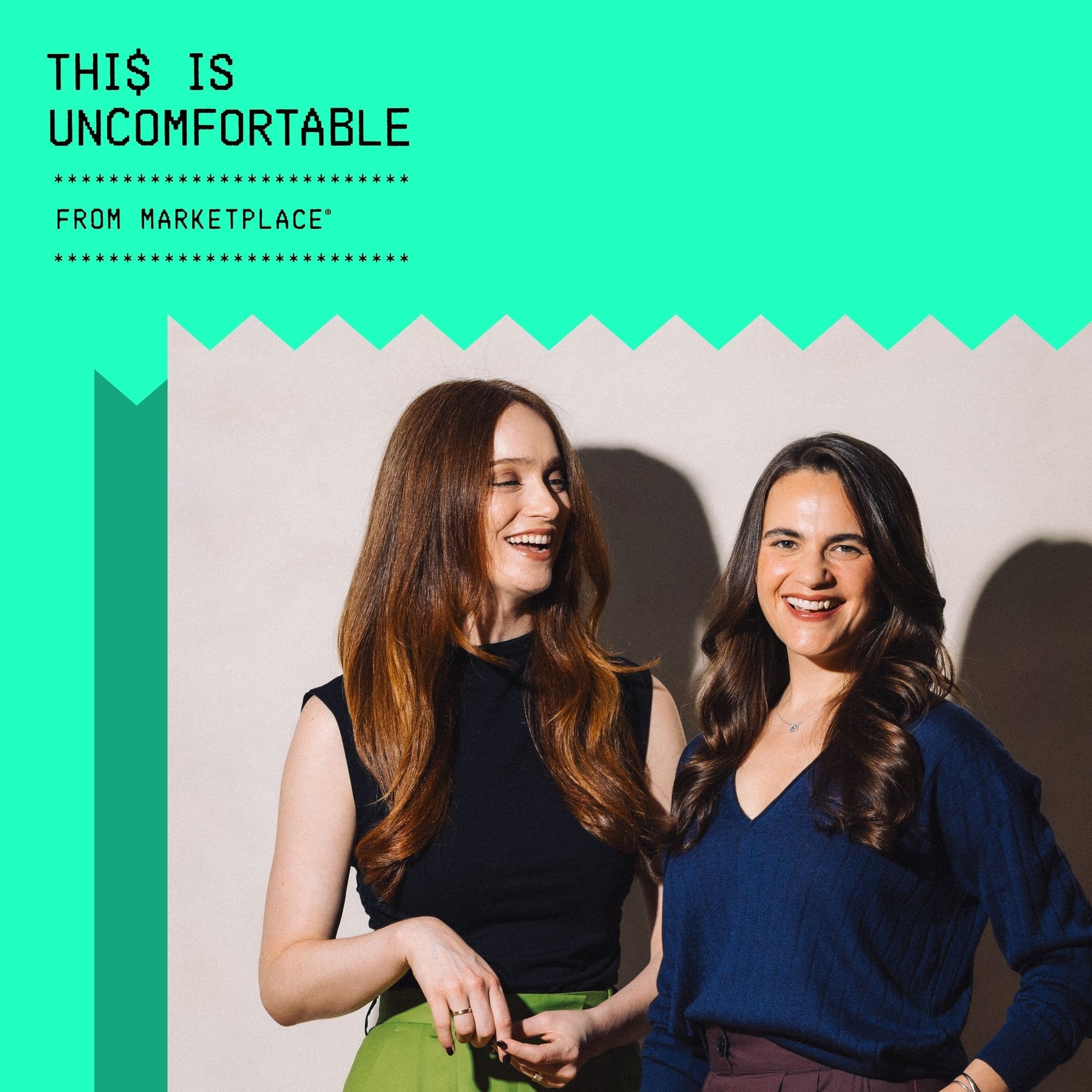
College sports has become a multi-billion dollar industry, but until just a few years ago, the actual athletes never saw a penny. It wasn’t until 2021 that the NCAA decided that college athletes could make money off of their Name, Image and Likeness (NIL). Guest host Alice Wilder talks to Madeline Hill and Charlotte Wilder (no relation), hosts of The Sports Gossip Show, to understand how NIL is changing the game for student athletes, financially and emotionally.
If you like this episode, share it with a friend! And let us know what you think by calling 347-RING-TIU or emailing [email protected]
If you want to answer our “Uncomfortable Questions” see more info here.
Follow us on Instagram and Tiktok!
Support This Is Uncomfortable with your donation today: https://bit.ly/mkp_tiu_pod
Get every episode summarized
Each time This Is Uncomfortable publishes, we email you a written briefing from the transcript — the topics, who appeared, and any specific claims, with the ad reads skipped.
Email me new episodesFree for 3 shows. No card needed.
Hosts & guests

Transcript ready
524 searchable segments. Every word is indexed and playable.
Full transcript
This Is Uncomfortable — Is there too much money in college sports?. Machine-transcribed; use the interactive transcript above to jump the player to any line.
Running a business is hard enough, so why make it harder with a dozen different apps that don't talk to each other? Introducing Odo. The only business software you'll ever need. It's an all-to-one, fully integrated platform that makes your work easier. From CRM, accounting, inventory, e-commerce, and more. And the best part, Odo replaces multiple expensive platforms for a fraction of the cost. This is why over thousands of businesses have made the switch. So why not you? Try Odo for free at odu.com. That's odu.com. This is Angus Maximus. This partner has one part of a pound of hot, juicy, cooked to water, angus meat. It's more expensive than a quarter pounder. The burger is closed! And for only $5.99, even regular juice can afford it. Like that guy! Give me that big ol' burger! Yeah! He holds Angus Maximus. Only $5.99 is cold senior. A bill for a limited time of participating restaurants, tax on included, not valid for use within a combo or in combination with any other offer or discount.
You have to be delusional to be an athlete. You have to believe that you're better than everybody else. Otherwise, how could you do it? I'm Alice Wilder, and you're listening to This Is Uncomfortable. The weekly show for marketplace about life and how money messes with it. My first real exposure to college sports was as a first year at UNC, back in August of 2013. Basketball players were campus celebrities, and they were bringing in millions for the school. And their coach was the highest paid public employee in the state of North Carolina. But the players were not getting paid at all. All of that changed in 2021. When the NCAA changed their rules around NIL, that's shorthand for name, image, and likeness. That means college athletes can now make money off of their star status. Okay, but this whole NIL thing is still kind of the Wild West. I wanted to come to y'all with real numbers about how much student athletes are making, but it turns out no one really knows. There isn't a lot of transparency in every school handles it differently. So some athletes are making millions of dollars a year, but the majority are probably
earning more like hundreds. But no matter the amount of money, NIL is changing the game. So today, we're digging into how all of this change has impacted student athletes. In terms of the money, yes, but also their emotional lives and their sense of identity. Here to help me understand how NIL has turned college sports upside down are the hosts of the sports gossip show Charlotte Wilder, No Relation, and Madeline Hill. Charlotte and Madeline, welcome to the show. Thank you so much for having us, Alice. Great last name, if I do say so myself, Alice. Thank you. We should get a 23 in me going at some point. Yeah, I know. I know. Okay, do you guys have any favorite NIL deals that you've seen, like particularly random ones? I was seeing a Carolina basketball player last year, making an appearance at my local Verizon store and I was like, what is going on here? I do have a favorite. It was a player named Grady Dick who went to the University of Kansas. He was taken by the Toronto Raptors in the draft.
So he did go pro. Even after he went pro, this guy was doing more ads for local car dealerships than I even knew there were car dealerships in Kansas. It was a master class in making sure he hit every one of those car dealerships. For some reason, to me, the romance of college sports now is student athletes doing car dealership ads. That is pure to me. That is the pinnacle and I hope that every student athlete out there gets a chance to do a car dealership ad. I love that. Honestly, I agree with you. How about you, Madeline? I think my favorite that came to mind is Fernando Mendoza, who was the quarterback at Indiana and now plays for the Raiders professionally. And I believe this was still when he was a student athlete, but he did a deal with LinkedIn. Finally, after a lot of online chatter around people being like, Fernando Mendoza needs to do a deal with LinkedIn because he posts on LinkedIn as if he is looking for an entry
level job. That's so charming. That's really charming. It's so charming. It totally fit his brand. It felt very on-brand and I think people who were fans of his were very excited that he actually did a paid partnership with LinkedIn. And I hope he does a TED Talk one day because I think he would be an unbelievable speaker about business and IEL deals. Were you either of y'all college athletes or student athletes? I was a volleyball player throughout my entire life. When I went to college, I played like essentially an intermural club volleyball at the University of Georgia. But I was not a D1 athlete. That is such a time commitment. I'm sure we'll get into it. But yeah, I played volleyball almost my entire life and I loved playing sports. I love it. What about you, Charlotte? Well, you know, Alice, I was a D3 squash player for about a month and a half before I realized that even D3 sports, you know, it is a full-time job and unfortunately, I think I wanted to
go to parties more than I wanted to go to practice. So, you know, I didn't have my priorities straight, but I can say that I was briefly a college athlete. Can you pay me a picture of what it was like to be a student athlete pre-NIL? Before NIL deals exist, student athletes could not make any money on their name, image, and likeness. Some did and were severely punished in some cases for doing that. Their job was to go to school and play their sport. And if they made any money, even a dollar off of their name, image, and likeness before this was approved, they could face serious consequences. So I think in many ways, it was a very different experience, at least from a financial standpoint and potentially from a, what does it mean to be a public figure and a student athlete standpoint? You know, this also would have been pre-2021, obviously social media platforms existed, but I think, of course, during the pandemic and since they've just blown up and these athletes have created their own personas and brands with sometimes millions of followers
that that didn't really happen, obviously, in those early days. No, that totally makes sense. Anything to add, Charlotte? I think to, there were a lot of players who were getting paid. It just was not above board. You know, there's someone called the bag man who would come around with a bag of cash and say, you should come to ex-school. Like, actually? Like, yeah. Like, a literal bag of cash? Yeah, oh my god. You know, so in some ways, NILs sort of put above board partly what was already happening under the table. Obviously, now it is happening much more and it is a fairer system in some senses because it can be regulated. Is it fair? I mean, you know, that's also the million dollar question, but it is crucial to note a lot of these athletes, they were the boosters of these colleges were finding ways to get money to people. It just wasn't public and if it was found out, you got in massive trouble. Okay. I'm holding myself back from just asking you a bunch of questions about the bag man because
now I'm like, okay, we need to launch a new podcast about the bag man. I think I'm right about that. I mean, we need to look at something that would happen, honestly. Yeah. It's just wild. How are student athletes today making money off of their name, image and likeness? There are so many different ways that they can, it's still kind of the wild west. You know, this has only been around for four or five years now. You can get brand deals the way that sort of any influencer or content creator could. You can have a deal with, as you were saying, a local business, you can have these national deals that are sort of structured more like traditional commercial endorsement deals where you know, you have a set number of appearances. You can also be paid through the college collectives, which is essentially where boosters pull their money to offer a certain amount to athletes that they are trying to recruit to come there with sort of pre-guarantees. So just to recap, it's like individual brand sponsorships, these collectives and boosters
where it's like, we're basically just paying you a salary or maybe like come to like a tailgate or like sign an autograph. And then you have revenue sharing with the schools. This is maybe kind of a silly question, but like, why not just give these players a paycheck? Like this seems like a very convoluted way to pay student athletes. It's very complicated. I think that is an existential question that there are a lot of people on both sides of the argument, whether student athletes should be categorized as employees of the universities that they play their sport for. There have been a lot of discussions around players potentially unionizing, which could potentially shake things up. But I think that that's like the, in some ways, the million dollar question, should these athletes be categorized as employees if they are, while they are students, yes, and they should be prioritizing academics. They are often splitting their time, of course, between their studies and being a student athlete, which can take up the majority of their time, especially at these D1 schools
and these top programs. I also think NIL came along as a way to circumvent how thorny this issue is. And I think the argument, it's kind of, you know, like a free market, neoliberal argument, which is like, well, each person should be paid commensurate to what they contribute to the university and basically what brands could see their value as. And in that sense, you know, it's like the football players and the basketball players are going to make the most money at these schools, the men. I think some women are now catching up in terms of, I think some of the highest paid athletes in recent years actually have been women, but that's sort of at the very top. I think the majority are these male athletes brought in to play football and basketball. And it was sort of done as a way to avoid questions of like, well, do you pay people on the diving team, the same amount that you would pay people on the football team? It almost let the free market deal with that instead of schools figuring out actually
how do we make this fair for everybody. What are the stakes here for student athletes around NIL? Well, I think the stakes can be quite high. And I think in some ways, the ability to make money off their name, image, and likeness as student athletes can be really beneficial for them long term after they're done playing their sport because most of these student athletes won't go pro. It's a very small percentage. So for them to be able to at least have some sort of financial footing after they graduate. And the bulk of their time as a student athlete was really playing the sport. While they yes are getting an education, they are incentivized to prioritize playing their sport and hopefully bringing a national championship to their school in that sport. And so I think this helps them set up almost like an insurance plan for themselves once they graduate if they don't go pro. Or they also could potentially have a season ending or career ending injury while they are student athlete that could prevent them from ever playing professionally in their sport.
And so the fact that they're able to capitalize on their success as a student athlete while they're in college can be very beneficial for their future post-graduation. Coming up how new legislation can impact the amount of money student athletes are making. But it wouldn't do anything to affect how much you can pay a coach. Let's go to the break. Running a business is hard enough. So why make it harder with a dozen different apps that don't talk to each other? Introducing Odo. The only business software you'll ever need. It's an all-in-one fully integrated platform that makes your work easier. From CRM, accounting, inventory, e-commerce, and more. And the best part Odo replaces multiple expensive platforms for a fraction of the cost. This is why over thousands of businesses have made the switch. So why not you? Try Odo for free at odu.com. That's odo.com.
Your personal information is being bought and sold every day. Data brokers make billions pulling details about you from public records and the internet, then package and sell it without your consent. That's how your info lands in the hands of scammers, spammers, even stalkers. It's why you get endless robocalls and why ads seem to follow you. ORA can help. ORA actively removes your data from broker sites and keeps it off. They instantly alert you if your information shows up in a breach or on the dark web. And ORA goes beyond data protection. You get a VPN, antivirus, password manager, spam call protection, dark web monitoring, and up to $5 million in identity theft insurance, all backed by 24-7 US-based fraud support. Start your free trial today at ORA.com slash private. Protect yourself now at ORA.com slash private. Yes, it's Angus Maximus.
This partner has won over the pound of hot, juicy, cooked to honor Angus V. It's more face-to-the-quarter pounder. The battle is closed. And for only $5.99 even regular juice can afford it. Like that guy. Give me that big open. Yes. The whole Angus Maximus, only $5.99 is cold senior. A bill for a limited time of participating restaurants, tax on included, not valid for use within a combo or in combination with any other offer or discount. Welcome back. I'm Alice Wilder. I'm here with the host of the Sports Gossip Show, Charlotte Wilder, and Madeline Hill. And we're getting into how college athletes are being impacted by NIL. That's name, image, and likeness. I'm curious what you think about this. Do you wish we could go back to the days before NIL? What's the best way to pay student athletes for their work? We're keeping the conversation going on our social media. You can find us on Instagram and TikTok at This Is Uncomfortable Pod. Okay, back to my conversation with Madeline and Charlotte. I want to talk a little bit about the way that this is changing how student athletes think about themselves.
I was talking about at the top of the show, there's already so much pressure on the athletes to bring in a win for their school. And then you add this factor of, you also need to become an influencer and an entrepreneur and you never know when you might have that career ending injury. How do you think that's showing up for student athletes that pressure? I mean, I think if you listen to what some of these athletes have said, Bryce Underwood, who's a quarterback at Michigan, I think is making around $3 million a year for four years. He has talked about how you have to surround yourself with the right people. A lot of athletes have talked about that. How all of a sudden you need a team around you of financial advisors, marketing people, social media experts who can help you maximize that, but also make sure you're not being taken advantage of. I also think that for some of these student athletes, the pressure and toll can have an impact on their mental health. I mean, a lot of athletes now are much more open about the pressures that they face being
both representative for their university, a spokesperson for their program. They're a student, they're an athlete, they're potentially an influencer as Charlotte mentioned. They're wearing a lot of different hats at a very young age. Well, also just having graduated high school and going into college, it's a lot happening at once. I think NIL just adds another variable to the collective soup of being a student athlete in many ways. It can also, I think, relieve a little bit of pressure in terms of, you know, if you don't have any money, it's always in the back of your head. And so there's an aspect of this that while it brings new mental health challenges and new pressures, I do think it can alleviate some existential questions about like, how am I going to make a living in this really bad economy, especially for recent grads. So there are two sides to the coin of that pressure, I think. Yeah, totally.
How do you guys think this is impacting team dynamics? I can imagine it's hard not to think about it, but I also feel like with NIL in general, there's got to be a lot of compartmentalization. I do think that you see this though when someone commits to a school and then decommits and goes elsewhere for more money. That's a pretty obvious impact on a team that you didn't use to see at least overtly in that way. So someone decides they don't want to play somewhere anymore because they can play somewhere else for more money and there's always drama surrounding that. I want to talk about the Protect College Sports Act, which is a bipartisan bill that senators Maria Cantwell and Ted Cruz have proposed. What is this bill aiming to change about the way the college sports work? This bill I think aims to regulate what has been unregulated in NIL and I think that while there are some aspects of regulation that probably would be helpful, this seems
like it would harm students more. Well let me just break it down. Basically it would put a sort of soft salary cap on schools that around like I think it's $21.5 million for these NIL collectives to pay to their athletes. If you think about it, that goes pretty quickly because if you're paying a quarterback and that would be per year, that goes pretty quickly because if you're paying a quarterback $3 million, now you're already at 18.5. I think that there's been some pushback recently from senators Chris Murphy and Cory Booker Democrats trying to galvanize other Democrats against this because it would limit the amount of time you could transfer. You could only transfer once per your college career. There would be these, a collective that would get to decide what brand deals you're allowed to do. It would also, as I said, put a cap on the amount of money you can earn, but it wouldn't do
anything to affect how much you can pay a coach or how much you can pay an athletic director. The adults once again would kind of get to do whatever they want with no regulation while it would affect these students and kind of put these arbitrary numbers and restrictions around it that once again would need governing from these sort of nebulous college sports bodies. I'm not an expert. I'm not a doctor. I'm not a lawyer, but it does seem like while there is something to be gained from figuring out how to regulate the system, it does seem like there's a lot of money. There are some holes and this would probably raise more questions than it answers. It seems like there's a lot of adults who are just very uncomfortable with the idea of student athletes making money. Why is that? I think because for so long, these student athletes weren't getting paid or if they were getting paid, it was under the table and not allowed, as Charlotte mentioned, with the bagman.
I think that there's also this feeling of these student athletes having almost too much power by having access to significant amounts of capital. I think that there is pushback in people saying, well, don't they need to go get a job and also have an entry-level job where they're not making a lot of money and they're grinding it out when they're making significant amounts of money from a very young age? I think that discussion and pushback extends beyond even the student athlete. I think and extends into all these new ways that people can make money, especially with the rise of social media, that these people are able to make way more money on the internet than they ever could in an entry-level job or a job even later on in their career. I think that there's just inherent pushback and it makes these people feel uncomfortable that these students are feeling empowered and can make this much money. I remember I was at UNC when our men's team won the national championship in 2017 and
every day leading up to those games, the energy on campus was so intense and the players must have felt so much pressure. I think about today, if that weren't happened, for still, it would be amazing if our team made it far and much madness today. Those players would also have to worry about brand deals on top of winning the game and it just feels like so much pressure. I think at the same time that we're talking about pressure, that is what these athletes have learned to do. That's their job. Whether that's fair or not or whether the vitriol online is definitely not fair, something has to be done about that. But that's why these are very competitive people who are playing a sport to win. They are playing a sport to bring a national championship to their college. You have to be delusional to be an athlete at the D1 or pro level. You have to believe that you're better than everybody else and that you will win a national championship even though the odds are so slim. Otherwise, how could you do it? You kind of have to lie to yourself a little bit. I think some of that pressure to these athletes is welcomed to a certain extent.
It depends on the individual as to where that line of pressure goes from being motivating to unhealthy, I think. What do you think are the potential positives of NIL for students? Obviously, besides the money. Yeah, I think it's one of the financial empowerment aspect. As you mentioned, they're setting themselves up for success, even if their chances of going pro fall through by the time they graduate or leave university. I think there's that. I also think that even beyond just earning more capital, they're earning cultural capital by building brands and names for themselves beyond just there on the field or on the court performances that could potentially extend to who knows what in the future launching their own company if they're interested in some venture investing in other businesses. I think that almost the possibilities are endless, I think, for these student athletes, as NIL became an option for them.
I also think that it creates safety net for more athletes than was ever possible before. I guess you could argue too. It does teach them about business. You can get a business degree, but you're also getting a practical business degree in terms of managing money and having a team of people around you. Maybe that's an aspect of it. I actually have a friend who teaches in the journalism school at UNC and he teaches an entrepreneurship class. He was telling me that he had a couple of student athletes in that class during the NIL who were like for their class projects, were using their own NIL deals. That's like, wow. They're on branding about like, I am actually going to like put this into very practical practice. Yeah. One thing I would think about too, just of how these student athletes can be set up for success and I'm sure it exists at some universities, but I wonder what sort of systems are in place for these student athletes to ensure that they're not being taken advantage of, that they
understand their finances, are there courses that these student athletes are being offered? Are they given like, here's a handbook of NIL deals 101, what flags to look out for, especially when they're early on in those deals and maybe they don't have an agent yet potentially to negotiate those deals on their behalf. Do they understand the contracts? What are their obligations? I'd be curious just around the resources, if any that these universities are offering these student athletes in their freshman year as they're kind of embarking on this new chapter in their careers, but then also in their own businesses, they're essentially creating for themselves. What do you all think is the best case scenario for NIL and college athletes right now? Alice. If I knew that, I would be making a lot more money than I currently am. Let's hear it out today. We're all going to get reds. Right. Right. I have no clue.
I have no clue. I think that there's probably some element of all of these things put together between a revenue share, a system of how do you make sure all athletes are paid something? How do you balance the playing field, level the playing field a little bit? How do you make sure that those who are bringing in exorbitant amounts of money for these schools because they are? These students are the only reason that Ohio State football is nothing if you don't have any Ohio State football players. Yes, they should be getting money. How do you make it so that it isn't quite the Wild West? I don't know. I would love to think that maybe there's some people smart enough in government to figure it out. However, I'm not holding my breath given what we're currently working with. I think it's on the NCAA, too, to really think about this from the point of view of students and not just like how do we save our own ass here and make sure that adults are still
able to earn and do and make whatever they want while these students are the ones who come under more intense regulation. Yeah, and they're also putting their bodies on the line every day. Yeah. Madeline, what are your thoughts? I would add to it, again, like I said, ensuring that there are protections in place to protect these student athletes from nefarious NIL deals are getting involved in endorsements that are not beneficial for them in the long term, that they're not being taken advantage of. That would be my biggest flag. And I'd also be curious to see if there are real unionization efforts amongst college athletes. And if that's something that will ever really come to fruition, I don't know. I think it's an interesting piece of the puzzle. But these student athletes are obviously independent contractors or not employees of the universities. So obviously the extent to which the universities or the government are going to protect these student athletes will probably only go so far, unfortunately. But I am curious if the unionization efforts at all bring up larger conversations around
ensuring that these student athletes are given proper protection and resources as they are earning significant amounts of money at a young age. One last question before we go. When you're a student athletes, what would your dream and NIL deal have been? Oh my God. I think mine would have been, I've always been very into boats. I not to brag around the sailing program in Rockport Maine for many years. And so when I was in college and I was still doing that, and now actually, so this goes, this shout out to Boston Whaler, they make these amazing little motor boats. They are quite durable. They're actually unsinkable. You can cut them in half and they won't sink. And if I could have had, or if I could have an endorsement deal with Boston Whaler, my life would probably be complete in a capitalist sense. You're already doing free promo for them, so they should really reach out. I have been, Alice, I have been free. I've heard it on the show. I'm waiting for it. I'm waiting for it. I'm waiting for the call. Reach out. What about you, Madeline?
I think mine would be, I am an avid drinker of Diet Coke. Charlotte knows this. I drink Diet Coke in college. I would get it from the fountain machine in the dining hall. I love Diet Coke. Is it good for you? No, but does it actually help me focus? Yes. And also I get chronic migraines and it helps when I have a migraine. So it's actually medicine. It is medicine. I would be honored to have had a deal with Diet Coke. Also I'm from Georgia. So Coca-Cola, if you're listening, your headquarters are there. Absolutely. You're gonna order by me. I love it. Well Charlotte and Madeline, thank you so much for talking about all this with me. It was so much fun. Thanks for having us. Thank you. It was a great question and not a ton of answers, but a lot of speculation. Well, we love that here. It's all new ones. It's all the great you go. That was Madeline Hill in Charlotte, Wilder. You can find their podcasts, The Sports Gossip Show, wherever you get your podcasts.
After talking to Madeline and Charlotte, I feel a little bit better about how NIL is impacting student athletes. Going into this, I kept imagining my college self. Frontal lobe, nowhere near developed, negotiating and dealing with a major brand. Like, oh my god. But like Charlotte said, these players are, for lack of a better phrase, just built different. My college self could never. Of course, like any student, these players face stress and security in at least one horrible 8 a.m. class. But they've also been single-mindedly working towards athletic excellence for most of their lives. Calm under pressure is their bread and butter. And I think that's a skill worth compensating. I just hope that those players have a support system to manage not just their money, but their mental health, too. Later this month, the US Senate will vote on the Protect College Sports Act. And I'll be watching to see what that vote means for student athletes' financial and personal lives. If this episode resonated with you, whether you're a current or former college athlete, or just a fan with some opinions, we want to hear what you think. Call our hotline and leave a message at 347 Ring TIEU.
That's 347 746 4848. Alright, that's all for today. This episode was lead produced by our intern Perry Gregory, and I'm Alice Wilder, filling in for Rema Reis. Zoe Saunders is our senior producer, audio engineering by Drew Jostad. Bridget Bodner is Marketplace's director of podcasts. Jessica Place's chief content officer is Joanne Griffith. Neil Scarborough is vice president and general manager of Marketplace. Special thanks this week to Dr. Molly Harry, Dr. Karen Weaver, and Dr. Mina Meerhome. Our theme song is by Wonderly. Alright, see you next week. In February of 2024, celebrated illustrator and children's book author, Patreon Mathers and her husband Michael, mailed letters to dozens of friends and family members to let them know they had died by suicide. Dear Hunnies, this is goodbye. By the time you get the shalliter of both Petra and I will be dead.
Next stop, Wonderland. Why did they do it? And what did it do to the people they left behind? Listen to Deathwin artist wherever you get your podcasts.
More episodes
More from This Is Uncomfortable

Listeners weigh in: Wedding hacks, questionable investments, and a fix for doom...
This Is Uncomfortable

If only he hadn’t spent so much on those turntables!
This Is Uncomfortable

How does anyone afford childcare?
This Is Uncomfortable

"If this is your first time being poor..."
This Is Uncomfortable