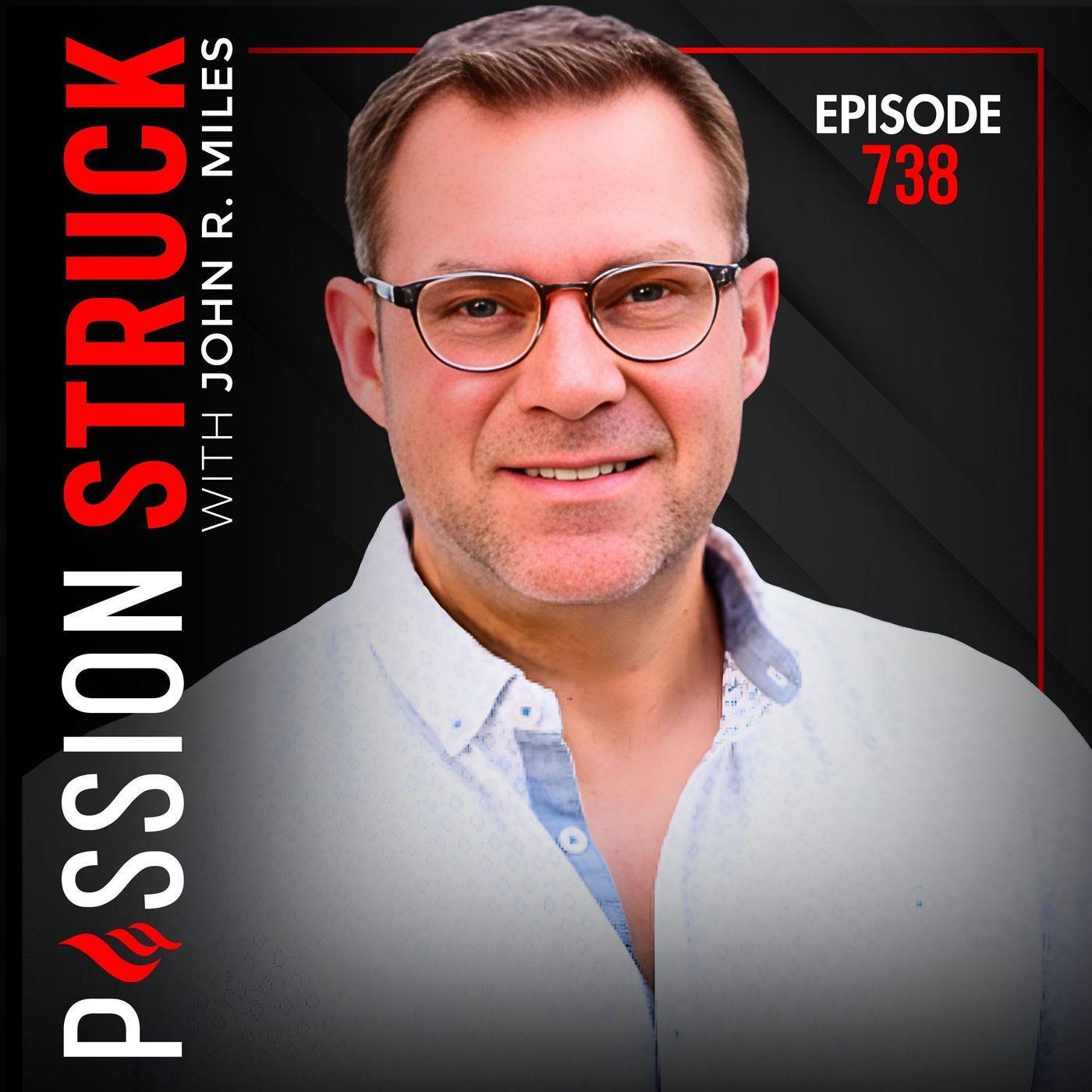
Is Your Success Hollow? When the Script Stops Making Sense | John R. Miles EP 738
About this episode
There is a moment most people never name. Nothing dramatic happens—no big collapse, no urgent crisis. From the outside, the routine looks fine, the success is visible, and the applause is steady. But inside, something shifts: the wins that used to light you up start to feel borrowed, and the applause begins to echo hollow.In this profound solo deep dive, John R. Miles kicks off the Life Beyond the Script series by naming the quiet "off" feeling that high achievers often ignore. Drawing on his own "defining win" in the boardroom at Dell, which left him feeling nothing, John explores why the script of our lives doesn't break; it simply finishes serving us. Building on recent insights from Joan Lunden on identity transitions and Leslie John on the cost of under-sharing, this episode provides a roadmap for those who feel they are managing their lives rather than truly living them.As we celebrate the launch of his new children’s book, You Matter, Luma, John reminds us that the truth of our intrinsic worth is the only thing that remains when the old script stops making sense.Passion Struck is the #1 alternative health and personal growth podcast dedicated to human flourishing and the science of mattering.Check the full show notes here: https://passionstruck.com/when-the-script-stops-making-sense/All links gathered here: https://linktr.ee/John_R_MilesCompanion Reflection & Integration Resources: Inside The Ignited Life, each episode in the Life Beyond the Script series is paired with companion articles and guided reflections designed to help you examine what chapter you are in and what is changing beneath the surface.Explore the community: https://TheIgnitedLife.netConnect with the Ecosystem
- Order You Matter, Luma: https://youmatterluma.com/
- Start your ripple journey: https://StartMattering.com
- Follow John on Social Media: @John_RMiles
- Watch on YouTube: Search for Passion Struck with John R. Miles
- The Anatomy of a Midlife Identity Shift: Why a transition point isn't a breakdown, but a sign of growth and movement.
- Signal 1: Hollow Achievements: How to recognize when your results are objectively real, but your internal "yes" has gone missing.
- Signal 2: Chronic Self-Editing: The hidden cost of "under-sharing" and choosing the safer, easier version of your truth in relationships.
- Signal 3: Life Management vs. Living: Why maintaining a "flawless" external image leads to isolation and exhaustion.
- The Power of Naming: Why the first step to motion isn't a dramatic decision, but simply saying "this no longer fits" out loud.
- The Three-Sentence Practice: A 15-minute grounding exercise to move misalignment from background noise to a foreground fact you can work with.
- Beyond the Script: Lessons from Joan Lunden’s career rewrite and Dave Asprey’s upcoming deep dive into biohacking and resilience.
- Caraway’s cookware set is a favorite for a reason—it can save you up to $190 versus buying items individually. Plus, if you visit Carawayhome.com/PASSIONSTRUCK, you can take an additional 10% off your next purchase.
Connect with John
- Pre-Order The Mattering Effect: https://matteringeffect.com/
- Book John to Speak: https://johnrmiles.com/speaking/
- Keynotes, books, podcast, and resources: https://linktr.ee/John_R_Miles
- Children’s Book — You Matter, Luma: https://youmatterluma.com/
- Substack: https://www.theignitedlife.net/
Support the Movement: https://startmattering.com/. Every human deserves to feel seen, valued, and like they matter. Wear it. Live it. Show it.
Disclaimer
The Passion Struck podcast is for educational and entertainment purposes only. The views and opinions expressed do not necessarily reflect those of Passion Struck or its affiliates. This podcast is not a substitute for professional medical or psychological advice.
Pre-Order The Mattering Effect: https://matteringeffect.com/. Take the 90-second diagnostic to see if you're disappearing.
Explore the Show: https://passionstruck.com/starter-packs/. New to Passion Struck? Start with the best episodes curated for you.
Connect with John
- Website: https://johnrmiles.com
- Book John to Speak: https://johnrmiles.com/speaking/
- Substack: https://www.theignitedlife.net/
- Children’s Book — You Matter, Luma: https://youmatterluma.com/
Support the Movement: https://startmattering.com/. Every human deserves to feel seen, valued, and like they matter. Wear it. Live it. Show it.
Passion Struck — #1 Alternative Health Podcast. 85M+ downloads.
Disclaimer
The Passion Struck podcast is for educational and entertainment purposes only. The views and opinions expressed do not necessarily reflect those of Passion Struck or its affiliates. This podcast is not a substitute for professional medical or psychological advice.
Hosted by Simplecast, an AdsWizz company. See pcm.adswizz.com for information about our collection and use of personal data for advertising.
Get every episode summarized
Each time Passion Struck with John R. Miles publishes, we email you a written briefing from the transcript — the topics, who appeared, and any specific claims, with the ad reads skipped.
Email me new episodesFree for 3 shows. No card needed.
Transcript ready
196 searchable segments. Every word is indexed and playable.
Full transcript
Passion Struck with John R. Miles — Is Your Success Hollow? When the Script Stops Making Sense | John R. Miles EP 738. Machine-transcribed; use the interactive transcript above to jump the player to any line.
Coming up next on Passion Struck, there's a moment most people never name. Nothing dramatic happens. No big collapse. From the outside, everything still looks fine. Success, routine, the usual applause. But inside, something shifts. What used to let you up starts to feel borrowed. The winds land, but they echo hollow. You smile back at the room yet parts of you wonders if the applause is really for you anymore. That moment isn't failure. It's recognition because the script doesn't collapse. It stops making sense. If that quiet, off-feeling has been whispering to you, stay with me or about to name it clearly. Welcome to Passion Struck. I'm your host, John Miles. This is the show where we explore the art of human flourishing and what it truly means to live like it matters.
Each week, I sit down with change makers, creators, scientists, and everyday heroes to decode the human experience and uncover the tools that help us lead with meaning, heal what hurts and pursue the fullest expression of who we're capable of becoming. Whether you're designing your future, developing as a leader or seeking deeper alignment in your life, this show is your invitation to grow with purpose and act with intention. Because the secret to a life of deep purpose, connection, and impact is choosing to live like you matter. Hey friends, and welcome back to episode 738 of Passion Struck. First, a huge thank you. This past week, we launched my new children's book, You Matter Luma, and the messages, the shares, the way you've helped carry its simple message into the world has been overwhelming in the best possible way. At its heart, that book is about planting the truth early. You matter just as you are
no proof required, and that same truth echoes into what we're exploring right now. We kicked off a new series this week called Life Beyond the Script. On Tuesday, Joan London took us there in her new memoir, where we discussed decades as the voice of Good Morning America. Mornings welcomed into millions of homes, until the role no longer fit, and she had to rewrite who she was beyond it. Then, Harvard behavior scientist Leslie John, with her book Revealing, showed us the hidden cost of holding back, how undersharing whitely shapes regrets, distance and misconnection. Together, Joan and Leslie created the awareness. Change your eyes. Vulnerability matters, and the old script eventually stops aligning. But before the rewrite, before the bold step, before any of it, there is a moment. I remember it vividly, bored room at Dell, high stakes crisis. Team executing perfectly, numbers turning around. Everyone
clapping. Me nodding. Smiling back. On paper, it was defining win. But inside, I felt nothing. The applause felt like it was for someone else. The path I'd been on, the one that once energized me, suddenly felt off. Not urgent. Not what I would describe as a breakdown. Just no longer mine. That's when it clicked. Something I hadn't heard named clearly before. The script doesn't collapse. It stops making sense. And once you feel it, you can't unfeel it. Today, in the solo reflection, the first deep dive in our Life Beyond the Script series, we name that moment explicitly. We explore the subtle signals most people ignore or dismiss. Why we stay in the misalignment longer than we should. And why this isn't a crisis. It's the beginning of something truer. More aligned. More you. If any of this is landing, if that quiet shift has been whispering,
grab a notebook if you can. Pause if you need to. Because today isn't about quick fixes. It's about seeing clearly what's already true for you. Let's begin. Thank you for choosing PassionStruck and choosing me to be your host and guide on your journey to creating a life that matters. Now, let that journey begin. To start off today, let's name what's really happening. The moment the script stops making sense is an abstract. It shows up in patterns. And there are three I see consistently in my own life in my conversations with guests and in what listeners share with me. The first is this. Achievements that start to feel like they belong to someone else. You keep delivering. The results are there. People notice promotions land. Projects close successfully. Numbers move in the right direction. But instead of energy, there's a kind of neutrality.
Okay, that's done. The external story says you're winning. But internally, you're thinking, is this even my win anymore? Picture a mid-40s professional who just landed a major promotion. The team throws small celebration. Emails flood in with congratulations. The new title looks good on the signature line. But on the drive home that night, the high lasts maybe 15 minutes. Then silence. No real pride. No lingering. I did this. Just a quiet flatness and a nagging question. This is what I've been working toward, right? The achievement is objectively real. The recognition is real. But the internal, yes, the one that used to light up the whole body is missing. It's replaced by relief that it's over. And a subtle sense that the victory belongs to a version of you that isn't fully present anymore. Joan London described exactly this
after Good Morning America. She had the pinnacle career. Millions turning in every morning. Yet when the role ended, the success no longer felt like it belonged to the person she had become. The scoreboard was full. However, the meaning was empty. If your recent accomplishments leave you more relieved than energized, that's not in gratitude. That's signal one. Pause for a moment. Think of your most recent win. Did it energize you for days or did the glow fade quickly into what's next? The second pattern shows up in how you relate to other people. You start editing yourself. The real thought comes up. The honest reaction is there. And then you adjust it. You choose the version that fits. You leave the conversation thinking, I was there, but I wasn't fully there. Imagine a long-term friendship or partnership. Something real is stirring. Maybe hurt
over a comment. Excitement about a personal change. Doubt about a shared direction. But instead of saying it plainly, you soften it. It's fine, comes out. Instead of, that actually stung me. I'm good with it. Replaces. I'm scared. I'm losing something important here. The exchange stays pleasant. No conflict. No awkwardness. But over weeks and months, the relationship stops deepening. It stays comfortable. But it also stays surface level. The distance grows quietly. Like a crack and a foundation, no one wants to acknowledge. Leslie John calls this undersharing, giving too little of our inner world. Her research shows we do it constantly, especially when stakes feel high. The cost builds slowly. Conversation stays surface level. Connections don't deepen. And over time, you start to feel less known. If you've walked away from important talks lately,
feeling like you left the most essential part of yourself in the room, that's signal too. So ask yourself. In the last month, how many times did you feel a truth rise and choose the easier, safer version instead? The third signal is more subtle. But once you see it, it's hard to unsee. Your days start to feel like something you're managing rather than living. You show up prepared. You say what needs to be said. You handle things well. But it takes effort to maintain the version everyone expects. The energy goes into managing the image rather than into the work. The people or the moment itself think of a typical high stakes work day. You walk into meetings with the right tone. The prepared answers. The steady demeanor. You navigate pushback. Deliver updates. End on a positive note. Everyone leaves thinking they've got it together.
But when the call ends, you're trained. And it's not from the content, but from the constant background effort of holding that version in place. The real you, the one with doubts, humor, fatigue, curiosity stays offline most of the day. It's efficient. It's safe. It gets results. But it's also exhausting. The mask doesn't protect. It isolates. I felt this most clearly in my corporate ears. During crises that lose, I could execute flawlessly on the outside, calm, decisive, unflappable. Inside, I was running a constant background program. John, don't let them see the doubt. Keep the mask on. And that mask worked until it started costing more than what it protected. So if your default mode in key areas of life is performing adequately instead of being fully present, if you end most days feeling like you managed well,
but didn't really live them, that's signal three. Before we continue, I want to pause for a moment. One of the ideas at the center of the series is this. You don't move through life once. You move through it in chapters. And most people rarely take the time to reflect on where they are or who they're becoming next. That's why alongside the series, I'm building something deeper. On my substack, the IgnitedLife.net, I'm publishing companion reflections and articles for each episode designed to help you examine your own life. What chapter you're in? What's changing beneath the surface? And what it might mean to move forward with intention? If you want to go deeper into this work, visit theignitedlife.net. And I also want to thank our sponsors. Their support makes this show possible. And if you've been getting value from PassionStruct, supporting the brands that support us helps keep these conversations going. You're listening to PassionStruct on the PassionStruct
network. Thanks for sticking with me through that. These aren't random feelings that I've been discussing. They are coherent evidence that the identity, the role where the path you've been living has run its course. The script isn't broken, but it's finished serving you. And here's why most people miss this. Because it doesn't announce itself. It shows up quietly and it's easy to override because it sounds like this. Everyone feels this sometimes. I can't afford to question it right now. If I admit this, everything unravels. There's also momentum. You've built something. Other people see it. There are expectations attached to it. Questioning it feels disruptive. Sometimes even irresponsible, but staying has a cost, a gradual loss of energy, a winding gap between how you're living and how you actually feel. Time spent in something that no longer fits.
What you're experiencing isn't a breakdown. It's a transition point. It means you've grown. It means something that once fit you doesn't anymore. And that's not failure. That's movement. You can see it clearly in Joan's story. She didn't fall apart when Good Morning America ended. She stepped into caregiving, advocacy, writing, and a fuller expression of purpose. Leslie's work shows that the moment we start revealing what's really inside, even in small ways, the isolation begins to lift and real connection becomes possible. You're in that same space. The script has stopped making sense because you've changed. Not all at once, but enough that the old version no longer holds. And the next step isn't a dramatic decision. It starts with something much simpler, recognizing it, saying it clearly. This no longer fits. And once you do that,
you're no longer stuck. You're in motion. The next step isn't a dramatic decision. It isn't quitting your job tomorrow, leaving a relationship or reinventing your entire identity in one bold stroke. Those things may come later, or they may never come. The first step is quieter, more internal and surprisingly powerful. It is simply to name what you've already seen. Say it to yourself first in plain language. This no longer fits my life. Or this role, this path, this chapter once served me. It doesn't anymore. Or even just, I've outgrown this version of the story. You don't have to explain it to anyone yet. You don't have to have the replacement ready. You just have to let the acknowledgement exist out of your head and into words. Why does this matter so much? Because naming it changes
everything. As long as the misalignment lives only as a vague feeling, a quiet unease you push aside, it can be ignored indefinitely. However, the moment you give it language, it becomes real. It moves from a background noise to foreground fact. And once it's a fact, you can no longer pretend it isn't there. That shift alone changes your relationship to the situation. You go from being carried by the old script to standing slightly outside it, looking at it with clearer eyes. I have seen this happen again and again in my own life. And in the stories people share with me, when I finally set it out loud to myself in a quiet car ride home, this corporate rhythm no longer fits who I'm becoming. The internal pressure didn't vanish, but it lost its grip. The doubt stopped being a secret shame and became a named truth. That naming created space,
space to breathe, to question, to listen for what might come next. The same thing happens when people finally say, I've been performing this version of myself for so long I forgot what the real one feels like. Or these achievements look so good on paper that they don't reach me anymore. Or I keep editing myself in conversations because I'm afraid the real me won't be welcome. Each time someone names it, even privately, something unlocks. The energy that was spent suppressing or rationalizing becomes available for something else. Here's a simple way to take that first step this week. Nothing fancy, no big commitment, find just 10 to 15 minutes when you won't be interrupted. Sit somewhere quiet, perhaps your car, a park bench, your kitchen table at night, then take three slow breaths.
Then write or speak out loud if possible because hearing your own voice adds weight. These three sentences. Don't ever think them. Let them be messy and honest. First, the part of my life that once felt right now feels off. Heavy, distant, borrowed, flat. For me lately, it's felt flat. Like the colors drained out, even when things look fine from the outside. What word comes out for you right now? Take a second, no rush. All right, here's the second sentence. The signal that's been showing up most clearly for me is this quiet numbness. Not traumatic sadness, just absence. Like I'm going through motions, but the spark that used to drive me, connection, curiosity, showing up fully, is dialed way down. What's the clearest signal whispering
or shouting at you these days? Maybe it's exhaustion that won't lift, or restlessness, or that sense of invisibility we've talked about so much on the show. Name it for yourself. And here's the third sentence. If I let that signal be true, one small thing that might feel more like the real me right now is putting the phone down earlier in the evening, sitting with my wife without screens. We're just writing one on a sentence in my journal instead of scrolling for validation. What's one tiny brave move that could bring back a flicker of the real you? No pressure to act today. Just let the question sit with you. If any of that resonates, jot it down, speak it out loud to someone you trust. We'll drop it in the comments or DMs. These little signals, their invitations back to matter. We'll keep exploring them together.
Now, I want you to notice what happens inside when you look back at those three sentences and you read them back. Is it resistance, relief, curiosity, perhaps grief, clarity, whatever it is, shows up as information. Many people who do this exercise tell me the same thing afterward. The simple act of putting it into words makes the misalignment feel less overwhelming. It stops being a secret burden you carry alone and becomes a named reality you can work with. Sometimes the next insight arrives within hours or days. Sometimes it takes longer. Either way, the motion has started. You don't need permission. You don't need a perfect plan. You just need to stop pretending the old script still fits. That's the first step after recognition. Not leaping, naming, not fixing, seeing clearly, not rewriting the whole story, admitting the current
chapter is complete. Because once you do that, you're no longer stuck in the old narrative. You're standing at the edge of a new one. And that's where we'll leave this reflection today. Before we go, a quick look ahead at what's coming next week on PassionStruck. Join me on Tuesday for a powerful conversation with Dave Asprey, the father of biohacking. From battling 300 pounds chronic fatigue and brain fog in his 20s, the pioneering a movement that's transformed millions of lives. Dave opens up about the research that shaped him, toxic mold poisoning, public smear campaigns, and how he rebuilt emotional resilience and inner peace. We dive into the inner outer biology of mattering, dissolving triggers instead of fighting them in his boldest idea that could go mainstream in 20 years. Consciousness, grading, reality. If you're ready to upgrade your body, brain, and interstate, this is the episode for you. Subscribe now so you don't miss it. If this reflection I shared today stirred something
for you, try the three sentence practice this week. Share what came up anonymously if you like. On X, at John R. Miles, on Instagram, at John R. Miles, or in the comments. Your experience might be exactly what helps someone else name their own moment. And if you want to help spread this message that you matter, especially to the next generation, grab a copy of my new children's book, U-Matter Luma. It's a general reminder for kids and the adults reading to them that they matter just as they are. You can order it now at U-MatterLuma.com or wherever books are sold. Share it with a friend, a teacher, a parent, it makes a difference. Finally, if this episode landed with you, please take 30 seconds to leave a quick rating or review on Apple Podcasts or Spotify. It helps more people discover these conversations exactly when they need them. Thank you truly for being here, for listening, for reflecting, for caring enough to show up for yourself. Until next time, live like you matter because you do. I'm John Miles, you've been Passion
Struck.
More episodes
More from Passion Struck with John R. Miles

How to Believe in Yourself When Everyone Tells You “You Can’t” | Cole Brauer - E...
Passion Struck with John R. Miles

The Agency Paradox: Why Real Adaptability Starts Inside the Box | John R. Miles...
Passion Struck with John R. Miles

You Don't Need More Freedom. You Need Better Constraints | David Epstein - EP 81...
Passion Struck with John R. Miles

World’s Most Influential Psychologist: The Hidden Force That Drives Human Progre...
Passion Struck with John R. Miles