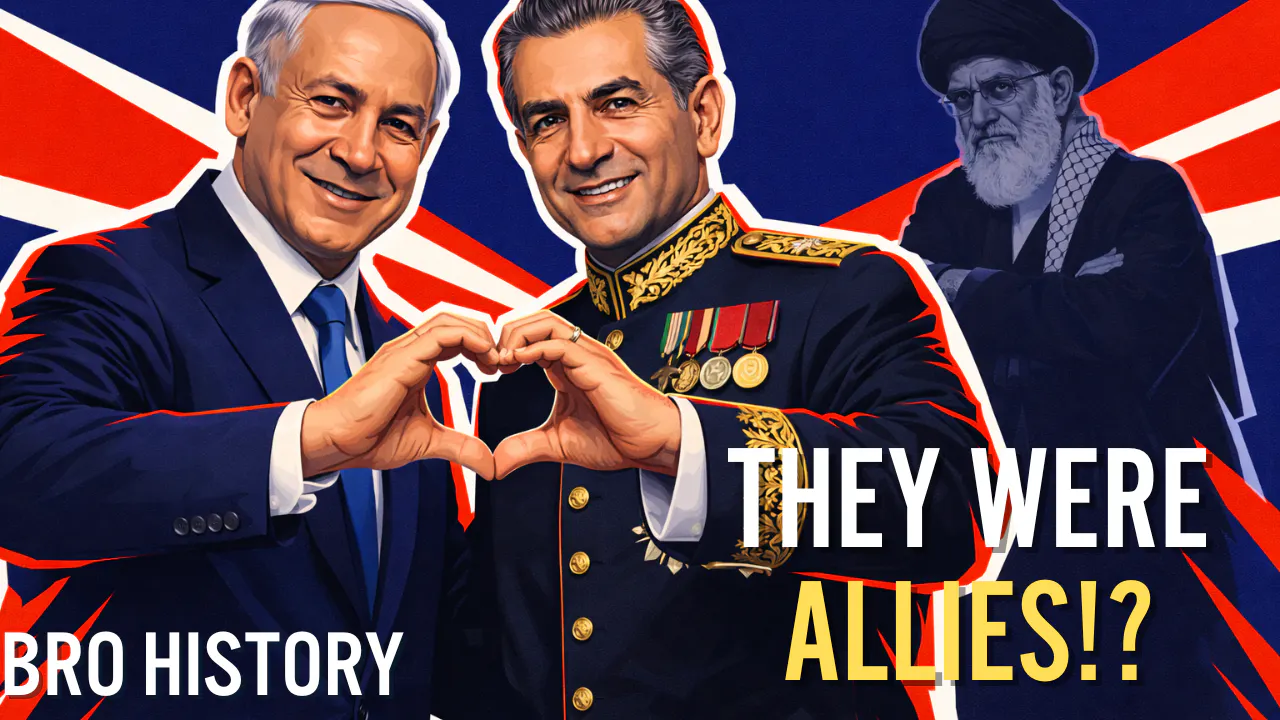
About this episode
Get every episode summarized
Each time Bro History publishes, we email you a written briefing from the transcript — the topics, who appeared, and any specific claims, with the ad reads skipped.
Email me new episodesFree for 3 shows. No card needed.
Hosts & guests
Transcript ready
996 searchable segments. Every word is indexed and playable.
Full transcript
Bro History — Israel & Iran Were Secret Allies… What Changed?. Machine-transcribed; use the interactive transcript above to jump the player to any line.
Grown-ups, if there's a child in your life who is interested in curious about or fascinated by people in places from history, then my podcast, The Past and the Curious, might just be a hit in your home. From the invention of microscopes to world-traveling dogs, to fashions of the 1890s, gold rush ghost towns, and audiences going wild for walking competitions, we've got a little bit of it all. Hosted by children's author and museum educator, Mick Sullivan, that's me. The show is fun, funny, engaging, honest, and beloved by kids and parents alike. Find The Past and the Curious at all the usual podcast places. Does my voice sound raspy? A bit. Why, you could come down with a cold or something. You sound like R. K. Jr. Wow, that's Fouchy with allergies or something, or I just lost my voice, but I am going to sound like R. K. Jr.
Let me see. We have our, hopefully clears up. All right. What's up guys? Welcome to another episode of Bro History, it is Henry's Emota and Danny of Delgebar. What's up my friend? How are you? I'm doing pretty, pretty good. We were just talking about an interesting topic off the record, and it's interesting, so we figured we'd just hit record. It's an interesting story, but Danny and I were just talking about how, or times when the CIA or intelligence agencies have infiltrated organized religion for some type of political aim. And Danny was like, well, I was reading, well, why don't you just say what the example you just said. Yeah, and I was doing a little reading, I came across an article that pretty convincingly laid out the case that in South America, and the CIA basically propped up evangelical Christianity to combat communism and socialism. It's pretty interesting, and apparently it worked so well that it got re-imported into
the United States, which is kind of fascinating to read about. And I asked Henry, he had a interest in that, and we just kind of went on a little side tangent and I was like, hey, this is not the only time that the CIA is potentially co-opted a religion for some geopolitical aim. I have a funny story. So I mean, intelligence agencies co-opt religions all the time. They've co-opted every single religion at one point or another, including Islam, Judaism, Christianity. But I have a very specific example. So Catholicism was used as a bulwark against the Soviet Union. And I've actually learned about this from my pre-Kena teacher. So pre-Kena is like a corset you take before you're about to get married in the Catholic Church. So my pre-Kena teacher was a, he worked for the State Department, and he got a job in
Eastern Europe in Hungary working with the Pope. Okay. That's cool. So he's lived in Budapest while it was still part of the Soviet Union. And he organized protests and the types of protests that he would organize that weren't violent. We're flash mob protests that were flash mob protests. So this is what he did. He would start get a group of people and they would start dancing in a middle of the street. And he, he organized when he was introducing himself, he's like, so some things about me. The Guinness, Guinness World Record holder of the largest Macarena. Well, the one of the protests that he did was that he organized a giant Macarena dance in Hungary. And it was a way to show like, hey, you can't stop the wet western culture from seeping into the Soviet Union. Everyone join in.
Look how far to this to be part of the West. So he worked directly with John Paul, Pope John Paul II and he was like kind of an intermediary between the State Department and the Vatican and he would go and he would, he would organize process in the Soviet Union. So until the state disease do it with every religion, there's not one, if it's possible, they'll do it. I mean, it's clear that that's, you know, something that they do, but I don't know, I just found it interesting. Just chatting with you about it, like there are so many examples of that. I think you called out like the Dalai Lama potentially being like a CIA asset or CIA adjacent in some way. I was like, I hadn't thought about that. There's plenty of other ways, you know, that they've done it to find the topic super interesting. Might have to dig into it a bit more. Yeah. I mean, it's something that we can put into it, but I mean, religion is something that's important to people. So it's something that you can rally people behind. That's why they do it.
It's also, you know, religion kind of fits in the same field of nationalism as well. So there's, there's, there's reasons why they do it. But I want to talk about the CIA infiltrated sports teams in the same way. Yeah, it's possible, but we're not, we're not talking about that today. Today we're actually doing an episode that is long overdue. So it is April 2nd at 1006 PM as of right now. So who knows what's going to happen tomorrow? If you're listening to this a year from now, and you discovered this podcast and kind of the wreckage of New York or Puerto Rico after the war comes here, then this is the circumstances that we were in. But we are in week four of the Iran US war, right, week four or above that were almost that 30 days, I believe, and doesn't look good, doesn't look good.
So the straight of our moose is still closed. And now there's seems to be a more than likely chance that there's going to be a ground invasion, hopefully not, yeah, hopefully not, but I think it's so crazy that it's hard for me to believe it. So maybe it's like a fainter or negotiating, no negotiation tactic, but certainly like all the signals are there that this is, this is going to happen and the people I've talked to in the military are telling saying, hey, this is, this is going to happen. It's hard for me to believe it, honestly. Like I can't actually see it happening, but we've been talking about a potential conflict with Iran for the literal years. And it always seemed like this kind of like hypothetical, what if blah, blah, blah. Now that it's actually unfolding, it's actually like way more ridiculous than I thought it would ever be. But in every sense of the word, you know, the only way that it's better than what I anticipated
is that the death toll isn't super high, which is. Yeah. That's the only way that I'm pleased about it. It's, I mean, it's a miracle that we've only had 15 casualties, which are horrible at the same time. The casualties. KIAs, which, which is absolutely terrible, but you would think that there would have been more by now and I, I'm not one of the people who believe that believes the US is covering up KIAs. That would be very hard to do in this country. I think there may, I think a lot of the wounded are getting just lost in the news cycle rather than it being lied about or they're paying some type of deception. I definitely think they're downplaying the severity of some of the wounded for sure. I definitely know you're going to have a lot of people that are coming home with, you know, life changing injuries, yeah, 100% and that's a tragedy in and of itself. I mean, every, every model, every scenario, every, like, you know, expert that we've covered
or, you know, studied on the particular topic is always like, you know, made it seem like this is going to be the bloodiest conflict ever and in many ways, you know, this, this war is a little bit different in the way that it's being played out than, than what a lot of the experts were, you know, originally thinking, you know, there's, this is much more of a standoff war than then, obviously, it's not put on a ground yet, but, you know, if we start putting human beings on the ground in Iran, even on Carg Island, I think that changes the calculus quite a bit. And we've got opinions, but I don't know if I'm ready to express them, I don't know, because you never know. But dude, it's, it's wild. It's hard to believe that this administration exists in our reality. It's like something out of, of a parody, it's like a film parody, like doing a satire
on this administration. It's kind of a Simpsons episode, you know, like, it's like an episode of The Simpsons. Yeah. It feels like it's, it's crazy just between the characters that they have, Trump looks like he's actually melting, you know, if you see him talking, it looks like he's melting. It really does. Yeah. It's, it's, it's weird, but we're not going to get too, we're not going to get too much into the weeds of the current situation, just because there's so much going on. And I'm kind of sick and tired of going on, like logging in the Twitter and seeing everyone's takes like, oh, well, I rents, missile production rate has gone down by 10%, but could it actually been saving their sighting missiles for, you know, just type of, like, I just, you know, kind of over that right now. Yeah. It's like, you know, the interceptor rate is, you know, the interceptor rate has been degraded by 20%. So now we're 90% of missiles are getting from television, and the fact that they're going
to, okay, I don't, I just, just, just tell me, be concise, just what's happening? Good or bad? Good. Is it, are we good? Or is it? It's not, it's not great. It's giving you scale from one, on a one to five scale, like do it by smiley face to like very sad face and say wherever it is. It's kind of like, you know, well, the interceptor rate, it's one wrong under the neutral face, I feel like. Yeah. That's my take. It's, yeah, it's like the, the one exactly, but it could turn into the very sad face. It could. Yeah. Very quickly. Very quickly. But we want to talk about the, the history gets obviously like, there's a lot of debate. Well, there's not that much debate. I think it's pretty clear that the US and Israel are, this is a joint operation. And by many accounts, the Israel was the reason why we got it in the first place. So yeah. So I wanted to talk about really the history of relations between Israel and, and Persia,
because I think if we just talk about it, and this is not going to be the entire history of every single thing that happened between the two states, yeah, because that would be impossible to do. I mean, you forgot about the 1300s. Yeah. We're not going to, we're not going to talk about 1300s. I want to talk about it at a high level, just, just to provide some, some context of what Iranian policy and what Israeli policy, how it evolved over the years and, and why it evolved, how it changed, just due to different circumstances and maybe it will give them context into why these two countries are so hostile to each other now, because you would think the way that like Benjamin that talks about the Iranians, does he call them alamak? Or is that just a, is that something that is only referred for Palestinians? No. I think you might have at some point. It's hard to keep track of all the Persian, the Persians aren't, I'm like, no, they're
not, okay, they're not declared at all. That's just the Arabs, I think so, yeah, I can be right about that, but I'm pretty sure it's, it's just the Arabs. Well, Jews and Persians have co-existed for thousands of years. Persians have lived in Persia since ancient times, and when the Jews lived in Persia, they lived under comparatively intolerant conditions. So the Babylonian Empire, they destroyed Jerusalem in the 6th century BCE, and they deported a large segment of the Jewish population, mainly the elites and the skilled workers to settlements across Mesopotamia, particularly around, along the Euphrates, and they did this mainly to separate Judah with a Thai human capital, and also the gain ductive workers. They were not slaves, but they lived in this, they lived in designated communities, and they performed, you know, important services in these settlements. And over time, these exiles became rooted.
Now when the Persians conquered Babylon, Cyrus, he entered a, he issued a general decree allowing the Jews to return back to their ancestral lands and restore their temples. Many of the Jews did return, which, you know, would form the second temple community, but many others did not. So after decades in Mesopotamia, you know, they had their families and their commercial ties, you know, Persian rule was tolerant, so many actually voluntarily settled across different provinces in the Persian Empire. It's then for most of history, Iranian Jews experienced a considerable amount of, you know, civic inclusion and also prosperity, and at its peak, Iran had one of the largest Jewish populations in all of the Middle East. So Persians and Jews historically had good relationships. They coexisted, and even the Jewish population in Iran now is, they're not persecuted,
or anything like that. It's not huge, but, you know, they have 30,000 left or something like that. It's very minor, yeah, considering that they have like 90 million people, I'm sure there's more Persian Jews in the United States than there is in Iran. Yeah, very likely far. There's probably more Persian Jews in great neck, New York, very likely, yeah. So what changed? Yeah, I mean, that's the question, really, and, you know, and the short version is that because international power struggles, you know, and the one in particular, you know, centered around Palestine in the 20th century and, you know, Jewish identity changed from a religious communal category into more of a geopolitical one, and that I think that that shift had forced to run a separate from, you know, its longstanding internal relationships with the Jewish populations that lived among them, and it shifted away from them to, you know, their external position
on Palestine, and later, you know, the question of Israel, and, you know, after the first World War, obviously, ruled Palestine under the League of Nations mandate and Jewish immigration accelerated under that mandate, under the British protection, and obviously that was driven by, you know, the Zionist project, but, you know, while the Arab majority was, you know, rejecting a Jewish state, it was still under the control of the British, so that's the scenario that we see ourselves in after the first World War, and that obviously created a lot of violence between both parties, but also interestingly against the British themselves, right? There was a lot of violence from Palestinians against British and even Jewish people against the British, and, and after the Second World War, you know, London had this, you know, basically they handed the problem over to the United Nations after that was created, and in 1947 Iran joined the UN Special Committee on Palestine, and they, they officially opposed the partition,
you know, they warned that it would produce like a lasting violence, and, you know, Tehran advocated for basically just a single state, a federal state, basically. Do you want to, did the partition plan anyway, and we all know what happens next, but fighting immediately started, Israel cleared its independence, Iran voted against the partition, and, you know, they refused to formally recognize Israel at the time, and this is a position that the Shah maintained throughout his reign, but, you know, early on in the, in, in the creation of Israel, when that was first spun up, there was some advantages for Iran, you know, Israel that is, was an advantage to Iran, but it was kind of a double-edged sort, and on one hand it's, it's this non-Arab pro-Western that could absorb a lot of the Arab hostilities, you know, might have been directed towards Iran, thus would benefit Iran's security apparatus,
but at the same time, if they supported Israel, then open support for Israel would also make the Arab anger redirect towards Iran, so it was kind of a damage if you do damage if you don't kind of situation about, you know, Iran and, excuse me, Israel and Iran supporting Israel. And so, as a direct result of that, I think that the Shah chose to be ambiguous about whether or not they directly supported Israel, so there's a little bit of a back and forth, some gray area around, and certainly some stuff over at the happening in the background that just existed. Well, just to provide some background, because they get to confusing regarding who was actually in power in Iran. So when Israel declared independence in 1948, Iran was formally ruled by the, by the Shah, who had been on the throne since 1941, but his authority was not absolute yet. The monarchy existed, but, you know, it wasn't, you know, an authoritarian government yet.
Mohammed Mosadak, he entered office in 1951, and he was elected Prime Minister. The Shah took power after the 1953 coup, and then from that point forward, foreign policy became, was set by him, yet on Israel, there was a lot of consistency between the previous governments, because they didn't want to create an alliance with Israel, or they didn't want to become in enemies with them either, because I ran viewed the Soviet Union as a primary threat, because there was a long history of Russia, basically using Persia, Persia as their playground. Also, Moscow would back Iranian left this movement during the Cold War. Now Israel initially appeared unreliable due to its socialist sympathies, when the state was, was first created, but as Israel aligned more clearly with the rest, with the rest, with the West, Iran shifted to, you know, de facto acceptance, but without granting
then for, like, you know, formal diplomatic recognition. Yeah, meanwhile, Israel adopted a strategy of aligning with non-Arab powers. This is, this was called a periphery doctrine. So Israel would create these working relationships with countries like Turkey and Ethiopia, and Iran was included in that. Right. And at the same time, Iran's like relationship with the Arab regimes was like super bad as well. Like, in the 1950s, there was this idea of pan-Arabism under Egypt's national, you know, for which regions were not included, right? And that threatened Iranian interests, so, you know, especially the territorial claims around Iran's like oil, rich, southwestern region, and that was a real concern, because, you know, this is what the Iran and Iraq war was fought over in the 80s. So in the 50s, Iran and Israel, they started sharing intelligence, and this is what, you know, basically what followed was the economic and military cooperation, for example, after
the Suez crisis, Iran financed a pipeline, and that allowed Iranian oil to bypass the Suez Canal. And that was called, if I remember correctly, it wrote this down, the Elliott to Ash-Kalon pipeline. And this is actually super interesting. I was reading about this recently, Netanyahu came out on, you know, on one of these press conferences, and the reporter asked him like, what do we, like, what's the exit strategy? So how do we make this safer? How do we make the scenario safer? And his response was, and I'll try and put the video. I think that what has to be done is to have alternative routes, instead of going through the choke points of the, of the Hormuz straits and the Babel Mandib straits, in order to have the flow of oil, just have oil pipelines, pipelines going west through the Arabian peninsula,
right up to Israel, right up to our Mediterranean ports, and you've just done away with the choke points forever. But response was something to the tune of, you know, we want to make sure that the, we don't have over reliance on the strait of Hormuz, you know, for shipping oil. So what we should do is we should build a pipeline straight from, you know, Saudi Arabia through the Arabian peninsula through Jordan, or right up to, you know, IFA, and, you know, export the oil directly from there. So there's like this precedent, actually, for Israel to like be partnered with regional people when it suits them, specifically around the flow of oil, because it suits them, naturally. So if you, you know what, I'm going to pull up this map because I think this is worth, this worth looking at, a little scribbly guy there, all right, can you see this map, Henry? Nothing like a good map.
I love maps. Okay. So obviously this is Iran, you know, this, this big old chunk right here, and this is Iran right here. This, I'm going to, I'm going to talk this country, people. This country is Iran, though, this is Iran. This is Iran. It doesn't know. Let me look on it, look, this is, this is where it is in the world, right? So, um, shit, what did I do that? So wait, wait, wait, wait, wait, wait, I have an important observation about Iran. We need to make those like, uh, kind of swiggly lines right there, uh, those are really big hills. Yeah. Giant mountains. There's, there's ski resorts there somewhere, um, up near Tehran, there's a ski resort. I can show it to you. It's a nice ski resort somewhere, but somewhere over there somewhere in this general area. There's a lot of mountains, uh-huh, and then there's deserts, and then there's forest
as well. Yeah. A couple of green spots. Yeah. So it's neighbor, though, Iraq. Right. Here's the difference between Iraq and Iran. Iraq does not have mountains, and they don't have forests. Most of it is kind of like Arizona, yep, or something like that. Mm-hmm. Whatever the plan is, because the mountains, they actually steal the precipitation that's supposed to go into Iraq. Yep. They block it. Yep. They block it. So it becomes a desert. That is true. We need to- we need to- that wasn't the important part, though. But so most of the oil, right? The oil is- and I'm going to make a different color because I feel like it. The oil is in this section right here. Most of it, in least, oil is right here. Most of it is centered in this area right here, because where your oil goes. Now if you want to get the oil out and go to like Europe, which is like a huge buyer,
right? You could sail it all the way the hell around, you know? We can go around Africa and then go this way. But that's crazy, right? Because that takes a hell a long time, and that's very expensive. And so what they did was eventually they created the Suez Canal. So now you can go up this way and you can go through this little Egypt, basically Egypt unilaterally decided to cut Africa off from the rest of this other, you know, the Asian continent. So you can go this way. But, you know, in the 50s, when we're talking about Brown and Israel cooperating on this pipeline, they're like, well, we don't want everything to go through the Suez Canal, partly because of the geopolitical issue, right? Cairo, you know, they are all about this pan-Arabism thing. And that threatens both these railings and the Persians because they're not included in that in group, right? And so at any point, if there's like an issue geopolitically, they could just shut down
the straight right here. They can shut down this, you know, canal and, well, there you go. That's it. No more oil goes through. That's heavily important for the, you know, specifically for the Iranians, but, you know, also geopolitically for the Israelis. So what Israel said, they go and say, hey, Iran, how about instead of going through the Gulf of Suez, you come up here through the Gulf of Ask Pa, or whatever the hell that's called. And you come up right to the little tippy tip of Israel right here in this, in this point of water called Ellie. And then we build a pipeline through all of Israel and we ended at Ash Galan and I'll draw that for you. We go from here all the way up to here and then from there we can go on to the sea and go on to Europe. And that was a profitable idea because now we have an alternative. We can avoid our geopolitical partner or a frenemy in Egypt.
And we can make this thing, we can make this a thing. Iran, you get a new shipping pipeline and Israel, they make a hell of a lot of money because they get to control the oil flow and they levy taxes for, you know, transit of oil. It's win-win situation, right? But this is something that happens in the background, they actually set up like a company that's like a, it's like a shadowy company, but it's obviously out in the open because they have to create it. And like neither party is admitting to the fact that like, yeah, we're doing this in partnership, like Iran and Israel. So they make this like shell company to spin up this idea, you know? But really, it's been for, it's being supported by both the governments of Israel and the governments of Iran, though, is a different issue, right? So we'll go to a new color. Now, as I said before, here's your oil rich area. And a lot of this is like Saudi Arabia, Qatar, Bahrain, all those UAE, now the straight of four mooses closed off, right? Iran effectively put minds in there and they're, you know, holding that ransom. So it's kind of like the thing that they were afraid of Egypt doing back in the fifties.
So now Israel is saying, well, how about you just make a pipeline all through this chunk of land straight into Israel. And then we can send it out through that way. I mean, it makes sense, like from, from a logical perspective, this makes sense, like just put a pipeline right here and now you don't have to use the waterway, but it's not sufficient. It's not as efficient as oil tankers for a couple of reasons, right? You have to have miles and miles and miles of pipeline and that has to be maintained all the time. Every couple hundred miles, if you want to pump oil that far, you need a pumping station. Those pumping stations are vulnerable to attack, you know, we've already seen Iran attack pumping stations, you know, in the, and same thing with the, the, the hoothies in Yemen, they've, they've attacked Saudi Arabian east, west pipeline pumping stations and turn those offline during their, during their conflict. And, you know, just generally speaking, you know, I've learned is static, whereas a ship is moving. So you can move it around a lot easier.
Tanker can carry a whole lot of oil. So economically speaking, this isn't necessarily the cheapest way to do it. So it is a way to avoid, you know, this straight of Hormuz problem, which is just go ahead and don't go through this waterway, you know what I mean? It's an interesting idea, but I think I'll let you guys infer what you want to infer about, you know, Israel's, you know, their end of this bargain, they stand only to benefit. I mean, a lot of the poll, the geopolitics in the Middle East has to do is pipeline politics. It's like, where is this pipeline starting from and what countries do, does it transit because, right? For every single country, the pipeline trans is through, that's revenue for the country, you know, they collect the tanks. So Middle Eastern politics is obviously completely shaped by oil, you know, it's like, yeah, it's 100% oil basically, everything, all the issues throughout the oil.
You know, the current conflict right now, you're looking at the, if you bring the map up right now, not to the type urge to, too, too much, bring the map, you bring the reason why the straight of Hormuz closing is such a big deal, because you could be like, because the Saudi has another pipeline that goes to the Red Sea, however, the East West, the problem is that the Red Sea is not as deep as the straight of Hormuz, so you can't get as big of tankers in there. That's right. That's right. So basically what they're doing is they have a go from over here to over here, right? And then get off in the Red Sea, but as you said, the Red Sea, this isn't deep enough for the largest of the tankers to go through. And then they still have to transit downwards this way, if they want to go out to like Asia, and then what's the big issue right here? Well, the proxy of Iran is the Houthis in Yemen right here. And so they've already shown the ability to, you know, harass shipping going through this
particular straight, the Bob Elman deep straight. So furthermore, it's in the world's interest for there not to be a war going on in the Gulf because of these two, these two straights. And right now there is. And we were not going to cover the current conflict, but it was relevant because like the context is necessary. Yeah, because we were talking about the past and we're talking about it in particular, the cooperation between Iran and Israel historically. And there was quite a bit of cooperation specifically around pipelines in the 1950s. And this was kind of covert. And it seems like the history doesn't rhyme, excuse me, it doesn't repeat itself, but it certainly does rhyme. Like this sounds a hell of a lot like the 1950s in that respect. And so in the 1950s, specifically, and I'll stop sharing here, in the 1950s, specifically, Israel needed to have a good relationship with Iran because Iran is on the outer edge
of the Arab world, right? And now Iran could not openly ally with Israel so they basically placed their official relationships under covert pretenses. So under Sabak, which is Iran's intelligence bureau and their secret police, rather than putting it through their foreign ministry. So instead of doing like State Department, they decided to put it under the CIA is the analog here, right? And Israel periodically was pressing for public recognition, but obviously hoping to normalize its place in the region. But the Shah, throughout basically refused that. Well, I mean, the Shah had to refuse because even though they were at odds with the Arab nations or the Arab nationalists, they were still trying to have good relations with the Gulf monarchies. Because remember the Gulf monarchies were enemies of the Arab nationalists. It was what Malcolm Kerr called the Arab Cold War. Because now when you say the Arab Cold War, in like today's context, you're talking about
the rift between Sunnis and Shias, right? The rift between Sunnis and Shias, like historically, there were times what obviously that they fought, but in the 20s, early 20th century, there wasn't that much hostility. Like, that was kind of the old world thing. When they talk about the Arab Cold War, they're talking about the Arab nationalists first of monarchists. That's right. Yeah. And in the 1960s, the Shah made a public remark that acknowledges Iran's official recognition of Israel. And this had like this huge ripple effect in the Arab world, and Nasser responded by basically severing diplomatic relationships with Iran in 1960. And then Egypt framed this like relationship with Iran with Iran and Israel as like basically proof that Iran was acting as like a Western or a Zionist proxy, which is just kind of funny, yeah, workly speaking, but it let Cairo justify more, you know, active Egyptian
role in Gulf affair, basically give them an end. Well, you have to remember, too, is that like Egypt was actually a powerful country back then super. I mean, I mean, it could be a powerful country now with the pop. I mean, that has a really big population. But back in the day, it had a very large military, you know, it had infrastructure that was built by the British. For example, like Egypt did, they were able to project power across the region. They were able to deploy forces in North Yemen during the Civil War, you know, at its peak, it had thousands of troops in Yemen supported by air power or naval assets that were operating out of the Red Sea, which again, that wasn't in Iran's interest, like they didn't want, you know, Egyptian naval assets in their waters, or, you know, in the Red Sea or anywhere near it. Yeah. Because it gave Egypt power over oil shipping routes in the Persian Gulf.
And to put this into perspective for Iran, the Arabs were in annoyance or competitors or whenever you want to call them. But they were people that they had to engage with if they wanted to expand their power. For Israel, the Arabs were existential threats. So there was a difference between like the threat level between the two. Like I ran the motivation deal with them, they're like, all right, like these are people we have to deal with. For Israel, that was like, okay, we're at war with these people. So in the 50s and 60s, there was much more parity between the Israelis and their enemies. So it wasn't like now where the Israelis are just where it's real, you know, frankly dominates all of its neighbors, they can attack with impunity. In the 50s and 60s and early 70s, it was a much more even playing field.
There was no guarantee that Israel was going to win those wars that they did. In fact, a lot of people thought they would lose them. But because of that, the Israelis felt like they needed Iran more than Iran needed Israel, which was probably true. That being said, after Israel defeats the Arab Nationalists in 1967, Israel is no longer a besieged state. You know, there are an emerging or even dominant or the dominant military power. At the same time, Iran is experiencing a lot of economic growth in rising regional influence. The British left their colonies, they had colonies in Bahrain and Qatar when they left that created a really big opening for the Iranians. So the thinking now from Tehran is that Israel could be a regional competitor.
So in the Shah's view, he wanted Israel to be what it was like in the 60s. He wanted it to exist and be stable enough to withstand the Arab regimes and also the Soviet Union, but not so strong where they could, you know, A be a dominant power and B be so strong that they completely dominated the Arabs. The Shah did, you know, he feared the Israelis as a direct threat, but he wanted to make sure that there was no imbalance in their favor. Yeah, I mean, Israel's refusal to give up, you know, occupied Arab territories basically created more issues. Rather than moving closer to Israel after its victory, the Shah like basically stopped all the joint projects that they had kind of covertly and started publicly condemning them. And, you know, not the death to Israel stuff that you hear from the moles or anything like that, but, you know, criticizing them other than the guise of like an international law as an example. So Iran, they back the UN Security Council Resolution 242 and they pressured Israel privately
and through Washington to basically withdraw from the occupied territories. And if I'm not, 242 was the one where that said that Zionism was a form of racism or no, that was 3379, right? 242 was the going back to pre-67 borders, right? Yeah. So that was that after the aftermath of the 6th day war, 242 basically was the land for peace formula on, you know, two central states. So one was to withdraw the Israeli armed forces from the territories, from that 67 conflict. And then the second part of that was to like basically stop the belligerency and like respect each other's sovereignty. And then the controversial part about this was like a single word. It was like Israel and the U.S. were arguing around the text. And the text in English said suggested a withdrawal from territories, whereas the French version
of the same text said the territories, which would, you know, one of them, without the the implied like a partial withdrawal and the one with the the implied a full withdrawal. And basically on the on the strength of a single word being omitted from the English version, the Israelis in the U.S. basically, you know, they're they're making arguments about, oh, actually, it didn't mean full withdrawal, it just meant some withdrawal, which is interesting. But getting down a rabbit hole from Tehran's perspective, like this, like this occupation was unresolved and it didn't strengthen Israel in any way that benefited Iran. And it just basically locked the the region into a permanent like cycle of, you know, violence that, you know, could possibly threaten to spill into the Persian Gulf. And like, here we are decades later, and it actually has, you know, also Tehran was aware that legitimizing conquest anywhere in the region, which set the precedent that could later
be used against Iran itself, because Iran is a mixed state ethnically, you know, they have borderlands where they, they just didn't want to open up that can of warms. Yeah, they have a lot of his areas and, and the local cities, the local standings. So now, I ran, used this criticism to open the door for improved relations with the Arab states. And after that Egypt and, and I ran, started to warm up with each other, the, the Shah, the bride to get Israel to compromise with Cairo, you know, the argument was that detaching Egypt from the Soviet Union mattered a lot more than Israel's territorial gains. Now as Egypt receded as a threat, Iraq starts to rise as a threat. The Arab regimes, you know, Egypt and Syria, they, they tossed the Soviets out in the early
70s. They start aligning more with the West. However, Baghdad, they further align with Moscow, which is obviously much more of a problem for Iran than Egypt. As we see, you know, years later, Israel shared this concern. So this emerging threat preserved the rationale for continued clandestine cooperation, even as political relations were continuing to go down. Can we pull this back to the young rapport, like what was, um, what was Iran's policy then? I ran one in neither an Arab victory or an Israeli victory because a decisive one by either side with threatened Iran's trajectory towards, towards ultimately primacy in the Middle Middle East. You know, the Shah had grand plans, you know, he was a big thinker, like he wanted Iran to be the dominant power in the entire region. Um, I think Iranians in general, a lot of them still pulled that view.
Yeah, but for a long war, risk drawing the superpowers back into the Persian Gulf, which would undermine Iran's claim to regional leadership, to run, therefore, they were made neutral. But during the war, Iran still supplied oil and, um, and, you know, logistical support to Arab states. But at the same time, Iran refused to join the Arab oil embargo and continued selling oil and weapons to Israel. Despite this, many in Israel have still viewed that as a, as a betrayal. I mean, the decisive break, I think, came over Iraq in the Kurds for years. Um, yeah, Iran and Israel had been jointly supported the Kurdish rebellion in northern Iraq to weaken Baghdad. Um, but in 1975, the Shah basically changed policies on that and without consulting Israel or the United States, he signed like an agreement with Saddam Hussein that settled, um, a couple of ordered disputes in Iran's favor, um, if he stopped supporting the Kurds.
And, uh, Saddam then crushed the Kurds so quickly that Israeli operatives that were embedded in Iraq, they barely had enough time to like escape from that, which is kind of a wild story for another time, maybe, but, um, I think the trend that you're seeing is that, uh, as Iran becomes more and more powerful, you know, the less that they care about Israel, uh, and they only really care about them when they need to, uh, when they need them. And they only really need them less and less, um, and because Iran is at the time on its way to becoming like a great power, a just, they see themselves as like this continuation of the Great Persian Empire, right? The U.S. needs them, needs Iran more than the U.S. needs Israelis at that point. And Israel was useful, uh, for intelligence and technology, but it also kind of became a liability for Iran, you know, um, especially in the regional positioning and became a bit of a domestic irritant, uh, for Iran.
Yeah. And it's a, it's a really important point. The relationship, one of the reasons why the United States and the Iranians have such a bad relationship today is because of like the betrayal, because we really thought of, uh, we thought Iran was like our key partner back into city, back into fifties and sixties and seventies. Yeah. Uh, they were a lot more important than the Israelis for, for U.S. policy objections, because Iran is a much bigger country, has a much bigger population. It's, it's a more racist, it's more important strategic points. It's closer to the Soviet Union, so, um, it was, it was, it's, it's why the U.S. just felt so betrayed. But going back, um, in Israel, the relationship between the, the relationship with Iran had brought public support. And I ran, the public sentiment was vastly against Israel, everyone hated him, um, because
Israel was a very aggressive state, yeah, who conquered its neighbors. So most of the world hated them. Um, now, anti-Israeli agitation, um, provided a safer outlet for anger in a system where criticizing the Shah would put you in jail. So, you know, that became kind of like a, uh, a pressure release for the population. And you, you see that across the Middle East today, you know, people don't really, the government's not going to crack down, if people are really unhappy in like Egypt or something or Turkey, um, or even one of the Gulf monarchies, and they start protesting Israel, start burning Israeli flags, like they're not going to be arrested, um, but if they've criticized their governments, they, they will be in their own culture and it's a different story, um, mm-hmm. Mm-hmm. It's easy. They're a straw man. They're, they're, they're, the, the thing that they can use to blame all of the issues
on rightfully sound some cases, but yeah, right, rightfully so in many cases, but yeah, maybe unrightfully so in some, in some cases. Now, hostility obviously existed within the Iranian state as well. Mm-hmm. Basically, there was a split, like the foreign ministry did not like Israel because they had to deal with a diplomatic price across, um, across the, the not aligned era of world. They had to deal with like the consequences of dealing with Israel. However, the military and the secret police, they, one of the, you know, they were more pragmatic and they, one of the, they favor keeping the Israeli ties strong, um, something important to know, the Shah was very concerned about Jewish influence in the United States. He feared that antagonizing Israel, um, would like ring the American media political machine down against him. Mm-hmm. But, you know, he would, you know, there's interviews and there's a pin of talking about that, like, oh, like, you know, the US design is occupied and all that.
Um, but the pull this back, in 1975, I ran voted for General Simply Resolution 3379 and that's the one that equated Zionism with racism. Yep. Mm-hmm. And the reason why I ran, um, voted for this is that they were trying to align themselves with the broader developing world block at the UN, um, the not aligned movement. And it was partly an appeal to, um, the anti-colonial settlement and what we call the global South where, because Zionism was framed as a settler colonial project. Mm-hmm. And the reason why they were doing that is, is, um, you know, they were, they were trying to project regional power. You've been outside the Middle East and sell them well. Yeah. And actually, interestingly, the resolution 3379, that one, um, one of the, I think one or one of two of the only, um, general assembly, um, uh, uh, resolutions that have been,
that were like rescinded in like 1991, they, they, they did a second vote to get rid of that, uh, resolution. And the reason why they did that was because they wanted to, um, Israel was saying that they didn't want to join the, um, the peace conference in Madrid, uh, at the time in the early 90s. And the only way that they were going to go to it is if, uh, everyone voted to get rid of the, uh, 3379, which, you know, said that Zionism was, was racist. And so they got what they wanted. The Israelis, they, they voted to get rid of 3379, that one away. They went to the, you know, the, the meeting, uh, PLO wasn't allowed to go, but they had some, some proxies, some, uh, residents of the West Bank, um, got to go. And talks are somewhat productive, actually, but in the end, nothing really happened, um, you know, there were, there weren't any settlement freezes or any negotiated settlements
on, on a path for peace, so didn't really go anywhere, but 3379 went away with the settlement. Um, let's talk about the, uh, the 77 elections in Israel instead. Um, in June of 77, the, you know, Israeli right, one, like a marked shift, rather than like just a simple turnover, they, they won by a landslide in Lecude, uh, uh, uh, you know, basically rose to power at this point under Manachem Began and, um, Israel moved away from the laborers, like a pragmatic security first approach to, like what I'd probably describe as an overly ideological conception of the state and, and Began, who was shaped by, uh, revisionist Zionism and, you know, hardened by the fact that he was in exile for a while, um, yeah, he treated Israel and its land, like, not like a negotiable, like security buffer, but like as a historical and like moral inheritance.
This is where you get like this idea of like, no, no, God promised me this land. This is ours, right? We're not negotiating away the land that is ours. This wasn't like the, the practice of pre-lecude pre-lecude, the, the government was more, the Israeli government was more flexible and more willing to make negotiated settlements, you know, for geopolitical reasons around its landland was just like a bargaining chip. They were secular. Exactly. Exactly. They were, they were, they were extreme, this in many cases, but they were a secular nationalist. That's right. That's right. And, you know, uh, at this time, uh, the West Bank was renamed to Judea and Samaria. It was, wasn't a bargaining chip anymore, um, but it was like a, like an integral component of, of the national identity of the state of Israel and, you know, uh, settlements just became a stalemate, you know, like it wasn't something to use for negotiation at all anymore, you know?
And that shift really carried some profound, Egypt consequences. Uh, the coup, uh, uh, basically elevated what, what people would call like this real school, arguing that like Jewish sovereignty was strengthened by territorial expansion, even at the cost of absorbing like a large Palestinian population. And labor in Israel, their rival, uh, sociological, uh, logic, it basically warned that like annexation would eventually dissolve Israel's Jewish character through demographics, right? So the labor party was like saying, hey, you can't just expand, you know, even if you, if you have this like, I, I, I, the ideological idea of the state of Israel or greater Israel because what you're going to do, practically speaking is absorb all of these Palestinian Arabs within your borders, right? Yeah. And the 80 to 20 role, like they wanted to make sure that, like, listen, like we have it the good thing going right here, Jews are 80% of the population here. Like the more we expand, the more Arabs we're going to have to absorb, we're going to
lose the super majority. Exactly. Exactly. And, and, you know, through demographic shifts, that, that's going to make them lose their grip on it. You can't, you can't spread yourself too thin, so to speak, right? But LeCoude Cummins says like, well, fuck that. No. We had, we must expand, you know, this is our territory, you know, from a, you know, ideological theological perspective, um, it's pretty big break, you know, and, and Beggins government paired that worldview with a new security doctrine and, and it rejected, you know, just deterrence in favor of, like, just regional dominance, you know, they, they, they wanted Israel to be a military hegemon rather than, you know, just like the state that's constantly under, you know, under threat by its neighbors and, and looking for help and, and looking to accommodate themselves in, in the, in the neighborhood. Now, they wanted to be the big dog, um, which is an interesting shift.
Well, um, the Iranians did not like this. So, you know, it's Ron had been cooperating with Israel, but essentially this was something that caused them to move closer to the, um, to the Arabs and, and also withdraw, um, under UN resolutions, um, they, they were like, okay, we need to solve the Palestinian question. Um, but again, this did not completely break ties between Israel and Iran, but cooperation became much more conditional. Yeah. And, you see the trend here, like, they are gradually, the relationship is gradually that's here, getting over time. Yeah. It's definitely eroding. We can, we can jump ahead a little bit, like, so we can go to 79, um, and that's when the monarchy collapsed in Iran and, and the Islamic regime took power. Um, and after the Shah's departure, there was no effective authority.
At the time in Khomeini, uh, he remained, he, he came up and basically displaced, you know, the, the transitional government that was set up, uh, Israel did attempt to preserve, uh, the, the minimal amount of ties that it had with Iran prior to the collapse. Uh, that definitely failed, uh, and then you government that was set up, you know, formally severed those relationships, that partnership ended and it was over. Yeah. So there was hostility to Israel, um, all across the revolutionary coalition. And the revolutionary coalition was like, there were different factions of it, you know, it wasn't just all, um, it wasn't all just like religious fanatics or whatever you want to call them. Um, there was a left wing component to that as well. The left frame is real as just like American proxy and, um, the, the clerical block, they treated the opposition as a religious obligation, you know, they were, they were kind
of an enemy to Islam, thus after the revolution, um, the PLO, try to start working with, with the new revolutionary regime and to make a long story short, I never actually really worked out and for various reasons that we're not going to get into today, but, um, the Iranian support for the PLO was almost entirely rhetorical lip service basically. Yeah. So they never really, they never cooperated really with the PLO in any significant way, nor have they really cooperated that much with any Palestinian movement with the exception of maybe Hamas, um, which is really not totally clear how, yeah, they're involvement with Hamas's, there's money being exchanged perhaps, but that's about it there, there's not like widespread military support that, unless there's something that we don't, that we don't know about,
but most Hamas weapons are, are built up and yeah, most of their money is actually from just charity organizations, right, they also smuggle in a good amount through Egypt, um, but, um, again, that's, that's not necessarily a particularly friendly country with Iran, so, um, but also, that's another reason is that Iran was declining little terribly, they didn't really have support to give at this time, the, the regime was previously they were pursuing this kind of this position of dominance in the region, um, they were, they weren't really able to do this in the late after the revolutionary regime took over, so they started to, um, they pursued regional leadership through, um, political Islam, so they replaced the Shah's model of power projection with this ideological one. Yeah, I mean, you think this is where like the relationship would turn bad, like what is it, what is it today? I mean, no, despite ideological hostility, both sides,
um, maintain discrete contacts, so Israel supplied equipment and spare part direct channels, I read in leadership, accepted this one necessary, because they still actually needed each other because after the revolution, there, there still is an enemy that they share and that common enemy, that enemy, that common enemy is Iraq. Yeah, that's right. And Iran was isolated from the United States at this time, um, they were isolated from the Arab States, they were isolated from the Soviet Union and the Shah's oil wealth and like diplomatic machinery was basically gone at this point, so Iran, you know, jumped into the early 80s, pretty weak, uh, and, you know, strategically vulnerable. Saddam Hussein basically, uh, got the idea that man was fractured militarily and had a lot of internal chaos and there were like super unpopular in the region and because Saddam was backed by the Gulf monarchies, um, and he was also kind of favored by
Washington and Moscow, Iraq decided to, in 1980 to invade and, um, you know, his idea was to, to seize the, uh, what's this called, the shot and the oil rich presence of, uh, Kuzistan. I had to read that one off because I'm hard to remember. But basically, you know, take over some oil rich areas, uh, and basically to establish themselves as the dominant Gulf power. And what wasn't, uh, excuse me, what was expected, uh, as a quick victory from Iraq turned into a brutal eight-year war, um, what one of those brutal wars in modern history. And, you know, Iranian society basically rallied behind the flag on this one and they absorbed a just incredibly high amount of losses. Nevertheless, they stopped. They successfully halted the Iraqi advance and the war deepened Iran's, uh, isolation from, you know, its, its regional neighbors,
uh, while also forcing, you know, the, the revolutionary states to, to, you know, have some pressure and, you know, they're surrounded by, like I said before, hostile Arab governments, you know, all the superpowers in the world, you know, don't really care about them. You know, so they, they started shifting, you know, away from early revolutionary, you know, like death to Israel kind of stuff. And they move towards kind of a more pragmatic approach, survival approach. And this kind of created a dual strategy that, that defines Iranian policy for the next several decades. Um, you know, kind of the ability to have this rhetoric that's extremely hostile on the outside towards Israel and to, you know, uh, make friends with the Arabs that are in the region. But that's also this discreet kind of backdoor deals, uh, and cooperation with both
Israel and Washington, you know, to sustain the war effort in this case during the Iranian Iraq war, but also just broadly to sustain themselves moving beyond that. And so there's this like tension, right? This is tension between this outwards ideology that they have. And then this, you know, internal, you know, desire to stay alive. So we kind of said this already, but, you know, this anti-Israeli rhetoric, it just come, it kind of, it becomes a political instrument rather than like, you know, like a strategy. It, it, it's, it was used specifically to avoid a direct confrontation while also serving Iran's ambition to lead the Islamic world, which is pretty interesting. And the, the result of this is like, uh, a very nuanced, very layered, sometimes very contradictory foreign policy, um, that, you know, publicly was this absolutist, but privately, it's very transactional with, uh, you know, Israel and it's less by like this romantic idea of like the revolution and more
just by doing the math. You know, they needed, they needed regional partners at the time. And Israel supported them covertly, which is a huge part of the reason why they weren't just totally steamrolled over by, by, yeah, Iraq when they once had them invaded. Well, it's, so the revolutionary government is essentially keeping the same foreign policy as Iran, but they're just taking things to a greater level in terms of rhetoric. But the difference is that now this is a, a transnational revolutionary regime, like it's something that you can export, like you cannot export Persian nationalism to Iraq or you cannot export Persian nationalism to Lebanon. What you can export to other countries is the ideological of the, you know, the,
the religious, uh, fundamentalism or the revolutionary spirit of the regime. And it was, Israel's invasion of Lebanon in 1982 that ended up giving them, giving Iran its clearest opportunity to project power into the Arab world. Yeah. Southern Lebanon, specifically their Shia population before the war or during the early part of war, um, they actually stole the Israelis as a positive counterweight to the PLO because the PLO was very heavy handed in, in Lebanon. But the behavior of the Israelis, the brutal behavior of the Israelis in Southern Lebanon obviously turned the Shia population against them. And this brutality of the war, it radicalized the environment. And it made, because the Lebanon war was awful, like the mass occurs and it was
very ugly. Um, the Southern Shia population gets radicalized. And the environment made to Ron's message very attractive to the Shia communities who were largely the poor and poversed. And they needed, they could always is. Yeah. And Iran sees the opening. So Hezbollah gave, Iran is foothold on Israel's northern, northern flank. And at the same time, the Iran Iraq war was settling into a stalemate. Israel viewed this as essentially like, you know, they, they wanted it to be a stalemate. Like they just, what they did when Iraq to win. So it maintained limiting contacts with Iran. Well, essentially waiting for how many to die. They thought whoever the new leadership would be, would be more willing to work with the West. However, US policy was different. Washington increased support for Iraq and attempted to,
you know, restrict Iran's access to arms while Israel continued to indirectly arm Iran. You know, this, this obviously is what produces the conditions for Iran, Gantra. Right. Because I ran had all these f15s and shit that were given to them. Um, from the Nixon administration. And they needed, they needed the spare parts to fix them. Right. So, um, I ran needed access to, to arms from, from Washington. Um, at the same time, the United States, they were trying to get, um, you know, they sought hostage releases and, um, you know, they, they, um, had to get some trades too. So Israel sought to draw Iran back toward a strategic align. You, they try to use this as a way to, um, treat them back into the fold. Yeah. So in the late eighties, the, the Israelis believed that the worst outcome of the Iran Iraq war was, you know, an Iraqi victory,
especially since the US was, uh, working so closely with them. Yet, uh, Israel kept clinging to, you know, the idea that, uh, Revolutionary Iran was just like a temporary detour and that the real Iran was going to come back and, you know, it was going to be a non-Arab partner again. And, you know, soon as culminate died, that was just going to be the end of that little phase. You know, it was like, it was like my goth phase in high school, you know, a couple of years, and then we're going to be out, you know. Um, but, you know, it always kept channels open to communicate with Iran, even after the Iran Contra scandal. And even when those channels were, were, you know, empowering Indian hardliners, they kept them open because they really did hope that it'd come back Iran would come back to their senses as it would be. I'm like, start cooperating with them again. So I think what happened is that Iranian emissions, like the Iranians were dangling promises, um, to the Israelis in exchange for spare parts. Um, it does, the Israelis
kind of misread the intentions of Iran. So like the senior Israelis would say things like, you know, like you said, like Iran was this long-term friend, uh, in waiting. And, um, after homonies regime would pass, they would, you know, they would turn back into the type of government they were before. Yeah. Um, but taking mine, there were split views within Israel as well, like any other country. You know, there was a camp that thought that the, just the total destruction of the war would lead to the Iranians being forced to renew ties with Israel. Um, but others were very concerned about Hezbollah as proof that, you know, Iran was not, um, moving back towards Israel because in the 80s, like Hezbollah became a much bigger threat later on in like the 2000s. So it was obviously on their radar, but it wasn't as big of a threat as it was, as it turned out to be even like right now. Um, but Israeli officials were obviously concerned about that. Um,
I mean, there were, there were Israeli officials that even floated the idea of leaning on Iraq as a counterweight to, uh, to Iranian fundamentalism. And, um, you know, that would have been something that would have been heresy a few years, a few years earlier. Yeah. Still, um, a large part of the Israeli establishment, they were really just kind of banking on homonies death and that would open up the country. Yeah. Now after how many ties in 18, 18, in 1989, uh, Israel tested whether there would be a shift in their policy. So, uh, you know, they would, they had the contacts. Um, and I think these rallies initially saw that as like a possible renewed alignment. While Iran was essentially using them to relieve economic pressure and just still maintain that indirect access to Washington. Inside Iran, the leadership was also split between those
favoring, um, really garment and those who were focused on, on, um, you know, really reconstruction and, um, reducing their political isolation. So the same policy, it, you know, goes on. Public rhetoric, state hostile, however, the policy was pragmatic in some cases, including outreach to the Gulf states. Iran also signaled openness through, um, through Lebanon because they were also like helping get hostages out and things like that. Now, let me point something out. Everything changes in the Middle East in the 90s. In the early 90s, two important things happen. Iraq is just, you know, essentially smashed in the Gulf War and the Soviet Union is collapses. Yeah. So the circumstances that lead, I ran Israel to cooperate or gone. Now both states benefit in terms of like
raw security terms, but the vacuum made them much more competitive. Israel began to see a post, Iraq post Soviet Union, I ran as this unbalanced power that could dominate the Gulf. And I ran saw this rare opening to climb out of isolation and reclaim supremacy. So during the Gulf War, I ran secretly cooperated with the United States. They allowed the U.S. to use their airspace and help, and also, you know, refuse to inflame the postwar Shia uprising in Iraq in ways that might dissolve the Iraqi state. However, there were still problems. Yeah. And some context to that is that the kind of the psychological aspect of the 1980s war and Saddam's, you know, survival kept, you know, Iranian planning basically focused on like a rematch,
you know, like Iran was planning to go again with, with these fears that the next time that they would be using weapons of mass destruction, and that could, you know, appear early. And so Iran starts work on, you know, missiles. And it intensified as, you know, this kind of response to the scud vulnerability that, you know, they exposed in the prior war. Israeli services, they tracked a, a, like a, like a growing long-range missile effort, you know, in the mid 1990s. And that included the development of the Shabab, Shahab, excuse me, three that was derived from North Korean technology. And that's a system that could eventually reach Israel, which is interesting. And to run insisted that it was just a deterrent infrastructure, rather than, you know, an offensive plan around also restarted part of its nuclear, nuclear energy program, which was initially super
far from, you know, making weapons or anything like that. And later they invite, you know, international inspections and, you know, they, it becomes a little bit more ambiguous than a clear verdict that they would be developing a nuclear weapon, but like it, they were playing by the rules for the most part. And, you know, within this context, Israel sees as now becoming the primary danger, because of the two things that I mentioned. They develop these long-ish, medium to long-range ballistic missiles that can reach Israel. And they start developing their nuclear energy program, albeit get peaceful, you know, and for energy purposes and not for weapons, but, you know, extrapolate from the two you put two and two together in your say. They might actually be looking to hit us. And so, as a result, within that context, you know, working with Iran was seen as like a political constraint, you know, particularly in Central Asia and the Caucasus where Iran,
you know, was monitoring Israeli activity in, you know, some of these newly independent states after that, after the Soviet Union had failed. And then, you know, they start producing military spending, you know, the emphasized economic recovery at the time. And then they move to normalize relations with the Gulf States, including Saudi Arabia. And the objective there was basically to position Iran as a central regional actor, you know, without relying on the external great powers, or power singular, because one of them had just fallen, right? And Iran expected this shift to be accepted by Washington. But the U.S. obviously chose to, you know, reinforce its security ties with the Gulf partners instead. And, you know, this preserved the U.S. dominance in the region. And it kept Iran excluded. It limited the scope of, you know, their, basically their regional, their regional claims or aspirations. I actually think this might be a good time to end this,
this episode. What do you think? I think so too. Because we can go on, I think we kind of laid out like the history. Well, there's so much more we can get into over like the Oslo courts. And really like the turn, like the actual turn during, during the ravine policy. But we've already been going for an hour and a half. It's not even, it's not even that. I think at this point in what we've said so far, we've already solidified that, you know, Iran and Israel have a transaction, transactional relationship that stretches back decades and decades, hundreds of years even, you know, thousands really, if you want to look at it. But more specifically in the modern time, I think we've kind of demonstrated how they had a relationship of convenience and how that convenience has slowly eroded over time. And by the point where, you know, we're at the early 90s, you know, after the Iran Iraq war and after the fall of the Soviet Union, you know, at this point, we're on
diverged, completely diverged paths. But even though they're on completely diverged paths, there's still these kind of covert one-off, you know, cooperations that feel super contradictory to, you know, what you've seen the rhetoric. And that's not new. That is actually, it rhymes with all of the things that we've seen in the early 20th century. Not a good way to wrap that up. Yeah, I'll just say that something that's important is that when you look at Israeli policy, is that there are different camps within Israeli policy during this time. One camp sees that Iran is a much greater threat. The other camp still sees Iraq as a much greater threat because Iraq still existed and they were actively providing much more material support to the Palestinians and Iran was. So there was a debate of like, okay, like, what are we going to do right now? Like,
who should we prioritize? If we can get the U.S. to conquer one of them, which one should we do? And basically, like the Netanyahu camp was like, we need to take out our Iraq. And he say to us in Hebrew. And then the, and then the, um, the, um, the Sherone camp was more hawkers in Iran. Yeah. And it's, it's funny now because, you know, it's saying, Netanyahu is more hawkers than on someone else. But, um, yeah, it's, there's obviously a whole history that goes into it. And maybe we can elaborate more if you want to hear more about this. But I think this is a good time to stop this episode. Um, anything else that you want to talk about? Oh, man, I mean, um, basically, there's a giant elephant in the room about, you know, whether or not we're going to be putting boots on the ground or in Iran. And, uh, it's something that we started talking about, kind of off the record before the episode started. And, and, you know, we're talking about this particular, um, topic because I think it's helpful context that I don't think a lot of people
are talking about right now. And, and I think it puts it into, puts the current conflict into perspective. But, man, it is, uh, and it's a weird time to be alive. This is a strange time line we live on. Very strange. Sure is. And I'm just checking my phone to see that, to see if anything, what blew up. See if it happened yet because I figured that, um, I think most people have a three or even four day weekend. So, it might be a good time to do it. Yeah. All right, guys. Thank you for listening to another episode of Bro History. You can subscribe to our YouTube channel, our podcast on your favorite podcast app. You can also follow us on sub-stack. Danny, anything else? And if you want to chat with us, you can engage with us in the comment section of either YouTube's or Spotify. Let us know. We're happy to chat with you. Right. Peace, guys. Peace.
More episodes
More from Bro History

Cuba Is Next: The 125-Year Obsession America Can't Quit
Bro History

From Knicks Riots to Facist Rallies — Sports Are More Dangerous Than You Think
Bro History

The war with Iran
Bro History
Why Iranian Protests Keep Failing (According to an Iranian)
Bro History