About this episode
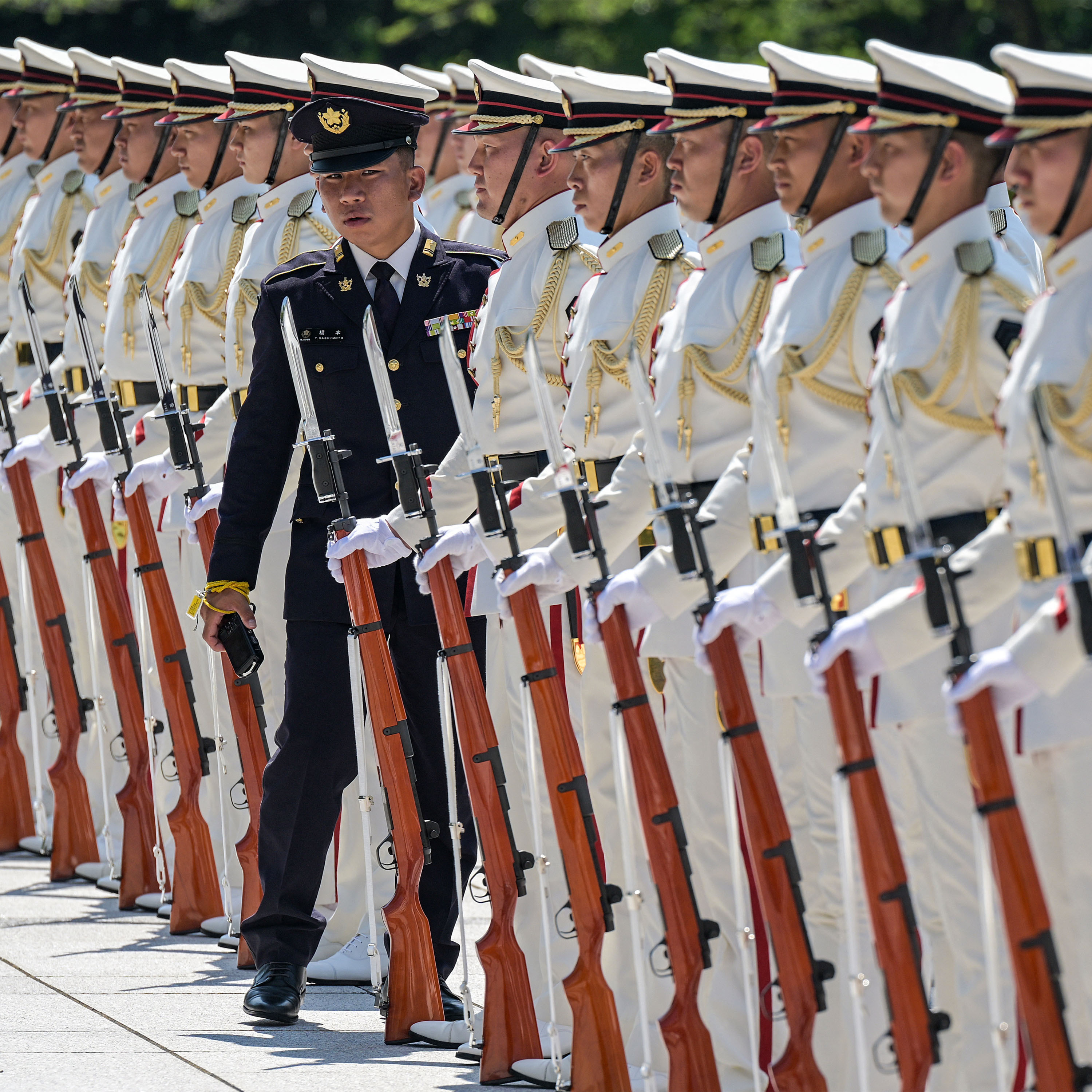
Has Japan broken with its pacifist past? Who or what is Harakat Ashab al-Yamin al-Islamia? And why are sportspeople retiring later than they used to? Olly Mann and TheWeek delve behind the headlines and debate what really matters from the past seven days. With Felicity Capon, Harriet Marsden and Jamie Timson
Image credit: Richard A Brooks / AFP / Getty Images
Get every episode summarized
Each time The Week Unwrapped - with Olly Mann publishes, we email you a written briefing from the transcript — the topics, who appeared, and any specific claims, with the ad reads skipped.
Email me new episodesFree for 3 shows. No card needed.
Hosts & guests
Transcript ready
332 searchable segments. Every word is indexed and playable.
Full transcript
The Week Unwrapped - with Olly Mann — Japan’s military, HAYI and ageing athletes. Machine-transcribed; use the interactive transcript above to jump the player to any line.
This week we've seen Keir Starmer defending his role in the Mendelssohn vetting scandal and airlines canceling flights due to the jet fuel crisis but we've got three under reported stories with repercussions for us all. Is Japan abandoning pacifism, are Britain's anti-Semitic attacks being orchestrated from Iran and the sportsmen slam dunking into his forties. I'm Oli Mann and this is The Week Unwrapped. And remember, you can read all you need to know about everything that matters in The Week magazine. But joining me to unwrap the week is Harry of Marsden Felicity Cape on and Jamie Timpson, our very own cast of The Devil Wears Prada. The original cast, of course, were back on the red carpet this week. Are you excited, you know, as fellow journalists to see them back together representing? Who are we all? If we are the cast, am I Stanley Duchy? I mean, I'm definitely the one with the rubbish skirt. I'm definitely the... I don't mind being Meryl Streep. I want to be the Emily Blonde character, but unfortunately I think I might have to settle for being the Anne Halfway character.
I've often said you only need to put Jamie in a wig, equals Anna Winter. Felicity, you're up first. What do you think this week should be remembered for? The sun sets on Japan's pacifist past. Japan's back. There is an appetite for clarity and for a firmer defense position for Japan. And that's something a decade or so ago that might have been a little bit more contested. Japanese politics expert Sheila A. Smith talking to DW News last week as Japanese PM Sonaya Takaiichi says Japan is back. Felicity, what's the story? The story is that on Tuesday, Japan announced that it was lifting restrictions on exporting weapons. This is a seismic change for the country. It means that it can now sell weapons to more than a dozen countries, 17 countries with which it has defense agreements, including the US and the UK. We will get into this, but it's a break as I alluded to. It's a break from its pacifist past that's kind of characterized its post post war defense policy.
Sort of up until now, arms exports have been limited to five categories, rescue transport warning surveillance and mind sweeping. That will now all change the one thing to say though is that Japan is still sort of claiming that it will prohibit the transfer of lethal weapons to countries in active combat. So there is a sort of nod, I suppose, to trying to keep this kind of peaceful, but nevertheless it is a major change. And it means that it's obviously now thinking much more about its national security. Yeah, why is Takaiichi saying she's making these changes now? Well, I mean, there's lots of different reasons. I mean, she's the new prime minister. She won a landslide victory. She became prime minister in October last year after being elected the leader of the ruling liberal democratic party. Her nickname is Japan's iron lady. She has a big sort of emphasis on defense and she, you know, this is something that she is obviously very keen to do.
But it's also, you know, there's sort of wider tensions and wider considerations going on. Japan is a vulnerable island nation in a dangerous part of the world. It's in a dangerous neighborhood surrounded by China, Russia and North Korea. It's very alarmed by sort of China's aggression in the area. And at the moment, you know, it's position as a kind of pacifist nation means it's vulnerable. And this presumably is a move to try and strengthen it in a region that is is very volatile. And the other thing is that up until now you, the US has been Japan's big allies, big defender. A lot of experts and analysis are saying, well, look, Trump's really distracted by what's going on around. Can we still, can we still rely on him? You know, he's sort of been withdrawing from that region and, you know, who knows if China were to go after Taiwan, whether the US would come, you know, would wait in or not. So I think it's that also sort of like maybe we no longer have the big ally that we used to. Yes. Okay. Jamie, let's talk about China then. Have they reacted to this? How do you think they might react to the idea of Japan being increasingly alarmed?
Yes, they have. I would characterize it as not happy. Their Chinese foreign ministry spokesman, Guo Jacken said that the international community, including China, would remain highly vigilant on this and firmly resist Japan's reckless new style militarization. I guess the kind of the main reason for this is that their new export rules allow legal weapons sales. Obviously like Philistia was saying to Western nations, but also the countries that are embroiled in longstanding territorial disputes with China, which is India, Malaysia, Philippines, Vietnam. And it seems like Japan is using arms transfers as a kind of tool of strategic alignment. They're putting Japanese made weapons in the hands of countries that sit on China's disputed maritime frontiers. It actually also, the announcement came at the same time with the Prime Minister going to the ritual, her ritual offering to the Yasukuni shrine, which is a site that serves as a lightning rod fierce historical grievances across East Asia given its association
with wartime military leadership. So I guess China is basically saying, how can we trust Japan when it's abandoning its previous principles and they profess to be a peace loving country, what's Japan up to? But I think as Philistia points out, the real thing here, and actually as I was doing the research for this, I was thinking, this is it now in terms of the war and a kind of global war, so we're arming Ukraine against Russia, Japan are now looking potentially to arm Taiwan against China. It's all coming together in quite a sad and quite scary way of people sending arms and military to these big flashpoints that we've all talked about, obviously American Iran distracted as well. It seems like we're all kind of heading for just one way and that's conflict. Harriet, as Philistia alluded to as well, this isn't just about sort of changing policy as in other countries, you know, you might have a similar thing where they said what we used to say we won't do this, now we'll do this.
This is a change to their constitution, their pacifist constitution created after World War II. Tell us a bit about the history of that and kind of what symbolically that means for the Japanese. It's actually it's so fascinating because it's so unique. So after the Second World War there was this the settlement of their 1947 constitution, which one of the articles basically kind of renounced war and prohibited Japan from maintaining what they call war potential. So article 9 says, Japanese people forever renounced war as a sovereign right of the nation and the threat or use of force as means of settling international disputes. So there's like super strict pacifist identity and they created the self-defense forces as a kind of defensive only military force. And then for decades there was this long long taboo kind of near total ban against like exporting arms and weapons and only allowed non-lethal humanitarian exceptions, like Philistia said.
But since the 2010s, there's been sort of reinterpretation of article 9 rather than kind of doing away with it as the tensions between China and Taiwan rose and also China became increasingly militarized and North Korea became popular. And North Korea became increasingly volatile Donald Trump as well coming into the US the first time. So Takiichi's predecessor, her mentor, Shinzo Abe, kind of stretched the interpretation of article 9 and he pushed through this legislation in 2015 to allow Japan to exercise what's known as collective self defense, which means they're allowed to come to the aid of an ally under attack. Even if Japan isn't directly threatened. So kind of going from pacifism towards proactive defense. Philistia, is there an analog with Germany here, you know, thinking about what Harriet was saying there in this shift, you know, in the decades since World War II. And we've seen them now saying because of circumstances in Europe that they want to increasingly militarize as well.
And if there is, how does it compare to the reaction from the Japanese people? Are they supportive of this change? Yeah, the comparison to post-war Germany is actually really, really interesting because it was the same, the same sort of deal was sort of like how do we, you know, prevent this aggressive country from sort of, you know, rising up again. But the problem with Germany after the Second World War was that obviously it had the Soviet Union on its doorstep. And actually there was this fear from the allies and from NATO countries that the Soviets would seek to reunify Germany by military force under communist control. And so actually there was no choice but to build up West Germany as it was at the time and to build up the West German military to kind of act as that buffer. And actually the West German armed forces by the 1980 was the most important military force defending NATO other than the US.
So you can sort of see parallels as what's going on with Japan now is that, you know, now we see that Japan has got North Korea, it's got China, it's got Russia as its neighbors. In some ways, you know, it does kind of make sense to build up its prowess in the region. And you know, we've seen how Trump has kind of attacked NATO and said, you know, you guys need to, you know, we're not going to pay the bill, we're not going to be the biggest contributor. So you also need to, you know, kind of get your act together. I'm sure that has also kind of, you know, sparked a bit of fear into Japan. And actually Japan has now doubled its defense spending to 2% because of the strength of the Japanese economy that makes it the third highest expenditure on military, on the military of any country in the world. So it's pretty formidable. In terms of what people feel about it in Japan, I think that's, that's very interesting. I mean, certainly when Arbe started to kind of row back a bit on the pacifism, there were massive protests, you know, people, people really didn't like that.
I think that's shifting a bit now. I mean, you can see that with Takaiichi's landslide victory. I mean, she made no secret of what her plans were. So she obviously has support. Again, there's kind of parallels with Germany in the sense of a lot of people seeing article 9 as being synonymous with defeat and kind of decades of subsequent self-adulation over, you know, what Japan did in the war. And maybe it's time to depart from that. But there was a very interesting piece in the Guardian this week saying that actually a lot of young people are in Japan are extremely worried about this. They don't want to sort of do Trump's bidding and get closer to Trump. I mean, Takaiichi is very close to Trump. They get on like a house on fire. They've done lots of deals together. I think Takaiichi was actually kind of slightly humiliated that when the US asked for allies to come to the Strait of Hormuz and help out there, Japan had to be like, well, sorry, we can't do that. That's not really part of our constitution.
But a lot of young people are really, really worried, which is interesting because I think you always think of young people as maybe, you know, there's always that sort of they don't remember their history. They don't remember their past and maybe therefore they're more likely to be a bit more gung ho and war ready. And actually this seems to be the opposite that a lot of young people are saying this is really worrying. And this is not the Japan that we know and love. And this isn't the bedrock of our country. Yeah, I mean, all of this, both pro and anti the decision, Jamie, can be seen, of course, in the context of what Trump wants and what Trump's done. And Trump does clearly want countries to feel themselves and defend themselves and have more military. But he's going to be gone eventually. And then what is this even going to be a better situation for the US? I mean, I wonder how Mandarin's in Washington feel about having a stronger Japan? Is that actually good? Yeah, and I think, I mean, the US ambassador to Japan, George Glass called the move a historic step that will help enhance defense capabilities between the allies.
Like a Japan that obviously can export fighter jets, missiles, warships is going to be able to help plug gaps that we've talked about in this podcast before when it comes to the supply chains that have been massively strained by wars in Ukraine and Gaza. I think it's not over kind of over exaggeration to say that this is a real massive realignment from Japan towards NATO and Europe. You know, 30 representatives from NATO visited Japan the week before the announcement was made. It feels like it's a massive shift from Japan to say, right, okay, can we trust the US anymore? Here's a way that we can maybe continue to provide security guarantees for Europe when Europe are looking around for other places to get those guarantees. I think it's interesting when you talk about the younger generations, older generations, the only thing I was going to say was that a Japan has a massive culture of listening to their elders and elder generations having a lot of sway.
So maybe that's just the characterization that Felicity was making of a younger generation who are in touch with those that are directly affected by the war and directly affected by the feeling that came out of it. So maybe that's kind of more understandable than they've certainly got much more cross-generational contact than other places. But yeah, to answer your question, I think it's a massive realignment in terms of the geopolitical standpoint, but also even if there's a massive change in the US and a Democrat president comes in and tries to undo all of this, it might be too little too late. And the risk, I guess, area as well for the Japanese is they're saying we're doing this defensively. Look at the situation around the world, we need to stock up, we need to show more power to the world. But what if it actually ends up with them being drawn in to military conflict that they otherwise would have avoided? It's a really good question, and obviously that's what so many people in Japan are really worried about, like tens of thousands of people protesting for an end to the Iran war,
is so significant considering how relatively rare big public protests are in Japan. Yeah, it's definitely a cause for concern among a lot of people, but what's also a cause, a far bigger cause for concern at the top is China. Like China is absolutely rising to be one of the big military powers of the world, if not probably the second biggest, soon possibly to be the biggest. The rapid rate of militarization of China and their presumed road towards the development of nuclear weapons or rumored or otherwise, it's sort of a necessary response to China being the big aggressive military threat in the region. And being increasingly belligerent and aggressive in the South China Sea, and it looking increasingly likely that it will move on Taiwan in the next year or two, particularly with the US kind of over committed in Ukraine and the Middle East.
So from Japan's perspective, it's like arm up or or get eaten basically, it's it's a really for the like the big picture like Jamie was saying, there isn't really any other option. And I think what's interesting is that it's also a real sign of just how much want like just one man, just one man, Donald Trump, who's been in power since 2016. So only 10 years, the massive massive geopolitical realignment that has had to happen because initially people thought, OK, after Trump, a Democrat president will come back in and it will go back to normal. Then obviously he came back again, it is, I think, very difficult to understate the impact of the US under Trump on every single former ally of the US around the world. Also, if you just a final thought, if you really wanted a good example of just how bad relations are between Japan and China, China took back its pandas from Tokyo because they're so annoyed.
And also they've banned imports now with Japanese China. So I'm pretty angry. I think I'd rather have the China than the pandas, wouldn't you? Not very not not so panda diplomacy. Yeah, also you can't eat pandas in a takeaway around mine anyway. Up next are Britain's anti-Semitic attacks being orchestrated from Iran. That's after this. OK, Harriet, it's your turn. What do you think this week should be remembered for? A group in the shadows moves into the spotlight. It's a very serious and central line of inquiry to look at how these events are connected. If they are, we can see there is a pattern, same methodology, same set broadly of target is really quite a new phenomenon in recent years of people hiring, basically, thugs for hire to carry out these acts. People who aren't motivated by their links to the cause. So we definitely see that as a core line of inquiry.
Met police deputy commissioner Matt Juegs speaking to Sky News on Tuesday. Harriet, what's the story? We've all been reading about a spate of anti-Semitic attacks on Jewish sites and synagogues, not just in the UK and London in particular, but also across Europe. But what if they are all linked? So this shadowy seemingly pro-Iran group has claimed responsibility for basically all of them. This group that calls itself Harakat, a Shahb al-Yemin al-Islamia, which kind of translates from Arabic as the Islamic movement of the companions of the righteous. So this group kind of appeared out of nowhere online in early March, just days after the US and Israel started attacking Iran. And it has claimed responsibility for attacks in France, in the Netherlands, Belgium, at least eight in London, including the arson attacks on the ambulances owned by a Jewish community charity. And French prosecutors have also linked them to a plot to ignite an explosive outside the Paris headquarters of the Bank of America.
Now this group posts their posts are shared online by pro-Iranian or Iran-affiliated channels on telegram and accounts on X. So they seem to be part of a pro-Iranian ecosystem online, but the group could be a facade, so not a real terrorist organization, but actually a front for an operation by Iran. Obviously there would be speculation to that effect. What evidence is there that they're being orchestrated from Iran? It's really, it's really, really, really tricky. So firstly, there's kind of all these errors in the Arabic spellings, in the logo and videos, some linguistics stuff, there's inconsistencies in the logos and brandings. And the videos were initially shared through channels linked to pro-Iranian sheer militias. And there's no digital footprint at all before the 9th of March, so it kind of suggests like a bit of an ad hoc structure or possibly kind of a cover name, because it just sort of the label kind of appeared abruptly alongside the first claims.
And UK terrorism experts, they suspect the group is linked to the security arm of the Iranian government, which is the Islamic Revolutionary Guard Corps. Because the working assumption is that this is kind of a hybrid warfare by the state of Iran. It's sort of plausibly deniable, it's low cost, low risk, with a massive psychological impact. They're effectively recruiting like local youths online and offering them cash for violence. So they're not even necessarily ideologically linked to an Iranian cause at all. So the Iranian state doesn't have to say that it's escalating anything and it doesn't have to claim responsibility. So that's the working hypothesis at the moment. And I suppose that bit we sort of know is true. You know, we don't know Jamie who's actually behind this account. We don't know if this account has taken responsibility for things is actually responsible for things they say they're responsible for. But we do know that some of the people that have been committed this arson or alleged arson or attempted arson. These people are young people that don't appear to have ideological links.
You know, previously to anti-Jewish or anti-Zionist ideas. So it's coming from somewhere. Yeah, and I think this is the key part of the story and one that I kind of found most shocking when you think about what it means going forward. So in the Rotterdam synagogue case, Dutch authorities detained individuals who were aged 17 to 19 from Tilburg. And it fits a kind of pattern that counterterrorism experts have been tracking with as we've been going forward. So the model basically relies on young low skilled effectively easily replaceable individuals who are recruited at low cost. And the approach kind of mirrors Russia's hybrid operations in Europe in which Russian officials have recruited people online to carry out sabotage attacks. There were the alleged ones on the DHL warehouse that we've seen in this country and in Europe. And it does create a kind of problem of security services because obviously traditionally counterterrorism is built around identifying, monitoring, ideologically committed actors.
So people have been radicalized over time. The whole concept of prevent. People who mean it. Yeah, the whole concept of prevent is about finding these individuals who are being radicalized. But this model, this HAY model, it kind of bypasses all of that deliberately and it's low cost, very easy to replicate. And because of the way that it's being filmed and shared the thing about the arson attack on the ambulances, was that they were able to get the film up online very, very quickly, which plays into something that we've talked about all the time on this podcast. It plays into what the social media platforms are prioritizing, you know, it gets engagement. And the networks can grow through the social media platforms, through, you know, it's things like telegram, anything like that where there's no real kind of ideological trail. There's no online radicalization footprint of any kind. It's effectively lone wolf attackers, but they're being coordinated by further overseas.
Yeah, and it's worth underlining isn't it Felicity? And this is what basically magic was saying in that clip that we just played. The police don't treat it any differently to ideological terrorism because there isn't that distinction yet in law. So when they're pursuing people for doing this kind of thing, you know, the group can say, well, we're scaring people, you know, we've thrown some petrol bombs through windows, but no one's died. It's all about generating an image, not from the police's point of view, it isn't. Someone could have died and that's an act of terrorism and you can go to prison for sort of 20 years for that kind of thing. Yeah, definitely. And I think there are already a number of suspects who are in custody. And they do still face like, you know, lengthy sentences for this. And they obviously will, you know, whoever is behind them will, you know, drop them as soon as they can and, you know, have nothing else to do. And that's another thing that they can, you know, create that distance and that it's nothing to do with us. But I mean, I have seen sort of commentators say, well, you know, is this a sign that the government should be pressing ahead with legislation to prescribe the IRGC as a terrorist organization?
And obviously that's a kind of complicated issue that some people would support. Other people say it would, you know, raise tricky legal questions because as Harriet was saying, they are the arm of a foreign government. And so it's not the same as going after a non-state terrorist group. And there is that kind of diplomatic reality that the UK just about still maintains relations with Iran as many other countries. But, you know, that's why it's kind of, it's, I mean, from what I've seen, a lot of experts are saying this definitely have the hallmarks and the footprints of the IRGC all over it. And you've certainly seen them very effective at online propaganda since the start of the war about sort of shaping the narrative and getting, you know, videos up online very, very quickly to support its version of events. And I mean, you only need to look at the kind of explosive media Lego videos that have been racking up millions, if not billions of views that, you know, they're very, very slick.
They, they tap into the cultural zeitgeist. They are obviously propaganda because there's all sorts of conspiracy theories in them and untruths. And also, you know, remembering that the Iranian regime has killed thousands of its own people. And there's extremely repressive and extremely brutal. But these, these videos are slick and they're very, very clever. So it doesn't seem completely unthinkable that this is, you know, emanating from Iran. And also thinking about that wider audience, Harriet, because, you know, the Jewish community in the UK is a tiny minority. It strikes me it's not obviously it has the side effect of intimidating Jewish people. But it seems to me that the purpose of it in terms of reaching more people from a propaganda perspective is by tying Jewish institutions, Jewish buildings, Jews that go about their normal lives with the actions of Israel. Because even if you follow the logic of this group, they're saying because of what Israel have done, we think it's legitimate to target not the Israeli embassy. But just a synagogue, you know, where people in the community, of course, would have a wide range of views about Israel, Palestine would be completely unconnected to it.
I mean, I think there are two strands here that are kind of linked but two very kind of distinct strands. One is the growing online threat of Iran, which I do think is going really under the radar among probably a lot of our listeners might not realize how strong Iran is in the online sphere. Not just in terms of its propaganda and its use of social media and video, but also in terms of its cyber hacking capabilities. There have been multiple attacks on US businesses and its really businesses and even the FBI director had his emails leaked. So there's that like as Iran has been hammered over the last few years and its proxies in the kind of war sphere, it has grown its online capability. So there's that and also obviously the growing very insidious anti-Semitism that because is constant link between Israel, the state and its actions, particularly in Gaza, the ongoing genocide in Gaza, also its invasion of Lebanon.
It's that link between the state of Israel and the people, the Jewish and Israeli people around the world is, unfortunately, is one that has just grown and grown and grown and I've seen it grows so much over the last few years that it's like it's almost now I mean we've got rhetoric coming out of people that are selected like for the green party for example, or members of political parties in the UK that sort of parrot this rhetoric that even a few years ago would have been completely unacceptable and very much like obviously a kind of like fig leaf anti-Semitism. A dog whistle? Yeah, a complete dog whistle. But the conflation works doesn't it? That's my point like regardless of whether the attack works in inverted commas in terms of fatalities, the propaganda works because it says to the broader public, you're attacking Israel therefore you attack Jews. Exactly. And if you read like many many prominent Jewish writers in the UK are writing very eloquently about the growing fear that they feel and the growing sense of victimization and blame for the actions of Israel.
I mean, even the person representing HAYI who was interviewed by CBS News said will keep threatening US and Israeli interest worldwide until we've avenged every child in Gaza, Iran, Lebanon and the resistance nations. We urge people to stay away from Zionists and American interests to keep themselves safe. So that threat I mean it looks as though that threat is only going to grow. Yeah. And in terms of what that means practically, you know, if you took that seriously, you know, stay away from interests, Jamie, what does that mean? You know, you don't go out for a bagel, you know, what I mean, it's it's tying that cultural life that people have with the war that's happening in another country. Yeah, absolutely. And I think I heard it perfectly there. There's, you know, the only have to listen to prominent Jews in in the UK to hear the effect that is having on the on the communities themselves, you know, individuals that like you say have very little to do with the state of Israel. But I think what's worth highlighting it and again, bring us back to it again, but it's like the networks that we're talking about here in terms of online networks.
They had so that there was research by the Institute for Strategic Dialogue, which kind of showed the networks that potentially the pro- Iran networks on on X, but they had basically roughly 20 accounts each. They both purchased accounts that both purchased X's premium subscription to gain blue check verification, like their posts were amplified then by X's algorithmically curated for you feed. You're talking about thousands of accounts then with 50,000 or more followers then shared this. It's easy to sit there and be like, oh, there's always going to be bad actors or whatever, but this is being being propelled forward by the social media platforms. And by things like the 4U feeds and I just this is a little bug bear of mine at the moment. But obviously we've all seen that, like this you were saying about the Lego videos, we've seen that the White House putting out this like horrendous like stuff that videos turning war into like super Mario Nintendo Wii games. But we ourselves in the UK and in the UK government are not beyond this, you know, that there are constantly very serious topics being pushed out by the government on a social media.
As if it's like a meme about get ready with me today with Keir Starmer or I saw one about a West street and bringing down NHS waiting times like footballers. And I just think it's a real way different. That's different. That's it. Yeah, it might be glib, but it's a legit way to try and get young voters who otherwise wouldn't engage with your content. It's very different to saying go and bomb people. Yeah, no, absolutely. And I'm not I'm not I'm not making the equivocation between the two of them, but I think that there's a kind of a desire now to appeal to a certain subset of people. And I don't think we are too far away. I agree that that's not what the UK government is doing, but I do think that now there's a kind of understanding within political communications that we need to meme our way to getting people involved in politics and understanding things. And I just think that's it's yeah, like you say it's glib, but it's also just it undermines the political message. Oh, just a very simple question, you know, the telegram group of this HAYI outfit have been reported in many places. People can obviously log on and see what they're saying.
Why is that still a thing? Why is telegram still in the app store? If the British government says an attack on Jews as an attack on our country, why are we allowing people to download an app where they can join in? I do not understand. Yeah, I mean, why is why is X still on the app store? You know, if the UK government as it has and the EU as it has have come out and said that X is a tool by which like users of propagating massive, massive child sex abuse material, for example, why is Apple still listing X on its app store? Apple has very strict terms and conditions is not about is this is not not a question of freedom of speech and anyone can say whatever they want on telegram or at OX Apple, for example, has very, very strict terms of use and terms of service in terms of what it lists on its app store. Why are telegram and X still apps that you can download and use like that to me, I do not see that there is any justification beyond the fact that they are too powerful to control.
Felicity. Yeah, I mean, I also think that the other thing when looking into Iran's kind of winning the online war and the online space is the use of AI like that has changed within the past few months and has kind of really coincided with the conflict. So I think it's about it's on the one hand, it's the speed that these videos get online and are then, you know, supported by an official Iranian channel and then it's inevitably picked up by the Russian media like RT will tweet out a lot of stuff. And then before you know it's sort of out there so it's extremely quick but also the use of AI I think is really interesting to to churn out video so quickly and the whole kind of the phrase sloppaganda that you know that is kind of. Yeah, but it's really it's it's what it's kind of what Jamie was saying because it's the attention economy it's worrying that when it comes to such serious global issues it's the thing that can you know turn your head the quickest when you're looking online.
And in the you know I keep on coming back to these like videos which just because I do think they are so so phenomenally clever influencing people and how they have been churned out with the use of AI. I mean they explosive media claims that it is independent although they have also admitted that the Iranian government is a customer and they do operate from Iran. And but these videos as you know they claim to be on behalf of the world to press like when you look at them there's themes of like slavery and black lives matter and sort of a kind of potted history of how awful America is. And and they're very very convincing but this is again this is where sort of AI and the attention economy is is sort of intersecting with like very very serious geopolitical issues. Okay so just finally on this then Harriet you know H.A.Y.I. it's a new group literally but also just come to our attention. Do you think we'll still be talking about them in six months or a year's time there's obviously very serious repercussions on what they're doing but you know we're talking about them as kind of boys in their bedroom you know are they going to be the next ISIS or are they just online propaganda tool.
I think the key thing is that regardless of whether H.A.Y.I. as the kind of brand as a kind of logo as a self described group sticks around it's what it's plugged into that will stay which is this massive Iran aligned network. You know so even if this particular group which may or may not be a group may just be an online front whether or not this group disappears or whether or not it takes responsibility for just about every antisemitic attack in the world in the way that ISIS used to take responsibility for attacks that had never perpetrated exactly even if this name of this group disappears. It seems as though the underlying network that it's plugged itself into that is here to stay. All right I'm next how old is too old to be an athletic superstar that's after this.
All right Jamie you are finishing the show what do you think this week should be remembered for. Is age nothing but a number. Basketball player LeBron James reacting after making a behind the back dunk for the L.A.Lakers on Tuesday Jamie why are we talking about this. It's worth digging out that highlight if you get a chance. This whole section I think given the fact that I'm 35 years old and I don't wish to say how old you are Oli but I believe probably older than 41. Correct I'm 40. Correct. Yes and the way that they talk about LeBron James as if he is a decrepit at the age of 41 a decrepit old man is actually quite sad. In the game this week against the Houston Rockets he was playing for the Los Angeles Lakers.
He pulled off a very impressive leap into the air to put the ball into the basket. Actually the thing that's fascinating about LeBron James this year if people don't know he's a 41 year old basketball star. Kind of widely now suspected to be potentially the greatest basketball player of all time. Oh don't get us into that. I know an old lady online culture to know we don't want to wait until that one. But I think what's interesting is that he is doing something so two of the best players on his team got injured. And so now he is the best player once again on the team and is leading the Los Angeles Lakers to success in basketball. And a lot of the kind of longevity stats about him are mad so when he first started playing professionally the number one song in the UK was crazy in love by Beyonce. The Iraq War had just started we remember that one to how that ended and the series cannot be the same year. First series of X factor hadn't even aired yet so this is pre X factor that he started playing professional basketball.
Now a lot of people will say that he's a bit of a kind of freak of nature genetically but he has put a lot of work into his recovery as well. It's kind of well known that he spends a million dollars a year on his body. But I think the reason that I'm bringing it is because I think it's interesting to counterpoint the way that we view age and particularly among athletes because a lot of athletes are now playing a lot longer. People like Cristiano Ronaldo, Tom Brady, Venus Williams played into their 40s. But I would like to also offer up a counterpoint with a famous painter because I am a man of many interests. Rose Wiley who has recently had a show at the Royal Academy which is amazing and her view on aging. She became famous very later on she's 91 years old they're great painters. She's not going to do it behind the backdunk. She's not but she is going to be well celebrated and became famous and some of her quotes on aging are really interesting because she sees it as nothing to worry about.
I think in society in general we've got a bit of an odd view of aging and I thought I could put up these two people this week to discuss it. Hang a tenuous discussion there aren't well done well set up. Okay, I mean leaving aside broader societal attitudes to aging for just a minute for the still the question of sport. It's not really a prejudice is it to say there is an age at which people's bodies you know have deteriorated to a stage where they can't compete with teenagers and 20 somethings that's just a fact. What's interesting is it appears that that age is getting slightly older in elite cases. Yes exactly it's definitely shifting in the Tokyo games in 2021 the average age of Olympians increased by two years from 25 to 27. Between 1992 and 2001 with median age up to 25 from 23 and that trend continued at the Paris games in in 2024 with the average age just over 27 and the media is not not far behind at 26.6.
So it's definitely a trend and a shift that we're seeing. But I think that is I mean like LeBron James it was fascinating because he's still struggling from like afflictions like arthritis and schiatica I think which is interesting. So like you're saying yes your body is aging and I think it is also slightly depends on what sport you're in. I think some sports are more forgiving on aging bodies than others. I mean certainly like there have been other incredible stories so like George Foreman springs to mind as someone who retired when he was 28. He actually became an ordained minister and everyone thought that was it for him and then like 10 years later made this incredible comeback at age 45 to reclaim the heavyweight title. A lot of people attribute that to him taking this break and people have seen that with other elite athletes that they go away they take a break. Other people say it's the fact that they keep on training other people say it's genetics I think there has to be a realization that sport science nutrition equipment are understanding of how the bodies work is just obviously getting so much more advanced and so much more intelligent.
I mean if you look at sprinters the more powerful starts the shoes they wear the training that they can do and it's just so key that we're just getting like fitter and better and faster all the time. Yeah the professionalization in another word Harriet which actually you need to look at someone like the Williams sisters and they've effectively been professional since they were children. So in a way it's maybe not a surprise they haven't aged like everyone else because of that investment in their bodies for decades. Well it also is a surprise you know that's I mean Venus Williams is she's just astonishing as I'm a huge Venus Williams fans I have to say her answering a Williams I'm a huge fan. But they're obviously they have been unbelievable strides in sports medicine and injury treatment and just kind of training smart not hard better understanding of overtraining and nutrition recovery sleep optimizations big one. And all these things have just come along in leaps and bounds in the last few years and as we were saying technology as well like tennis rackets for example the strings now generate more power with less effort and in basketball there's been kind of I think I understand this.
There's been some real changes to where by now there's kind of reduced collisions some spacing stuff I don't quite quite got it but it's like technological and those advances but ultimately it's it's also a mental thing. You know athletes like LeBron James and Venus Williams and Cristiano Ronaldo they change their playing style as they age it's about adaptation. You know the thing the key thing in any high performing athlete is always mental for every genetic freak of nature or incredible training or decades and decades of investment there is a mental fortitude that sets them apart. There's also big financial incentives now to keep going like the huge find like strong financial incentive to extend your career but ultimately it's also a bit of like selection bias you know for every Venus Williams or LeBron James there's thousands possibly tens of thousands of athletes that never made it to that age as well. So it's important not to not to generalize but it's also I think important not to take away from what an achievement it really is.
I suppose it's all being prepared to push through the humiliation of maybe not being the best you know Jamie you've chosen this example where LeBron is actually the best or the second best on his team still but he could easily not be he could easily be. You know like David Beckham was you know just sort of still hanging around but not that great anymore and you see this with the sort of stuttering comebacks don't you people like Andy Murray or Tiger Woods where they can be really good but then it can go wrong because of you know medical facts. And I suppose maybe people are more willing to take the chance now than they used to be they used to think this is my record and you keep it as it was. Yeah absolutely I think it's all of those things I think it's interesting when you compare again we're not going to do it but if you compare LeBron James to Michael Jordan who actually did come back after he'd retired at 35 basically because he missed the game so much and had taken a break and he was good but he wasn't quite as good as he once was. And there's lots of really interesting stories of watching him on the Washington Wizards in those two series where he was desperately fighting to try and get back to where he was as a 38 39 40 year old.
But I think that's the thing is that and you know not to keep banging this drum but when you're reading about this stuff they're talking about you know fighting refusing defying. They're kind of every all of these all of these athletes are defying time you know and the language is obviously dramatic but it also reveals I think how we feel about aging which is underneath all of this kind of admiration for them there's fear and a massive cultural anxiety about getting older and becoming less and about being past it. And I think that's it that's really interesting because there's a version obviously of LeBron where he's a man who just loves playing basketball and has found a way to keep playing it at the highest level on his own terms. But there's also another version where he's built his entire identity around this incredible ability that he has and the concept of retirement is maybe scary it feels like a death people talk about retiring from sport as a death and the grief that you feel at the end of your career. And I think that's the the thing and why I brought up Rose Wiley before is because there is another way of viewing this and of enjoying the work that you do in life and the things that you do in life for them for the doing of them rather than for the success and the achievements.
And maybe it is about finding other stuff to go and move on to you know I know like you mentioned Andy Murray there and he sees now owns a hotel quite near me so I'm sure he's doing that but there's like lots of other stuff and that you can do in life and maybe the celebration should be that you once reach those heights rather than you clung on. Yeah sort of I mean I'm going to have to disagree with you a bit I think Rose Wiley story is inspirational because she found success in art in her 90s. But she hadn't sort of broken through earlier and then carried on what I think the danger of what you're saying what it leads us to is people saying are you really should listen to this new album by Paul McCartney because it's amazing because it isn't amazing is it it's always going to be four stars. You know there are people I like going to the theatre nothing Alan Bennett's written for the last 30 years is as good as we wrote in the 70s and 80s that's just a fact it's still fine but actually maybe it'll be better for people to focus on. People had something original and you to say regardless of their age but I think the idea of writing off people the older they get just as a general theme is really important
particularly for women who in all like all lots of different spheres increasingly just get written off and you know take him off the TV or that you know that you just become the sort of aging hags and I think in lots of different areas. I mean this is this is sort of going off on a bit of a tangent but like it's really it's really sort of gratifying now to see more public conversations about the menopause for example. It's it's great to see athletes who having having having her babies make remarkable comebacks it's it you know I know Venus Williams. I don't think she's won anything this year but I think the whole kind of this is very very cheesy but you know if you can't see it you can't be at the idea of Venus Williams still in her 40s going strong. I think that is something in and of itself. I think the depressing thing about this is that when it comes to beauty standards. I think there's a still this kind of like stubborn insistence of getting all the work done to try and look as young as possible. I think the beauty industry has an awful lot to answer for and is not in any way pro aging in a natural way.
But I I I I take Jamie's point I do think this is a sort of I think it's a positive thing to see older people still doing remarkable things still contributing still showing that they you know they have so much so much to offer. And I think just on the on the point about good stuff is and particularly was very widely is that she she said that she wants to be known for her paintings not because she's old not because she's still working age 91. And I think there's that you can still class things on their merit and you can still review an Alan Bennett play as a three star and still also celebrate the fact that he's working and writing into into old age because I think that's the idea is that we don't want to go away. I mean that's the thing isn't it like Harriet people used to say I've got to this age I'll retire and then younger people had an opportunity even if in fact they wouldn't be as good as the person who just retired if they carried on for another 10 years. Is there a danger we edge out younger people's chances. Well, I don't know if it's a zero sum game because there's not like a cap on how many painters can achieve renowned but there is a cap on how many painters can be featured by the Royal Academy.
And I'm sorry to be cynical though I find Rose Wiley delightful and I love her paintings I do not believe she would be nearly as famous as she is where it not for her age unfortunately I just have to say that I that's that's really the niche really really interesting hook about her. And I don't think there's anything wrong with acknowledging that I don't think there's anything wrong with acknowledging how amazing it is that she found fame as a painter in her 80s and 90s. I think the gender point is very key I 100% agree with Felicity that the difficulty as a woman is that socially speaking culturally speaking your power is in your youths and you lose that power as you age I am becoming less and less relevant and powerful every single year. But unfortunately you only gain professional or economic power slightly older up to a point and then there's a massive cap and ceiling on that is a very very sweet spot basically in your 30s and 40s before you're effectively like you you disappear out of the highest echelons of professionalism like for example at the BBC.
So I think as a woman I see it very differently when I look at people like Serena and Venus Williams I do find that incredibly incredibly inspirational. I think her age is going to get more powerful and more influential. The trajectory is going up and up and up. It's like you know what's funny is if I if I actually wanted to pick up on the fact that this is Jamie's second story on aging and longevity and not not that long I'm sensing like a certain amount of anxiety and Jamie about. Honestly I was talking about my facialist before we started recording shout out Nicole Campbell at face space in Glasgow. It's just it's a real it's a real worry. I can't believe you have a facialist that is a sign that Jamie is making way too much money that he has a facialist like. Come on. Enough from you aging Hanks amazing face you just dropped in Felicity earlier. Is there a male equivalent to Hanks? I don't even know what it would be. My thanks to Jamie. Why is old with it?
Why is old with it? You can follow this show for free. You can every episode as soon as it's released just search for the week unwrapped wherever you get your podcasts including YouTube where you can now watch us as well. You can also get six free issues of the week magazine with the trial subscription if you go to theweek.com slash subscriptions. In the meantime I've been Oli Mann. How music is by Tom Morby the producer Oli Pied Ageless at Rethink Audio and until we meet again to unwrap next week. Bye bye. Music
More episodes
More from The Week Unwrapped - with Olly Mann

A naval odyssey, paternity leave and art heists
The Week Unwrapped - with Olly Mann
The maternity gap, Tunisian unrest and literary feuds
The Week Unwrapped - with Olly Mann

ADHD, the besieged Palestinian-American and discussing women’s appearance
The Week Unwrapped - with Olly Mann

Assad sentenced, LGBT rights in Africa and sleep drugs
The Week Unwrapped - with Olly Mann