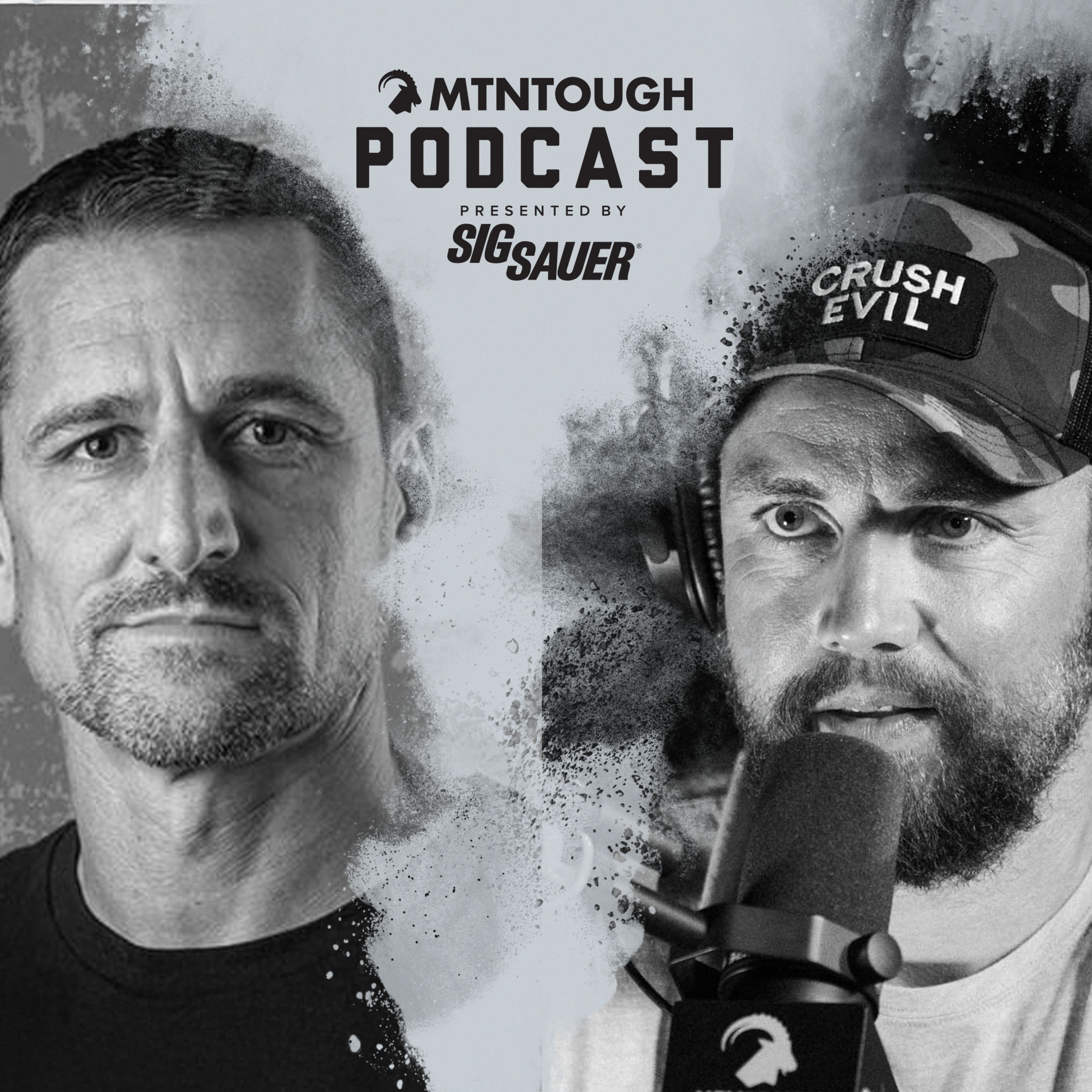
Jeremy Stalnecker: Why Men Freeze On Their Calling | MTNPOD #159
About this episode
In this powerful MTNTOUGH Podcast episode, host Dustin Defenderfer sits down with Marine Corps combat veteran, pastor, author, and Mighty Oaks Foundation CEO Jeremy Stalnecker. Jeremy shares the raw reality of veteran transition struggles—identity loss after uniform, isolation, moral injury, and skyrocketing suicides—and how Mighty Oaks’ faith-based programs restore purpose through Christ-centered identity, community, forgiveness, and hope. He unpacks why fear of man (FOPO) paralyzes high-performing men from generational impact, why performance mindsets leave holes no achievement fills, and how shifting identity to “child of God” breaks chains, rebuilds families, and reignites mission. From combat to chaplaincy to church planting, Jeremy delivers mindset tools on resilience, spiritual toughness, community over isolation, and living Always Ready through obedience to God’s calling—essential for veterans, hunters, dads, entrepreneurs, and any man feeling numb or stuck.
Join Dustin Diefenderfer, Founder of MTNTOUGH Fitness Lab and creator of the MTNTOUGH+ Fitness App in the top podcast for Mental Toughness and Mindset. (P.S. 🐏 Get Your First Month of MTNTOUGH Free Use Code "MTNPOD" @ https://mtntough.com/.) On this show, we delve into guests' purpose, mentality, and mental toughness so you can learn from the best of the best. Whether you're a seasoned backcountry hunter, an outdoorsman, or simply someone who wants to level up your mindset, this is your go-to source for inspiration, expert insights, campfire tales, entrepreneurship, and stories of perseverance and triumph.
Presented by Sig Sauer.
V I D E O S TO W A T C H N E X T
🎙️ More MTNTOUGH Podcast Episodes: https://www.youtube.com/playlist?list=PLdAelJZ1bZWr5v6K_-IPix0tq8b7xH1ms
S U P P O R T O U R S P O N S O R S:
💊 Get 20% off MTNTOPS Supplements, Use Code "MTNTOUGH" Here at checkout: https://mtn-ops.sjv.io/LXkPEo
__________________________________________
W H A T I S M T N T O U G H F I T N E S S?
MTNTOUGH is The #1 Fitness App Trusted By The DedicatedOur premier functional fitness programming is conveniently packaged for hunters, first responders, military, and mountain athletes. Train at home, at the gym, or on the go.
Since 2016, MTNTOUGH has been dedicated to helping individuals achieve their personal goals by creating a foundation for physical and mental toughness. The brand’s best-in-class programs are developed, tested, and proven by former Navy SEALs, Army Rangers, and renowned physical trainers. MTNTOUGH+ programs are used by elite groups and operators, including special ops forces, wildland firefighters, backcountry hunters, professional mountain athletes, and more. The MTNTOUGH fitness lab is headquartered in Bozeman, Montana, surrounded by some of the world’s top mountain athletes.
00:00:00 - Intro: Mighty Oaks & Veteran Transition Crisis00:07:00 - State of Veterans: Identity, Isolation & Suicide00:14:00 - Fear of Man Blocking Purpose & Generational Impact00:21:00 - Performance Mindset Traps & Empty Achievements00:28:00 - Mighty Oaks Approach: Faith-Based Healing00:35:00 - Changing Identity to Child of God00:42:00 - Mountain Ops Supplements & Conquer Hunger Promo00:49:00 - Community, Forgiveness & Breaking Isolation00:56:00 - Spiritual Toughness & Obedience to Calling01:03:00 - Closing: Golden Nugget & Final Thoughts
Get every episode summarized
Each time MTNTOUGH Podcast w/ Dustin Diefenderfer publishes, we email you a written briefing from the transcript — the topics, who appeared, and any specific claims, with the ad reads skipped.
Email me new episodesFree for 3 shows. No card needed.
Hosts & guests
Transcript ready
548 searchable segments. Every word is indexed and playable.
Full transcript
MTNTOUGH Podcast w/ Dustin Diefenderfer — Jeremy Stalnecker: Why Men Freeze On Their Calling | MTNPOD #159. Machine-transcribed; use the interactive transcript above to jump the player to any line.
Coming back around to the question of what actually helps people change their identity perspective? What is actually helping there that you're seeing actually work at my deal? Yeah. On the show today, we have Jeremy Stallnecker. Marine Corps combat veteran, pastor, author and co-founder and CEO of Mighty Oaks Foundation. Jeremy served in the United States Marine Corps with infantry and combat service support units deploying in support of Operation Iraqi Freedom. After transitioning out of the military, Jeremy stepped into ministry and began working directly with veterans and active duty service members struggling with invisible wounds of war, trauma, moral injury, isolation and identity
loss. Through Mighty Oaks, Jeremy and his team have now served thousands of warriors and their spouses through faith-based resiliency and recovery programs designed to restore identity, rebuild families, and reignite purpose. Additionally, Jeremy is the author of several books on leadership, faith, and veteran recovery. Jeremy, I am honored to have you on the show because of many, many reasons, but I am very honored from the perspective of you with Mighty Oaks and the work that you're doing. I know there are others, but you are on the more rare side of faith-based programs. I actually was just ironically not knowing that we were leading up to our conversation today. A great buddy of mine was in town last week, a 20-year special operations guy, and he
is transitioning out right now. He had been out to quite a few programs, and he has an incredibly strong faith, and he was a little bit bummed with the landscape. He's like the landscape out there for veteran transition. There's not many faith-based organizations that are there, and I was like, man, have you heard of Mighty Oaks? And he's like, I haven't. I was like, how have you not heard of Mighty Oaks? I was hammering him on that. But the conversation was interesting because I was like, man, I thought there was more. And he's like, you know, there's really not, there's some great organizations doing great work. But, you know, he believes, and I agree that without Jesus Christ being at the center, all programs are going to be missing a cornerstone component, and you guys have taken that head on. So I'm excited to impact that with you.
Yeah. Well, thank you. No, I appreciate the opportunity to have that conversation. Yeah, super cool. I've been very excited about getting on the podcast with you. So thank you. Yeah, I'm excited too. What would you say right now is kind of the state of the union on the work that you're doing? The reason I asked that question is related to mountain tough in this podcast in particular, we spend a tremendous amount of time talking about mental toughness and resilience and mindset. And a lot of time we are talking to people about how they can break through and really be the person that God created them to be and break through in 2026 feels different to me than it did in 2019, for example. And part of that is because of just
the sheer amount of distraction that is out there at kind of an unprecedented level with the speed of technology and the power of technology, how does that kind of connect into the work that you're doing? And how would you kind of describe like the state of the union on transitioning veterans at the moment? I think it's that's a that's a broad question, but the state of the union on transitioning veterans. I mean, that's the question in front of us is not good. I'll caveat that with I think it's not good, just like transition from a lot of other careers and you know, life issues and so forth are also not good. Transition is always difficult, but when you've served in the military, particularly for any length of time, and if you've had combat experience, that that becomes
who you are, that becomes your identity. I identify myself with the uniform that I wore, the job that I did, the rank that I had, where I fall in the hierarchy. I knew exactly what I was, exactly what I was supposed to do. It all made sense. Even in a chaotic environment, it made sense. And that's true. I believe in the first responder community as well, again, for a lot of the same reasons. The job is clear. There's a lot of chaos around that and we can talk about all those things, but what I'm supposed to do is clear, the training helps me understand what I'm supposed to do when I find myself in situations that I may or may not have anticipated. I'm ready for that because of the training that I have. I fall in a particular place on the hierarchy of command. I wear a uniform that identifies me in a specific way. And so this is who I am. This is my identity. So when we talk about identity, you could work in corporate America. Your identity can become that, but it's just different when you wear a uniform and have a rank and a job that says that's who you are. And the rest of the world looks at you that way. And then you transition out of that role. You hang the uniform up in the closet,
you are no longer that guy or girl anymore. And you find yourself in a world that may say, thank you for your service, but really has no idea what you did, where you came from, what that all means, what that looks like. And so the world around us doesn't understand it, but we don't understand the new world that we find ourselves in either. And so transitioning is always very, very hard. I don't know if it's harder now than it has historically been. But we have become as a society, as a culture, unmoored, pulled away from community groups. You know, it used to be very common. You're part of a large family unit or you're part of a church or community group. You're plugged in somewhere outside of the military. So veterans returning from World War II or from some of these other conflicts, they're plugging right back into a community of people that help to develop a new identity around them. We've become really taken away or pulled apart from that. And so you transition out of the military into this world where, as you mentioned, there are so many distractions,
there are so many different things that you can do and places that you can go and voices that are telling you how you should act and what you should think and what you should be, that it's very easy to get lost in that. What was once very clear is now not clear at all. I lose who I am. I don't know how to function in this new environment. And here's the slope. If we don't know who we are, we can't clearly identify. This is who I am. Well, if we don't know who we are, then we don't know why we're here. So I lose after my lost identity, I now lose my purpose. I don't know why I'm here. And if I don't have purpose, then the next step, I don't have hope. There's nothing out there bigger than this situation. There's nothing beyond where I am right now. I don't even know why I'm here. So there's nothing that's going to carry me forward. So without a clear identity, I've transitioned away from what I knew. I'm in a different place. I don't know who I am. I don't have a clear identity. I don't have a clear purpose. I lose hope. And so the next natural decision is to do things that, I mean, a lot of veterans are taking their lives. There are steps
before that that are just very destructive. And so, yeah, I mean, the state of transition is not a good one. And as many people are, as they're trying to help, there are a lot of good people who are trying to help. A lot of money is being thrown at it. Without an understanding of faith in identity, the rest of it is going to fall apart. Yeah, I would like to hear from you a little bit more around what has actually helped the most with that at mighty oaks because I couldn't agree more. And you can see that equation on the veteran side, the first responder side. But I also can see that same exact thing happening regardless of someone's previous profession. And I am a big believer that many listeners of this show because of it being
mountain tough and because of kind of pushing the limits in the back country, pushing the limits in the gym and really trying to kind of scratch the edge of human performance. Most of our listeners have a performance mindset. And the performance mindset can be rewarded so greatly in a worldly lens. And it's rewarded since we were children. And so it's like show up early, stay late, rewarded, run faster, rewarded, jump higher, rewarded, work harder, rewarded. And so the performance mindset, regardless of profession, can quickly become a big chunk of that identity. And then there's a point where it just doesn't work anymore. And it's like right. It's kind of like goal post, a goal post, a goal post, a goal post with still this
giant hole in your heart. And you can't figure out why is there this giant hole when I'm achieving some really amazing achievements. And the identity of being a son of God in a child of God is where we have to get to, regardless of our current occupation or our previous occupation. And that shifts our mindset. And then mindset determines our methods. So if our mindset is I always have to perform, that's going to determine the methods I live out each day. But if my mindset is I'm extremely loved. And I won't be any more or less loved today. If I get my to-do list done or not, that can really change the methods that I execute on today. But
coming back around to the question of what actually helps people change their identity, perspective, what is actually helping there that you're seeing actually work at my diodes. What's up guys, Dustin here. As you know, good music in the gym for your workouts can change everything. The right music allows you to flip that switch and keep pushing when you need to break through. We've been running the turtle box speakers for a while now. And these things are waterproof, tough, loud. These things are built like a tank. The turtle box ranger is great if you're on the move. The original covers most days. And that's what you see around here. And the new turtle box Grande puts out some serious volume for big spaces. Check them out at turtleboxaudio.com. Man, great question and super important. So outside of, you know, kind of my work life and my
family life, I'm involved in two communities. So I trained Jiu Jitsu. So that's a community that I'm involved in. And for a bunch of years, I've been part of the ultra running community. So you got these communities of people. And the longer you're in those communities, you start to realize that a lot of the people that are a part of very hard disciplines like Jiu Jitsu, like ultra running, are there because they're looking for something and what they're looking for is a new identity. And it doesn't take long to find that in those communities. I identify as a grappler. I identify as a Jiu Jitsu person, whatever. I identify as an ultra runner. And it's, you know, that becomes who I am. But the problem with that, just like jobs and often relationships and the other things that we find our identities in, is that they'll change. I can't continue to perform the way that I did. Or I've won all the things, but there's nothing left. Or I'm only, you know, I physical limits. So I can only get this far. So I'll always fall short. So your identity is constantly shifting and constantly
changing. You're constantly asking, who am I? Because your environments are constantly changing. And so for high performers, often you find yourself in a very physically difficult, do hard things environment because it makes sense to you. Again, the goal posts typically are very clear in terms of what you have to do to achieve. But then you do achieve and realize, now what? Right? What goes, what's beyond this? Or I got hurt or something happened? And so, so now I'm lost. When we have an actual identity rooted in a relationship with Christ, it flips all of those things on their head. So now, instead of training Jiu Jitsu and running ultra marathons and writing books and, you know, doing the other things that other people do, to find my identity, I'm now doing those things to fulfill my identity. I understand who I am in Christ. And who I am in Christ helps me
to understand that my job is to leverage my purpose, is to leverage what God's given me, the talents, the abilities, the gifts that He's given me to be a help and a blessing to others to make the world a better place. And so, those other disciplines, those other areas of hard work that I am capable of and enjoy are now used to get me to that purpose instead of fulfilling an identity that shifts. And so, it changes everything. And so, the starting point is realizing that God, the creator, exists, that He created with purpose and design, and that when I understand who He created me to be, then I can move forward in spite of whatever is in my past. The trauma is the difficulties, the brokenness, the hurt, whatever. I can move forward in spite of that. As my roles and relationships and responsibilities change, I can continue to move forward because those are things that I do, those are not who I am. But establishing that for very high performing people, and this is who we deal with,
we work with, you know, very high performing people. People have done very hard things and very difficult environments at a very high level, both from a human performance standpoint and just emotionally, often the things that are involved in are very spiritually difficult things. And so, they understand that, they just don't understand it in a new environment. And they think, if I can't be that person anymore, then who am I? So, that was a long way to get to your question. And the question was, what works for my diodes? A couple of things. One, we acknowledge right up front, we're not a clinical program. There are some great clinical programs. I'm in favor of them. But we're not that. We're not a program that is going to teach you how to adjust your habits or how to apply medications or other therapies to deal with these traumas and these brokenness and this difficulty that you're never going to get over. But we're going to learn how to manage it. We're not trying to help you manage anything. We are in favor of medication in the right place, in the right quantities for the
right period of time. It's overused. We have people that show up to our programs that are on 25 or 30 medications a day. There's no end in sight. Their physicians say, this is just how it's going to be for the rest of your life. We're not for that, obviously. But medication can serve a purpose in its right place. But that's not what we're about. So, first of all, we're very upfront about what we're not. And then we move on to what we are. We're a faith-based organization. What does that mean? It means we believe in God. We believe that there's a creator. And then he created us with purpose and design and that you need to understand how to align to that purpose and design. So, we set the table early. And then we teach classes. Our program is five days long. We teach classes over the course of that five days. But I think the key for giving hope to high performing people that feel like they've lost their purpose is this. All of our instructors, every person who stands up and teaches a class or leads a breakout, every single one started as a student in our program. They came because they needed help. They came to the program. We brought
them through about a year-long process of training and equipping them to be able to help others. And then when they stand up and teach a class, we require them to give their testimony first. So they will say something like this with their details. They'll say, I know where you are because I've been there. I've been in that spot. I sat over there. I came as a student. This is what was going on in my life. I have shared experiences, but also shared struggles. So I know where you are because I've been there. I don't have it all figured out, but I'm moving forward. And I want to walk this out with you. Now I'm going to teach a class. And this is how this class helped me when I was sitting where you're sitting. And so it gives hope because now you're looking across the table or across the room from people that are like you that have the same experiences that did the same things that were very high-performing people and very difficult situations. And we're able to transition through that. And then over the course of that week, as those testimonies are given, the walls come down. An understanding of a purpose bigger than the uniform that you wore or the
job that you did, understanding God has a plan for you. God has a purpose for you. And then breaking down, what is the gospel and why is that important? When we talk about identity, identifying with Christ, what does that mean? It is identifying with the death, the burial, and the resurrection of Jesus. Why is that important? Because in relationship with Christ, the Bible tells us we are a new creation. Old things are passed away. Behold, all things are become new. So who I was is not who I am anymore when my relationship or my identity is found in Jesus Christ. Romans chapter 8 and verse 1 tells us that there is no condemnation. So feelings of condemnation on the other side of trauma or what we call moral injury, that survivor's guilt. So many of the guilt and just the emotional and spiritual challenges that are brought into a person's life, their heart and their mind. Well, there is no condemnation to those who are in Christ Jesus.
What does that mean? I am identifying with the fact that he took my sin, my brokenness, my hurt, all of it on himself when he paid the price for me on the cross, that he was placed in a tomb. But because he is God, he defeated sin, he defeated death, he offers, he gives new life, and the same Holy Spirit of God that rose in from the dead in dwells, the believer. And so I'm identifying with that completed work, the forgiveness that comes from knowing who Jesus is and what he did. Understanding there is a new purpose, there is a new direction. That's who I am now. And from there, the rest flows, the purpose and the hope. That's incredible, man, because I imagine that there are quite a few that enter your program that are kind of hearing that for the first time. Yes, yes. Yeah, most. So it's funny because we position ourselves as a faith, you say faith-based, that means different things to different people. It just means we're
a Christian program. And so the assumption is most people that attend your program are Christians. So it's a church program or something like that. It's absolutely not. In fact, we don't charge anything to attend our program. We don't charge anything for travel to get to our programs. And so for a lot of people, they're with us because they have nowhere else to go. They've tried all the other things. It doesn't cost them anything. And so they're here because they just have nowhere else to go. They don't care about the God thing or some of them are hostile to God. They come from a different place. Has it relates to faith and understanding of spirituality and Christianity? So yeah, they've either not heard it most of them or they've heard it and rejected it. Some, you know, they blame God for the death of people that they cared about or whatever. So yeah, it's interesting. And the way we approach that is, is relationally. We don't start with an explanation of who Jesus is and what it is to have an identity with him on day one.
We start off by just talking about what's happened in my life. Again, all these testimonies. By the time we would have a class that breaks down what I just said, what Jesus did and what that means and all it. By the time we do that, that's halfway through the week. They've had, you know, our students have had 20 hours or something of classes in small group time where they're just talking about service and talking about breaking through that and talking about relationship issues and talking about all the things. And so we walk there because it has to be built. That conversation has to be built on trust and a recognition that one of the reasons I've been pushing back against faith is because I'm a man's man or whatever. I've done very hard things. You know, I used to carry a gun for living and so you can't mix the two. And then you realize like, no, you actually can. And there is a reason that some people make it and some people don't. And so we have that conversation after that
trust has been built. And that's again, that's where the testimonies and those conversations and just relationship is so important. Mountain tough is the fitness app trusted by the dedicated. Mountain tough ethos is backed by we've always wanted to be the best in the world at helping our customers become more mentally tough. So inside the mountain tough app, you're not only going to find all of our physical training programs, but you're going to find additional training as well so that you can stay sharp physically, mentally, spiritually, and nutritionally. The mountain tough app also allows you to train no matter where you are, anytime, anywhere. Additionally, the mountain tough app is going to have programs from beginners all the way up to elite athletes. And all of our programming is structured in a way that you can start with no gear at body weight. And you can go
all the way up to programming that is full gear. So you can do that in a robust home gym or your local gym. There's no excuse for you not to start today. With mountain tough, you can conquer your goals with ideal program for your lifestyle and schedule. Train with equipment or just your body weight on your phone, tablet, TV, or web browser. Most importantly, mountain tough will help you train your mindset so you are always ready for anything life throws your way. Mountain tough is offering the mountain tough podcast listeners an incredible offer. Six weeks free on the mountain tough app. All you need to do is use the code MTN POD 3D your six weeks of training. That'll be a 14 day free trial plus a whole additional four weeks of training. Just go to mountain tough.com and enter code MTN POD for your six weeks free on the best in class physical and mental training app.
It makes me wonder about a comment you did make at the beginning of our episode. And that comment was around how we are quite like alone and isolated as a society now. And a lot of all of the individuals that come through your program and and find significant life transformation and help. They still are going to eventually go back home and be back alone by themselves. And that part is really interesting to me because you are so correct that you know guys aren't playing softball much anymore. Guys aren't bowling much anymore. Guys aren't
barbecue and much in the neighborhood anymore like historically was happening. And so the the brotherhood of just society now in America is different and difficult. And you you know you can find it through some of the things like like you mentioned with jujitsu and ultra running. But it is a it is a large difficult topic especially thinking about the audience that you're working with. And you know the audience that you're working with I've through the years with mountain tuffs leaning towards you know what can we do to scratch the limits of back country performance. We've gone in to share some knowledge with different special operations communities.
And I always tell my wife I'm like man some of them are like Disneyland for men. It's like the it's like your childhood dream as a boy of like well I'm going to work out with some buddies and then I'm going to I'm going to eat some really good high protein food and then I'm going to shoot guns like some of them are a man's dream it's Disneyland for men. But the the camaraderie is like thick you can feel it you can breathe it it the camaraderie is so thick and not only is it thick it is a lot of times you know it is an environment where everyone's challenging each other to be better not only physically but mentally and leadership wise at every area of life just the constant kind of challenge can you be a little better here can you be a little
better here can you be a little better here. And now you come out of that and you are trying any way you can to replicate that in a civilian world for civilians it's hard to find a brotherhood a community camaraderie especially from the lens of like to be exceptional we need to kind of surround ourselves with exceptional people and that kind of that kind of cliche let's call it like you are the sum of your five closest friends it is accurate in my opinion is very true but it's not very talked about that to be spiritually exceptional you need to surround yourself with exceptional spiritual people and whether you are a prior military member first responder or you
were never a first responder or a veteran finding that in current society is really difficult yes yeah one of our one of our taglines we have it on our t-shirts is never fight alone and isolation absolutely kills and you know I think most people are familiar with the number 22 but we're told that 22 veterans every single day in their lives for those of us that do this work in other recent studies research based on accurate reporting and things like that is probably closer to 40 veterans every single day in their lives almost five active duty service members a day in their lives these numbers continue to increase so as much as the VA and others have put money and attention into this the problem is getting worse and there are a lot of reasons for that but one of the major reasons is isolation it was interesting during the COVID lockdowns
ABC News and others did kind of a report I guess on data that came out from the Department of Defense that during the months immediately following the shutdown I think there were four month period of time so one quarter suicides across the Department of Defense I forget the number by break break down by service service but the total average went up 25 percent of suicides on the active duty side of the military during that four month period of time during the lockdowns and what happened during that period of time was those who were going to basic training were locked down in hotel rooms waiting for basic training to start because of all the restrictions commands that are active locked their people in the rooms isolated them to wait to see how those things would change so I mean we all live through that we know what that was like but for the service member dealing with the things they were already dealing with and now being forced into isolation
25 percent increase in suicides so it's not anecdotal I mean this has been researched and we understand that this is a real thing if you isolate yourself the crazy thoughts that you have and the emotions that are out of control they find some validity in your heart in mind because there's no one saying hey that doesn't make sense you're not processing it with anyone you're sitting alone in that and you begin to believe it and then you eventually may act on that and so when we you know our program again I mentioned this five days long five days is not long enough to really fix a problem per se we can point people to Christ and people make professions of faith a lot of people do and that's a starting point but on the other side of that five days we're very intentional about staying in contact with those people so for six months after a person graduates we're in contact with them every week we provide resources we connect them to counselors if they need that if they need a substance abuse program we'll find that for them so we're very intentional about staying in contact you made a good decision during that five days and now we
want to provide you the tools and the resources to walk that out but before people graduate from our program we teach a class called the four bees four bees not complicated but it makes sense in this context right four bees in order to succeed in order to move forward in a good way in order to keep the commitments you made during this week you need to do four things you need to be in the word you need to be in prayer you need to be in community and you need to be in contact these we have discovered over the time that we've been doing this with thousands of people coming through our program if someone is consistently doing those four things they're going to be able to deal with the relationship issues that are on emotional or traumatic issues they'll get the help that they need they will move forward and those four things are important because being in the word is us hearing from God every day us being in prayer is us speaking to God every day again it keeps us grounded it keeps us focused it keeps us humble it keeps us where we need to be and then be in
community this is connecting to a local community we would say a local church where you can be around like-minded people encouraged by people who are a little bit further down the road than you are as you mentioned those people who are constantly calling you to be better and to do more you're in a community of faith so you're in the word speaking or hearing from God you're in prayer speaking to God you're in community around people that understand the values that you hold and the way that you're the direction that you're traveling and then be in contact that last piece is important we call that a corner man it's a mentor have someone in your life that knows they're that for you and reach out to them regularly so you've built in now with those just four simple elements really a defense against isolation and you're constantly pushing yourself into environments where you can be encouraged and strengthened and helped and and and not alone so yeah if there's one key to succeeding on the other side of making these decisions to get up and move forward it's it's
that refusing to stay isolated and intentionally putting yourself in environments with the right people that can help you move forward yeah those are just game changing principles that all of us need to apply regardless of where we're at in life I mean yeah those those principles need to happen for us to be pursuing the abundant life that's right and it is really fascinating that there is a new research study that came out that showed individuals that that eat quickly and eat alone well trigger a lot of the food allergy problems like a gluten or celiac or lactose and they can then have those individuals in like version two of the study eat slow surrounded by friends and
family with laughter and conversation and with slow laughter and conversation and community there's no trigger of like the celiac or lactose and so it's just like it and we've been you know like we've been talking about that kind of stuff for a while and a lot of times it is talked about in terms of think about all the things that hurt our gut in America and then you go to Europe and you can eat similar things and it does not hurt your gut so that you know that conversation is quite common with especially now the substances in our food that actually are illegal in Europe that are legal in America right right right but such a big component of that is community and it is slowing down and it is conversation and laughter and there's an exercise
component with the amount of walking and walking outside creates a vitamin D component that is all kind of happening in some societies and it it struck me you know long time ago my wife and I worked in Uganda for a couple of years and I was I was pretty young and naive and we flew a Uganda pastor home with us to Bozeman to preach in a couple churches and then he was going to fly back and return home and I was thinking that this Uganda pastor was going to be so blown away by our way of life and so impressed and he stayed in this great house with this great family and we went over to have this great meal with him and I've been to where he is from you know and it is a I've been to his home and it is a third world environment hands down extreme
extreme poverty at the most extreme level so now we're sitting in Bozeman and I ask him thinking already he's going to be blown away by Bozeman right and I was like how you know how's it going how are you how are you liking it here and you know he looked at me straight in the eye and he's like I cannot wait to get home and I was like what and he's like he's like man the the community the community we have at home is so strong and that always stood with me and struck me because we are really kind of isolated and alone and in America and breaking through that is difficult to kind of create that that true community it's not a it's not a super easy task and you know
there's a lot to that whether it's you know our personality types and the structure of our country but it is not necessarily getting easier either with how technology has made us even more so isolated right hey guys I did want to interrupt for a quick minute right here and let you know about some supplements I've been taking I did shy away from supplements for a long time I was always cautious about what they were made out of where they were from and who the team was behind the brands but over the last couple years I've got to meet the team at mountain ops from top to bottom and they are an amazing group of humans I've got to know the CEO Trevor Farms really well and he is a mission focused individual that cares about humans living a better quality of life so that they can have that abundant life so over the last couple years he has helped me add some things that
have changed the game for me one of those things that I've added is creatine from mountain ops it helps me maintain some muscle mass but also it's a big big player in cognitive function one of the most research supplements out there also I've added reds greens and protein all from mountain ops what I found as a busy professional always on the run I do eat a whole foods diet for breakfast lunch and dinner but on the go it's hard to get enough vegetables fruits and proteins so I've added that from mountain ops and it has significantly changed the game I can feel it in my performance I haven't got sick for a long long time and I can certainly feel it in my mental clarity as well the last thing I've added is the mountain tough hydrate product for the back country for hunting season when I'm in the hills I do run short on those electrolytes we even have a mountain tough flavor the mountain tough lemon lime hydrate and that is a game changer for hydration in the back country so I keep it
really simple that is all I've added to my protocol and it has certainly helped me and I certainly believe in the team and the culture behind mountain ops they have started an initiative that's been around for a while called conquer hunger conquer hunger is giving meals to hungry kids that aren't getting enough food and they've given out over six million meals plus two kids through their conquer hunger initiative so every order that happens at mountain ops a percentage of that order goes to conquer hunger so certainly an incredible company an incredible culture as a listener to the show you do get an exclusive offer to mountain ops so make sure you check that out the offer is incredible as a first time purchase at mountain ops.com so build your order if it's your first time they are offering you a 20% exclusive discount all you need to do is enter the promo code mountain tough all one word all caps for 20% off your first order at mountain ops.com
yeah you're absolutely right it it's I mean it's so important to us that people find a community and again you're right you can be in a church and still not have a great community it's it's difficult to build that and and particularly if you're not wired that way but it's so important to us that when someone's with us during that five days we ask every student if they have a church if they're regular at their church and if the answers know we will work before they even leave to find them a church in their community and connect them I mean it's it's just that important to us that they have that and then several years ago one of the things we started doing was developing what we call outposts they're small groups in local churches run by graduates of our program and so I think we have almost 70 of those across the country now and it's constantly expanding but but to your point it's different to go into a church that you're not familiar with when you don't know the people that are there and then you go to a church where people have a shared background you know and they come from a similar place as you that that helps to develop that community and
so we've been working that end as well because it is and you just it's so easy to be isolated and it's easy to be isolated and feel connected because of technology and those kind of things but it's yeah we have a very lonely world and a lot of young people that are very lonely and we've got to fight against that it's not how we were created to live. Yeah I think that I would be interested to hear your perspective on this but it does kind of feel like we're bumping up to a pivotal moment I'm hoping so that is similar to when we saw a lot of early generation smoke and they were smoking a bunch for like status and just kind of like a fashion statement and not realizing at all that it was extremely bad for them and then
then we discovered oh this stuff is like really really bad and then there was a generation that made fun of the previous generation a little bit they were like can you believe like my grandma smoked two packs a day my grandma smoked on an airplane my grandma smoked in the car there was ash trays and cars right right and I feel like we might be on the the edge of something like that where it's like can you believe a generation spent four hours a day on a phone can you believe they spent five hours a day on a phone can you believe they got no vitamin D they they spent no time outside they can you believe there's a generation that like touch the phone the second they woke up and the second they were going to bed and there's got to be a moment where it's like oh that stuff's really really bad for us it leaves us even more isolated and that isolation
is devastating in so many ways but are you feeling are like are you feeling any of that yes I do believe that I mean I think more more and more people that I talk to you are are either getting off of social media they're moving away from even having smartphones right or having those available to them technology is shifting all the time it will be interesting to see how it you know what happens with that but we've seen and again a lot of good data has been presented by Pew and other other research organizations on young people returning to churches particularly young men going back to church and a lot of that is not even a specific kind of church it's it's the idea of having stability and community we see more and more again a lot of good research young people moving away from kind of video game culture and going to meet ups where they're doing you know board games and things like that and so a lot of that is happening
and I think the the need the desire for authenticity continues to grow my opinion is that with a lot of what's being generated by AI as as helpful as a tool as that can be people are going to really search for authenticity in person experiences being around real people people they don't have to wonder is that real or is it AI I do think the pendulum is going to swing now you know emerging technologies what is that going to do to all of that I don't know but yeah I think more and more we're seeing people go I've got to do something different this is not fulfilling me the way that I was I was told that it would and I hope that the church will fill that gap we've seen a lot of churches lean into technology and virtual services and things like that again I think there's a place for that but the church has to be very careful in navigating this landscape well and understanding the importance of in-person communities and groups of people again just how
important that is and so I hope the church will lead the way on that but it'll be interesting you know I'm I'm almost 50 I'll be 50 this year I have four kids two of them are in high school two of them are young young adults they look at the world very different than I do and that's not a surprise anyone but but even for them spending time with friends and spending time in in communities becoming more and more important and it's good to see but again we'll see what happens yeah I've heard some of that similar data which is really fascinating the data around young individuals returning to the church and right especially there seems to be a higher rate of young men than young women and there's a I think in some of that data it indicates that that younger generation has kind of seen what they don't want to happen to them and decided that like instead of going kind of like the the algorithm government route a better route is
Jesus Christ and that is so fascinating that that is starting to happen that that yes that pendulum went too far and is kind of starting to swing back the other direction is really interesting right yeah that's right so we we kind of started at the beginning of the episode that the the numbers of individuals coming through mighty oaks is not decreasing it's it's continuing to increase and increase and that is amazing to see but but it also just shows like the the massive need that is out there what what is kind of related to why the numbers for you guys continue to climb I think there are probably a lot of things we've been around long enough people know who we are you know so that's a big one we're so there are other faith focus or faith-based organizations
Christian organizations that are addressing these things most of them are not addressing them in the numbers that we are so they have you know smaller groups and smaller opportunities and there's nothing wrong with that but it's just it's very limited in scope and in what they can do so there are a lot of people doing good things we're unique in how we do it and the scale to which we do it so that's a big part of a part of the growth we just provide more opportunity there's more opportunities to attend our programs but I think I mentioned this to you 84% of people who attend our programs say they came because someone they know recommended them and this has been crazy to watch over the years I think you know Chad Rochow who found my diodes and you know in the early days when we were talking about what my diodes would look like and who it would serve there was always this pushback on us with the faith piece people would say if you keep talking about Jesus then you're never going to have access to the active duty community maybe veterans
will attend if they care about faith but but you'll never be able to really have a big impact on people who aren't already Christians and you know that was not negotiable that was something we were committed to but what's happened over the years is the opposite of that it's the other thing when someone gets help someone who's broken someone who's hurt someone who has no one else to go someone that's tried everything else they come to a place with others who are similar to them in background and experience we're not a church program we're not held in a church it's not pastors who are leading the programs it's not any of that it's it's men and women who've experienced the same things and so now I'm in this environment with people that are just like me but now they're talking about faith and they're talking about a relationship with Jesus and all that means and all that has meant to them and they found hope and healing and then I'm going to give this a shot I'm going to try this I'm going to lean into this and then that person finds hope and healing in direction and they go back and tell others in their community and it continues to you know grow exponentially that way and so it's people finding hope and help and turning around and helping
and offering hope to those that they know who are also struggling and so I think again a lot of reasons that we've seen the growth that we have but the biggest one is probably just enough people have been helped through what we do not because of us we point others to Jesus but through what we do they've been helped that now that exponential growth is really getting momentum for more than a century America sportsmen and women have led the way in paying for the restoration of wildlife conserving habitat and investing in the future of our natural world this is a legacy built not on what we take ourselves but on what we give back that's the nature of conservation paying it forward for the next generation this is the reason mountain tough is a proud partner of wild sheep foundation an organization committed to keeping and putting wild sheep on the mountain if you're not already a member learn more today at wildsheepfoundation.org
it is encouraging to me and I'm sure many other listeners to hear a little bit about I would guess how kind of intimidated a little bit scared you were to start into this and how far it I'm just guessing has exceeded your wildest expectations at this point because so many listeners I believe have kind of been nudged by the Lord to do something cool and have been nudged by the Lord to take a little risk and have been they've heard the Holy Spirit ask them to be obedient to different things and they've been in a state of fear or state of delayed
obedience and so like with with your story I would imagine you were a little bit scared a little bit intimidated you probably started in an incredibly small scale compared to what the organization is now and you probably could have never in your wildest dreams imagined what it looks like today and then in your wildest dreams you couldn't imagine of not doing what you did is that accurate? oh yeah I mean I was well said so I met Chad through a mutual friend and he had come to Christ through a mentor through someone at his church in Houston and said I need to share this with other veterans and so my deox was started I was introduced to him through another marine and marine that I had served with and and I was a past I was pastoring a church at the time so Chad said hey
I want to do this thing I have an idea we're we're putting the pieces together I'm just not exactly sure how it all works out like I'm I'm not in ministry I've never done this would you help me and so initially when we were talking about it it was having a program that we could work with donors to fund for the people that we knew for people who who we knew who we had served with who were in kind of our community of veterans and service members so these were people we could call directly and say hey come to this place and we'll be able to do this and so that's what it was about I was working a full-time job you know leading a church I was doing that and then a few times a year the plan was a few times a year we'll get together for a week and I have these have these sessions and if we can have you know a hundred people a year come through one of these that would be amazing I mean the day we get to a hundred people a year we're gonna have to hire like staff and stuff and so when we started it was I think four of us that taught all the classes it was just us
doing the best that we could and then again people would reach out to their friends and say I went to this thing it's different than anything I've experienced different than anything you've experienced you need to try it out and it grew to the point where now you know we're a large national organization but to your point at the time I just thought if I can be used in any way to help people that I've known I was helped by people in the church I struggled when I came home and I had people in my community come alongside and help me get back on my feet help me move forward if I can do that for a few other people then I want to do that but God's plan envisioned for that was so much bigger we've had over seven thousand people come through one of those programs we have now this year we crossed a thousand a year that will put through the program so again exponential growth we're receiving about 200 applications a month right now so we're trying to figure out what's the best way to scale and we're working through a lot of that and a lot of questions have to be answered but yeah I'd never put a limitation in my mind on what
God could do I just never thought it would be more than just a few times a year we do this and that'll be great and I'll be happy about that but it's become yes something much different than that that's incredible it's just incredible the way God does that just like over and over and over again and yeah yeah he only seems to show us like just the next step not all the steps and I think it'd be overwhelming to show to all of them it with you know with mountain tough it's always funny because we I started with three guys behind the park behind my house in the park yeah like you know no gym no money no equipment but I loved every minute of it and he if he would have showed me like where we were headed over the next 10 years it would have been hard to believe and then if he would have showed me some of the because it's not easy either so
no if he would have showed me some of the pain that you have to go through it's it's a lot easier to walk through that pain when you don't know it's coming versus if you wouldn't know it's coming that's right man that's right the way it orchestrates that is really cool yeah yeah in order to see you know I think good things happen you have to be committed to the the reason you know your why the mission the the thing that God's put in front of you but you also have to be willing to endure a lot of pain I tell people all the time I'm not good at much really anything but the one kind of skill I have is I just don't quit you know I was I was introduced to the speaking thing the other day and they went through my whole bio and and the guy at the end was a mince event so at the end of it he's like and he's an accomplished ultra runner I got to have a password I'm like I'm not an accomplished ultra runner I just know how to keep going and I go slow so I'm not even getting anywhere fast I mean it's not that it's just you have to be willing to go God's put this in front of me and so I'm just going to keep going I'm going to keep
to take the next step and I think you know I I've said before that persistence is a super power because so many people are unwilling to be persistent but yeah you start where you are you let God guide you one step but a time the way that he says he will you trust him for the next step and you just remain committed to taking the steps that he sets in front of you and as long you're that there will be hard times there will be difficult times for sure but yeah man will we ever regret doing what God let us into I just I just don't think so no I think the the scary regret is the other side of like at judgment day where we're all gonna pass some point in time it's coming for all of us Jesus kind of asking us why we squandered a lot of authority and power yeah I mean that is a much scarier regret I agree yeah that's right that's right well man we are
at a time and I want to stay stay punctual with you but it has been awesome to learn more about what you guys are up to and learn more about your story and just the work that you're doing with mighty oaks from the way that you know the gospel and the message of switching your identity into an identity of being a child of God a child of Jesus is powerful and it's been it's been awesome to get to know that story a little more cool man thank you so much for yeah I just for having the conversation I really appreciate it appreciate what you guys are doing awesome thank you appreciate you
More episodes
More from MTNTOUGH Podcast w/ Dustin Diefenderfer
John Wayne Walding: What They Don't Tell You About Survival | MTNPOD #184
MTNTOUGH Podcast w/ Dustin Diefenderfer
Jim Ramos: Why Men Never Talk About Marriage Until It’s on Fire | MTNPOD #183
MTNTOUGH Podcast w/ Dustin Diefenderfer
Mitch Ammons: From Heroin Addiction to Elite Marathoner | MTNPOD #182
MTNTOUGH Podcast w/ Dustin Diefenderfer
Jason Schlarb: Ultra Running, Anxiety & Finding Purpose in the Mountains | MTNPO...
MTNTOUGH Podcast w/ Dustin Diefenderfer