Get every episode summarized
Each time Fresh Air publishes, we email you a written briefing from the transcript — the topics, who appeared, and any specific claims, with the ad reads skipped.
Email me new episodesFree for 3 shows. No card needed.
About this episode
“This message comes from Capital One with the Venture X card, earn unlimited double miles, a $300 annual Capital One travel credit, and access to airport lounges.”From the transcript
See pcm.adswizz.com for information about our collection and use of personal data for sponsorship and to manage your podcast sponsorship preferences.
NPR Privacy Policy
Get every episode summarized
Each time Fresh Air publishes, we email you a written briefing from the transcript — the topics, who appeared, and any specific claims, with the ad reads skipped.
Email me new episodesFree for 3 shows. No card needed.
Hosts & guests

Transcript ready
915 searchable segments. Every word is indexed and playable.
Full transcript
Fresh Air — Jill Scott is in her ‘auntie’ era. Machine-transcribed; use the interactive transcript above to jump the player to any line.
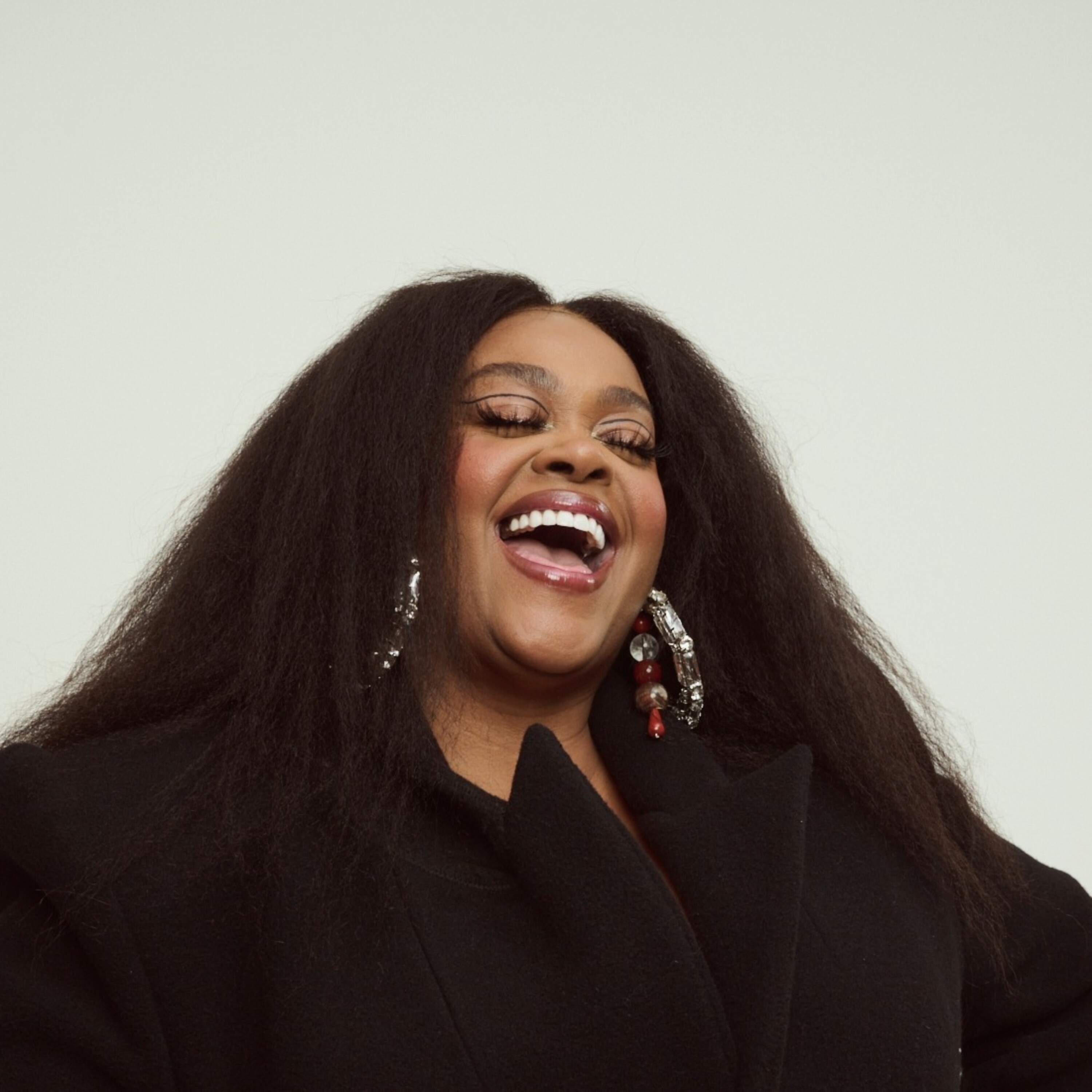
This message comes from Capital One with the Venture X card, earn unlimited double miles, a $300 annual Capital One travel credit, and access to airport lounges. Capital One, what's in your wallet? Terms apply, details at CapitalOne.com. This is Fresh Air, I'm Tanya Mosley, and my guest today is singer, songwriter, and actor, Jill Scott. She released her sixth studio album, to whom this may concern last month. Her first new music in a decade. Here's a single from the album, called Pressure. I wasn't de-estated, I guess, I guess, I catered.
So much pressure to appear, just like them. Pretty and gas-medic, elementary, alphabetical. So much pressure to appear, just like them. Just like them. So much pressure to appear, just like them. The song recently went to No. 1 on the Billboard Adult R&B Airplay Chart. And it's about the weight of being asked to look, sound, and move through the world a certain way, and being desired in private, but not claimed in public. And the quiet courage it takes to stop performing for someone else's comfort. Jill Scott has been making music for more than 25 years. The story goes that Quest's love of the roots first discovered her is part of Philadelphia's spoken word scene. Her 2000 debut, Who Is Jill Scott?
Words and sounds, volume 1, answered its own question with double platinum sales, three Grammy nominations, and a sound that is helped to find neo-soul. Since then, Scott has won three Grammys, written a best-selling book of poetry, and built an acting career that has spanned from HBO's The No. 1 Ladies Detective Agency, BET Plus's First Wives Club, and the role of Sheila and Tyler Perry's Why Did I Get Married. A character so beloved, Tyler Perry is bringing her back this year, and Why Did I Get Married Again for Netflix. And Jill Scott, welcome to Fresh Air. Thank you. It's a pleasure to have you. I feel the same way I'm so happy to be here. That song, Pressha, what a song for your first single in 13 years. It comes from such a personal place, and I just want to know the inspiration behind it. Pressha was one of the last songs that I got. I've been collecting music from producers for quite some time in order to make this album.
And I heard it, and I love the dissonance in the chords. The chords felt so dark and haunting, but it also, the music felt very sexy as well. Like, what is this energy? And I put paper to pen, and those are the first things that came out. I wanted you to be mine in the daytime as well as the night. Oh, this is someone who is desired but not claimed. And I like that idea because I know that there are people who didn't choose my beloved Beyonce. There are people who passed on Tyler the Creator. It's not specifically just for someone who is plus size, or who is brown skin, or who has freckles. Or, you know, it's bowled.
You know, it's the fact that you could be all of what you are and someone would pass on it. Desire you privately. But because society says that someone has to look a certain way, or be a certain way, or that you want to gain favor by having someone who looks a certain way on your arm. You know, I've seen it a lot. And it's always disturbed me, quite frankly, that you're not even choosing what you actually like. There's a widely circulated essay from a writer named Jasmine Canack, who said that pressure lands as a recognition for grown women. And she used that term in specifically. And I want to read an excerpt. She writes, What Jill Scott offers in pressure is something rare. She names the weight grown women carry quietly, the pressure to be everything, hold everything, absorb everything,
and will still make it look graceful. She understands what it feels like to realize you weren't rejected because you lacked value, but because your fullness didn't fit someone else's image. Word. Absolutely. Well said. How does it feel to start with something that's so rough and raw, and then you create this piece of work with an intention, and then your intention is received? It's overwhelming. It really is overwhelming. I know what I meant. I know how much I wanted the album to reach people in a real way. I wanted it so bad. I wanted it so hard for it. I pined over every line. Every word, every inflection. When you say you wanted it so bad, I mean, the thing that the headline of this record, this album, was it's been 10 years.
It's been a whole decade. Yes. And you've been gone living life and doing your own thing. You say you've been pining it, you've been wanting it. What do you mean? Was that break intentional? Or was it also a mix of you just trying to find your way back in some way to get to that thing that you're talking about? I've literally loved writing. From the very first time I read Nikki Giovanni's poetry. Loved it. How old was that? When was that? I think 12 or 13. Loved it. Never really saw myself on paper before. I could smell the lotion between my grandmother's legs when she would break my hair. When I read Nikki Giovanni. Like, I love that. I want to write like that. And when you say you want to write like that, I think for me, one of the most powerful things about Nikki Giovanni is she made the ordinary.
So beautiful. It was the place you wanted to be. Talking about the joy of killing a pregnant roach. You know. Yes, I know that joy. There's actually a song on the album called Ode to Nikki. That's right. And what's really powerful about it is it's in the cadence of the way Nikki wrote. I want to play a little bit of it and we'll talk a little bit more about it on the other side. She is not trapped in a perpetual loop. They are not doing what they are used to. He is not sitting on the same concrete wishing. She is a living, alive, cellosteen prophecy. He can actually taste his own vibrancy. She is swaying to her symphony. Rocking, rocking, her hammock. Feeling the breeze. Self-motivating. Self-satisfactioning. Wonderful curiosity. Exciting. Pages crumble. Much pride. Much humble. No more dumbing down. For what? For whom?
Exquisite views. Intentional luxury. Mind bending the spoon. Complex simplicity. Sympathical. Beautiful beings. Touched by the sun. Redefining shining. Vibrating sonically. That was my guest, Jill Scott. And that's a cut from her latest album to whom this may concern. And that cut is called Ode to Nikki. And you were really young. So you were about 12 or 13 when you first found out. Do you remember what it was you were reading? No. I honestly don't remember what it was. I should. I remember the pictures. And I remember how I felt. It was a book of poetry. But my English teacher named was Fran Danish. She gave us a list of people to do essay about. And I landed on Nikki Giovanni. And I just thought it was probably like some Italian guy or some Italian lady.
Yes. And I found this poet. Ego tripping obviously was big for me, particularly in the quote-unquote neo-soul era. We were all discovering poets and having poetry slams. In college, I tried to get into our class and couldn't. Yeah. Oh, I tried. Couldn't get in that class. I never actually had a chance to shake her hand. You never matter. I never matter. But the impact is massive. One of the things that I found remarkable as I was digging deeper into this new album is that. It's come out on your Blues Bay records. That is your label. You own this one completely. Has it offered you the freedom to be able to really sit in that pocket that you sit in? That allows you to speak that truth in the way that you do?
Yes. Everything has led me to this place. As this 53-year-old woman who is, you know, maneuvering her career the way she wants to, how she wants to, when she wants to, for whom she wants to. This is all been a part of the plan I didn't know. That was even happening. But I love it. I'm the same little girl who read a poem for my eighth grade graduation and got a standing ovation. And I meant what I said. The school that I went to, it had air condition. It had carpets on the floor. It had lockers. It had lunch. And from the school that I had come from before, you know, this was a revelation. This was everything. It set me up for wanting more.
So that little girl who reads the poem and everybody stands up and I'd never really done anything in public before. You know, got this? Yes. So we hear you. We feel you. We understand it. We see it too. It let me know that I wasn't alone. That there are people who dream for real. This is what to whom this may concern is all about. It's that little girl. Makes with some living. You know, being a daughter. My father passed. Being a mother. My son is in this critical area. Being a daughter as well to my mother. That's a whole other dynamic. Now I'm the leader in our household. You know, when my mother has been my mother, now I have to mother my mother.
Like, a lot of stuff, I turned 50. There was a light that clapped loudly in my ears. And there's no going back. I'm here now. This is the best life I have ever had. Period. You're at this place of such beauty where you say I am living the life I want to live. I am the age that I have always dreamed of being. But has it always been that way for you? For me, it really is about the journey. Listen, all that I wanted was a house on Spring Garden. And that's in Philly. Yeah. And what's Spring Garden like? Three, four story homes. They have white marble steps with rod, iron, banisters. Tall ceilings with very intricate crown molding and hardwood floors.
I mean, dream. I would walk by there real slow, hoping that somebody would have their window or their door. So I could take a peek. That's not what I come from. But I wanted it. That's all I wanted. That was it. And I was going to sit on the steps with my cat. And I was going to drink coffee with my legs crossed. That was the dream. Yes. My crown molding is so beautiful. It's, is there a moment when you realized every day, every day, every day? Like, I'm sure it's annoying. You know, I'm sure somehow, somewhere in somebody that this is annoying that anybody could feel so self-satisfied. I feel satisfied. When so often, everything seems so terrible.
Relationships are bad, kids are bad. The system is bad. And it is. And it is. It really, really is. And there are people who live within the light. They follow their inner voice, even when it sucks. They make terrible, wonderful mistakes and learn from them. Let's talk a little bit about growing up in Philadelphia. You grew up primarily with your mom and your grandmother in North Philly. And this is not always the case. But the thing that I've been thinking about is some of the lessons that you learn by being in a multi-generational home of women. You're someone who exudes very much femininity and softness. But also kind of a way of being. You set this intention with every piece of music that you put out there.
What was your multi-generational household like? Good question. First of all, full of love and humor. My mother and my grandmother both competed for my attention. Yep, through humor. Sometimes, sometimes I've been beloved. Okay, so they competed for my attention. My grandmother was born in 1917. She had a whole bunch of stories. Bunches and bunches of stories. Around, so brown. And her skin texture was like a soft peach. Stunning. She looks very much like the actress. I think her name is Wummi. Oh, from centers. Yes. That's what my grandmother looked like. She's the one that gave me God.
My grandmother. She introduced you to God here. But she also a singer herself. Yes, but only in private. I think I've heard you say she sounded like Mahalia Jackson. Something like that. It's just sincere. What were the other ways that your mom and grandma tried to get your attention, compete for your attention? That's an interesting thing because typically it's the other way around. The kid is trying to get the attention of the adults. No. My grandmother was in the front room. My mother was in the back. And I could go and visit one. And then I had to go and visit the other. And then go visit the other. And that was my days. Going back and forth. But they wouldn't come together. Now they worked together beautifully in creating a home. A home was very, very important to my grandmother. And became very important to my mother as well. We lived in North Philadelphia. There were lots of ROD and T.S.s. My mother fought them hand in nail.
Like literally. Literally. Lice and scrotches. Yes, they fought them hard. And she won. She got the house next door to us. It had been abandoned. It was one of the reasons why there was so much going on. Got that house clean at house up. Do you remember when she decided I'm going to buy that house next door? And I'm going to clean it up. And what you thought as a young girl watching your mom do that. I just thought it was dope. These are the things I expect out of her. My mother will make you a pair of pants. You know, she could do that. Make you a great soup that will keep you full all day long. You know, she could do that. She started doing drywall with people. You know, a way to make money but also to learn how to put up drywall. And then she started learning how to put down hardwood floors. And then some plumbing. So she was hanging around some people that knew how to do some things. Was this all in her day job?
Because she was a dental hygienist, too, right? Right. For a while. She was a dental hygienist till I was about 14. But then, you know, after that, I'm going to do whatever I want. And that was a little tough. Because we didn't know, you know, how we were eating. But she did what she wanted to do. And one of the things she wanted to do was clean up this house. It was important to her. And that's what she did. Because all those rotons and an abandoned house is making it their way to your house. Right. Yeah. Right. Was there a lot of music in your home? There was some. Uh-huh. There were nights when my mother wanted to talk. And she would play Millie Jackson. And we would list, uh, drink Man of Shepherds. That was the thing. What is that? Man of Shepherds is like a Jewish wine. I think it's not very good. It's very sweet. And hold for you. Uh, I don't know. Maybe 15, 16. But having a little Man of Shepherds and listening to Millie Jackson or the pointer sisters.
My mother's music was very rooted in womanhood. My grandmother's music was very rooted in Jehovah God. And my music was rooted in, like, verses. Hip-hop. Hip-hop. Storytelling. Yes. Nicki Giovanni. She's open a door. I've never turned back. Our guest today is Grammy-winning artist Jill Scott. We'll be right back after a short break. I'm Tanya Moosley. And this is Fresh Air. I'm taking my freedom. Pullin' it off the shelf, Pullin' it on the chain. Winner-wr cał, Longing on freedom. Pullin' it in my car. Wherever I choose to go, It won't take me far. I'm living my life like it's hoping. Living my life like it's holding. Living my life like it's holding. Living my life like it's losing.
Living my life like it's holding. This message comes from Comcast. Nothing brings people together quite like Team USA at the Olympic Winter Games, from NBC Universal's iconic storytelling to the innovative technology across Xfinity and Peacock. Comcast brings the Olympic Games home to America, sharing every moment with millions. When Team USA steps on to the world stage, people are not just watching, they're cheering together. This winter, everyone's on the same team. Comcast, a proud partner of Team USA. When did you realize you could sing? I think I always knew. It was just mine. This wonderful thing that would calm me down and give me peace and make me laugh and get the feelings out. I remember when other people, yes. Yeah, I was a ninth grade. I did freshman day.
And the initial audition, I had a drummer. And it was me and a drummer. We were doing thing from a Hogony. And a movie, yes. And all the kids were like, oh! Because it felt like that. Mr. Murphy, who gave me so much, did not like that and played the piano. And I was so disappointed because I really like the fact that the kids went to all-girl school. All the girls were like, yeah, that's cool. But he took it and played the piano. And I sang it from a different place. It was so sincere. I remember feeling so sincere about those words. And then the place erupted. It was quiet first. And I finished the line and then silent. And then that was it.
That was the moment like, oh! You like it, too? Because before then, you had been singing but just singing to yourself, not in front of other people. Not in front of other people. Where would you sing? Where my grandma sang in the tub. And when you're cleaning, or all my way to school, or, you know, on the bus, or every says, while Plain wrote, like, you know, everywhere. There's this story that Questlove from the roots discovered you as part of the spoken word scene in Philadelphia. How do you remember it? I was in a poetry reading. I had been doing it quite a bit. I had my feelings heard in my girlfriends. We're like, rep poetry, and I was like, okay. So I wrote, and my girlfriends were like, you're a poet. And I was like, I'm a poet, like Nicky T. Avon. I'm gonna do it more, so I did it more. And started to make a little bit of a name for myself.
And then Questlove came to a poetry reading. I think he was DJing. You might have been, I don't know. But he was there, and he asked me if I ever wrote songs. And I was like, yeah, I do. But I didn't. I lied. What was it in you in that moment that made you say, yeah, I can. And how did that feel knowing that, oh, you might be able to enter this world? I didn't really think about the world. I just honestly enjoyed what I was doing. And you mean there could be more of that? Oh, I would like more of that. So yeah, I went. You know, when he invited me to the studio to write a hook for them, sure. I'll go. I have been listening to Do You Want More faithfully. It's one of my favorite albums still is to this day. So, you know, this is a big deal to be asked by Questlove, but it's also like Philly.
Cause this is the guy that played, you know, on the street corner. Right, you knew him at that time. I didn't know him. I wanted to. I knew him. I knew of them. Yeah, you know, but I don't, I don't necessarily assert myself in these places. It has to be organic from me so that it's real. So you entered that studio and then you started writing. Yeah. And there's this song you got me was your first real song writing credit, a song that you sang for the roots. But the version that we heard was Erika Badu's version. Take us back to that moment. Did you record the track? Yes. It all happened in one day, like one afternoon. I went to the studio, Sigma Sound. And Scott Storch and I were talking hanging out. And he was that just for folks who don't know. Scott Storch is a big time producer now. Okay. Yeah. Big time. And at the time he was playing keys for the roots. So we go into the studio and it was very simple.
He started playing a melody. I sang the words. He said, can you record that? And I said, okay, recorded it and we went to lunch. We went to an Italian restaurant. I kind of forgot all about it. I don't know why, but I did. You know, either they liked it or they didn't. Yes. And they liked it. So I heard through the grapevine. I was told that they liked it, that they were going to use it. Then I heard it was a single. I was like, get some single. Oh my God, that's crazy. I can't believe it's happening to me. And then I was on 22nd Street. I was looking for like beauty supplies or walking by the beauty supply places. And I heard the song and I was like, this is the song. And it wasn't my voice. And I was like, what is cool? And then I knew who it was. You know, I listened to Luma. I was like, that's Erica, but I do. That's Erica, but I do. I made it. So you weren't feeling like, why isn't that my voice? You were feeling, oh my gosh,
Erica, but I do is singing my words. I got about 14 good seconds, wait a minute, what happened? That's not me. And then I realized it was way bigger than that. Like way bigger. This is a door. A door has opened. You know, and Erica will tell you herself, she doesn't sing anybody else's music. I didn't know that either. So that knowing that, what does that mean to you? Knowing that she doesn't sing anyone else's music, but she was singing your words. I'm telling you, it's really ridiculous. Well, you eventually ended up touring. I'm up touring. I'm feeling fresh to death, I'm so blessed. Yes, yes. Well, you eventually ended up touring with the roots. And then you were singing every night, every city that you went to, you got me. Got a chance to learn and almost lost that job because I had a manager who wanted to make money. And it's not that I didn't want to make money,
but I'm singing one hook on one song. You know what I mean? How much can you really ask money to pay you to sing one hook? And I'm getting an opportunity to see places I've never been. I haven't traveled much. I've been down a lot of money. You know, but now I'm getting to go from city to city and see these venues. And I'm performing in front of people. And it's a lot more than poetry readings. You know, like, but luckily we fixed that. We had to partway she and I. And you went on tour. And I went on tour. And did you write your first album while you were on tour? No, because when you got me came out, that gave me the confidence, you know, to go ahead and do this. I have been calling producers and musicians for six, seven months. I don't know how long, but a long time. I was waiting for somebody to call me back so that maybe I could write some songs for them. And that was the goal, you know, to be a songwriter. Yeah, yeah. I liked it.
It seemed, it fit me. And I figured if I could talk to the person, the artist, and they could tell me some things about their life, I can paint, I can paint for them. And that was the goal. Let's take a short break. If you're just joining us, my guest is singer and actress, Jill Scott. We'll be right back after a break. This is Fresh Air. This message comes from Comcast. Nothing brings people together quite like Team USA at the Olympic Winter Games. From NBC Universal's iconic storytelling to the innovative technology across Xfinity and Peacock, Comcast brings the Olympic Games home to America, sharing every moment with millions. When Team USA steps on to the world stage, people are not just watching, they're cheering together. This winter, everyone's on the same team. Comcast, proud partner of Team USA. So once you started getting deep into your performing and you understand yourself to be an artist,
you wrote this really amazing remake of the Star Spangled Banner. And a video of the performance that you did at the Essence Fest in 2023, it comes up every now and then on social media. A few months ago, it was back being viral again. I think that people come to it when we are at moments of unrest in the country and it kinda makes its way again. You were 19 years old when you wrote this and I wanna play a bit of it, let's listen. Oh say, can you see? It was through by the blood in the streets. That this place doesn't smile.
All you colored child who's blood built this land with sweat and their hands. But you'll die in this place and your memory leaves. Oh say, does this truth hold this truth hold and in your hands?
This is not the land of the world. But the home of the slave. That was my guest, Jill Scott, performing at Essence Fest in 2023. Tell me a bit about what spurred you to sit down and write that at 19 years old. I don't know exactly, I don't remember what it was. It made me write it. I'm mostly amazed at what made me sing it now. You know, made me sing it years and years later. I don't know, I think I just was so frustrated. Just so frustrated.
And I knew I wasn't lying. I mean, it's a couple of years later, I'll say, can you see by the blood in the street? That this place doesn't smile on you, colored child? I could have said a lot of things. I said, colored. It's a big spectrum. Who's blood built this land? What is America without the Chinese on the railroad? What is America without, you know, they're all that free labor? And then please include all the other people that have contributed to this country. In so many ways, whose blood built this land, people died here. You know what, I said with sweat and their bare hands, but you'll die in this place and your memory erased. Look at what's happening, look at it. I know that people went immediately
to African Americans being enslaved. I'm talking to all of us. Every single, every kind of person you are, there is an oppression. And we're in a place that just needs us to purchase, and purchase ourselves to death. You know, many people think it's sacrilegious to change even a word from the star-spangled banner. The stuff has underbellies. Well, we're not interested in an underbelly. And guess what else? I risked a lot to share that. That's what I meant when I said, why did I don't even know why? I don't know how to. When you say you risked a lot, just knowing that it's a song. I got death threats. Whole hours of blogs with people being very, very ugly
towards me. There was a lot of stuff about race. I was talking about us as an American society on a whole. You know, this was tough. This was tough. But this is what we do here as artists. We're not going to say, I'll always say the nice thing. You feel like that's your purpose. I do. I do my writer. I just want to do. If you're just joining us, my guest is singer and actress Jill Scott. More of our conversation after a short break. This is Fresh Air. This message comes from Comcast. Nothing brings people together quite like team USA at the Olympic Winter Games. From NBC Universal's iconic storytelling to the innovative technology across Xfinity and Peacock, Comcast brings the Olympic Games home to America, sharing every moment with millions. When Team USA steps on to the world stage,
people are not just watching, they're cheering together. This winter, everyone's on the same team. Comcast, proud partner of Team USA. Before I let you go, I got to talk to you a bit about your acting career. Why did I get married again? It's coming to Netflix later this year. It's the third film in the franchise. It's nearly two decades after the original. And you play Sheila again. The character who was married to this man who is just ridiculous. He openly ridiculed your weight and treated you like you were lucky to have him. You have said that the filming of that original was one of the hardest experiences of your career, that Tyler Perry directed that set by having extras hurl insults at you night after night to provoke that raw emotion that we see in your performance. And now you're back to playing her again. Tell me about why it was the hardest moment
in one of the hardest moments in your career. It wasn't. It wasn't. No. No, people made it a lot more than what it was. I did not enjoy that. That was not a favorite for me to be verbally accosted by strangers at work. No, I did not enjoy that. But being in Botswana in a hundred and nine degree temperature would have fatsoed on saying words like Ylokulela, that was hard. Oh, let's talk about this. So you played precious. That was the start. You played precious in the HBO series, The Number One Ladies Detective Agency. And that's what you're talking about. You traveled to Botswana to play that character. It was based on Alexander McCall Smith's novel, Set in Botswana. And just to let the audience know, the story follows this woman who after her father dies, gains an inheritance to open the first female run
detective agency. And she is deeply intuitive. She knows this world. She's able to get into it and solve cases. I actually want to play a clip where your father has just died and you're talking with your friend about what you want to do with your life. And you say you want to help people solve mysteries. Let's listen. Every man I am meeting wants me to change something. I could have thought to fix things myself. And what brings you to Khabodon? Ah, I just sold my father's kettle. So I'm looking for a nice house in the city. And then I would find an office and start my own business. And what business is that? I'm going to open a detective agency. Really? Error. And then the bad, bad, bad, bad, a lot's out. What? Those are the very same words my father said to me
when I told him. That was my guest Jill Scott in the HBO's number one ladies detective agency playing precious who owns a detective agency and hear a little baby Jill's voice. You can hear how light it was in it. So young. Oh my gosh. But the accent, how did you, how did you perfect that accent? Oh, they worked on me. Yeah. Well, when I got there, I realized I was being tutored by a coach, a dialect coach. Got there and realized my accent was actually Zim. It wasn't even the right, it wasn't the right dialect at all. So I had to unlearn and relearn. And I had a group of women. I would just call them a tribe of elder women. And if I got something wrong, you'd hear. And I was like, oh no. You know, went through every line, wrote it in phonetics so that I could understand and say it properly.
Practice so much. It was an incredible experience. I just took my son for his 13th birthday to Botswana because he had to be there. I was pregnant with him. Well, you were there. Why was there? In a Fatsuit in 109, did degree weather. Yes. That was a challenge. That was tough. What a shame that it was only a season. It was a crying shame. I loved it because people had an opportunity to see that Africa isn't just war and famine. And it was only one season because Anthony Mengele passed. He passed away. Sydney Pollock passed. And I was pregnant. I shot up until seven months of pregnancy. And then after that, I was like, okay, guys. So in some of those episodes, you're seven months pregnant. Yeah.
Wow. Yeah. Which is why for his 13th birthday, my son, I had to take him to Botswana because we don't have a right of passage as, you know, African-Americans. We called it a bromitza. That's pretty good. Yes. We had an opportunity to sleep and hang out under the Kalahadi night, the stars and eat delicious foods and meet people from all over the world, and particularly from Botswana. They just welcomed him beautifully. It was great. You know, Jill, your first album came out in 2000 when I was coming into myself as a woman. And I just want to thank you for all of what you have put out in the world. You've allowed me to see myself. And it's a beautiful thing. And then I can't even, I don't even have the words to tell you. I'm telling you, I really love this anti-life.
Yeah. I really, wherever I can help, I am into it. Wherever I can help, especially when it comes to, I've learned this, when somebody wants something from you, you give them a task. They handle the task and do it well. Then you can proceed. But other than that, you know, people talk a lot. Oh, I want to do this. I want to be this. I want to go here. Let me see what you do. Do you do that? Because I'm sure you have a lot of young artists and singers who come to you because they want to, they want advice from you. Sometimes. That's what I do. Yeah. Let me see what you do. This is how I've learned to navigate. Do you have them do? Whatever I need them to do. Yes. Whether it is to learn an album or listen to an album, whether it is... Aretha Franklin sent me to get her two hot dogs with cooked onions and mustard.
You met her. You told her you loved her. Yes. And then she said, what? Go to the corner and get me two hot dogs with cooked onions and mustard. And I went. Yes. Okay. I think I had the number one album in the country at the time. Yes. And I went to the corner and I got those hot dogs and I brought them back. And I, you know, just waited. I don't think she ate them. What did that teach you? Well, I would once say, be nicer to people, but to... You got to earn your stripes. Then I was like, aww. You know, I wanted her to be nicer to me, to embrace me, to tell me that... You know, give me some advice and hold my hand a little bit. But that's not what happened. Okay. Now I'm in a... Now I am that woman to a certain degree. And now I just have a task for you. What is she going to do? Don't waste it. Don't waste my time. Don't waste your time.
It's too valuable. And I like this. This is the auntie portion she's a little tougher. And I like that part. This is good for me. It's good for you too if you want it. Absolutely. If you want it. I'm very grateful to be a part of so many people's maturation. There's nothing wrong with being mature. There's nothing wrong with growing up. Jill Scott, this has been such a pleasure to talk with you. Thank you so much for your time and for your music and your art. Thank you. You're welcome. Jill Scott's new album is called To Whom This May Concern. Fresh air's executive producer is Sam Brigger. Our technical director and engineer is Audrey Bentham. Our interviews and reviews are produced and edited by Phyllis Myers, Roberta Shorrock, Ann Marie Baldenado, Lauren Crenzel, Monique Nazareth, Fayette Chaliner, Susan Nyokundi, Anna Bowman,
and Nico Gonzales Whistler, our digital media producer is Molly C. B. Mesper, Teresa Madden, directed today's show. With Terry Gross, I'm Tanya Moosley. This message comes from Mint Mobile. If you're tired of spending hundreds on big wireless bills, bogus fees and free perks, Mint Mobile might be right for you with plans starting from $15 a month. Shop plans today at MintMobile.com slash switch. Upfront payment of $45 for three month five gigabyte plan required. New customer offer for first three months only. Then full price plan options available. Taxes and fees extra. See MintMobile for details. This message comes from Warby Parker. Prescription I wear that's expertly crafted and unexpectedly affordable. Glasses designed in-house from premium materials starting at just $95 including prescription lenses. Stop by a Warby Parker store near you. This message comes from Capital One. Capital One offers checking accounts with no fees or minimums. What's in your wallet?
Terms apply. See CapitalOne.com slash bank for details. Capital One NA member FDIC.
More episodes
More from Fresh Air

Mahershala Ali
Fresh Air

A John Prine Appreciation
Fresh Air

Veteran White House reporter April Ryan’s ‘Blacklash’
Fresh Air

How Defense Secretary Pete Hegseth brought the culture wars to the military
Fresh Air