Jonathan Keeperman: “We need to reassert a healthy masculinity”
About this episode
President Donald Trump’s cuts to USAID were cruel, said Democrats and the media. Indeed, they argue, the underlying cause of most of society’s problems is lack of empathy. If only we were kinder and gentler with each other, they say, we would finally be able to end poverty, inequality, homelessness, war, and oppression generally.
But societies have become vastly kinder and gentler over time. Levels of poverty have declined dramatically in part because we redistribute wealth from the rich to the poor. And racial and sexual minorities experience less oppression and greater freedom today than at any point in recorded history.
Of course, more should still be done to enable all humans to flourish. For example, the United States is in the midst of a severe crisis of homelessness, untreated mental illness, and drug addiction.
But those problems do not result from a lack of empathy or care. California, for example, has spent $24 billion on homelessness since 2019; it grew 40% in that time period.
In fact, the increase in homelessness, addiction, and untreated mental illness is more the result of enabling and even subsidizing them than cracking down on them. That’s because being arrested and being mandated rehab or psychiatric care is often the only way that addicts and mentally ill people are able to escape life on the streets.
A similar story can be told about many other social problems. Psychologists, including Jonathan Haidt, have found that coddling children results in them being discouraged more easily when they encounter problems. Their challenges continue in schools when teachers allow children to pass classes despite not being able to read.
In fact, argues author and publisher Jonathan Keeperman, who I interviewed recently for this podcast, there has been a “remarkable overcorrection of the last two generations toward social norms centering feminine needs and feminine methods for controlling, directing, and modeling behavior. Many from left, right, and center have made note of this shift. In 2010, Hanna Rosin announced ‘The End of Men.’ Hillary Clinton made it a slogan of her 2016 campaign: ‘The future is female.’ She was correct.”
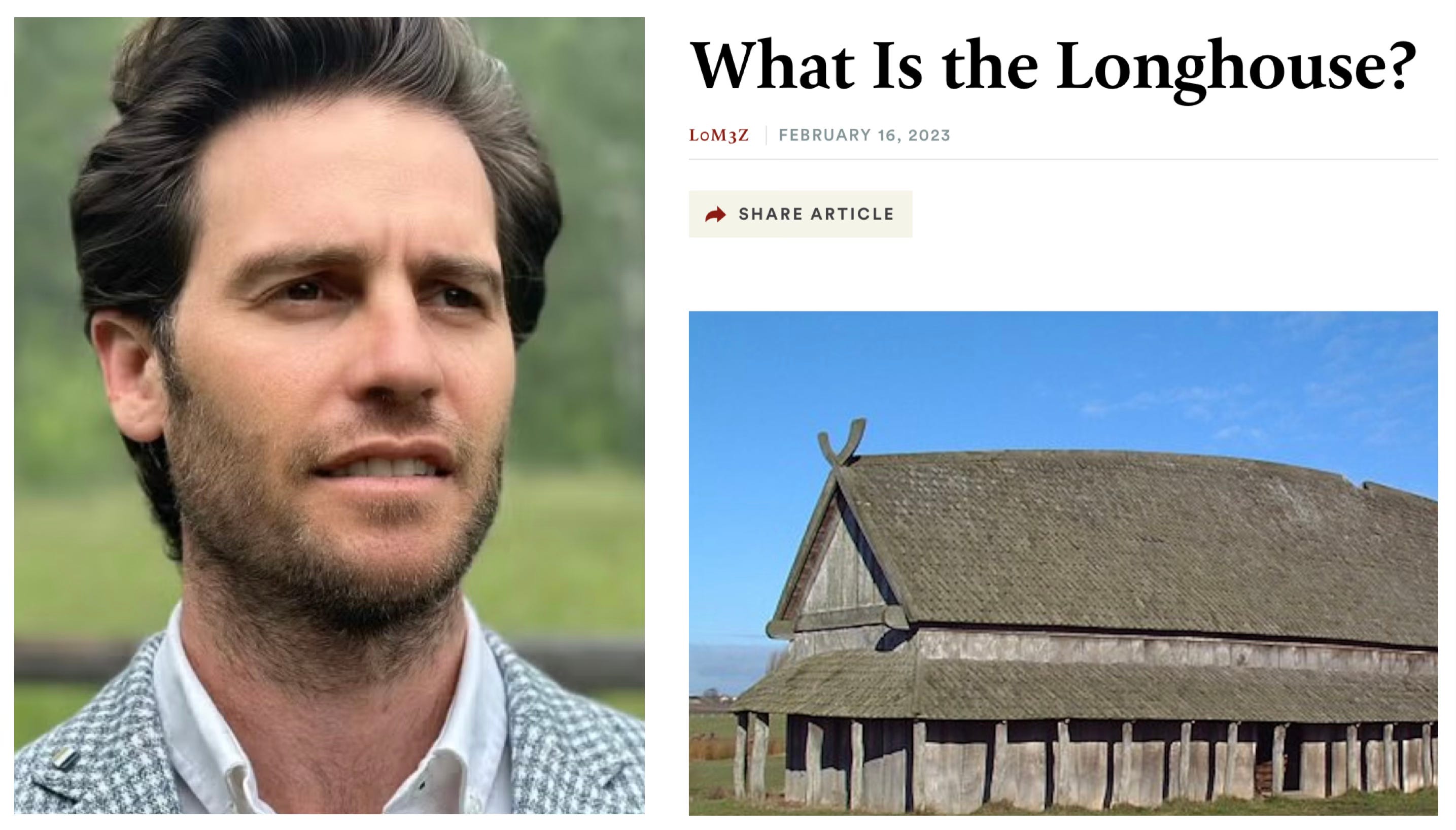
In a viral 2023 essay in First Things, “What is the Longhouse,” Keeperman used the metaphor of the indigenous Longhouse to describe female-dominated and overly feminized institutions.
“The most important feature of the Longhouse, and why it makes such a resonant (and controversial) symbol of our current circumstances, is the ubiquitous rule of the Den Mother,” he writes. “As of 2022, women held 52 percent of professional-managerial roles in the U.S.… And because they are overrepresented in professions, such as human resource management (73 percent) and compliance officers (57 percent), that determine workplace behavioral norms, they have an outsized influence on professional culture, which itself has an outsized influence on American culture more generally.”
The increase of women in our institutions is not the only reason for the rising power of feminine values in society. Other factors play a key role. One of them is likely the success of civilization itself in reducing violence and obviating the need for traditionally masculine norms. Another factor is the well-intended turn toward values of openness and inclusion after the horrors of the First and Second World Wars.
Get every episode summarized
Each time Public publishes, we email you a written briefing from the transcript — the topics, who appeared, and any specific claims, with the ad reads skipped.
Email me new episodesFree for 3 shows. No card needed.
Hosts & guests

No transcript yet
This episode has not been transcribed. Request it and it moves to the front of the queue.
More episodes
More from Public

Pascal Clérotte: Ban on front-runner Marine Le Pen is “nail in the coffin of Fre...
Public

Matt Goodwin: UK is “a big pile of wood covered in gasoline”
Public

Roger Pielke, Jr.: “Climate change is going to fade from view like overpopulatio...
Public

R.R. Reno: “We may be moving to a point where the American right sets the agenda...
Public