About this episode
Get every episode summarized
Each time This Week publishes, we email you a written briefing from the transcript — the topics, who appeared, and any specific claims, with the ad reads skipped.
Email me new episodesFree for 3 shows. No card needed.
Hosts & guests
Transcript ready
124 searchable segments. Every word is indexed and playable.
Full transcript
This Week — Judge never reconsidered working at ICC despite sanctions. Machine-transcribed; use the interactive transcript above to jump the player to any line.
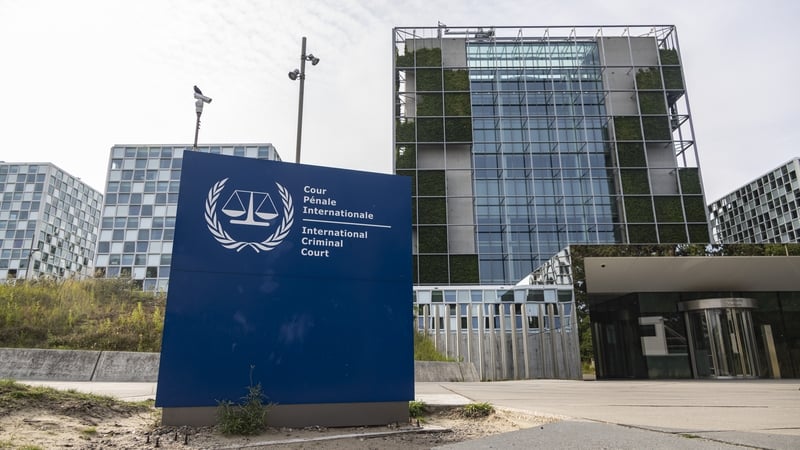
You're welcome back to this week on RT Radio 1. A Canadian judge at the International Criminal Court in the Hague undertook an investigation into possible atrocities in Afghanistan, including US troops and, as a result, has been sanctioned by Washington. The effects on Kimberly Prost were immediate and far-reaching, including being shot out from most of the international banking system, online shopping, airline and hotel booking systems. The US State Department accuses the ICC of infringing US sovereignty, given that it doesn't recognize the court's jurisdiction. Judge Prost has been explaining to me how she plans to continue with her judicial work irrespective of the consequences and what being sanctioned by the US government means in real terms. The effects are felt immediately. For example, within a few hours, the credit cards were no longer working or most of them, some of them was a little delay. These all credit cards are canceled immediately, no matter where they were issued, whether
they issued in the Netherlands or Canada, they can no longer function once you're sanctioned because of the influence of the United States in the financial context. So that was one side of it. And then I started to get notices from various services because obviously any American company can't provide services to you, although it's random as to which one. Someone's respond immediately or which one's interpreted as applicable. Amazon was the first one to notify me that my account had been canceled and then I suppose the most traumatic moment was then I went home, wasn't even thinking about it and spoke to Alexa who would not speak to me. She had cut off completely. And then there was other things that followed from that, whether it be on my emails or other types of services, inability to use certain booking companies, that kind of thing. So those sanctions were felt almost immediately and they continue because you still get met
with surprises rising from your access to banking services, which transactions will go through if you retain banking services, which I have, you still don't know whether the other bank you're dealing with will accept your payments, things of that nature. So it's sort of a learning process. It comes quickly and then you learn more about how it can affect your life. The ICC is based in the Hague. So if you have a Dutch bank card, how is it that there is American reach to prevent you from being able to use it? Yeah, it's a very good question. What was the credit card? It's because of their involvement in the Swift system and their control over all of the major cards, these are MasterCard, American Express of course. The debit cards, they can work if your bank is willing to, a bank can make a business decision that they simply don't want to deal with you here in Europe. That's over compliance. These sanctions are not binding in Europe.
But that happens. Thanks to simply say we don't want the trouble, our American component or investments or whatever it may be, your business is important to us. So you have that factor. But also there's mysterious things that honestly I'm still trying to figure out where I go to make a transaction and say between here, I was in New Zealand recently, with my debit card between here and New Zealand, what American role can there be in that process? Whether it's just compliance departments that are over-compliant, I don't know. But it's really frustrating because it's unpredictable when that's going to come. And as you say, in a context where there doesn't seem to be an American role. I saw your interview with New Zealand TV and your difficulties even trying to secure a hotel because once again, it wasn't just the financial card, your name was enough to trigger a red flag. Yeah, that was one of the most surprising things and I know at the university that it kind of brought me out to do a fellowship there was making a reservation for me with Expedia
and they were paying and it was simply the fact that when they gave them my name automatically, they rejected the booking. That's pretty shocking for everyone involved, they found that quite shocking. And what are you able to do and I'm not being glib here, but apart from carry around wads of cash? Well, it really gets difficult, fortunately here within Europe generally, my debit card will work, but that's, you know, I'm fortunate to have that service. But there's a number of situations where you simply have no choice but to use cash that certainly happened to me when I was traveling in New Zealand, you have to resort to cash. Sometimes you can find ways like there's direct debit systems in some places like there is here in the Netherlands, but really, it's really limiting your back in the 1980s. This sanction wasn't just addressed to you, it was to others in the ICC, within that, the
indictees, if I call it that, what have you been able to do to get around it? Well, so far, I mean, we, other than working on practical measures and we, we try to work our, certainly, our registrar has been working with industry, with banks, trying to convince banks to make financial institutions to make decisions, which are good business decisions, and not just to automatically comply with these sanctions, that's very important. And there are a number of us, as you say, there's eight of us on the bench, and three of the prosecutors who have been sanctions. So we also talk about, you know, how do you make arrangements for this or that, practically speaking, how do you use Uber, Uber, for example, using gift certificates, but really, it's what's important is these institutional work, where we're trying to build up here in Europe in particular, and elsewhere, for example, in Canada, cooperation from industry, where
there's not automatic compliance with sanctions, which are not binding outside of the United States or in reference to American company. Now, the United States is outside of the ICC, why did it decide to sanction you on the basis of the work that you were doing? Well, the United States took the position, the executive order was adopted against the ICC, and then judges have been added on the basis that we have been implicated in cases involving the United States, or its ally, specifically in this instance, Israel. So I was sanctioned because five years ago, sitting temporarily in the appeals chamber, I'm a trial judge, I unanimously with my four colleagues, we authorized the prosecutor to investigate the situation of allegations of these crimes in Afghanistan, which is a state party, and included in that was a component.
This was the whole situation, so involving alleged crimes by the Taliban, by Afghan forces or other forces, and there was a component relating to the United States. And as a result of that, I was sanctioned. Given the extent that the sanctions has had on your life in your enumerated sum, I'm sure there's even more if you sat down and we were talking for longer, did it make you question the work that you are doing for the ICC? Absolutely not, never for a moment, never for a second. The work of this court is, as I've said, about bringing justice to victims. I sat at the Yugoslav Tribunal, the ICTY as well, on a genocide case related to Srebrenica. I've done this work here, I've worked in international criminal justice for much of my career, and I believe so much in the mission of this court to bring this justice through fair trial processes. And I can assure you that while it's painful and we're all dealing with difficult situations, noiances in our day-to-day life, some of my colleagues'
worst because it affects their children's visas and things of their nature, nothing has affected the way we do our jobs, the judges, or the prosecutors. If you're looking at the world that we current exist in, one could be, have the sense that things are going backwards when it comes to trying to deal with international issues. Instead of a world order, multilateralism, collectivism, it seems to be going the other way. Do you believe that the ICC can endure in this global climate? I have no doubt that the ICC in more importantly, the Rome statute system, which is about everyone together states and the court working towards bringing justice. It's the imperative of justice that has driven this whole project, this whole idea of individual criminal responsibility of international criminal law. And I am quite certain it will survive the, what are challenging times? Back after World War II, we made so many accomplishment steps forward, but then there was a whole period where there were crimes being committed globally that had no prospect for justice.
And the advancements with the tribunals and then the ICC was a huge step forward in a better time. I'm confident this is a difficult time, but we will come through it and we will eventually progress again. It's the nature of international law and this hard criminal justice project, but it's too important to in any way abandon. If anything, we must fight hard to defend it now, fight harder. And that was ICC judge Kimberley Prost.
More episodes
More from This Week

Minister Chambers on Budget 2027, Carbon Tax, Fare Hikes
This Week

Legal row sees Tusla paying for legal aid for children
This Week

Remembering Frank McDonald
This Week

Summer tourism 'on par with last year' - Fáilte Ireland
This Week