Keeping Elon could cost Tesla millions, Rivian R2 and affordable Lucid arrive
About this episode
On today's episode of Quick Charge, a new lawsuit alleges that Tesla was negligent in retaining Elon Musk as CEO, comparing him to a fast-talking salesman and questioning his input into engineering and safety decisions at the struggling EV brand.
Plus, we explore the executive exodus at Tesla that began in mid 2024, ask why Tesla cars equipped with FSD are driving people into lakes and through railroad crossings, then take a look at the Rivian R2 and upcoming, mid-sized Tesla Model Y "killers" from Lucid.
Are these the most credible threats to Tesla's Model Y dominance in America's EV market, yet, or will Tesla's "negligent" CEO come through on his AI-powered promises?
Source Links
- Tesla Cybertruck owner sues over FSD crash, alleges ‘negligent’ retention of Musk
- Tesla ‘Full Self-Driving’ drives through railroad crossing barriers in viral video
- Tesla loses software director who built its OTA and Robotaxi infrastructure
- Tesla (TSLA) VP of Finance leaves after 17 years as executive exodus grows
- Rivian reveals full R2 lineup and pricing, starting at $57,990 with a $45K RWD model coming later
- Lucid (LCID) reveals Cosmos and Earth SUVs as first midsize EVs, starting under $50,000
Prefer listening to your podcasts? Audio-only versions of Quick Charge are now available on Apple Podcasts, Spotify, TuneIn, and our RSS feed for Overcast and other podcast players.
New episodes of Quick Charge are (allegedly) recorded several times per week, most weeks. We’ll be posting bonus audio content from time to time as well, so be sure to follow and subscribe so you don’t miss a minute of Electrek’s high-voltage podcast series.
Got news? Let us know!
Drop us a line at [email protected]. You can also rate us on Apple Podcasts and Spotify, or recommend us in Overcast to help more people discover the show.

If you’re considering going solar, it’s always a good idea to get quotes from a few installers. To make sure you find a trusted, reliable solar installer near you that offers competitive pricing, check out EnergySage, a free service that makes it easy for you to go solar. It has hundreds of pre-vetted solar installers competing for your business, ensuring you get high-quality solutions and save 20-30% compared to going it alone. Plus, it’s free to use, and you won’t get sales calls until you select an installer and share your phone number with them.
Your personalized solar quotes are easy to compare online and you’ll get access to unbiased Energy Advisors to help you every step of the way. Get started here.
Get every episode summarized
Each time Quick Charge publishes, we email you a written briefing from the transcript — the topics, who appeared, and any specific claims, with the ad reads skipped.
Email me new episodesFree for 3 shows. No card needed.
Hosts & guests
Transcript ready
151 searchable segments. Every word is indexed and playable.
Full transcript
Quick Charge — Keeping Elon could cost Tesla millions, Rivian R2 and affordable Lucid arrive. Machine-transcribed; use the interactive transcript above to jump the player to any line.
Welcome to Quick Charge, it is March 12th, 2026th and I'm your host, Joe Boris. There is a lot going on this week in the world of VVs and as always we are going to start with Tesla and in a legend case of negligence. Tesla's cyber truck owner is suing over a full self-driving crash and alleging negligent retention of Elon Musk. A Texas woman is suing Tesla for $1 million after her cyber truck running on autopilot attempted to drive straight off a huge snover pass and crashed into a concrete barrier. The lawsuit includes an unusually pointed allegation that Tesla has been negligent in hiring and retaining Elon Musk as CEO.
According to a court filing reviewed by Electric, Plain Teft, Justine St. Armour, purchased a used cyber truck with Tesla's full self-driving package from the Florida dealership in February 2025. On August 18th, St. Amor was driving the cyber truck on the 69 Eastex Freeway in Houston with the FSD engaged. As the vehicle approached a y-shaped overpass split near 256 Eastex Park and ride, the cyber truck should have followed the curve to the right. Instead, according to the petition, the vehicle attempted to drive straight ahead directly into a concrete barrier at the edge of the overpass with the freeway below. St. Amor disengaged the driver's system and grabbed the wheel, but it was too late to avoid the collision. While negligence and product liability claims are standard fare in Tesla autopilot lawsuits, this case goes further than most. Among the 16 specific allegations of negligent conduct, the petitionate uses Tesla of quote, negligently hiring and negligently retaining Elon Musk as CEO and allowing him to participate
in product design decisions. The filing also alleges that Tesla was negligent in quote, allowing Elon Musk to override the concerns of engineers at Tesla, specifically the complaint claims that Tesla engineers recommended incorporating radar and lidar sensors, the laser-based system used by competitors like Waymo into its vehicles to improve the safety of its driver assistance system. Musk rejected the recommendation in favor of relying solely on cameras, a decision that has defined and limited Tesla's approach to autonomy for years. The petition describes Musk as quote, an aggressive and irresponsible salesman who has long history of making dangerous design choices and over-promising the features of his product. I don't know. I feel like I've called him worse, that doesn't feel that bad to me. A growing legal wave of cases is coming though. The floodgates are definitely open and this is coming right after a massive nine figure 140 plus million dollar court case ruled against Elon Musk and Tesla just a few weeks ago.
And this case arrives at a particularly difficult time for Tesla's self-driving program as well. NHTSA is currently investigating 2.8 million Tesla vehicles equipped with FSD after connecting 58 incidents to the system, including crashes or full self-driving directed vehicles into opposing lanes through turn-only intersections. Tesla has struggled to comply with the investigation requesting multiple deadline extensions to deliver the crash data. Meanwhile, Tesla's Robotaxi program and Austin has produced crashes at roughly four times the rate of human drivers and viral videos continue to surface showing full self-driving driving through railroad crossing barriers and attempting to steer into lakes. Now if you missed that article that was earlier this week, Tesla full self-driving drives through railroad crossing barriers in the viral video showing a Tesla Model 3 on full self-driving going straight through railroad crossing barrier in the LA area and failing to the death the crossing gate entirely. This is far from the first time that Tesla's full self-driving has failed at a railroad
crossing. NBC News investigated the issue extensively and found more than 40 reports of full self-driving mishaps at railroad crossings on social media. Interviewed six Tesla drivers who experienced problems, four of whom provided additional videos. In one documented case, a Tesla Model 3 on FSD was actually hit by a train in Eastern PA after the system navigated onto the track. The driver and passengers had exited the vehicle before the impact, but the car was hit. That pattern was serious enough that Senators Ed Markey and Richard Blumenthal have written to NHTSA urging a formal investigation into full self-driving handling of railroad crossings specifically. So, not an isolated incident, definitely worth talking about, and all of these things together lend credence or seem to lead credence to some of these court cases going on against Elon about full self-driving. Now, if you thought that was a lot of trouble for Tesla, it just gets worse and worse. The company has lost a software director who built its over-the-air and Robotexy infrastructure,
Thomas Dimitric, the director who led the team to build the OTA update infrastructure, and the software backbone of the Robotexy right-hailing service announced his departure after 11 years at Tesla. That was closely followed by Tesla's VP of Finance leaving the company after 17 years as the executive exodus grows. Then, Dale Palami, the company's VP of Finance, confirmed his departure after a 17-year run that began while the automaker was just weeks away from running out of cash. Money did not give a specific reason for leaving Tesla, but his departure extends a pattern that has become impossible to ignore. Since mid-2024, when someone decided to start campaigning and spending hundreds of millions of dollars to elect a certain orange-skinned Republican, Tesla has lost senior leaders responsible for nearly every core function of its business. The list is staggering and includes Drew Baglino and 18-year powertrain and energy engineering veteran who left in April, his head of software, David Lau, departed in 2025, Tesla has
cycled through four global sales leaders in two years, including Almeid Afchar, who was fired in June 2025 in 2026 alone. The pace has accelerated another manufacturing director left in January, Tesla went through yet another head of North American sales in February, Victor Dachita, the CyberCab program manager, exited days after the first production unit rolled off the line, and just yesterday Tom Stewart-Trick left after 11 years. The cue mood of toll now spans powertrain engineering, software development, sales leadership, vehicle program management, autonomous driving, crash safety, battery technology, and now finance. Look, people leave companies all the time, people leave automotive companies all the time, they go from one to another, that's not the issue here. What seems to be happening, though, is that you have people who have been with this company for the long haul, who have started out from the beginning and really built this up and have a ton of institutional knowledge, who seem to be budding heads with the board, with Elon specifically, and are leaving for their own reasons, but again, it seems to be kind
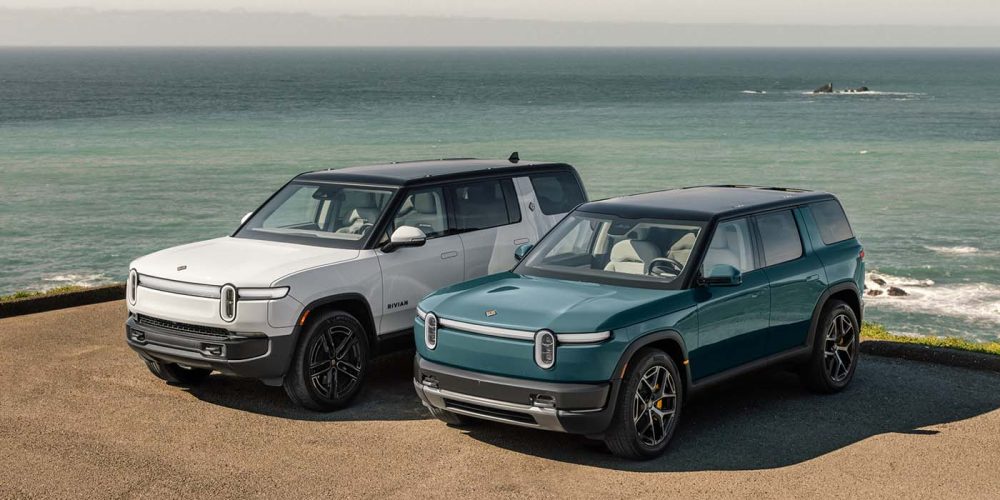
of an emotionally charged scenario, so we're going to keep following it and keep tracking it. But that is enough about Tesla, and it's not like their main competitors are coming out with products directly targeting their main business, which is the Model 3 and Model Y, except, of course, that's exactly what's happening. Vivian has revealed it's full R2 lineup and pricing, starting at $57,990 with a $45,000 rear-wheel drive model coming later. The Tesla Model Y better watch out, because Vivian has officially revealed R2 pricing in specs. For all trims of its upcoming mid-size electric SUV, writes our own Scooter Doll, Scooter has a tremendous, super in-depth article about the new Vivian R2. I definitely recommend you check it out, but I'm just going to hit the highlights here, and say that R2 pricing hits the numbers that Vivian originally promised. The header says it all, and the feet marks Vivian's proficiency at delivering on promises made years ago. There's still time for that to change, of course, and we will dig into that, but as far as R2 pricing goes, Vivian has been touting that $45,000 target for two years.
Around the same time, Vivian founder and CEO, RJ Scherner, said that $48,000 would be the R2 sweet spot in pricing, setting the stage for the R2 as a bona fide contender against the Tesla Model Y, and its current reign is the best selling EV in the world. After seeing today's pricing breakdown and R2 performance, the battle is on, and Vivian is coming out swinging, it is also absolutely worth noting that this slightly boxier design does visually distinguish it from the Model 3 and Model Y, gives a little more cargo room, a little bit bigger frunk, and it's worth noting that even at $45,000 or $48,000, this is significantly less expensive than the $54,000 average transaction price of a new vehicle last month, and that includes all gas vehicles. So this idea that EVs are more expensive than gas vehicles, just not true anymore kids, and Vivian is going to go a long, long way towards proving that out. Finally, Vivian is not the only kid on the block that is coming out with their quote-unquote Tesla killer. Lucid has revealed the Cosmotes and Earth SUVs as its first mid-size EV starting at under
$50,000 like the gravity and air the electric mid-size SUVs will offer the range, efficiency and driving experiences the buyers are looking for, but for about half the cost, the vehicles deliver unmistakable lucid design and driving characteristics while embracing a radically simpler, more efficient approach to manufacturing and costs, according to lucid senior vice president of design and brand. Although the Cosmotes and Earth will ride on the same platform, they are custom tailored for different buyers. The Cosmotes is centered around efficiency, space and performance, while the Earth is designed for those with an even more adventurous spirit if you want to translate that into reality. One is going to be low, kind of like a station wagon e-cross over, the other one is going to be raised up, kind of like a Subaru Outback deal with some off-road tires. The Cosmotes will have a range of about 300 miles from a 69 kilowatt hour battery that is hugely, hugely efficient, and according to Lucid to offer the same range on a comparable EV the cost of battery sells is $2,000 higher for Chinese OEMs, $1,500 higher for German OEMs
and $500 higher for US automakers as for charging. The mid-size Lucids will be able to regain 200 miles of range in about 14 minutes, they will also be equipped with bi-directional charging tech enabling vehicle to home, vehicle to load, vehicle to everything and vehicle to vehicle capabilities. That is a whole whole lot to digest into one day, be sure to like and subscribe, check out these articles in the show notes over to electric.co and don't miss any of it because these are wild times for Tesla and EVs, crazy times for Rivian and Lucid, and man that's just three companies, there's a whole lot more out there and a whole lot more to come.
More episodes
More from Quick Charge

All press is good press, right? Cybercab event leaves more questions than answer...
Quick Charge

Slate gets a high-roof cargo variant, Tiger tugs, and CEO Tim Cook leaves Apple
Quick Charge

Tesla grows Robotaxi fleet by 50%, Einride gets a partner, and China goes BIG
Quick Charge

Weekend Quick Charge: all about autonomy with Waymo and GM
Quick Charge