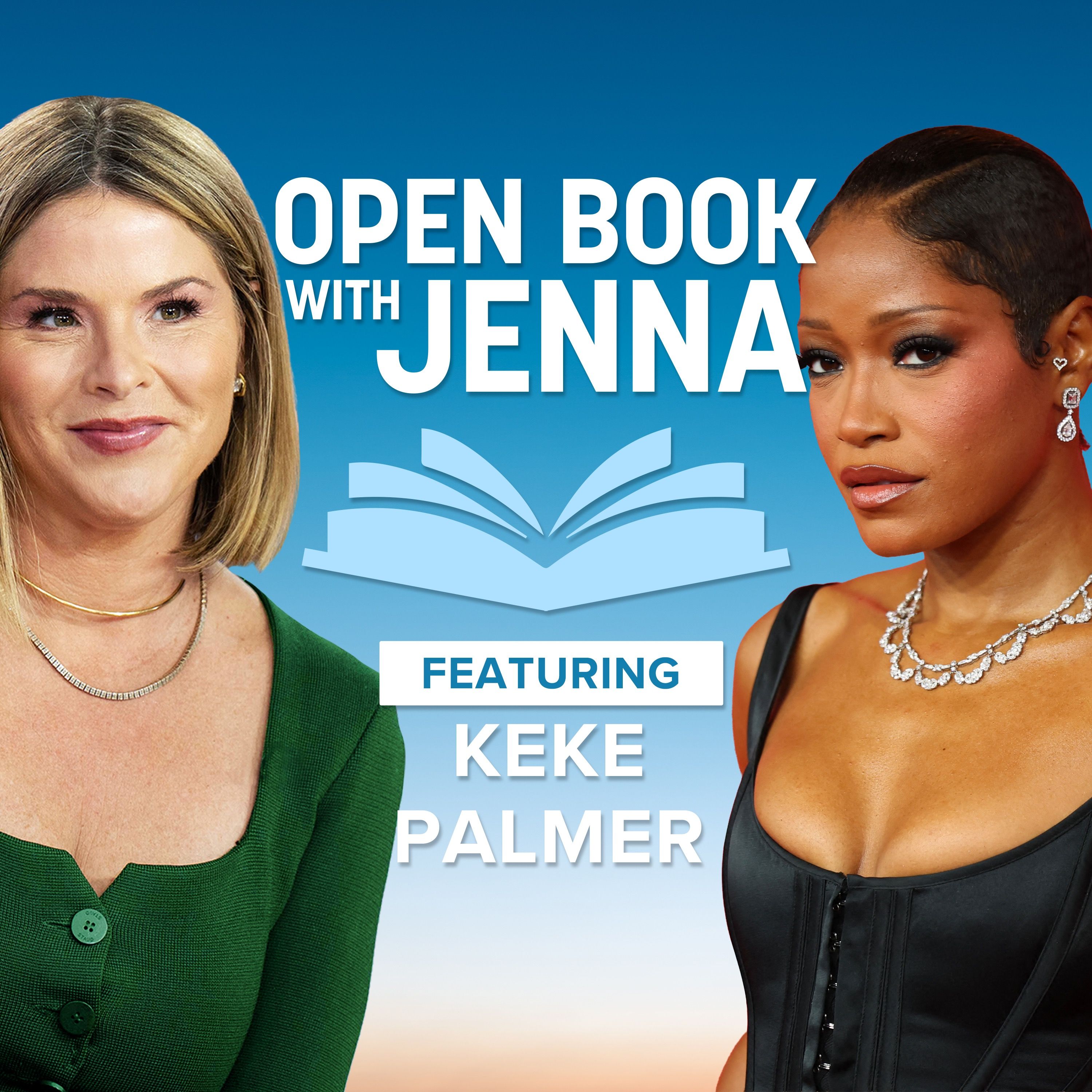
Keke Palmer On Her Journey From Child Star To Award Winning Actress (August 2025)
About this episode
Open Book with Jenna is made possible by:
Keke Palmer is an Emmy Award Winning actress, singer, podcast host, and mother. She rose to prominence at the age of twelve through her breakout role in ‘Akeelah and the Bee’ and has gone on to star in more than twenty-five films. In her latest memoir ‘Master of Me’ Keke tells her own raw and intimate story. Keke sits down with Jenna Bush Hager to discuss how she navigated fame at a young age, how becoming a mother gave her clarity about her priorities in life, and how she’s embraced who she truly is rather than conforming to others expectations. She shares the powerful lessons she’s learned along the way and how she has reclaimed her story, her power, and her purpose.
Hosted by Simplecast, an AdsWizz company. See pcm.adswizz.com for information about our collection and use of personal data for advertising.
Get every episode summarized
Each time Open Book with Jenna publishes, we email you a written briefing from the transcript — the topics, who appeared, and any specific claims, with the ad reads skipped.
Email me new episodesFree for 3 shows. No card needed.
Hosts & guests

Transcript ready
818 searchable segments. Every word is indexed and playable.
Full transcript
Open Book with Jenna — Keke Palmer On Her Journey From Child Star To Award Winning Actress (August 2025). Machine-transcribed; use the interactive transcript above to jump the player to any line.
With the Discovered Cashback card, it's payback time when you earn cashback on everyday purchases. Activate and earn 5% cashback at different categories each quarter on up to $1,500 in purchases. That's 5% cashback at different places each quarter, like grocery stores, on gas, and at restaurants. It pays to discover. Terms apply, see Discovered.com slash 5 for details. You want to know what quality sounds like? It sounds like a Ford Super Duty, towing up to 40,000 pounds before the sun comes up. It sounds like a Ford Mustang, doing what a Mustang does. Ford, JD Powers number one, and initial quality among mainstream brands. Ready, set, Ford. When properly equipped, Max Dowing Buries based on cargo, vehicle configuration accessories, number of pasts. For JD Power 2026, you have to study the award information, visit JD Power.com slash awards. Awards based on 2026 model year, new or models may be shown. Hey everyone, Jennifer Shaker here. I wanted to let you know that we're taking and break this week, but we'll be back soon with new episodes.
In the meantime, where we're visiting one of my favorites. I hope you'll enjoy it. Kiki Palmer is an Emmy award-winning actress, singer, podcast host, and mom. She rose to prominence at the age of 12 through her breakout role in Akila and the Bee. And she's gone on to star in more than 25 films, including Jordan Peele's blockbuster. No. In her latest memoir, Master of Me, she tells her own raw and intimate story. I sat down with Kiki who opens up about her journey from child star to a powerful self-assured mother, who has learned to navigate the complexities of fame, identity, and personal growth. She shares the lesson she's learned along the way from overcoming childhood pressure to reclaiming her self-worth. She also gets candid about the tools she's developed to create boundaries in her personal and professional life, and how she's embraced who she truly is, rather than conforming to others' expectations.
The book is filled with empowering and uplifting messages to help all of us become the master of our own lives, and to take charge of our personal narrative with grace, confidence, and purpose. I'm Jenna Bushaker. Welcome to my podcast, Open Book with Jenna. So Kiki, welcome. I'm so happy to talk with you because you do it all. You know, hold on. I love to talk about you because we think you are one of the premier talents. That means so much. Thank you. And you know, I love hanging out with you. I feel like we always have a Kiki at 9 a.m. tomorrow. Exactly. Exactly. But what's so amazing is that you're going to be able to do this. You know, I'm going to be able to do this. I'm going to be able to do this. Exactly. Exactly. But what's so amazing is that you can sing. You can act. You can host. And you also write really thoughtful, interesting books and put yourself out there. So let's talk about the master of me. First of all, I love the title.
Thank you. What does it mean? Like what does that mean to you at this stage in your life? Well, it's funny because I was writing the book and then also doing some music and I had came across, you know, the old school song, I got the power. Yes. And I was just thinking to myself, like, man, this song is so powerful. You know what I mean? And then I thought to myself, what would I say to me in my own words in today's day that would give me that same kind of feeling? Yes. And I thought, I'm the master. Yeah. I'm the master of me. Yeah. And so it was kind of my version of articulating what it feels like to be and control of my own narrative, which I know sounds so like intertainery, but I think all of us, even if you're not an entertainer, are trying to be in control of our own story, right? In the stories we tell ourselves. Yes. Well, definitely and feel like we are empowered to make decisions that feel right for us, right? Yes. That our intuition says, like, okay, this is what we should do and actually listen to it. Yes. That aligns with who we want to be. Yes. So as you were working on this, was it therapeutic to you?
Was it cathartic? You know, sometimes it's like even to take stock of where you were, who you've become. Like, what was the process like for you? I think it was all those things. It was cathartic. It was also empowering. Yeah. It felt like I was learning as well because, you know, when you have to sit down and write a book and talk about yourself, you have to analyze yourself and figure out what it is you want to say. And I think I've always been like a really on the lowest of keys, a serious person as it pertains to how I am objective in this world about myself. So I've always kind of been overly thoughtful about how I want to show up. And so I think during the process of writing the book, I became more in realization of that of who I am and how I want to continue to be like in control of my direction. Is there a difference? I mean, you write a lot about the performer, but is there a difference of who you are and different lanes? Do you know what I mean? Like your real name is Lauren. Is Lauren different at home with your baby than you are as a business woman?
Is it entrepreneur than you are as a podcast host? Like do you have different sides? Like did you analyze that at all? I think I do. I do have different sides. And I even challenge my concept of my book is the realization that I think we all do. We all show up differently. You know, how you are at your job is not going to be the same way you are with your home girls. Yeah. How you are with your home girls is not going to be the same way you are with your partner or with your family or whatever. So it's kind of like a constant, different window of yourself that you get to explore that is still authentically you. It's just the different people in your life or the different experiences allow you to explore them differently, which also I think is why I love to act and get into different roles as well. But yeah, I mean, even when, you know, Lauren, when we think about Lauren, I would say not the smaller version of me, but maybe the more introverted version of me can be quite quiet. You know, I love to spend time alone. Even sometimes when I'm hanging out with my son, there's no words and it's not just because he's a baby because he definitely can understand and he definitely talks. But like we'll be in a backyard. We'll be on the swing and there are no words. I love to sit in silence sometimes, which I don't know if that's something that naturally
people would think of when they think of me. No, I mean, I'm so funny because I'm an introvert too, but nobody would ever think that. But I recharge solo. If I'm like tired, I'm like, tell everybody. I'm like, I need a break from all of you. Like, seriously? There's too much energy. Not the cat girl. Come on. Even Garfield had to leave. Garfield and Melania out. So what I thought was so cool is that this is your second book. You wrote your first book in 2017. Have you had a chance to think about how much you've evolved since then? I mean, the narratives are different. You're the same person. And yet your life has drastically changed, right? Yeah, I think the biggest thing is how some of the things that I wrote in that first book were a reframing for survival. And then now I'm able to articulate what that reframing was and kind of come to terms
with a lot of different traumas that I experienced that I kind of was on the verge of being able to understand and speak about at 21, but at 31, I've had more clarity in it. And I remember I was talking to Raven Simone and her wife on her podcast. And it was Raven who said, you're going to really enjoy your 30s. I was turning 30 that year. And she was like, you know, because 30s, that is the decade of realizations. And I really received that. I didn't know what that meant, but I love Raven. And she's always been a very like, I mean, she's just a wise person. And we have a lot of shared experiences. And that's exactly what is being this first year. And I think it's interesting. Like, I was talking about it with my best friend. Like, you know, we always get it so excited about the beginning of a new chapter. Like, oh, I'm turning 20. I'm turning 30. I'm turning 40, but really that first year in, I feel like we have to really applaud more because it's the first year into that decade. Where you really kind of get your introduction to what this is going to be about. And for me, 31 was a big realization in all of those ways.
Yeah. You know, it's so interesting that you bring up Raven because both of y'all were famous early. Really young. And when I was reading in this book, this newest book about not only the fact that you broke out. But I remember when we talked about this with you on the show, I remember seeing you in Akila and the Bee because you were so magnetic and fresh and fabulous. You know, it was like, God, she's going to be a star like, so there's that side, which is the public side of it. And then there's the private side, which is that, you know, you write something to the extent of you kind of had to say goodbye to your childhood because all of a sudden you were also carrying the burden of taking care of your family. Yeah. Adult things, adult responsibilities that most kids don't know what that's like, you know? So talk about that time in your life. So at that time of my life, to plainly put it, you know, I became the sole breadwinner for my family financially at around 12 and 13. And to be clear, my parents, you know, my dad gave up his pension, my mom, they both left
their jobs to go to California to help. And it was like from my career, but it was also because I think on a deep spiritual and just like a parental level, they wanted us to know that our dreams matter. Yeah. In a way that they didn't feel their dreams had mattered. So it seemed crazy and frivolous, but it was truly from a genuine place of love. Yeah. You know, why not let's just try it? Yes. And then they were unbelievably blessed. But then in that blessing was also a challenge. And it was the fact that they had to relinquish a lot of their own, was I say their own kind of not their titles because they were my parents, but their perceived position as a parent. Yeah. To kind of create our own dynamic for what our family needed to move into a place that we never would have if we stayed in Chicago. Yeah. A big part of that was me being this star. Yes. And it changed everything in a really weird way. But I try to talk about it in the book in a way that while my experience is unique to me, I don't know that I'm the only kid that broke generational curses in their family.
That is such a common thing. Yeah. For me in the book with this story and many other stories I tell is really just a launching pad of the lessons that I learned that I think we all can apply or have applied or relate to because when you're the first, you're the first. Yeah. It could be the first to go to college, right? The first to get married. The first to say, Hey, I don't want to be depressed anymore. The first to say, Look, I deserve the right to have options. It could be anything. And for me and my family, it was the first to chase my dreams and to actually decide that I wanted to be the person that I always knew I could be. But I was able to get there because of their support, which is also in the book too. Yeah. Well, exactly. I mean, you write about how much they gave up for you and how much you worked for them. I mean, it was this beautiful relationship. It is this beautiful relationship of family. But now you're a mom. Now you have little Leo who I know you adore and it's probably changed everything for you. Everything.
I mean, I dedicate the book to my son. Yes. You know, I dedicate, I say at the beginning, you know, I dedicate this book to my son, Leo, and who I've become because of him. And it's very similar to what I've realized, you know, when looking back on my relationship with my parents where a lot of people talk about the sacrifices that you make for your kids that are ones that I don't know. They just seem common. Oh, you know, I had to wake up early. Yeah. You know, I had whatever it is, these kind of leisurely sacrifices, but they're also these sacrifices that you must make with the discomfort that you're comfortable in. Right? It's the sense of telling yourself that you can't do things that when you have your child, you have to say, yes, I can. Or, you know, feeling anxious like you, you know, you don't want to address this situation, but you have to because your child needs you. And that's who I became because of Leo, the power of love, of parenthood, of knowing that he's watching me. But in that chapter that I do speak about that parenthood and that relationship, I do tie it back because, hey, everybody don't want to have kids. Everybody doesn't want to have kids. They're not interested in kids.
But even if you're not the parent, you know what it's like to be the child. And there's still so much in that dynamic that you can unpack that also, I think, is the gift that keeps on giving. Yeah. You know, when I'm sitting here listening to you, but also when I was reading the book, how much about this stage of your life is about choices? It's about what you want to say yes to, what you want to say no to. And sort of like, let me give you my look at all this and then y'all do you, you know. And I think choices for women, like when we were young, I don't know that we were taught like we're the choosers when we were looking, you know, for men or what, you know, you would always think about who's going to come and choose me to be the wife or I thought that, you know. Yes. And what we've realized now is like, oh, no, no. I'm the chooser. I'm the one that's going to be out looking for whatever it is I want. So how is that played in to who you are now versus to maybe who you were as a young girl?
I think like my parents made it clear that I had a choice, but I didn't always know or wasn't always comfortable in the direction that I felt was for me. Yeah. It's this insecurity that sometimes we have. And I think it came from like, people commodifying me so young because it's like even though I was already this young lady that was loving to be this little boss and, you know, I love to be in charge and I'm delegating this to you. And you that was who I was. That was why I was true Jackson VP was already me. It was an element of how I wanted to show up in the world. It got to the point where people were overly commodifying it. And I felt like it was out of my control. Like now they're telling me how to be me. Yes. You know, now it's like laugh on cue and be pulled back and make sure you smile, but not to be it. Like everything became overly refined in a way that felt like I had no room to be multi-dimensional. Yes. And so then I got afraid and I had to explore a little bit differently. You know, just to see how much of it was really still me and how much of it was y'all in my brain. You know, is it, is it am I really this person or did y'all make me this person? You get confused. And so I did what most people do at 17, 18, 19.
Again, my experience may be unique to me, but everybody knows what it's like for your parents to encourage you to be who you already were. And then you're like, is it me or is it who you want me to be? And so I went through this experience of exploring so I could see what I didn't love or what I did like and wanted to maintain and then balance this understanding of who I was so that if I did decide to come out of myself, I would not lose myself. And so I think this book, when I'm talking about the master of me and my career and the way that I see myself in this world where we got to make a living. Yeah. I know who I am and I know the choices that I want to make. I know the intention behind them and how I want to show up for myself without losing me. And that's kind of a big part of what that journey arc is. The situations, the experiences that I had that have led me to understanding how I want to show up for myself and to know that that's all it is. It's a grand performance because no one, I can't ever really show someone my insides. None of us can't. We wish we could show people like my heart is big.
Sometimes I'm angry, you know, but you can't. All you can do is give them a perception and be perceived. And that can be scary, but the more clarity that you have on you, the more objective, you can be about what that means. The easier it is to go through life, I feel totally. Yes. And it's so interesting because sometimes it's not even, you know, when you're saying, is it me or not? Sometimes you tell the same story so many times, whether, you know, to friends or in therapy, but you get lost in it and you're like, do I even, is this my story or is this somebody else's story that I am sort of woven into? No, there's no. And I love what you're saying. I mean, one of the things you write about is the power of no. And I kind of feel like the older we are, the more sure of the fact that other opportunities are going to open. I mean, Hoda always says and it's so true. If you don't have space for something else to come in your life, if you're so busy, then you don't have space for the magic. Where's the magic, you know, and so true, right?
More with Kiki Palmer after the break. Have you heard that McDonald's spicy chicken McNuggets made with spicy tempura and a blend of aged cayenne are back. Remember to grab a few extra napkins. Bottom up, but boy, for a limited time at participating McDonald's. With the Discovered Cashback card, it's payback time when you earn cash back on everyday purchases. Activate and earn 5% cash back at different categories each quarter on up to $1,500 in purchases that's 5% cash back at different places each quarter, like grocery stores, on gas and at restaurants. It pays to discover terms applying. See Discovered.com slash five for details. There is so much NFL on ESPN right now. Monday night football, plus pregame and post game. NFL live NFL part time.
Everything you need to stay on top of every game every week. And now NFL network is on the ESPN app more football, more coverage, more ways to watch. Football's on all season long on ESPN and streaming on the ESPN app. So one of the things you write about is the power of no. And it seems like that's something you're really leaning into more than when you were younger because it's true when you're younger. I mean, I thought that way I was on the treadmill. Any story they want me to do. Yes, I do it. Yes, yes, everything. And then what's suffering, you know, so talk about the power of no and how it's played out. Yeah, I think it comes from like you're saying when we're younger, we kind of don't know where it's coming from. We're like in the beginning stages of that blueprint. We just know we want it's like you have a seed of something and you're trying to grow the seed of intuition inside you, but you just know I'm going to be somebody.
And so then everybody's throwing everything to you and you're kind of like, yes, yes, yes, yes, yes, until finally you realize something happens, you know, an experience, multiple experiences, wisdom is becoming you, right? You're having stories and lessons that back up that intuitive voice to what you finally can say. This actually doesn't align. And I think it's just that growing clarity. For me, now I have so much more clarity. And yes, for me, my son has been a big part of that. Many experiences that led up to my son. And then after I had my son that allowed me to say with much more understanding, this is simply not for me. And that's why I always say to like be patient with ourselves. Some things do take time. Yes. When you think that when you were a kid, there were some things that you understood just intrinsically. Yeah. But you needed to have the experience to validate that voice so that you knew to follow it. Right. And it's like nobody can, there's nothing that can happen other than some time for that to come in. And so I also talk about that in the book where it's like, I'm just glad to finally be here.
I don't know how much quicker I could have gotten here. And I don't really want to harbor on that. I just want to be glad that I am finally here and that I, I listened to the lessons when they came because otherwise I couldn't have known. Right. And you know what? That's also about falling down a little, you know? I mean, I always say that like the best gift my parents gave me was that I made mistakes. My mistakes were public. So it's not always easy. But no, but it happens. But thank goodness, you know, because none of us are perfect humans. We shouldn't be. And you also have things that are played out publicly that I know probably is not easy for you. And yet do you feel like you're stronger because you've gone through all that way stronger? Yeah. And I also have a better relationship with how I communicate with my audience. I think that's a big thing too, right? We live in such an age where there's so much information like you don't even have to say the things about your personal life. Other people will say I'm for you. And then they want you to explain everything to them in this light. Well, I didn't even want you to know this in the first place. So why would I explain the depths of it more?
And I realized through that experience that I think if somebody had told me I was going to go through any of these things when I was younger, I would have been like, oh my gosh. You know, scout me now. But after experiencing them again, I just realized, wow, I'm better because of it. Yes. Now I know how to set those boundaries and have to have conversations that I think need to be initiated a little bit more. You know, I'm an entertainer. That's my job. Yes. My purpose is to speak on things that are either important from a community level and a social level or speak about them through my work, make you laugh, help you feel things you haven't felt before. But I don't think it's fair for me to dump my personal life on you. That's not the position that I want to take. Yeah. It doesn't mean that my personal life isn't important to me, but it's just like, why would I put that on y'all? Yeah. It's like going up to one of the like, I got into a fight with my sister last night. And that's shit. You know, like, that's not right. And so I think sometimes in this day and age where sometimes that is, yeah, some people want to do, which I totally get. Yeah.
You know, we live in reality television. Right. Everything's kind of meta learned. Some people do like to do that. Yeah. Me, that's not what I want my platform to be about. And so it becomes really difficult because it's not about secrets or being fake or being, it's just I want to be professional. Yeah. And I want to give you my best. Yes. You know what? I love that. And I love that it took sort of like something messy, plain out for you to figure out too. What makes you comfortable? Because it's not only what you don't want to put on other people. It's also what do I feel in the time where everybody's sharing everything? You're like, where is my line here? Where is my boundary? You know, and I think only until you're pushed into the brink of something slightly messy, would you ever even know what feels uncomfortable? Do you know what I mean? And I had a conversation like that with my therapist actually where we literally saying it because I was like, why don't things have to happen like this and why why why why why why why why why why why why why why why why why why why why why why why why and she was like, honestly, because she told me about this really cool guy who discovered that the greatest vibration on earth is not love.
It's actually authenticity. And she said actually on a spiritual level, we are putting these positions, we put ourselves in certain positions to allow us to be mostly authentic. Mm-hmm. We want to be able to have opportunities to show up and create boundaries that allow us to know what we've been doing. And we feel comfortable with. And I do think that I was the kind of person that it was really hard for me to put up boundary to the people that I love. And it could be anybody that I love. Romantic, family, my audience. I love my audience. I don't want to tell y'all, no, I don't want to tell y'all to back up. I don't want to, you know, I don't want to do any of that to anybody because I love people and I'm happy that y'all are around. So I think creating boundaries for me was always really difficult, but it's so important because it also calls other people to be the best people in their lives. If I never tell you, if you're talking to your kid and he keeps hitting you and you letting them hit you, well then it's like, guess what's going to happen when he's a teenager? You know what I mean?
Like you got to tell him, no, it's so important. Yes. And so it's like that's I had to learn that with me with my audience and in this industry, yeah, I had to get pushed to the brink of being like, you know what guys, no, no, no, this is not who I am. Just so y'all know, let's be clear. This is not what I don't do. Celacius, you know, I do empowering, inspiring, uplifting, community, you know, and if I am going to say something, it's going to be in service to you, not just for us to laugh and kick our feet back. Yeah. And on your own terms too, right? Like that's the whole point. You want to write your own story, which so you're literally doing it, you know, you don't want to let other people tell your story because you know that it's not going to be truthful or authentic or real or whatever it is. More with Kiki Palmer when we come back. September's always busy.
Whole Foods Market can help. Their September stock up event makes it easy to load your pantry and freezer with flavorful, nourishing food. Even better, there are hundreds of sales. Get dinner going with canned soups and veggies. Lean on frozen pizzas, pastas and seafood. Everyone loves their build your own family meals. Feeds for for just $35. Stock up at Whole Foods Market. This episode is brought to you by SoFi, the everything app for smarter money, banking, investing, borrowing, and more. Make your first move with SoFi, chicken, and savings. Earn up to 3.80% savings, APY for up to six months. No account fees. Plus a cash bonus up to $400 when you sign up with eligible direct deposit. Terms apply. SoFi.com slash smart money. SoFi. Get your money right. SoFi, chicken, and savings is offered through SoFi bank, NA member FDIC. There is so much NFL on ESPN right now. Monday night football.
Plus pregame and postgame. NFL live, NFL prime time. Everything you need to stay on top of every game every week. Unbelievable. And now NFL network is on the ESPN app. More football, more coverage, more ways to watch. Football's on. All season long on ESPN and streaming on the ESPN app. You talked a little bit at the beginning about sort of the self-doubt that we feel. I mean, one of the things that I think is so interesting is I bet little Lauren was fiery and confident and knew what she wanted. And I've read all this stuff because I have an 11 year old daughter about how girls have this. They're born with this self-knowing and this empowerment. And then something happens in sort of the adolescent years where we all know it. And it's to different levels.
But we start to question ourselves or there's that self talk that feels not empowering, not great. Talk about your young, young self before. You made it big. Do you feel like you're close to who you are now? Like what were you like as a little little kid? Yes. And I think at a certain age, the age you're talking about is like this denouncing that happens because sometimes people make you feel weird about it or they feel intimidated by you having that kind of attitude. And so then you kind of like unintentionally you quiet it to make them feel comfortable. And it sounds like something that you wouldn't do. But it happens naturally because you just don't want other people to feel bad. And we hear it all the time. I remember at the tender age of 10 learning that Mary Ann Williams, some quote that I said in the key in the B. And even still, I had to go through the experience of what it felt like to denounce myself to find myself again. And so yeah, as a young kid, I think I was more like who I am now. Where I just knew I had it. I knew what my calling was. I was not afraid of it.
I was going to let everybody know. And I was a star in my show. I felt that at a very young age. I don't know why Ann. I had this quality in my mind that I thought that everybody did. And maybe a lot of people do where when I thought of something negative, like when something negative came in my brain, I knew from a young age that it wasn't me. And the reason why I knew it wasn't me was because it wasn't my choice. I didn't choose that thought. That thought was something that just came in my mind. Now, obviously as I've grown old and I've read books like Eckhart told, listen to things. Yeah, the voice inside your head isn't you. It's a collection of a lot of the information and the things you see. And your brain is kind of just spattering them around and about. Totally. And the you is the one that makes a choice. The you is the one that says yes or no to that thought. That's the you, the one that has awareness. And the one that is making the choice. Yeah. And so for me, I feel like, yeah, as a kid, I always knew that I was the awareness, that I was bigger than my circumstances.
And so was there a point, maybe in your adolescence where that negative self-talk, which wasn't really you, as you said, it was sort of like the cultural nonsense, the garbage that was just in there from whatever reason. Did you find a way to quiet any of that? Oh, yeah. That other people can utilize around 17. I started re-engaging with self-work, which would have been my first introduction into therapy and then my reintroduction to quiet time, which we would call meditation. As a little girl, I would spend a lot of time in my grandmother's house. First of all, I was in church a lot. So I was constantly doing rituals. Yes. And I always say this doesn't matter your religion, like having a ritual of positive self-talk or calming conversation yourself or quiet time, which church can't offer, it helps you to be able to filter through negativity in your mind and just your gunk in your brain. Yes. And so when I remember back as a kid, when my ability to swift through was so strong, I did do what I would consider meditation.
Sometimes I would lay in my grandmother's bed because she didn't have no cable. You know what I mean? It was no cell phones. It was just like either outside or in the house chilling and you just, I would sit there and I would close my eyes and I would sing and I would, all of that I think is what the key was to me being able to filter through in the way that I now know to do today, where I've been reintroduced to some of those tools through meditation, yoga, prayer, therapy, all of these different things. They've been the power of what they are has been reaffirmed now. Yeah, it's so interesting and it worries me a little bit like for our kids because we're adults. So we can say like, okay, God, I've been on my, I've just been mindlessly looking at my phone reading the same news articles over and over again or looking at Instagram or whatever it is. And I haven't been able to be quiet with myself. We're adults and we can take stock of that. And can't really do that. They're just mindlessly looking at things. So does it make you kind of want to make sure your son knows that quite a time or being
in nature or not just staring at screens? I do, I do. I do have tons of thoughts on that because I think for me, it's two things. There's something so beautiful about what we can do with technology, especially when we're in the right mental frame to use it. But there are ways that we could change people's lives when it comes to technology. But so much of that is dependent on the perspective in which you're looking at it from. And then there's this big fear with technology where you're going to lose jobs, but I also think there's so many other jobs that are going to be born through it as well. And so there's something that excites me about the kids of today and what they're going to be able to create and how much more knowledge they can gain from being having access to some of this stuff so early on. But again, there needs to be a balance like there needs to be with everything in life. And so I just want to be able to keep the balance. I don't want to totally hide him from the world. What's happening in the world because I want him to be able to live in the world with everything. I want him to have the tools and the skills to know how to be a person in the world. But I also want him to know that he's not of the world.
Okay. And so it's like how I'll start balancing that more and more as he gets older. I think it's going to be something that I'm going to be practicing and learning from. But yeah, it is something that we, I think we all think about his parents because you don't want your kids to just not know nothing. No. It's also like you can live in this world, the world of the phone and what people comment and what people say that don't know you or you can live with the people that love you and know you and you're, you know, and look at nature and be in the world. I mean, I remember Maria Shreva who like I just think is the wisest said that to me. She's like, I told my kids, you can live in this world or you can live in the world, you know? And you could probably do both. But what means most? I think what she's saying is really important is reality is what's relative. And on the flip side of that, obviously like Maria Shreva, I'm sure her everyday world is probably incredible. And I feel like mine is too. You know, I mean, like me and my son, but the reason why I do love what that world is is because if you look around and your world is shit, then you can pick that up and you can see that there is another world.
That's right. And so it's like that's why that balance is so important because some people, they put that phone down and they love what they see. Yeah. And so that's the crazy thing. You know, that's very true. And it's, you know, we talk a lot about reading, obviously on this podcast and that's the thing that books have done. Books are, I mean, books are, of course, right? But you're in on a journey to a totally different world and people absolutely read them to travel to places that they may never go to or escape loneliness or look for companions or whatever that is. Were you a reader when you were little or booked something you found solace in when you were young? I think it's so funny that you mentioned that too because I think that's probably why I do also love technology as well because it was too full for me. One half of it, yes, I did. There were certain books that I liked. A wrinkle in time. I can remember was one of my most favorite books as a kid. And it's so funny because I would see, even though a lot of times they don't speak about the color of people's skin and obviously some of these books, some books they do because
it has something to do with the story. But a lot of times you don't know. With a wrinkle in time, I thought to myself, I could be that little girl. And so when the movie was actually made and the little girl did look like no storm, I was so happy because in my mind, I thought like I could be that little girl. And so anyway, that's a whole thing there. And why representation matters so much both on the screen and in books way, it's so, so important because every kid, no matter where they're from, should see themselves in those places and books and television and technology, all of it. That's why I love that book growing up. When I was around, like I told you when I was going through all that stuff, I was going through 1617, I actually started Google in a lot of a lot of different things. And I started describing the way that I felt because I didn't have the words, didn't have the language to help myself articulate my problem. And I found out that I was stressed, that I had anxiety, that I was dealing with depression. And I discovered all these philosophers like Aristotle. And I discovered the concepts of Buddhism. And I discovered all this stuff through searching online and putting in just certain words
that led me to Albert Einstein. And I realized that a lot of the things that I was saying or the things that I was grappling with were philosophies that people had did after it's own and all this kind of stuff. I'm like, oh, so wait a minute. This is existentialism. Right. This is something that we deal with because we're existing and we don't know why we're existing. I'm like, I thought I was crazy. And so obviously, there are even more amazing books about that. Basically, technology led you to those places. Yes. Right? That's right. That's right. A search engine, the Google search engine. Yeah. And so for me, that's why I do have a positive relationship in that way with it. Because I don't know that I could highlight those words to go to know to find them in a bookstore. Right. You know, I don't know that I could just, if I had to describe it on a search engine, so then it could tell me what that was. So then I could find the authors on the books that I wanted to read. And so there is something beautiful about technology. But when it's used in the right way, you know what I mean? There's obviously there's a good and bad to everything. Yeah. And I think it's the same thing too when you go to a library. You need to know what you're reading and what they're known for.
Do you research on the author too? Yeah. Now, you're totally right. And that nuance, you know, is something that's really important to think about. This book is so much about you stepping in to your power. Yeah. We feel that when we're with you, when you're here in New York. I feel this when I'm reading every word. What are you most looking forward to in the next couple years in this stage of your life, which just seems beautiful and free and powerful? I'm looking forward to the community. Yeah. Okay, the element of community that is existing within me that empowers me to do everything that I do. The stories that I'm telling in every aspect of my career from film and TV to my podcast, to my writing, you know, even in marketing and the different companies that I'm being able to collaborate with to tell a greater story about women and power. Yes. Black people. Yes. Millennials. You know what I mean? What we're trying to do in the next phase of our lives that we're trying to move into and how we
really want to take on as much as we can with the best ability, even though everything feels so crazy and like we don't understand it all the time. Just being able to say, I'm here. I'm present and I'm involved. Like I really do feel proud of all the work that I've been able to do as a kid and all the time that I sacrificed to get to where I am and in this point in my life. And I just don't want it to be in vain. Yeah. And so to me, that means community connecting with others, being able to, you know, catapult this message to the highest realm that I can so that we all can feel the ability to master ourselves. Yeah. And love that. Kiki, you are so amazing. Your podcast is the best. People should tune in. I know everybody's loving it. And that's where you're building a lot of your community, right? Like it feels like it's this forum for conversations on empowerment and lifting up others. And a safe space. I think we've gotten to the point in every aspect of the world, whether it's, you know, men and women, Democrat, Republican, Black and what?
Like we've got to just like, yeah, we just too visceral about everything. Yeah. I don't remember when I was a kid. We was able to tell. Yes. You know, in disagreeing, but like, yeah, I don't know about that. Well, girl, I don't know about that. Yes. You crazy. You do you and I'm gonna do me. And we move on. Like now is like, I'm ready to do. No, I know. Like I'm tired of that, Jenna. Yeah. I'm tired of that. No, I know. It's not realistic. It's not democratic. Yeah. Not even I'm not meaning the actual group. I mean, like we've got to be, we got to have, totally, if we can't sit across from our neighbors and have conversations, come on now, with people that have different opinions than us, then we're in a real trouble, you know? It's too much. Yeah. And so for me, and 100% with my, with any space of mind, you know, we should be able to talk. Yes. Share our thoughts. Share our struggles. Let's talk. Yes. And not be so like, I know. Ready to kill each other. That makes me so sad. I know. I think that's so, so smart. We need more forums like that for sure. Kiki, I love you. Congratulations. Love you. Love you. Love you. Love you. It's so great.
Say. And I know so many people are going to be empowered by it. I know that's your goal. And people are going to just love it. Thank you so much. I appreciate you. Thank you. Thanks everyone for listening. We hope you enjoyed. This episode is produced by Ashley Williams, along with Abigail Russ and Kate Saunders. Our associate audio engineer is Juliana Mastarilli. Our audio engineer is Katie Lau. Rice and Barnes is our head of audio production. Missy Dunlap Parsons is our executive producer. This episode is brought to you by SoFi, the Everything app for smarter money, banking, investing, borrowing, and more.
Make your first move with SoFi, chicken, and savings. Earn up to 3.80% savings, APY for up to six months. No account fees. Plus a cash bonus up to $400 when you sign up with eligible direct deposit. Terms apply. SoFi.com slash smart money. SoFi. Get your money right. SoFi, chicken, and savings is offered through SoFi bank, NA, member FDIC.
More episodes
More from Open Book with Jenna

Bunnie XO Opens Up About Jelly Roll Divorce, Finding Herself and Starting Over |...
Open Book with Jenna

Kathryn Stockett Talks ‘The Calamity Club’ & Finding Her Way Back to Mississippi
Open Book with Jenna

Tia Williams and Isaac Fitzgerald Reveal Their Favorite Summer Reads | Open Book...
Open Book with Jenna

Hoda Kotb on Life After TODAY, Embracing New Beginnings, and New Book ‘Jump and...
Open Book with Jenna