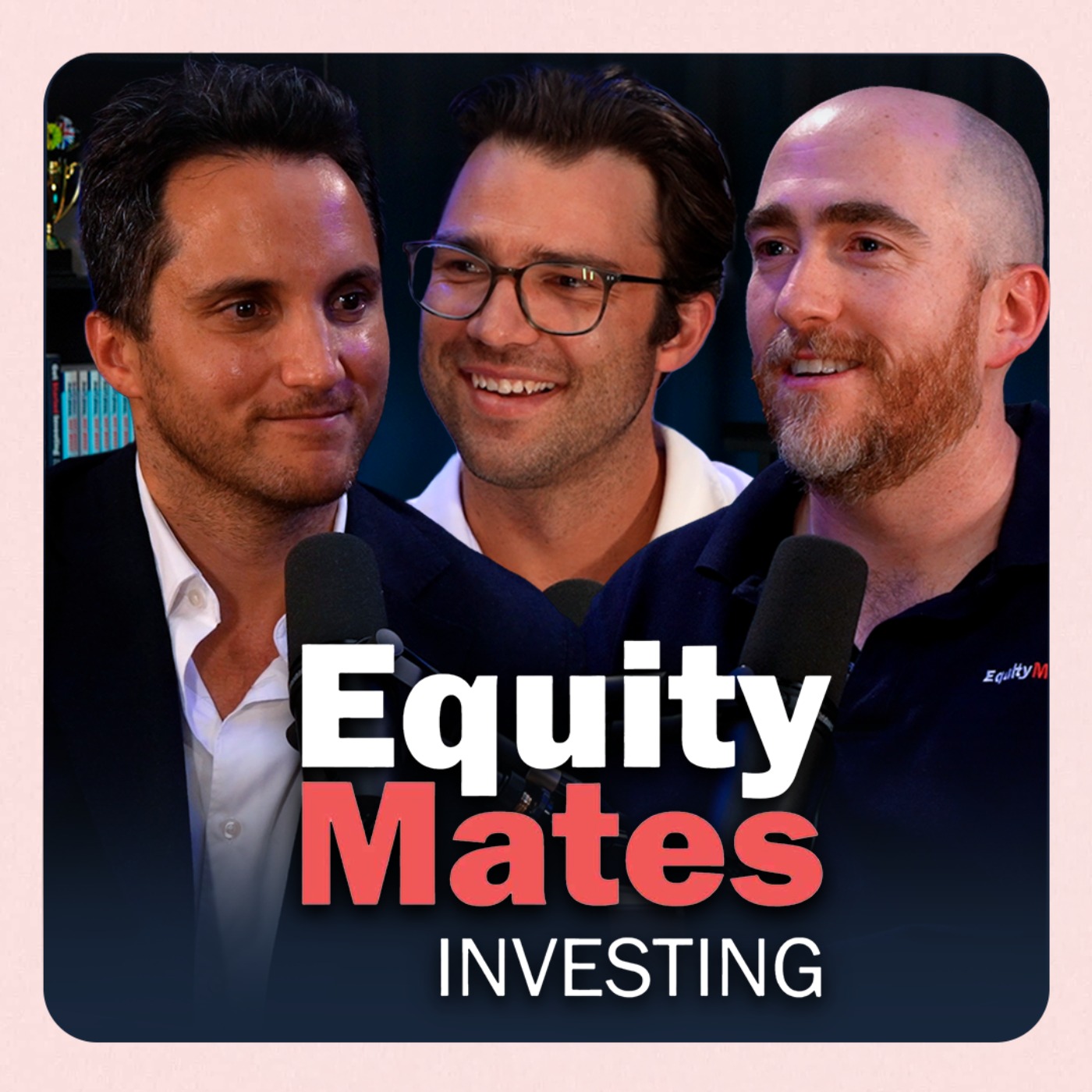
Knowing when to sell: How growth investor Michael Frazis manages risk
About this episode
Michael Frazis is back to unpack a market moving faster than ever. From cracks appearing in the AI infrastructure trade and a potential software comeback, to personalised cancer vaccines and the evolution of his own investing strategy, Michael explains why he’s moved from simply holding great growth companies to systematically taking profits and managing momentum. Plus, we dig into Nvidia’s biggest long-term threat, why Apple may have played the AI boom perfectly, and the thinking behind Frazis Capital Partners’ new ROAR Active ETF.
In this episode:
00:00 Why markets could be entering a more volatile era
02:27 The AI trade, leverage & the Ashenbrenner blow-up
08:11 Is the AI infrastructure boom starting to crack?
12:25 Cheaper AI models, China & why Apple may be the winner
16:50 The software comeback & where Michael sees opportunities
22:17 Michael Frazis’ new rules for growth & momentum investing
39:25 GLP-1s, Moderna & the next wave of biotech breakthroughs
46:49 Why Frazis Capital launched the ROAR Active ETF
Stocks & ETFs Mentioned: Frazis Capital Partners ROAR Active ETF (ASX: ROAR), Nvidia (NASDAQ: NVDA), Broadcom (NASDAQ: AVGO), Apple (NASDAQ: AAPL), Alphabet (NASDAQ: GOOGL), Meta Platforms (NASDAQ: META), Amazon (NASDAQ: AMZN), Microsoft (NASDAQ: MSFT), Taiwan Semiconductor Manufacturing Company (NYSE: TSM), Alibaba Group (NYSE: BABA), Atlassian (NASDAQ: TEAM), WiseTech Global (ASX: WTC), Xero (ASX: XRO), REA Group (ASX: REA), Datadog (NASDAQ: DDOG), Tesla (NASDAQ: TSLA), AMD (NASDAQ: AMD), Palantir Technologies (NASDAQ: PLTR), Wesfarmers (ASX: WES), Commonwealth Bank (ASX: CBA), Eli Lilly (NYSE: LLY), Novo Nordisk (NYSE: NVO), Moderna (NASDAQ: MRNA), Tempus AI (NASDAQ: TEM), Clarity Pharmaceuticals (ASX: CU6)
Check out Lioncrest's new ETF ROAR here: https://lioncrestpartners.com/#roar-etf
———
Want to get involved in the podcast? Record a voice note or send us a message
And come and join the conversation in the Equity Mates Facebook Discussion Group.
———
Want more Equity Mates? Across books, podcasts, video and email, however you want to learn about investing – we’ve got you covered.
Keep up with the news moving markets with our daily newsletter and podcast (Apple | Spotify)
We’re particularly excited to share our latest show: Basis Points
Listen to the podcast (Apple | Spotify)
Watch on YouTube
Read the monthly email
———
Looking for some of our favourite research tools?
Download our free Basics of ETF handbook
Or our free 4-step stock checklist
Find company information on TIKR
Research reports from Good Research
Track your portfolio with Sharesight
———
This podcast is intended for education and entertainment purposes only. Any advice is general advice and has not taken into account your personal financial circumstances. Before acting on general advice, you should consider if it is relevant to your needs. If unsure, speak to a financial professional. The host of this podcast and their guests may have positions in the companies mentioned. Equity Mates Media is part of the Betashares Group but maintains editorial independence and operates under Australian Financial Services licence 540697.
Hosted on Acast. See acast.com/privacy for more information.
Get every episode summarized
Each time Equity Mates Investing Podcast publishes, we email you a written briefing from the transcript — the topics, who appeared, and any specific claims, with the ad reads skipped.
Email me new episodesFree for 3 shows. No card needed.
Transcript ready
1,462 searchable segments. Every word is indexed and playable.
Full transcript
Equity Mates Investing Podcast — Knowing when to sell: How growth investor Michael Frazis manages risk. Machine-transcribed; use the interactive transcript above to jump the player to any line.
The hyperscalers are now going into debt as a group, and borrowing huge amounts of money and raising equity in the markets to fund the CapEx. If they grow as planned next year, they're gonna have to do even more of that. And that's gonna completely change the market, because they were the big stabilizers. Now you've got the opposite. So no matter what, it's gonna be a much less stable environment going forward. So we'll probably see more of these crazy moments. It's gonna be a much more volatile market. Welcome to another episode of Equity Mates, a podcast where we explore what is possible in the world of investing. If you've just joined our community for the very first time, a huge welcome to our show. My name's Bryce. And I'm Ren, and today we are talking all things high growth with a returning guest, Michael Frazos. Yes, Michael Frazos is the Chief Investment Officer at Frazos Capital Partners. And we've got him on because they've recently brought to the market an active ETF. It's the Lion Active ETF. The ticker is a raw R-O-A-R. And it really brings together Michael's love
of high growth companies that we've spoken to him about many times over the years with a momentum quant tilt. Yeah, I think for people who have followed Michael's journey and have heard him on the show before and say him in the media, his story is a fascinating one in Australian funds management. He was the best at writing the 2021 growth wave. Smashed it. Fair to say. Yeah. That really like shot him to prominence, had some big years there, and then got absolutely whacked in the inflation and interest rates sell off of 2022 and 2023. And so he went away and thought a lot about risk management. And we spoke to him maybe a year or two ago and he was speaking about how he was trying to build some risk models. And this conversation was an evolution of that and he's thinking a lot more about when to take profits and when to get out of stocks as they turn or before they really start to crash.
So this is a really interesting conversation to think about his evolution but also for our personal investing, how we can think about taking profits when we've had a big win on an investment. So a massive thank you goes to Fraser's Capital Partners for supporting today's episode and helping us keep all of our content here at EquityMates free. All right, well with that said, let's get to our conversation with Michael Fraser's. Michael, welcome back to EquityMates. Thanks so much for having me back on. It's been a massive month in markets. AI story has been unfolding. We've had a run, we've just come off a bumper earning season starting at the top. How do you make sense of markets today? Yeah, it seems like there, I mean, we say this every time we chat but they're just moving faster than ever, aren't they? There's multiple cycles and mini cycles and rotations within every year at the moment. So the moment it seems like AI's not a bit of pressure. The data centers, chips and video of these kinds of companies. The small companies are down 30%, 40% off the highs. And meanwhile, it seems like there's been a bit of recovery in software and some of those growth related names
that drop 60, 70%. And so basically, over the last 12 months, there's been this huge rotation where everybody is massively overweight software, underweight semiconductors. It was early 2025. So I guess a year and six months now, it's hard to believe there was a very bearish view amongst professional managers on the AI cycle. It seemed like the models were slowing down, investment would slow down. And so exposure was extremely low and everybody was still really bullish on software. And that just completely reversed over the last year or so. And then maybe in the last couple of months, it seems to be rotating back. And just as everybody goes to max long semiconductors, they've peaked and come off. And then just as everybody's kind of written off software completely, nobody wants to admit to owning it last year, for example. That stock just doubles in a few weeks. So it seems to be one of those moments where things are just rotating and moving. And yeah, it's pretty hard to navigate. Yeah, it is. We're going to dig into both sides of that story and help understand how you navigate it
because Bryce and I certainly aren't the experts. Let's start with the AI side of the trade. And there's probably the poster child for the recent blow up in some of these picks and shovels names was Leopold Ashenbrenner. We were chatting about it off-mic. So I want to bring it on-mic. What's your read on that whole story? And what can we learn from this 25-year-old wonderkin who was up 400% before he blew himself up? Yeah, it's a wild story. I mean, how many times have we seen it? Yeah, well, not offset. We usually watch it. It's always the same way. And to a much smaller scale, I think I kind of played that role four or five years ago. You know, there's always like somebody, usually somebody younger, who's just the most bullish on a particular sector, gets it right, beats everybody, attracts all the money. And then sooner or later that trade kind of fizzles out. And it seems like that happened here on steroids. Because obviously, he wrote this essay, situational awareness. He's got really got away with words. It's extremely verbally intelligent. And obviously named his fund the same thing
and then rode that wave exceptionally well. You know, it was up several times, he had a date. It looks like he was levered up to four times at the top. That's what's being reported. And obviously, there's no way you can run that kind of leverage without blowing up at some stage. You know, just the standard market volatility will wipe you out sooner or later. But I don't think even the people who are kind of criticizing him or were saying, you know, surely it's just another wonderkin that's going to flame out. I don't think anybody expected to happen so soon. Yeah. And basically, he bought all these stocks and he's had to liquidate and he's and now can griffinize them. Yeah. And probably made billions of dollars on the rebound. Yeah. The day before his wedding or something, or two days before his wedding. Yeah. Running around. Ice cold, isn't it? He's still hanging around though. I see all these reports now that he, because he's still as his anthropic. He's as his private investments. Yeah. And it looks like what's been reported is the public portfolio went to Citadel. Yeah. So he's still in the game, but it's kind of not the same, right? You don't know that veneer of invincibility and seeing things nobody else can see.
Went to Citadel and then pretty much the day after he had to liquidate all these stocks were up 40%. Yeah. Yeah. Well, he's, he's a pressure. He would have been selling the prime broker, the information leaked out. Yeah. Everybody knew something was up. Yeah. And you could see which stocks it was. Yeah. He was aggressive. And he was taking huge positions, like meaningful equity stakes in illiquid near clouds. It was pretty, it was pretty aggressive. And I'd say he went down the quality curve with time as well. You know, he wasn't in video, he wasn't in Broadcom. It's not like he was picking the biggest and best companies and going, leaving him up on them. And in fact, if there's ever a way to kind of survive a leverage strategy, it's probably leaving him to quality. But if you're leaving him to kind of junkier things, illiquid names, but you know, it's, it was real money as well, right? It was reporting it was 24 billion. And if that was, leave it up several times, that's tens of billions of buying into those stocks. So he would have been one of those things where he was actually creating that rally and pushing those things to those heights. Along with, you know, and don't know if you guys
are active on Twitter or X, being everybody was tracking his portfolio, waiting till he released his name, following him into trades. And I think that's one of the reasons it's so fast now, if somebody captures the imagination of the market, you can have thousands of people buying hundreds of thousands of all, you can have tens or hundreds of millions of dollars following them, you know, each day. And some of these stocks, that's a lot of, a significant amount of the volume. Get certain, then tweet about it. Yeah. You know, there, we saw it so many times, like there are crypto wonderkins, TZW, you know, that obviously it's hard to think of any of them that had happy endings. It's just the side, as you see. Yeah, yeah, yeah, people do the maths on Sandbankman Freed's portfolio, because they have stakes in like anthropic and all of them. And if you didn't steal money from his investors to cover up other losses, it would have been like one of the best IRIs gone around. Yeah. And I was sitting in jail. Yeah. And Leopold worked for him, right? Newly popular. Yeah, yeah, yeah. So I think he's 24 and he's been part of the two biggest collapses. Yeah.
Yeah. Yeah. Yeah. So I guess zooming out from Leopold and thinking about this AI picks and shovels play more generally. As you said earlier, the past sort of 12, 18 months, it's been a one way bet on some of these names, the South Korean memory chip makers, and the like have been, have captured everyone's imagination. Then they really fell off coming into this Q2 earning season. Where, how do you assess it now? Like looking forward, what's your view on them? Yeah, there's a few things. So the Korean, the memory players, I think they're really rich to the limit of how much the market could actually take on a pricing basis. So you know, Apple is pulling their higher spec machines off the market. And you know, they weren't selling those higher spec machines for any price. And you know, that's something for like $10,000, $15,000. So the prices got so high for memory that was really affecting the market. So how much further could that have really gone on a pricing basis? Obviously volume, there's only so much they can do because it takes two to three years to build these factories. And then the Koreans themselves went through something
similar to what Leopold did. Where they all bought those triple-leafed ETFs. And it's one thing to do triple-leaf ETFs on an index. It's another thing entirely to do it on a stock. Because pretty much every stock is going to drop 30%, 40%. At some point. And so the ending of every single triple-leafed stock is probably zero. I'm surprised the regulator allowed that, but they did. And now they're trying to step it back. But I was like one mini-cycle. The other, there's two other interesting features. One is that the hyperscalers are now going to debt as a group, and borrowing huge amounts of money and raising equity in the markets to fund the CapEx. If they grow as planned, next year they're going to have to do even more of that. And that's completely changed the market. Because they were the big stabilizers. You know, every, they'd stop their buybacks during a earnings season. It'd be very shaky. Everything moves around. And then the buyback window would close after the big four reported. And immediately those multi-billion dollar bids would come back in and settle the market. Like that's been going for over 10 years. It's been a really big stabilizing force.
Now you've got the opposite. Whether not doing that in the same scale and many of them have stopped. And actually flipping into reverse. So even Google is issuing equity. Matters is issuing equity. That's almost unheard of. So no matter what, it's going to be a much less stable environment going forward. So we're probably seeing more of these crazy moments. So next time we talk, we'll have a whole other set of crazy things that have happened to talk about. But yeah, my guess is like heavily leveraged players will probably be cleaned out at some point. You're just not going to survive this. It's going to be much more volatile market. Yeah, yeah. The other big feature is what Nvidia is up to. So you'll be probably aware of what they're doing in terms of partnering and financing with their customers. So obviously it looks kind of circular. I saw this thing on a podcast. It's not like an original thought. But somebody framed it as kind of a price cut. They're giving away some margin. It's probably true in a way. But there's no doubt they're like boosting demand that wouldn't be there otherwise. If they weren't writing these lending guarantees, if they weren't investing in equity in these companies. And so that makes it even harder to kind of pass and understand where the real demand is.
Because obviously if you finance somebody or give somebody cash to buy a product, that's not the same as if they just bought it out of money that they had separately. So that's another thing that investors have to try and think through. And it's probably worth thinking like, why would they do that? And is that coming from position of weakness or strength? And to some extent it's probably weakness. I mean, the hyperscalers are the biggest customers. And the hyperscalers, they're already doing it. My views, they're going to over the next two to three years. It's going to be their primary strategy. But they're basically trying to vertically integrate. So they want to design their own chips, optimized for their own use cases. Google already has been doing it for many, many years with the TPUs. Amazon's got Trainiam, Microsoft's got Maya, and other chips. Separate ones for both training and inference. So they can just go straight to Taiwan semiconductor and get these chips made. And long term that is absolutely a threat to Nvidia. If they're biggest customers choose to use their own chips and it's kind of natural, that's what you'd expect them to do. Why pay off that margin?
Why not just optimize something exactly for your needs? So there's no doubt in my mind that they'll continue to take market share. So in the next two to three years, that could be a major part of the market. So that's another thing on the Nvidia side to think of. What are you thinking about the sort of cheaper models that are coming out of China at the moment? It kind of reminds me of the deep-seek moment. If you remember, when someone's like, whoa, there's a Chinese model that's like really cheap and very fast and has been trained for a fraction of what open out and the topic have. This is, there was one released in the last week. I was quen, it's 27 billion parameter models. I don't know how, what spec those MacBooks are. But if they're on the upper end, it can probably run on those. Yeah, right, okay. And think about what that means. That means you don't have to have a data center. You don't have to, you can just download the model and use it. And you can also download models that are completely unsensit that will allow you to do anything. So don't have the guard rails. That's dangerous. That's dangerous. All the online ones have. What was it called? Quen, it's from Ali Baba. I'll come back. There's so many different Chinese ones. We're over here. We're over here. Yeah, and you know, there's the model.
There's also the harness. There's a number of different publicly available harnesses now. So that codex or that Claude code interface that was so powerful and such innovation and such led to such a step change in how they're working. There's also many different versions of that. And many startups trying to build better ones. So you can just plug your own model on your own computer into that and get an experience that requires no ongoing monthly subscription cost. Wow. And you know, as they're always saying this, these are the worst the models will ever be. So in six to 12 months, these are going to be even better. Yeah. The scientists were always saying that most of the parameters aren't used. They're very inefficient in the models. Like they don't have to be that big. And we know in our own brains, it's like obviously much lower parameters. Very few layers fire in our brains relative to what happens within these less efficient ships. So there must be heaps of efficiency you can get out of. So that will just keep going. So maybe you can have steady the art on your Mac Pro. And then, you know, a company that's spending tens of millions of dollars or hundreds of millions, I don't know if there's, there wouldn't be many, spending hundreds of millions of dollars.
You know, anthropic and open air, very much relying on companies spending tens of millions of dollars on this stuff. They can just run on their own hardware. They'll have to do it. You know, that will just be a market thing that you're going to have to move towards that. So where does that leave the multi trillion dollar valuations in this company? Yeah. And the spending plans. So it's like, it's not the commoditization of chips, but it's like the diversification of the market, like getting rid of the Nvidia monopoly. And then it's the commodification of the models and questioning some of these big valuations. I mean, it seems like this story is a story that is great for consumers of AI, but pretty terrible for a lot of the companies that we're investing in. Yeah, definitely. I'd say the commodification of models is probably well understood from deep sea, like the markets absorb that. It does seem there is like a premium that people will pay for open AI and anthropic over said Chinese models or ones that just aren't quite as good. But that next step of putting it on your computer and not actually calling anything over the internet, being able to run it on your own hardware. That was always coming, but always seemed years away. It's one of these things.
I don't think anybody thought it'd be this soon. You could get that. And that's interesting, it's kind of scary. Yeah. And I think that's why the last two days were very bad for semiconductors, which I'm very well aware to be on some of them. Oh, that's right. We'll get to that. Listening to this conversation, one of the takeaways is, one of the questions I have is, has Apple just played this perfectly? Like, have they withstood all of the negative press around non-investing in AI? And now someone's going to make a model that can just run on their machine. It's incredible isn't it? It was like how they dropping the ball on this and not having their own model in the game. I mean, they do have their own models, which they'll use for speech that are very efficient on phones and things like that. But yeah, they played it perfectly. They haven't made those hundreds of billions of dollars of capex. They can leap from on all the investment of everybody else. And they've got the best hardware for this. These MacBook Pros are fully integrated. The chips are well designed for it. They're their own chips, M-series of chips. They've actually played extremely well. Well, long Apple. Respect. You've got to respect that.
Like the amount of internal meetings they would have had where it's like, we're falling behind. We've got to do it. And Tim Cook or whoever would have just been like, no, I'm back in this. And compared to say, somebody like Mark Zuckerberg, he probably doesn't even really need to be in the game in the same way. Obviously, artificial intelligence is critical to getting those efficiencies in advertising. But he doesn't need to have language models. That's something that he's decided to do. So he's been the opposite. And the whole Silicon Valley and thought leaders and everybody trying to make an error themselves on Twitter. Everyone's talking about AI is forward. Apple somehow has stood that storm. Yeah. It's very impressive. So Mark, in your first answer, you sort of said there were two sides to the story. There was the AI trade. And then there was the SaaS Pocca lips and the software story. And they've kind of moved in inverse relation to each other. You mentioned that last year, they had a decent report and the market loved it. What's your view on this software sell off and recovery today? Yeah, I think there's two part. And one part is just the market. When everybody goes maxured something, everybody sold it. Or flip side in semiconductor, because everybody's bought it.
If the entire Korean population is triple-leaved into set, how much further can it really go? But it was always a narrative shift. It was a narrative shift that software was dead. Mostly with some exceptions, it mostly didn't come through in the numbers. It was always just this idea that always companies would eventually be replaced by open-air and anthropic. And it's interesting when you have this huge price movement based on narrative. And then the fundamentals will have to follow that. For that sell off to continue, or for these software names to continue to be the worst performers, you'll have to see each quarter them deteriorating, going from growth to shrinking. They spend a lot on staff mostly. And then some of them are kind of probably spending too much on anthropics, so their own cost have gone up considerably. So you'd expect them to have shocker results, and then that would justify the narrative sell off and the SaaS apocalypse. And then in some very notable reports, they've actually accelerated. So if they've accelerated, and the narrative is that they're going down, well, then you've got this huge mismatch between the markets kind of suggesting and what reality is.
And that's probably what's happening now. So the ones that accelerate and able to accelerate, or even just maintain 20%, 25% growth, are probably going to be really strong performers for the rest of the year, off of very low base. And then there will be ones that probably are disrupted. But the moment, and none of them have already gone to new heights, whether it's data, dog, infrastructure modeling, companies that rely on internet traffic. There's a lot of software parts of that software ecosystem, everything more broadly from software, infrastructure and related companies that actually benefiting and accelerating. So they're good places to be, I think. Do you have any favorite stocks, software stocks that come to mind? It's a good question. Australia's hard. I mean, most of the listens will be in Australia. Australia's hard because one by one, it seems like each of those companies has hit their own kind of problems. You know, why is there a whole heap of well-publicized issues, including recent ones? Zero, kind of one of the weaker players, growth is slowed down. I know they're trying to turn that around and trying to make it harder for other people
to access and disrupt their own data. But ultimately, they're probably on the more disruptable side. You know, if you can just upload data and get analytics and reports and things like that, not in the near term, but maybe in the midterm. Companies like RIA, real estate, obviously, under a fair bit of pressure here. One by one, it seems like in Australia, each of those have kind of run into problems. But overseas, yeah, absolutely. Whether it's Atlassian accelerating and doing 28% whereas maybe before it was doing low 20s. You know, those kinds of names can do really well. The application monitoring ones. Cybersecurity is obviously a pretty easy one. You know, a lot of those companies are growing 30%, 40% still. And they're going to, you're going to absolutely need constant cybersecurity surveillance and large language models, constantly penetration, testing your own apps and systems to make sure that you're on top of whatever anybody else can do. Because anything that can be hacked will be hacked. It'll just be automatically done. Chas. It's pretty well. But you know, it's done. You know what's interesting to smell with this AI stuff? I was chatting with the man. I was like, okay, how much is your life actually changed?
Like, really, how much has it changed? And I would say for us, I'll give our answer. I don't know if you just ignore yours. For hours, I'd say not much. We've probably hired one less person over the last couple of years. And we've probably built a few of our own systems where as in the past, we wouldn't have. But your day to days hasn't really changed that much. Yeah, it's funny. Like, I know what you're saying, but I use it every day for so much. And so it's like, it has changed my life in that sense. I think I'm just more efficient. But yeah, it's not like we've- It's changed working life. Yeah, but we haven't hired anyone different. Like, it hasn't changed our, our P&L doesn't look any different. Yeah, yeah. Yeah. And you haven't seen Mass Unemployment, which was predicted. And you know, it's been quite a while now. It's been almost a year now since Cloud Code came out. And several years since AI came out, you haven't seen those Mass Unemployment. GDP growth hasn't really moved other than there's been this big boost in investment. Yeah. And a lot of leverage, increased leverage in the system now because people are borrowing to build these data centers. So there's probably been a bit of a boom related to that.
But it hasn't been this crazy revolution. It could be too early to tell. Yeah. Yeah. People are still figuring out. The capabilities of the move have moved so quickly in the last 12 months as well. It's just like as soon as you understand how it could be beneficial to what you're doing, something better comes out, and you change the whole dynamic of how you think about it. So- Yeah. I always had this theory that we're already moving in that direction. Like, they're already more and more people being, you know, influencers or personal trainers or government sectors expatted significantly, which is kind of like almost like UBI in a way. You know, where there's these huge government programs that so many people are kind of living off. You know, it's kind of always been happening in a way already. I think that's kind of interesting to see. So maybe it is, maybe we are on that thing. It's just happening very slowly and hard to tell. But I think it's notable that it hasn't been as, I wouldn't say it has been as revolutionary as people really think. In terms of what your day to day, what you're doing now, what you're doing five years ago. Yeah, just an interesting thought. Yeah. We're going to talk more about AI and software as this story goes. But I want to just talk about growth investing more generally because I think that's something you're very well-known
for in Australia. And I remember the first time we had you on the show, you had a framework. It was explosive growth and customer love. Yeah. Are there any companies that are really taking those boxes for you today, particularly ones maybe that are less well-known for the equinex community? Don't you try to less well-known? I would still say that is the best framework. I mean, the good thing about that framework is, A, it started from the customer rather than starting from the financials, which most people in the investing world come from the financials side and start there and try and pass balance sheets and income statements to find quality, whereas really the performance of a company over a number of years depends on the customers. And are there winning it that highly competitive bit where somebody picks something over another? I think that's true. And I think the growth was also interesting because it still holds up because you've got to be able to see it. So if something's that good, it's going to be growing. It should be people should be talking about it. There should be word of mouth. It should be selling more products than it was last year.
To update, I think then we talk about Apple and Tesla. I guess Apple kind of held up. Tesla growth slowed and went from massive waiting lists down to hypercompetition and lots of Chinese companies and maybe not the same customer love. And then also I guess you did alienate a number of people politically, so maybe half the political spectrum got a more negative view than they had before. Yeah, I think you can say customer love turned when people were putting stickers on the company's product saying we don't like the CEO. That's a sign that the love wasn't quite there in the same way. Definitely. It was just half the half. You know, you always be politically just works that way. You split down the middle and debate about those issues and agree about all the other ones. But yeah, really growth slowed as well. So even if you didn't have that view or didn't notice that, you've seen his basic flatline and the stock hasn't performed. I guess there was a new one was probably in video. So that one maintained 100% growth for basically three years and maybe 50, 60% this year. So two, four, eight, 12 kind of those kinds of returns
and the stock followed that. And you know, the customer love side, everybody agreed it was the best. It was 75% margins, way ahead of AMD's margins. People were willing to pay up for it. So probably got you the best large cap performer just based on that framework. So it still still works. I mean, in terms of we're very quantitative now. So that's the biggest change. Yeah, that was where we were going to go. So maybe let's go there. Tell us the evolution and sort of what the philosophy is now. Yeah, well I think if we spoke, or we did speak, you know, five, six years ago, it was very much trying to hold things to the cycle. I think it's a lot easier said than done. Yeah. And also I'm glad we didn't because a lot of the companies we owned didn't recover. You know, a lot of those were software companies that got caught up in a second cell off. And sure they've bounced off the lows and doubled off the lows. They're still down a lot from those highs five years ago. You know, there wasn't actually a hold. Even if you just held, we now know if we held everything we owned in 2021, we wouldn't have recovered the way we did. Yeah. Like I wouldn't have worked. I think there's just too many changes at the moment. It's there's way too many changes.
And even like the long term things, like if you see Nike's stock lately, what down 75% of the price? Yeah, there's a number of companies like that that have really like quality names that compounded for 20 years, longer that have now been down 60, 70% over a number of years. Now we're very quant based in terms of how we trade and what we actually own. So it's very much trend following. And that's been exceptionally effective historically in our sectors and has been really well good for us over the last few years. I guess to drilling to that, you've got, it's like a momentum kind of play, but you said that in your sectors, how have you defined what sectors you want to play in? If you're trend following or momentum investing, it works really well in those big movements. Because you capture the big trends, so you make a lot of money, and then you avoid the big crashes. So you kind of get your app performance there, and then where you lose is the chop in between, where things are just flopping around, and you're losing 5, 10% each time. Generally, it won't work for something like West Farmers or a CBA. You just trade too much, you just lose too much. You know, things like in the gross space,
where they seem to periodically fall 60, 70%. And if you get something right, you can get that 234x. So just to dig into the, I guess the actual, well, not the algorithm, but like how long you're holding for and how far into the momentum sort of phase are you buying? I'd say most things we trade one to three times a year. Okay. It's that kind of thing. But dealing with something like Nvidia, like you can run this model backtested over 25 years, you'd like triple the return and cut your drawdown in half. And then imagine doing that over 20, 30, 40 stocks. Like you can really smooth things out. And then when you get the big washout moments, which were in videos happened a lot of times. Like it was like COVID, there was, you know, the GPUs around crypto, where they had a boom and a bust. People were vlogging their GPUs, you know, e-band, things like that. And then obviously the AI boom hasn't really been a bust in the last three years. There's been a few moments where it looked very shaky, like early 2025. Yeah, so it's pretty, it's pretty active.
The other thing we learned was it was just a blanket. If we just sold everything that went up 4x, would have massively upformed. And that sounds really obvious. Yeah. Yeah. Yeah. I mean, the challenge is finding the things that would go up 4x, but. Yeah, but you were just saying, I feel like we've never had that problem. We've always, we've often had three of the top five performing stocks, something like that. Or you know the kind of battleground stocks. Often these companies growing really fast, often spending a lot. Not always, like I'd say in the chips, a lot of those companies were profitable, which is why I think value managers really struggled. Oh, like how so many people missed memory. I mean, those things were trading at five, six times Pee. And then went up 10 times, you know? Yeah. It's easy for a value manager, I think, to dismiss something that's like losing money and growing really fast. But those companies were making money the whole way. I mean, that's a separate issue. Yeah. Yeah. Well, I mean, if it was trading on five or six Pee, why do you reckon value managers, do you reckon they just thought it was peak cycle? And. I think it's very hard for anybody, professional retail beginner experience to buy something that's up to 3x. Yeah, yeah, yeah.
You feel like it's good? And I think the people that are bent towards value investing, are bent towards buying things that are down 50%, 60%. If they think if something's doubled, they see it as consensus. They want to be anti-consensus. Yeah. So if you've got that thing like, I want to be anti-consensus, I move against the herd, against the crowd. If that's kind of how you see yourself, then it's very hard to buy something that's doubled, even if it is on a Pee of five or six. That's my theory anyway. And so then I guess you're the opposite of that now with this new strategy. You want to move with the herd, but the challenges you want to get out before the herd gets out. Yeah, well, as things roll over, one by one, we should be closing our stocks, building our cash balance. But the toughest thing is knowing when momentum's about to turn. So what are the factors that you're looking at? Yeah, I mean, we just use end of day pricing, basically. So super simple inputs. And we want to keep it super simple. But yeah, you will get clipped on that first turn, that first part. There's two ways we'll sell. Either it hits our profit target, which is great, then you don't get that. On like Forex profit, you're out, regardless. It's kind of two to four X now. Okay. Honestly, like Forex is optimal. You will generally, across the stocks that we look at,
like hundreds of stocks that we traded over the years, Forex gives you the best return. Okay. You can reduce your drawdown if you sell sooner. Yeah, yeah. So it's a bit of a trade off there. The longer in cash and... And so that's just a hard and fast rule for you guys. It's just like Forex. Forex, yeah. Forex, yeah. Okay. And really will scale out from 2X to 4X. Yeah, okay. So you don't have a multiple times. Bottom. Then on the downside though. On the downside, it just depends. I mean, things have doubled. There's probably going to have to come most of the way back down. If it's ground up over six to 12 months, then it's probably down 10, 15% and then you're selling. And either buying back really quickly, or you miss a big crash. And you know, three times in the last three and a half years, we've moved over 50% cash. Wow. It's been really active. Each of those times were like fully prepared for 2022, 2008, 2009, but we ended up buying it all back a couple of weeks later. Are you market cap agnostic? So in the ETF, it's all a billion dollar plus. Right. Yeah. And global. Yeah. Like I saw in the US, there's like rest of the world, there's Australia. Yeah.
I mean, it's just the nature of ETF. It's got to be daily liquid. Mm-hmm. It's a Vosy biotech, which is illiquid in the wholesale fund. You can't use, can't trade it in the same way. You couldn't sell it all back in. Yeah. Even at a small scale. And so what sectors are you interested in? I'd say we've got three. I'd say it's semiconductors, software and healthcare. They're like the three. And I think there's enough movement there. Yeah. There's plenty of them there. We have some healthcare questions, which we will get to. But I just want to stick on the philosophy. So back in like your earlier philosophy, it was very much like company fundamentals in the sense that like the customers love it and is it growing revenue and sort of if those two things are ticking the boxes and it's a good business, everything will follow. Are you now worrying about company fundamentals at all or is it purely on like volume and momentum indicators? We don't really use volume, but it's definitely, you still need, kind of like what you said earlier, you still need to find companies go up to the forex. Yeah, okay. So that's the challenge. Yeah, yeah. But you know, the company's growing at 40%, that's they're the ones that will do that.
Yes, you know, they're the ones that, you know, they'll just maintain that growth for a few years. And there's a good chance of getting that 2 to 4x. The actual stock selection is more or less the same. We haven't really changed. It has kind of helped us a bit in terms of how we think about valuation. Because we think valuations like obviously the hardest thing, like we talked about companies with P multiples of six, you know, some of the best performers are still companies that sales multiples of 50 times, you know. And why something should be the P of six and a sales multiple of 50x? I think there actually is a real answer to that, you know. And why, even within a sector, two software companies, like look at Palantir, it's been around the top performers for shaking recently. But you know, if you sold that on valuation at 20x sales, which by any metric seems overvalued, you're obviously assuming a lot of forward growth and paying up for that, you know. And then the multiple itself expanded 50% as a company itself, doubled triple quadruple in size. And that was a huge return. So if you're trend-falling a momentum base, you can actually capture those movements
and be a bit more comfortable that if it is considered expensive on, like say last year's revenue earnings, you will get out if the whole thing turns. You know, you'll probably be first out of the holders of that stock or amongst the first out. It is helpful. And I think valuation has been one of the hardest things to make work, certainly over the last few years. I don't think it's been a very good guide as to what to buy. Like maybe the cheap memory stocks was one time we're buying cheap work. I'd say in other times it hasn't really been a good guide. And if you sold everything that was expensive, you probably missed some of the bigger rallies. So it's a tough one. Yeah, it is. Yeah, I mean, it's the hardest thing. Yeah, yeah, yeah. You know what I find funny? I feel like everybody goes to the same cycle. I think we've talked about this before, but it's like you start investing, you're like, we were born buffer books. Yeah. And you buy the low-pig, and then you don't make any money, and you try and figure out, then you kind of move in other directions a bit. And you get a bit more balanced, but it's very, even people who consider themselves value investors, like a challenge of it's like, okay, you bought this sort of P multiple of 10.
Why don't you buy, why don't you just buy companies that P multiple of five then? You know, how do you explain that? And I bet you even that, like most value investors would struggle to do that, and struggle to justify why they're paying up for the 10 and not the five, and why they can't extend that, and understand better how growth investors are looking at things. But the trend-falling process does take a bit of that pressure off. And you can also invest in some of these situations in a bit more binary or a bit more risk around them. There's been a sort of a growth in momentum factor ETFs. That's been something that we've seen more and more. I guess like, how do you differentiate your strategy to some of these factor ETFs? They might have the same name, but they're kind of very different in terms of what they do. So example, when the momentum ETFs are blowing up, often we've already sold those stocks. You know, they're not actually selling high momentum stocks. They're owning them throughout. So they will hold, they'll basically hold those things. Whereas we could apply our models to a momentum ETF and would outperform the ETF probably.
In fact, that would probably a good thing to use it. You should, because it's very uncomposed. Yeah, yeah. It's funny, you can also apply these models to ETFs of active managers. OK, well, it's like a hyperion or something. I'm maybe shouldn't talk about other ones in my house. They roll, and then like, would sell, and they continue it, and then now they've turned a bit, so you're probably buying. Like, isn't that interesting? Yeah, yeah, yeah. Interesting. For those that have listened to you over the years, know that you've got a background in chemistry and finance, but not software development. How have you gone about upskilling in the quant side of things to actually build this? I think now it's probably the easiest time to learn anything if you're interested. Like, it was probably a few years ago. I think I, like, many people I tried to get a software development over the years. You kind of build a little app or a little website that works. Then you hit a roadblock, you spend two or three days on it, and then you just get frustrated, and don't pick it up for another few months. That was my experience over the last 10, 15 years. But even like the first generations of CHET GPT, you just get through that roadblock, you know?
You find a solution almost instantly, and then continue. So it's like much faster. You know, the first versions of mine, we, the first versions of our quant stuff I was riding, but now we have full-time software developers working on that. They work closely with every day. Yeah, so I didn't even do most of that work now. Yeah. You know, if you're starting from scratch, I mean, the tools are so powerful now. What are you using? We switched a few months ago. We switched from anthropic codecs, and now I think there's been a big move. Like now, if you're looking at the numbers that just came out of last few days, open AIs accelerated, anthropic, I don't know if it's a second river or whatever seems to have slowed down. Certainly open AIs taking share. It's cheaper, it's faster. Actually, anthropic is the most expensive by far now in the market, because open AIs has this whole, basically a whole range of models. Like they've got three latest models and then different reasoning on each one. So there's probably 12, maybe 15 even, different gradations of their own models. And if you use the low ones, they're extremely good, extremely fast, extremely cheap.
And you know, those a moment a few months ago, it's like, okay, we should probably move to Chinese models. If they're gonna be just as good, and we're not paying the money, or much lower cost, why don't we just switch? But now open AIs, lower models, lower versions of their latest models are so good and so cheap, it doesn't make sense. As all this uses them. So you haven't gone to the, just download it and use it on your laptop. Play it around, playing around. Okay, okay. The thing is, it's so easy to switch. There's like no switching costs. Like there's somewhat, they tried to build in, oh, you've got all your context. Memory. We've got your memory, we're like learning and adapting to the way you work. Really, those are all just text files. And you can just ask open AIs, okay, download all. Copy every single chat. I've got, summarise it if you want, or just put that all in a separate folder, and then the next AIs that you use can just access that. So there's no, and actually the best practice is not to work in those. It's to use the models to work on files saved separately. You know, whether it's markdown files in Obsidian, whether it's a database, even like a spreadsheet or a Word.git, you can actually use anything. Get the AIs to work on that,
and then you can switch with AIs at any time. That's kind of the best way to do it. Which again, it's like all this entire CapEx investment cycle is largely driven by OpenAi and Anthropic and their plans, and what they want to build. You know, Amazon's obviously working with Anthropic and expanding capacity, and even the hyperscaler CapEx is dependent on those companies and their plans. Yeah. And every time you look at these things, you're like, oh, it looks like there's a bit of threat, bit of pressure. Yeah, well, it's like, you look at the Q2 backlogs for the big guys, and it's like, you know, Google's backlog was like 500 billion, and Amazon's I think was in like 600 billion, but it's like, how much of that is just two customers, Anthropic and OpenAi? Yeah. We don't know, but... And if it's not them, is it just somebody else, in which case, it does make a difference to Amazon, right? If you're like, okay, well, I'm not going to use Anthropic, I'm going to use a cheaper model. I guess if you're using more on your computer, if they get more and more efficient, and we know theoretically there are these efficiencies there, huge efficiencies that will come in the next couple of years, that would be the instance where you're like,
actually, I'm not going to make a call to Amazon, I'm going to do an external model, that could change it all. And I think at the moment, that's not really factored in. People using free models are open source in Chinese models, that debates very well-worn now. At least everyone's thinking about it, it's kind of aware, like it's probably reflected to some extended market pricing. People using their own hardware on smaller models that are as good, anything is really... I mean, who knows? Who knows what you actually end up using these things for, but a lot of those tasks are easy for models now. You don't need the full state of the art. Amazon whistles. Yeah, just like reading emails, passing through the air. Yeah, yeah, yeah. Going through balance sheets. So I think you're thanks to that. Yeah, yeah. You don't need state of the art intelligence. Yeah, yeah, yeah. Now we want to move to biotech because, you know, the, I guess the residents, sort of biotech expert here at Equity Mates, we always enjoy talking to you about, you know, Eli Lilly, so let's start there. Are you still going to... Of course, of course. Of course, of course. Of course, of course. Yeah, look at the JLP ones,
they're clearly just going to continue to power on. I'm surprised, Retta Retoucher Tide, it hasn't hit the market yet, but it isn't at will. There's so many of them in competition. Obviously, there's a thriving black market. Yeah. At the moment, which somehow hasn't been shut down, but it's still there. And the oral versions are still to come. So I think oral azimpyk is going to hit the market pretty soon. It's been available by prescription for a long time, but hasn't been widely available to consumers. So I wondered if there's like maybe a chance for Nova Vertica back in the game, but actually the big news was a Moderna. Did you see that? Yeah, that was going to be on the next question. So for people who haven't seen it, up 177% in a day because of their melanoma. Was that on the momentum charts? Yeah. Don't, don't. We actually did like a while ago. We got the signal, but didn't buy it. Whatever reason, so I was like... So what's your view on... What have you done? And the stock. They've done so many... They've done a number of trials, and they haven't actually released the data on the phase three.
But we do know in the prior trials, it was something like... It's like when you've got melanoma, it's a stop at coming back. Like you've done the surgery. You don't want that residual disease to trigger it. It was reducing that recurrence by like 50% extending life. It's not curing all cancers, but it's certainly big help for that. And yeah, I think it'll work for some cancers, not all of them, but I think it's just another step forward in terms of pushing out. You've seen those charts where like everybody's kind of living on the... Yeah, yeah. We've all had different cancer types, just pushing that out. So... If you'd had Moderna in the portfolio and you benefited from the 176% share price move today, what do you reckon would the model have been telling you to get out? I would have almost certainly hit our profit target, so that out. True. If you're probably talking about that. Yeah, and then you have to worry about it. Yeah, yeah, yeah. Just wait until it's like overshoots and comes back down. Yeah. And again, like the market's so fast, there's like a cycle every year. Yeah. Yeah, yeah, yeah. So from a technology point of view and a healthcare point of view,
COVID happens, we mRNA vaccines became a thing and we were all told this is going to be the tip of the iceberg. Like mRNA is going to be amazing. And then we didn't really say anything for sort of five years. Now, this Moderna vaccine is supposedly producing incredible results. Is there a pipeline of more drugs that you're sort of saying come through? Or is this going to be like a... I'm sure they'll expand that out. Yeah. I think it seems to work on cancer with like a high-mutational burden, because they're basically taking a biopsy of the cancer and then adjusting the vaccine to the actual genic profile of your own tumor. So it's personalized. Yeah. People in talking about personalized cancer medicines for so long, it's actually happening. And they'll roll it out. They'll make billions of dollars a year probably out of it. It's good news. Yeah. They were kind of saying that was AI helped them sped along or certainly commentators were. I'm not sure that's true because it was definitely in development before that. It was more like from the COVID era. Do you know what's very good for? It's very good for all the genetic testing companies, which there are a number. Oh, okay. Like the companies that test for residual disease,
like blood draws and... Yeah, yeah. You know, there's a ton of those companies, no ton, but you know, at least 10 companies that would be better. Because they'll need, people will need to do that to get the personalized treatment. Yeah. Yeah. And like it'll just, already it's probably like, if you go to a good hospital, they're going to do that anyway. But I wouldn't say globally, everybody with a cancer gets a genetic signature of it. But that will probably become commonplace now. So that'll expand the market for them. And obviously it'll be used in conjunction with somebody to do that testing as they roll it out. So that's obviously a clear benefit. It's a company temp say AI, which is probably going to be a big beneficiary. They're up pretty big. I think it was up 25% yesterday. Well. But it's been sold off pretty heavily going into it. So it's not like some crazy runaway stock. Yeah, it's a good boost. I mean, they work on other vaccines that didn't fail. I'm not for top of my head. If I think they're working on a type of herpes, for example, it didn't work. They're like RSV, I think. A couple of their vaccines didn't actually work.
And that's kind of what took the excitement out of it. Yeah, yeah, yeah. Or as this was separate, this was their oncology research. And it looks like they've got a clear winner. What else have been happening? It looks like pancreatic cancer. There's like finally progress there. It's a ruxerosib. Is that how you say it? It's a ruxerosib. Yeah. Pancreatic cancer, that's pretty good. It's kind of extending life by doubling survivability. And then the way these things work now that that works, there's a number of other people using the same approach. But also, usually it ends up being two, three, even four drugs using combination. So now that's, they basically just pass their phase three and that becomes standard of care. And then over the next few years, they'll try it in combination with a number of different things, probably improve it further, hopefully reduce the side effects. There'll be other drugs that hit the same pathway that don't have the same side effects. It looks pretty bad when you see people that have taken it, like the bright red. Yeah, so there's a lot of progress going on. Yeah, it's amazing. Awesome. It has been hard for us. So I say all the excitement has been in the US.
And our wins have all been in the US as well. I mean, for us, we often screen for growth. So there's about 30 or 40 companies in healthcare growing over 40% in the US. And that's like our universe that we're looking at. Often the companies that have passed phase three have rolled out, maybe they did 50 million in a quarter, and they're going to get to 250 or more. It seems like that's, I wouldn't say easy, because nothing's easy, but backing those companies through the rollout and then as they expand into different markets, usually they've got it approved in a very narrow subset, the most confident end, and then it's much more likely to be approved in the broader market. Like backing those rollouts has been pretty successful for us. So in Australia, it's kind of like in software. It's just been hard case by case. So we had Centaura, the results were good, but the FDA didn't knock them back, but said they had to do another phase two trial. So you push the whole thing out by two years, that massive increases the expense. Companies like Clarity Pharmaceuticals, really good data, but you're looking at things, again, one, two, three years out. It's just hard. It seems like when they have good results, everybody gets excited.
And then the reality of three to five year development timelines just kind of ways. There's also that issue in Australian biotech, where they generally capital constrained, and so they do small trials, and then sometimes that means that they have to do other ones, or it's not convincing. It's not convincing enough to the FDA, it's not convincing enough to doctors. And I guess Centaura was an example of that, where they did the trial, but it wasn't big enough, it was like 15 patients. OK. And then if you look at what, but Dern is done, like they do a number of phase two, is number of phase three, it's not just one. You know, they'll do multiple. And you don't see that very often in the Australian health care space, certainly in the small caps. It's just been a long time between wins. OK. And then, you know, op-fear collapse, and a couple of big names that didn't quite work. And if one of those went the other way, you know, a lot of people had made money, or would report back in, the trials would be in bigger companies, we'd better funded. They're better funded, so it's easy to invest in them. It's much easier to invest in a company with a big cash balance that's funded their development than something that's scraping through for the next 12 months, you know.
Well, healthcare, semis, and software are big thematics in raw. So I guess we'll close out with why an active ETF, what was the motivation to list on the ASX? Yeah, look, I think they're just really good products. Like, there's so easy to access. No application forms. Everyone can see the price. You can get your money in and out at any time. They're just so much easier to navigate. And it was also the feedback we got. I mean, we always had a wholesale fund. So the vast majority of people that wanted to invest always retail. We had to turn them back. So we wanted to do a retail fund. And then we could have done an unlisted, but then you start that paperwork issue. It's still very complicated. If it's listed on the ASX, it's just so much easier for everybody to access. It also opens up the advisor pool. Because most advisors are able to easily customise funds that are listed on a stock exchange. Whereas for us, it's actually quite difficult. Like, let's say they've got their money. They then need to transfer that out. Fill out all this paperwork, transfer the funds out, mess it up, they're reporting, it's complicated. It just makes it so much easier for everybody.
And you can track and see along in real time. Yeah, it's adding to it. Yes. We'll be certainly tracking along as the raw journey grows. If people want to check it out, they can search raw wherever they buy stocks and ETFs. But Michael, please, thank you for joining us today on Equinimates. Yeah, thanks so much for having me on. Thanks, Mike. MUSIC This podcast is intended for education and entertainment purposes only. Any advice is general advice and has not taken into account your personal financial circumstances. Before acting on general advice, you should consider if it is relevant to your needs. If unsure, speak to a financial professional. The host of this podcast and their guests may have positions in the company's mentioned. Equinimates media is part of the Betashez Group, but maintains editorial independence. We operate under Australian Financial Services License 540-697.
见
More episodes
More from Equity Mates Investing Podcast

Tesla’s robotaxi reality check, One Nation’s Super proposal & what would you do...
Equity Mates Investing Podcast

Ask an Adviser: Investing, Property & Super - Community Mailbag with Glen Hare
Equity Mates Investing Podcast
Why AI, Energy & Housing are the biggest themes for the rest of the year & are a...
Equity Mates Investing Podcast

Apple enters a new era, Super September is back & Pimp My Portfiolio with Henry...
Equity Mates Investing Podcast