About this episode
In this episode of The Truth In The Art, the returning guest is Lanise Howard!
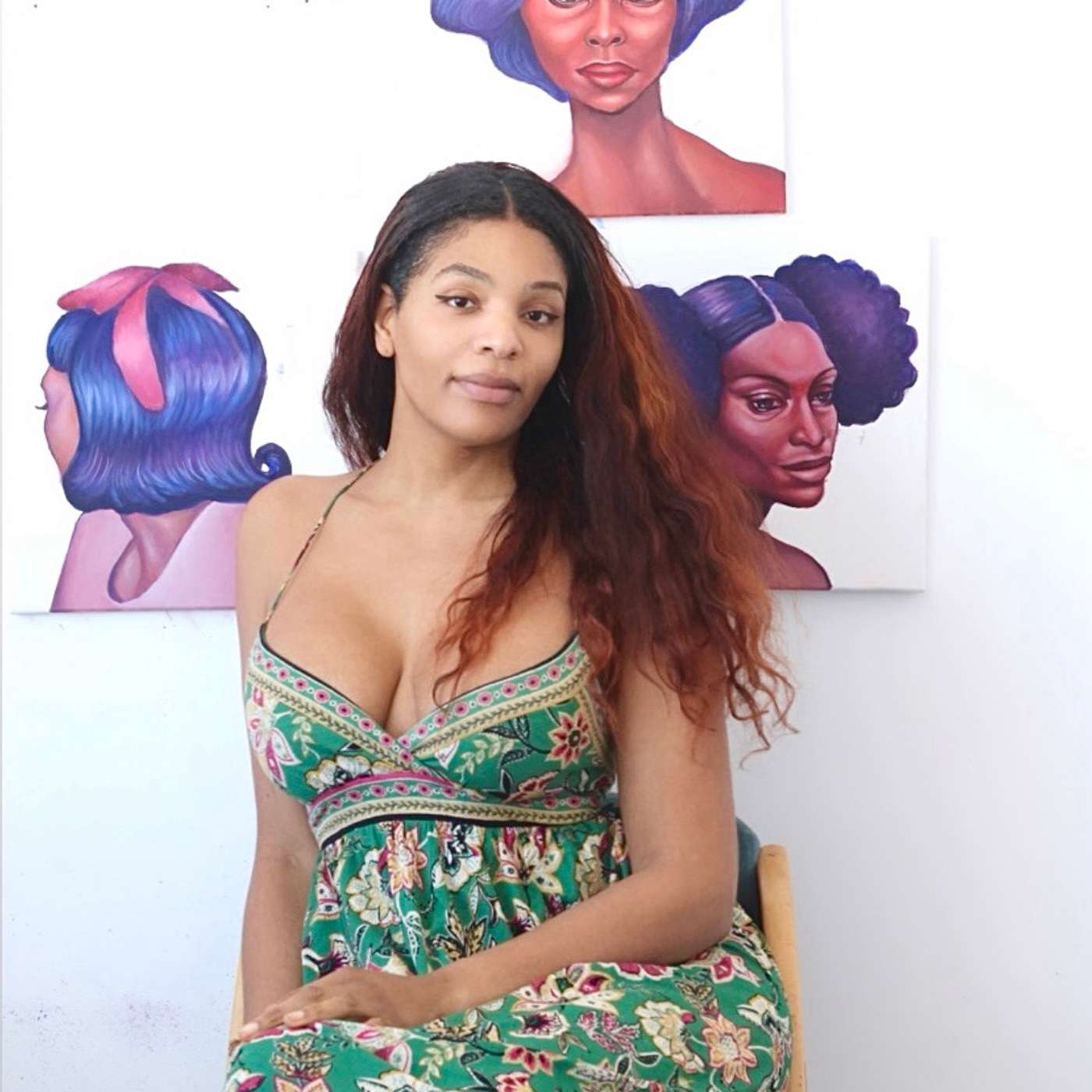
Who is Lanise Howard: A Los Angeles-based multidisciplinary artist, Lanise Howard creates work centered around a reimagining of different histories, especially within the black experience. She pulls from the past and from the future, which she often sees in her dreams. Working across paintings, drawings, sculpture, and soon textiles, Howard is a world-builder whose portraiture depicts Black bodies and paints often untold stories.
Lanise talks about the three bodies of work she's currently developing: her main project, a sci-fi world based in the future but with a story that started in the 1970s; a more personal body of work featuring herself traversing different landscapes; and an ancestral series honoring different ancestors from the past. We dive into her world-building practice, how she merges the "future past" or "past future" to create parallel universes and new dimensions, and her approach of asking which medium best conveys each story she wants to tell.
She reflects on recent museum shows—particularly at the California African American Museum in partnership with Art and Practice—where she witnessed diverse audiences getting emotional while viewing her work. Lanise shares details about her Miami solo show, where she experimented with cultural elements like feathers and architectural details. She opens up about becoming more unapologetic in her work, navigating the art world as a Black woman who has to demand respect, and why her work is always uplifting—even when melancholic—to give people hope.
For updates, follow @lanise_howard_studio on Instagram and Twitter, and visit lanisehowardart.com.
This is Lanise's second appearance on The Truth In This Art—it's been a little over two years since her first episode.
The Truth In This Art is supported by William G. Baker, Jr. Memorial Fund, the Maryland State Arts Council's Creativity Grant and Mayor's Individual Artist Award - Creative Baltimore Fund (Baltimore).
Host: Rob Lee
Music: Original music by Daniel Alexis Music with additional music from Chipzard and TeTresSeis.
Production:
- Produced by Rob Lee & Daniel Alexis
- Edited by Daniel Alexis
- Show Notes courtesy of Rob Lee and Transistor
Photos:
- Rob Lee photos by Vicente Martin for The Truth In This Art and Contrarian Aquarian Media.
- Guest photos courtesy of the guest, unless otherwise noted.
Support the podcast
- The Truth In This Art Podcast Fractured Atlas (Fundraising): https://www.fracturedatlas.org
- The Truth In This Art Podcast Bluesky: https://bsky.app/profile/thetruthinthisart.bsky.social
- The Truth In This Art Podcast Instagram: https://www.instagram.com/truthinthisart/?hl=en
- The Truth In This Art Podcast Website: https://www.thetruthinthisart.com/
- The Truth In This Art Podcast Shop: Merch from Redbubble
Get every episode summarized
Each time The Truth In This Art: Stories That Matter publishes, we email you a written briefing from the transcript — the topics, who appeared, and any specific claims, with the ad reads skipped.
Email me new episodesFree for 3 shows. No card needed.
Hosts & guests

Transcript ready
613 searchable segments. Every word is indexed and playable.
Full transcript
The Truth In This Art: Stories That Matter — Lanise Howard. Machine-transcribed; use the interactive transcript above to jump the player to any line.
Welcome to the Truth Inness Art, your source for conversations connecting arts, culture, and community. These are stories that matter, and I am your host, Rob Lee, except no substitutes. Today, I'm thrilled to welcome back onto the program, a Los Angeles-based painter whose portraiture combines her interest in the digital space with her desire to depict black bodies and paint often untold stories. So please welcome back to the program, Lonnie Howard. Welcome back to the Truth Inness Art. Good. It's good to have you back. It's been a little over two years. That's a wee back. Absolutely. It's been a little over two years since we, you and I last spoke on this program. So for the folks that begrudgingly and unfortunately may have missed our first episode, could you
reintroduce yourself in your own words for any audience that's, you know, any audience member that's not familiar with you or your work? Could you reintroduce yourself? Okay, my name is Lonnie Howard. I'm a multidisciplinary artist based in the way, and my work is often centered around the imagining of different histories, especially within the black experience. So I pull a lot from the past and from the future, which I often see in my dreams. And I merged them together, I often call it the future past or the past future, and then I kind of imagine this new world. Sometimes I call it like another dimension or parallel universe. Recently, I created this hypothetical planet that I tied up a Lujria, and named Lujria, and it's really like this black planet. So there's a narrative that's centered around that recently. And yeah, I do paintings, I do drawings, some sculpture, going to be working on some text
out themes. Okay. And yeah, I see much, you know, just, I feel like there's no bounds to them. The media or the medium that I can use, because I often ask myself, which is the best medium to convey this thing that I'm trying to tell, or the story, or experience, or the spilling, whatever it is. So not adding bounds to it. I think one, since you're a black planet, if you will, you want to add that other one. You're a world-builder girl. What are you talking about? You're a universe, you're a universe. When I talk about a universe, I'm thinking about what's in a universe, everything's in a universe. There's good, there's bad, there's night, there's day, there's different environments, there's things that are happening, that are intimate, there's things that are happening that are theatrical, you know, there's just so much, so it's really endless.
Absolutely. Absolutely. I heard sort of dreams, imagination. So I want to kind of delve in a little bit deeper. So what's currently like, let's say, today, we're going to Sunday, a rare Sunday recording. What's inspiring you or peaking your curiosity at this moment? In this very moment? Or in the moment of the studio. In the moment of the studio. See? Artists. Here's the thing what you art is. Go on, please. Yeah, so I have a, I got like a, I guess a mood wall. I would say, um, where there's just a bunch of different, see if I can try to show you. Wait. It's over there. Oh, nice. It's a city. Yeah. Yeah. So there's like a mood wall, which is just all the different ideas that I have at the moment. And I kind of put them there to remind myself of, like, the direction I'm going to
going in. Yeah. So there's, there's like three, almost like three bodies of work in one. Okay. So there's the main body of work right now, which is a Lujria, the world of the Lujria. And that's very sci-fi if based in the future, but the story started in the 1970s. So there's definitely still some area elements of the 70s and the 60s, bats and the more. And then there's a more personal body work that's like me kind of traversing through different landscapes in the future. And those things are more intimate. And I haven't really been working on those ones as much, but just the ideas of them, because I was working on them and I kind of took it in. And then I have another smaller body of work, which is more ancestral. And that one is kind of like honoring these different ancestors from the past.
And they're all kind of celestial in a way. They all have like elements of celestial, the otherworldly, the spiritual, but they're kind of like three different storylines or sequels of each other or branches of a main tree. Yeah. So I'm hearing time, I'm hearing intimacy, I'm hearing sort of just space in like a openness there, especially with allujria having sort of the that world component. It's like a boundlessness that's there, but also having these sort of common threads that it's time there. It's I'm thinking from what I'm seeing depictions of folks that look like me and you. That's there. And so I'm seeing those threads and as far as within the last, since we last spoke, you know, in the last few years and I know how artists or even something like what I do, I'm
always tweaking. So how do you refine your your painting process or your process in art generally because you said painting, some sculpture playing with textiles coming soon, drawing and such. How have you refined your your process or your artistic vision in the last few years? So it's definitely gotten more thorough, I was saying originally, I would just have like these, I would probably like dream sketches and they were really rough compositional studies often small. And then from there, I would start working on paintings, but now there's about two other costumes before that. So I have my little dream sketches, compositional sketches and then from there, I create a mock up on Photoshop. And the mock up is usually I take that compositional sketch, I put it into Photoshop and I try to line up the image with real images that can kind of match it.
Now sometimes I have to shoot those images myself, like certain backgrounds, certain figures, or I'm able to index images from online, like I've been indexing a lot of images from old magazines, from like the 50s, 60s, old jet magazines, old like life magazines, ads from the 50s, 60s, 70s, and I'll then superimpose those into the Photoshop's image. And I'll also change things and draw things and I create this mock up and then from the mock up, I then do a study. And the study is, there's one behind me right there. So I've been trying to get these more fleshed out studies, which they are able to really showcase not just the composition, but the feeling of it because I'm always kind of pushing
a little bit of this joltialness or slightly uncannyness in the work. And I feel like when I'm drawing, I'm able to really feel that. And so then it kind of reminds me of them when I go into the actual painting to put that in there. So this one is me drawing it onto the canvas. Now the funny thing is this one, and there's another's two other classes before the sketch. So I'm looking at the mock up also as a reference and I kind of bridge them all together, like on this one, on the one that's on the canvas, I have to use a little bit more of reality. So on the sketch, her feet are really tiny, almost like cartoon like, but that was just to really showcase like the daintiness of her or like the femininity. But then when I'm doing her here, I want that foot to be more realistic with the measurements.
Got you. But it just kind of like, I'm looking at it. And then I might go back in and make the foot a little bit smaller or I've also like made her legs, the movement of her legs a little bit more natural. I feel so I'm always looking at them and just kind of seeing what I can do cool from each of the process, like in creating the painting, but I like it to take a long time on realizing, like I want it to be this whole process, I'm almost like, you know, I'm almost like bespoke, like this bespoke process of like having an idea, refining it, retuning it, building it and making it into hopefully a masterpiece, like I want to move it forward every, every change to be masterfully done because I feel like I trained and I've learned so much.
And now I feel like if it's not to that level, I don't want to release it. And I'm being a little bit hard on myself, but it's fun actually for me. Like it doesn't, it doesn't feel like work, it feels like something that is a challenge. And it also kind of calms my nervousness so in a weird way, where I feel like I'm just pushing through. I know that there's this process and I can take my time with each part of the process. Like okay, we have the sketch that we have the, you know, the refined sketch and give yourself a week to finish that. Take your time with it. You don't have to rush, you know, you don't have to rush from painting. Do this up a month, month and a half for the painting. You know, we're kind of three days a week. Each day you go in there, you're energized. Do you, you know, so that's kind of how I look at it now. That makes sense, especially compared to sort
of two things that is running concurrently. And thank you for mentioning it because it brings this thought up. You know, doing something artfully showing one's skill, showing one's pursuit, I'll call it in my own terms, they're pursued towards failure. Like I want to keep getting good, so with getting good, or better, you're failing as you go along. It's like lifting weights or, man, I used to run this mile in this distance and this time. Yeah. So, so those two things, so with that in mind, the two things that come up, and I like you were talking about giving yourself enough time, but also not trying to be a machine for sake of argument. I think of in a world of sort of AI, I think of, hey, I can just type this in. And immediately I have art quote unquote versus someone being an artisan and doing something. As you said, bespoke with time and attention mastery, the technical component. So we have the AI component there versus people actually making real things, right? Yeah. And then there's this other piece and we were having a
conversation before we got started in this area, like sort of folks who are novices maybe who don't have the training or the background or even the love for it, whether it be painting, whether it be drawing, whether it be doing a podcast, everybody with a paintbrush and a painter, everyone with a microphone and a podcast. So talk to me a bit about how you're feeling in that area where you know what it takes to make your work. And you know what time, skill, you know, that you put in that education that you put in and seeing other people like, hey, you go, there's something on a canvas and I was great art. So talk about something like that. Yeah, and maybe there's just some different points in this career, you know, I've been working as a professional. I've been showing my art from past eight years and galleries. Six years as a professional, I would say. That's the year I graduated. And so when I look at my trajectory or I look at the past, I'm like, I painted over like 200 painting. So there's no
reason to just usher out the paintings. Now I am super inspired right now. So I'm working on several paintings, but they can take their time. Yeah. You know, when I look at the masters, they took years on paintings. So, you know, I think sometimes nowadays, we want this instant gratification. We have an idea. We want to put it out there and we want people to clap like, oh great, not I got the lights, I got the comments, maybe it's sold, the galleries, showing my work, whatever. And the art world has a swear way of congratulating that, but also just respecting it in the end. The art world loves commodity. And work that's easy to produce that still gets a reaction. Gallery see that and they know that that's an easy turnaround. So they scoop up a lot of young artists that make work kind of in this
relax before it in this pie chiseled way that they know that they can sell it quick because the collectors, a lot of the collectors, unfortunately, don't really know what they want. They don't really, a lot of collectors don't really have the best taste, but they see whatever is moving the needle online. And there's something that they gravitate towards it that gravitate them towards it. And you know, they scoop it up, but the art world has a weird way of kind of like disposing of that type of work after its moment has come. And something that I've noticed is I've shown in a lot of spaces, but I kind of say that this medium case, which is what I want because I don't mind work to last for long periods of time, even way after I'm gone. So, you know, I'm constantly grappling with that in my mind. So I want this interpretation
or do I want a lasting satisfaction? And I would go last in satisfaction knowing that I put my heart into something, knowing that I really pushed myself. And you're always going to get better. So I'll look at a painting from five years ago. I can do that better now, but I don't even really look at it like that because I see it for what it was at that time. And you know, it's, you start to feel, over time, like how it's changed in your use of color and how you retain something is different. And I like seeing that. I like seeing that evolution and knowing that I'm always constantly challenging myself. Or I'll just be working at that. That's a good point. And one of the things I was thinking of when you were saying looking at paintings from like five years ago and part and doing this podcast, like this is the second time that you've been on. And my hope is that this is at least showing some progress in the type of
conversation and in the context of the conversation. It's similar in my mind to when a musician says, hey, I'm going to do a remastered version of my old stuff. It's like, I'm back with it. It's like, I don't know if you can hit that note the same way you could, but I appreciate what you do. That's right. So one of the things I wanted to ask you about that thought was kind of interesting based on the the sort of your story, you know, if I recall correctly, has New York and sunny L.A. Monochromatic New York, concrete jungle, and you know, sunny L.A. So how do those environments sort of influence perhaps your your palate or your compositional choices? When I think of L.A., I'm like, yo, yellow, bright palm trees, whatever, sand. When I think of New York, I'm like, pizza, buildings, you know. So how does that influence your choices? I'm not sure. I'm not sure of New York. And I live in New York for like six years,
but I don't know how much New York is in my work anymore. I feel like a trader. But I didn't notice that it's in my work and kind of the in the works that are like, I'm gonna go fuck part of my language, but like with this work that I'm doing now, it's title of the tease. And she's a bad bitch. Like, I mean, let's just keep her up. She's a bad bitch. It's kind of like, I realize a lot of the women are like versions of me, either versions of me that I have been or versions of me that I could have become or versions of women in my family, whether that out around. So looking at sort of recent shows that you've had, whether it be, you know, solo shows, whether it be group shows, what's standing out to you like that in like recent history?
What's standing out to you about maybe being being seen out there as far as your individual work or being in a group show, what have you? What's sticking out in terms of experiences that have been like really positive and enlightening for you at this stage in your career? Well, I didn't say the museum shows probably stood out to me in the malls. And I think it's because the museum attracts a lot of the fantastic people. So down the shows, you know, is a very niche crowd. Usually it's other artists, collectors, going there looking to your work, or they're just patients of the gallery in general, where museums, they, you know, there's kids, there's random people from the neighborhood and museum, but one of those museums I was in, California African American Museum and partnership with Art and Practice, they, you know, invited all kinds of different people.
They had tours from just all kinds of different groups, seeing a work. And so having people experience my work in that way was different. And, you know, a movie, you know, it was like I saw people getting emotional and I thought people get emotional from my work, but just seeing all different types of people get emotional looking at the work. And I was like seeing themselves, my work is also always very uplifting. And that's one thing that I was want to you to have to, there to a certain degree, even if it is male and colleague at times, I want there to be the side. So relying on that almost there. And so, you know, I, it makes me feel good to know that people like they see themselves with the one painting, the the nucleus of all the women that kind of in the triangle. And that king is like 88 inches huge. So when people
would go there, it was almost like this mountain top that they could see, you know, black women be at the top of. And, and it's all kind of supernatural and the supernatural background. Sorry, background. And it's like hopeful in this way. And I think right now, we're like in a time where there's not as much hope. So people seeing things like that, it just was very uplifting. And it was very emotional for people and I didn't. I guess I did expect it. And so, certain degree because I was emotional painting at times. But it just resonates with me and it makes me feel good that I'm painting what I want to paint. And people, you know, appreciate it. I mean, that's all any artist want. My show in Miami, my solo show, I was really proud of that show. It was a little limiting because of the space. So I can really do too much large paintings. So I
had a limit on size, which was a little limiting. I will say because I had really big ideas. And, you know, I did the best work with this space that I had. But one thing I would like to about that show is that I tried different things. Like I did some more sculptural elements with the paintings. One of the paintings had feathers. And I'm going to reintroduce that in some new, some other paintings. And just it just challenged me. You know, I did some sculptural elements in the back of the painting to kind of bring into this world of allutria, some architectural kind of elements. And I want to definitely challenge from that. So I kind of look at that show as almost like this incubator for what's to come. And it was, you know, it was great. And that respect, it was that coming very side by, they're very strong side by fate happening in the work. And I'm loving it. That's great. I love hearing just the opportunities to work within
confines and parameters you were saying was, you know, limiting in some ways in terms of space. But being able to take perhaps that lemon, if you will, and say, look, I'm going to make this lavender lemonade with it. I'm going to try a certain completely different. That's what you were doing over there of experimenting sort of within those parameters, but being able to branch out from there. I tried the same thing in here. It's from like this sort of patrice, no, not protrusion, no, Hannibal Barras joke about, look, if I'm going to do something I don't like or if I'm not really into, I'm going to at least have fun with it. And it's not to say that you don't like it or that I don't like it in a scenario, but something that might not be the exact ideal. And it's like, can I at least learn something from it to build on and maybe refine certain areas? So and the last two years of doing this podcast, I've had to make some concessions, which was a little disappointment. Let's disappointing as to how I wanted to talk to how many interviews that I
wanted to do and so on. But I was just like, all right, keep it interesting. Keep it fun for yourself. So while I can't do maybe the volume I'd want to do 100 200 episodes, maybe doing a strong 75 to 90 episodes and adding in something that's a bit more refined and a bit more robust and being able to talk to some of my art friends, like such as yourself that's enjoying your water right now. Uh-huh. Uh-huh. Uh-huh. Uh-huh. Uh-huh. Parched. So being able to connect, no, no, you're good. You're good. I'm just teasing you. So to connect back with folks, that's one of the things that I get out of it to kind of one check in going back to one of the things I think we touched on. It's this notion of something feeling disposable. You were talking about with sort of the art world, right? And it's just like, this is popping right now, but where is this going to be at in five years? I take that into account in doing this show. I don't want to just throw something out there. It's like, well, this person is doing something interesting right now. So let's talk to them right now. And part of that comes
to comes into mind when I'm going back through some of the interviews that I've done from 2019 and seeing like, who do I want to talk to again and see where they've progressed in the last six, seven years. So to me, it's just like it's a continuing conversation. This isn't a new conversation with you. This is a continuing conversation with you. So that's the thing. Exactly. And we keep you on point. We're going back to your old questions. I'm getting up there now. 33 now. So I'm getting up there. That does not count. You know, when I graduated, I was 26. So a lot has changed from 20. So I mean, I'm going to work the time though. But yeah. So I'm just on my role. I think I'm blessed. I'm more apologetic. I used to care more like when I first started going to paint as I was a little edgy. I'm like, I mean, but now it's, I'm like, I don't care. Judge me.
Somebody don't like it. So like, I just do what I want. Because I have to believe you, but like, if I'm painting her, I got to feel like her. I got to feel like that bitch. You know, I don't feel like that girl. Like, I can't just be scared because some galleries doesn't want it or just approve of it. There's not the gallery for me. And I know that I do enough or work again, like we're saying, painting universe. And a universe, there's going to be heroes. And there's going to be villains. She's not a villain, but she might be a villain in his eyes. You understand? She's not a villain. She's the hero actually. She's my hero. Now, one of my heroes, but you know, I love the woman who knows her work and knows her power. But she made the ability to sell my deals. She made the ability to someone who's insecure. You know, I realized other when there's other women that are insecure when a woman knows
her power and knows her strength, she's been a slut. She's been a hoe. She's been, she thinks she's all that. You know, and I've dealt with that just in the art world when you're attractive or whatever and you go to an opening and you're selling cute and you're looking good and you're confident and you're sweet as pie. Some people don't like that. And so you get to a plate where you interact with that so much. It's just like, you know what? I don't give a fuck because I know that I'm a good person. I know I have a good apartment sweet. And if somebody has a problem with me then they got problems with it. So I didn't do that. Exactly. You know, so you have to get to that point because being a people, please, there can literally ruin you. You know, being a people, please, there to that extent where you know, we should try to be respectful to people and be considerate to people. But when you're taking someone else's feelings more into consideration when
they're all in and what she want to do is you're like in the paintings that you're making that you're sitting for 40, 50, 60, 100, 200 hours working on. Like, what are you doing? So I think on that that point where, you know, because I get a dollar, it's telling me, you know, I got a dollar, it's telling me, and I've had people tell me what galleries have said behind my back. And you know, I said, but I have this one gallery tell this other collector and collector one told me. And said, no, well, oh my, these works get real wonky lately. What's wrong with her? And just because I had a couple of new paintings, you know, I'm saying, and it's like, it's just so funny. It's like, first of all, I'm a young woman. I know you can't identify with that right now. And that's okay. You know, like, I still have to tell stories that represent things that I experienced and things that I can identify with right now. When I'm 60 and seven years old,
my work will probably change. And that's okay. And so, yeah, I think I just had to get more apologetic. And maybe I think when my mom passed, it helps a lot, you know, because I realized it's just how precious life is. And, you know, I can be interested in so many things. I mean, I'm taking some landscapes right now. And I think the challenge for me now is like showing people that all of these things can intersect. Just because a woman sexually doesn't mean that she can't love nature, or that she can't follow through the trees or whatever. And I was like, I think I'm going to win. It's trending right now on Instagram, being wonce the gold. But I am like the epitome of wonce the gold. Like, I'm a wonce the gold, bro. I've always been wonce the gold. I love, like, following it in the trees. And being a nature and all that stuff and kind of going with my own flow, like a free spirit. And I think a lot of my work kind of resonates in that
works. It's in that element of being a free spirit. And, you know, but there's some deep stories there too. So I don't know about on me. No, no, no, no. See, see, the thing that you did, see, the thing that you did there, you answered two other questions. I literally have one real question left. But you've given me a new question now that I'm going to ask you because I think it's kind of funny. You said being a sweetest pie. Which flavor pie go? I was saying you gave that look that your painting has going on. By the way, you gave that same apple pie. I know that I'm like, I'm naturally like a happy, I'm a happy girl. I'm always, you know, nine times. I just said, I'm happy. I'm sweet. And I think sometimes like I dealt with that going up where maybe people don't expect me to be sweet. So it kind of breaks people the wrong way. Sometimes, you know, they think
it's on the fake or they don't know what to think or I don't even know, but it's just like I see the reactions. And I don't have that much friends, you know, because of that and I'm high school, I had a million friends. I was like, we'll pop away through whatever had tons of friends, even after I graduated, high school of people. But I think I got older. I just had less from my friends. And, you know, I think the world that I don't know, there's somebody thinks with that. But you just can't, you can't think of overthink about or consider other people's feelings more than your own. That's what I take from it. Because, you know, a lot of times, but again, I'm being sweet, I'm being respectful, but someone can still have their own issues with me. And that's out of my control. You know, I mean, I got several issues with you, frankly, now I'm kidding. You're already said, you're like, I don't care. So
so let me, let me, let me move into the rapid fire questions. And I got one more real question after the rapid fire will be done. So rapid fire, you've been on here before, but here's a refresher. So rapid fire is, is if you can say it in like one word or whatever the quickest sort of response here, that's what we're looking for. So I got six of them for you. It was three before you started talking. And now it's six because you said so many random, interesting things that I wanted to go deeper on. All right. So here's the first one. Are we spending enough time appreciating art? I would say it's getting better. That's good answer. What is your most common dream, dreamer, frolicer? What's your most common dream? We can evolve as humans. Yeah. This is a, because when we started, one was getting in their calories. So I'll ask you this, breakfast for dinner or dinner for breakfast. How do we dinner for breakfast over breakfast or dinner?
Yeah. Okay. There's too much sweet so carbs and all that. You can't be eating that late. Girl, in this universe, in Cobb, Landria, as I like to call it, you can, carbs don't have any, you can do whatever you want. You know, it's like, well, I'm going to have pancake. Because I was going to have that interview and I think, you know, you listen to your body, I can get older, like what makes you feel tired or makes you feel pain, it takes a lot out of you. Yeah. It takes a lot. I mean, I can't big. So I have that energy. So I don't need after like nine, thirty, nine, I don't eat anything after that. And then I don't have a villain. So probably one, twelve, one. All right. I gotta keep this straight. I mean, maybe once a week I'll, on accident, I'll slip up because I'm going to get home so late or something. But I think it might have been on top of it. You, you, you're committed. Because I remember when we had that first conversation, you were like, I'm in the middle of the intermittent fast. I was like, girl, if you don't eat something. So here's the next one. You're a traveler. So I'll
seat or window seat. I know that you're tall. So I'll seat or window seat. Window seat for sure. I'll see. Go on. I hate it. Because everyone's talking past you, like, I don't know how all those homes. Yeah. That's a, that's, that's true. Like, I, I, I, I, I, I, I, I observe, I observe these things. Yeah. I'm tall and I'm very small. That's, that's great. I don't. That's not not back. No, that's not back. Because you know, like, always, I love my show of girls. I love, yeah. But in high school, if I was a short girl, that'd be like, oh my gosh, you're so tall. You're so tall. I'm like, yeah, I'm small. I love everybody. But you know, sometimes you gotta come back. You gotta come back
with people because, you know, sometimes you'll be shining it. I mean, I sometimes like when people have real conversations out of the, it's not being, that I'm being performative, but I'm hosting, right? But when I'm having a conversation, one on one with someone outside of the mics, some of the spiciness that flows, it's, it's got's bonnet that comes out of me. It's like, yeah, so here's the thing. But I don't gossip too much. So this is the next one. I got two left here. What color is, what's your mood right now in terms of color? Oh gosh, you know, it's so hard to be an artist because I don't have a favorite color probably. I would say I've been wearing a lot of white. I've been wearing a lot of white. And I think it's just because it feels like summer, this winter, and white is just such a summer color. It's been 90 degrees or more. A lot of the days, though, you just, you gotta keep it.
You gotta keep it light. So I've been wearing a lot of white. And I've been thinking about making some clothing. So I'm kind of in the early stages of that. So I've been actually, like, dying some stuff myself, like taking white dresses and dying them and playing with that. So yeah, I don't think I don't have to say where I think historically, my favorite color is probably been turquoise. Yeah. That's good. I'm trying to always get away from turquoise when I'm decorating the house. Yeah. It's like, oh, I have to sneak that to quite, but I love it so much. That's good. I used to have a few turquoise. I guess they're just turquoise, kind of. Yes. I see a bit of it. It's got the turquoise. Yeah. And it's a white in there as well. Yes, a white, yeah. So this is a trolley last rapid fire question because we talked about it earlier. What's your current skincare routine? All right. Thank you, routine. Okay. So I've been doing this nutrient in a wash. I wish it up a lot. So right now, the ones that
I'm working for me with the heat is nutrient in a wash. And I'm using this aerobatic soap, because I do a double cleanse. So I watched with an intrigina and then I used this aerobatic soap, which is like an Indian soap. And it has hemp. It has neon, turmeric. It's like an herbal amoe vera. I use that. And then I've used this thermoe, which is like this organic company. It's nothing fancy, but they make good products. The moisturizers are actually like a very small amount. I realize less moisturizers. Good. You know, the less the better. I actually have a phrase as the best skin. And she doesn't moisturize all, which is crazy, but the skin is flawless. But I don't want to try that. But I've been trying to be less moisturizer. And it works good. I can mix that with my sunscreen. And then I just do my eye cream. And that's it at night. I do the
same thing, but I use a night moisturizer and a different night cream. I use the vitamin C night cream in the day. And then I use a hydrolytic acid, my cream in the night. And one of the things that we do in L.A. So, you know, we're all about our little beauty treatments. So before it gets to be too, too, too hot, I'm going to do a couple of little things. Once a year, I do like either my radio frequency sessions, which helps tighten the skin. I either do a chemical pill, but this year, I'm going to do a fractal laser and some little small things, no Botox. I like it. I like it. So here's the last question. This is the sage advice question. So I think you've been very transparent. You've been very real in this conversation. So this last question is in that same vein. We're all ambitious. We're go getters. We were talking about that a little earlier, seeking out opportunities for our work to be seen, heard, and connections to be made.
How do you discern what's worth your time right now? What are the traits that you look for in the relationships that are most important to you? Whether it be, you know, with galleries, whether it be with collectors, whether it be with fellow artists or just people socially, because we're all so busy and time. Is that a premium? Well, it's definitely changed. I think when I first started, I was just so breathing. I was so innocent. Even my heart was so innocent when I was back at it. And I think I had met it. I wanted to just really get my heart out there. So I said no to think back then, but there was a lot more guest foods. And I was just trying to get my work in as many places as possible. Now, you know, I've been a lot of places. And so I think I really have to evaluate what is like the purpose of it. You know, and unfortunately, I have to be able to self it with where I place my work. You know, if I don't think it's going to be beneficial, I just
don't do it. And maybe in like sweetest pie or whatever, it was really hard for me to get to that thing, because I felt like it was so selfish. But with your career, you have to be a little bit selfish because it's for you. It's for like what you want to do with your trajectory. Oh gosh. So I'm going to get that technique. And so yeah, I think I'm just, I'm like, it's nice to get offers here and there. And I'm just like, hmm, it's something I've already kind of did or just a gallery that I feel like doesn't have the reach that I mean or they don't sell work in the range that my work sells for. Now, if it's something that I'm doing, I'm just the love of the shows that curated some shows in that way I wear. I had kind of given back to galleries and curated shows. And even in my space now, I have two spaces. And so one of the spaces I'm
going to use to create my own shows here. And that's really just purely out of the love. And I want to have a space for that where that side of me can exercise that. And I can, you know, put something on for the love of it. But in my personal career, I'm just very, very, very picky. Now, it's terrainly picky and careful. And I feel like with galleries moving forward, if it's, I have a bit and of what I want and most galleries don't fit into that, unfortunately. And if that, you know, it's just you have to try to be a little bit after a while. You have to be a little bit smobby in that way because the galleries are there to help you. But they're also, you know, they have your own attire among us. And they're not going to work with you. They don't feel like they can get something out of you. So why, you know, why are you so bad that, you know,
it's a mutual thing that's getting taken. Of course, there should be a love for each other there were respect for each other. But, you know, it's definitely harder now because my, I'm often leaning towards no automatically when someone sends me a proposal to sit with them or something. I'm simply want to say no, but I have to just temporary a little bit and give them a good reason of why I can't do it or, you know, like when I just did Felix, I got offered to do like having five shows that week. And I took on two. Sure. But I didn't want to be in five shows and different galleries and then, you know, different fairs. It's too much. It would have been too much. So I want to look very intentional as well. And even moving forward, I think I have to be more strict on my social media as well. And that's one of the reasons why I like turn my
hands off. And I think, you know, I have to be like a sense for when I'm going to post a little key picture of myself or something. It's really not a sense. It's like a private Instagram or personal Instagram, but I haven't really been using it that much. Or like on Thursday, get going there and talk if I wouldn't talk. I have other outlets, but on my Instagram, I definitely want it to become more curated and just really about the art so that I can keep people focused because I was talking to you earlier. I just, unfortunately, you have to play the game because the world is a certain way. And we think and I just see one's the goal in LA, close to the picture in the park, you know, feeling cute or something like that. It's distracting because it's distracting the men that unfortunately can't focus because they're, they can't see the art because they're going to have some other kind of art for them or whatever. And so, you know, I finally got to the point, okay, I just have to, in the maybe I could do like a recap of the
bun then just have like a, you know, several pictures in that recap or something, but I definitely want it to become more curated on my Instagram. And so I have to be a big girl. It's time to get, you know, more girl-owned and more serious. It's not always a bit serious, but I want it to all the time keep that kind of old movie for not just a lot. And then, you know, but you have to get more attention on. So, yeah. Yeah, I think what you're, what you put out is sort of, you know, sometimes is what you're getting and sometimes you have to rebrand that. So I've been thinking the same thing, you know, of how to be a bit more mysterious, how to have more barriers between levels to get to me if that makes sense and not showing like, you know, because it's, it's a lot of time-wasters, it's a lot of things that, oh, you're not quite ready. And I find the sort of traits that I exhibit, you know, is this sort of, I'm very ambitious, I get things done.
And, you know, the evidence is there, you know, and folks will leverage sort of that ambition, ding a lot of current, and they don't have their stuff in order. And suddenly, it's just like you're attaching your brand, your business, your career, what have you, what something that may not be in alignment. So being able to discern who matters. And the thing that I've tried to get much better at in this last year is trying to make time with people. I joke about my 1.333 friends, but trying to make an effort. The point, we have that at point, isn't it? Yeah, yeah. Sometimes we find why they go to the club with you, but not to that. It's based on how much side-eye they get for me. That's what it's based on. I give out a lot of side-eye, but you can't see because my eyes are so small. But, ultimately, I try to make it a point to show up to the friend's birthday. I make it a point, and almost as a rule, that if someone sends me a personal invite, or if I'm in personal contact,
I don't give my number out to everyone, but if there's personal contact and there's a familiarity, there's at least an opportunity to build. And those are the things that I look for, and I think those are the things, you know, touching on this sort of rebirth idea that you've talked about in your work, I think that's a piece of it. How do we get back to the real stuff? Like, online is not real, it's a pipeline. So if I know someone, and I'm good enough to connect with them, and they're good enough to reciprocate, then there's an opportunity offline to build and be supportive of one another. And having things that feel reciprocal reciprocity is so important, and I think it's a thing that's lost because, again, people are really ambitious, and, you know, there's an inconsideration that comes there, there's a misaligned expectation that comes there, and those are the things that, frankly, they hurt, and they feel weird. So I try to flush those things out really early, because before it leads to something where it's like, oh, so we're using each other. Yeah. There's a big bug in here.
Because you're a sweetest pie. I don't know how to do a bug that is, but okay, but, but yeah, like, we're branding, and I'm just getting serious. I will always be serious, but I've never wanted it to, you know, I want you to have, I didn't want to feel like people can again concept with me. I wanted to feel like, because, you know, I still have a lot of, like, kids that shout to me, like, because I taught at Harvard Westlake Schools, where I have some kids that from there, or just teenagers, or, you know, young adults that go to Otis that reach out to me, and ask me for advice and things like that. I never wanted to feel like I was not in the breach, but I had to just, it got to a point where I was like, I had to, you know, from my all-point theme of TV, I had to kind of cut off that, you know, form of communication, and I'm like, if someone wants to reach out to me, they either reach out to me already, and they can, you know,
we can continue that conversation, or they can email me, or whatever, and, you know, or talk on threads, or something, one of the other ones, but on my Instagram, I'd talk to be a bit more strict than, you know, right now, it's such a weird place in the art, weird times in the art world, especially being like a black artist, I think, you know, we're not in a trend right now. We're not in fashion. I mean, there's still a black artist that are doing well, but I think overall that big, you know, fixation on like black artists that was going on like two years ago, it's not the same now. Right. And the way it's a good and bad thing, I think it's a good thing where it's narrowing down to the artists that are great, because there was a lot of club, but I think that it's that in the way where it's like some galleries, opportunistic galleries,
they just, like, I had some galleries that used to reach out to me, like, oh, like not so, bad thing me to be in shows with them, literally, literally, bad thing me, and I would try to find here later. And then as soon as some, you know, some articles came out about how black art is not in trend, it's like they're not even reach out to me for it. Right. And yeah, and then there was one gallery that I was working with, and I worked with them a couple times, sold out two solo shows. We had a solo show, we had a show planned, and they just did every spawns, and I even met with them about some legal stuff that I was having in, in New York. And know the signs just, it's just like, I would just stick like there's so many curators and galleries that are just opportunistic, and all they care about is money, all they care
about is what they can get from you. And just seeing that, it builds character with you, it builds, like, you grow up, you have to grow up, because you realize that the personal nature of this business, and it makes you become a big girl, like, okay, this is how people are. And, you know, me, because when I was, I was young when I first graduated from school, and I was like, I thought everyone was like, you know, a mom or a father, like some kind of figure, you know, like, oh, they love me, and they love my art, and they got my best interests, and you know, we're a family, like, I have that mentality, but now I just, you know, luckily, I do still have one gallery that I feel really close with, but even in that situation, I understand what it is. Like, I understand that it's a business relationship, you know, we may have, we have great respect, or even love for each other, but it's business. And ultimately, she has to keep her business, or they have to keep their business alive. And, you know, business of the personal. And, but at least I do expect
respect, you know, like, if I can't do a show for someone, I'm going to tell them I can't do a show. I'm not going to, like, not respond to their email, and just leave them a red or whatever. That's just, that's just rude. But, um, but yeah, if you grow up and you realize just how, you know, and not to make a race thing, but, you know, we have a black woman, and you're, you know, where you lie on the Tullum pole, so you always have to, you have to fight for your savings and have to demand respect. And you should have put up a bullshit, should, just accept anything. And yeah. And to make it about race, because I'll do that, um, no, it's, it's super true. And in doing this, like, you know, we were talking about expertise a little bit earlier, and, you know, I've been doing this nearly 20 years, and I feel like I'm constantly auditioning.
And I do this thing where it's just like, I know what I do is good because I enjoy it, right? And then the people who come on, they seem to have a good time, whether it be for someone is asking them about their work for the first time, or someone is giving them time and space in an unfiltered way to talk about their work or their story. So the people who are involved in the making of this are happy. And at least feeling some degree of contentment. And then when, when other folks kind of chime in as to how they're going to discern it or whether I'm the person to do it, because I see a lot of people being very influenced by what I do. In fact, stealing full segments, whether it be radio shows or whether it be people with budgets, I'm just doing it as an independent. And I see it. And every now and again, when I talk to people, I get some opportunities to speak as an independent creator or a journalist and all of that stuff at universities, which is really cool. And other instances I'm just seeing as, so why don't you do a sports podcast? You're a big black eye. And I say, that's wild. And it's some of the things that I hear or I'm not, I'm kind,
I'm considerate. I'm nice to the people, but it's also a certain degree of, I don't know about until you've passed sort of that thing because I'm prone to have a certain degree of disappointment to people. But once there's sort of, oh, we rock, we can have a long conversation and you have substance. You know, I don't care about, oh, that looks really pretty. That's really technically sound. That's amazing. What is the story behind it? That's the thing that I care about. Where's that depth there? Technical stuff? Great. You know, in this realm of overly manicured and overly perfect paintings, music, whatever, you know, overly clean podcasts, I don't care about those. I care about the people who are making it and what the flaws are in it and what's the story behind it. That's actually where the real stuff is at. And that's what I care about most. But as we get more to this sort of prepackage pipeline artificial thing, we want perfection. And I don't do
something that's perfect. I try not to have perfect conversations. There's sometimes a listen back through them like, damn, that was not good. Or okay, that could have been a little bit better, but it was real. And that's sort of the barometer, if you will. And so what's that? I knew your stuff is crazy. Oh, for sure. I'm a bit of a perfectionist every now and again, this is why I'll do a video podcast because sometimes I'm like, oh, I should have shaved my head before that when the stubble is looking crazy. I'm always like, when I, I guess when for some reason, I usually have some kind of fly away. And I'm just like, go, let's show here. So if you brush my hair, but I'll be walking somewhere in the wind or something, the wind will get you every time. So, so let me, when you have like this, what happens when you got, you know, you don't have one only. You won't have some fly away. I see the next stage, once I actually blow up, right? I'm not going to have like real guests on anymore. I'm going to
get a unit. I'm going to go to Turkey. I'm going to get a unit. So I'm going to have like the walls, like, because you know, I got to have the, I'm going to get the unit and the veneers. So I'm going to look wild. No, not it. I think they use the pieces from the back and they put it at the top. Well, we're going to do that then. Now, it's my ex is like, he's the, oh my, I used to make me last night. No. Yeah. He's like, hey, we were, look, look, look, look, what's his place? I'm going somewhere. I'm getting it. I'll be mad. So if you want to do it, that's great. And there's people of be like, so high stuff about it. And then, you know, three, four, five years past, but I'm like, okay, so let's talk about that. Turkey has the when you get the money and you want to do it. So, you know, I was like, I think you should do anything that makes you feel better. You know, because me, I, I got my hair like all this time of red. But I, I, well, I got it black. And then I had to try to dye it back to the lamp, brown, like, brown, but it didn't get there because my back was, so anyway, turn out red. So
next time there's somebody later, but yeah, I changed my hair. You know, I put it in, I had extensions, I do all kinds of things. And I think we should do whatever makes you happy. See, the only reason I would do that is literally a higher publicist. They're like, Rob, we need a rebrand. So this is what you're going to look like now. I'm like, yeah, yeah, let's do it. Let's do it. Being your best view. I will start wearing leather pants and mid-drives. Don't get me started. Okay. I'll press that. Look, I'm out here. I'm out here. But let me close this out. Let me close us out. So there's two, there's two things I want to do as we wrap up here. One, I want to thank you for coming back on to the pod. I think we had a deeper, more insightful and in a great addition to our first conversation. So yes. And secondly, I would like to invite and encourage you to share with the listeners where they can follow you, check out your work, and you know, all of that good stuff. Share the fence to and the best places to go frolic. I'm just sharing my fence that I think
that people just have to find that because I am. So my Instagram is by these. That way, and I see underscored Howard underscored studio. And you can't follow me on threads the same thing. I'm talking on threads. I'm always talking about city planning for some reason. My mind was an architecture and I love city planning. So I have a lot of city planning friends on threads. We're always talking about the future of LA, what we want, all that kind of stuff. And but I'm also talking about other stuff. Sometimes art on the air, but before I get people upset, it's my opinion for a little. And then you can also go to my website. It's kind of white up, but I need to update it. So it's my kneeshowardart.com. And there you have it folks. I want to again thank Lonnie's Howard for coming back on to the truth in this art and catching up with me. And for Lonnie's, I am Rob Lee saying that there's art, culture, and community. In and around your neck of the woods, you just have to look for it.
More episodes
More from The Truth In This Art: Stories That Matter

Glass Artist Dany Green on Chaos, Order, and Letting Things Break
The Truth In This Art: Stories That Matter

Photo artist Farrah Skeiky on Photography, Grief, and Staying Connected to Peopl...
The Truth In This Art: Stories That Matter

Yes, Please and Thank You — Georgina Coka Treviño on Cultural Strategy, Art, and...
The Truth In This Art: Stories That Matter

Producer LuvJonez on Building Community Through Instrumental Hip-Hop
The Truth In This Art: Stories That Matter