Loading...
newstechnology
Lilly and Insilico Strike Big AI Drug Deal, LG Innotek Apps Sensing Revolution, Datamine Unveils AI MineScape 2026, Pro AI Group Bets $100M, and more...
About this Episode
(0:10): Eli Lilly and Insilico Strike $2.75B AI-Driven Drug Development Deal
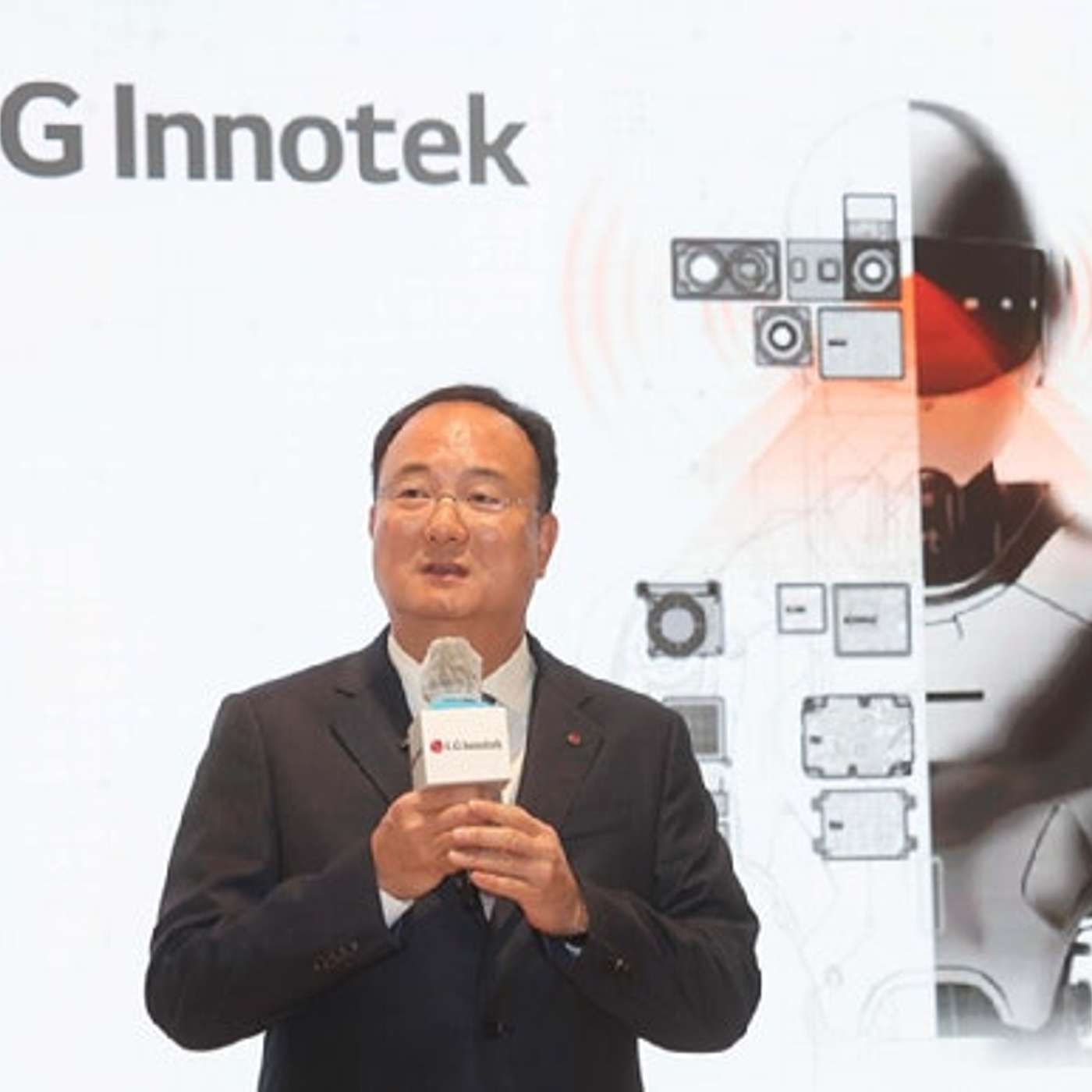
(2:25): LG Innotek and Applied Intuition Partner to Revolutionize Autonomous Driving Sensing Modules
(4:12): Datamine Unveils AI-Driven MineScape 2026 for Real-Time Mining Optimization
(6:41): Pro-AI Political Group to Pour $100M into 2026 Elections, Backing Trump's Deregulation Agenda
(8:42): AI Stocks Face 2026 Volatility: Long-Term Strategy Focuses on Microsoft, Nvidia, Meta Amid Shifting Valuations
To subscribe visit https://www.brief.news.
For more updates in your inbox each morning visit www.brief.news.
Image credit: KMJ
(2:25): LG Innotek and Applied Intuition Partner to Revolutionize Autonomous Driving Sensing Modules
(4:12): Datamine Unveils AI-Driven MineScape 2026 for Real-Time Mining Optimization
(6:41): Pro-AI Political Group to Pour $100M into 2026 Elections, Backing Trump's Deregulation Agenda
(8:42): AI Stocks Face 2026 Volatility: Long-Term Strategy Focuses on Microsoft, Nvidia, Meta Amid Shifting Valuations
To subscribe visit https://www.brief.news.
For more updates in your inbox each morning visit www.brief.news.
Image credit: KMJ
Hosts & Guests
Transcript
Good morning, it's March 30th and this is your daily brief in AI.
Here's everything you need to know.
A new $2.75 billion partnership pairs ELI Lilly and Ensilico Medicine to push multiple
drug programs with $115 million up front and the rest tied to regulatory commercial milestones
and royalties.
Lilly gains an exclusive license to develop, manufacture and commercialize Ensilico's pre-clinical
oral candidates in chosen disease areas while combining Ensilico's pharma.ai with Lilly's
development expertise and disease know-how.
Industry context shows AI driving operational efficiency in pharma, potentially boosting
margins even without blockbuster drugs, and Lilly is positioning to capitalize on that
adoption curve.
LLA leadership says the goal is faster identification of therapeutic candidates and exploring novel
mechanisms across several disease areas, supported by an integrated biology chemistry
automation approach.
Javor Onkov says Lilly is a premier partner for these assets and that no other company
is better suited to advance the candidates in the relevant disease areas, noting Lilly
outperforms Ensilico in some respects.
He emphasizes Lilly's integrated framework and scalable platform while acknowledging
Ensilico's AI strengths remain competitive in certain areas.
Key risks include industry-wide cost and approval pressures under EROOMS law and the possibility
that AI-driven capital expenditure may not translate into proportional clinical or economic
gains.
Success metrics focus on faster pipeline progression, lower cost per candidate, and improved clinical
success rates using Ensilico's pre-clinical nomination cadence as a benchmark.
The deal fits a broader trend of pharma leveraging AI to accelerate R&D and improve
efficiency, aligning with regulatory moves that may reduce animal testing in the future.
CEO A.L.E.X. Javor Onkov praises Lilly's AI capabilities and positions Lilly as a top-tier
partner while noting Ensilico's AI work remains competitive in certain areas.
The strategy aims to leverage generative AI to speed each development stage, from target
identification to trial simulation, while building scalable platform and computational infrastructure
for the long term.
LG Inotech teams with applied intuition to push autonomous driving sensing from modules to full systems.
LG Inotech will supply sensing modules for applied intuition's reference vehicles and simulations
while applied intuition provides the software platform, reference vehicles,
and simulation tools to accelerate development.
CEO Moon Hyuksoo says the goal is to move from components to end-to-end mobility and robotic
sensing solutions in the physical AI era, with the collaboration aiming to turn virtual sensors into
concrete orders from global car makers. This comes as LG Inotech reported a 31 percent year-over-year
jump in fourth-quarter operating profit to 324.7 billion one, driven in part by stronger
semiconductor substrate demand, though automotive components sales edge down amid softer industrial
demand. The company plans to double semiconductor substrate production and reach full capacity by
2026 to meet rising physical AI demand and to double FCBGA server capacity by the second half
of next year for AI data centers. The broader strategy mirrors a shift seen across
component makers toward closer to final product offerings, supported by LG Inotech's growing
mobility order backlog, which hit a record 19.2 trillion one with 4.8 trillion one in new mobility
contracts last year. The success of this path depends on converting applied intuition
collaboration into sizable sensor orders and scaling production, all while maintaining a focus
on longer-term robotics bets. LG Inotech is developing unified sensing systems that integrate
lidar and cameras and is pursuing customers across North America and Europe.
DataMean unveils Minescape 2026, an AI-driven digital twin platform that links geological modeling,
mind planning, scheduling and simulation into a real-time execution tool. The digital twin
continuously updates a dynamic replica of mining operations to test strategies, quantify risk,
and optimize plans before field execution for safer operations and higher decision confidence.
Minescape 2026 targets coal and stratigraphic deposits, blending geological modeling with surface
and underground design, tactical and long-range scheduling, and drone surveying to boost productivity
and cut costs. Industry discussions at summits highlighted policy signals around R&B internationalization,
cross-border financial services, and the use of AI and blockchain in fixed income issuance,
trading, and risk management. A focus on data integrity, interoperability, and partnerships with
tech providers aims to accelerate AI, drone, and digital twin capabilities while addressing data
integration challenges. The platform seeks seamless data flow from design through scheduling
and simulation, reducing rework and delivering execution-ready workflows. AI integration
enables natural language interaction and context-aware guidance via a smart chat assistant,
file analyzer, command executor, and MPL expert, with safeguards to protect PII and prevent
training on customer data. The four AI components, smart chat assistant, file analyzer,
command executor, and MPL expert, support mindscape process logic code generation,
interpretation, and explanation while ensuring data privacy and non-use of customer data for AI
training. Minescape will hold an upcoming user conference in April 2026 to validate adoption,
showcase case studies, drive peer advocacy, and identify usability barriers. Data mean provides
the mindscape product page and press contacts for further information. Risks include an industry
skills gap, integration complexity, onboarding challenges, and the need for robust IoT networks
to unlock full platform potential. The platform aims to reduce unplanned work, enable faster decision
making, and lower costs by unifying workflows and offering execution-ready planning and simulation.
A new pro-AY political group, Innovation Council Action, is planning to spend over $100
million in the 2026 midterms to influence US tech policy and advance Trump's deregulation
and AI agenda. The nonprofit launched with a fundraising goal of at least 100 million this year
to push the president's artificial intelligence achievements and back policy makers aligned with
his AY policy positions. Innovation Council Action aims to advocate for a White House AI
national policy framework to unify federal standards and counter disparate state regulations.
The broader backdrop is a heated debate over AI regulation, with tech industry groups seeking
lighter rules and consumer advocates calling for stronger safeguards. Founders and supporters
include Taylor Budowicz and donors from leading the future, with notable contributions from Greg
Brockman, Joe Lawnstale, and Mark Andreessen. The group plans a Washington DC presence and a
scorecard to guide spending and reward candidates aligned with its AY policy priorities.
David Sachs and Taylor Budowicz endorse the group's mission, emphasizing support for Trump
aligned AI policy positions. Budowicz says the group will back policy makers who align with the
president and hold others accountable. Sachs, a tech investor and White House AI advisor,
leads the group and highlights its stance on deregulation and opposition to stricter AI rules.
Industry expectations frame AI policy as a major electoral battleground in 2026,
with movements to promote deregulation and counter critics. The group has established a DC
office and is building a scorecard to rank lawmakers by alignment with Trump's AI agenda
to steer future political spending. Innovation Council Action aims to push for a national
AI regulatory standard and accelerated AI infrastructure, projecting the US leadership role in
AI ahead of global competitors. The AI stock landscape shifted in 2026 as Nvidia, Microsoft,
and Meta cooled from earlier gains, pushing long-term investors to focus on holding core
positions and selectively adding when valuations align. Microsoft remains a centerpiece with a
market cap around 2.6 trillion, and shares near 357, supported by about 81.3 billion in Q2 2026
AI-driven cloud revenue, with capex of 37.5 billion that quarter, and evaluation near 23 times
earnings. The author plans to hold Nvidia, Meta, and Microsoft, and may add to Microsoft,
given its lower relative valuation and ongoing AI capex and cloud expansion.
Lyle Daily discloses stakes in alphabet Meta and Nvidia and Motley Fool holds positions in AMD,
alphabet Meta and Nvidia, signaling a research-driven but potential bias toward these tech giants.
Nvidia and Meta are presented as having high revenue growth, strong margins, and reasonable
valuations, supporting a long-term hold despite different AI business models, Nvidia as hardware
supplier, and Meta as AI model developer and platform. Nvidia stands out for leadership in AI
hardware, with the Vera Rubin GPU for AI inference and orders that could approach a trillion-dollar
trajectory by late 2027, underpinned by 2.026 revenue of 215.9 billion and solid GPU demand.
Nvidia's fiscal 2026 revenue reached 215.9 billion, with Q4 2026 revenue of 68.1 billion.
CEO Jensen Huang aims for at least one trillion in data center product revenue through 2027,
and the stock trades around 22 times forward earnings with a price earnings growth ratio below 0.4.
Meta's 2026 capex guidance rises to 115 to 135 billion as AI drives ad revenue and content
personalization, with Q4 2025 revenue of 59.9 billion up 24% year over year, and a 2026
market cap near 1.3 trillion as it remains invested in large-scale AI initiatives.
The article grounds the investment stance with concrete metrics for Microsoft, Meta, and Nvidia,
including price ranges, 52-week performance, gross margins, dividends, capex composition,
and cloud growth. Meta platforms remains committed to AI-enabled ad performance and content
personalization alongside substantial capital expenditure, with 2026 capex guidance and a continued
focus on AI initiatives. This has been your daily brief in AI. To read more about these stories,
follow the links in the episode bio. You can also subscribe to these updates via email at
www.brief.news. For more daily podcasts about the topics you love, visit brief.news-forward-slash-podcasts.
Tune in tomorrow. We'll be back with everything you need to know.