Loading...
newspolitics
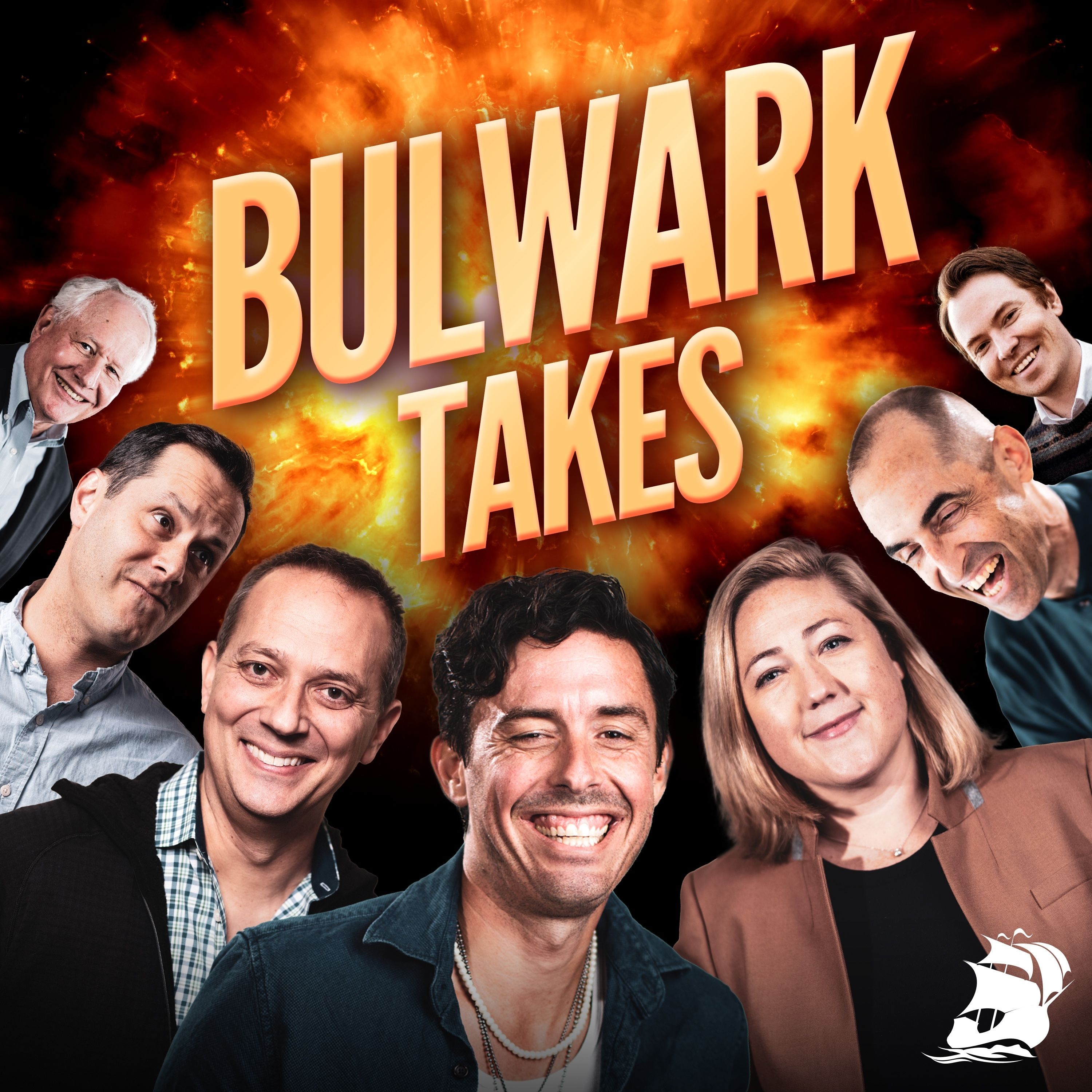
LIVE: Did Israel Drag Us Into the Iran War? | Morning Chaser
About this Episode
Bill Kristol and Andrew Egger are going live to discuss Israel and the war in Iran, Congressional war powers, the growing split between hawks and “America First” within MAGA, and the DoD/AI question.
Hosts & Guests
Transcript
All right. I believe we are live. Hey, everybody out there watching on YouTube and on
Substack. I'm Andrew Eger Whitehouse correspondent for the Bullwork author of our Morning Shots
Newsletter with Bill Crystal, our editor at large, who's here with me today. We are here
for the third and hopefully not final week of our Tuesday Morning live show coming off
of our Morning Shots newsletter. Just went out a little bit ago. This is Morning Chaser,
your Tuesday Morning Chaser. Thanks to you all for coming and tuning in with us and
to everybody who's watching later. Bill, how are you doing this morning? Just fine and you?
Oh, you know, I'm doing great. It's what a time to be alive. There's so much going
on in the news right now. I have been trying to wedge some content on what seems to me
like a very important story about AI and who gets to own it and what the future of it
is into the newsletter for several days now. But it keeps being superseded by more immediately
pressing concerns. So we're going to do both today. We're going to talk about the more
immediately pressing concerns. And we'll do a little bit about AI as well. But let's
start with. It's good that Andrew isn't taking it personally every time Sam and I tell
him, you know, that thing could be put off for another day. Andrew, it's not really
quite as important as the war that's going on in Andrew. You take it, you take it, you
take it well, you take it. We'll get it in. I think 2027, 2027, they'll be a good, a good
lead warning shot side of on AI, DOD and throw pick. It's actually a very interesting topic.
We will get to it after we do the war first, right?
Yes, that's right. Because as you may or may not have heard or seen by now, we are seemingly
sort of at war. We're quasi at war. No war has been declared, but that seems to be increasingly
a sort of frippery formality these days, at least the way, you know, presidents from all
over tend to practice it. And especially this one, it has been a little strange to watch
the president and the defense secretary not bother to avoid the word war. I mean, they
keep talking about us being at war where usually under these circumstances presidents have
a little bit more, they sort of talk around it. They talk about, you know, these limited
actions that we're taking, you know, in these different theaters around the world. But
let's talk about that, Bill, because you wrote the top for our morning newsletter today.
We are, I don't know how many days now actually removed from the strikes. You know, they
happened over the weekend and, and it's now Tuesday morning. And yet, even though we have
gotten quite a bit more communication now from the White House in the form of the president
calling up many random reporters at odd hours to sort of give his stream of consciousness
thoughts about the, the, the, the, the quote unquote war. We've had, you know, Marco Rubio
out there talking, we've had Mike Johnson out there talking JD Vance out there talking
about these actions. And yet, it does not seem as though we are that much closer to understanding
really why we did this or what our objectives are and were in doing it. Then we, then we
did over the weekend. And so you wrote about some of this this morning. Can you just kind
of talk us through the state of play in terms of what the administration is saying about
all of this right now?
Yeah. You know, and on the war issue, it was amazing when Senator Mark Wayne-Bullin said
yesterday on CNN, well, it's not a war. And really, I mean, I, I, I, I, I, I, I, I, I,
I, I, I, I, I, I, I, I, I, I, I, I, I, I, I, I, I, I, I, I, I, I, I, I, I, I, I, I, I, I,
President, Trump's gonna finish and, um, yeah, as I don't think the families of the
Service Memberswho have died fighting this war tragically. And what appreciate being told,
well, it's not really a war, you know, and other presidents have stretched obviously the
kind of their ability to use executive power byель. It's not quite a war that requires congressional
authorization to be fair. We haven't done anything this big since 2003. I mean, we've got
I mean, and the fight against the ISIS and ISIL and different versions of the terror groups
in and around Iraq and Syria were genuinely a continuation of what was authorized.
I think it's fair to say in the original AUMF that authorized the war at terror back
in the end of 2001, Obama's intervention at Libya's fire, the test case of him pushing
the boundaries, but it wasn't nearly at this scale, nothing like this scale.
It was done at Ajax with NATO Allies, I still think better to have gone to Congress then.
So this is genuinely shocking that he, I mean, I just think we shouldn't have what's been
saying correctly.
There's a long history of executive overreach and it's been gradual and it's been building
up for decades, but this is different in the sense that this is really big.
It's massive, you know, and it's ongoing.
It's not a one-off thing like the strike in June, but we sort of finished up what Israel
was doing to the nuclear program.
So A, it's really a war, it's a big war.
It's pretty, for me, it's totally astonishing and unacceptable that they didn't go to Congress.
We'll see what Congress says this week in terms of the war power's resolution that they
need to, I think, exert their authority.
Even if they defend the war, they should say, okay, but let's sort of not quite retroactively
authorize it, but let's signal to the world that we're behind it.
As it is, you got the president conducting this war with unfavorable public opinion polls,
no congressional authorization or even expression of support, and I think allies and others
can look at it and think, well, what exactly is going on here?
And then, as you say, the president hasn't given many different explanations, some of
which he's walked back, freedom explanation, helping the Iranian people rise up, which
is actually would be a pretty decent explanation for doing what we've done, but that is one
that Congress could have should have authorized if we were going to do it for that reason.
Mubios tried the imminent threat authorization, we'll get back to that in a minute maybe.
That doesn't stand up very well, I don't think.
They've been a bunch of other, we have to stop Iran from having nuclear weapons and exporting
terror, but they've been trying to do both for 20 years, and they've been trying to do
both for the whole first year of the Trump administration, and we didn't think it required
this kind of action, sometimes it does require some military action.
So I think the reason the Trump administration seems incoherent about its goals is that
it is incoherent about its goals, and I don't really know why, honestly, I really don't
know why the president is doing, I mean, I think he's doing it for various reasons, maybe
we should get to the Israel point, which you wrote about in the second, I've been warning
shots a little more, I have a thought or two on that too, but I do think historians
will be, maybe Venezuela went to his head, maybe he doesn't like Iran, the Iran leadership,
I totally agree with that, he doesn't like what they've done over the last 20 or 47 years,
I totally agree with that, Hamayni tried to kill him as he put it, and he's gotten him
back first, maybe it's kind of personal revenge, I mean, it's obviously some combination
of all these things, but I think the final point I make just right now is that I think
the Venezuela quote success, but it was at least success in the limited sense of Maduro
being sacked and us doing it neatly, and cleanly, though close run thing on the helicopter
there, but anyway, that really went to his head, I think, I just think he is high and
his own supply and this respect, and thinks he can do anything, the US military can do
anything, there's no cost to be paid, people will cow-tow us to us anymore, which some
will do in the short term, if they're scared of us, and there's no thinking through the
broader consequences of what we're doing, I think.
Yeah, yeah, I mean, the most striking thing to me, just listening to them talk about it
over the last couple days, especially Pete Hegseth yesterday, speaking to reporters,
it's just the real incongruity between the stated aims and the rationale that they're
getting, because the aims are pretty traditionally hawkish, at least some of them the way they've
been expressed.
Iran can never be allowed to have a nuclear weapon full stop, Iran, even the degree to which
it was stockpiling conventional weaponry.
Marco Rubio said yesterday, short range missiles and drones, that was threatening to tip
them over to a point where they could attack with impunity in the Middle East and overwhelm
missile defenses, our missile defenses there, or Israel's missile defenses there.
And so those aims expressed that way makes sense from a hawkish thought process expressed
by Gaelic Marco Rubio.
You get Pete Hegseth up there, and he is obviously very concerned with the more isolationist
MAGA critique of the last 20 years of our foreign policy.
The idea that you create these power vacuums, you set the table for yourself to have to
fight years and years and years of war, and he has said in no uncertain terms, that's
not what this is going to be.
We don't want endless war, we don't want nation building, we don't want to spread democracy,
we don't want to have woke wars in ways the way he has bizarrely put it, but the incongruity
between that stated end and those stated assurances is remarkable.
I mean, the thing that they are saying is we are going to refuse to allow this country
to have, to reach a certain military threshold forever, but don't think it's going to be like
a lengthy conflict or anything like that.
We're going to be in and out.
I mean, it's just, am I missing something there, or is it actually quite this incongruity?
No, that's well said.
I mean, I was a supporter of the Iraq war and a very strong advocate of the fact that if
we were going to do it, we needed to send in ground troops.
So that obviously is very much mixed out, not a great outcome, and obviously that leads
to casualties and so forth.
And so that's a very tough thing to advocate and a tough thing to carry out as we all found
out in Georgia.
It's where you push that out.
We weren't fooled.
We weren't crazy.
I'm just to get to your point, right?
I mean, we thought if you're going to go for a regime change, if you're going to try to
construct something much better, you can't just bomb them for a day or a week.
We had bomb, people have a Clinton bomb, Saddam Hussein for four days, like it was,
at the end of 1998 and maybe done some damage to the nuclear program.
And so, yeah, there's, I think it's really well said way, the way you put that, I mean,
there's a big incongruity, incongruity between the ambition of our aims.
And I would say the scale of what we're doing, which is, in a way, somewhat consistent
with that.
But then the incredible wish to stop short, not incredible, the understandable, I suppose,
but irresponsible wish to just reassure everyone that nothing to stay here, we just demolish
them and we have no responsibility, we wash our hands of what happened.
I mean, even just from a human point of view.
Hopefully you're going to go pulverize the nation and I'm not against pulverizing some of
the regime elements and destroying a lot of the weapons, and then you have no responsibility
for what comes next.
I mean, that's not a very sound position, I think.
Yeah, yeah.
And it really does kind of drive home just how remarkable it is that not only is there
no real broad base of popular support for this right now, I mean, small, small minorities
in the public, at least prior to the action, said they wanted to see something like this.
It was like 21 percent, I believe I saw of, in one poll.
Obviously, that is likely to take up because of the nature of these things when Trump does
a thing, MAGA, at least in large parts, tends to line up behind him.
So I assume the polling will increase, but there's nothing resembling sort of like a broad
base of popular support for action over there, nor are they really trying to generate
one, right?
I mean, they're not saying, let's buckle in for a really long haul here and everybody
just needs to be patient because the ends will be, you know, satisfactory, it'll be
worth sort of the cost paid in blood and treasure.
But instead, even from the very jump there, they are in sort of damage control reassurement
mode, right?
Like, don't you worry, this isn't going to be like the other ones, this isn't going
to be long, this isn't going to be costly, this isn't going to be painful.
And I guess we'll see.
I mean, like that's that, but, but it just it, again, I just keep coming back to the
the incongruity between those reassurances and the deliverables that they are saying they're
going to be able to deliver.
So we'll find out about that.
But one, one other thing on all of this that we haven't talked about is the one piece
of new information that we did get yesterday about why specifically this happened now.
And that was this remarkable reporting that we got first out of the New York Times and
later confirmed, both by Secretary of State Marco Rubio and House Speaker Mike Johnson,
basically saying that a big part of the calculus for these strikes for the Trump administration
was that Israel was determined to go forward with its strikes now, regardless of whether
or not we joined them and according again to these leaders that I just mentioned, that
was a part of our assessment.
That's what made it sort of a defensive action in the in the term terminology of Mike Johnson
or as Marco Rubio put it, that was what we judged we needed to do to address an imminent
threat because Israel was going to strike and we assessed Iran was going to strike back
against us and against Israel.
And so the sort of again, in this in this strange logic train, the defensive action they
are alleging was to join Israel.
Obviously, the logic of that is sort of tortuous.
It may be it holds up, maybe it doesn't, I'm not an expert in these things, but I think
that the bigger sort of the reason why this explanation made a lot of people prick up
their ears is just the underlying state of play that that reveals about sort of who's
calling the shots here.
Between between between America and Israel, it was kind of a startling at least suggestion
of sort of a lack of agency on the part of the United States of America in terms of when
to get involved and when not to get involved with this conflict.
I don't know exactly how to parse all that bill.
What was your take on in this upcoming out yesterday?
I think it's really worth noting.
Look, I think part, it can eat, who knows what the true truth is about exactly what
Israel would have done if we had said, no, we're not going to help.
The buck passing side of it, which you mentioned in warning shots, shouldn't be ignored.
It's a nice excuse that a lot of Republicans, a lot of Americans, a pro-Israel, a lot of
people are very sympathetic.
Israel has a much more existential threat from Iran, has had and does have than the U.S.
does.
A lot of people are sympathetic to the idea that we should help Israel and Trump, in fact,
went into help Israel and Jew and did the last finished up, so to speak, the nuclear
bombing.
It's unclear why we wouldn't have done that kind of thing again, even if Israel had gone
to war.
A, B, in June, the war between Israel and Iran went, I think, for 11 days until we came
in.
Very few American assets were hit by Iran.
They're not idiots.
Do they really want to fight?
They were having, they did hit Israel.
They tried to.
They launched mass of this old tax and so forth.
We helped Israel defend itself against those.
But it wasn't as if Iran said, great, Israel's attacked us.
That's just attack America too, because we can handle both Israel and America.
That's what they're saying, right?
That's literally what we'll be saying.
I don't buy that as a true analysis of the Iranian regime.
They hate us.
Maybe they would try to kill Americans and terror attacks or by lobbying some drones into
the bases.
I don't minimize that.
Obviously, if Israel had attacked, we would have taken many defensive precautions.
I assume we would have told the Iranians who we were talking to last week in negotiations.
You touch us.
You're really going to get it.
For now, we're going to let Israel do what it feels it has to do.
There were millions of things, millions of in between positions we could have taken rather
than saying, oh, Israel is going to attack.
We can't stop them.
And he pointed out in warning shots, we did in June at the end, after our sort of concluding
nuclear attack on the nuclear facility, Trump told Israel privately and publicly, we're
not with you if you do anything more.
Don't do anything more, right?
There was some all caps, tweet.
Remember that?
Don't drop the bomb.
I mean, it was really on truth social, right?
Suddenly now, Rubio's account, well, we're kind of helpless because Israel was going
to go ahead.
Now, either it shows that DB had dropped wrapped around his little finger or sort of conned
him, I suppose, or Rubio's looking for an excuse and blaming Israel in a sense or making
Israel take responsibility for this whole war.
But again, it's ridiculous.
Whatever, I mean, we would have been involved if Israel had gone to war in the same way
we were in June.
We might have done things.
We might certainly would have had to take defensive precautions.
The idea that this massive attack, which we spent two, three months sending huge chunk
of our fleet and many bombers and so forth over to the Middle East to participate in,
was triggered by simply by the need to defend ourselves because Israel was attacking, is
both false.
And I think dangerous for for an American, for Rubio to say that, I mean, the effect of
is either to make, I don't know, a week in the world's size or like a tool of Israel
that helps anti-Israel types here in the US.
I think both on the right and left, don't you think, and say, well, look at this is, you
know, we're now being dragged into a war that, as you said, is not very popular by Israel.
Rubio basically said that.
And it's, I don't think it's true in the sense that we have a lot of agency.
Trump did not have many American, every American president has said no to Israel in the last
fall that we're such close allies in the last 30, 40 years, often on very controversial,
very controversial moments telling Israel we wouldn't support further actions by them
in Lebanon or elsewhere, often not supporting, you know, it's not as if every administration
hasn't had a pull and push and pull with Israel.
And Trump has in his first year.
So it's really a response, at that point, I find really distasteful, maybe because I'm
pretty pro-Israel and I just feel like this is going to increase anti-Israel's sentiment
and then really kind of anti-Semitism, probably in the US in the sense that it's a Jewish
lobby, but you've written, you know.
Now, Trump himself may have been very responsive to parts of that, you know, some of his biggest
owners, Miriam Adelson, I don't know, I mean, who knows what calculations Trump personally
is making, but it's not an excuse, as you put it, he has agency, the U.S. government
has agency, U.S. government has many times not done what Israel wanted.
And it's just saying, well, Israel wanted to do this, so we just had to go along, this
would be a sad, not go along.
We had to launch a massive attack on our own in conjunction with them.
That's really wrong and irresponsible, I think.
Yeah, and I think the point that you make that's really important that a lot of the analysis
of this out there right now is missing is that Rubio might not have been being particularly
forthright, right?
I mean, like there are a lot of extraneous reasons why it might have been useful for him,
you know, for this or that sort of narrow reason of making the case, for instance, that there
was an imminent threat that we had to address, and therefore, you know, this is constitutional
under various, you know, wartime authorities, that sort of thing.
All this is kind of in the back of Rubio's mind, but I did want to talk a little bit about
sort of the political repercussions of the administration so publicly making this case,
because there is a fault line, I mean, you kind of gestured out of here, there's a fault
line that runs right through the mega base in terms of a lot of this stuff right now,
some of which is blatantly anti-Semitic, but a lot of which is doesn't quite go that
far, but is very skeptical of sort of extremely close military ties between the United States
and Israel, that wants to see less of us doing all of that and so on, and I mean, these
people were not happy yesterday, they were not happy about the war at all, first of all,
but then seeing these sorts of comments from Rubio and from Johnson, I mean, there are
a lot of people out there who are like, my worst fears about, you know, this administration,
cow-towing to Israel are confirmed from within the mega base, I mean, like I at least
was a little surprised to see the White House not feeling the need to massage that side
of the base, maybe it's just because I'm too online and I see them a lot, and I think
of them is actually maybe a larger contingent of the broad mega constellation than they
really are, I mean, but that was my reaction, isn't this kind of just giving a lot of
grist to sort of the Marjorie Taylor Greens, the anti-Israel folks of the party?
So I think it was, maybe this was Rubio though, very focused as you sort of said on taking
care of the congressional problem, I think he was on the hill when he said this, wasn't
he?
Yeah.
That he was dealing with, why didn't we get, oh, it was immediate, it was urgent, it was
imminent, which has always been a sort of an excuse for not going to Congress first,
and not just excuse, it would be a reason not to go to Congress first, if it genuinely
were an imminent threat, you can't forecast to the world exactly.
So that was the problem he was dealing with, but he maybe didn't think through what other
problems it was causing, either politically for Trump and for the mega base and for Republicans
or just for the country to, what does the world think if Secretary of State, the United
States says we had no choice because this much, much, much smaller country, whom we have
constrained many times and who we have, as recently as June, you know, stopped doing something
and in any case, can't make us do anything, are saying, we had no choice, they were, they
were going in and it wasn't just they were going in, but Iran was then going to attack
US assets as if we don't have the ability to defend US assets once Iran starts to attack
them.
So the idea that, again, I think Rubio wasn't thinking about both the geostrategic implications,
the White House has not actually said what, now that I think about it as you mentioned,
what Rubio said, right?
I mean, the White House has not gone down the Israel path.
The White House is more just, how many is horrible and, you know, and it's, we can't
let them develop nuclear weapons.
So there may be an interesting, you know, maybe what Rubio said was not exactly a White
House line.
It was his own attempt to deal with a congressional problem.
But either way, it now is out there and it's having the effect it's having.
Yeah.
And it kind of gets into what actually counts as an official White House line, right?
I mean, I know that some of the, like, I think I saw the, the rapid response 47, you
know, one of the, one of the, like, White House's Twitter web teams, reposted Rubio's
remarks.
And so like that is in some sense an endorsement from, you know, the main building of, of
the line, but also it's, it might just be some random, you know, calm staffer who's
like out the Secretary of State said this, let's just on this point, it's a little opaque.
On this point, Andrew, this is why in normal White House, the president of the United States
gives a carefully written 50 minute, 20 minute speech when we're going to launch a major
military action, each, and lays it out.
Now, it's not always perfect.
It's not always coherent and people can always say that's not a good argument that that
one country exists.
One fine.
And then each day, you know, I was in a White House that was it or the White House's press
secretary is coordinating with the State Department and Defense Department, spokespeople and
the, obviously, the top level of the president's coordinating with the Secretary of State and
so forth is National Security Advisor.
And they are being very careful about their message, right?
And I mean, and that's not just a, you know, George W. Bush was probably better than
most administrations of this with Cheney and Baker and Skokroft and those guys, but that's
true of every administration, Obama, even Trump won actually, you know, you need accounts
of Pompeo being on the phone with Kelly and so forth when there were, you know, moments
of, of really intense action.
When it has the sense here, it's, you know, hegs that's prancing around the Pentagon beating
his chest, Rubio's desperately trying to keep the hill sort of under control.
There is no national, I guess, Rubio's technically the National Security Advisor.
There is basically no National Security Advisor, which I would just say for those who, you
know, from an inside government point of view, that's a very important job when you're actually
fighting a war.
I mean, you, someone needs to call the meeting a coordinate these guys.
If ICE president has got his own little political agenda, keeping his head down because he wants
to be sort of on the isolation side that you think of the Mago War also, he doesn't really
want to be too much involved in this war and he wants to leak out that, well, if we're
going to do what we have to do, a big, but also get it done fast and, you know, getting
his own spin out there.
So this is where you pay a price for not having a serious administration, honestly.
Yeah.
Yeah.
And if you think that power vacuum is bad in terms of messaging the war from the, for
in the, in the immediate term in the White House, just think about the one that's now developing
in Iran in the wake of all of this.
So, so yeah, it's a, there's a lot of chaos, not a lot of it seems to be adding up to anything
good.
We will obviously continue to follow this story very carefully in morning shots and in
50 other bulwark products.
I mean, this is, it's crazy, this stuff that's going on.
What does time to be alive?
We can turn away from that now.
I did want to talk a little bit as well.
Again, like I said, it's, it feels weird to talk about this in the midst of this actual
war breaking out and maybe starting to metastasize, hopefully not too badly across the Middle
East.
But, but, but I have been working and writing about something else related to the Pentagon,
sort of a policy thing that, that you never know in the long term could in fact end up
being just as important, which is this fight that has been going on between Pete Hegseth
and the AI company Anthropic over the last couple of weeks came to a headlight last week,
resulting in the Pentagon, which had previously been really integrated with Anthropic Anthropic
had been the only AI company licensed for its AI to be used in classified settings.
So, so for instance, even as late as this weekend, you know, the, the, the attacks that,
that we carried out in Iran and then as we co, as our commands around the world coordinated
our, our, our responses or, or planned for Iran's responses against us, they were using
Anthropic AI. Anthropic is, is integrated into these systems, but it's not going to be
for long.
And the reason for that is because on Friday, Pete Hegseth pulled the plug.
He said, not only are we canceling our contracts with Anthropic and we're going to sign, you
know, so we're going to backfill those, we're going to sign similar contracts with a couple
of other AI labs, open AI, which runs chat GPT and XAI, which is Elon Musk's GROC, that
will be good in classified settings, I think.
But not only are they, are they switching to those other AI software partners to contract
with, but they are also forbidding Anthropic from doing any work with any government contractor
period in perpetuity until, until Hegseth decides to take his foot off of their neck, which
is a real, you know, existential threat to the company as, at least as far as Pete Hegseth
has characterized this, if he got his way, Anthropic would no longer be able to partner with,
many of the companies that own a lot of its stock, Google and Amazon, they would no longer
be able to buy video chips that power its technology from Nvidia, they would no longer
be able to sell their software to any number of companies that have contracts with the
DOD.
So it's a real, it's a real threat.
And the reason for this is because Anthropic and Pete Hegseth had a disagreement about
what the DOD should be allowed to use their software for, up until now, under the terms
of an agreement that was first signed under the Biden administration, but which the Defense
Department under Pete Hegseth re-ratified last year, the Defense Department had very
broad latitude to use Anthropics AI for classified military purposes, even lethal purposes,
but there were a couple of red lines, one of which is Anthropics said, you can't use
our models to conduct mass surveillance domestically.
You cannot do broad American citizen surveillance with our models.
And the other red line was, we don't think that our models are currently reliable enough
to be used to power lethal autonomous weapons systems, so like, self-targeting, self-actualizing
killer robots and drones out there.
The models are not reliable enough to do that yet, so we do not think the Defense Department
should be able to use our model for that.
Hegseth basically said, we disagree with these, we don't think you should be able to tell
us what to do.
Hegseth says, we don't want to do either of those things yet, but sort of on principle,
Hegseth is basically saying, you can't tell us not to do those things, Anthropics said,
well, we're going to anyway, so that was kind of what led to the nuclear blow out here.
Obviously, this has kind of continued to reverberate.
It's going to take a long time, Anthropics is suing, and some of these other companies
are striking these new deals with the Defense Department, but also it's not
very popular, the idea that AI would be used to surveil Americans in mass and pilot killer
robots.
These other AI companies are having to pretend to the public that that's not really what
they're doing.
They also really have respect for civil liberties and a healthy fear of the robot apocalypse.
There are amazing things happening in the Defense Department right now.
I have just been rambling a lot about the stuff that I find interesting in the world
and report on.
Bill, I don't know.
You have a take on this, on this DOD Anthropic blow up.
I mean, there's so many different weird angles about the future that this implicates.
No, that was really an excellent, I think, account of what's happened.
You wrote about it Friday day before the war began, and you have another piece coming
maybe to see tomorrow or Thursday, depending on how much the war cries everything out,
but no, that was really an excellent way to get pushed again.
Yeah, yeah, I'm doing my best to soften the blow here.
That was a very good summary.
The one thing you said at the end of the piece Friday I totally agree with is, you know,
this should not be a matter of a private negotiation between Pete Hegseth and the CEO of Anthropic.
I mean, this is, Congress can act here, Congress can, it should lay down markers as they do
in a million other ways.
Every few years, someone gets reauthorized, some massive debate in Congress over section
702.
I don't even honestly remember what 702 is a section of it, some act, obviously, some
congressional, some law, which has to do with national NSA surveillance and the Rand Paul,
but also the left, the lengthy degree to which they don't surveil us, but they surveil,
I guess if we're talking to a foreigner, they can get not the phone, not what we say
on the phone, but what to a suspicious foreigner, but the fact that the call happened anyway,
it's, I mean, that is data.
I mean, it's very complicated.
It's always debated.
No one, everyone thinks, you know what, Congress, it's a good thing to debate.
There are real differences in how you prioritize privacy and national security, and this is
the kind of thing the United States Congress resolves.
The president has a veto authority, obviously, and I think at times in the previous administration
is threatened, the veto thing is that weren't friendly enough to national security.
That's, where's Congress?
I mean, this is where you pay such a price for the absence of Congress, because even if
it doesn't get resolved perfectly, at least there's a sense of a democratic process
that's dealing with this.
And now where, as you say at the very end of what you just said before, it's very unclear
what's happening.
It's unclear if AI, if the other companies really are going to do what anthropic wouldn't
do or not, they're really not going to do it, but they're sort of saying they're going
to do it.
It's unclear what the legal situation is.
Hegsf really doesn't have the right one wouldn't think, because of one disagreement
over these particular things, to ban anthropic from dealing with anyone and any other unrelated
defense thing.
And as you say, in the actual real time, right now anthropic is in the US defense department
systems, and the others aren't, right?
And I don't know that that's changing in the next week or the next month or the next
three months.
So, typically these things can get they get changed over if they, in fact, do get changed
over.
So, supposedly they have six months to make it happen, according to me.
Yeah, so that's great.
So, the whole war is going to be fought with this allegedly unreliable.
I mean, it exists as determinations that anthropic is an unsuitable partner to have
in our defense supply chain.
And we're literally fighting the biggest war we fought in 20 years with anthropic, you
know, contributions on AI.
So, I think you did an extra job on the summary.
You should keep following it.
It is really important.
And my only sort of footnote, I guess, more broadly would be I talking to a very intelligent
democratic strategist last week, I just sort of ran about other things actually about
races in 2026.
I can't remember how it came up even.
Maybe we were chatting, maybe he'd read your piece, and he said, you know what?
I think the whole AI issue.
That's even so much on the job question, which is what a lot of people have talked about.
We'll have a lot of white college jobs, we'll take and so forth.
But on the privacy question, GROC, sexualizing women, and I suppose men, and also the
women they could, and girls and their boys, that whole issue is going to be huge is what
he said.
He thought it could be one of the biggest issues of American politics over the next
years.
He thought it should be because it is a genuinely big technological development.
It takes us a while to handle these big technological developments, and there are big fights
about them.
We make some super decisions as we go forward.
But no one thought you could just have the automobile and not have, you know, rules of
the road and build highways that are suitable for automobiles and then limit the speed on
the highways and then have limit the, you know, danger of automobiles with seat belts.
I mean, right?
Not what?
And God knows AI is a bigger thing, I think, than automobiles.
So the idea that we're just passively watching all this happen gets back to the point about
Congress.
I mean, it's, we need, and I don't, don't you think I do think that in each political
party, maybe you should say a word about each if you want, or certainly on the Republican
side, this can be a very big kind of lurking issue for 2028, no?
Yeah, absolutely.
I mean, I, I have really more and more been coming around on the idea that not only are
these technologies, you know, not a flash in the pan, like some people have, have kind
of thought they're going to plateau off and not create a lot of economic activity, but
that in fact, they are going to continue to, to sort of reveal themselves to be more
and more powerful than we even really anticipated, which just, you know, multiplies the potential
for disruption, multiplies the upside and the downside, right?
And, and, and increasingly spotlights how, you know, perilous it is that there really
is no energy, hardly any policy work being done at the congressional level to like get
our laws up to speed in one way or another about this, because I mean, this is, this is
sort of at the, the bedrock of the Pentagon's position is like, well, look, you know, we
should be able to use these models for what they call all lawful purposes, and what a
lot of these advocates and, you know, civil liberties types people are saying, and in
fact, the position that anthropic is kind of tacitly endorsing is none of these, none
of these sort of privacy laws that we currently have, first of all, the state of them is not
great anyway.
We've known this for 20 years, that sort of like the state of the restraints on, on sort
of these digital, digital companies, the amount of information that they can vacuum up is
so far beyond what anybody would actually sort of deem permissible if they, if they sat down
and tried to, tried to develop a line for like what they think is reasonable, and it's so far
outstripsed what we could do before, you know, the digital revolution before all of our lives
moved online, and when you add AI into that and, and you add not only can, not only are all,
is all of this data being vacuumed up all the time and put into these different commercial databases
and government databases and things, but now you have a basically sort of omnipresent, omniscient
database synthesizing machine that can, can at will sort of pull all of those different things
out of all of those different repositories and put them all together to assemble like a remarkably
thorough and, and like consistent picture of like a, a person's digital footprint, and that in
theory, that's just at the government's fingertips now, like that's the kind of thing where you
really start to realize, wow, on the surveillance side of things, we have no framework for like,
we never anticipated that this would be the case when we were writing the laws that are now on the
books, we have not written any new laws since then, and, and, and as a result, these things are
getting hashed out in this environment where really the only, the only thing stopping the government
from, from being able to sort of do this at will is the scruples of this or that AI company,
and, and, and as we have seen, those scruples don't necessarily go very far when, as in this case,
one AI company like Anthropic is willing to say, well, look, please don't just don't do this one
thing, and the government is going to say screw you, we're going to destroy your business,
and it won't even matter because we're going to get rid of your models, and we're going to move
over to this more client AI company over here that is willing to let us, let us do these things.
Um, so, so it really is, I mean, like it, it's the sort of thing that cries out for real policy
thought and real policy work at a moment when Congress is, is completely paralyzed, uh, and it's,
uh, it's not a great thing. Um, I don't know what to say about it exactly. I, well, can I,
I'm sorry, go ahead, Bill. No, I just said AI is spending a huge amount of money now on
congressional races to try to support people who are really in favor of, uh, you know, not regulating
them much. Again, and, and, and I don't know, maybe that, well, that's, well, a company spent a lot
of money trying to fight environmental regulations and so forth, right? I mean, so it's not,
nothing wrong with that. It's a free country and all and interest groups will be, we'll do what
they do. But, uh, yeah, one, one thing that, that limits the power of certain interest groups is
just more public discussion, right? The auto companies were very powerful and then Ralph
Nader came along and a lot of other groups got formed and mothers against drunk driving and suddenly
the auto companies wasn't quite as one sided. One can imagine that dynamic happening in a normal
and healthy political system in the US is just the system seems so broken. I guess the final point
I make is just, this is so new. I mean, this is the, you know, these blue weapon commissions are
often pointless and foolish or, you know, it's kind of just don't really do serious work, but some of
them do. And again, you could have in a different world an executive commission appointed by the president
or appointed by the president with some selections from congressional leadership of big shot former
CEOs, former judges, former everyone, right, civil society types, religious leaders to say,
okay, is there what should be the outlines of a kind of regulatory structure here or what are
at least the questions that we should be asking? It wouldn't be a foolish thing to do. We've done
that in other areas in the past and sometimes it's been helpful. But again, with sort of in the
era of Trump, one that just sounds silly to even suggest such a thing. Yeah, yeah. And the White
House has had sort of a policy approach to these questions, right? I mean, their, their broad stance
on AI all along has been don't get in the way. Just like any any sort of like, uh, sort of like
overly personality regulation that we did right now would only be sort of like shackles on these
companies that are developing these models that are going to be so transformative, uh, you know,
that that would hold us back in the sort of the AI race against China. You know, these have been
their positions. And so it's very strange, you know, to see Hegseth and the Defense Department,
you know, still pushing this extremely maximalist sort of vision of what AI the technology should
be used for, you know, no restraints on the way we the Defense Department are going to use them,
you know, keep on pushing that forward because we need to, you know, when the AI race against China,
while at the same time, you know, what having these these viewpoints about the technology,
but now taking this insanely hostile stance toward one of the leading companies in the industry.
And so that is like creating this bizarre fissure right now, even inside sort of the tech right,
where they're like, wait a minute, I thought you guys were pro AI. And now you're taking like,
perhaps the most promising AI company we have that we should be so lucky to have, you know,
a bunch of cloths, a bunch of anthropics in America. Um, and you're trying to nuke them from orbit.
Like, how is that sort of like pro AI in this broad sense? Obviously, this is a really developing
story. We will we will hold on onto it. There are 50 different angles that we didn't even talk about
about this. Um, but, but it is, I mean, it's it's the biggest clash so far between the government
and the AI industry. It is spotlighting just how sort of flimsy the the legal structures that are
that in theory should put a curve on all of this are. Uh, and and it really does just start,
it starts to look like a race to the bottom in terms of in terms of, you know, whether there are
going to be any real curbs, um, on, on the, the most frightening uses of this technology,
which we haven't even talked about. Like, some people think will actually also just exterminate
humanity and destroy the world. I don't necessarily think that, but that's out there too, uh,
in terms of in terms of hooking more and more of our decision making up to, uh, artificial
intelligence. Um, I should have said long ago, uh, uh, that, uh, they, they tell you, you know,
not everybody tunes in at the beginning, remind them who you are, remind them why you're here.
I mean, Dregor, this is Bill Crystal. We write morning shots for the bullwork. Uh, on Tuesdays,
we're going live, uh, to, to talk through what we've been writing about. What we're going to be
writing about, uh, thanks to, uh, to everybody who's out there watching and following along so far.
I think we're going to call this one quits, but I should say one more thing before we stop.
And that is that, uh, uh, Sarah and JVL and Tim will be doing a live, uh, uh, taping of the next
level this afternoon at 2 p.m. Uh, so, you know, you, uh, you can, you can, pretty much these days,
you can just go through your whole life, um, um, uh, consuming live, uh, and, and on-demand
board content. Um, you can, uh, you can watch us at 10 a.m. You can go take a long,
relaxed, three-martini lunch, uh, come back at 2 for, for the next level. You know, uh, there,
there are, there are worse ways to spend your time on the internet. We appreciate you guys all
out there for watching. We hope you'll head over to the bullwork, uh, uh, uh, calm and get the
morning shots newsletter as well as our many other excellent newsletter offerings. Um, and,
uh, and I guess we'll see you here next Tuesday. Thanks, Bill, for, uh, for coming along and, uh,
we'll see you all next time. Thanks, Andrew.
