About this episode
Get every episode summarized
Each time Covenant College Chapel publishes, we email you a written briefing from the transcript — the topics, who appeared, and any specific claims, with the ad reads skipped.
Email me new episodesFree for 3 shows. No card needed.
Hosts & guests

Transcript ready
354 searchable segments. Every word is indexed and playable.
Full transcript
Covenant College Chapel — Luke 24 | Truly Seeing Jesus. Machine-transcribed; use the interactive transcript above to jump the player to any line.
Good morning. I would like to start by saying thank you to our student body. You guys have adapted really well to the seating with lobby, with overflow and weight, with the balcony. Thanks. We're getting it down. We would also like to extend a special welcome to you all. We have 18 high school counselors who work with high school students as they're looking to colleges from all around the country and one. Am I right? From Nicaragua? Who's that? Welcome. We're so glad you're here. Can we just welcome everyone? Thank you guys. Great to see you. So tomorrow is our first discipleship Thursday. Just want to make sure everybody understands what we're doing, how this is playing out. Tomorrow will be Doodsday Talks. And what has been renamed Thursday Talks.
Everybody knows the importance of names. It started off Tuesday Talks with the women. Then it was the guys joined with Tuesday Talks. And now Thursday Talks are happening. Tomorrow, Si Mitchell and I will be in Brock 114 with the men. We are going to be talking about friendships between men and women. Please come out for that. That is our first stop. We'll be in Cresky for the rest of the semester in the library lounge. But Brock 114 tomorrow come out. And the women will be just, I don't know what you guys are talking about. It'll be great because Kelly Boiles and Stephanie just make everything interesting. That will be in Christa Voldin's apartment, the RDA apartment in Andres. So come out for that. Next week will be our first PRS public reading scripture taking place on the overlook. And now I get to introduce our speaker for this morning. You know her and love her. Please give a warm welcome to our VP of Student Development, Stephanie Formetti.
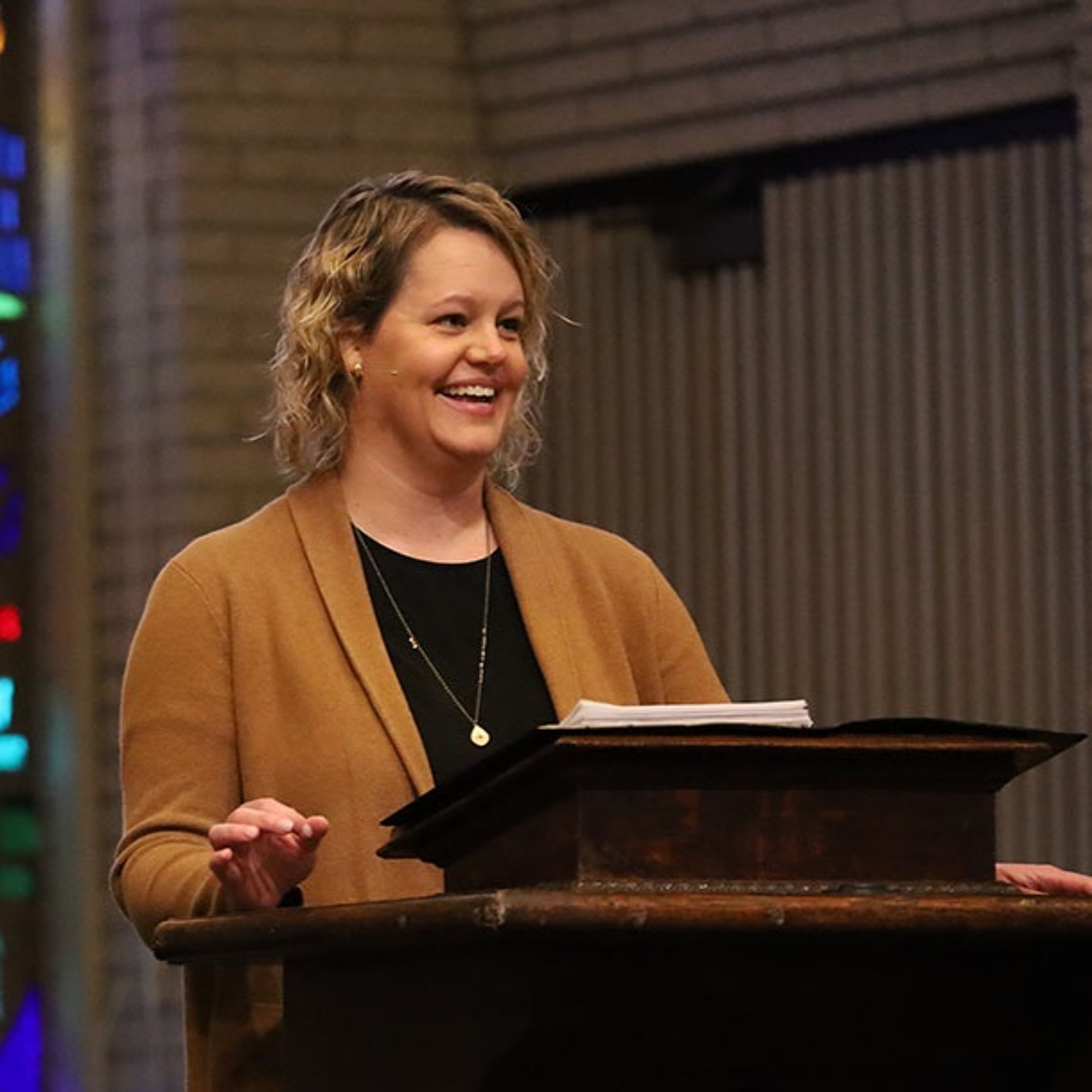
Thank you. Good morning. Wonderful to see you all here. Quick clarification because names do matter. It's Thursday Thursday. That's our new name. So join us tomorrow, ladies. We are talking this semester, our series on, is on, you are what you love. And we're going to talk tomorrow about friendship actually too. So we're coordinating well with the men and what they're doing. It is a delight to see you. It's a delight to see this room full. I'm really just grateful that our semester is underway. And I hope classes are going well so far. I was just wondering if this has ever happened to you. This recently happened to me. I was opening my refrigerator to find the strawberry jam that I put on my sourdough toast. In the morning and it makes my morning really happy.
And I open my refrigerator and I was looking and I was looking and I was looking and I was like, man, I know we have this strawberry jam. I just cannot see it. Where is this jam? And then my daughter about a minute later, she kind of walks up and she breaches around me and she grabs the strawberry jam, which was like on the shelf right in front of my eyes. Has this ever happened to you before where you're looking for something? Maybe it's in your closet or in your refrigerator or it's like it's right in front of you and you just can't see it. In Portuguese they have an expression that says if it was a snake it would have beat you. Right? Yes. Ask Bruno for how to say that in Portuguese. Anyway, but here's what was where I'm going with this. I think we do the same thing spiritually as well. I think we have sometimes trouble seeing Jesus when he's right in front of us. So this morning we're going to spend some time in the gospels especially Luke chapter 24.
This happens to be one of my favorite passages in Scripture and it is a story about what it means to truly see. So if you have your Bibles, turn with me to Luke 24 and I will set the stage for a second. So you probably are familiar with the story. It is a story about two disciples who just spent some time in Jerusalem. Some scholars actually suggest that this is a man named Cléopus and his wife traveling. Most likely though the couple had come to Jerusalem to celebrate the Passover. Right? But this had been a Passover unlike any other because during this Passover celebration Jesus had been crucified. He died and was buried. They watched him maybe be mocked, beaten and then hung on across. They saw the earthquake and the darkness, the way that creation itself was mourning the death of Jesus.
Now at this point in the story as readers we know that Jesus is alive at this point because we have insight that these characters don't have this chapter in Luke. Luke actually begins with an angel appearing to Mary, Madeline, Joanna and the other Mary telling them that Jesus has risen from the dead and they rush back to tell the disciples he is alive. But this couple, these disciples, they don't know that yet. Right? So we have some knowledge that our characters do not have. So the story picks up in verse 13. Let's read together. That very day two of them were going to a village named Emmaus about seven miles from Jerusalem and they were talking with each other about all these things that had happened. While they were talking and discussing together Jesus himself drew near and went with them. But their eyes were kept from recognizing him. Keep your bibles open because we're going to jump back into the passage as we go along.
So we have a couple of people who have been talking about Jesus and they were talking about Jesus, and they were talking about seven miles outside of Jerusalem to a village named Emmaus. And they were talking and they were processing. They were probably crying, trying to figure out everything that had happened over the weekend. We aren't given the details of what their conversation evolved. But Luke does tell us that they were so deep in conversation that suddenly we don't know how this happened either. And it starts walking with them down the road. And it's almost like they don't even see Jesus until he speaks to them. The text gives us, as readers are really interesting inside, it says their eyes were kept from recognizing him. This is actually not the only place in scripture that this kind of thing happens. In fact, this narrative in Luke is one of three similar stories in the Gospels. Stories where Jesus appears and is not recognized by his disciples or even his closest friends. In John 20, we have the story of Mary Magdalene when she goes to the tomb early in the morning and she finds the stone rolled away.
Remember, and she's frantic and panicked. Where is the body of Jesus? And in the middle of her panic, Jesus appears to her, but she doesn't recognize him. Remember, she thinks he's the gardener. And then the next chapter, John 21, Peter and John, Jesus' closest, his best friends, are fishing. They are resuming normal duties and responsibilities, probably trying to adjust back into day to day life after three years of following Jesus. And casually Jesus walks up to them and they do not know that it is him. They have actually already seen Jesus in his post-resurrection body because he appeared to them in the room. Remember with Thomas? Maybe they even touched Jesus' body, but they are still not able to recognize Jesus. Why? What's preventing the couple on the road? Mary, John and Peter from seeing or recognizing Jesus when he stands, just like playing his day in front of them.
Kind of like my strawberry jam. And lastly, I think there is a bit of mystery here. We may not actually know the reason with certainty, but I do think it's worth looking at these stories to gain insight. And we notice a couple of things. So first, with Mary, she was profoundly sad. So before, had she experienced such deep and pure love and such deep and profound loss? She could not see through her grief. She couldn't see a way out. Her world had come crashing down. And it was preventing her from seeing Jesus. Second, remember Peter and John, they were fishing when Jesus appeared. They were no doubt, also devastated about all that had taken place, but their response was sort of to get back to work. Get busy with what they knew. They had bills to pay and they had jobs to do. They might as well just go back to being fishermen like they were before Jesus called them.
The text almost gives us the impression that they didn't even look up from their nets when Jesus walked by. They couldn't see Jesus maybe because they were too busy. And third, as Claypison is wife on the road to Emmaus, they were also sad and confused. Verse 17 tells us that. Maybe they were headed home because they didn't know what else to do. That was a terrible weekend. But they had put all their eggs in the Jesus basket and it wasn't really panning out for them the way they thought it would. They expected Jesus to free them from Roman oppression. They had hoped that Israel would be liberated once for all from the pagan domination and free to serve God and to worship Him in peace and holiness. And they thought that Jesus would free them from this suffering. That wasn't a crazy thing for them to expect. But Jesus didn't meet those expectations. They thought that they were going to die.
And all of those hopes came crashing down when Jesus died. And so here they are. They're talking and they're discussing and they're verbally processing. All that that happened. They are trying to make sense of it. Trying to come up for maybe reasons with why they had gone it wrong. And Jesus appears in the middle of that wrestling. He walks with them as they tried to process. They couldn't see them maybe because they were disappointed. And there were unmet expectations. And maybe they couldn't see them because they were talking too much. Right? All three of these stories do have one thing in common. Mary, the travelers, Peter and John, they weren't looking for Jesus. They actually, they weren't expecting to see Him because they thought He was dead. If we pause for a second, we might easily find ourselves in one of these narratives. Do we see Jesus?
And if not, what hinders us from seeing Him? Perhaps like Mary, our story has been one of compounded, lost or grief. Maybe you just feel sad right now on the verge of tears or panicked and frantic. And we can't see Jesus in it all. Or maybe like Peter and John, when life hands us lemons, we're going to make a lemonade. And so we get, our go to solution is to just get busy. Like get back to work, make a plan, reevaluate. Just do what needs to be done, right? This is my personal tendency. We get busy. But in this response, we realize that we're actually walking blind. We just can't see Jesus in our busyness. Or we might better imagine ourselves on the road to Emmaus, and with Claypus and his wife. And we imagine that deep disappointment and the unmet expectations.
Maybe we too had expectations of what it would mean or feel like to follow Jesus. And he's just not really coming through the way we thought he would. Maybe we too thought that following Jesus meant less suffering and more certainty. Or that at least we would be less afraid and less anxious and less lonely. And so we don't see Jesus through our own disappointment. Or our endless striving to maybe just understand and make sense of things. In reality, we've probably found ourselves in all three of these stories at some point. And if we haven't, we will as life moves on. Sadness and disappointment and confusion and anger. Those are all normal and often friends, even appropriate responses to things like that. To living in a fallen world. And to grieve and to stay busy and to try to figure things out. Those are actually also reasonable responses. There's nothing necessarily wrong with those things.
But my invitation to us this morning is to think about how easy it is to miss Jesus in the midst of all that. It is easy to think that we are seeing when we really just like need new glasses completely. But here is what is so encouraging about all of these narratives and the rest of the gospel stories. Jesus is there. These stories are about the power and the presence of Jesus, whether or not he's recognized. Just because his friends don't recognize him doesn't mean he isn't there. He is present, he is near, he is involved, he is in step with them. He is real. I love how every one of those narratives starts with a question that Jesus asks, questions or invitations. He is there in all of his resurrected glory and power standing before them and ready to help them see.
And the way that this happens is really beautiful in these stories. With Mary, do you remember he simply says her name. And she gains new sight, all of a sudden her eyes are open and she can see Jesus in front of her. He doesn't dismiss her tears or her panic or her anxiety. Instead, he steps in with comfort and with familiarity and with gentleness. No one else said her name that way because no one else knew her the way that Jesus did. Mary sees Jesus when he invites her back into relationship when he reminds her that she is known and loved by him. For Peter and John, the interaction is a little different. The story tells us that they had been fishing, like to no avail, they hadn't caught any fish. Jesus walks up. Again, he starts with a question. He asks them if they've caught any fish and you can almost hear their frustration when they're like, no, been at an all night and we haven't caught a single fish. And then Jesus tells them to throw their nets onto the right side of the boat.
They do it and they start catching just crazy amount of fish. And when this happens, Peter sees Jesus clearly and accurately. Now, maybe Peter is having some flashbacks here of when Jesus calmed the sea during the storm or when he fed a multitude of people with just some loaves and fishes. Maybe he remembers when actually this exact scenario played out once before. When Jesus displays his kingship and his power even over the fish of the sea, Peter sees him. For the first time, even though Jesus was there all along, Peter sees clearly when Jesus steps in and provides and when Jesus demonstrates who he is and what he can do. Even for our friends on the road to Emmaus, their sight rows are stored through a beautiful juxtaposition and intertwining of two things. So the process begins again when Jesus inquires, he asks a question about what they are discussing and look with me in verse 17.
He said to them, what is this conversation that you're holding with each other as you walk? And they stood still, I love this detail, looking sad. And one of them, Nancleus answered him, are you the only visitor to Jerusalem who does not know these things that have happened there in these days? And he said to them, what things? Can you feel irony of this passage? And they said to him, concerning Jesus of Nazareth, a man who was a prophet, mighty indeed and word before God and all the people, and how our chief priests and rulers delivered him up to be condemned to death and crucify him. But listen to this, we had hoped that he was the one to redeem Israel. Yes, and besides all this, it is now the third day since these things happened. Verse 22, moreover, some women of our company amazed us. They were at the tomb early in the morning and when they did not find his body, they came back saying that they had even seen a vision of angels who said that he was alive.
Some of those who were with us went to the tomb and found it just as the woman had said, but him, they did not see. Him, they did not see. And Jesus is right there, they're telling Jesus. Him, they did not see and here he is, walking with them and talking with them. The resurrected son of God, they so badly want to see the one that's right in front of them. They see, but they don't see. So what does Jesus begin to do? How does he solve this problem? Look at the verse 27. And beginning with Moses and all the prophets, he interpreted to them in all the scriptures the things concerning himself. Isn't it interesting that Jesus doesn't just say, to the surprise, it's me. I'm here. He doesn't even alleviate their suffering by confirming the resurrection rumors to be true. In fact, he just walks with them in their sadness.
He does not fix the pain or take away the pain. He doesn't fix the situation. But what he does do is offer the glasses that they need, which is the word of God. Can you imagine, wouldn't have that been the best Bible study ever with Jesus? When I get to heaven, this is my thing. I want that Bible study. I want you to walk me through it, Jesus. Imagine hearing Jesus talk about the Exodus or to talk about the prophets or to talk about David. And to explain how all of that is pointing to him and how he fulfills it all. And yet, even in this incredible, in-depth Bible study, Klaybos and his companions still fail to see who is talking to them. The first element alone is missing. So a few miles later, Shifu tells us they'd drawn near to Emmaus and this couple invites Jesus to stay with them. Luke skips the details.
We don't know if this was a party waiting. Did they unpack first? No details from Luke. And said he goes straight to a meal. And there they are sitting together. And it says that Jesus took the bread and blessed it and broke it and gave it to them. And their eyes were opened and they recognized him. Now if we pause for a second and think we realize we've heard much of this before, took the bread, blessed it and broke it. That's what happened only a few nights before during the last meal. Jesus had with his disciples when Jesus made the breaking of the bread, a central symbolic action of his people. They were to break the bread and remembrance of him. And in doing so, when Jesus did that just a few nights before,
he was telling his followers to see him for true, who he truly is. The bread of life, the sacrificial lamb of God, broken for us so that we might have life forever. This act of corporate remembering, this meal with Jesus, it helps to give sight. But another expression should maybe like ring a bell for you. The words and their eyes were opened. It too is originally connected to a meal. Think back to Genesis. Adam and Eve ate fruit from the only tree that God prohibited them from eating from. And what happened? Their eyes were opened. However, the very first meal recorded in scripture led not to sight, but to blindness, to spiritual blindness, through sin and death. But here, in Luke 24, through a new meal, another meal, the breaking of bread,
their eyes are opened until life. This meal led them to true sight. This meal allowed them to see Jesus, to really, truly see Jesus, who had been walking with them all along. Do you see how Jesus is undoing the curse of the garden? And the result was that hearts that were previously broken, scurvy tells us that their hearts were aflame. They were set ablaze. They were made alive. Jesus was alive, and he was making all of the sad things untrue. And he was bringing sight to the blind. Friends, what we are starting to see through these stories is that it's one thing to be adjacent to Jesus, and quite another to truly see Him in and through relationship with Him. So, you guys here at Cumber, you take doctrine, you take Old Testament and New Testament, and you have Bible studies, and you go to church.
Wonderful, wonderful things. That's one of the things I love about this place. But just like the couple on the Mayus Road, our eyes could still be closed. So as we wrap up, I want to revisit our question. Can we see Jesus? Perhaps our vision is clouded by loss or grief, or your sad, or your afraid, or your anxious. Maybe our vision is like Peter and John, and we are just flying through the semester a thousand miles a minute. And we hardly even look up from our nets and see that Jesus is with us. He's standing right there. Or it could be that we're sitting in the stream thinking like, I thought this whole following Jesus thing was going to be really different. It's a lot harder than I thought it was going to be. I thought Jesus was going to save me from suffering, and not through it.
It's a matter, it's an invitation to attention and awareness. Are we just like to pull into our own selves, our own stuff, that we just can't see when Jesus is right next to us? Or maybe we actually just don't expect Jesus to show up. We're not anticipating an ordinary and delightful encounter with Jesus. You just don't think that's going to be part of our existence. What these narratives show us in the invitation in front of us is that Jesus is near. He is not far off, and he is willing to give us eyes to see. He is inviting us to know him for who he truly is. Not as maybe the Jesus we had crafted in our mind, but for who he truly is. And we do this through the powerful juxtaposition of both word and sacrament of scripture and fellowship.
If you want to see Jesus immerse yourself in God's word, Jesus is on every page and in every story. Meditate on it and be prepared to have your heart set a place. Expect it, pray for it, look for it. But this, studying God's word without fellowship, becomes nothing more or can become nothing more than maybe an intellectual exercise or maybe even a grade in doctrine. So friends, we need to sit at the table with Jesus. We need to share a meal with him and to remember his sacrifice on our behalf to taste and see his goodness. And to spend time with Jesus necessarily means spending time with his body, the church, his people. We need others to help us see sometimes. I needed my daughter to like pull that jam off the shelf right in front of me.
Our ability to see Jesus being Jesus in our lives, it's not simply an individual endeavor. It is a community endeavor as well. One way we see Jesus is by actually seeing others around us as the image bearers that they are. That's one way we see Jesus. So one final observation as I close. Luke begins his gospel account with a couple, Mary and Joseph. They travel to Jerusalem for Passover with their son Jesus and on the way out of Jerusalem. They realize that Jesus is not with them. So they search frantically for three days until eventually finding him in the temple and they find Jesus, 12-year-old Jesus doing what? He is teaching the word. And then Luke closes his gospel account with another couple, also three days after Passover, also desperately looking for Jesus.
And they find him not only teaching the word, but they find that he is the word. And I don't think this is an accent. It's almost as if the rest of Luke's gospel is sandwiched between these two searching narratives. As if Luke is saying, look here, this banner, this is Jesus. This is where you can find him. And believe what I write about Jesus and you will truly see. It is true that Jesus may feel hidden sometimes. There might be seasons that seem like when we need him the most, he is far away. There might be times that when we look for him, we can't recognize him. But, friends, he is there. He is here. He indwells you through his spirit. He is walking alongside you. He is inviting you to sit and to eat with him. And we will help another truly see Jesus as a semester. Let me pray. Lord, we are so grateful that you are the ones who give, you are the one who give sight to the blind.
And Lord, as we are saying a little bit earlier, we pray, would you be our vision? Would you be our vision? Help us to truly see Jesus. Help us to help one another. Truly see Jesus into love you. Because you have first loved us and we pray these things in Jesus' name. Amen. Praise the one from all the blessings of God. Praise the one who is the Lord.
And all he has. Amen.
More episodes


