About this episode
Get every episode summarized
Each time Version History publishes, we email you a written briefing from the transcript — the topics, who appeared, and any specific claims, with the ad reads skipped.
Email me new episodesFree for 3 shows. No card needed.
Hosts & guests

Transcript ready
2,050 searchable segments. Every word is indexed and playable.
Full transcript
Version History — Macintosh: All in one. Machine-transcribed; use the interactive transcript above to jump the player to any line.
Hey, David Pierce here. Before we get into it, yet another reminder, at version history podcast on TikTok, on Instagram and on YouTube, those are our new channels. That's where we're doing all of our stuff. All of our clips, all of the mini episodes that we have planned that I probably wasn't supposed to tell you about yet. All of the full episodes are going on YouTube. Everything version history you can find at version history podcast on TikTok, Instagram, and YouTube. Time for the show. It's the early 1980s and Apple is still mostly a company making nerdy computers for nerdy computer users. But Steve Jobs just won a power struggle inside the company. And he has this big idea about how to change computers forever. From the Virgin Box Media, this is version history, a show about the best and worst and most interesting products in tech history. I'm David Pierce, and today on the show, it's the story of the Macintosh. AVOIDING YOUR UNFINISHED HOME PROJECTS
because you're not sure where to start, thumbtack knows homes, so you don't have to. Don't know the difference between matte paint finish and satin, or what that clunking sound from your dryer is. With thumbtack, you don't have to be a home pro. You just have to hire one. you can hire top-rated pros, see price estimates, and read reviews all on the app. Download today. Get in the game with the college branded Venmo debit card. Record your team with every tap and earn up to 5% cash back with Venmo stash, a new rewards program from Venmo. No monthly fee, no minimum balance, just school pride and spending power. Get in the game and sign up for the Venmo debit card at Venmo.com slash college card. The Venmo master card is issued by the bank court bank NA, select schools available, Venmo stash terms and exclusions apply at Venmo.me slash stash terms. Max $100 cash back per month. All right, we're back. We have a Macintosh. It's time to talk Macintosh. If you're just listening,
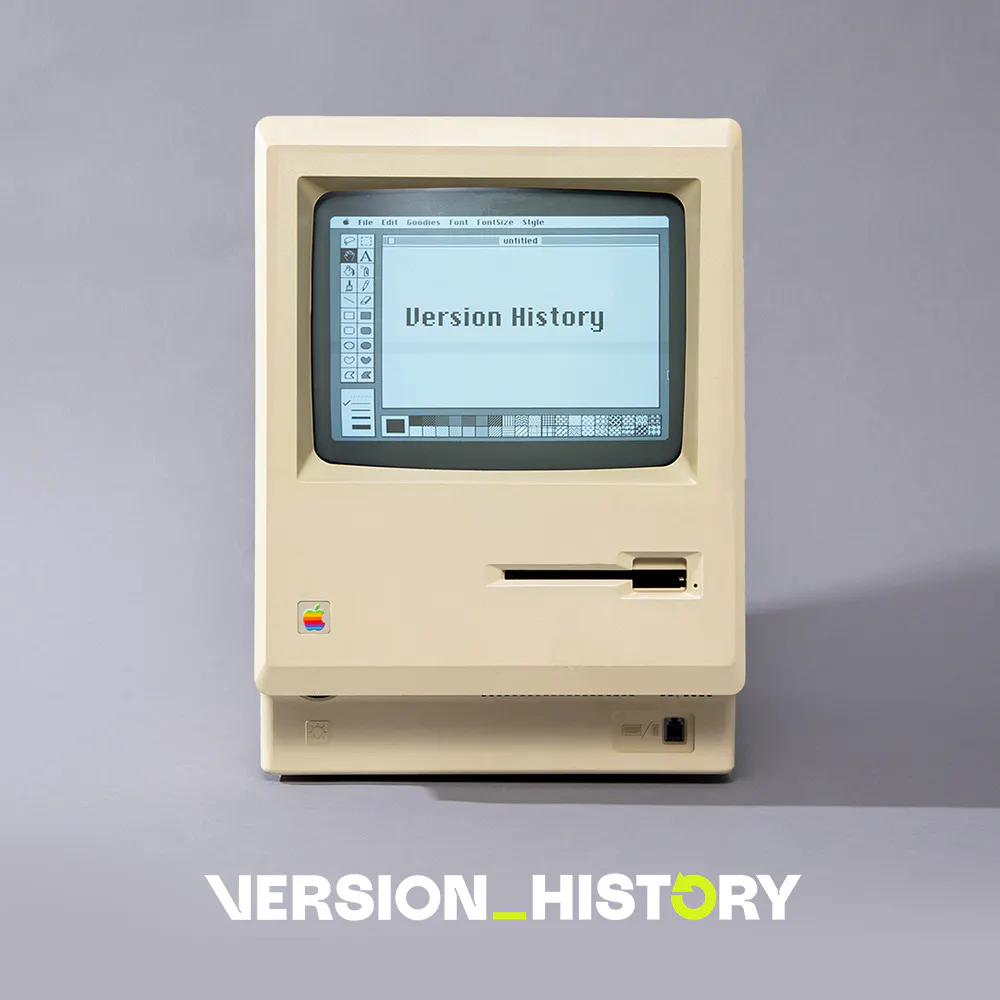
hey, go to YouTube. This is the most visual episode we've done, maybe ever. But this like beige brick of a computer just brings me joy. We have a big mechanical keyboard. We have a mouse, a very early mouse. We have a Macintosh. This is not, I should say, a 1984 Macintosh. I don't know when it's from, but it's not the original. So all the people who just raised and have a Macintosh. Is it a five-hole K? What do we got here? It's also impossible to use because it's single-tasking. This is Neil, I could tell, by the way, Neil, I was here. I love this thing. You can immediately see why this thing was a sensation when it was released. You really can. Also joining us remotely, Daring Fireballs, John Gruber. John, welcome. Thank you for doing this with us. Thanks. I wish I were there just to play with the Mac. I know, I normally don't feel that bad for remote guests because it's warm in the studio. But this is like, you just have to stare at this this whole time, and I feel very bad for you. I'm curious, actually, for both of you, but Neil, do you have personal life Macintosh experience? Oh, yeah, my job in middle school, I worked at a computer store, an Apple computer store
that was walking distance from a middle school. It was called CoreTech Technologies, which is a great, like a mom-and-a-pop computer store. It was like two guys in Wisconsin, you were like Apple nerds and they bought a computer store, and I worked in the basement and I fixed these old Macs. And I've taken apart dozens of these Macs. Oh, wow. Like over the years. And only years later did I realize they were just letting a child screw with the power supplies and CRTs, which is extraordinarily dangerous. But I survived. I survived from my eighth grade job. Oh, I thought you meant dangerous for the computers. You mean dangerous for you? No, that's a lot of voltage. That's all right. Yeah, that's a lot of voltage to screw with. And I was just doing it. And so, yeah, this era of Macs, there's like all over the place and I worked in a computer store or a parent name and my school had a bunch of them. But they all had the SCs and SE30s. I think that was that era of Macs. That was when they were new. This, I think, is obviously the iconic Macintosh. They're actually very different than the ones that got popular. Yeah. And this, I learned, ends up being, this is in terms of mainstream popularity.
This is kind of the one before the one in a bunch of ways. John, what about you? Were you a Macintosh guy back in the day? Not for like the first, I didn't get one till 1991 when I went off to college. And then in my high school, we had one, probably in SE, but I don't even remember it. And I took, I don't even know if it was called AP, but it was like a programming class. We had a really great computer teacher, Mrs. Donna Spatz, if she's out there. Thank you for my career. A wonderful high school teacher, middle school. We had a lab full of Apple twos and one Mac. And then I took a class, like my senior year, so it would be like 1990. So I really missed like the first five or six years of the Macintosh. And it was just me and one other kid. So it was sort of, you know, sort of like, even though it was a public school, it was just sort of like a cool thing that she set up for us to have a programming class with just the two of us. And she was like, which one of you wants to use the Mac? And believe it or not, I was like, not me.
I wanted the 2GS because it was color and the Apple 2 was my jam. But I remember touring the Mac and she was so impressed with hypercard for obvious reasons. And again, this is a lot later than at the time it felt like the Mac was already off and running. And I was deeply intrigued, but it just didn't seem like what a quote-unquote computer it was to me. I mean, to talk about themes that have recurred throughout the last decade, two decades in our coverage about iPads and iPhones and stuff like that. But it just didn't seem like what a computer was. Like a computer was something that turned on instantly and gave you a blinking command line and, you know, you go from there. And I wanted the color screen. And so in hindsight, it seems crazy. And I remember, I remember thinking, this is awesome. And I just remember thinking, that's not what I want my programming class. And then I went to college and got one and, you know, the rest is history. Yeah, I think it turns out I think a lot of people around that time went through about that same thing
of not completely getting why this thing needed to be like this. And then a little bit later, it's like, oh, no, it actually was, it should. I'm looking at it right now. My more things should be like this right now. That's the same thing. Yeah, more computers should weigh a hundred pounds. Yeah, and have handles. And be beige. Like, honestly, the country might be in a better condition. It's more computers looked and felt like this. You're not wrong. All right, so let's sort of rewind all the way back to the beginning here, which I think is like the early 80s. And I think the way at least I understand Apple of this era is Apple has gone public. It has the Apple too, which is, which is a hit. It's going well. The other project going on at Apple is the Lisa. And the Lisa is a fascinating story that is not really our story for today. But John, can you very briefly just describe sort of what the Lisa was supposed to be at this time? Because this was not quite a like bet the company kind of computer, but this was before the next big thing is sitting in front of us, the Lisa was going to be the next big thing, right? I guess, you know, there was the famed meeting
where Xerox Park's team where they'd sort of invented the what we call the graphical user interface and overlapping windows. I don't even know if there's overlap, but you know, windows, icons, a mouse pointer, wizzy wig, word processing, a lot of the concepts of gooey computing famously, famous, famous meeting, not what, and you know, it's misunderstood that Apple came in and ripped off all their ideas. They were like, come in and take all the ideas you want. It was like an invitation to borrow ideas. They were like, we've been working on this and wondering why it's not taking off and we'd really like it to. And then you know, a bunch of the people who worked at Park, like Larry Tesla ended up working at Apple. But the Lisa was Apple's first attempt to bring those ideas to life in an actual computer, to make a graphical user interface as opposed to a command line interface on a computer. And I forget what the retail price on a Lisa was. It was like $10,000 without control. It might have been more. Yeah, which is like 25,000, 30,000 inflation adjusted today.
It was a big bet. It was Steve Jobs, baby. He will deny it through most of his life that he'd named it after his daughter, Lisa. Yes, but it's like, dude, it's also named Lisa. Like I don't, yeah, this is a very difficult thing to deny. And you, you can see what he's trying to get to my sense of it is Apple's very good at completing its thoughts, right, at having a philosophy of the things that it makes. And in making the Lisa, they realized how incomplete all those philosophies were. And so then the thing is too expensive and it's too big and too complicated. And when they take the second shot with the Mac, a bunch of very smart people get to finish all those thoughts. They get to say, oh, this thing needs to have a very strong point of view about how the windows work, about what applications should do, about what the system is gonna provide for you and what the applications will go on from there. Yeah, I think it is, it is maybe too simple but only slightly too simple to say
the Lisa's price killed it. Like there's, it had other things that were going wrong, but like... I would say too from the stuff that I've read. It's not just that the price killed it, but the price, it's almost like the price was both a cause just because it was so, so, so high. But also the high price was an effect of how mismanaged and unguided the whole project had gotten. And you go back and read the biographies of jobs and the histories of Apple. And you can see, you know, you can read it from multiple points of view and multiple perspectives that the team was too big. It Apple actually bet too much on it and it was famously, I mean, jobs was run out of the company by the end of 1985. So he was already wearing his welcome thin and the company he found it and sort of working his way towards the eventual exile. And yes, he was on, he was leading at some point the Lisa team and the Lisa team was this big bet.
And I think it's fair to say long story short that they were like, we gotta get this guy out of here, he's driving us nuts. They're like, what if we let him run this take over Jeff Raskin's smaller Macintosh project just to get him out of our hair and lead a much smaller team. But it was sort of like the fact that the Macintosh team was so much smaller, but almost every single person on it is like a Hall of Famer. Yeah, it is wild. Hall of Fam hardware engineers, multiple Hall of Fame software engineers, Hall of Fame graphic designer, Chris Espinoza, employee number six who was hired against child labor laws. And it's still working at Apple continuously today. Right? It was like this much smaller team. And so it was this unbelievable chance to refocus. And like, hey, let's do something people could actually afford and that might actually reach people and just focus, focus, focus, focus. Yeah, my favorite part of this by the way, there's always famous photos of the Mac team
and they have pirate flags up in the office. Yeah. And jobs has this line, which is an absolutely famous Steve Jobs line, which I love, which is it's better to be a pirate than to join the Navy. And it's like, dude, you ran the Navy. You got your ass kicked out the Navy. Yeah, you got thrown out of the Navy. What are you talking about? Like the Navy was your idea. And then he is like, no, we're pirates now. And that is the early myth making magic of Steve Jobs. Well, yes, but also inside of Apple, it was kind of true. Like I think John, your characterization is kind of right that they wanted him off the Lisa project for a bunch of reasons that I think are kind of his fault and kind of not his fault. Personality issues, all kinds of stuff going on. And basically the way I understand it is he just needed something to do. And yeah. And so the way that this started, so Steve Wozniak had been working on this thing that he called Annie, which was basically a $500 game console. And that was never gonna go anywhere. Wozniak just like to do things. But then this guy, Jeff Raskin, who you mentioned,
pitches the idea of doing a cheaper, simpler computer. The learn all of the lessons from Lisa, start with price and be like, okay, what does a $500 computer look like? And what can we do and how can we make it? So he gets approval. He decides he doesn't wanna call it Annie and decides to call it Macintosh. And it's obviously Macintosh is an Apple, which makes sense. But he's spelled it with an A because they wanted to avoid a trademark fight with the company Macintosh Laboratory, which they didn't do and wound up paying Macintosh Laboratory a bunch of money anyway. But that's fine. The goal was start with the price and work backwards, which again is I think this lesson from the Lisa that wound up being really important. It's like they wanted it to be $500. Spoiler alert, it wasn't. They failed this spectacularly. But they wanted it to be $500. So they started with this relatively cheap, even for the time underpowered Motorola processor that they could just get. And it was cheap. They built out the first prototype. This is like 1979. So all of this stuff is kind of happening concurrently,
which I didn't really realize. There's like three sort of different computer companies happening inside of Apple at this point. There's the Apple II, there's the Macintosh and there's the Lisa. All happening kind of competitively next to each other, which is a very strange way to think about this kind of product development. And I feel like it's not how most companies are run. But basically, these are jobs sort of looking around for something to do. Finds the Macintosh, gets really interested in the Macintosh and decides essentially that he's going to take over the project. Not everyone on the team, as I understand, was super excited about this prospect. I had not realized, John, to your point, that this was already, like you said, jobs was starting to wear his welcome thin at the company that he founded. He drove a lot of people really crazy in those last years. But he shows up in immediately, he starts clashing with Jeff Raskin. And Raskin wanted to make this simple $500 computer with no mouse, no icons, no graphics, like run away from everything the Lisa did
and do something else, just like a blisteringly fast $500 text machine. He eventually did build this thing much later at Canon, a computer that no one remembers. So we'll talk about that. It's called the Canon Cat. It's called the Canon Cat. It insists that you not disrespect the Canon Cat. Okay, listen, shouts to the Canon Cat. I have a picture, would you like to see a picture of the Canon Cat? It's a beautiful computer. Yes, I would. Here's the Canon Cat. It is, frankly, it's an awesome looking computer. It is. It has a signature that says cat on it. There's just a lot going on. You could dial phone numbers like genuinely a very cool computer that has been completely memory-holding. In a weird way, I forget what's, what are the name of those keys under the space bar? They were very important to the interface. They're called leap keys. Leap keys. I was gonna say jump keys, leap keys. And in one way, like obviously the leap keys under the space bar didn't have staying power, but the idea that the space under the space bar would be useful every single person watching the show on a laptop of any kind looking at their trackpad
is like, yeah, that actually is interesting space. Totally. What I love about this, by the way, and not, again, you cannot disrespect the Canon Cat. I'm so sorry. Spoiler alert, this is the Canon Cat episode. Well, you're not sure. It's like throwing this thing off the table. Reveal the Canon Cat. Your point about there being three different computers happening inside of Apple, this is an era of computing when literally any idea required you to build the whole thing from the ground up again. Yep, right. We didn't have operating systems really. We did not have standardized hardware really. We did not have standardized input really. Like it was all up for grabs. And so any idea you wanted to try, you're like, well, I have to invent the computer from scratch again. Yeah. You see this happen across the whole industry. Everybody is like, yeah, this is called the Texas Instruments Computer. It's totally different than the one Atari makes for some reason. And it's just down the line. We didn't really even have IBM closed yet. So you just see that there's this explosion
of new ideas about what a computer could even look like and certainly how it could work. And you get this famous, I believe it's Alan Kaye, quote, where he's like people who really care about software have to build their own hardware, which also is repeated throughout Apple's history. But in this case, it's like, no, literally, if you have a software idea that is new, you're going to have to build your own computer because every other computer is so tightly integrated with the software, you can't try new things. Well, and there's a very practical outcome of this too, which is that the Lisa was running a lot of these graphical user interface ideas. And so the Macintosh team you would think would just essentially run Lisa software. Like they've done the thing already. But I think both for practical reasons and for jobs being petty reasons, decides, no, we're going to rebuild something very similar from scratch. And John, this is what you're talking about. This group of all-star engineers comes in and builds a series of like truly remarkable bits
of software to run on this thing that is incredibly power constrained, incredibly memory constrained. Like it's a crappy computer. Like even for the time, it is not an impressive piece of hardware. And they have to do this unbelievable amount of work to make any of it possible. And they just do it. Over and over and over, they just do it. It's nuts. It's, you know, I guess we should throw out some numbers, the original when the Macintosh shipped in 1984, it cost $2,500. And again, inflation adjusted, that's like up to like $7,500 today. And so I keep tossing that up. I have those numbers in my head because I keep tossing them out when I write about the Vision Pro, which I do think compares. I do think the analog to the 1984 Mac is the optimistic story for the whole Vision platform. I was gonna say, that's the meanest thing you could ever say about the Macintosh. Yeah. That's right. I think it's sort of a tale of shipping ahead of its time and needing a few years to build up a library. And then all of a sudden, when the hardware
and the price kind of catches up to where it should have really been at the start, there's actually a library of software and or in the case of Vision Pro content. But it was $2,500. It had 128 kilobytes of RAM. But they up until late in the game, they really were trying to ship with 64 kilobytes of RAM. And they realized that they needed 22 kilobytes just to fill up the screen with pixels. Right? There was so little left. It's like, we're gonna have to go to 128. But really, that 512K, and they called it the fat Mac and it didn't get fat or physically. It was the same footprint. It was just like 512 kilobytes felt so luxurious that they called it the fat Mac. I'm reasonably sure that this one's sitting here as a fat Mac. It might be. That's very possible. But yeah, so to the price thing, actually, one of the first things Jobs did, he wins this fight with Jeff Raskin. Raskin ends up leaving Apple.
And again, everybody else at Apple is very happy to just like, let Steve Jobs have something to do. I don't think anybody thought this project was gonna really go anywhere. So they're like, sure, knock yourself out. Go have fun over there with your friends, which is cool, like I would like that job. Yeah. But the first thing Jobs does, right, is he demands that they do the graphical interface. And from that comes, we have to, up to the more expensive processor. We have to double the memory. And so all of a sudden, this idea of a $500 computer is like immediately out the window. They kept pushing it that idea for a while because everybody likes to have insane goals, I guess. But it was very clear immediately that as soon as this became Steve Jobs' version of the Macintosh, that it was not going to be a $500 computer anymore. You just couldn't do it. You literally couldn't do it. He also tried to change the code name of it, which I thought was very funny. He, this is when he was obsessed with the idea of the bicycle of the mines. Do you remember this? This is like one of the Jobs isms. He wanted to call it bicycle. And the team hated that. So it stayed the Macintosh.
They tried to rename it a bunch of times, apparently, that it was like, this was always supposed to be a code name. It was eventually going to be something else and it just sort of kept being Macintosh, which is actually, I think, the best way to successfully name a product. It's just give it a name and then discover you kind of can't get rid of it. That is always how good names come from. Absolutely. But yeah, so they're making this thing and they immediately set out to make a bunch of changes. And the first one I think is this very visual thing here, they made it vertical. This was like a brand new idea that I had really sort of forgotten the idea that like computers used to be these horizontal things that's out in your desk and the disk drive would go over here and the screen would go over here. And they were like flat sort of television-shaped things. And this one, they just decided to stack it. That was the idea. And they were just like, they wanted it to be a little more approachable. The idea is like having it feel a little smaller and a little more sort of compact and adorable would make people want to use it more. It works. It works. It's just one of the best form factors for computer ever.
Yeah. And it really does put that design ahead of its time. Probably by a full decade, a decade plus, I forget when PowerBook's first became sort of semi-affordable. But it's about 1994, 95, like with the PowerBook 100, et cetera. The laptop was ultimately what the PC was going towards, right? But that this design at the time was considered portable. That there is a handle. There's a handle in the back, right? It's 25 pounds or something like that, but they sample sold in a case that you could put it in. We have the cases in my computer store. We've got like a carrying case? Yeah, you could just drop it in a case in here. I'm imagine like a bowling ball bag. Kind of. That's awesome. So bowl, you know, of everybody who bowls recreationally, bowling balls are technically portable, you know? That's true. Listen, with enough work, anything is portable, you know what I mean? Right. But they had the right idea. It's just at least a full decade ahead of its time.
And CRT technology was not going to get you there. No, definitely not. But I mean, that's the other big decision they made, right? I mean, there's two right here that you can look at. One, they have the black and white CRT, whenever it also is trying to do color, and then they have the 3.5 floppy drive, which they got crushed for, because they abandoned the big floppy disks with this thing. So, okay, I made, I made us get these out because I had straight up forgotten that floppy disks used to honest to God be floppy. That's the Apple too. Yes. And this is the big 5.5 inch one, and then Apple goes at this, which is much importantly smaller. And the thing that I learned is actually what Apple was debating was whether to do the floppy disk or to do a really expensive hard drive. And then in the middle of this development, Sony basically builds this thing. Yeah. And all of a sudden they're like, oh, well that's great. That's all of the other problems, and they switch to it. But it is. It's a full, I mean, this is like a classic Apple story, a full format break that made a lot of people very angry, as Apple always does when it makes a full format break. But again, I think these things in general
were pretty clearly the right call for a variety of reasons. One other thing that I enjoyed is very early on in this process, Steve Jobs demanded that they remove the cursor keys from the keyboard because he wanted everybody to use the mouse. And he was like, I'm not even, I'm not even gonna give people other options. This computer has a mouse, you will use the mouse, you will like it, you can shut up. It's like the true Steve Jobs way. So he's like, he is very much bullying people into this being the computer user experience that he wants. And I just, I think that's so fascinating. He's like, this is the future, and I will force you into it. And years later, Apple would remain haunted by the ghost of Steve Jobs, his bad keyboard ideas. And sometimes I think about that too, like when we all got very upset and formed very strong opinions during this stretch where Apple made the left and right arrow keys and Macbooks full height so that instead of an upside down T, left and right were full height. Cause what's that extra space doing anyway? And I know it's actually a good question and as opinionated as I am about every little thing Apple does, I actually preferred the upside down T
and I'm glad they went back to it. But I totally get that, well, that extra space isn't doing anything. And then there's the counter argument that it kind of is doing something because when you're not looking at the keyboard, you can feel that space and know your hands are on the arrow keys. And it's like every time I got upset about those full height arrow keys, I would take a deep breath and think about the fact that the original Mac shipped with no arrow keys at all. And how mad I would be trying to edit text today. If you just duct taped over my arrow keys and they said you, you got to use the mouse. There was a, there was also an argument and I think it, you know, totally it was just jobs being jobs and nobody else would have said no arrow keys period. But I think the rest of the team kind of got on board with it because there was this whole philosophy of, hey, let's make people learn to do things the way way, right? That there was no command line shell with the Mac and Tosh. When you booted it, you didn't get it. There was no booting dot, dot, dot, and you know, any kind of text screen. The first thing you saw was an icon of a Mac itself smiling.
Hopefully not frowning. That was the idea. But even when the machine failed, it's actually kind of interesting. When the machine did fail, when there was something wrong with the disk or something had gone corrupt, you did get, you still didn't get text on this screen. You got an icon of a frowning Mac, right? And there was this philosophy of, hey, let's make people do it the Mac and Tosh way. And so if we give them the arrow keys are going to, you know, if we give them a command line that runs Apple II programs or something like that, nobody's going to write Mac and Tosh word processors. They're just going to say, run the Apple II word processor, right? And this is very much what I mean about, they learned all the things they needed to learn with Alisa in like big ways. So Alisa's $10,000 you're going to sell it to enterprises. The enterprises are demanding, I mean, it's businesses. You have to do what your clients want. Yeah. And so they're demanding all this backwards compatibility and all this weird stuff. And the Mac and Tosh team is like no arrow keys, right? You're going to do it our way. And I think they had to learn that they needed to be this opinionated to protect the thing
that they were trying to push forward. And that is, I mean, it's like, there are very few companies that are like, we're going to take our all-stars and let them get so worked up that they take the arrow keys off because they hate working for the business customers who are potentially the only people who will pay this much on A4 computer. And yet it happened, which is kind of a bummer. It was an incredible like burn all the boats behind you, kind of trying to do this. And we should, we should here pivot to software because this is mostly a software phenomenon, this computer. But first let's take a quick break and then I have to tell you about quick draw. We'll be right back. President Barack Obama. Virginia, we are counting on you. Republicans want to steal enough seats in Congress to raid the next election and wield unchecked power for two more years. But you can stop them by voting yes by April 21st. Help put our elections back on a level playing field
and let voters decide not politicians. Vote yes by April 21st. Paid for by Virginians for fair elections. Okay, caller one wins court side seats to tonight's game. What? I won floor seats? You did. I've been calling for 13 months. Wait, Chris? Yes, I finally did it. What are you going to wear? Men's warehouse. They've got today's looks for any occasion and I need to look like a celebrity. Don't want to stick out. Exactly. They've got chill flex by Kenneth Cole, Joseph Abboud, and the tailor at every store for the perfect fit. Congrats. You can stop calling now. Not a chance. Hit any look for every occasion at men's warehouse. Love the way you look. All right, we're back. So let's talk about the Macintosh's software. Jobs describes the Macintosh in such a perfect way. I just want to read you a quote. He says, we realized that we could build a super cheap computer that would run Bill Atkinson's amazing quick draw and have a mouse on it. In essence, build a really cheap implementation of Lisa's technology that would use some of that software technology.
Like, quick draw and the mouse are the Macintosh. It's like, that was the idea. We built a thing that could run quick draw for cheap. Quick draw was, at least as I understand it, basically, it's the thing that let the Macintosh have multiple windows and have them overlap. This sounds very normal. This is what windows are, but this did not exist before. And the idea of having two windows, the one that would go underneath the other that sort of understood each other, was like brand new software and felt like magic to them. And this is like, going back to John, what you're talking about about this Xerox Park visit. This is the kind of stuff that they had been thinking about and learning ever since. How to make this stuff feel lively and graphical and interactive in new ways. Bill Atkinson, we're looking at, I think, MacPaint on this thing, if you open the about page, it just says Bill Atkinson. Like, MacPaint version 1.3, written by Bill Atkinson.
And there's a picture of it. There's a little picture of it. Yeah, that's great. This is what you mean by all stars, John. Like there's fundamentally a handful of people who just sort of achieved software miracles over and over and over in the course of building this thing. And including Susan Care, the graphic designer slash icon artist who, nearing the end of the project, drew little icons of everybody on the team. And if you look at them, they're uncanny. And you think like, and they're like 32 by 32 pixels, black and white, 32 pixels on both dimensions. And she absolutely captured every single person. And I'm 98% sure that the Bill Atkinson icon there is Susan Care's picture of them. And then you look at a picture of Bill Atkinson circa 1983. And it's like, yeah, that's him. It's like you can absolutely pick him out of a lineup. Like that's better than most police sketches. Like you could take that icon. And if he had committed a crime, the cops would be like, nope, nope, nope. That you, you're the guy.
It's that good of a picture. It really is. Susan Care is like a total legend of design and software. And my favorite thing that I learned in this is the original deal was that Susan would come and design some icons and fonts in exchange for an apple too. That was the trait. They're like, we'll give you a computer. These are expensive. Come do some stuff for us. She ends up coming on board full time and like does a vast more work. But I really liked that as the first trade. You need a computer? Make us a font. John, in terms of all stars or Susan Care for sure, Bill Atkinson feels like the all star. Yeah, probably. This whole project doesn't happen without him, right? Yeah, I think so. And I think because I think fundamentally what Quick Draw solved, and Atkinson did other thing. He wrote all of MacPaint, right? He wrote the application too. But what Quick Draw solved? And we can talk about the fact that even at $2,500, which is $7,500 inflation adjusted today, the original Macintosh was very expensive. But for what it did, it was compared head-to-head
against the Lisa that Apple sold for four times as much. And Quick Draw effectively was the way to make a computer that went. And even after they knew what the price was going to be, the job was still describing it as super cheap. It was super cheap for a bitmap display that you do overlapping windows. And if you think about it, like what Quick Draw solved, I think it's fair to say would be, okay, it takes so much RAM just to show the, and again, it's binary. The black and white display translates very well to computer think. It's every pixel is a 1 or a 0. But you've got 300, I think it's 384 by 512, or maybe it was less. I know it's 512 across, but you've got that many pixels. But then if you have overlapping windows, don't you have to store the RAM for each one of those windows? So three windows would be like three times the RAM. And like Quick Draw effectively solved that problem by allowing the ones in the background to not be in memory. And yet when you resize the window, it would refresh right away.
And you could see the contents. And again, they're doing this with almost no memory. Like all of this is up against these impossible, physical constraints. I feel like I need to point out for our younger listeners, John said black and white, and he means it. This thing cannot display shades of gray. Correct. The pixels are black or they are white. Those are your traces. And I really thought about that. And so these memory constraints are like, oh man, we drew a box. If we want to put another box on the screen, we're going to need more memory. And we don't have enough. It can't be black and white. That's what they're up against. And that's what they're up against. It's an incredibly slow computer by today's standards. The Motorola 68000 chip. And yet so much of what you do, what you guys could do right there with that Mac in front of you feels fast, right? When you move the mouse around, the mouse moves like a mouse today, right? There's no lag between moving the mouse. It doesn't feel like it's lagging behind. There's a great story that Hertzfeld's folklore.org has
about the first time they showed it to Bill Gates. And Gates was just moving the mouse around and watching how the on-screen cursor had no lag at all. And he was like, you're cheating here. You've got a graphics accelerator for the mouse. And Hertzfeld was like, no. And he goes, you have to be cheating. And he was like, no. And then Hertzfeld was going to explain how they're doing it and jobs her over her. He's like, shut up. And Microsoft's never figured it out. No, right. God, yeah. To this day. Hertzfeld is like the engineer's engineer and all-star. But he just knew Bill Gates would understand the elegant explanation for how they solve the problem. But so much that you pull the menus down. You go up to the file menu. The menu pops right down. There's no lag. There are so many things that are laggy by today's standards. But there are so many things that are not. One of the, actually, the really interesting things about this, the no lag, this thing is basically only running one application at a time. And it's funny that there are parts of this.
And eventually, like Apple tore itself apart. And Steve Jobs has to come back and have to reboot the whole operating system because this thing is running one application at a time. It's actually faster in some ways than computers of today. Like it has less lag in what it's doing than computers of today. Because it's only doing the one thing. And it's just direct connection between the hardware and the software. That's very much in the Macintosh. And so they did. Kurtzfeld and his team built a bunch of these mini apps, which are essentially desktop widgets. That was a way you could do very basic things that felt like multitasking. And you could actually have them next to each other on the desktop. But if you wanted to run a proper app, you could literally only do one at a time. If you ran two regular apps, it once the whole thing would just collapse. Desk accessories. That's what they're called. Desk accessories, that's right. They are the things in the Apple menu. It's also worth pointing out these metaphors that they're using to communicate how the computer works. Or all new. This all sounds so simple now, right?
But the idea that on your desk in your 1980s corporate office, you would have a calculator and a notepad and whatever else. Apple's like, oh, we'll have those on the Mac too. They're your desk accessories. And like Steve Jobs is out there being like, how do you open a file on a computer? It looks like a file, you guys. And it's like, no computers have worked like this before. No one has ever been like, we should use these metaphors to make the computer operate in this way. And we should make it super-visual so I'm gonna understand it. And also there's no arrow keys so you have to do it. And this is very opinionated design. Yes, very much so. I know that we have younger listeners who are like, what are you talking about? And I'm just gonna make this comparison. My friend made this comparison to me in college. I've thought about it a lot since. I was like, Van Halen sucks. And he was like, no, dude, you don't understand. Eddie Van Halen invented all those guitar solos. They just sound cheesy to you now because they're played. Like all music is Eddie Van Halen guitar solos. And I was like, well, I still think Van Halen sucks.
And I'm confident that that is like what many, many of our younger listeners, they're like, what are you talking about? Like it's a disc, it shows up. No one had these ideas before. No. They just hadn't come up. And the idea that one tiny little team had all of them and almost all of them were correct is the remarkable part of this first Macintosh. Yeah. So can I tell you briefly about one feature that didn't make it? Do you guys know about Mr. Macintosh? Yes. Okay. This I did not. I just want to know more about it. So Mr. Macintosh, I'm just going to read you an excerpt from this is from Andy Hertzfeld's website. Steve Jobs, one day they're in the middle of building this thing and Steve Jobs just comes roaring into the room and goes, Mr. Macintosh, we've got to have Mr. Macintosh and the team goes, who is Mr. Macintosh? And here's a quote, Mr. Macintosh is a mysterious little man who lives inside each Macintosh. He pops up every once in a while when you least expect it and then winks at you and disappears again. It will be so quick that you won't be sure if you saw him or not. Well, plant references in the manuals
to the legend of Mr. Macintosh and no one will know if he's real or not. I have two things to say about this. One, drugs are fun. And two, famously he was on drugs and like did a lot of else to eat as you do. And yeah, you know Steve Jobs saw Mr. Macintosh like with both his eyes. And two, this is the funniest possible least apple-y feature I can see. He's modern apple. Sure. Apple of that time is all about weird Mr. Macintosh. That is true. But as it turns out, this is everything I think because the team loves this idea and they set out to build Mr. Macintosh and they go, they go, well, wait, this sounds awesome. We're in, what does it do? And Steve Jobs goes, one out of every thousand or two times that you pull down a menu instead of the normal commands, you'll get Mr. Macintosh leaning against the wall of the menu. He'll wave at you then quickly disappear. He'll try to get him to come back, but you won't be able to. They end up not implementing this only because there's no memory on the computer for it. Right. They're like, we can't physically put Mr. Macintosh into this computer. Is this tremendous otherwise they would have done it.
Right, I do think it's important to note that for the whole team, I think the reaction was, oh, that's a great idea. We should try to do this. Not, oh, Steve is, you know, taking too much LSD or something like that. They weren't like, oh my God, Steve's having one of those days. They were like, oh, yes, we need to have Mr. Macintosh. Yes, I love Mr. Macintosh. But anyway, so the team keeps building, they build a lot of software. We're actually looking at MacPaint, which I think ends up being probably the most important piece of software on the wrist. I would say MacPaint, right, in MacPaint, right? Do they ship with? Because you've got to be able to do something with the computer. Right. You can't just gaze at the floppy disk icon, like John was, apparently, with the hearts in his office. You got to do stuff. And so what do you do? You're going to draw pictures and you're right. But I also think you can do. And those things are tremendously important. But it's the draw pictures that immediately tell you, this is something different you've never seen before. Right, if I just want to write text on a computer, you had other choices. This looked different, but you can fundamentally write text. But the idea of I can make shapes on this computer
is so transformatively immediately new that I think it's the most Macintoshy of the things that they make, I guess, is kind of the way I think about it. Yeah, and there are so many ideas in MacPaint 1.0 that are still present in Photoshop and photo-mater and Acorn and you name it. Any kind of paint application today, the paint bucket tool, right? Like, oh, if you draw a box, but you want to fill it with a pattern, how do you do it without the laboriously clicking pixel by pixel to make the whole pattern? Just use the paint tool, click once and it'll fill in the whole region. That's a standard tool in every paint app today. Every single one is true. The idea of a palette of tools is a standard idea. That's right there in MacPaint 1.0. It's totally familiar to anybody using any paint app today. And it did not exist in ones previously. You'd get like a template to put on your keyboard and be like, hit F3 to switch to this tool.
Hit F7 to switch to this tool and you'd have to memorize them and they'd be different for every app. The idea that you have like a little floating sub window, they had just invented or just brought windows to a personal computer and they invented little sub window palettes. Totally. Yeah, so but I think one thing that was interesting to me about this moment is Apple is building a bunch of software for itself but also is very clear that it needs other people to build software for it. So Apple goes out on the road, starts showing people this new device and is trying to convince them to build software for it. One very funny fact about this is at the beginning, the only way to build Macintosh software was on Alisa. Yeah. So there are people on the Macintosh team who claimed afterwards that they were the best salespeople that Alisa ever had just because it would cost you 10 grand and you could then build Macintosh software. But what really happened is a lot of folks got excited about this like the, I think it gives good demo. You know what I mean? There is something that immediately grabs people about it.
But then people heard about the really bad memory and the fact that this whole thing had been sort of sped up into production and there was a lot of stuff that wasn't finished and all of a sudden this big pipeline of software they're trying to build kind of starts to disappear. And so this question of like, what is going to be available to do on this computer at launch becomes very much up in the air. But now we're sort of barreling through 1983 at this point and we're just getting ready for launch. Apple has actually decided to like make a big deal out of this thing. They're going to launch it for real. They're going to now have three computer lines. We're just doing this and Apple starts to think through, okay, how do we, how do we want to launch this? This has been delayed a bunch of times but they, they set a date on it. It is going to be January 24th. It's a, it's a shareholder meeting. They're like, this is when we are going to launch this product and they do a bunch of things. They give max to a bunch of important people. Mick Jagger got one and was apparently just utterly
uninterested in it, which is very funny. Ted Turner got one, Michael Jackson got one. This is like a very normal, you know, if they were doing it now, it would be a bunch of like, Mr. Beast would have gotten one, like this is just what they were doing. Andy Warhol loved it. Yeah, that's right. Apple also, a thing I did not know, decided it wanted a fan magazine. So it funded the entire first year of Macworld to go along with the Mac launch. This is all content market. I did not know what you would do now. Yeah, I had no idea. This was the Macworld or something. That's like, we run a cycle to doom, yeah, differently, you know? Yeah, very much so. But then the big moment is two days before launch, January 22nd, 1984, is the Super Bowl. And Apple decides to run an ad, which I think you could make a strong case becomes the most famous tech ad in history. Maybe one of the most famous ads in history. Let me just play it for you. The Daily Procedure. The first glorious anniversary of the information for the creation of the victims, and we are created for the first time in the whole history.
This is the famous 1984 ad. Rudy's walking. It's the big brother ad. Yeah. The rules is more powerful than any fleet. What are they on earth? We are one people. They apparently, if you had a very hard time casting, the person who could run and throw this hammer, it's successful as she does. And we will play them with their own culture. We shall pray. It's a good speech. I don't think that's the message of my name. I have a number of politicians who would give that speech today. And you'll see why 1984 won't be like 1984. That ad still hits, dude. That's good. They even hired one of the two guys who did all the movie trailer voiceovers. Yeah. The way that in the 80s, every single movie trailer, comedy, drama, any kind of movie,
started with that guy or the other guy saying, In a world. Yeah, where? Is that Ridley Scott? Is that who directed that? Yeah, Ridley Scott directed. I mean, it looks like a better, it looks like a trailer for a great movie adaptation of Orwell's 1984. It really does. So a bunch of things, there are a bunch of like apocryphal stories about this ad, including that it only ran once ever during the Super Bowl. That's not true. It ran a bunch, including apparently once before the Super Bowl in a super obscure market. It's like Sacramento. Just to see, yeah. At 11.30 at night. So the story I heard about that is they ran it then so they would qualify for the advertising awards. That's what I mean, yeah. But they knew people couldn't record it because almost nobody had BCRs at the time. And they ran it at like two o'clock in the morning or something too, yeah. Yeah, like two o'clock in the morning in Sacramento or something, but it counted. Yeah, some stoner in Sacramento. I mean, like this computer is gonna be super good. And he's like telling everybody the next day. You can't believe it. And everything's like, dude, you're so big.
Yeah. Yeah, they eventually ran it in movie theaters. They ran it on TV. It was like, this was a huge ad. Apparently also right before it launched, one story I saw was that Apple's board didn't even want to run the ad and actually tried to sell the advertising slot. But it was so close to the Super Bowl that they couldn't sell the ad slot. So like, well, all right, whatever. I guess we'll run the ad. And they run the ad and it obviously becomes like this absolute icon of advertising. I do want to point out that here in 2026, running an ad like this, where the core assumption is that everyone has read a book. It's a good point. Like fundamentally, it's like everyone's gonna get it. Everyone has sat down and read it before. And knows what it's about and understands why there's this guy talking about a garden of pure ideology. It's a very different time. Be like the Hunger Games. That's like the only one you can get away with now. You'll see why the Hunger Games will be like the Hunger Games.
Didn't quite hit the same way. But anyway, I think this ad is really interesting, A, because it's a giant, immediate success. I got covered on the news. Like it was a big deal this ad. But it also takes this thing that had been sort of a lark and then kind of a skunk works. And now it is like a, it's a thing. Yeah. They have just absolutely exploded the excitement for this computer with two days left to launch. And then we get to January 24th, 1984 at Deanza College, which is just down the street from Apple HQ. At this point, everybody knows this computer is coming. This is very different from Apple now, which like is as secretive as it could possibly be. They said we're going to launch Macintosh. They have been like out doing interviews. Like this is out in the world. Everybody knows what's coming. So the anticipation is through the roof for this thing. And at this point, it's important to note that the computer barely works. It is not finished. They're not going to ship it for some time. This is like a classic Steve Jobs thing. Like tape and bubble gum. They're going to make this demo work.
So Jobs gets up on stage and he makes this argument that IBM with its PC is about to take over the world and we cannot let that happen. And then he plays the 1984 ad again. Just as a reminder of what IBM is, this whole thing is done at IBM, which is the big bad of this industry according to Steve Jobs. And he plays the ad again, and then we get the reveal. And this is where it turns sort of uproarious in the room where people are like, oh my god, you have invented the future. This is the moment that Macintosh speaks. Now we've done a lot of talking about Macintosh recently. But today, for the first time ever, I'd like to let Macintosh speak for itself. Hello, I am Macintosh. It sure is great to get out of that bag. But of course, sometimes I am too purgly to begin. I'd like to share with you a Macs
and I thought of the first time I be in mainstream. Never trust a computer you can't live. Wow. You see I don't know. But right now, I'd like to sit back and listen. It's just doing a tight 30. With the sitter of Othride, that I introduce a man who's been like a father to me, Steve Jobs. I'm trying to say that the total, paternal look, he's like, I love you, my son. The tonal shift between Apple computer, orange juice, Macintosh, and you'll see why 1984 won't be like 1984. And then like, Borscht belt comedy. It's very high. Now, you know what I'll say from Big Brother puns? Never trust a computer that you can't lift. It's such a bad burn, but it's so good. I do, but I think ultimately, it comes back to the fact that when you turn the machine on, you got an icon of the machine itself smiling at you.
It's like there was a philosophy of every single person on that team, including Steve Jobs, who was the guy behind Mr. Macintosh, that computers should be fun, and the fun shouldn't, should be explicit. It should be right there, a smiling icon, a Mr. Macintosh, and that that's the future that IBM was trying to drain out of computing, that if you're going to pay all this money for a Super Bowl commercial, you better be talking about megahertz and how much faster your spreadsheet's going to compile a column of numbers. Yeah. So fun fact about that demo, Mac, by the way, it was a fat Mac. It had 4X the memory of the thing that ended up shipping, because they couldn't run the demos on the actual Mac. The Mac, they shipped, couldn't do the things they showed in the demo. You know, it's just a fabulous take of the demo. As soon as the computer started talking, a young Sam Altman said, that computer's alive. It has feelings too. All right, so let me just sort of breeze through the rest of the history here and stop me as you like to go. So the thingships, the reviews are fabulous.
People largely love the thing. Apple sells 50,000 of them in two and a half months, which was way ahead of expectations, way faster than other Apple computers. This keeps going. John Scully, who at this time is the CEO of Apple, he had come in during this process. He reorganizes the company, puts jobs in charge of the Lisa and the Mac, and gives this guy, Dell Yokem, another executive control of the Apple too. Jobs basically immediately dumps the Lisa team, just shows up and is like, goodbye to all of you. Some of the Mac team ends up leaving out of just sheer exhaustion, like the pace of work over the three years to get this thing done had just been apparently horrific. And a lot of them are just like, I can't do it anymore, I am burnt. And then pretty quickly, like in a few months, the Macintosh sales start to slow way down. People start using the thing and they discover that it wasn't fast enough. Business people didn't like the mouse, turns out they wanted cursor keys. And maybe most importantly, it didn't have enough software. Like overwhelmingly, I think the story
of that first year of Macintosh is people loved the idea of it, but the actual reality of it was not quite big. And there was this great Alan Kay, who you mentioned earlier, he referred to the Macintosh as a Honda with a one-quart gas tank, which is just a fabulous metaphor. That's a good one. I got to love that. So then, so by the end of 1984, they're now missing sales targets. The software is not coming, enthusiasm for the whole thing is kind of waning. They had shipped the Fat Mac for $3,200 instead of $2,500 in September. Like super fast-followed things. It's $2,700 for that much memory. And that's like a deal, right? In that wild. I know. Yeah, it is a deal. But even then, they couldn't solve the other problem. So they're in this real like the whole potentially of like this thing was a super flash in the pan, but we're not sure it's gonna catch on. Apple in April launches the Apple 2C, which was half the cost of the Mac, also had a handle. It was exciting and cool.
But even the 2C didn't quite hit the way that it had. People thought it was underpowered. It didn't have the expansion cards that people wanted. Like IBM is starting to reshape what people want from computers in a way that is potentially bad for Apple. All the way to the point where by the 1985 shareholder meeting, a year later, Apple is basically promising to make peace with IBM and play along and be cool. And can't we all just be friends? In 12 months, the pirate ship has like, I don't know, joined with the Navy again. They've just gotten back on board. They made another Super Bowl ad the next year, which is weird and kind of bad and pisses everybody off. And I think I have it. Let me just play this for you. It's called Lemmings. Do you remember this ad? I was gonna say, I think it's Lemmings, right? This one's funny because in the context of bad Super Bowl ads, like this doesn't even rate anymore. It's just a bunch of lemming people walking blindfolded
through I guess a desert and off a cliff. They're whistling hi-ho, hi-ho, right? If I was dying, what a bleak ad. I'm just saying, if I told you to, this is just another bad guyco commercial. You're like, yeah, I did this, I guess. The Gecko is catching every day in life. This is just what we do now. And at the time, it was like, what a failure of vision. On January 23rd, Apple computer will announce the Macintosh office. You can look into it. Or you can go on as business as usual. This computer is a real bad call for the Macintosh office because this alienates business people. And do you know who Apple really, really, really wanted to buy their computers?
Was business people? I'm just saying, again, just, I'm trying to rewind everyone's brains. At the time, this is like a scandal. And like we peg Apple's failures to this ad. And if you just ran this ad in 2026 next to any of the AI slop ads, we just saw the Super Bowl. You're like, yeah, it's just, it's fine. Like it kind of sucks, but whatever. I watched the Super Bowl with a bunch of people and it kept asking me like, what does that one mean? And I'm like, just stop asking me, dude. It doesn't mean anything. This is nonsense. So at this point, jobs is kind of deeply depressed and starts to have fights with John Scully about everything. He cared about the Mac. Scully basically saw it as a failure and kind of wanted to move on. Scully and jobs end up at odds. Scully threatens to quit if jobs stays on the board, the board sides with Scully. Jobs tries to stay to coup. He loses, he tries to poach a bunch of people to go build something else. Apple sews him, he ends up resigning. And then eventually at the end of all of his, he leaves. Yeah. Well, literally wander the wilderness.
I do think one of the funniest moves in all of this is they took the Lisa and they tried to get it to run the Mac software. And they're like, this is now called the Mac Excel, which is just like, what are you doing? Yeah. But meanwhile, at Apple, they start to build the software ecosystem. They put back a bunch of the things that the Mac needed to give it more memory. They add an expansion port. They give business people in particular, the stuff that they want to make their computer work and it starts to work. But those are different Macs, that's not this one. No, this one kind of lived and died very quickly. But the idea of what the Mac could be starts to take off with a lot of the same interface ideas, like this, a lot of what Steve Jobs wanted stayed in those devices. But he was, I think as Apple has often been, so precious about so many things that it sort of lost the force for the trees in some spots. And then the Mac Plus ends up launching in 1986 and it's a huge hit and the Mac is often running for decades.
But that's a story for another day. A thing that I really had not realized was how quickly this thing rose and fell. Like the moment of the Macintosh, the first one. Yeah, the first Macintosh was so huge and so exciting and sort of lit so many people's eyes up with the future of computing and then it was gone. Like months, it was crazy. To the point where a year later, they ran Steve Jobs out of the company. Yes, it's not one year after introducing a computer that you can clearly draw a line from to today's, all of today's computers. Absolutely. Whether they're Apple computers or not. You know, you can draw this line that this computer, this one computer was the beginning of the future of all of personal computing. Yeah, you could draw it to the phones, you could draw it to our desktops, you could draw it to our laptops. And one year after introducing it, they ran the man out of the company, almost out of the country.
Almost, yeah. All right, well, that is actually as good a transition as any into the version history questions because now we get to litigate whether this thing actually mattered or not. Spoiler alert, it does. But let's take a break and then we're going to go back to do the version history questions. We'll be right back. This episode is brought to you by Indeed. Stop waiting around for the perfect candidate. Instead, use Indeed Sponsored Jobs to find the right people with the right skills fast. It's a simple way to make sure your listing is the first candidate see. According to Indeed Data, Sponsored Jobs have four times more applicants than non-sponsored Jobs. So go build your dream team today with Indeed. Get a $75 Sponsored Job Credit at Indeed.com slash podcast. Terms and conditions apply. This episode is brought to you by Whitecloth Search. Great podcast, big friend. No surprises there. After all, you're all about finding the tastiest flavors out there. Just like Whitecloth Search. I'm with big bold flavors to enjoy, like blood-orange, blackberry, cranberry, and more.
It's time to go all in untaste, unleash the flavor, unleash Whitecloth Search. Please drink responsibly. Hard Seltzer with flavors, 8% alcohol by volume. Whitecloth Seltzer works, Chicago, Illinois. All right, we're back. It's time for the version history questions, the same eight questions we ask about every product. The first one is Neolize Favorite. It's the Time Matrix. It makes sense. The Time Matrix, which everyone loves and is scientifically proven to make perfect sense to everybody. It maps ideas and time. Was this the right idea at the right time, the wrong idea at the wrong time, or somewhere in between? John, do you have a theory here on where on the Matrix, this device belongs? I think it was the right at the right product at the right time. It was ahead of its time, if anything. And it was the fact that it chipped in 1984 when it was underpowered, had too little memory, but was so exciting that by the time 1987, 88 rolled around, it had a library of software
and Adobe had introduced PostScript and the desktop publishing stuff could all happen. I'm just pointing out John has fallen into the trap set by David with his remarkably asinine Time Matrix, which is, you just said it was too early. So it's the wrong time. I think what the problem was with their institutional expectations for how it should sell. And that's, again, that is, informs my, still optimistic take on the Vision Pro that I think Apple sees the Vision Pro the same way. I don't know how you brought this back to the Vision Pro. Every time you do your credibility, it just kind of wanes for a few more minutes on the phone. What do you talk about? That this is meant to sell now. This is meant to get a platform, get some footing for a platform four years from now. This is meant to cost the CEO his job. And the Apple, yes, no, no. That's the point is that they should have had much more realistic sales expectations for the Macintosh
and been looking ahead for years, not months or quarters. That's fair. And if they hadn't, if they hadn't shipped this product in 1984 with the amazing engineering talent that it took to ship it as flawed and limited as it was, then by 1987, 88, the Macintosh that was began to flourish at that time wouldn't have because it wouldn't have had the software library behind it. I do, I think that's a good case. I think there is an, the argument that I would make for it being the right idea at the wrong time is I think there is a strong chance that if they shipped the Fat Mac as the first Mac, a year later, when a bunch of this stuff had gotten better and gotten cheaper and they could have sold the $2,500 Mac with 512 kilobytes of RAM instead of 128, that maybe they immediately solve a bunch of their problems. No, they would have still sold it for 32 million. That was the price of the Fat Mac when they launched it. And then the commercial would have been, this is why 1985 won't be like 1984.
Right, and if I'm forced to participate in this time matrix, which you are, then the only argument is you have to run that ad. Damn, that's a reap, that is, I honestly can't argue with that. You have to run the ad with a different slogan than this is why 1984 won't be like 1980. Yeah, because even if you talk to yourself into, this is why 1985 won't be like 1984, you're like, well, yeah, do this is, of course it won't. And you can't pick a different book. You can't be like, this is why Brave New World won't be brave. Like that doesn't make any sense. You're stuck, you're stuck. Damn, that's really good. All right, I mean. No Steve Jobs, like on one of his many, many acid trips, like I got a great idea for an ad. I need to, where's Jeff Raskin? Get him out of here. I don't know what we're gonna launch. I don't know what it's gonna be, but the tagline is gonna be sick. Start from the tagline and work backwards. I still like the idea that somebody looked at alien and blade runner and was like, that's the guy who's gonna make a commercial. All right, no, I mean, for that reason alone, it's the right idea at the right time.
I have no comeback for the greatest tech ad in history. Yeah. All right, question number two, was this peak anything? I have a couple that I would like to offer you. Was this peak Steve Jobs unveiling? No, I think the Macintosh is either first or second. You think, you think, no, Tom, is it the iPhone? This is not three devices. This is one device. That's the peak thing. I think it's, I think the original iPhone that's not three devices, that's peak. That's number one. I don't even think this is top five. No. No. Not really. I mean, it's just like off the top of my head, the original iPhone, that's one. The MacBook Air on the envelope. That's obviously number two. The first iPod, that's actually a very important one. Was it a great intro though, the first iPod? Because it was like post 9.11, and it was a great product, but the actual intro with that. That's one where he developed, like, I'm going to show you pictures of everyone else's products and say they suck. Yeah. It was one of, I'm just saying like in the annals
of this history, like there are moments where like, oh, these are his moves. Any of them, one more things, like I'm just, again, I'm pointing out, like the thing about that intro that is peak is the one with the U2 announcement. You can really end up with the U2 announcement. First iPod, actually. The first iPod was a good one. What do you think, John? Any peak, anythings? Maybe peak monochromatic display. That's good. Right, but it goes right back to the iPod, where maybe the original iPod was peak monochromatic display. They sold more black and white, not grayscale, black and white, I think. I don't think, but looking at this, it's probably not coming through on camera. This display looks beautiful. It really does. It's so crisp. It really is. It's just something else. And the iPod did not have that, because it was a cheap LCD, right? You look at this. You're like, oh, I guess you just see it. So maybe peak monochromatic display. That's good. We're even when the iPod came out,
it didn't seem futuristic. It seemed like, oh, there's a good compromise for a battery operated thing in your pocket. Whereas in 1984, this was like, this is the nicest computer display I've ever seen. Yeah. Yes. Is it peak gadget handles? No. No. I immediately go to the wild colored laptops. That's the handle I had when I first, yeah. Or the iMac had it handles. Yeah, the iMac had a handle too. I mean, you can see a lot of the iMac in this product. Yeah. Like, she just took another run at it years later. Yeah, the old one, this of it, which again was a thing that people hated, right? Like the idea of this being a closed, unexpandable system was core to what they were trying to do with the Mac and Hush and was a thing a lot of people absolutely hated about it. Yeah. They're like, let me tinker on this thing. I think they already, even with that first one, already started with the screws that you needed in some kind of weird screwdriver that nobody else had, you know. It's so apt to be hostile. It's a really long handle. Yeah. I remember, I used to repair these a little late-threader.
Like, we had a screwdriver, it was this long. You had to go all the way up in the back. That's awesome. All right, question number three. If you could time travel back knowing everything we know now, and be involved in the development of this thing, could you have made it more successful? Are there any changes you could have told 1982 Steve Jobs that might have tweaked the way that it went? Cool it with the jokes. Yeah, like, being nice to everybody. For a minute. No, I meant to, like, it sure was, I see out of the bag joke. That worked. That went over huge. You know, a thing that we have not actually mentioned really, maybe, maybe only in passing. This thing only runs off a floppy disk. Operating system and all the applications, everything are on a floppy disk. And I know that there was some period of time where they thought about doing a hard drive. There was some period of time where they, you know, eventually you could buy an external disk drive. The limitation of this thing was like, it's an appliance. Yeah. I actually wonder if Apple oversold it without the applications in the beginning. And they didn't lean into the fact that, like, if what you want is the single best,
like word processing situation, it'll just do that. They got there eventually. Like, just, it's MacPaint and MacRite the end. Yeah. Like, I do wonder if trying to be like, it's a computer at a time when computer to John's point meant you got slots in expansion cards. And like, the world is your oyster. And this thing is a toaster. You know, like, it's, it's just a very different paradigm. And I do wonder if they kind of, they got too far ahead of themselves. John, what do you think, any other ideas? Uh, I would at least pitch arrow keys on the keyboard. Yes, that was going to be mine too. Like, give the people the keys, Steve. They got there eventually. Where'd it go? If you swear to God, if you missed a letter in a word, you could just go back arrow three times. It's not going to keep people from using the mouse. Yeah. Yeah, I really do appreciate the extent to which he was like, the mouse is the thing, screw all of you. Like, we're, we're this close to just like, what if it just didn't have a keyboard, you know what I mean? It's a good mask. Well, that was, I mean, just as a rule of thumb,
if you could use that Macintosh, the one right in front of you without the keyboard, but with the mouse or with the mouse without the keyboard, you, you could get more done with the mouse without the keyboard, right? Cause you could use Mac paint, right? You could, you could actually make a painting and save it. Uh, draw the words, help me, right? Without the mouse, I don't know that you could actually get anything done because there were too many things you just could not do without the mouse. Yeah, totally. Um, all right, question number four. Well, the youth ever make it cool again. That's tough. I know I'm going with no on this one. Like, do I think this is the thing you and I talk a lot about on the verse, actually, I think I, I am very drawn to the idea that we should go back to the idea of computers as places that like, I think I think desktop computers are potentially do a comeback in a real way. And like we, we talk about the 1990s computer room all the time that like, computing as a, as a space, not a device.
I think it's off for you at this situation. Okay. This is my iPhone 17 Pro Max. It's loaded up to the verge. And this is the screen. The first back, it's up. You see the problem. I do, in fact, see the problem. I don't think the youth are going back to this far. Like if, if you were like, David, are we going back to the like early 2000s, really cool looking iMacs, we could talk about it. I'm not sure we're getting back this far. Yeah. And it's really heavy, you know, if you want to move it somewhere. So you really do have to find a permanent home for it. The handle, the bag aside, you kind of have to find a permanent home for it. And I think that's sort of a deal breaker. Whereas all the kids who are buying up old iPods right now, it's like, all you need is a way to get the songs on the damn thing. And then once you do, you, you know, you're actually, it actually is usable. Totally. Yeah. Sorry. I can touch. No, no, no, no. If someone can get out there, like the old iPods and start a movement where they're putting SSDs in these things, yes, SSDs and internet connection somehow.
I don't know. Yeah. All right. Question number five, what feature of this should every current version have? What would you lift off of the Macintosh and put back onto modern computers? I have, I have one that I'd like to offer you. I think this, you can only use one app at a time, except for the little desk accessories paradigm is great. Yeah. And I think, John, you actually, you were writing about your Apple scorecard commentary for the year. And one of the things you said is about the iPad, which is that we're in this interesting position with the iPad where they have really exploded the amount of stuff that you can do with an iPad. And yet there was incredible power in the simplicity of just giving you one thing to do at a time. And I actually think there is something to that with computers that is like, there is a, I don't want to ask for all of my computing, but there is something to the focus of this that I find very appealing. I can't disagree with you. I know. I mean, the iPad was a third of the phone. Like, what are we dying on here? I mean, the reason this thing looks like it I spoke is because it doesn't have the internet connection. Yeah, I can't do anything. Where would you like to process some words?
If I got the app for you, like, that's it. The thing I would take away from this, actually, and we've talked about it kind of a lot throughout this entire episode. You can see the personalities and care that went into every pixel on the screen. One thing we didn't talk about, by the way, was on the inside of this. There are signatures of a lot of the people who made it. They had a signing party and they all, they all signed it. And it is, it is in the plastic that this thing is made into the back of the case. Yeah, and that persisted for a long time. Again, taking apart the computers in eighth grade, you, I got to see all the signatures all of a sudden. It's so cool. But you can see like the computer has a personality. Mr. Macintosh is in here somewhere, just waiting to get out. You know, the, the little Susan Care icons, the portraits that we're talking about, they're all over the system. The fact that the Windows have pinstripes for no particular reason. This is Steve Jobs, he's like, making it have more texture. Like in like the, the earliest possible stage of the computers he's making, computers do not have this personality anymore. You used to load up a new iPhone, like, fresh out the box.
It's not smiling at you. It's like, it's, it's like telling you that the EU regulatory state has required Apple to issue warning stuff like all this stuff. It is just no, it's like, it is a series of corporate experiences that you have. Yeah. And this one is just all personality all the time. And like, boy, do I miss that? Yeah. And Nila, I'll just, I'll just add to that that, yes, the, the slogan was the computer for the rest of us. But it wasn't, the rest of us weren't dummies. They were people who don't understand how computers really work at a low level, but are very smart. The Macintosh was designed for clever, bright creative people, not for dummies. That's not who the rest of us were. And I think a lot of these things in Tahoe are like, ah, you're too stupid to resize a window. Or notice that we can't put the corners in the corners. Yes. So we, yeah, you won't notice. So what do you care? Totally. All right. Three more questions about the Macintosh. These are the version history Hall of Fame questions. It has to pass all three of these tests to get in the version history Hall of Fame. Question number one, did this product do something truly new?
Yes. You, you've been talking about how the Lisa did it all. Well, yeah, but like quick draw is truly new on this. Like the thing that they actually did, right? My $2,500 computer run quick draw. Yeah. That's the thing. It's that's the thing. Like there's too much in here that is actually new. I'm just saying jobs pretending that he hadn't taken a very expensive run out of it already is like very funny. Yeah. I tend to agree. John, what do you think? Oh, I think definitely. And I think you could compare it to the fact that were there touch screen computers before the iPhone? Yes. Of course. You know, but was making it a $500, $600 phone that you could put in your pocket. New making this a $2,500 computer that you might reasonably as a small business or a family buy. Taking these concepts and putting them in a computer at a price that yes, it was very expensive for the time. But people might buy to put it there. Yes. I think the funnier thing would be if like Apple was the company that had made like that Microsoft surface table and jobs.
It was like, we invented the touch screen and they were the company that did it. That's what makes ignoring the Lisa so funny is that jobs did that so many times until the end of his life by pretending that Apple had invented these things that other companies had done. But I think with the Macintosh and the Lisa, it was the only time it was Apple itself. It's just funny. They're right there. Maybe for your daughter, he stolen people from the team. Yeah. Agreed. All right. Question number two, was it either remarkably good or remarkably bad? Remarkably good. I think it was, I think from a pure software perspective alone, it was remarkably good. Like the actual machine had its issues, but the thing that it did was like it just blew people's minds. Yeah. And there's so many things that are still true today. Like I said earlier about the way that Mac paint on that computer in front of you is so similar to paint applications today. When we were at the break of minute ago, you were playing with Mac paint and you just like, it's, it's, you just understand it. Like it just, it works the way you think it does 40 years later.
Yeah. I agree. Question number three, the last one did the Macintosh have a lasting impact? Did it like capital M matter? The thing I've been trying to think about is if Apple hadn't done this thing that looked like this and worked like this, how long would it have been before somebody else did, right? Is this one of those things whose idea had come or whose time had come and give it a minute and somebody else would have put this thing out? No, I don't make it very, I don't make it argument. There won't make a lot of people really bad. If Apple in particular Steve Jobs had not done this, I'm not sure anyone would have done it in this way, ever. I think we would be able to create a different timeline of computer evolution entirely. Like if if IBM wins, like wins, wins, you think we end up, we don't end up here. Yeah, I don't think we end up here. Like for a long time, interesting, because you know, their, their incentives were to sell productivity software on mainframes to business. Yes. Like they were not interested in the rest of us as honest thing. Like they had no, like I think we would have gotten to a place where creatives desired
some kind of computer and you end up with was a mega made the video toaster, which is like a specialized computer for video editing. Like we would have ended up with these other weird little tools. And I don't think we would have ended up with a general purpose creator that was like made by somebody who wanted to speak to creatives, who's given the thing to John Lennon, right? And Michael Jackson, like that's not what IBM was going to do. Yeah, I really think that if not for this team at that time, like we wouldn't be here. We would be looking at a very different branch of computer evolution. That's a bold, that's a bold. I know it's going to make people mad, but I just, I don't see it. I mean, if that's even remotely true, then the did it have a lasting impact is the easiest question we've ever had on this show. All right. Well, I just want to say, John, this does not pretend the vision pro getting into the version history of all the fame and no circumstances. Will we be flying this to the vision pro? But the Macintosh, I think I think I think I think to talk about the vision pro so much. Yeah, the Macintosh.
This may be the only time the vision pro appears on this show. But the Macintosh, I think, deserves to be in the version history, Hall of Fame. So, so here we are. All right, we're done here. Thank you both. This has been tremendously fun. Thank you to everybody for watching and listening. If you want to support all of this, read John at Daring Fireball. Listen to the talk show. John's equally very long podcast. Read the verge, subscribe to the verge. The verge.com slash subscribe. It's the best way to support all of this stuff. Thank you both. Thank you as always. See you next time. Yeah. Version history is a production of the verge and the vox media podcast network. It's produced by Victoria Barrios, River Branson, Eric Gomez, Owen Grove, Brandon Kiefer, Travis Larchuk, Andrew Moreno, and Alex Parking. Our editorial director is Kevin McChain. Studio support from Matthew Heffrin and Joe Nebris. Our theme music is composed by Brandon and Farland. You can follow the dedicated version history podcast feed for all of our episodes as soon as they arrive and you can watch full episodes on our new YouTube channel at version history podcast and to support everything we do and get access to this and all of our other podcasts
at free, become a paid subscriber to the verge. Thanks.
More episodes
More from Version History

Oregon Trail: Saddle up
Version History

Vergecast: ELIZA, the world's first chatbot
Version History

The Clapper: Light work
Version History

Philips Hue: The smart home’s light bulb moment
Version History