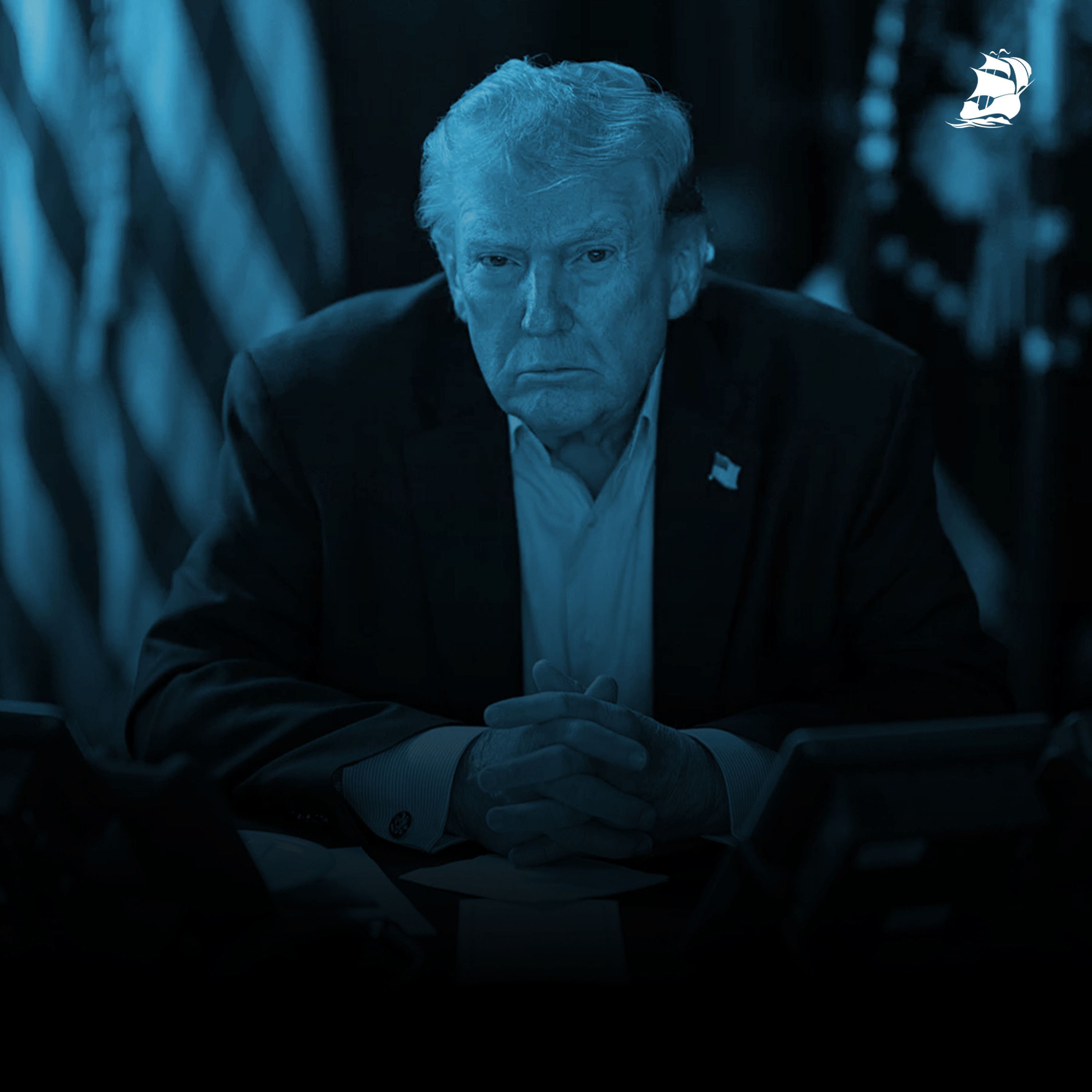
About this episode
The facts on the ground and the ludicrous statements speak for themselves: The administration inadequately planned for the execution of this war. That's likely why six service members were killed in an insufficiently protected facility. It's why our embassy in Riyadh and our consulate in Dubai were hit with drones. And the administration clearly does not have an exit plan. Venezuela had Trump thinking this could be a cakewalk, but in the Middle East, circumstances can change in a heartbeat. Plus, Israel's role in pushing for the military campaign, Marco's effort to pawn off responsibility for the war, and Gallego's endorsement of Graham Platner in the Maine Democratic Senate primary. Sen. Ruben Gallego and Lt. Gen. Mark Hertling join Tim Miller.
show notes
- Pre-order Hertling's new book, "If I Don't Return: A Father's Wartime Journal"
- Watch The Bulwark’s LIVE coverage of the Texas Senate primary on Substack YouTube
- Carol Leonnig's reporting on the firing of FBI agents with Iran expertise
- Tickets for our LIVE show in Austin on March 19: TheBulwark.com/Events.
Get every episode summarized
Each time The Bulwark Podcast publishes, we email you a written briefing from the transcript — the topics, who appeared, and any specific claims, with the ad reads skipped.
Email me new episodesFree for 3 shows. No card needed.
Hosts & guests
Transcript ready
778 searchable segments. Every word is indexed and playable.
Full transcript
The Bulwark Podcast — Mark Hertling and Ruben Gallego: A Rush to War. Machine-transcribed; use the interactive transcript above to jump the player to any line.
Tax season has arrived and doing taxes without the right help can feel overwhelming. Into it, TurboTax is here now to guide you through it with confidence. Match with a TurboTax full-service expert who handles everything for you from start to finish. Your dedicated expert checks every single deduction and credit to help you get the best possible outcome so you can feel confident you're getting every dollar you deserve. And the best part, you'll see real-time updates on your expert's progress right on your phone while you live your life. Plus, you get unlimited expert help at no extra cost, even on nights and weekends during tax season. Visit TurboTax.com. Only available with TurboTax full-service experts, real-time updates only on iOS mobile app. Hello and welcome to the Bullard Podcast. I'm your host Tim Miller. We got a double header for you today in segment two, Senator Rubin Gaiego who's been on fire on social media about all
this. So I wanted to grab him and talk to him about how the Democrats should deal with the Trump or on-war news. And tonight, for the political junkies, we'll be live on YouTube and Substech as the Texas Senate primary results come in. I guess there's some Texas House Races to monitor as well. So come check us out on your platformer choice. But first, he's retired at US Army Lieutenant General. He served as commander during the surge in Iraq from 2007 to 2009. He writes a military affairs for the Bullwark. Thank God. And he's the author of a new book. If I don't return a father's wartime journal, it's released next week, but it's available for pre-order now. I'll put the link in the show notes. You can go pre-order that book right now. It's Mark Hartling. How you doing now? Hey, Tim. It's good to be with you. And thanks for hawking the book for me. I need it. It's wonderful. You know, I was paging through it last night in this morning. But tonight, we'll get into the book at the end, but it's nice. It's one of these books that's like my attention span is being negatively impacted by, you know, the internet,
by my Twitter addiction, et cetera. And I read way more books in a year and the past few years, and I have recently. So the nice thing about your book is it's one of those. You can just kind of pick up and do a couple chapters in the middle, you know? You don't have to commit to the whole. Yeah. How many pages, isn't it? Uh, 325, I think. Something like that. You don't have to commit to the whole 325. You can learn some life lessons along the way if you just pick up a couple chapters. We'll get to that. We'll get to it. But first, we got to do more podcasting. Yeah. I think the first question is, do you have any more clarity today that we did yesterday on what exactly it is that we're doing here? It seems like we have some mixed messaging coming out of the lighthouse. No, it's actually getting worse from what I can tell. There's more messaging of exactly what the end state is. And that's important to the military commanders. I mean, if you say regime change or regime decapitation or take out their navy or destroy all their ballistic missiles, you have different planning cycles. I think that the military operational campaign is really going toward
destroy as much stuff as possible within the country. But, you know, the Israelis, I think, have maybe even a different mission set based on their actions. They are looking at true decapitation without any kind of thought about what comes next. They just want to destroy all of Iran's leadership, kill all of them, and destroy as much stuff as they can as long as the Americans are hanging on. And what's interesting to him, I heard this morning that the Iranian leadership is now calling this war without rules, a game without red lines, and a contest of endurance that they think they can win over the United States because they know how quickly we get fatigued entire of the news cycle. So we'll see how that works out. To your point about the different goals and missions at Israel, as we're coming on, so this is developing right now. We've news that the Israeli struck the meeting of the Iranian Supreme Council where officials were gathering
to choose a new Supreme leader. So I mentioned yesterday's podcast that Trump had told, I believe he told the New York Times that they had two or three people in mind, you know, for the Delcy Rodriguez of Iran. And then by the time you talk to John Colve, ABC a few hours later, he realized that we'd killed all the potential folks that we had in mind for the next phase of the regime. Now it appears that Israel is, you know, expanding their operation to, seems like kill anybody in any type of leadership role in Iran. And that is important in that, you know, you can speak to this, but knowing what you're going for matters. And if the object of this was a Venezuela style campaign, and that's what the U.S. wanted, and the government officials told us it was, right, that they, you know, had a goal of, you know, having some continuity. And I was on a podcast yesterday with the MAGA guy. I was debating him. And that's what he was saying. This is like Venezuela. This is like Venezuela. Well, if that is our goal, but then Israel is out there just killing everybody that could
possibly take over because they're not interested in that. They're not interested in continuity. It seems like that's a pretty important tension. It is. And I'm also struck by what you just said about the MAGA guy saying it's just like Venezuela, because harkening back to Venezuela, we didn't know what they were trying to do there either. I mean, was that regime change counter-narcotics? You know, counter-terrorists? You know, what was it? They finally snatched one guy. And my take of Venezuela right now is it's not a whole lot different than it was before Maduro left. It's still kind of a corrupt society. There's not a whole lot of changes taking place. They still have the same security forces. And in transferring that to Iran, what's interesting to me that I don't think most American politicians understand is their leadership isn't based on personalities. It's based on institutions. And as long as they can maintain institutions, and that's what this Majlis, this coming together to take a vote on the
new supreme leader, was all about. I mean, they all sit around a room sometimes on the floor, but it always has rugs and kind of a centralized bunch of chairs around one big meeting space. And they make decisions based on who's got, I'll use the Arab term, not the Persian term, Wasta, who's got the most Wasta, the credentials, the creds. And it's a fascinating dynamic that's very different from taking a vote for the people you think you will have as your leader in the United States or most Western societies. On the mixed messaging, we're getting it out of the administration as well. I was watching JD Vance last night on Fox. And he, it seemed like at least recognized that there is some miscommunication here and really tried to focus his message on obliterating Iran's ability to have any kind of nuclear ambitions. And he's saying that was that was the objective, what he was saying on Fox. Hegseth yesterday morning, during his press conference, was not that explicit. And well, actually, I want you to just talk about
what you saw yesterday from Hegseth as he was trying to explain what the military objectives were yesterday. Well, his, his was sort of a, it was an unbridled presentation of more sycophancy toward Trump, but also the dynamics that he's shown with his knife hands and, you know, the kinds of things that a squad leader does to a group of six or seven soldiers, you know, you're going to go do this today. And it's embarrassing for someone who's in that kind of a leadership role to do that kind of harang. But his comments, I mean, he started off by saying, we didn't start with regime change. That's not what we're going to do, although the regime has changed now that we've killed them all. So he kind of countered the president's message, earlier messages. And then he said, we're, and let me see if I can remember, I wrote it down, but he said, we're going to destroy their naval capability. We're going to make sure that they can't defend with conventional weapons and missiles, what they've been defending, which is their
creation of a of a nuclear capability. And we're going to destroy their nuclear capability. So that sounds like nothing but kinetic strikes with a kind of amorphous political outcome. So he's talking from the standpoint of a tactician and not connecting the tactics of the strikes to what the overarching requirement is from the civilian leadership. And maybe that is the clarity at this point, which is that they're kind of in yellow mode, and don't, don't care what the next leadership of Iran looks like. And Jay, one of the thing, JD Vance of the Senate Fox was, we would love it if someone came to power in Iran that was willing to show respect to the U.S. But ultimately, whatever happens to the regime in one form or another is incidental. It's incidental. All JD cares about is that somebody respects him, respect my authority, but it's incidental who is there. That's one step below the knife hands of, which is what Hegseth always does. Hey, here's what, I wrote it down, I wanted to pull
it up, but here's what Secretary Hegseth said, his objective, this is what he said in order, destroy the Navy, their drone capability, and their offensive missiles. The Iranians can't have nuclear weapons, and they can't use conventional umbrella to protect their nuclear ambitions. Those were the three things he said. Okay, that's a kinetic strike package. Here's what we want the military to do, but there's nothing beyond that. And that's a pretty big mission set, because when you're talking about the size of the country of Iran, those ballistic missiles are warehouse everywhere, and a nation that's three times the size of Texas. So when you're talking about planning aircraft or Tomahawk missiles into those locations, you're spread out over literally almost the Eastern United States from Missouri to the East Coast. So good luck with finding all of them, although they now have said there's been over 2,500 kinetic strikes from aircraft and missiles.
It's still, there's probably a whole lot left that they haven't reached, and most of them are underground and buried in mountains. That takes to another thing that there's been a lot of conversation about over the last 24 hours to get your take on, which is the munitions stockpiles, and to your point, if the objective is that broad and sweeping, and the territory is so large, obviously it's going to take a lot of material from us. And so there have been some conversations that there are shortages. Trump bleeded about this last night from his social media account, and on the screen, some of what he wrote. The United States munitions stockpiles have at the medium and upper medium grades never been higher or better. At the highest end, we have a good supply, but are not where we want to be. Sleepy Joe Biden spent all of his time in our country's money giving everything to PT, Barnum of Ukraine, Zelensky in parentheses, hundreds of billions of dollars worth, and he didn't bother to replace it. Trans like that for me. Okay, what he's saying is we
evidently gave up every one of our, or most of our military supplies to Ukraine. That's not true. There's a certain stockpile of weapons that we sell or give to foreign governments. It's called FMS foreign military sales. That is separate and distinct from the things that we have in stock to contribute to every one of our contingency plans as long as you're conducting sort of a risk mitigation of, hey, if we're fighting now in Iran and we're using a lot of stuff, how is it affecting the contingency plan for, let's say, North Korea or China? And there are guys in the joint staff. I was the guy at one time when I was a young Brigadier general. They kind of raised the flag and said, hey, we're using too much ammunition in Afghanistan. And if we move to Iraq, we're not going to have enough for that. That happened in 2003. And we're going to put great risk on all of our other contingencies is something flares up in Korea or in China or in Russia or any other place.
So there are literally bean counters as they call them in the Pentagon saying how much stuff do we have. I would say from the very beginning of Mr. President Trump's statement that we have a whole lot of stuff at the high and upper end level. I'm not sure what that means. I mean, there are precision weapons and they are accounted for by type. And I don't think he can say that because we have been using quite a bit over the last couple of years. And we've been especially using a lot if you're talking 2,500 strikes in a four day period, which we've conducted. That's a whole lot of precision weapons. And Tim, I'll say one more thing. I'll give you a little military tip. I'm watching on the news the films that they're showing. You know, what we call in the military war porn. You know, you're watching all kinds of things exploding. I saw this morning the Department of Defense released some films of precision missiles hitting trucks. Now, it's great war porn because it hits
right in the middle of the truck and it blows up. But I don't think I'm going to waste unless it's a very valuable target and you know what's inside that truck. I'm not going to waste a $100,000 missile on a $10,000 truck that really isn't all that effective. So what they're striking is also important. There are things. Now, I'm really going to get geeky on you. There are targeting plans that say, Hey, today we're going to wake up. We're going to climb in our airplanes and we're going to hit this target that the intelligence guys have told us is very important. That's called a kinetic strike package where you know where you're going. You know what the mission is. You know what you're going to hit. There are other things called TSTs, time-sensitive targets where pilot is flying around the area and he sees something on the ground like an air defense piece of equipment. He radios back to headquarters. Hey, I've just gotten this target. I need to hit it. So you go in and hit it. It's a target of opportunity, basically. Most of the packages I think
that they've conducted in the first three days are those kinetic strike packages. That's what the chairman described yesterday that they have targets for the B1 bombers, the F-22s, the F-35s, all the different aircraft are hitting different types of targets and they're all very well synchronized. But they're all using precision weapons that are very expensive and they're running low on an operation that we hadn't planned for. The other piece I'll say is the defensive weaponry. What that means is the the Patriot missiles and the Thad missiles which are two air defense units. We have scattered those batteries, the units that operate those missiles all over the Middle East to defend our allies, the Gulf States. They are firing those things like crazy because incoming missiles, incoming aircraft, they're striking and hitting down. A Patriot missile cost about a million and a half dollars a piece. So when you shoot that thing, the Chichen goes up in terms
of the cost. They spend the real scratch. And they are very hard to reproduce. There's not a large stockpile of those as we saw during the Ukrainian war. So for the president to say we've got a whole lot of things that we can continue to use. That could be true. I haven't been in the Pentagon for 10 years. I doubt it, but they're using quite a bit of them on a daily basis. When this takes us to, you know, the thinking about going into the war and the timing and the preparation and ensuring that you have that kind of material. And it's related to one of the things that they were telling us at the start, which was, you know, that there was some type of imminent threat that required the action at the time that it came. And Marco was asked about that yesterday and his response has created a lot of a stir. So I want to play that for you. There absolutely wasn't imminent threat. And the imminent threat was that we knew that if Iran was attacked and we believed they would be attacked, that they would immediately come after us. And we were not going to sit there and absorb a blow before we responded because the Department of
War assessed that if we did that, if we waited for them to hit us first after they were attacked and by someone else, Israel attacked them. They hit us first and we waited for them to hit us. We would suffer more casualties and more justice. And so the president made the very wise decision. We knew that there was going to be an Israeli action. We knew that that would precipitate an attack against American forces. And we knew that if we didn't preemptively go after them before they launched those attacks, we would suffer higher casualties and perhaps even higher those killed. And then we would all be here answering questions about why we knew that and do that. That's crazy to me. I'm not to be a pedant, but it seems like the imminent threat came from Israel. If you just take them at their word, right, that they were saying that we had to do this because we knew Israel was going to attack and that the result of Israel's attack was going to be that our troops were at risk. It's amazing. When I heard him talking about that yesterday, I thought to myself, oh, okay. So Israel caused all this by saying they were going to attack. And as a result of that, we have a preemptive response to some other nation attacking
that could cause a regional conflict. Okay, got it, Marco. That makes no sense at all to me. I don't understand that. And he was talking so fast and with a dry mouth and for folks who don't understand military operations, what he was saying was ludicrous. You know, there was a great debate in 2003 in the US military about preemptive strikes. And it's a moral issue. Do you strike first when you think someone is going to come after you? And in that case, it was a rock. But now we're talking about a preemptive strike based on another nation going to war and putting us in the crosshairs. It doesn't make sense to me. It's not part of our existential approach to providing security for the United States. Also, the other nation we're working with. So it seems to me that if we needed more time to prepare, sort of get to here in a second, that we could have asked for that. I don't understand what we had to be responsive to.
Israel's chosen timeline. That Israel is even making the case that they were under an eminent threat. I noticed you mentioned that Marco is the dry mouth. Does that say something to you? It tells me he was nervous. I mean, you look for body language. It was the same thing he had when he gave the response to the state of the Union address a couple of years ago when he researched water. So it is a indicator of nervousness. The mouth is drying up. He knows he's kind of caught in some things that he doesn't want to talk about. And it appeared like he was really riffing there for a long time. All right. For a while now, I've been telling you about my cat journey in this household, a reluctant cat journey. But some of you out there are dog people. And so we got we got some dog food stories for you too. When it comes to dog food, it seems like you have to make a choice. You can either have fresh and healthy or easy to store and serve, but never both. But you don't have to choose anymore. Thanks to Sundays, Sundays was founded by a veterinarian and mom, Dr. Tory Waxman, who got tired of seeing so-called premium dog food full of fillers and
synthetics. So she designed Sunday's air dried real food made in a human grade kitchen using the same ingredients and care you'd use to cook for yourself and your family. Everybody of Sundays is clean and made from real meat fruits and veggies, no kibble. That means no weird ingredients. You can't pronounce no fillers. Sunday invests 50 times more in its ingredients than other brands out there because you're talking deserves food made with care. Not the interest of costs cutting the best part. You just scoop and serve. No freezer, no thawing or prep, no mask, just nutrient-rich clean food that fuels. They're happiest, healthiest days so you get more of them to share together. Make the switch to Sundays. Go right now to sundays4dogs.com slash Bolark 50 and get 50% off your first order or you can use code Bolark 50 at checkout. That's 50% off your first order at sundays4dogs.com slash Bolark 50. Sundays4dogs.com slash Bolark 50 or use code Bolark 50 at checkout. So I want to talk about the preparation why this
and obviously it matters because the rationale for the war matters and whether we did it according to Mark goes on words because we felt like we had to because of Israel. That matters. It also just matters as the type of prep that we could do in the region. There are two things that jumped out to me on this front. One is, so we've learned a little bit more about the six casualties. Now six US service members were killed. They were all in a makeshift operations center in Kuwait, an Iranian strike hit that operations center. There's no warning. There's no siren that went off. You know more about this than me. So I guess I guess amateur, I look at this and say, well, man, couldn't we have done more to solidify and protect our makeshift operations center as if we were picking and choosing the time that this was going to start. Maybe that's not right. I don't know. What's your reaction to that and what is a makeshift operations center? Yeah. Well, what this was, it's in a place called Schwabah which is in Kuwait and it's right on the
port and the operation center was literally the administrative base. So it has a finance center, a personnel center. You go in there and sign in and sign out and it has a theater, an expeditionary support command. And that's a fancy term for a bunch of logisticians. People that drive trucks, provide oil, provide ammunition, provide stuff for a unit. That port at Schwabah has a theater, it's called a theater support command, the first theater support command that is always there. And they rotate both active duty soldiers and reservists and national guard into that location. I'm not sure which national guard unit was there, but the majority of the forces in that are national guard are reservists. And what they do is they support the warfighter out of a base that's right next to a port. So as people come in and equipment's delivered, they're the ones that are
driving the trucks, given the fuel, those kind of things. When Secretary Hegg says that it was a fortified operation center, I don't think he really knows. That doesn't define what it was. I've been there. I've been to the first theater support command or that area. And what it is is not a tent, it's like one of those temporary aircraft shelters. And inside there's a bunch of people on computers and typewriters and just processing stuff. So it's a command post like we have on the bulwark where we talk about things. It's a pun, I guess. But fortified means it probably has a fence around it. It's a building that's made out of tin that's insulated. It has some tents nearby. There's probably some sandbags around the tent. But when you say fortified, you think of this grand fort with large boulders or eyes. It is not that. No defenses. Well, and it does have some defenses. I mean, at the port, there are types of small
weapon system that can shoot down incoming aircraft. But at Schwabah, they're never used. I mean, since the Gulf War, this has become an administrative logistic area. And an errant drone or missile got in there and killed six people and wounded a whole lot of others. By the way, there are many of those all over Kuwait. This isn't singular. And I'm sure right now the commanders on the ground and they're really reassessing how to protect some of those temporary facilities from drone strikes and missile strikes. And I guess the other thing that folks have been saying is that what has been able to get through the defenses is the drones more. The shadowed drones in particular. You know, we've seen obviously this big change over in Ukraine about the type of war, the type of what's going to get through into Kiev and what's being intercepted. Is there anything that can be learned from that or, you know, kind of lessons at this point about how things are changing? Yeah. Well, I mean, our military has taken a real close look
at that. And we're garnering information from the Ukrainians, which is extremely valuable. And when we've cut ties with Europe to the degree we have, it's a whole lot harder to get that information to improve our forces. But when you're talking about the Shahed drones, they come in a variety of sizes, techniques, approaches, uses, some are reconnaissance, some drop bombs, some shoot missiles. Some of them have ranges of 1500 kilometers, which is about a thousand miles. You know, the drones that hit the US Embassy in Riyadh really surprised me last night because Riyadh's in the center of the Saudi Arabian Desert. And those drones came from Iran. So that's a pretty long distance and unobserved. Yeah. Some of the Shahed drones are flying low. They're at maybe 300 to 500 feet. Some of them are up to 30,000, 60,000 feet. Some of them have wing spans of eight feet. Some of them are jet purpled and have wing spans of 20 feet. But this is a product
that has been developed by the Iranians. They have sold them to the Russians to great effect in Ukraine. And it's going to be something that it's a poor man's approach to attacking bases. So you can either spend, you know, a million dollars on a cruise missile or you can spend $5,000 on a small Shahed or $10,000 on a large Shahed. It goes underneath the radar in many cases and it can attack bases. And you can't afford, as I was saying before, about the Patriots and the Thad missile systems. You can't afford to shoot a $2 million Patriot missile at a $20,000 Shahed drone. One other thing just as it kind of relates to the timing and Marco's point to how he felt like we had to do this is, you know, the evacuations, what's happening in the kind of the chaos in the region. Obviously, this is something that you had to deal with. You coordinate, you know, defense military coordinates with state and, you know, you don't want to tip off the enemy, but you also want to make sure people are protected. Well, yesterday, the Assistant Secretary of
States sent out a depart now, all caps, memo telling Americans in 14 countries that they should use available commercial transportation to get out of that country due to serious safety risk. A couple hundred thousand Americans live in these 14 countries. It includes Egypt, which is pretty far from this war at this point. I don't know what that tells us something that they're doing that. It includes a bunch of countries where the airports are shut down. There aren't, you know, commercial airport opportunities in UAE and some of these countries at this point. You know, it kind of reminds you of the Afghanistan thing, one of my criticisms of Biden, which was like, I feel like we could have done more to warn people to get out. Obviously, there's a risk profile associated with that. You know, the more we're doing that, the more Iran can prepare or the more the Taliban could prepare in the Afghanistan case. So talk about
that and kind of balancing those considerations. Yeah, there's a mission set for military commanders called Neo. It stands for non-combatant evacuation operations. I had to prepare and almost execute one of them when I was commanding in Europe to a country I shall not name. But when we first started planning for it, we estimated there were from the State Department, there were about 10,000 American citizens in that nation that we would somehow have to plan to get out. The thing about the contention between the military and the State Department, the military says, hey, I've got a mission to do to get 10,000 soldiers out of here. We got to start doing it right now. Well, the State Department will say, no, no, no, no, you're not going to do that because that's going to cause a whole lot of turmoil and people are going to think that the government's exploding and things are falling apart. So no, you can't make that announcement. So the military has to plan sort of undercover to get boats and ships flowing in and airplanes, you know, the civilian airplanes
coming in to pick people up. And it's really hard, especially in big countries. The one I had, we estimated there were 10,000 American citizens there. By the time we were done with the planning and almost into the execution of that mission, there were 120,000. So imagine trying to get 120,000 Americans out of a country from a military standpoint. That's what happened truthfully in an Afghanistan. There was a lot more than could be handled. When the State Department puts a warning out like that, it causes turmoil in the local government saying, hey, the Americans are leaving, the Brits are leaving, you know, all the Westerners are leaving. What the hell's going on? And they start panicking. So you have to try and avoid that. So normally the State Department folks wait until the very last minute to do that. But it's part of a plan. It's part of a coordinated plan. And when you're doing an evacuation after a war started, you're asking for trouble. Yeah. That
should have been part of the pre-conflict plan. But Tim, this gets to the point of there was a whole lot of hubris in our government in terms of this attack plan against Iran. I think the President was enamored by what happened in a very precise and surgical strike in Venezuela. And he thought he could do the same thing in Iran. And it's a different country with a different approach with a different population and a different geography. And it's a whole lot further away. And the Middle East by nature is extremely complex. Anything you plan to do will fall apart in a heartbeat. And I think a lot of people were saying that before this all started. We're seeing great big things happening right now because of a lack of planning and an understanding of what the true mission was. And I guess that's the point about the evacuations, right? It's like and nothing's going to be perfect in any of these situations, right? It's hard to plan for all the
contingencies. But we got to do this on our terms. And if you one thing, if Iran decided to bomb Bahrain or Kuwait, one of our bases randomly, and we're figuring out how to scrape, that's not what this was. Like we were planning it. Okay. I want to get to your book. Anything else I haven't asked you just about kind of what you're seeing in the short term horizon here. Obviously a lot of this is unpredictable. Yeah, I just think the biggest thing we ought to focus on right now is the timelines. You know, the president's been all over the place three to four days, five weeks, six weeks. We could stay longer. We need to ship more forces there. So there's an ever-increasing timeline on the part of the United States. And the Iranians are basically saying, you know, we can outlast them. We can go 60 to 90 days and continue to harass not only the United States and Israel, but all of the Gulf states. That's going to be an interesting proposition to watch. One of the things that Iraqi told me one time when I was trying to pressure him to do something
when I was in Iraq, he looked at me and he said, General, you got to understand. Because I was tapping my wrist. I was saying, Hey, we only have till Tuesday to do this. And he said, General, you have to understand you may have the watch, but we have the time. And it was kind of an interesting lesson for me to learn. All right, guys, we're getting heavy on the podcast today. We're talking about war. We're talking about journaling for your kids when you're scared. You might not come back home to them. And maybe you aren't the journaling type, but one thing you can do to protect your kids is get life insurance. Thankfully, we've got select quote for you. For over 40 years, select quote has helped more than two million Americans understand their options and get the coverage they need over $700 billion in coverage and counting. As a broker, their mission is simple to find you the right insurance policy at the best price. They take the guesswork out of finding the right life insurance policy. You don't have to sort through dozens of confusing options on your own. Instead, one of their license agents will find the right policy at the right price for you.
You'll be covered faster than you think. Select quote works with providers who offer same-day coverage up to $2 million worth with no medical exam required. And you're not out of luck if you have preexisting health conditions. Select quote partners with companies that offer policies for people with high blood pressure diabetes, heart disease, and more. Life insurance is never cheaper than it is today. Get the right life insurance for you for less and save more than 50% of select quote.com slash bullwork. Save more than 50% on term life insurance at select quote.com slash bullwork today to get started at select quote.com slash bullwork. To the book. Yeah. If I don't return. The basis of the book is this journal that you're writing during Gulf War I. Now, it's kind of a surprise. I had seen the log line for it, which was, you know, you had been told that half of your, what was it, half of your battalion? Half our squadron. Yeah, a cavalry squadron. Yeah, half of your squadron was likely to die in a mission in Iraq. And I had assumed it was in second Iraq war because in my, I was such a,
I was a kid. I was a baby, you know, during Iraq war one. And in my mind, like that was a very, you know, cut and dry mission in and out. Not a lot of risk. We dominated them. Like, you know, that's sort of what it is in the mythos of it now. And so I was interested to start reading it. That, you know, this journal was from that first world where we really didn't know a lot. And you kind of went in expecting it to go worse than it had. So anyway, talk about that a little bit. We were told it was going to be a bloodbath. You know, we were going into Iraq in 1990, late 1990. And we were facing Saddam Hussein who had just, he had the fourth largest army in the world. He had just fought an eight year war against Iran. He had used chemical weapons on his own citizens and the Kurds in Halabja. So when we got the intelligence estimates, as soon as we were told to deploy, the intel chief told us, Hey, you're in the cavalry squadron, which is something that's out front of the rest of the division. Our job was to find the bad guys and then
pass them to the tanks. And he said, the cab is probably going to have sustained 50% casualties. So my major brain at the time, as well as some of our other soldiers said, wow, that's a coin toss flip of whether or not you're going to come home. So my wife and I had two young sons at the time. We had an eight year old and a 10 year old. And my thought process was if I don't come home, what can I leave my boys that will help them grow to be met? And I start, I have it right here because I have the book and the record. This was the book that I kept with all the journal entries. You can kind of see it where I just started writing about life before the war started, before we were crossed into Iraq from Saudi Arabia. And there were all different kinds of subjects that I wanted them to know about. Love, emotions, fear, friends, friendship, those kind of things. So every day I would pick a subject and write a page of here's what you need to know as young kids.
Then the war started. So the middle section of the book is about the war itself. And then the end section is what it was like after the war while we were still out there for a long time. And that that book came into this. So every day in the book or in the in the journal, it starts with a date in 1991, has a subject goes for a page. And our youngest son found the journal a couple of years ago and he typed it up as a gift to me, gave it to me a Christmas and said, Dad, my brother and I knew what you were doing. You were preparing us if you didn't come home. It was obvious in the pages that you were trying to teach us life lessons. He said, but you did come home. And now you have five grandsons and two granddaughters. Why don't you write more for them on what you've experienced since 1991? Well, that's 35 years of experience both in the military and in cable news and in health care at the bulwark and in teaching in college. The original journal has the original entries that are short
and then it has an explanation of what I've learned about those same kind of things like friendship and love and emotions and fear since then. And so it was an easy book to write because I had an outline already. I just followed what was in the original journal. I want to learn a little bit more about just kind of thinking back to your headspace when you're writing this at the time because it kind of scrambled my perception of that first Gulf War a little bit because it's like this was also not a war that was about some urgent imminent threat to our country and our safety. And here you are right about my age now basically with two young kids. You had to be thinking, man, I don't know, in the pages it doesn't, there's no like bitterness really showing. And at some point I would think that you would be feeling like I can't believe that this is going to be a coin flip situation for my life over Kuwait. And I'm just wondering kind of like how you are processing that and thinking about it and
compartmentalizing it when you are initially writing the journal. When you think about what a soldier does, when you sign up in a professional force and you take that oath to the country to protect and defend the Constitution, which means obeying the order of the president too, you realize that there might be an unfortunate situation where you're going to have to put your life on the line and sacrifice for that country. So it's part of your duty requirement. And that was one of my transformations to him to be honest with you because during that conflict with two little boys, I was thinking, oh my god, I'm not going to come back. I'm never going to have a beer again. I'm not going to ride bikes with my kids and my wife. And you know, you think those kind of thoughts and it's all directed inward about you. You know, I want to come back. I don't want to die. But in later deployments to combat, as you assume more responsibilities, that changes because, and I talk about this in the book, when I went back to Iraq in 2003 and then
again in 2007, I was a one-star general, then a two-star general, and I had X number of forces. In 2007, we had 30,000 Americans in our unit. So those were people I was responsible for. And it wasn't so much about me. It was bringing them back. In fact, right before we deployed, I had a young woman come up to me. She was a sergeant and she had never been to combat before. And she had the same experience I was having in 1991 because she came up to me and she said, sir, are you going to bring us all home? And boy, that was a punch in the gut because I realized, man, I'm responsible for bringing them all home. And I know that's not going to happen. The chance of going to war, someone's going to get killed. So that's a tough question to answer to a young soldier who's going off to combat for the first time. So those are the kinds of things I talk about in the book. You know, my publisher last week, Tim, told me he said, you know, this isn't a war book. He said, this is a book about
family and about love and about leadership. And he says, and then after all those things, it's a book about war. So yeah, it was a fun book to write. It's also about growth. You look, your career, at that point, was much more honorable than mine was. But you know, it was, trust me, it was. When I wrote, uh, why we did it, but I had to like, I went back and reread a lot of the stuff that I was doing earlier in my political career when I was Republican, right? And I had to like think about it. Like, why did, like, what was my mindset at the time? Why was I doing it? You know, there's certain things I reread. They're embarrassing, obviously, or certain things that have different, obviously, have different perspectives on now. I'm wondering how that was for you. I mean, like, looking back on like the journal of your younger self, and you mentioned a little bit of it right there about how you kind of went from focusing so much inward to focusing more about other people, but other examples of, you know, kind of growth and wisdom gained. Oh my gosh. Yeah, all, all sorts of things in terms of maturity and having a better understanding of life. And that's
in the book too. I try and portray that. And this isn't really a book about me. It's just like you just said, it's about growth. It's about the understanding leadership and values and ideology. And the army, you know, I talked about how the army transformed from 1991 to today. I mean, going across the desert in 1991, there was no such thing as GPS at the time. There were no cell phones. So we were in the middle of this flat desert trying to work our way to figure out where the hell we were using a boat compass and a Iran device that we stole. And one of the towers for the Iran was in Iraq. So we were actually using a tower in Iraq to maneuver through 250 miles of desert that were flat and we didn't know where we were. So that's kind of a evolutionary change. There were other changes like intelligence processing, the use of drones. We had drones in 2007. We didn't in 1991. The dynamics of friendship and what a true friend is, you learn a lot about
what a real friend is. And that's one of the first chapters, the emotions of fear and respect for one another, cultures. When I first went to West Point, Jim, you know I'm from St. Louis. I had never left the city of St. Louis until I went off to West Point in my first time on a plane. Since then, I've been to 123 different countries and have tried to analyze cultures in each one of those so I can learn more. And even that's a huge growth requirement to just understanding the people of the globe. I mean, it's a little different going to Saudi Arabia versus like North St. Louis versus South St. Louis. The cultural gaps a little wider. A little bit, yeah. And you know, I did a lot of eating and drinking from my country along the way too. So that was kind of fun. Yeah, like I said, it's fun. It could be, I mean, obviously you could read a cover to cover, but it could be kind of a coffee table book situation where you page through and look at different nuggets of wisdom. It's a good bathroom book, Jim. Come on. It's a good bathroom. I wasn't going to call it a toilet book. It is a good bathroom book. It's a really,
it's a really good bathroom book if that's the type of thing you're into. I try to keep the bathroom books in my house gay, just as a little, it's a little reminder for people when they're when they're visiting, but this would be a good bathroom book, especially if you're a military family. All right, but there are two chapters is I was just paging through. They're kind of funny and relevant to the podcast. I want to leave us with those. You had a whole chapter on cursing. Yeah. My parents biggest critique of this program is the amount of cursing that I do. Fuck yeah. You talked about how cursing kind of makes you feel bad. It makes me feel good. And so let's discuss. I want to see if I can glean any wisdom from you on the topic of cursing. I think Mark Twain said there's a huge difference between obscenity and profanity. Have you ever heard that statement? Yeah. You know, I have used the F bomb more recently. Thanks to me. You're going backwards. Thanks. Thanks to the administration. I think, but yeah, it is an expression of emotional just, you know, your distraught. So you throw something out there. I normally use it
at the administration or at St. Louis Cardinals games when they're performing very poorly. The original entry was for our sons. Yeah. It was just teaching them a little bit about language and how you should approach life. I'm glad you brought that one up. The last one I want to start with, you kind of begin with what I think is that I learned about you that you're a cryer. Your wife says you're a cryer. Yeah. I love crying in male tears. I've never made you cry on this podcast. So that feels like now an objective for me going forward. Just so you know, but on the podcast, it's our emotions. Yeah. I'd like to cry. Is that okay? Would you feel comfortable crying on the podcast? No. No. It's just you in the life. That's a private. It's your private. Yeah. Well, no, I'm not actually. I mean, I cry at both happy and sad events. When I'm at a wedding of people I don't even know or when I'm at a graduation, a high school or college, I think about potential of people. And I get emotional. It's thinking they've got an
entire life in front of them. It's going to be great. And I cry at sad events of, you know, deaths and people who, you know, soldiers, you know, the six soldiers that were killed that we talked about earlier. I mean, when I when I heard that, I teared up a little bit because I think, I don't know if I told you this, but I've got a box on my desk right here that I open every morning. And, you know, when I look at those soldiers, I don't cry every day when I look at that, but I do think about what kind of life they would have lived and how because they haven't, I have to earn it for them. I have to be a better person because they made the ultimate sacrifice. And I've got to represent them because they were serving under my command. I appreciate that very much. I just turned that a little bit. Say I didn't I? No, that's good. I wanted to say that. That's important, actually. Like it is a good male message, actually, crying and being in touch with their emotions is important. And so in a book for two sons, I was making a little joke about it,
but it also, I think, is important and meaningful. So I appreciate it. General Hartling, appreciate so much. You're able to add your wisdom to us here at the bulwark. Go get his book. If I don't return a father's wartime journal link here in the show notes, appreciate you very much, sir. We'll talk to you soon. Hey, thanks, Dan. Appreciate it. Up next, Senator Ruben-Gaigo. Are you a fraud-paying American? It's a fact that one in four honest, hard-working, tax-paying Americans has been a victim of identity theft. With life-lock identity theft protection, though, if your identity is stolen, they fix it, guaranteed, and get you your money back. Last year, the IRS flagged over $16 billion in refunds for identity fraud. That's billions of dollars that could come from your salary, overtime, or second job. But this year, you don't need to stay a victim. Life-lock monitors millions of data points per second for your personal information
and alerts you to threats you could easily miss on your own. And if your information does fall into the wrong hands, only life-lock has US-based restoration specialists who are backed by the million dollar protection package. Because this tax season, fraud-paying American is something no American should have to claim. Visit lifelock.com slash iHeart and save up to 40% your first year. That's 40% off at lifelock.com slash iHeart. Terms apply. All right, we are back. He's a Democratic Senator from Arizona, a Marine Corps combat veteran. He was deployed to Iraq in 2005 and served as an infantryman. It is Senator Ruben Gallagher. How you doing, man? I guess okay. You guess okay. I guess that's, I want to start with that. So I was watching you on Chris Hayes last night. And you got quite emotional talking about this war with Iran. So I was wondering, what is underneath that? I want to learn a little more about your experience and why this is? It's not that hard. My friends died.
My best friend died. The 23 men of my company died in another war that was hastily decided to go to a war of choice. And seeing this, our leadership, a lot of them actually lived through this, kind of doing the same mistake. And maybe it's not going to cost the amount of men who cost in Iraq, but it's already cost six people their lives. And I don't know how many civilians, right? Six Americans their lives. And I don't know how many civilians all around the world, whether it's Iran, Israel, sorry about Qatar, right? You know, this is just not thought out. And now I hear more and more that we just decided to do is because we're following Israel. Okay, like where was the force protection? Where is the proper ammunition? Where is the exit plan? All these things that they're not even answering right now and it just reminds me so much of what happened, you know, when I was in Iraq and I just don't want another generation of men and women to be dealing with this. One of the reasons that we reached out to struck by your post about this, you've been on fire on social media on this in general. And you do the one thing I've been
demanding of Democrats, which is like it's you posting, right? Trust me. Trust me, it is me posting, yes. Tell your staff to let the dollar off the chain, okay? They haven't had a chance for a while, because that is what is required in the year 2026. And you've been talking powerfully about this. And Jim Shooter's good reporter was just I kind of contextualizing what was happening right now and did a post, you know, about how he had covered the rock war. And you know, he's reminding folks that the itola and the Iranian regime was involved a lot of terror attacks that cost our troops during that war. You replied to that, I don't need revenge. And I don't want another generation of veterans dealing with the consequences of war in my name. And I just thought that was so powerful and important perspective on this. Yeah. And because I hear this other message. And by the way, I'm not saying that Jim was actually advocating for us going to war that like I read it as he was just kind of making information. But what I wanted to make sure the rest of the rest of the public understands. And this is also a reflection of not just me, but other Iraq and Afghanistan veterans.
Like don't don't assume just because what they did, which is what's awful, you know, and let's be clear, Iranian-backed militias had and were probably given, you know, some very powerful IEDs that killed and made a lot of us. And also they traded even with the Tunis. I was largely fighting the Tunis surgeons. And knowing now what I know from what I understand the intelligence that some of those IEDs were attempted and were used against us. But also, I talked to my Marines. I talked to the Marines. I served with. I talked to a lot of Afghan veterans. And we know what I ran did. But don't use that as an excuse for us to engage in us and get us involved in another illegal war. In other words, it's going to cause more and more people. Don't do that in our name, right? And there was another, I can't remember where it was, but someone asked me about that. But like, how does that make you feel? I was doing another interview. I'm like, like, well, you know, what makes me feel personally is, yeah, I hate the fact that Iran killed potentially some of the Marines I served with and other friends that served in the military.
But also, when you're a leader, you don't go after other countries and put your men and women at risk for your personal, you know, feelings, right? I need to look out for the betterment of my country, men, the women and men serving this country. And I'm not going to go to war to engage in revenge, right? There's a lot of ways to do that. There's a lot of ways to keep our country secure. And sometimes it does involve war. I'm not like a peacenick by any means either. But I also know that when we're going to do this, when we're going to go to war, that has real, real consequences. Like, when I, you know, I'm sorry, I'm going on my rant, but like, I think the morning after we started the war with Iran, my mom was over at my house having breakfast with me. And she commented to me like, how scary it was for her the times that I was in Iraq, because especially after a couple of us started dying, you know, there was, there was a lot of questions about whether or not I was still alive. And she said it was a worse feeling in the world knowing that I could have been dead. And she refused to answer doorbell. She refused to answer the door. She was always afraid
and Marines were going to show up and, you know, say something had happened to me. Like, it really struck me that like, I feel like our leadership had never thought about that. And I don't want people to feel that unless we absolutely need to, unless we know that our, our security is actually at risk. Yeah. And this goes to the rationale. I mean, Donald Trump literally laid out his feelings as one of the rationales and one of the conversations he's been having with reporters. He hasn't spoken with the American people who's calling reporters. And one of them he said, you know, the IOTO almost got me, but I got him. It's like a crazy thing to say. I swear to God, I thought that was like something from, I don't know if you've seen the way I'm going to get you sucker. I thought there was a line from that. Like, I was like, when I heard that he actually said that I was just like, this is just shocking. That's lunacy. And then as you mentioned earlier, there's been a lot of kind of conversation about what Marco said and Mike Johnson said this yesterday, which was basically that like we had to go when we did because because we knew that Israel was going to attack Iran and we presumed that
Iran was going to then attack us in reaction to that. And so we had to act imminently. So to me, I listened to that. It's like, well, I mean, technically speaking, the imminent threats seem to have been from Israel, right? So if we wanted to take our time, we could have asked them to wait or you know, we could have done more preparation. Yeah, well, there's a lot of options, a lot of options. Yes, there's a lot of, I didn't hear like, well, we try to talk to Israel to I'm like, hey, this is not the right time. You do it. This is not the way to do it. This is going to escalate to beyond a point of no return. Israel is using our weapons system, using our intelligence, probably using our our diplomatic efforts to actually fly over some of these countries. There's a lot of things we could have done to stop Israel from doing a pre-infestrike on on Iran. And there's a lot of things we could have done to make sure Iran was at least slowing down whatever is was whatever was potentially threatening Israel. But it seems like we just kind of either wanted this to happen or just didn't know how to stop it, which is which tells me there's just a total lack of leadership at the top. And then total lack of there's just so cavalier now about
military, the use of military power, right? I think they got a lot of confidence with the first 12-day Iran war and then their confidence with the Maduro operation that they just thought that this would be another cakewalk. But at some point, there's just only so much munitions we can make. There's so much we have to protect. There's so many operations we have to worry about that this is going to start costing us. It's going to cost us in manpower. We're just going to start costing us in munitions. And we have to start pulling them in from other places. Like if I'm South Korea, Taiwan, Japan, I'm going to start getting pretty worried when I start seeing more and more of my, you know, it's actually defensive capabilities that we share with these countries being pulled to the Middle East. As a millennial, you're probably familiar with the Leroy Jenkins, me? Yes. It's the world of warcraft. It was basically a player that just like fuck at Leroy Jenkins. Like I'm doing Leroy. Yeah. Like it felt like that and you'd listen and I watched JD Vance last night in Fox. We've listened to Trump a couple times. And like they literally don't
have an exit plan. Yeah. They have different explanations for why we went in. But nobody has an exit. Nobody. And they're just like, we're just going to kill a bunch of their leadership and kind of see what happens. Leroy Jenkins. See what happens. Yeah. Leroy Jenkins. By the way, I don't know if you saw there was an actual radar. If you ever see the radar screen, I guess there was a air like a civilian airplane that tried to do a Leroy Jenkins in the middle of this war and actually flew right through like so. Yeah. No, there is no like there is like that's a crazy part about this. And like it's like very simple things that I you know, and I suspect what actually happened was that there was some kind of professionals within the Department of Defense that's like, no, no, no, no, no, you need to do XYZ. And that's why some some of them were removed by the way. And I think also remember they've been removing some of the best generals in the country and putting in a lot of sick of fans instead. But you need to plan properly. You know, there's there's a God, I'm going to mess it up. And some of them is going to get pissed, beginning to mad at me. But there's a saying like piss poor planning predicts piss poor performance, right? Like they basically did that, right? There is no planning. So you didn't plan for the exit.
You didn't plan for even the execution. You plan to drop bombs, but you didn't plan what's going to happen when they were able to send back, right? This is why our embassies, by the way, are literally under siege right now, both by protesters, but also by drones, right? Our embassy in Saudi Arabia is getting hit by by drones right now. They didn't harden, for example, the the site in Kuwait that's pretty close to the border of Iran. And it got hit by drones. All those six deaths came from one drone strike or multiple drone strike, but I won location because they didn't harden this like these couple trailers, right? This is what happens when you rush to war. And when you treat, you know, human lives, our forces, our own forces, in such a cavalier manner that you don't really worry about their operational security. Speaking of firings, there's another story I wanted to ask you about. Have you seen this story from Carol Lenning about FBI agents? Cash Patel fired 12 FBI agents at staff last week for their role in the classified documents investigation against Trump. Among those 12 were an
elite counter espionage unit that investigates threats from foreign adversaries, but specializes in Iran. Part of the reason they'd been brought into that classified documents case, you might remember, it's just Trump had Iran war plans in his bathroom at Mar-a-Lago. And so we fired, last week, like they knew this was coming, I guess. I don't know, maybe BB hadn't told them yet, but they knew this was coming possibly. And they fired the counter intel experts on Iran inside the FBI, insane. Well, I mean, it's it's even crazier than that. Like some of the FBI counter-terrorism experts are literally at home depots being provisional ICE agents, right? Or they're at the local, you know, Karin Sadia trying to hunt down, you know, whatever, unfortunately, poor mom that doesn't have her right visa right now. That's what they're using with some of our brightest, you know, embass people. We have ATF agents, right? First of all, ATF agents were fired because, you know, there's an element of the White House doesn't believe that there should be any type of restrictions on weapons. But there also, there's a lot of ATF agents,
the people that would be making sure that if there are any Iranian sleeper cells in this country could not get a hold of bond-making materials or weapons, they're all right now, probably like, you know, roaming the streets of wherever it is to try to, quote unquote, find these illegal immigrants. And I'm not exaggerating that. Actually, you know, down here in DC, I was at dinner with my wife at the war if I think it's called or the peer camera, what it is. And sure shit, there's ATF agents walking around with their flat jacket sign. Like, is that really the best use of someone who's probably making close to $120,000 a year? No. But, you know, this is, this is their play, right? And now they're saying like, well, you need to get, you know, you need to fully fund DHS. DHS is fully funded. They have $175 billion. They have more money than the Marine Corps, you know, but what they're not doing is you're not actually putting them and using them to their true, the utmost advantage. The fact that you don't know that's called the war if like that is some solid, like, you're not a beltway insider flex there. Like, I don't even know what it's called.
I know it's called. I don't even know what it's called. I don't know if it's northeast south. I don't know any of that stuff, you know, just like. I'm a real American. I'm a real America. I want to ask about how the, how Democrats should talk about this stuff. I want to get to immigration next because, you know, not to glaze you too hard, but you did overperform Kamla by quite a lot in the elections. There's maybe something can be learned from this. I've saw the worst stuff. I've seen some. And look, as you mentioned, you're not a peacenick. You are a marine vet. I'm a former neocon. There are certain times where I've, and I've no love for that. I told that. Yeah, exactly. There's certain times where I would be supportive of military action on behalf of the Democratic mission abroad. This is just not that. And I worry a little bit. I see some Democrats elected officials doing a lot of caviating. And I'm just wondering what kind of advice you have for your colleagues about how to talk about this. I do everything from personal experience and probably shoot way too much off the hit. But
I think I'm reflecting what a lot of normal Americans are thinking. They don't necessarily get into this process question, right? What they're thinking is, why is this so important that you're risking my kids' life? Number two, why is this so important that you're not paying attention to a lot of the problems I have right now in my life? Very simple, right? So I've been of the opinion that we need to talk about the morality and the distraction. Because that's what people are talking about. They're not talking about war power resolution, AUMF, all this kind of stuff. They're talking about, like, I'm afraid that my kid's going to get drafted. I've actually heard this. My kid's going to get drafted and go to war. I don't want to even sign my kid up for selective service now. You know, I'm afraid my kid who's, you know, in the reserves going to get called up. I'm afraid my kid that's already overseas going to get sent into this. Number two, why are we spending all this money? Like they, like, all these countries in the Middle East have a lot of money. Why are we spending all this money? Right? These are the things that are very simple for people to understand. And I think we should not be afraid to communicate that. And
people are sick of war, man. They're just so sick of war. It's okay for us to say like, this is not our war. This is not a timing for us to do this. I'm like, there is a lot of ways for us to counter Iran, by the way. And there's a lot of ways to actually counter Iran militarily that aren't, you know, a full-scale war. And maybe there is a long discussion we can have about what that looked like and whether any administration did it incorrectly for so long, perfectly good discussions to have. That's not the discussion right now. The discussion is, are we going to gauge in war? How does this end? And how much is it going to cost me? Same question, but on immigration. I think the last time we talked actually, I was talking about how it's a little frustrated that some Democrats were not going to the mat fighting these ice thugs because, you know, concerns about the political elements and the mistakes of the Biden administration, and the border, et cetera. So, you know, here we are right now. You've mentioned the DHS fight. How do you think your party should be talking about the immigration issue right now? Well, I think it's very simple. Like, where we are, it's actually where the American public is. They don't like the enforcement they're saying right now. And look, we have to be
all very honest. Yes, the border was messed up. Biden messed up the border. Democrats messed up the border last time around. We should not have had, and you know, I get yelled at this all the time, but we should not have had moons of refugees being able to go to the border and use a loophole to actually cross over to the border, right? That caused chaos. I was at, I was at, I'm a border state. We saw it. We saw it all the time, right? That's what the American public wanted to stop, by the way. What they did not want is the chaos to move from the border into our streets. What they did not want is ice agents after only 45 days, given a weapon, and be able to roam free. What they not want is racial profiling, especially of minorities, you know, like Latinos and African Americans are being pulled over by these guys. And in Minnesota, you know, Black and Latino police officers were being pulled over by ice because they haven't been driving, right? Because these guys want to hit their mil, their milo quotas every day. So, you know, we need to be very confident where the American public is. The American public wants deportations of criminals. They don't want the, the guy who's just working here who just has not gotten the right paperwork, right? They don't
want racial profiling, and they certainly don't want the federal federal agents treating U.S. cities like war zones. And until we get some reassurances from this administration that that's not going to do, and reassurances, I mean, actual laws, we shouldn't just give them more money. At the end of the day, again, back to this, my whole thesis, they already have enough money to do whatever they want. And so if we, you know, zero out whatever they were going to get this year, they're still going to be able to do it. But morally, we're at least putting our online in the sand saying, you're not going to be able to do this. Like right now, they're using this money to buy massive warehouses where they're going to use ostensibly to to detain illegal immigrants. And, but, you know, with this administration, you just don't know where else it could go. Real quick, Farley, there's a couple of politics things. You endorsed Graham Platner. This was in politics? No, campaign politics, bro. Like, like, George, George politics. Okay. You endorsed Graham Platner in the main center. And he's in a primary, Janet Mills sitting governor. There have been a couple of people
nagging you about that. Part because Platner has some controversies around the tattoo that he covered up and he was on some podcast with a guy that does some anti-Semitic conspiracy theories. And Michael Cohen wrote that between your critiques of Marco and endorsing Platner, you know, this leaning into this anti-Israel stuff, how do you respond to that criticism? I guess you just can't appease anybody because I got like, you know, I also endorsed like Haley Stevens and Angie Crack, right? And I was accused by the left of being in the pocket of Israel. First of all, to explain those three endorsements. I'm picking people that I know can actually win the general election. It's very simple. Janet Mills can't win the general election. It's just how are you going to send an 80-year-old, we just had a whole referendum on. That's an 80-year-old candidate to run and say that we need to have that person run against the establishment when this is a change election, right? It's that simple. Like, Platner can bring out new voters, can it get crossover voters? Look, and I think the other thing, this is a class issue more than
anything else. Platner went on to a podcast where someone's, you know, not on that actual podcast, but later on did spew some conspiracy theories. There's been a lot of establishment, Democrats, that everyone loves. I don't have to go to the names, but you could all look it up, that have gone on other podcasts of people that have done anti-Jewish, anti-Semitic, and conspiracy theories. But everyone's okay with those guys because, you know, they speak well, they're they're the establishment candidates, they're running for important offices, right? So it's okay for those guys to try to get crossover, but this guy isn't, right? This guy isn't allowed to do that because at the young age of 20-something, he got a stupid tattoo with all his Marine Corps buddies, by the way. It wasn't just him. And then proceeded, real list, twice, and then go through a secure background check where three times they check all of your tattoos when you're doing that to make sure you don't have any any extremist tattoos. And nobody in any agency and or in the military said that tattoo that he and his buddies got was anti-Semitic,
right? And so for me, you know, I have lived in the real world. I have grown up as a Marine. I almost got a stupid tattoo, not a school in Crossman like this guy, but I almost got a really stupid bullet tattoo on my body. Didn't do it because to be honest, me, my body's got way too drunk that night. It was when we got back from the first, my first activation. And so I understand when he said like, I didn't know what it was. Most people in this world just aren't political. And we want people to get into to be authentic and actually be able to talk to people and get them to cross over. But I guess they could only be perfect in order for them to do that. They actually can't have lived experience. They can't actually have been stupid at some point. They can't actually have been, you know, a young and dumb Marine getting drunk in Croatia. And that's what really, really ticks me off is that, you know, from the get-go, as someone who actually has been, you know, in politics and has been a Marine, has been a young Marine, like this was one big op that was designed by people. They want genitals to win. And they just leaked it. And that's it. This guy is an authentic man. You know, he's not anti-Semitic, you know, and more
importantly, you know, not more importantly, but just as important is that he's going to win this election. And we need to win elections. We cannot go another four, five, six years, you know, trying to get the Senate back. Like, we need to consistently win because whoever's going to be president in 2028, we need to hand them the House and the Senate. And by us getting someone that's 80, right? 80, will they even be alive by the time 2028 rolls are out? Like, I think that's the legitimate concern. Also, nobody likes finger-waking nags. This is going to be a problem for JD Vance next time. And it's just, it's a problem. Sometimes, for those of us left, you went through this, like some of your text leak about like a joke you made about Democratic women. And it's just like like normal people every once in a while say something strange on social media or text jokes to their buddies. Yes, we're idiots. We're idiots. Well, he's not my buddy anymore. That's, that's the most heartbreak one of my best friends from the war. He got maggots. I defended Kelly against, you know, the DOD and it's so heartbreaking. But, you know, yes, people do stupid things.
Do you learn from it? Are they a part of your character? They're not. And the other thing again, I don't understand why I can't basically state what Marco Rubio has said, what Johnson has said, what Tom Cotton has said, the cause for us to go to war. If we're not allowed to question our foreign policy just because it involves Netanyahu, then I, what's going on here? And like, by the way, like I'm supportive of Israel and it's right to exist. As the right to exist as a Jewish state, is that we can't have qualms with our friends. We can't have debate. We can't say like we don't think that this is good in our national interests without being accused of being an anti-Semite. Then what kind of relationship is this that it's being established? All right. Thanks so much, man. I'm way over. Do you have a Texas Senate hot take that's the elections tonight? So my only, my only take because I was just there is that Texas is the Arizona of 2018 where people were stunned by the movement of voters. I think that's actually what's going to happen there. I don't know who's going
to win the Senate race. Both of them have different paths to be able to win the general. But the electorate is in the right place in terms of who they're going to go and vote for. And there's going to be a potential huge stunner up and down the ticket. I think in Texas come election day. And I look forward to going in and campaigning there too. Thanks brother. Really appreciate you. Senator Ruben guy I go. Everybody else we back tomorrow for another edition of the show. See all the end piece. I'll see you next time. The Bored Podcast is produced by Katie Cooper with audio engineering and editing by Jace
More episodes
More from The Bulwark Podcast

Bill Kristol: It Always Comes Back to Trump/Russia
The Bulwark Podcast
Mehdi Hasan: 9/11's Fallout 25 Years Later
The Bulwark Podcast
Sarah Longwell and Pedro Gonzalez: Meet the Young MAGA Edgelords—and the One Who...
The Bulwark Podcast
Jessica Tarlov: POTUS Needs Some Moral Support
The Bulwark Podcast