Loading...
healthfitnesseducation
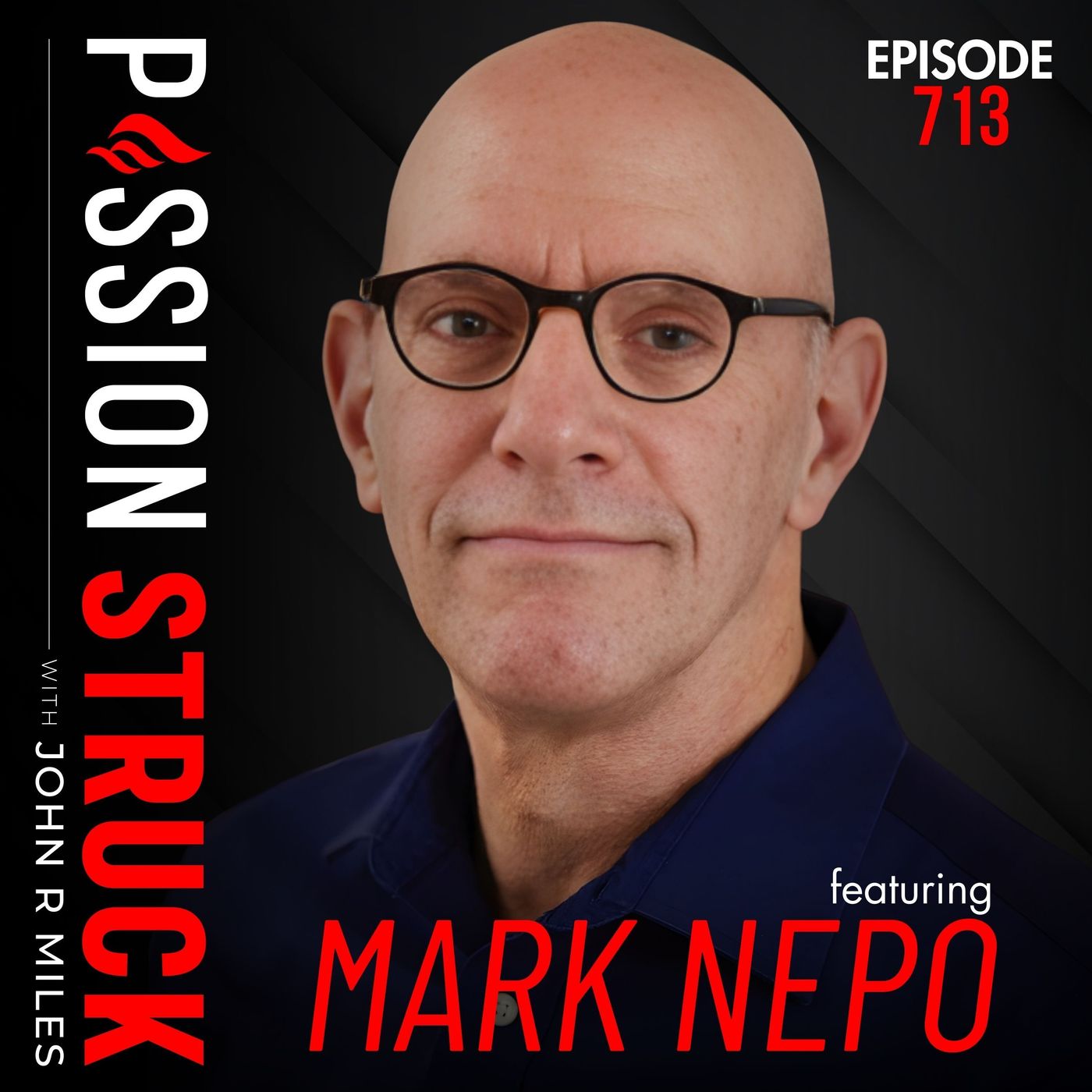
Mark Nepo on What It Means to Live with an Open Heart | EP 713
About this Episode
What if living with an open heart, especially in times of loss, uncertainty, and division, is not a matter of willpower or optimism, but a quiet and courageous practice of presence?In this episode of Passion Struck, poet, philosopher, and cancer survivor Mark Nepo joins John R. Miles for a deeply human conversation about acceptance, aliveness, and what it means to live with an open heart in a fractured world.Drawing on his lifelong body of work, including The Book of Awakening and his newest book, The Fifth Season: Creativity in the Second Half of Life, Mark explains that acceptance is not resignation but an act of cooperating with truth. Together, John and Mark explore why the heart is our strongest muscle, how immersion, rather than achievement, brings us to life, and why caring fully for what is right in front of us may be the most meaningful form of compassion we have.This episode weaves together stories of grief, creativity, aging, and meaning. From feeding a dying parent applesauce to the metaphor of the meteor that burns away what no longer matters, Mark reveals how life becomes clearer when we stop holding back.At its core, this conversation is an invitation to stay present even when life is difficult, to say yes to life even when it breaks us open, and to remember that our presence, here and now, truly matters.Passion Struck with John R. Miles was recently ranked #1 on FeedSpot’s list of the Top Passion Podcasts on the Web, recognizing the show’s ongoing commitment to thoughtful, human-centered conversations like this one.Check the full show notes here: https://passionstruck.com/mark-nepo-interview-fifth-season-book/All links gathered here, including books, Substack, YouTube, and Start Mattering apparelhttps://linktr.ee/John_R_MilesFor more about Mark Nepohttps://www.marknepo.com/Pre-order You Matter, Lumahttps://youmatterluma.com/The Fifth Season Companion ResourcesPractical reflections and contemplative prompts inspired by Mark Nepo’s teachings on presence, creativity, and aging with intention.Explore the companion guide: https://www.theignitedlife.net/p/the-courage-to-stay-awake-to-life-mark-nepoIn this episode, you will learn
Connect with John
Support the Movement: https://startmattering.com/. Every human deserves to feel seen, valued, and like they matter. Wear it. Live it. Show it.
Disclaimer
The Passion Struck podcast is for educational and entertainment purposes only. The views and opinions expressed do not necessarily reflect those of Passion Struck or its affiliates. This podcast is not a substitute for professional medical or psychological advice.
- Why acceptance is not about giving up, but about cooperating with truth
- How the heart functions as our strongest muscle and most reliable compass
- The difference between nostalgia and the healing use of memory
- Why dreams remain essential to aliveness in the second half of life
- How immersion, not excellence, creates meaning and creativity
- A simple question that reveals whether something is life-giving or life-draining
- How the metaphor of the meteor explains why aging can bring greater clarity
- Why caring deeply for the smallest detail connects us to the wider human story
- What it means to say yes to life in a way that affirms that you matter
- How widening your inner horizon helps right size fear, grief, and suffering
Connect with John
- Keynotes, books, podcast, and resources: https://linktr.ee/John_R_Miles
- Children’s Book — You Matter, Luma: https://youmatterluma.com/
- Pre-Order The Mattering Effect: https://matteringeffect.com/
- Book John to Speak: https://johnrmiles.com/speaking/
Support the Movement: https://startmattering.com/. Every human deserves to feel seen, valued, and like they matter. Wear it. Live it. Show it.
Disclaimer
The Passion Struck podcast is for educational and entertainment purposes only. The views and opinions expressed do not necessarily reflect those of Passion Struck or its affiliates. This podcast is not a substitute for professional medical or psychological advice.
Transcript
coming up next on Passion Struct. And if you're lonely, you say hello,
get out of the house. Doesn't mean that every interaction will be some may be awkward,
some may not work out, some may be irritate, but you're engaged in life. And so even as simply
as instead of reading at home alone, reading a cafe, even if you never say hello to another person,
you're around other life, you're exchanging presence and energy. So expand our sense of
solitude to let others in so that the line between self and other blurs.
Welcome to Passion Struct. I'm your host, John Miles. This is the show where we explore
the art of human flourishing and what it truly means to live like it matters.
Each week I sit down with changemakers, creators, scientists, and everyday heroes to decode
the human experience and uncover the tools that help us lead with meaning, heal what hurts
and pursue the fullest expression of who we're capable of becoming. Whether you're designing
your future, developing as a leader or seeking deeper alignment in your life, this show is your
invitation to grow with purpose and act with intention. Because the secret to a life of deep purpose
connection and impact is choosing to live like you matter.
Hey friends and welcome back to episode 713 of Passion Struct. If you've been walking with me
through the start of 2026, you know we've spent the last few weeks and what I call the season of
becoming. We saw that before resolutions can stick, we need revelations. We reclaimed our worth,
we practiced microchoices of courage, and just last week we looked at the Dunbar Reset,
the radical idea of shrinking our world to the size our biology can actually handle.
As we move into this first week of our new series The Meaningmakers, a new question has emerged
once we've cleared out the noise. What do we actually build in the space that's left behind?
On Tuesday we started to answer this question with Dr. Stephen Post.
Looking at why pure, unlimited love is a biological requirement for health.
But that shift brings us to an inevitable question. How do we inhabit that pure, unlimited love
without losing ourselves in the process? Becoming gives us the capacity to move,
but presence is what allows us to actually be where we are once we arrive.
Without it, we aren't living a life, we are just managing a series of events.
Today's episode is one that sits close to my heart. I've been wanting to have this conversation
for several years, and it comes at a moment in my life where its lessons feel especially present.
I'm joined by a world-famous poet, philosopher and cancer survivor, Mark Nippo,
whose work has guided millions through grief, awakening, creativity, and the long arc of becoming
fully human. Before we began recording, I shared with Mark something deeply personal,
that after my sister Carolyn passed away from pancreatic cancer,
she chose one specific poem to read at her memorial, Mark's poem Accepting This.
Its lines captured her philosophy of life, and truthfully it captures Mark's philosophy too.
In our conversation, we explore what inspired those words and how, in a world marked by division,
disconnection and noise, we can reclaim the simple human practices that awaken the heart,
presence, reverence, compassion, and the courage to hold nothing back. Mark takes us into the meaning
of acceptance, not as resignation, but as cooperating with truth. He explains why the heart
is our strongest muscle, how to recognize whether what you're engaging in is life given or life
draining, and why immersion is what brings us alive. We discuss the creative life as a spiritual
practice, the differences between nostalgia and the purposeful use of memory, and the profound
metaphor at the center of Mark's newest book, the fifth season creativity in the second half of life,
that as we age, and life wears away what is no longer essential, we shine brighter.
Before we dive in, a quick note on a project that mirrors these themes of inherent worth.
We often spend our dot lives trying to rediscover the value we should have been anchored in as children.
A new children's book, UMatter Luma, is a bridge to that truth, or a reminder that your significance
isn't earned by your performance, it's a fact of your existence. You can pre-order it now at Barnes
and Noble or UMatterLuma.com. If this episode resonates, please share it with someone navigating
a similar season. And if you haven't yet, a five-star rating review on Apple Podcasts
for Spotify helps these conversations reach the people need them most. You can also catch the
full visual experience on our YouTube channels, PassionStruck Clips, and Jon Armyles.
This is episode 713 of PassionStruck. What does it mean to live a creative,
open-hearted life in the fifth season? And how do we become, as Mark says,
students at the inside of everything? Let's begin the main makers with Mark Nippo.
Thank you for choosing PassionStruck and choosing me to be your hosting guide
and your journey to creating an intentional life. Now, let that journey begin.
Hey friends, there's something about March that makes you want to reset your space.
For me, that started in the kitchen, clearing out what I didn't need and upgrading
what I use every single day. That's when I brought in Caraway. What I love is how simple Caraway
makes everything. The ceramic coating means food just lifts right off, so I'm using less oil,
clean up, take seconds, and cooking actually feels enjoyable again. But it's not just performance,
it's the intentional design. The storage system keeps everything organized, and I've become
a lot more mindful about what I bring into my home. And that's why it's so important that
Caraway is third-party tested and made with high standards, which just gives me more confidence
and what I'm using every day. It's one of those upgrades you feel immediately.
Caraway's cookware set is a favorite for a reason. It can save you up to $230
versus buying the items individually. Plus, if you visit CarawayHome.com slash PassionStruck,
you can take an additional 10% off your next purchase. The steel is exclusive for our listeners,
so visit CarawayHome.com slash PassionStruck or use code PassionStruck at checkout.
Caraway non-toxic kitchenware made modern.
It is my profound honor today to welcome Mark Nipo to PassionStruck. Mark, it's such an honor
to have you on today. I've been wanting to do this conversation now for about four years,
so thank you so much for being here. Oh, you're so welcome. Thanks for having me.
And as we were chatting before we started today, you were in one of my favorite parts of the
country in Kalamazoo. I grew up as a kid going to cold water, and I always love that area of
the country. So I'm a little bit jealous, although during air water, it's probably a little bit
warmer today than it is for sure. Well, before we dive in, I want to begin really with a personal
note about the impact that your work has had on me and my greater family. Last year, my sister
Carolyn passed away after a courageous battle with pancreatic cancer, and her final years,
much like your own journey as a survivor, were marked by resilience reflection and an unwavering
commitment to living a life anchored in love and meaning. Over the last 10 years of her life,
she became a Buddhist, and living in the present moment was key for her. She, during that time,
discovered her calling after she got this diagnosis, actually enrolled in a master's program
in social work at the University of Texas, because she wanted to help other people navigate their
very struggles that she had faced. And her life was really a testament to compassion acceptance,
and the quite courage of showing up for others, so many things that you write about.
When we were planning her memorial service, which she, in her typical fashion, dictated what she
wanted, she made one very specific request that your poem, accepting this, be read aloud.
She felt it captured her philosophy of life more clearly than anything she could have
said herself. And I wanted to say a couple lines that echoed through that chamber,
and through all of us, we were outdoors and Austin reading this. And as a Buddhist priest was
saying your poem, a butterfly went over his shoulders and through the scene, which we all believe
was the sister. And the words I wanted to say are, we cannot eliminate hunger, but we can feed
each other. We cannot eliminate loneliness, but we can hold each other. We cannot eliminate pain,
but we can live a life of compassion. And for those of us who were watching this, those words
became not just a comfort, but a call to action that she wanted to ripple beyond her.
For someone who's writing, Mark, has helped us through profound grief like that, and someone who
has stood at the edge of life and death. You understand the necessity for that kind of acceptance
and compassion. What inspired those lines in accepting this? And in a time where the world feels
increasingly divided, how do we, what you call the small living things awakened in the stream,
live into that final stanza? Thank you. Thank you. It's very touching for sharing that from the
service with your sister. Well, I think, and let's back up a little bit when we talk about our time
and things are very difficult and acute and polarized. And I would back up and say that every
generation, every age faces the same thing. The things that trigger us, the things that block us are
different in each age and each generation. But this is part of the archetypal journey of being
alive, being human, struggling to be awake, to stay awake, to remember who we are, to ourselves
and each other. So I think from my cancer journey, I'm 74 now. And if I met someone my age, when I
was younger, I thought they were ancient. It doesn't seem so old now. As in my early 30s, I almost
died from a rare form of lymphoma. And through that, I was turned inside out and upside down and
through no wisdom on my part, I was jettisoned into learning a different way to be in the world.
In learning how acceptance, we often misconstrued. It doesn't mean resignation. It doesn't mean
giving up. It doesn't mean just obeying whatever someone acts of us. Acceptance comes out of
surrender. And I think surrender I've learned is cooperating with truth. So instead of fighting life,
we stay in relationship with it. We work with it. And that's on a way in the ancient, one of
all the spiritual traditions speak about this in different ways. But the Taoist tradition, the ancient
Chinese tradition, Tao simply means the way. They don't even try to name it. But the metaphor
for it, which I so love, is that life is like an invisible river. And every soul is efficient at
river. And so the goal of every soul, every fish is to find the current. So you can swim with it.
And that's the proper use of our will. That's the work of acceptance and not fighting, not insisting on
what I want. But seeing what am I being asked here to learn and contribute that will both
feed my life and life in the stream of life?
That is really beautiful and profound. As I have dived deeply into your work, one of the things I've
heard you say more recently is that the heart is our strongest muscle. And that its work is to keep
us awake to life. When you look at the world today, what does living from the heart actually require of us?
Well, it requires us. So let's also back up here to say that. And again, this is what every part of
the journey of every soul that comes into being is there's an age old argument, if you will.
On the one hand, there's a tribe of thinkers throughout the generations who have said human beings
are, you can't trust them there. If you don't have constraints and rules, they're going to be cruel.
They're going to just go with self-interest. So we really need to clamp down on these strange beings.
And there's the other, which I'm a part of, that tribe of thinkers and feelers that says, no,
human beings are innately good and left to their to our own basic human nature. We will be kind
and help each other and be more together than alone. And the things that block us come from we can
be blocked by others, by suffering, by the world we live in, by ourselves, by the wounds that we,
but our job of awakening is how to repair from those blockages and wake up again. And the heart
is, I believe, our strongest muscle, our strongest instrument. And the word trust literally means
to follow the heart. And so we are asked not to bend life to us, but to inhabit life. And there
was a Chinese philosopher, Menchis, in 300 BC. And I loved he had this wonderful metaphor for this.
He said that water allowed its true nature will always flow downhill and join other water.
It can be manipulated. It can go even uphill or sideways or through a dam or a pipe.
But allowed its true nature, it will flow and join other water. And he said, so too we
allowed our true nature. We will flow and join with each other. We will help each other. We
won't even think about it. It'll be just innate. But we can be, we can manipulate ourselves and
be, and I think we live in a, now to come back to, to our age and our turn. This is, and this
doesn't minimize the suffering, the cruelty, the lack of compassion that we're seeing in our age,
globally. But it's our turn. Will we choose love over fear? Will we remove what's in the way?
Will we remember? Oh my god, it's you. Oh, so I think that there are many things in our modern
world that have almost like an inadvertent, perfect storm. I don't think anybody planned this.
But we have the pandemic. We have technology, the insulation of social media. And we have this,
I think one of the things that seems so simple, but it's so profound is many of us have lost
our direct connection with life. And why is this important? Because when we are directly connected
to life, we have a reverence for life. And if we have a reverence for life, we can't do harm.
One of the things when we're not connected with life are need to feel and be here, it doesn't go
away. And so it comes out sideways. And in some ways, violence is a desperate last attempt to feel.
It will do anything to feel. This is where the whole notion, the psychological self-harm of cutting
people who are so blocked from their heart. So have no access to what they're feeling into the
life around them that they still need to feel. They still want to do something to open up.
And it comes out in very hurtful ways. So I think and all the traditions give us
ways to reconnect with life and each other. And so it starts with taking a risk. It starts with when
we're closed. How do we open? When we're numb, how do we wake up? And I think it always starts
with the risk to be present, to hold nothing back for me. And so all these states, we will experience
them because we're human. We're not going to eliminate them. But this is what it is to be a spirit
in a body and time on earth. We're always course-correcting. Oh, today I was too closed. Oh, today I gave
myself away. Oh, today I listened and I lost myself. Oh, today I was stubborn. That's the work of
self-awareness through the heart. How do I keep returning to the corridor of aliveness? And this
is why you and I could work at the same office for years. And I'll work cordial and we don't really
know each other. And then one day, shortly after perhaps you lost your sister and shortly after
perhaps I lost my father. And then now we say hello. And those walls are down and we actually see
each other. And I go, oh my god, I had no idea. It's you. Oh, here we are. Let's begin.
But you have just captured is so profound. And it really is at the center of all the work that I'm
trying to do. I see so many people today who are, whether you call it lonely, hopeless, nihilistic,
whatever word you want to use. And I think the word I use for it is they feel invisible in their own
life. They feel like they don't matter. And when you lose that central feeling of mattering,
you are just filled with a profound emptiness and a lack of any direction that's giving you meaning.
And I love your work on using the word love here. I happen to have Joshua Green who's a Harvard
psychologist and Dr. Rick Hansen who you might be aware of yesterday on the show. And we were
talking about how to expand the circle of moral concern and Rick and this chapter of his life
has created this foundation called the global coalition circle. And with this, he is trying to spread
love through acts of compassion. And he's trying to get people to start compassion circles
because we've lost this whole presence and connection in the communities that existed from
millennia. So I'm completely in line with what you are saying and what you teach.
Oh, thank you. And I think that one of the things that's important is when we think of the world,
it's overwhelming. When we think of these huge, and it always has been, how do we reignite
compassion all over the world? Well, when we think of it conceptually, it is overwhelming and can
make us feel insignificant. But when we feel it through our heart, we become a part of it and
that gives us resilience and that's uplifting. And this is why all of it begins with the smallest
detail, the smallest step. So when I listen to you totally in your pain or whatever you're going
through, then I am casting a stitch in the fabric of humanity. I'll give you a personal example
of this that was so profound for me. And this was my father's gone now about almost 15 years. And
toward the end of his life, he lived to be 93 and I was visiting him in a hospital. And he was,
he had a stroke. And I mean, he could talk, but it was so much work, he just didn't. And,
but there I was, all of a sudden, and it was not a private room and there was all kinds of noise
and things clanging and people everywhere. And, but all of a sudden, I was feeding him applesauce
with a spoon. And it was a very bittersweet, beautiful, sad, wonderful moment. And I just felt,
my whole life was in that moment, slipping the spoon so it didn't hit his teeth and him trying
to swallow the applesauce and the adhering, of course. And then I was surprised because I fell
into a moment of wonder by giving my all to that moment, that detail. I had tripped
into the moment of every adult child who ever fed a dying parent. And I was not alone.
And so it's changed how I understand resilience. By being authentic and holding nothing back and
giving my all, not to change the world, but to the detail of the moment that opens to me,
I can trip into the larger stream of the mystery of life. And that's where I was like a fish swimming
in that stream. I was now by not by trying to swim in the stream, not by trying to fix the world,
but by meeting what was presented to me with everything I had, I was in the stream
with all of humanity. And so my encouragement is, care for what's before you
with all your heart. And it matters. It matters because we do not know, we do not know which gesture
of wholeheartedness will keep the world going. And so each day, we are challenged to be fully here.
And the whole nothing back. Before we continue, I want to pause on something important.
Listening to Mark talk about swimming in the stream of life is one thing, living it,
especially when you're navigating the turbulence of the surface, is quite another thing.
So many of you write to me saying, I want to be present, but I'm exhausted. I'm overwhelmed by
the noise and I don't know how to find the current. That tension between the pressure to perform and
the desire to be present is exactly what the season of meaning is all about. That's why each
episode in this series is paired with reflection tools inside the ignited life. We help you build the
architecture to find your own current, asking questions like, am I acting as a glass better and small
or a lake, expansive and fresh in this moment? What parts of my outer life need to flake off
so my inner life can shine brighter? Inside the ignited life, you'll find weekly reflection
prompts that are tied to insights from our episodes and tools to help you move from the turbulence
of the surface into the death of being. You can join us at theignitedlife.net. Now, a quick word
from our sponsors. Thank you for supporting those who support the show.
You're listening to PassionStruck on the PassionStruck Network. Now back to my conversation with Mark
Nipo. I can completely relate to what you were going through in a different context to my
papa who was my hero growing up when he got into his 90s, had developed dementia and we face the
same onset that you were going through where he had forgotten really how to care for himself.
And it happened to me in a different way, not through feeding him, but just seeing all the memories
in this brilliant person who was the head of research at craft, that brilliant mind disappear
was just so difficult to see from someone I respected so much. So I completely understand what
you're saying here and what I've heard you say previously is that immersion is whatever is
before us and that's what brings us alive. For someone who's not in one of these moments
that you and I are referencing here but they're in their everyday life, what does that immersion
look like and how do we know when we're holding back from it? I think in a very simple way,
I use a very simple question to help me get a sense of that and that is is what I'm involved in
is what I'm giving myself to whatever it might be. Is it life giving and heartening or is it
life draining and disheartening? That's like an inner barometer, especially when things seem complicated
or tangled. I just come back to that question. Is this life giving and heartening or life draining
and disheartening and if it's life giving, even if it's difficult, well, I'm in, but if it's life
draining, what am I doing? And so likewise, if I don't feel what's before me and what's in me,
well, they're usually two two possible major kind of reasons for me at least. One is on blah somehow
I have a wall or a wound or a fear or an anxiety that's not allowing me to be thorough and open,
so then okay, how do I identify where I'm blocked? That's the inner work so I can clear it out.
The other is I may be just tired and I need to rest. I'm committed to being wholehearted but
there's some days I'm halfhearted. So it means it's like when you go to a famous museum and you
want to take in everything and after an hour, you're like, oh my god, another masterpiece. Give me a
break. No, there's not that's still a masterpiece. We're just tired and we got to rest so we can
refresh and take it in again. And that's part of our journey as well is to tend things not push
to tend and not push. So I think that and then also there is just that not everything every day
is going to be while life is divine and always miraculous again because we're human, we come in
and out of being able to fully apprehend it. There's a wonderful story from Einstein was
recalling with it was a conversation with him about his early development of his mind and he
shared that at the age of 11, he in a glimpse of intuition grasped all of Euclidean geometry
and he said, and I knew the next day would be dull of necessity.
But we have these what's like life is like the ocean, there's these crests and these swells
and the waves crash and because we're not always on the crest of a wave, it doesn't mean there's
something wrong. And so by keeping the heart open, we can discover the extraordinary and the ordinary.
Mark, you have now written 25 plus books. I'm holding a couple of here in front of the camera
that I think everyone knows the book of awakening or at least millions of people do. But I have
loved your work for years, but as I have understood from hearing you talk, you knew you wanted to be
a poet fairly early on in life. And I'm going to go into have you tell this story here in a second,
but when I was early in my life, I was serving as a naval officer. I was in rotus, Spain.
And over there, it was really an interesting dichotomy between us Americans and the Spaniards
who were in the military. And we would be in the office at 5.30 in the morning working till it
was dark and our Spanish friends would roll into work around 9 a.m. they'd take a two-hour
siesta in the afternoon and they would work into the evening. But I remember one of my close
Spanish friends said to me, John, you Americans love to work and we work to live. And it reminded me
of something that you said to your parents that I'm going to live a making instead of make a
living, which I just love. Can you look at that line? When I was undergraduate, it actually just
took back up a bit. So when I was in high school, I first started writing because my first love
was a year ahead of me and went to went to college and fell in love with someone else. And
so it was my first heartache. And I was devastated. And I wasn't a loner, but I hadn't experienced
a real friend yet until I got to college. And so I started writing as a way to deal with the heartache.
And I realized pretty quickly, I wasn't just talking to myself. I had begun
a conversation with life and with the mysteries of life and the difficulties of life and the wonders.
And so that was the beginning of my writing. And then when I realized in college that I was a
poet and I didn't, I hadn't really written anything much, but I just knew it. And I was still
learning what that meant. And I was the first in my family to go to college, in the history of my
family, of family of immigrants, Jewish immigrants. And my father, who was a master woodworker,
my mother was a bookkeeper, but they were both highly intelligent, grew up out of the great depression,
were very survival oriented for my brother and I. And they got a mystical poet first on,
like we didn't really speak the same language. And I came home as a sophomore I think in college
excited to tell them that I was a poet. And we were around the small kitchen table and we had
the classic argument, my father escalating and yelling that how are you going to make a living?
And I don't know where it came from in me. And I just said without missing a beat, I'm going to
live a making. And it just frustrated the hell out of him. And I spent the next several years trying
to understand what came through me from my soul. And from the world of spirit was a deep instruction
on how to move forward to stay close to what it means to be alive. And I would share with you now,
all these years later, that I've discovered, I think, over time, that the creative process
and the introspective process are really the same thing. I just happen to write it down because
that's how I learn. And one of the reasons that I've been blessed to be prolific is that I've learned
that writing is really listening and taking notes more than speaking my beliefs. And so I've been
able to explore a lot because I write about what I need to know, not what I know. If I'd written
about only what I know, I would have written very little. And so this raises a whole thing that's
a paradox in life. And that is we all, whether the art is in living, not in what we produce.
And so this starts to move into the fifth season, my latest book about creativity in the second
year of my life, because really what I'm exploring there is not that, well, now that I'm retired,
I can paint more or I can write more. What I'm exploring there is our life is the work of art.
And by immersing ourselves, by devoting ourselves, we take our place in the mystery of life.
We live as fully as we can as holding nothing back. Our relationships become a work of art. And so
another lesson from my father, which I learned a lot because he was a creative force as a master
woodworker. And he built a 30-foot sailboat catch when I was a boy out of wood that I spent a lot
of my youth on. And so I didn't learn a lot by him talking about creativity just by watching him.
And I remember being 10 or 11 and we had a small home on Long Island and the basement was where
his workshop was. And he was working because one of the things he would do as a hobby as well was he
would carve half models. So what he would do is he would get blueprints for sailing ships from
the 1800s. And then he would build them to scale maybe six foot long. And they were half models because
only build half. And so you could mount them on a wall. So part of it was flat. And I remember
watching him through the see-through stairs of the basement. And he was immersed in with a tweezer
with black thread pulling two-scale rigging through the masts. And that what were dead eyes,
were turnbuffles that call them now today. And he didn't know I was watching him. And I didn't know
what it meant. But I've come to understand he was showing me the secret life of detail.
This goes back to dealing with the one thing that's in front of you. And I learned that he was so immersed.
And this is interesting given what I learned by attending him when he was in his last years there in
the hospital. But back then he was so immersed that he was in the moment of everyone who ever built a boat.
And so while the work he did was excellent, it's about immersion, not excellence.
Excellence is the byproduct of immersion. If you light a flame, you don't have to work for it.
It will give off heat by virtue of it being lit. And if we're immersed, we will do excellent work.
But if we just strive for excellence, we may not be immersed. And then the reward for immersion
is the experience of oneness and connection to life. And now we come back to reverence and doing
no harm. One of the things today when we get back to your question about someone who's not feeling
connected, who's feeling gnomos, feeling isolated, what do you care about? What can you immerse yourself
in? It doesn't have to be a big career. It may be caring for one plan. It may be bringing dinner
to a neighbor. Who knows what it would be? It could be stamp collecting. It could be working on cars.
It doesn't really like the soul wants us to throw care on the fire of aliveness.
Yes. So like any fire, a fire doesn't care what kind of wood you put on it.
And I don't think the soul or the life of spirit cares what care we put on the fire of aliveness.
Just that we care. I can completely relate to what you're saying. For so many years in my life,
I was chasing success. I was trying to chase happiness. And I found out more I chased the empty
or I became and none of that comes from trying to chase it. It comes from meaning in our lives.
It comes from those who we surround ourselves with. And I think Dr. Frankl got it right. We find
meaning at work or in pursuing a creative element to that we're passionate about. We find meaning
in love. Love could be love of our partner, caring for someone who might be sick, love of another
human being, you could be a friend. It comes in suffering. And I think as Dr. Keltner teaches,
I think it can come in moral beauty by doing acts of kindness to others. So I agree with you that
when you start pursuing those things and you immerse yourselves in them, that is the secret
that I found in this chapter in my life is that is bringing more happiness and success
than I ever felt before when I was trying to chase it. It becomes a result of having meaning and
purpose and service in life. Yeah, I think absolutely. Which doesn't mean that we don't do things.
One of the things in our modern world, we have rightly an emphasis on heart and being
because we're so out of balance with thinking and doing. But ideally, I think like you need
two good feet to walk, being and doing complement each other. And after best, when we're fully
inhabited, they're one and the same. And just like when we're really there for each other, it's hard
to know who's giving and who's receiving. They really become the same thing.
Yes. And that is the reward for that deep immersion. And there is an epidemic of loneliness
in our age. And I know especially with young people. And I was on an interview with a young
editor in London, a young woman who asked about this. And I don't give advice. I just share,
and when I share our examples, not instructions. But I found myself speaking from my cancer
journey and what came up was you don't interview ambulance drivers. You take the first one.
And if you're lonely, you say hello. Get out of the house. Doesn't mean that every interaction
will be some may be awkward, some may not work out, some may be irritate, but you're engaged in
life. And so even as simply as instead of reading at home alone, reading a cafe where there are
even if you never say hello to another person, you're around other life. You're exchanging
presence and energy. So expand our sense of solitude to let others in so that the line between
self and other blurs. I want to go into the fifth season here in a second, but I want to ask you
one more question about the book of Awakening, which really was a turning point for millions of
readers. And as I understand it, it's not something that immediately became a New York Times best
seller out there for 10 years before Oprah discovered it. And then it had its own journey on the
other side. But this book was written after your cancer journey. And what I've heard you say when
you talk about it is you call the book short doses of what matters. Today looking back, what rises
to the top of that list? What matters more now than it ever did before? Well, thank you for that
question. I think I would return to that what matters most is being as fully present and whole
hearted as we can be, knowing that we can't do it all the time. But how do I behold the life
that I meet? Because I think one of the things about the fifth season to go to the latest book,
it was the journey for every human being once we're here is to awaken so that there's as little as
possible between what lives in here and what lives out here. And why I speak so much about authenticity
is that I believe that when we're authentic, the practice and devotion to being authentic
makes us a clear inlet between the inner life and the outer life, makes us kind and useful,
makes us receptive. And that's an inlet and one of my books is at the endless practice. That
staying that open is an endless practice because we're never done. And there's a great metaphor
for this which is what's called an asiquia. Now an asiquia in the south, it's actually the word
comes from the Arabic because in desert climates and you'll see what this means. But in the
southwest native Americans for centuries and asiquia is a slew sway or a natural water flow,
let's say from the top of a mountain where snow after winter will create a water course to the
bottom of the mountain. And villages and tribes would would settle there because it's a natural
water source. It's right there. So naturally over a winter, debris would fill the asiquia,
trees, limbs would fall in it, animals would build nests, stones would erode. So that once a year
at least there was a ritual where the entire tribe, including children and elders would take a few
days and from the top of the mountain to the bottom clear out the asiquia so nothing was blocking
the flow from source into the world. Well this is a fantastic metaphor for a spiritual practice
and what both collectively in relationships and families and towns and nations,
but in our own individual work and the asiquia, the source, the waterway between spirit and
our lives gets clogged not because we're deficient or stupid because it's natural. This is what
experience does and so we have to clear it out. So just like we would do a house cleaning every spring
at least once a year we each need our own form of cleaning out the pathway, the slew sway
between source and how we live in the world. So this gets back to what patterns, what patterns,
what wounds, what patterns, what ways of clothes-minded and closed-hearted thinking and feeling,
what ways of assumptions and judgments. How do we make a practice of clearing that out? So
that we start with I don't know rather than I told you. Man, that really hit me and I think you're
so right. As I was immersing myself into the fifth season because myself now the second half of
life, one of the things that struck me that I find so true is that you point out that the years
behind us grow longer than the years ahead and when that happens the proper place of dreams and
memory shifts and you say that dreams are the kindling of our aliveness and I love that because
given my work centers on mattering that belief that our presence has weight meaning and value
is so important. So how do you think presence what you were just talking about memory and dreams
contribute to that feeling that we matter? Well, so this is one of the things that's
from the book a shift in our horizons and as we age. So I'm 74, I'm hoping to live to 100
who knows, but even there's more years behind in the head. One of the things that doesn't mean I
don't dream anymore, but often one of the liabilities of dreaming in our world is that without realizing
we defer our better self to the future. When I do this then I'll be whole. When I'm in that
relationship then I'll be happy. There's always a if then oh yeah, but what we do is when we dreaming
we're actually putting forward some of our potential and possibility so that we can see it
so that the alive we can then see where is that aliveness in us right now. How can we bring it
alive now and I think I've been helped with this because almost dying from cancer all those years
ago while I dream it always boomerangs back well okay when I have is now so if I'm dreaming that
how can I bring it alive now? And the same thing with memory when we look back which we tend to do
as we get older okay but the difference between what I try to uncover in the book as the helpful use
of memory versus one that kind of entraps us nostalgia entraps us so nostalgia is when I look back
to 20 years ago to a very wonderful experience and I go gee well I wish I could have that again
I wish I could go back there. Where should I could go back to Spain? Right 25 again
but what the helpful use of memory is I go back to whatever that memory is to touch into what was
alive then and trace it because that stream of aliveness is always there oh where is it showing up
in me now so just like we go back in memory to say oh yeah where is that aliveness in me now
and I dream forward well not forget going forward where can I trace it back so that both memory and
dream help us realize what is wants to be alive in us right now. I want to switch to celestial
topics here for a second. I love how you use metaphors and there's one of the meteor that I think
is really profound and the meteor is this idea that we burn through what doesn't matter we shine
brighter and I thought that this is an extraordinary metaphor. How did that arrive for you and what
is it well I think yeah metaphor and again it has been my native language even when I was a kid
I didn't know what metaphor was but it was how the world's always spoken to me how spirit is always
spoken to me and so what I would I want to share from that is every one of us has a gift and part of
our job of awakening and immersing and following our heart is to discover what our gift is and let
it be our teacher let it be our teacher. So the metaphor just entering the second half of life
myself and trying to understand from all the things I've been through this paradox of how
while outwardly yes the body starts to wear away and we have limit physical limitations but at
the same time throughout our life of the spirit is deepening and broadening and expanding
and illuminating and if we don't become a student of that then the limitations of the earthly
body will take over and be way out of proportion so it's not reframing it's not turning from one
to the other it's allowing both to accurately write size what our experiences as a spirit in a body
in time on earth so I guess trying to live into all of that this metaphor came about the meteor
so we know that meteor is very few reach earth because they burn up in the atmosphere and so when
a meteor starts it's a certain size and as it moves through the atmosphere more and more of it flakes
off and it gets brighter and brighter until there's nothing left but light and that became a
teacher for me that oh this is what it's like to be a spirit in a body over a lifetime on earth
throughout our life we through the life of experience and gravity and wonder and suffering and
beauty and erosion our outer life flakes off and we become more and more light
till the spirit leaves the body and so nobody likes the flaking off a year ago I had major back
surgery I had fusion surgery so I have those titanium screws in my back and it's been my dad has
blessing you had that too oh my father my father had that and it was with scary moment but he
was in so much pain that he said it's given him a new release on life in some ways because he
wasn't so much distress before that exactly and I felt it was so difficult since my cancer journey
it was the most difficult thing I've been in and the surgery has been a tremendous success I'm so
blessed I thankful that I and that was a flaking off and I'm brighter for it so there's just again
it's not to deify suffering it's like everyone has to deal with gravity this is part of gravity
this is part of but the opposite of the outer world has the force of gravity and the inner world has
the emanation of spirit and these two fort we live subject to these two amazing forces in the world
one of the things but before we close I wanted to make sure we talked about is throughout the book
you have stories of saying yes to life and they're really powerful I wanted to ask in your view
what does it mean to say yes to a life in a way that affirms I matter this moment matters and what I
give of myself matters yeah so I think that saying yes to life is again is not being obedient
often we need to say no to situations and relationships and patterns in order to say yes to life
saying yes to life and I come back down to means leaning in when pain and worry and fear push us
away it means holding nothing back when we hesitate it means loving again after we've
been burned by love it means never and we make familiar with Leonard Cohen's hallelujah song yeah
so he talks about a broken hallelujah there saying yes to life this coincides with what I think the
real meaning of the story of Job is I don't think it's a blind obedience to God I think it's a saying
yes to life by accepting and not turning away from all the hardships that there's a mystery there's
a paradox you and I could be on a raft at sea and a huge wave comes and smashes the raft and we're
hanging on that's not a good day for us and it doesn't diminish the majesty of the sea
and we're asked to hold both that's the broken hallelujah not just a everything's wonderful don't worry
it'll work out no the fact that saying yes to life is there is a incomprehensible mystery that we're
apart of this is why you've heard the old proverbial question is the glass half full or half empty
well that is really not helpful for me because it's always both and our job in the broken hallelujah
in saying yes to life in facing life and embracing life is how do we relate to both how do we let
both be a teacher how do we open our heart to the mysterious wholeness of life that is both fragile
and gentle and at times harsh and can break us and break us open and that's where the work of being
a spirit in a body and time on earth is and no one knows how to do this which is why we need each
other I think that I've come to think that life is made just difficult enough so we need each other
to ensure the journey of love and bouncing back and forth from positive negative from true to
falls from is again like that question it's not helpful yeah because it's always both
it's definitely both and one of the most important shifts I think we need to make that is
a much bigger part of eastern thinking that it is for us in the west or it's more either or
which I found for how much I fear well the last thing I wanted to talk to you about Mark and you've
talked about this already in the way you wrote about in the book which is one of the most profound
ideas is shift in horizons and you've talked about how much of life we look forward and then we look
back but I want to talk about shift in horizons a little bit differently I have a really good friend
of mine who I've I want to college with known for three decades now who was the chief astronaut at
NASA and he he tells me that one of one of the most profound things for him was being up in the ISS and
having that opportunity to look down and he said it completely shifted the horizons in his life
because he started to realize the true idea of a ripple of kindness or a ripple of love or ripple
of compassion when you're looking from above how it could impact the world and from that moment on
he would do these things that no one knew about where even if he was up in space he would telephone
or find out about a sick child who might be suffering from cancer and he would call them
just the right day or he'd go on tracks in the Amazon forest to bring awareness to a climate change
or he would kayak to help bring awareness to to suicide just in veterans who would do all these
things but so much of us don't have that opportunity that he did how can more of us shift
our horizons I think that certainly in those amazing things you shared certainly we can
ready ourselves but I don't know that we can will will a shift in horizon and so this is where
I think that great love and great suffering have always been the great teachers and we usually
grow human beings by two major ways many but two major one by willfully shedding and the other
by being broken open and if you don't want to willfully shed don't worry you'll be broken open
and it's usually a combination of both and what you know your friend has shared which I totally
agree with is when we are broken open or we are loved open or we willfully shed the parameters
of what we know so that we can grow we glimpse the wholeness of life like seeing the earth from space
and that changes everything because while we want to live the moment that we're in seeing things
from the whole changes and again it's both we talk about this is where the Native Americans are
famous for saying every decision needs to be considered from the perspective of seven generations
but we're still chopping wood to warm the fire to keep the family warm to only see from above
or beyond is conceptual and to only be in the moment is to be at the mercy of the turbulence of
life and we are asked to inhabit both on a way that I understand this another metaphor from the sea
is we look at any part of the ocean we see the surface and we see waves well actually if you look
below you can't tell where a wave stops in the deep begins it's all one water but if we only stay
on the top 18 inches or two feet we will be bounced around in the turbulence of the surface which
is always being disturbed by weather by living in the world if we feel we don't leave the surface but
if we allow all of that water if we so I would say to you that top foot or two that is the waters
of our psychology that meets the world every day but now if we are allowed to go below
or we are allowed to go into the depth of life we are allowed to go beyond just the framework of our
opinions whether it's going out to see the earth from space or in to see all like my father in that
moment of lapelsauce everyone who ever fed a dying parent in the depths that depth takes the edge
off the turbulence of the surface and that is the depth of spirit and being
when we live in the surface and so what happens when we're living is we're talking about this we're
more in the depth right now now we'll get off this wonderful talk and I may take the garbage thing
down to the curb and trip and skin my knee and now I'm by its very nature I'm drawn into the surface
but I don't have to stay there I can feel I can't it's not running from it but by going back into the
depth of being that right size is and we have to live in both so let me give you like an example
and a story so the example is I go back to when I was going through especially before my back surgery
the incredible as your father knows pain that I was in I've never experienced chronic pain before
I was right here at my desk my studies on the second floor in our home and I could have worked
on the first floor I wanted to be in my study well during that time it took me like
a half hour to get up the stairs because I had to take each step wait for the pain to stop
lean on the banister okay so an example of what we're talking about now it is
I would sit here and I couldn't escape the pain and the fear that was in me but I had to
start to ask okay the whole world and life is not in pain and afraid right now I am so where is
the nearest thing to me that's not afraid or in pain it was the floor beneath my feet
the ceiling of this study it's the sky above the ceiling it's the earth that's holding up the
foundation of our house and not escaping my pain and fear but allowing myself to feel it
and what is holding it is akin to your friend helping a child but seeing the earth from space
so the story which is I love these anonymous teaching stories from centuries this is an ancient
Hindu teaching story about how to meet pain and fear which also speaks about this in a very
wonderful way so in this story it's an ancient Hindu story there's a master and a
apprentice always and the master of the truth be known finds the apprentice very annoying because
all he does is complain about life so the master says to him I want you to get a handful of salt
put it in the glass of water and bring it to me quietly so he does the master says drink from the glass
so he drinks he spits it out and the master says what's the matter and the apprentice says it's bitter
master says I want you to get the same exact amount of salt cup it in your hands and follow me
quietly and he does and the master leads him to a lake he says put the salt in the lake he does
he says now drink so this student meals he scoops some water it dribbles down his chin
master says well and he says oh it's fresh and the master says stop being a glass become a lake
stop being a glass become a lake look from the whole perspective of the earth from the ocean of
spirit be where you are but let everything in because what that ancient anonymous story is saying is
we will never eliminate fear and pain but we can rightsize it by enlarging our sense of things
by enlarging our sense of things so we we may hear this story people who are listening with us
and say well it's not good to be a glass I won't do that well yes you will and I will
you will because that's how fear and pain say hello but we don't have to stay there so the practice
question the daily practice question is what experiences relationships and practices
yes experiences relationships and practices are in your toolbox to enlarge your sense of things
when you stumble into fear and pain and worry and numbness and despair so you don't have to reinvent the
wheel yeah and even there may be times when I know what I need to do and I can't do it and then I
got to call you up and say hello mark it has been such a profound honor to speak with you today if
you could leave one thing for listeners to carry with them as they're entering the fifth season
what do you hope they will finally release well I think what I would offer
and we go back to the heart being our strongest muscle and our finest instrument is to trust our heart
and I encourage people not to think that everything that's in the way is a problem or a deficiency
but a teacher we're in our world modern world we've been mistaught to think we're entitled to
a obstacle free existence and no obstacles nobody loves obstacles but they're not demons they're teachers
and what's in the way is the way and that's how our light goes brighter and how our heart shows up
through each other mark thank you so much for joining us today on passion struck I know this
will be a fan favorite thank you so much for everything you have done for so many people throughout
these 27 books of knowledge that you have put out in the world which I know as you were writing
them I know you hoped that they would touch people but you probably never in a million years
thought they would touch as many people as they have not at all it's beyond anything I imagine
and I'm just so grateful and thank you John wonderful to be with you that's a wrap on today's
conversation with Mark Nippo what stood out to me most from today's episode is his definition of
surrender not as giving up but as cooperating with truth it's the realization that we don't need
to bend life to our will we just need to inhabit the life that is already here when we stop fighting
the current and start swimming with it we don't just find ease we find a liveness but that brings
the next structural challenge how do we know what is actually true and in age of misinformation
and divided minds how do we distinguish between our own intuition and the knowledge that we've
been fed that's exactly what we explore next and our upcoming episode next Tuesday I'm joined
by Steve slummon Steve is a cognitive scientist and author of the knowledge illusion we're going to
deconstruct the boundary of the mind exploring why we think we know more than we do and how the
illusion of knowledge can actually prevent us from finding true meaning if Mark Nippo helped us
explore the spirit of presence Steve slummon will help us understand the cognitive mechanics
of how we perceive our world if you really want to make good decisions you need people with contrasting
views to yours right you don't necessarily need them to generate ideas to generate hypotheses
but you need them to test those ideas like the best way to perfect your own thinking is to
describe it to someone who disagrees with you vehemently and that way you'll construct really
good arguments before you move on today I'd encourage you to pause look at the one thing right
in front of you the smallest detail can you give it your full immersion in just 60 seconds
that small stitch is how we repair the fabric of our lives if you want to support these ideas join
me inside the ignited life at the ignited life.net and remember to check out you matter Luma for a
reminder that you are significant just as you are as we move through the meaning makers remember
significance doesn't come from doing more it comes from doing what aligns consistently and with
care until next time I'm John Miles you've been PassionStripe


