0:00
We know that for every one person that is going from street to home, there are about
0:08
5-10 people that are going from home to street.
0:11
We really need to look at them as the individual that they are, whether they're meeting their
0:17
substance use schools or not.
0:20
You're exactly right, Matt, when people are deprived of housing and they feel like there's
0:24
no other options and the one option is survival.
0:28
And survival is a really hard work.
0:38
We've got a great show for you today.
0:40
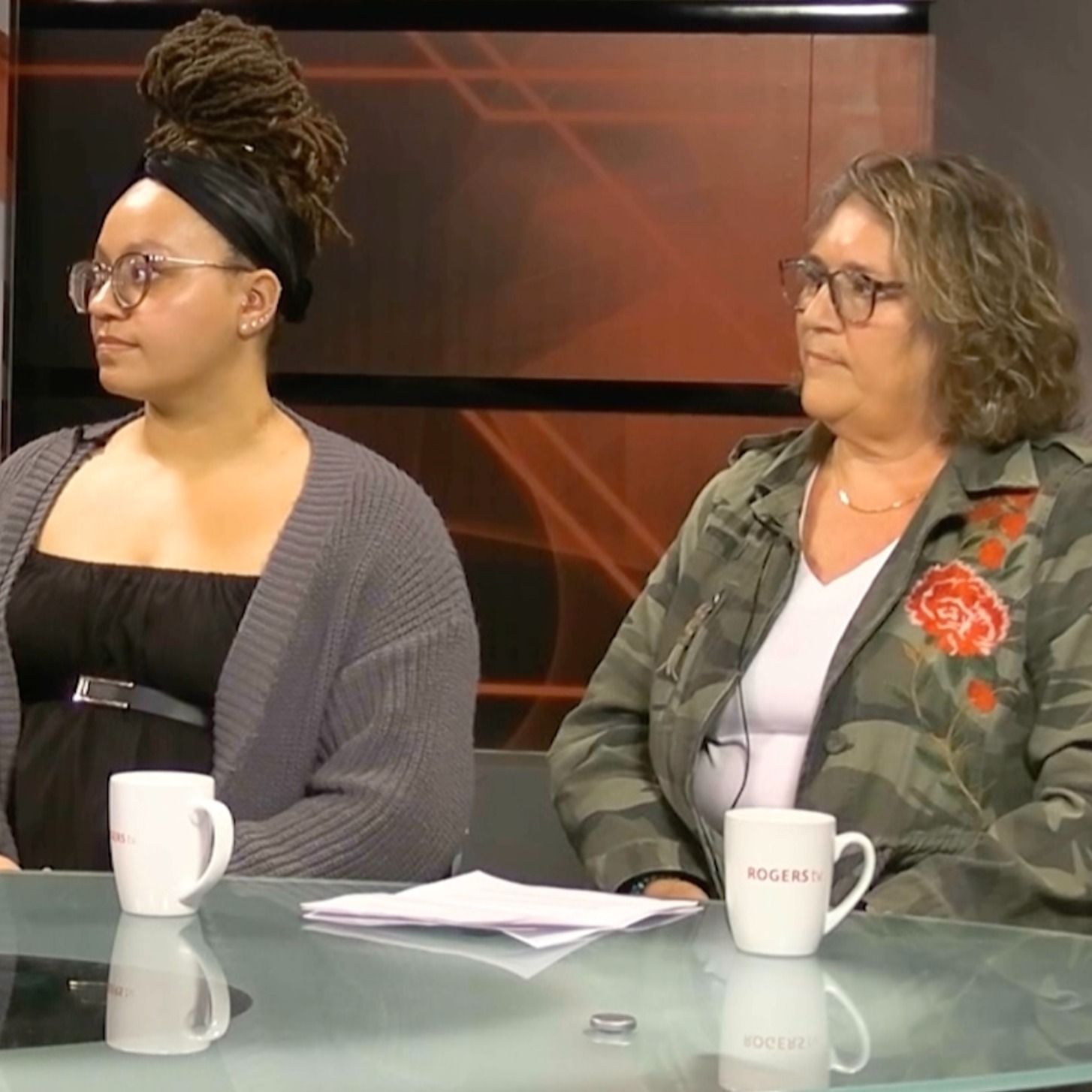
Michelle and Melissa are joining us to talk about how they and 76 of their frontline colleagues
0:46
feel about how some members of City Council are handling the homelessness crisis here in
0:52
They're also going to tell us about what it's like to work in this field and the challenges
0:55
that they face every day.
0:59
Winter is here, time to discover Bicycle Cafe, cozy up with our daily soup and sandwich,
1:05
or unwind with an evening latte and Dutch comfort food.
1:08
London Bicycle Cafe at the Forks of the Tems.
1:14
Michelle is a community care worker who has 23 years experience working the front lines
1:19
of the homelessness crisis.
1:21
Melissa is a frontline worker who's been doing this work since 2018.
1:25
There are over 2,000 people who are experiencing homelessness here in London.
1:30
And that number grows each and every month.
1:33
People like Michelle and Melissa provide support to these individuals who are living rough.
1:39
At a recent council meeting, members of council were considering a number of policy changes
1:45
that a group of 78 frontline workers say would have made their work harder and the lives
1:50
of the folks that they serve harder still.
1:53
When council met to discuss the changes, these frontline workers filled the gallery.
1:57
This caught council's attention and the changes didn't happen.
2:01
On top of the 2,200 people experiencing homelessness here in London, there are also another 83,000
2:08
people living rough across Ontario.
2:12
As Londoners, we hear about and we witness the homelessness crisis on a regular basis.
2:17
Michelle and Melissa and their colleagues are immersed in it every single day.
2:22
They're here with us to tell us all about it.
2:27
Michelle and Melissa, welcome to Newsmakers.
2:30
Thank you for having us.
2:31
So first, Michelle, let's start with you.
2:33
You're part of a group of 78 frontline workers.
2:36
You recently wrote an open letter to all members of London City Council and you lobbied for
2:41
Londoners to do the same.
2:43
Can you tell me about this group?
2:45
Sure, I'd be happy to.
2:46
The group collectively, we have over 700 years of experience.
2:50
That's some experience.
2:51
Yes, and we have a variety of experiences.
2:54
Many of us are well-read and have contributed to research.
2:58
We have participated on countless committees, advisory panels and professional workshops.
3:07
We have, we're a group that deeply cares for our community.
3:11
We're deeply committed to the people that we work with and we serve.
3:15
We've forged meaningful and lasting relationships with people that have often been left for
3:22
dead by the rest of society.
3:27
We also have a deep understanding of homelessness.
3:31
Many of us have personally experienced homelessness often at a young age.
3:35
We are passionate about this topic and we are passionate about our work.
3:41
Yeah, it sounds like a group of some pretty special people.
3:44
Yeah, we're also like one or two paychecks away from accessing our own services as well.
3:50
So, you know, it's an important issue.
3:53
Well, we're going to learn all about that today.
3:55
Melissa, can you tell us about the letter that was sent to council?
4:00
So the letter, its purpose was to inform council that the decisions they're making have consequences,
4:08
real human consequences and our concern was that what they were proposing at the time,
4:15
cutting some funding to certain services and providing it to others while necessary was also
4:22
could be very, very detrimental.
4:24
Yeah, absolutely and thanks for outlining it like that.
4:27
I'm going to say that your group demonstrated democracy in action.
4:30
Not only did you write the letter, you also filled the gallery at that council meeting.
4:35
And I think you changed minds, people who were contemplating these changes were voted down
4:41
by the majority of council and the policy relating to warming centers was improved.
4:46
So congratulations and thank you for that.
4:48
I wonder what motivated you to do this, to move in this direction?
4:53
I felt really motivated by realizing how necessary it was for us to come together
5:00
and increase our visibility, amplify our voices and show really how important this issue was to
5:08
all of us. We all, all 78 of us saw the importance of what these decisions could mean and yeah,
5:18
it was, I just really felt like I needed to be a part of it personally to show my support.
5:24
Absolutely. It was an important win and that said, the homelessness crisis is still upon us.
5:31
2,200 people are experiencing homelessness here in London.
5:35
They're joined by 83,000 other individuals right across the province and that number goes up
5:42
each and every month. What's happening on the front lines?
5:47
Well, as you've mentioned, we are in a crisis.
5:51
We know that for every one person that is going from street to home,
5:57
there are about 5 to 10 people that are going from home to street.
6:00
So we are seeing numbers across the board increase which for folks that are doing
6:08
outreach and working at services, it just stretches the organizations, it stretches the programs
6:14
and the resources and it creates really long wait lists for people.
6:19
So we're seeing a lot of exhaustion, seeing preventable deaths happening by the numbers.
6:25
Yeah, it's not a good situation out there.
6:27
A really, really hard work. Addiction and homelessness can sometimes go hand in hand.
6:33
And I wonder if we could talk about that. Melissa?
6:37
So people who use substances often face barriers when trying to access services,
6:43
a lot of services expect abstinence and that just isn't realistic for every person
6:51
who uses substances and so services like primary and mental health care, housing support,
6:59
social services, a lot of people are denied access to those programs and services and it leaves
7:07
them with nothing, with no support.
7:10
Creates a huge challenge. I see that very, very clearly.
7:14
And I think that some people think that oftentimes substance use occurs and then it results in
7:20
homelessness. And in almost every case, that's not the direction that the line goes.
7:25
A person experiences homelessness, they're living rough, their life is really terrible and they turn
7:31
to substances. Michelle? Yeah, you're exactly right, Matt. When people are deprived of housing
7:38
and they feel like there's no other options and the one option is survival and survival is really
7:45
hard work. We've only got a couple of minutes left that I want to make sure that you have those
7:49
minutes. And so any final message, what would you like to see moving forward Melissa?
7:54
I think moving forward, we really need to provide permanent services to the people we're already
8:02
serving. And we need more housing first programs. We need to focus on harm reduction and meeting
8:11
these people where they're at. We really need to look at them as the individual that they are,
8:17
whether they're meeting their substance use schools or not. And that could include abstinence,
8:22
it may not. And just really, really being there to support them, get them housed and get them healthy.
8:30
Michelle? Yeah, I agree with a lot of what Melissa said. I think that something to remember going
8:37
forward is that we are all equal and we belong to each other. And our community is only as strong
8:44
as our most vulnerable members. So I think when we go into a voting year, I think the things to think
8:50
about when we are casting our votes is, are we considering the most vulnerable people in our
8:57
community? And how can we be stronger community together? Or are we going to cast votes that just
9:02
line the pockets of a few wealthy power brokers in our city? Fair enough. And you're absolutely right.
9:09
This is an election year. I think this will be one of the topics that is discussed over the course
9:14
of the next several months. I'm afraid we're out of time. Your message is very moving. The work
9:20
that you do and that your colleagues do is incredibly important. And I think that it would only
9:25
be appropriate to finish this segment by saying thank you. Thank you to you and to your colleagues
9:29
for doing what you can to help our most vulnerable community members. Thank you. Thank you, Matt. We do
9:35
it together. Winter is here. Time to discover Bicycle Cafe. Cozy up with our daily soup and sandwich
9:43
or unwind with an evening latte and Dutch comfort food. London Bicycle Cafe at the forks of the
9:50
temps. See you soon. Okay, that's the show. Thank you for tuning in. This show is for you. In fact,
9:58
we couldn't do it without you. And as always, we do want to hear from you. You can write us
10:03
at the Matt Brown podcast at gmail.com. Tell us what you think. Tell us what you'd like us to cover
10:09
in a future episode. And thanks to everyone who's already doing this. The back and forth has been
10:15
great. So that's the show. I'm Matt Brown and you've been listening to the Matt Brown podcast.
10:21
It's the show about all things London and maybe some other stuff too. As always, thanks for listening.
10:27
Bye for now and talk to you again soon.