Loading...
newsbusiness
Meta shares slide after landmark ruling on social media addiction
About this Episode
Meta shares slide after landmark ruling on social media addiction. Shares of Alphabet, Google's parent company, were also down but not as sharp as Meta stock. Jurors found that Meta, which owns Instagram, Facebook and WhatsApp, and Google, owner of YouTube, intentionally built addictive social media platforms that harmed the 20-year old's mental health. We look at the numbers and find out what investors are thinking.
The global energy crisis is already wreaking havoc on economies across Asia, and the impact could soon be felt worldwide. It’s not just about higher cooking gas bills or queues at petrol stations, as Will Bain has been finding out. And what happens when you let artificial intelligence take over your holiday plans?
We hear from one travel columnist who decided to find out by handing a two-night seaside break over to Google’s Gemini, with no guidebooks, no travel agent, and no help from friends.
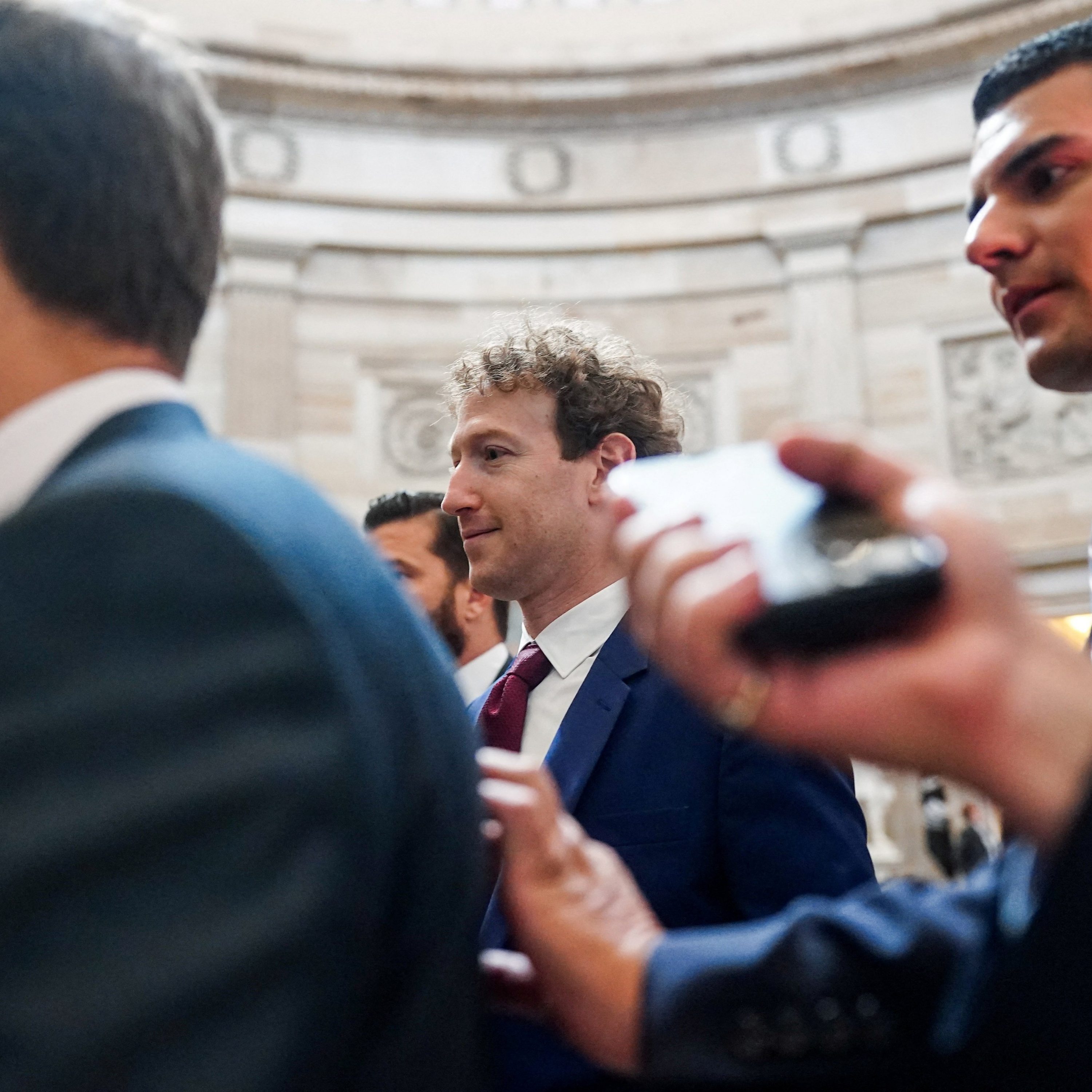
(Picture: Meta Platforms CEO Mark Zuckerberg departs the office of U.S. Majority Leader John Thune (R-SD) following a meeting at the U.S. Capitol in Washington, D.C., U.S., March 26, 2026. Credit: REUTERS/Nathan Howard).
Hosts & Guests

Transcript
This BBC Podcast is supported by ads outside the UK.
We face the greatest challenges of our time,
challenges that test our limits.
There is a place where we can find answers,
where journeys break new ground
and connections unlock opportunities.
Where innovation can spark real change
and our actions can push our world forward.
Singapore, where business events can create lasting impact.
The best B2B marketing gets wasted on the wrong people.
So when you want to reach the right professionals,
use LinkedIn ads.
LinkedIn has grown to a network of over one billion professionals,
including 130 million decision makers.
And that's where it stands apart from other ad buys.
You can target your buyers by job title,
industry, company, role, seniority, skills, company revenue.
So you can stop wasting budget on the wrong audience.
It's why LinkedIn ads generates the highest B2B return
on ad spend of major ad networks.
Spend $250 on your first campaign on LinkedIn ads
and get $250 credit for the next one.
Just go to LinkedIn.com slash broadcast.
That's LinkedIn.com slash broadcast terms and conditions apply.
Will the social media business model have to change?
It's World Business Report from the BBC World Service.
As shares in Metta and Google dive,
we're digging into those landmark rulings against the companies
and what they could mean for how social media is designed.
Also, how Asia is dealing with rising energy prices
and would you let AI plan your holiday?
Okay, so here's the thing.
Shares of the social media giant Metta took a battering today
at one point down by 8%.
After two court rulings in the United States
found the company liable for harm caused to young users.
Google's parent company Alphabet also fell after was
found liable in one of the same cases.
Now, the payouts themselves aren't huge by big tech standards.
It's only a few hundred million in both cases,
which for companies with market caps in their trillions,
it's not much.
So that's not what's worrying investors,
but what is Kerry Leahy is an economist at Columbia University
in New York.
Kerry, thanks for joining us.
Oh, you're very welcome.
Kerry, if it's not the money, what is the issue?
If it's not the payouts, what are investors worried about?
Well, investors are worried that even though each individual payout
may not be substantial,
there could be a flood of hundreds more over the next few years.
And so they're afraid there could be a big tobacco moment
for these firms, meaning that at some point in time
they just have to wave their hands
and pay out extremely large cumulative amounts
to a wide variety of people.
The point that the companies are making are
they don't think they are responsible for third-party content.
That is not how these rulings have been going,
but they're still clean to that belief that they don't have to do that.
And if they do, that obviously will be expensive too,
because that's been more money checking on people to get on their system.
And that obviously is quite labor intensive
and ultimately can be very expensive.
And why do you think matters share price took a bigger hit today?
Well, I think because they're probably more likely to get hit
by more lawsuits and they're more in that kind of space
than any of their other competitors such as Google.
All right, also with us is our technology correspondent, Lily Jamali.
Lily, what are the conversations going on in Silicon Valley right now?
Is there a sense that this could change social media?
Well, certainly people in Silicon Valley are talking about this,
this morning and into this afternoon.
I think, you know, there's a lot of discussion
around, you know, the deep pockets that Meta had going into this case.
They are a more than $1 trillion company compared that to some of the companies
that settled before this went to a jury snapping.
It worth just $6.7 billion as we sit here and talk.
And so the fact that company that was able to hire the best lawyers,
$1,000 plus an hour for each of those attorneys who bought this case,
the fact that they lost, I think is a real blow.
And it's likely that that could change the calculus
when it comes to future cases in terms of whether or not they settle.
This case that they lost in Los Angeles is just one of nine bell weather cases
set to play out over the next couple of months.
Now, both of the companies disagree with the verdicts.
I say they're going to appeal, but how long will that take and what will that look like?
It could take years for this to work its way through the appellate process
and these again are companies that are able to subsidize a legal fight
that could drag on for quite some time.
So stay tuned for that. We're going to be following all of that.
But, you know, they with the existential threat to these companies
as it's been described to me by experts who've been following this
is that they are going to have to make fundamental changes to their products.
So in Instagram's case, for example,
what they fear is a court mandated changes that could demand enhanced age verification.
They could be asked to do more to remove predators once and for all from their platforms.
And also to protect younger users from encrypted communications
which sometimes can facilitate these bad actors and what they're trying to do.
So what you're trying to say is even though the both of them say they're going to appeal,
they might actually have to change things within the company's despise saying,
hey, this could take a couple of years.
They might because in Metta's case in particular,
there's a separate case that they lost in New Mexico,
of $375 million was the verdict there.
And in about two months' time, that case is going to go into a second phase
where the prosecutors in New Mexico are going to say we want more financial penalties
on top of that very large amount,
but they are also going to seek court mandated changes of the ilk that I just described.
All right, Lily. Thank you so much for joining us.
Now, let's hear from someone who has been arguing that Metta has not done enough
to safeguard children for years and who testified in that New Mexico case.
Aturo Bihar, former senior staff member at Metta who turned whistleblower is with us now.
Aturo, thanks for joining us.
Thank you very much for having me.
Aturo, can you just describe what your job was at Metta?
So the first time I was there, I was the person in charge of safety and security
of everybody, including children working regularly with Mark Zuckerberg
and Cheryl Sandberg.
And so I set this strategy and managed both all of the engineers and all of the systems
that help protect people.
And what did you raise concerns about?
Well, I left and seeing my daughter's experiences.
I came back in 2019 and I found a company that was not willing to do the research
for the work to understand harm.
So we did that and we found in 2021 that one in eight kids get and wanted
sexual advances every seven days, 98% from strangers.
And this is 2021 about kids getting suicide and sort of harm content.
One in 12 every seven days, multiple times.
And that Instagram was facilitating harm at a staggering scale.
And so I took that directly to Mark Zuckerberg and the executive team.
And much to my heartbreak, it turns out that they knew and they weren't doing anything about it.
And that's one of the things that's coming to bear right now.
Is there knowledge of harm and the refusal to make things better?
Can I read out their statement?
They say we respectfully disagree with these verdicts and will appeal
reducing something as complex as teen mental health to a single cause,
risks leaving the many broader issues teen, teen space today,
unaddressed and overlooks the fact that many teens rely on digital communities
to connect and find belonging.
We remain committed to building safe, supportive environments for young people
and will defend our record vigorously.
I just want to hear what your response is to that.
Yeah.
And there's so many things that are so broken with that statement.
If you start from the fact that they talk about teens connecting with communities
they care about, that's not what their addictive design does, right?
An infinite scroll created from an algorithm that notices what catches your attention.
It gives you videos and notifications all the time to get back.
All the things that drive addiction are the things that drive profits for them.
And they don't cover any of the things that in that statement they say is good for children.
And then the other thing is, and this was what we plan to see both in New Mexico and NLA
is that they talk about defending their record.
But the record is that this is a company that says we don't allow harm.
There's no such thing as addiction or problematic use.
Our environment is putting kids that are safe from predators.
We don't allow under 13 kids.
We've created these things that make parents feel safe and better.
But the reality of this is that they do know of harm, significant staggering amounts.
They know how many kids spend six hours a day on a school night.
They built these tools that we tested last year and were found to not work.
And so they love saying how good they are.
But they each other actions, they show how terrible they are at it.
And it's our kids that are paying the price.
That there might be some people listening, they say the algorithm, the notifications, the endless scrolling.
Okay, it's not good, but how is it harmful?
How would it affect your mental health?
It's pretty simple.
When you look at the study that we did, we found what the case called the direct harm.
So you are the target of bullying one in 10 kids in the last seven days.
And one in three watched it happening and that can be incredibly distressing to a kid.
Things that make you feel worse about your body that lead to eating disorders.
One in five kids in the last seven days, sometimes thousands of times.
And so to some extent, these addictive mechanisms, they create this fire hose that kids spend many hours in.
And then what they deliver, right?
Kids are telling you, I don't want this. It's harmful.
If you just talk about, for example, the unwanted sexual advances,
think about like a 13 year old getting this from strangers.
Because the way that Instagram is designed is it connects kids to strangers.
And so the way that they product this design and the way that it's managed has all of these preventable harms.
They've had the technology to not recommend suicide or self harm content to kids.
They have the technology to make sure that kids connect to people that they know and the communities.
They think they promise, but that's not how they behave.
They've been able to do this for years.
But they're refusal to acknowledge that this is an issue.
Creates this environment. Imagine a school where you tell the principal,
my kid got raped in your school or suffered this thing and the principal's responses.
Well, our school is a great community.
And you know, maybe it was just kids being kids, right?
How would you feel about that school?
Now, it's important to say again, Matt, it does deny the verdict.
But you're saying these safety features that you're saying,
you know, those are the ones that you propose, but they didn't bring them in.
You can't say that there isn't any safety features.
But do you think that they ever will go a bit further with what they have now?
Well, I think that what's amazing right now of these trials, but, right?
Both in LA, if people thought the jury was out on addiction,
the jury looked at all of internal documentation that all of the data
against the company's best representations and decided that there is addiction
and that this can be bad for kids, right?
And the thing about New Mexico is all about putting kids in contact with predators, right?
And they were found guilty of doing that as well.
And so my hope is that this leads both in the kind of remedies that we were talking about earlier.
So agreements with Attorney General in the United States.
And hopefully the regulation in other parts of the world
that made it can be required to create products
that can be demonstrably safe by third parties
because we cannot trust any of their claims.
I mean, it just keeps happening over and over again.
So you think this is open the floodgates?
Yes, I think this week the world starts changing because anybody
who is in a position to make these things better,
now got all the internal emails, the limitations and presentations
that talk in detail about how by design they know about harm and they don't prevent it.
And they will be able to use that in litigation, they will be able to use that in regulation
and the fact that in two court cases in one week,
it came back clearly.
This is the first of many.
And here's the hope that it's for the kids, right?
Ultimately, or everything we're talking about,
is can you please create an environment that is safe enough for kids?
Okay, Arturo Behar, former senior staff member at MATTA.
Thank you so much for joining us.
Kerry, I just want to ask you about this.
Does this business model work if they're not using these types of design features?
What do you think of the bad, the model when you hear about it a lot?
Well, they have a model that is so focused on profitability.
They take their eye off the question of safety and security for the users.
So that's the problem.
Unfortunately, leaving the system the way it is now is highly profitable
and they will be a less profitable, but I assume still very profitable company
if they quote unquote do everything correctly after changes have been made.
All right, Kerry Leahy, you stay right there.
You're with World Business Report from the BBC World Service.
Kerry, we were talking about MATTA's share price, Google's share price,
but Wall Street was down generally today as well.
Was that to do with Iran and Flation?
Things we've been talking about for weeks.
That's right.
This is one of those days that investors were very nervous about the situation
and increasing the probability of more adverse outcomes,
meaning higher prices, weaker growth and more inflation.
In particular, the investing base was caught flat footed by a OACD,
which is a bipartisan group in Paris doing economic research,
said that the US inflation rate will probably hit 4% in the foreseeable future
because of the price increases today.
And then we also have the World Trade Organization saying
this is the worst disruptions in the past 80 years.
Now, I feel like we've had a lot of disruptions in the past 5, 6, 7 years
in terms of trade.
Why do you think they're thinking it's that bad?
Well, they're looking at the fact that because of the closing of the Strait of Hormuz,
you've lost effectively about 12 to 15 million barrels per day of supply.
And while other means can be taken countries in the G7, including the UK
and the United States can draw down their reservoirs of stored oil,
but that will only offset about a third of that.
So that is actually bigger than the initial embargo in 1973.
So it's hard to say that it is bigger because we haven't yet seen the price increases
that would back it up.
So it's the fact that you are eventually going to lose this amount of oil,
but the market is assuming that's a very short-term outcome
and they're not pricing in the kind of oil price that you would expect to get from that,
which would probably be closer to $150 a barrel.
Well, Kerry is right.
This is sending reverberations around the world.
The global energy crisis is already wreaking havoc on economies across Asia
and the impact could soon be felt worldwide.
And it's not just about higher cooking gas bills or cues at petrol stations
as Will Bain has been finding out.
If gas prices continue to rise and may start driving a tuk-tuk
and work in construction instead, that will be better since I'm making any income.
The war in Iran may only be weak-sold,
but it's already shifting the economic reality for workers right across Asia,
whether they be driving a tuk-tuk in Cambodia or reading the news in Thailand.
When reading a news, we always have to wear suits and ties.
So I discussed with the net team that we could set an example and cooperate with the government.
So we started a program and took off our suits, sending a signal to the puppet that this could help.
Yes, the sky high cost of energy sparked by the war is having unusual consequences
with even office attire seemingly being sacrificed.
That newsreader on Thailand's main public broadcaster was responding to recommendations
from the government there to tie citizens to try and save energy.
That included not turning the air conditioning down below 26 or 27 degrees Celsius.
And as a result, they didn't want sticky workers in their suits.
I hope the newsreaders could set a trend for a more casual look.
It's just one of the ways many countries right across Asia have been responding to the energy crisis.
So why are Asia's economy so exposed?
Doris Lu is an economist based in Malaysia.
84% of all that pass through the street of hormones goes to Asia.
83% of LNG that pass through hormones goes to Asia.
So in the sense, Asia is very energy dependence.
So with the close share of trail of hormones, suddenly Asian countries find themselves out of these sources.
And then what do they do?
They have to look at whether they have enough reserve.
They have to look at alternative sources.
And we see that different Asian countries have different level of reserve.
The effective blockade on the straight up hormones isn't just causing supply disruptions and shortages of oil and gas.
The shocks flowed all the way through to the price of Vietnam's national dish.
The noodle soup beef foe.
That's according to this restaurant owner in Ho Chi Minh City.
Not only beef, but prices for every ingredient for firm noodle like vegetable, lemon,
casserole have increased since the petrol price soared.
In my restaurant, it costs just 30,000 Vietnamese dong per bowl of foe.
But I'm planning to increase the price to 35,000 Vietnamese dong per bowl in the coming day.
Well Asia is often referred to as the workshop of the world with many of the world's biggest exporting nations,
calling the continent home.
As a result, any shock in terms of input costs there could have far reaching ramifications.
Moe Deen Rubel is the owner and regional managing director at Denim Expert Limited,
a garment manufacturer in Chizagong, Bangladesh.
It is a total supply chain disaster, right?
Basically, the price will increase for everyone around the world.
When every product of the world, more or less, I believe so.
And how quickly will that happen?
Listen, as I said that still they did not increase the price.
And if the situation goes the same,
and they need to continue buying from higher prices by spot from other places,
obviously they will have to implement the price increment, you know.
Is that question of how long the war continues?
Now the key one left hanging over how long Asia's economies can continue to cope?
Economist Doris Lew again.
How long government can it depends on one or reserve and how much fiscal buffer do they have?
So just give an example, Malaysia, Malaysia is an oil exporting country.
And in fact, for Malaysia, it's quite well resilience against the crisis.
Countries like Vietnam Indonesia, they have a very narrow fiscal reserve.
So if the crisis were to be prolonged, we will see Indonesia's fiscal budget greatly impacted.
How long they can keep the subsidies is also very questionable.
I think Bangladesh is going to be the most impacted because of the high dependency on imported wine
Yes, in fact, the manufacturing site is already closing down.
So whether shorter medium term or long term, I think they are going to face energy prices in the very immediate terms.
That was economist Charles Lew ending that report by Will Bain.
And you can hear more by searching for business daily wherever you get your podcasts now.
What happens when you let artificial intelligence take over your holiday plans?
Wall Street Journal travel columnist Don Gilbertson decided to find out by handing
a two-night seaside break over to Google's Gemini with no guidebooks, no travel agent and no help from France.
Don joins us now. Hello, Tom.
Hi, thanks for having me.
So tell us about your trip. Where did you go and where to descend you?
Well, I mean, the interesting thing is here is the more and more people I talk to even within England.
I mean, I ended up on by the North Sea in Saltburn by the sea, which a lot of people
apparently had never even heard of within the country.
I've seen on some trains. I'm from Ireland, actually, and I've always wondered where it is.
So I'm glad to meet somebody who's actually been there.
It's lovely. I mean, except for the weather. I mean, the weather, the weekend turned out okay.
But the first day's weather was absolutely miserable, but to anybody who lives there obviously knows that.
And I didn't really put in any weather parameters. I was in London.
I wanted to seaside getaway. I wanted to put all my faith in Gemini and my editor and sister.
You are going to do everything that it says. So I did.
So what were your prompts and then what came back for you?
My prompt was two night seaside getaway from London, no fancy hotels, no tourist traps and no Instagram hotspots.
So I was really kind of looking for a hidden gem without calling it that something authentic.
And I was sold by Saltburn. I mean, almost immediately.
I honestly don't even recall a couple of the other responses at them.
But like it talked about the price to beauty ratio, you know, like a multi-coast views.
You know, without the cost. I mean, also without the weather.
And so did it deliver? I should feel about it.
It really, I would love to go back to Saltburn in the summer.
I really would. I love beaches, right? So there's that.
But the people were lovely. The pubs.
I did one of the prettiest hikes I've ever done, the Cleveland Way hike.
A height for two hours had the entire trail to myself and didn't get blown off the cliff.
So it wasn't so bad. So you're happy enough with the results or do you?
Is there bits where you kind of like this didn't get it right?
Well, I mean, like, you know, there was a closed restaurant.
I mean, you know, one of the first things that happened to me, like first of all,
the train station, like at Kings Cross, it seems to have kind of a short term memory,
even if you have this long string with it because, you know,
I have booked everything that they said to book, right?
And so I had my 933 departure. And then when I get to Kings Cross,
I'm all confident I have the ticket and and Gemini's telling me,
no, you need to go on this track. And I'm like, no, I don't.
But the worst part of it was, you know, nearly sailing down the street to my hotel
because it told me to walk there when I arrived and so on.
So, but it had a sense of humor, right? I mean, it apologized.
It said, that was probably the biggest surprise to me.
I mean, I use a I like all of us do for various things, right?
But the sense of humor was one of the funniest parts.
It said, it apologized immediately. I said, you know, why did you send me on this?
And it said, you know what, you're right. After the day you've had the last thing
you needed to be was a human sale.
I mean, I couldn't have thought of that line. I loved it.
I mean, that was just the funniest part of the whole thing.
So very quickly, Don, would you do it again?
I would do it again. I would just, you know, I would just use the additional source
resources with it. You know, I check with friends. I would check with,
you know, other newspaper articles. I would check, you know, social media,
Reddit, etc. So yes, I would, but it's a great, it's a great starting place.
And it's kind of quick one stop shopping.
Listen, like any journalist, we've got to check our sources. Don Gilbertson.
Yeah. Thank you so much for joining us.
And hopefully you might be in saltburn again.
I also had a better time. Don, thanks so much for joining us.
Carrie, what do you think about that? Are you going to give your holiday over to AI?
Within, within limits, usually ours is so structured and I do the structuring.
I'm probably not going to let my cold, old hands let go of the tiller in that whole process.
But that was actually good news because believe it or not, I've actually been
in that area myself. And it's a very handsome area.
So it actually wasn't a bad choice by the by the AI assistant.
It was just that they didn't take in the parameter of do you want want a warmer
rather than a colder place? I'm off the coast, though.
Do you think that would that would be nice to be with, you know,
like it go over dollars old place in that area would be in revolve would be pretty wonderful.
Right. Well, let's talk a little bit more about AI because chip manufacturers
that can get in her because of AI aren't they? Can you just explain this story for us?
What happened today was AMD, which is one of the larger manufacturers in another company's got hit
because companies like Google said we may need fewer of your chips going forward
because changes were making in our AI structure.
So it isn't always straight up for the chip manufacturers and there's going to be
some settling going on as there's this diversification of what kind of chips firms need firms
that will have chips that will help more more sophisticated AI may do better
than the ones that are doing more garden variety things.
So that's what hurt AMD and other chip manufacturers was the fact that maybe demand
may be undercut by AI and isn't always positive development from day to day.
Interesting. One actually we talked about this yesterday,
but because of the shortage of helium and interestingly, I did not know this
it goes massively into the production of chips.
So that could also lead to shortages.
So I'm assuming the price of chips are probably going to go up.
Oh, yes. I mean, you think of all the little pieces that go in there,
the prices of those can go up astronomically, particularly if you're
one of the only sole providers of that product, you're in the driver's seat in the
in the short run. In the case of the US, a lot of the stuff in this
broadly defined AI area is imported, which is making our president very happy
because he'd rather have it domestically produced.
But you can't always do that in the short run.
No, exactly. It's still in videos game, isn't it?
Yes, it is.
They still seem to be the one that no matter what happens, they're generating
the profits and the revenue of these firms is just extraordinary.
And we have to remember that it's these kind of companies and actually US
business in general that's really generating a lot of profits.
And that's giving a nice support to all the crazy ramifications going on in
Middle East and elsewhere in general, economic policy.
All right, Carrie Leahy, economist at Columbia University in New York,
always a pleasure. And that is it from World Business Report.
I'm Leana Burn, have a great day and thanks so much for listening.
Dinner time. It's where little moments are cherished.
With Blue Cash preferred, get 6% cash back at US Supermarkets and bring
everyone together.
I did say everyone.
Learn more at americanexpress.com slash explore.bcp.
Terms in cash back cap apply with Blue Cash preferred.
More from World Business Report
View all episodes →
Fears of fuel shortages lead to panic buying in Australia
World Business Report
Mar 27, 2026·8:53·completed

Meta and Alphabet shares fall following social media trial defeat
World Business Report
Mar 26, 2026·8:52·completed
Meta and YouTube found liable in landmark social media addiction trial
World Business Report