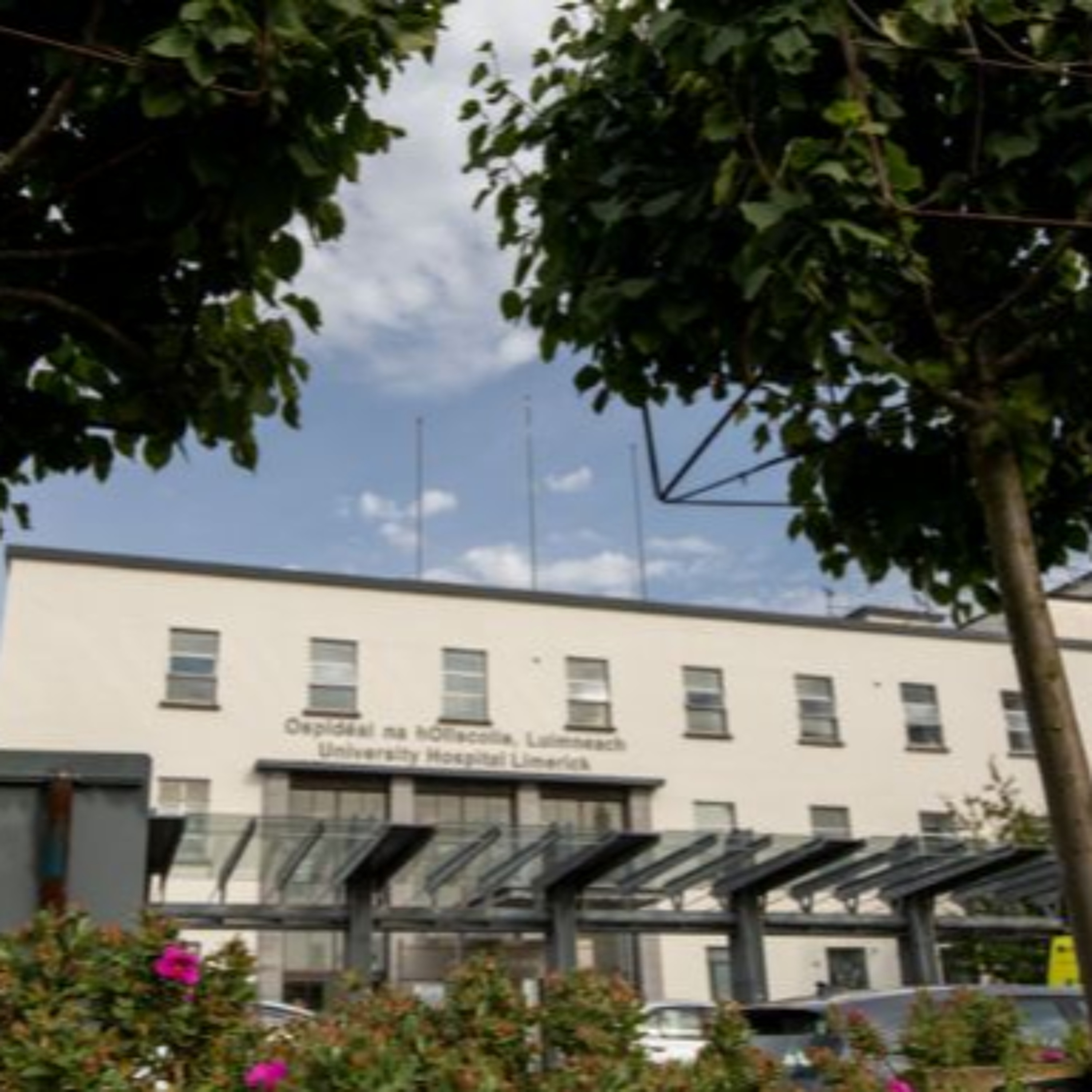
About this episode
Get every episode summarized
Each time Clare FM publishes, we email you a written briefing from the transcript — the topics, who appeared, and any specific claims, with the ad reads skipped.
Email me new episodesFree for 3 shows. No card needed.
Hosts & guests

Transcript ready
169 searchable segments. Every word is indexed and playable.
Full transcript
Clare FM — Midwest Health Planning Board. Machine-transcribed; use the interactive transcript above to jump the player to any line.
The new Midwest Health Planning Board has been tasked with tackling the region's growing healthcare pressures, including capacity at University Hospital Limorick and Future Hospital Development at Raheen. But friends of Ennis Hospital says the focus must not be solely on Limorick and that Ennis needs investment. Bed's theaters and services now, alongside a longer-term plan for an acute hospital in this county, joining me for more on this on the line is Angela Cole, of course the chair of Friends of Ennis Hospital. Like a morning to you Angela. Good morning, other than good morning to listeners. You've said the Midwest has been studied, reviewed and reported on for years. Now we need delivery. To have been numerous reviews and plans of healthcare in the Midwest, why should people believe this board will be any different? Well, they have to be all in really because we've had so many reports drawn about the Midwest region, about the situation in UHL. If I was to sit down and print them all up today without repaid and every appendix, I'd have to put down a couple of trees to print them.
We can't afford to waste for another report. We need action. We saw at the end of July start of August, there were 350 people turning up in the U.D. The places under which men just manage pressure. I actually looked at the statistics there last weekend. The attendance is in UHL, 27% since 2022, and that's only four years ago. We can't afford to sit back and wait for another report. We need things to start moving now. I would be hopeful that with the composition of the board that has been put in place, that they will be looking at action rather than just another top shop because we can't support to have another top shop. I guess one of the things that might help expedite this process and move it along is if preambles and consultations are quick if they're occurring and you say the problems and capacity deficit are already well documented. So is there any justification for another lengthy period of consultation before decisions
are made if indeed such a period turns out to be lengthy? Well, from what I understand, the new chair of the board, Mr. Rizquil, is actually visiting people and visiting facilities in the Midwest at the moment. We were promised September that the new board would finish and meet and we have now arrived in September. So I would be hopeful that he's actually already doing consultations and that when the sink board is down to how it's first form and meeting, that he will have an idea of what is actually the issues that we're facing in the region and that he can hit the ground running so to speak. You've described the Rahean site as an important opportunity, but you're also warning against allowing it to determine the entire future hospital network. So what exactly should be decided at Rahean and what should not? Well, we should first think, I would say, that we should have to wait for Rahean to be often running before anything else happens in the region. So, NS has primary care centers that are waiting to be built. We need a new community nursing unit whether it's wherever it decides that it's finally
decided for us. We need beds and the casers and NSO that new services can be put into NS to relieve pressure on your soil. And these are all things that can happen while they're doing the planning aspect for Rahean because they already know what the edges and what beds are going into NS. They already have the locations for the primary care centers. So these are things that can actually start moving right now while the plan for the Rahean site is being developed. From my perspective, Rahean needs to have acute beds, but you can't just put beds in the fields. You need to have services to accompany the beds. You need to have ICU, you need to have high dependency, you need to have cardiac care. There are certain services that need to move into Rahean in order to support the acute beds. But our argument would be that while that has been planned out and that will need to be planned out, that NS and Nina and St. John's and each fellow in the region can go on in the meantime. And obviously in the long term, it's now 2026.
I was suspected by 2030. We're going to have a half million people in the region. And they can't. No one can realistically expect a half million people to be relying on one acute hospital. So we're going to need the second acute hospital. It won't be Rahean because Rahean is going to be an offshoots of UHL. So that second acute hospital should be in fair because clear is actually the country that has the highest growing population in the Midwest region. But with, as you say, the population of the region expected to hit half a million in just a couple of years' time, you believe what's happening that development at Rahean should be considered under the state's critical infrastructure legislation. So if that were to happen, what difference could that actually make to the timeline? How much does that cut it down by? So if the site in Rahean is designated as critical infrastructure, I think it has to be because otherwise it could be 20 years before anything is seen on that site.
So if it's designated as critical infrastructure that was created off the process, I mean, it could have actually been opened in services, open on the site in Rahean within five years. There's a massive difference between five years and 20. I don't want to be pushing up gave days in drum place before we have a new hospital, I mean, I have a child who's in Chiwai. She's going to be a tertiary 40 by the time we have a new hospital in Rahean and a hospital in Venice. If the site in Rahean is not designated as critical infrastructure, it's actually critical if you're part of the pond, but that actually happens. And that should be the one of the first priorities for the board. I mean, the word crisis as you so often, Angela, in relation to the situation we see with healthcare in the Midwest, but you've said we can't describe it as a crisis and then accept that infrastructure could take a decade, which is a fair enough point. So what is a realistic delivery timeframe, you know, three years, five years?
I would expect that if it is designated cases, Christian, clinical structure that in five years time, we have services open running in Rahean. I would also be saying that the services that are needed in Venice need to be set up and running in parallel, that we shouldn't have to wait for Rahean to be open running for the services in the rest of the region to be developed. And I'm going to get to Enison just a moment, but I recall, we're talking about timelines, I recall previously the Oreo, the regional executive officer Sandra Broderick being in studio at me and me asking her about, and I'll be at a different situation, the Bonsikura's hospital, you know, a private hospital, but that was built and completed within around two and a half years. And even allowing for, you know, she did say reasonably that there are different situations, but it would frustrate people if you see a hospital going up from start to finish in two and a half years and then waiting around a decade, a decade and a half, maybe even longer,
who knows for this hospital. Can we use the Bonsikura's example as any sort of barometer or is that unfair, given as I said, it's private hospital, and is there different circumstances and a lot more in the background to that? So there's a couple of things that differentiate the bonds from what will be the new hospital in Rahean. Obviously the bonds is a private hospital, so they don't have to go through the public procurement process that Rahean will have to go through. But more importantly, the services that are available in the Bons are in no way equal to what's available in NewHL. So if you're in the Bons and you have a heart attack, they're going to be transferring you to NewHL because NewHL has services that the Bons don't have. So it's not comparing like with like, the Bons is more, I won't say model two, but it's kind of a model two cloth in terms of the services that they have available there, whereas NewHL obviously is in a huge hospital with all the bells and whistles. So you're not comparing like it's like having said that the the builds that went on the
Bons was in modular builds, which is why it was so fast. So maybe that's something that the board can look at in terms of doing modular building in Rahean to speed up the process. Okay, just on Ennis then, I mean you're very clear, Ennis, cannot become an aftertall, and certainly the soundings from the health minister Jennifer Caron. But Neil is that she'll endeavor that that doesn't happen. She said there hasn't been enough healthcare focus on on Claire and Tipperary. She has promised enhancements at at Ennis as well. Additional beds and theater capacity have been proposed. Why aren't those projects already being delivered? And there's no commitment obviously from the minister on emergency department for Claire. Yeah, so the emergency department for care when it happens in the future is not what it happened at the current site in Ennis because the current site in Ennis is not big enough for what would be required. So putting back in that for a moment, why is the beds and theaters in Ennis not being
developed? I can't answer that. But what I can say is that when they're built, Ennis is continue to know a lot more stuff. And I would be saying to the board that the recruitment of that staff should be starting now because the developments, there's nothing to say that they can't turn the sides on the new theaters and the new bedblock in Ennis before Christmas. There's literally nothing blocking them. So, especially if all of the healthcare developments in the region or designated as a Christmas infrastructure, then that could actually practically happen. So they need to be looking at the staffing as well because there's no point in having beds if you don't have the staff. And we have the lowest number of consultants, we have the lowest number of nurses. You know, the minister when she was in Ennis was talking about X-rays, but we don't have enough radiographers. You know, these are all things that need to be looked at in tandem with the actual builds because you can't, there's no point in us having a brand new, snazzy, beautiful building if we don't have the staff to win towards. Yeah, true. When you look,
you've mentioned services and you've argued some services could safely be expanded in Ennis now. So, which services could be expanded immediately without waiting for a new regional hospital plan? Nothing's far telling, but that would be for people who are made to keep qualified, rather than me. I would have ideas, but I wouldn't be putting anything like two paper on that because that's something that the clinical teams in the Midwest needs to find. I'm sure that there are services like people who need diabetes, biotics should not have to go into the market to get that. Now, the dialysis unit in the guard role is actually progressing well and we'd be hopeful that that will be open soon. The other thing we have to think about is the surgical hope because from what I understand the surgical hope that's going up in Scolcarma and Nimric, they're not going to have the staffing that they were hoping to have to bring down the waiting list. Waiting list nationally are going to the roof and the surgical hope will need more staff if we want to make a significant difference on the waiting list in the Midwest. Again, building a building is great if you need the
staff to go into it. Okay, just finally, Angela, the situation with an acute hospital, how likely is that to happen in Claire? You're continuing to advocate for it, but how likely to happen in any time in the near future, do you think that is? Well, it will need political will, but I mean, statistically, the Midwest has to have a second acute site. The ringing is not going to be, the ringing is an off-shoes of UHL, so that's not going to count. If you're looking at people out in Keroch where Georgia are a payroll list, there are people in Keroch, the oldest population, there's huge levels of social deprivation and there's a sparse from any EEG in the country. So you can't, for parity and for equality, the people of Kero need a hospital. So the Gaza support us, you can't rely on one emergency department and one acute facility for a half
million people. There's nowhere else in the country where it does is happening. So our politicians stand up and go, okay, we need a hospital in Claire. And that's something that happened really happened over the last 15 or 20 years. The Midwest has been totally left behind over the last 20 years. So is this, can I say a project that's going to happen? No, will I be pushing forward to happen? Absolutely. Okay, we do have to leave that there, but thanks for joining us on the show. That's the chair of Friends of NS Hospital. Angela Call with us on Morning Focusing.
More episodes
More from Clare FM

Sunday Prayer - Sunday 13th September 2026
Clare FM
Sunday Prayer - Sunday 13th September 2026
Clare FM
Ennis MD To Explore Potential Sites For Dog Park In County Town
Clare FM

Clare FM Sideline View Friday September 11th
Clare FM