Loading...
newsdaily
Minister Darragh O'Brien on the government's plans to tackle fuel costs
About this Episode
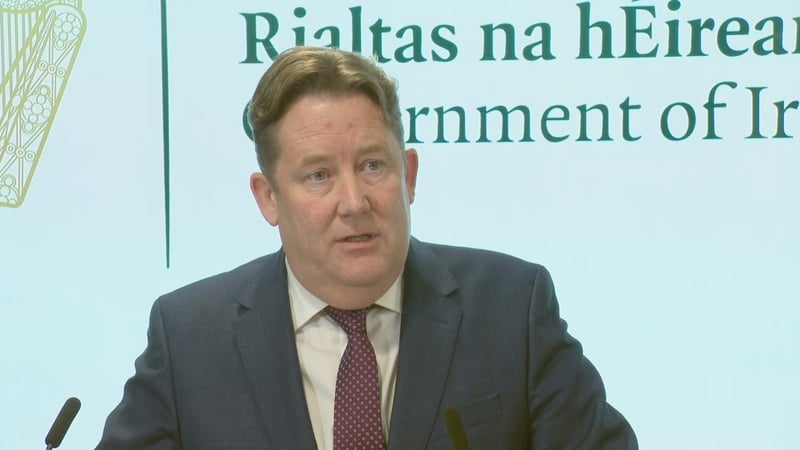
Transport Minister Darragh O'Brien.
Hosts & Guests

Transcript
As we've been hearing, the Minister for Transport has been meeting hauliers who want emergency measures
to address the rapid rise in fuel costs. The situation in the Middle East is growing ever more
fee-brile following the Israeli attack on an Iranian gasfield and Iran's retaliatory strike
on a natural gas plant in Qatar. There were also drone attacks on refineries in Kuwait
and on energy facilities in Saudi Arabia. The strikes prompted an immediate surge in oil
and gas prices. A short time ago in the oil, the issue was raised by Sinn Fain's pierced
authority. Today alone, the price of diesel has increased by 8 cent per liter and it is projected
to rise a further 12 cent tomorrow night before that is even applied. Home heat and oil has increased
by 100 euro a felt today with a projected increase of 120 euro expected tomorrow night.
So while costs surge again, what is your message to ordinary people out there? What is the message
from your government? Wait until Tuesday. Wait for another meeting. Wait while prices climb. Wait
while families fall further behind and we know what delay means in the real life,
a pensioner telling me I'm sitting here with no heating for a week. I can't afford electricity
and heat together. It's one or the other. Pier Starrty joining us now is the transport minister
Dara O'Brien. Minister, let's start with the holiers who said they wanted immediate concrete
proposals. You met them this morning. What did you offer them? Yeah, look, we do very constructive
and cordial amazing today. Have a good relationship with the road holiers and they in a very
articulate way put forward the serious challenges that their sector is having. It's a sector that's
obviously critical to our supply chains and to our economy. So I heard them out and assured them
that we will be bringing supports forward as part of an overall package and that will go to cabinet
on Tuesday and we're looking at various options about how we can lessen the impact of the very
severe cost increases that we've seen since the outbreak of the conflict in the Middle East.
As you've articulated there at the top of your show that like this is changing not just on a daily
basis on an hourly basis. So it is a very volatile situation. That's why government have to,
you know, respond in a targeted, in a nimble and flexible way because we will need that flexibility
going forward. It's not just a one and done measure that the main opposition party might think
is the way forward. We have to make sure whatever we bring forward is targeted that helps the
sectors that need it most, that help the households that need it most, but is done in a sustainable
way. And also means that as we keep the situation under daily review that we can further
respond should we need to. Okay, what you did the last time then when Russia invaded Ukraine
was among other measures. The government caught excise duty on fuel. Is that what you'll be doing
this time? Well, obviously in advance a cabinet like I've been discussing this with the T-shirt
and with the Minister of Finance, the Tornished as well. Again this morning. That will be on the table
and it is one of our considerations. All right, so it's a safe assumption that that will be happening.
No, I didn't say that. I said we've got to look at a number of options. That's one of them.
But what I want to make sure is that the measures we bring forward are impactful and are positive
and actually work. And that's why it is important that we do this in a considered way.
And it is of course like excise is one of the options that we're looking at. In advance of me
getting that decision at cabinet and Tuesday, I don't want to say that that will definitely be
the road forward, but that is certainly one of the clear options that is available to us.
Is that your preference that excise duty be cut? Well, I think look, this is further work
needed on this and it's not just in relation to excise. There's other supports that we'll need
for vulnerable households. We've seen what the attack and Qatar and the other attacks there
yesterday on energy infrastructure. The impact that has had immediate impact in relation to a surge
in gas prices. So like these are things that need to be looked at in the round. Does that mean energy
credits? No, I think we need to be targeted, as the Tisha could said very clearly.
And but it does mean support. It means actually pointing the supports at where they're needed
most across business and across across our citizens too. But to be clear about that then what
you're considering, we're not just talking here about measures to bring down the price of petrol
and diesel. We're also talking about other issues. Yes, we are and we've been doing that for the last
for the last number of days and there are a number of departments. It's a cross-government
approach here. So those who are vulnerable as well, we need to ensure that they are protected
as best we can. We're not going to be able to soften the blow of all of the increases.
I think people will understand that. But we've got to respond in a way that's impactful.
I think to be fair, if you look back at the last two crises that this government and the
previous government have actually dealt with through COVID, through the outbreak of the war in
Ukraine, that we were able to deploy measures on behalf of our citizens that actually in the main
worked, not going to resolve every element of it obviously. We all want de-escalation. We want
the conflict to stop. But if the conflict was even to stop today, there is still going to be a
lag time in relation to getting supplies back to where they should be and there still are
those immediate price increases which are still going to be born. So what I expect next week
and we'll be working through the weekend on this obviously is a number of measures that to support
those and indeed sectors like the hauliers that require that most at this stage.
Will there be measures to reduce the price of home heating on?
All of that being looked at right now Rachel and I don't want to be a reason.
So that hasn't been ruled out? No, I know it hasn't and I think look we
I've said we're not ruling anything else but what we've got to be able to do is to
work as a collective to look at how we can target the resources that we have on behalf of our
of our citizens and make sure that they that they work. We do need flexibility too.
So like yesterday we did a debate in relation to an opposition motion about a change for a six
month period of a 20 cent reduction. That would be a one and done measure. I actually believe that
as this crisis is continuing and no one can say when this is going to end that we need to be able
to retain flexibility to come back and to look at these things to review them.
You just mentioned there sorry just to pick up on something because I want to be clear about it
for listeners. You said that nothing has been ruled out but in the past you did rule out any changes
to the carbon tax. No, that's still the case. I said everything is considered okay that's what I
meant by saying that the carbon tax we will not be making changes to the carbon tax. The carbon
tax if I could say your listeners will know this too is a very important measure that enables us
to retrofit homes to retrofit businesses to make permanent permanent savings on energy.
We've been able to retrofit over 240,000 homes in this country that bring about savings of the 1200
euro per annum significant permanent savings making homes safer healthier and more energy efficient.
This year we're actually targeting those resources at 73,000 homes and thousands of businesses so
that is 558 million euro worth of exchequer funding alone. That's what at the top of
New York that actually goes into permanent savings and I think this crisis again speaks to
the fact that we need to continue and to accelerate the deployments of renewables across
our system, the electrification of our society to protect ourselves against further shocks.
And we're making good progress in that regard but it does show you how how vulnerable we are
and I think many people appreciate international events, you know.
Can I ask you about something that I haven't really heard mentioned but which I'm sure is
of concern to many people today. Will there be rises in the price of public transport given
what we've seen happening with the cost of fuel? I don't expect that and that won't happen in
the short term. All right but you can't rule it out in the longer term but in the short term
there won't be any change. I've answered you as really as honestly as I can we're seeing record
public transport journeys. We saw a further increase last year of 6% we've over 360 million
public passenger journeys across the state, both urban and rural, people are responding well
to that. We need to continue to invest in public transport and there are no plans to increase
public transport costs at this stage. And as we're on public transport 132 electric buses
bought, paid for but sitting idle because of the lack of chargers. How was that allowed to happen?
Well look some of this is legacy to be honest and the we have now as of today over 250
battery electric buses in operation across the country full electric services in Limerick and
at Lone, 132 buses you know are available for delivery. Some of that is dependent on installation
of charging infrastructure in the depots. Now what I can say by way of good news on this is that
16 of those 85 buses which are coming to Dublin are prepared and ready for delivery and we'll be
actually entering into service very shortly. We've charging infrastructure installed in
Fibsbury and Harris town. That's going to mean the remainder of those buses will be able to be
deployed by quarter three of this year. I think to be fair the last government and the last
minister actually purchased ahead of with the electric buses to have them in stock. I want to
see them deployed as as quickly as possible and they will be deployed indeed and people see that
across across our cities as well with electric buses with buses using alternative fuel as well
and that is a good thing and obviously I want to see these buses deployed as speedily as possible
and they will be and this is something that I've been working on directly with the bus operators.
Minister Dara O'Brien thank you for talking to us. You're very welcome Rachel.
More from News at One
View all episodes →
Meta workers in Ireland seeking assurances about their jobs after company announ...
News at One
Apr 24, 2026·6:32·failed
Is a rise in the number of US troops passing though Shonnon Airport a threat to...
News at One
Apr 24, 2026·2:36·failed

Technical issues as thousands queue for Ryder Cup tickets
News at One
Apr 24, 2026·