Get every episode summarized
Each time Today, Explained publishes, we email you a written briefing from the transcript — the topics, who appeared, and any specific claims, with the ad reads skipped.
Email me new episodesFree for 3 shows. No card needed.
About this episode
“I would say it's a little confusing because her relationship with Kermit and her kind of yearning girlishness for him would suggest a younger woman, right?”From the transcript
Get every episode summarized
Each time Today, Explained publishes, we email you a written briefing from the transcript — the topics, who appeared, and any specific claims, with the ad reads skipped.
Email me new episodesFree for 3 shows. No card needed.
Hosts & guests
Transcript ready
402 searchable segments. Every word is indexed and playable.
Full transcript
Today, Explained — Miss Piggy, feminist diva. Machine-transcribed; use the interactive transcript above to jump the player to any line.
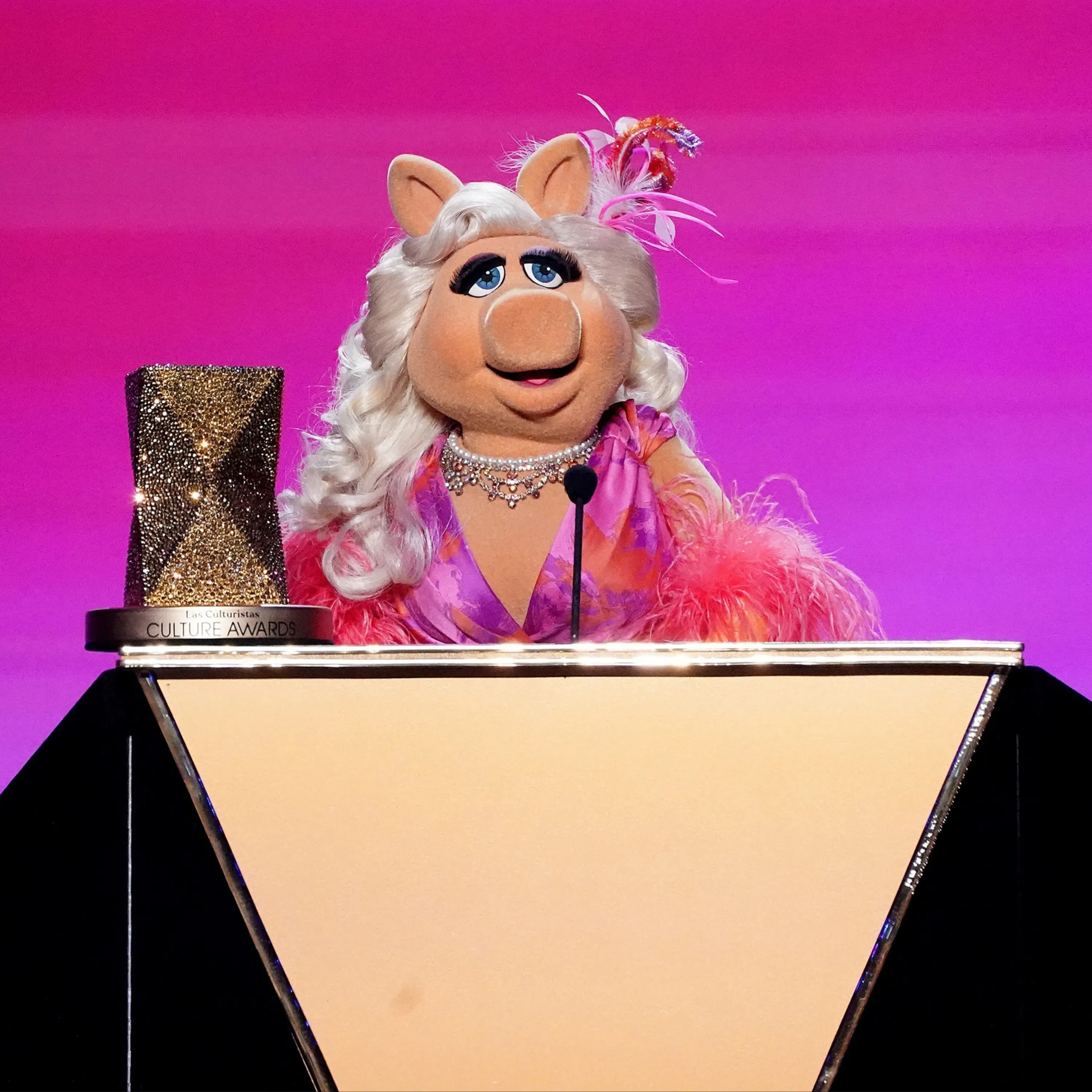
How old do you think Miss Piggy is? Oh, that is such a good question. I would say it's a little confusing because her relationship with Kermit and her kind of yearning girlishness for him would suggest a younger woman, right? But on the other hand, her empowered rage and over-the-top stylings would suggest a woman in full flourish. So you know, I would say a ripe woman in her 40s or 50s maybe. From hacks to the housewives to pleurabists, on-screen depictions of women in middle age and later life are more three-dimensional and unapologetic than possibly ever. What Miss Piggy got to do with that? Coming up on Today's Blame from Box.
Are you a pet owner? Every six seconds. A pet owner in the US gets hit with a vet bill over a thousand dollars. Always an unwelcome surprise. That's where Fetch comes in. Fetch is the most complete pet insurance for dogs and cats. According to ConsumerAdvocate.org, you get paid back up to 90% of vet bills at any vet in the US and Canada, with claims paid back in as little as two days. Go to fetchpet.com slash save right now for your free quote. That's fetchpet.com slash save. Support for the show comes from engine. Making a small business means every dollar has to work hard, but if your team is still booking travel the old way, it's costing you more than you think. Engine is the fastest growing travel and spend platform in the country, built specifically for businesses like yours. Book a trip and as little as two and a half minutes, earn up to 10% back on hotels.
And in 2025, engine customers save more than $300 million on travel, with zero booking fees, no contracts, and no BS. More than a thousand businesses join engine every month. Join them and get $500 when your business signs up and starts traveling at engine.com slash box. This is me. Today I explained. Being a loop. Being a mirror. Interesting range of emotions. You think so? My name is Angelica Jade Bastien and I am a critic at New York magazine and its site Bolcher. You are my view. One of America's leading critics at this point in history. Why are you writing about Miss Piggy? What's going on? I take femininity seriously. I find femininity a fascinating art form, a tool, a guide, an exploration and experiment
presentation. And I believe Miss Piggy over several decades since the mid 70s when she came into being has been such a fascinating window into how American culture looks at women who are larger than life and refuse to be anything else. Okay. Before I ask you about her arc, who is Miss Piggy? God. How can you sum up Miss Piggy? Miss Piggy, you know, in the beginning with scene and played as a delusional woman who comes from like a hard background who decided to launch her career through beauty pageants and make her way, you know, into the limelight, so to speak. Small time, girl, trying to make it in a big city. Oh yeah. And then I come home. And finally you find her in a small club. No, no, no. I picked her up in a bus terminal. In the Midwest on the farm. Oh.
Yes. I was, uh. This, this is humorous? Yes, yes, girl. Everyone had to grow up somewhere. She has definitely become an emblem not for a woman being delusional, but for a woman making the argument that her most interesting art piece is herself. You know, but you want to see, you want to glamour, you want to jazz. Well, you have come to be right big. And so now the star she was delusional about being, she actually is. When did Miss Piggy first appear on the Muppet Show and what was her, what was her job back then? When Miss Piggy first first appeared, she didn't have a name and she showed up in the mid-70s sort of pilot for the Muppet Show called Muppet Sex and Violence. Ladies and gentlemen, presenting the end of sex and violence on television.
Would you wouldn't think they would have something like that? No. And she was just a BDI sort of chorus pig. But in a couple years, like I would say by 78, 1978. She had coalesce into a more formidable figure. She had the, you know, operulent gloves, the feather boa. This is me wicking grandeur. Being a loo. Being a mirror. Daring. I actually had, you know, these big eyes with eyelashes and an iris. So it gives her an interesting humanity. She had her blend of arch aggression and like put upon whispery femininity. And one of her early appearances in 1978 was on this British TV show called Parkinson.
Well, I'm going to make a special introduction in fact to Miss Piggy because I said I think she's so sensational. I mean, the real and most beautiful, beautiful creature that I've ever sat down. I really mean it. And she is so, so funny. You have so deep blue eyes. Yes, and you have bedram eyes. And you see this blend of innuendo and just like confidence that I think has become the signature for Miss Piggy. So even though like in 1974, 1975, she was just a BDI chorus pig. She within a few years became the Miss Piggy we've grown to love today. And then how does she evolve from this? So we go from the late 70s up into the present day. We're talking about a 50 year time span. What kinds of changes have we seen in the character in the last five decades? Those 50 years are really fascinating. We have images of Miss Piggy and things like the great Muppet Caper.
We see her in a smaller role in the Muppet's Christmas Carol, although I think she has the best line reading in that movie. And therefore I'm about to raise your salary. And I am about to raise your run off of pavement run to the... And so what you see in both the movies and her appearances, like I would say 80s and 90s, is like this blend of a group of people. And I think that's a big question. But I would say while you see a lot in the 80s and 90s, her still being seen as like larger than life and fascinating, sometimes her weight or her appetite or her aggression, it's a punchline that could easily make her a joke. For our last, it'll be exercise that's a workout on the candy bars. But by now, you know, if you talk to the people who actually bring the Muppets to life,
the producers, the designers, like I did for my piece, you learn that they're very aware of the fact that audiences no longer see those aspects of Miss Piggy as a detriment. Why do you think that is? I think there's a number of reasons actually. On one hand, I definitely think that we are seeing pretty much the end of the larger than life woman movie star, right? And so Miss Piggy is filling that void. So there's that. I also think that Miss Piggy, you know, her audience, when it comes to like later gen actors, millennials, are people who look at these sort of contradictions as fascinating rather than against femininity, but an aspect of femininity that deserves to be not just praised, but probably Miss Piggy's mind worshiped. So there's I think a lot going on with gender today that really also fuels why people find
Miss Piggy so fascinating because she's such an outlier. You write that in 2026, the people behind Miss Piggy understand that what was once a kind of locus of mockery is now something that people really like. What actually changed do you think? Is it the way she's being presented that's changed? Is it us who have changed? What happened? I honestly think it's us. I think in a large part, it's where we're at culturally with stardom, with femininity, with the gender wars happening, which has always been happening, it seems like, but has taken on new dimensions where, you know, being an independent woman who believes in yourself can be kind of dangerous to the order of the world and certain people who run the world expect of women. And so, you know, a lot of it is where we're at culturally, but also I think it's important to acknowledge that the change I am arguing about with Miss Piggy happened when she was
handed over to Eric Jacobson, who is such a fascinating performer. When I got to interview him, I was really struck by how, you know, quiet and measured and reserved he is. I was like, you would never know this is the person who makes Miss Piggy, Miss Piggy. And he said something to me that is really stuck with me and didn't make it into the final piece where he said, Miss Piggy didn't have to die young like Marilyn Monroe to be a eternal. Damn, I like that. I really like that. What do you think our love of Miss Piggy says about what we want and what we don't want from women on screen, particularly more mature women? I think Miss Piggy is able to be a diva all the way down in a way real life women kind of can't anymore. But I think what Miss Piggy also communicates, the interest in her communicates at least, is that there is some acknowledgement on some cultural psychological level that there
is a wisdom and older woman can provide that no one else can. Unfortunately, when we are talking about flesh and blood women who mess up, who sometimes marry partners who treat them terribly or who make mistakes because they're human, you know, they're not allowed the leeway Miss Piggy is because she's not real as much as she feels real. Angelica Jade Bastion, you can read her at New York Magazine when we come back. There are some real women who are changing our idea of what mature ladies look like and act like for better and for worse.
Support for Teh explain comes from Anthropic, the team behind Claude. Every big AI headline is a lot of important questions like what does this mean for my job? Should I even be using it? Anthropic is a public benefit corporation founded on asking those kinds of questions. More specifically they say how do we make sure AI goes well for people? So Anthropic sat down with some people, they did more than 120,000 interviews, they asked those people for their hopes and fears and they don't gloss over what they heard. Anthropic publishes that data even when it's uncomfortable. What came back they say wasn't just fear, it was curiosity with questions like could this cure diseases or could my kids have a better future? Perhaps there is hope in asking hard questions, ask yours at claw.ai slash today explained and keep thinking. For Teh explain comes from NPR trying to follow the political news every day can be a lot. Here's a cheat code that could help you out the NPR politics podcast.
There are daily political podcasts where you can catch up on the biggest political news of the moment and you can do it in 15 minutes or less every week. Day right now NPR politics has its eye on the midterms and the issues that affect your life, the high cost of housing, health care, ice and immigration, America's role in the world and the growing death. There's no doom scrolling needed. It's just an exact calm summary for you to declutter the chaos. NPR politics team is full of experienced political journalists who talk like your smart friends. They give it to you straight rather than speak in hyperbole. They offer clarity without judgment so you can wrap up every episode with a better understanding of how the balance of power might shift without stressing you out. I used to work at NPR, the people who host and produce the NPR politics podcast are fantastic. Listen now to the NPR politics podcast in the NPR app or wherever you get podcasts. The show comes from engine. Running a small business means every dollar has to work hard, but if your team is still booking travel the old way, it's costing you more than you think.
Engine is the fastest growing travel and spend platform in the country, built specifically for businesses like yours. Book a trip and as little as two and a half minutes, earn up to 10% back on hotels. And in 2025, engine customers save more than $300 million on travel, with zero booking fees, no contracts and no BS. More than a thousand businesses join engine every month. Join them and get $500 when your business signs up and starts traveling at engine.com slash box. I'm today explained because those other shows yesterday's news. And Nomi Fry is a staff writer at the New Yorker. She co-hosts their culture podcast critics at large. We called Nomi to talk about of all things, the real housewives. I mean, I think one of the places that we go to as a culture to see representations of
kind of loud, proud, fully ripe, if you will, women, I won't, but you can. Is Bravo's real housewives franchise? I don't keep up with the jealousies. I am the jealousies. It may look like I have it all, but I want more. I'll always have your back if you stop stabbing me in mine. In which we see groups of women in, you know, in different cities live out loud, going frankly through mid-life and having kind of like relationships with each other obviously, which is kind of the the crux of the show. It's about groups of women, but also, you know, kind of going about the business of mid-life, which might be kind of kids getting older. When you were in first grade and fourth grade and eighth grade, I was like, what is this child going to her life here? And I'm just proud of the lady that you are.
Relationships with their partners, possibly divorced. And I'm actually making a good decision before it turns into a bad situation. And I don't want that for my children. I like your optimism, but I had it too. Sometimes death, older parents. All simers is terrible to watch somebody go through. Career challenges or triumphs that come to women in mid-life. And I thought the alcohol was a great idea. I really looked up to it. You did not thought it would be a great way for me to get at it. Just thought it would have a couple of things, the Rose A and the Prosecco. You know, we see kind of all of that on our screens when we watch these shows. So real housewives has been on for 20 years? If we look over the past 20 years, understanding that as you said, these are women in a certain phase of life. Do you think the way that they are being portrayed or the way they feel comfortable portraying themselves because this is reality TV?
Do you think that's changed? Like is it evolved at all? I think the type has become much more familiar. You know, 20 years is a not-unremarkable span of time. And I think- So it's a post-region, yeah. Yeah. And I think when the show began, there was a bit more surprise or like a change of like scandal or worry about women, you know, in their 40s and 50s, kind of like throwing down on reality television in a way that I think we were used to seeing maybe younger, younger people do. And with the housewives, it was suddenly like, okay, these women who are like have run like an insurance empire or something and are like 48 years old are suddenly like cat fighting with each other or, you know, having affairs or what have you. And I think maybe the impression was that it was a little unseemly.
And I think over the past 20 years, it's become much less remarkable. Of course, you can associate that with the kind of crassening maybe of our culture and our, you know, as becoming a nerd to what reality TV can do and what types of behaviors it can represent on our screens. But I think it also maybe has to do with, yeah, the level of comfort with being older women on screen doing whatever the fuck they want. Do you know, do you, if we were to talk about middle age women mature women, whatever youth, I'm as am you want to use women of a certain age before real housewives, how were, how were they portrayed on air? Like where did we see them? What shows? You know, it's really crazy. Like when you think about it really, it was like the picture of the Golden Girls, you know, the cast of the Golden Girls. Yeah, yeah. In 1980s sitcom.
You'll just have to grow old along with the rest of us. I couldn't go old if I had to look like the two of you. Which was about like four retirees. And they're all like kind of like basically gray hair to white hair wearing like smocked flower tops kind of like retiree, garb, iconic but like palpably old or elderly looking women. And it's like, you know, these women were only like 52 when the show was in, you know, air. Like they were like, we didn't know that was the thing. I didn't know until that meme started circulating. Yeah. Mostly they were women who were kind of middle age like they weren't even really old yet. And yet it was like, okay, we're putting them out to pasture, you know, they're not really trying to still kind of like retain their kind of like bedroom and kind of their sexual vibrancy and or their professional out in about this, right?
This was about retirees. And so I think when I think about like the shift that has happened for better or worse and we can talk about it, you know, in some of the ways in which this might not have been like absolutely like great in all respects. And certainly thinking about women in mid life as they'll potentially like attractive, potentially sexual, potentially, you know, desiring and desirous subjects in the prime of their life rather than sunsetting into an early retirement as soon as you say hit 50 or something. I think I think that's that's really changed. You know, the evidence for this, if you look at the show Hacks for example, I got all these eyes on me now. I'm finally respected. Anything I want to do, I have to do now. I remember sitting down to watch Hacks one day after a long run, very exhausted, everyone been talking about it. And I was like, she is supposed to be in her 70s.
That felt like a major deal. Like this is a television show about a woman in her 70s. I know. And that sort of thing didn't really, you know, yeah, I don't really think that was like, I mean, maybe murder she wrote, you know what I mean. But again, like Angela Lansbury was sort of like, she was a woman out and about I guess solving murders. But certainly she wasn't like shown in complexity, you know, as kind of like a person, just a person, a person who it happens to be in her 70s. And that's part of her life, the realities of getting older. But she's not like sex, right? Yeah, yeah. Which Deborah Vance was. Yes, yes, yes, absolutely. I think that's a big part of it. It's okay to like have sex past the menopause or in menopause or you know, it's like you don't necessarily have, just have to be like a woman in the first bloom of, you know, pubecens, the, the, to, to bees, consider it sexual or to feel sexual or whatever else.
And I think that's, that's a big transition and hacks as an example of this. Deborah Vance, is this a booty call? Oh, don't be tacky. Just get on your private jet and get over here. Let me ask you about two competing schools of thought regarding real housewives. So there's one school of thought that I've certainly heard, which is these women are like, there's a lot of plastic surgery. There's a lot of behavior that you think of as associated as you said with younger people, but maybe isn't the most like decorous behavior for women of a certain age. And therefore, this is actually kind of problematic versus Andy Cohen, who will defend the housewives by saying, there's no show that's given a platform for women over 50 in this way in terms of expressing their sexuality and who they are. Okay, so two competing points of view, which of them do you buy? Oh, God. I think I'm probably somewhere in the middle, which might sound wishy-washy. But I don't think it's easy.
I would love to fall on one side of the debate. I think my life would be easier. Easier not just as a critic. Easier not just as a critic, but also as a woman who just, I just turned 50 this year. And so I think I would feel much more like, if I embraced wholeheartedly, the kind of like, I'm 50, I'm out of the game and I'm fine with it. Or no, I'm going to remake my face from scratch and spend $100,000 getting a face lift or whatever you want to, however you want to paint it. My life would be easier, but I think just because the kind of internal debate wouldn't be kind of alive in me in a way that sounds more serene. But I think a lot of women are probably in a similar position to my own, whether in our own lives or in relationship to this kind of like housewives debate, which is like Andy saying, no, you know, these women can do whatever they want and they're grabbing
the bull by the horns. They're kind of embracing their own agency and kind of like path of aging. And like, they're going to Lauren Sanchez it into the sunset, you know, or not into the sunset, into Mars or, you know, versus like, no, women should be allowed to grow older. Women should be allowed to look like be Arthur and still be on TV, you know? And so I think we need to realize what kind of world we're living in. But also I would love, I mean, I often say like, can we just return to like 70s feminism like enough? I can't, I can't. I can't with this rat race. I can't with like, oh shit, now I have to worry about my jawline like, let me just let me rest. Why can't I be? It's just like, what a how tiring. You know, let me rest.
That was the New Yorkers, Nomi Fry. Danielle Hewitt produced today's show and Domina El Saadi edited, Bridger Dunn and Getten, David Tattasher, our engineers and miles Brian, check the facts. The rest of the team includes Heidi Moog, D. Peter Balanon, Rosen, Patrick Boyd, Kelly Westinger, Ariana Sputu, Dustin DeSoto, Gabriel Dunn and Tuff and Sean Ramos firm. Our managers are Avishai Artsy and Jolly Myers, EP is Miranda Kennedy. We use music by break master, cylinder, I'm Noelle King. Today, explain is distributed by WNYC and the show is a part of Vox. Support for the show comes from Engine.
Running a small business means every dollar has to work hard, but if your team is still booking travel the old way, it's costing you more than you think. Engine is the fastest growing travel and spend platform in the country, built specifically for businesses like yours. Make a trip in as little as 2.5 minutes, earn up to 10% back on hotels. And in 2025, engine customers save more than $300 million on travel, with zero booking fees, no contracts and no BS. More than a thousand businesses join engine every month. Join them and get $500 when your business signs up and starts traveling at engine.com slash box. Are you a pet owner? Every six seconds. A pet owner in the US gets hit with a vet bill over $1,000. Always an unwelcome surprise. That's where Fetch comes in. Fetch is the most complete pet insurance for dogs and cats. According to ConsumerAdvocate.org, you get paid back up to 90% of vet bills at any
vet in the US and Canada, with claims paid back in as little as two days. Go to fetchpet.com slash save right now for your free quote. That's fetchpet.com slash save.
More episodes


