Loading...
About this Episode
Credit unions are playing an increasingly important role in the mortgage market, with lending reaching record levels and close to €1 billion now issued in home loans.
It comes as more people look for alternatives to traditional banks, with credit unions highlighting competitive rates and a more personal approach.
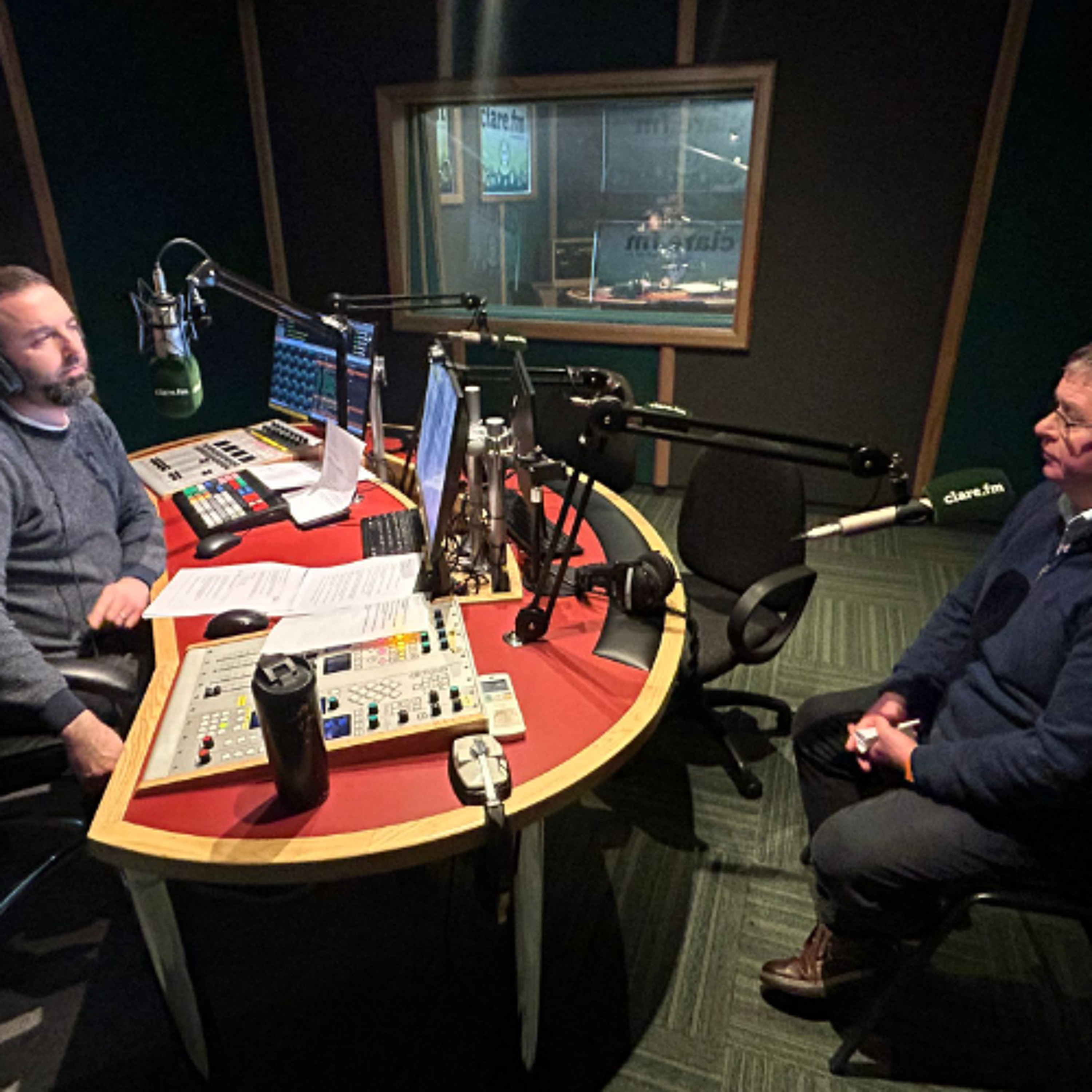
Alan Morrissey was joined in studio by Louis Faye from St Francis Credit Union in Ennis to find out more.
Image © Clare Fm
Hosts & Guests

Transcript
That mortgages and credit unions are playing an increasingly important role in the mortgage market
with lending, reaching record levels and close to 1 billion euro now we shoot in home loans.
It comes as more people seek alternatives to traditional banks with credit unions highlighting
competitive rates and a more personal approach, and I'm joined now by man with a very personal
approach.
It's unpersonable indeed.
It's Louis Faye from St Francis Credit Union and Ennis.
Good morning, Louis.
Good morning, Alex.
Thanks very much for being with us.
So what is driving this surge that has seen mortgage lending through credit unions at
its highest ever level?
Well, it's probably nothing new that the credit union movement is doing mortgages.
I think what has changed is that given the tightening to the number of banks that's
operating in the market, it is never his interest that there is competition.
And I would believe that even from the Department of Finance, this is a really, very,
very important piece for them.
So what has happened in the last 16 to 18 months is that credit unions have formed one
of my call as an alliance and there are approximately 80 credit unions involved and we have effectively
set up a standardized mortgage offering because prior to that, we were offering different
rates, different terms, you know, all that.
We are now in a situation whereby the 80 credit unions involved are offering standard
terms conditions, standard interest rates and competitive interest rates.
That's the key.
How competitive are the rates from credit union compared to the main banks?
Well, my belief is, is that what we have is, is that we have a standard variable rate.
So we don't have a huge spread of rates.
We have a single offering right now, which will change over time.
But right now, our rate is a bit quirky because it is a standard variable rate at 3.85.
And it has a cap of 4.4%.
It doesn't matter what happens in the interest rate sphere, it will go any higher than that.
And it will only change in the event of, you know, some serious movement in interest rates.
And that's fixed for a term of three years.
And then it rolls after that.
So it does in terms of where market conditions are.
And is that attracting much attention or custom here in NSC in Claire, you're seeing a good
demand within the county for the mortgage rates?
Certainly, the pipeline would indicate to us that people are very interested in dealing
with credit unions.
And it's more to do with the, you know, as you mentioned earlier, that personal service,
right, that idea that you can actually speak to somebody.
And what we provide in St. Francis, at least, we have a full-time mortgage advisor.
And it's really around the whole package of financial advice.
So that's what we're offering.
Is that part of it, I mean, obviously, the rate, as you mentioned, and it won't go any
higher than 4.4% what it regardless of what's happening in the wider context is surely
appealing.
But is a personalized service?
Do people feel that they get more of a personalized service with a credit union than
the wood with, you know, a large bank?
Look, for sure.
Look, our bread and butter is, you know, is personalized lending, right?
That's our bread and butter, so it is.
And I think anybody who is dealt with the credit union, like in terms of getting a personal
loan, would feel that the, that personalized service is really very, very important to
them, so it is, so this is an extension of that in a way, so it is.
And, you know, because we're, you know, we're a community financial piece, we're not
out there to, you know, out to make profit, like, we're not, we're not profit driven is
what I'm trying to say.
Nothing we're not driven, like, but what I am saying is that it's not about us gaining
from, from our members.
They're our shareholders.
Why would we?
Yeah.
Fair point.
I do wonder what kind of people are common to you for mortgages, Louis, you know, as
it's switchers, movers, first time buyers, and it may be even people who we traditionally
here find it difficult to get a mortgage, those who are single.
Yeah, listen, a bit of all of that, so it is, right?
But, you know, there's a lot of people who are, you know, who might be finding it difficult
to get a mortgage through through their, their current advisor, they might have had a blip
in their credit some way back, you know, three or four years ago, that's, that's, that's
normal life.
That's how we view it.
And, you know, certainly, you know, we're probably not in the new build sphere.
That's, that would be it.
And so we're, we're, we're definitely settled in the second hand market.
And like, interesting enough, like, we believe that a lot of, a lot of people are now upgrading,
you know, their houses up to, up to, so it might be somebody who, who doesn't have a mortgage,
who inherits a house, and they want to upgrade the house to, to a family home.
Those are the type of people I think that we're, that we're, that we're generally seeing.
How helpful has it been that the central bank has increased lending capacity for credit
unions and, you know, how, how significant is that for your future growth?
No, it's massive.
It's massive for the, for the whole sector.
So it is, now we were never, you know, we've, we've, we've, we've, we've about six
years, 70 mortgages on our book.
We were never going to breach those limits.
One way or the other really in the, in the, in the near future, but it, it really means
that we can concentrate.
And now when we're not looking over our shoulder or looking at our balance sheet and seeing,
you know, you know, you know, are we within limits of stuff with that?
We have, we have, we have, we've, we've always the space there.
Okay.
I mean, most mortgages at the moment, we, they're still issued by just a handful of banks.
Is it something that the credit unions, that kind of dominance is something you can realistically
challenge?
Or is it even something that credit unions want to challenge you?
Kind of happy what you're offering, but it means you're, as we say, it's at a highest
level ever.
Yeah.
But I think it's very, very important that we, we have diversity in what we offer.
You know, we don't want to be, to be, to be, to be boxed into a corner about that we're,
you know, that we only offer, you know, personalize lending.
I think it's very important.
I think it's very important for, for competitiveness that credit unions are, or that, that, that, that,
that any other players are in there.
You know, I mean, if you, if you take it, you, you know, you, you've lost so many players
in the, in the recent past, that, that, you know, you, you've lost lots of bank, you've
lost KBC, and that market is, you know, that means that the, the offering is shrinking.
So it's really very, very important that there are more players out there offering, you
know, the customer needs more choice.
100%.
Yeah.
It's not just mortgages, of course, over 100,000 personal loans were issued in the, the
last quarter.
What kind of things are, are people borrowing for, and when I see a number that's over north
of 100,000, it does make me wonder, is there significant financial pressure amongst borrowers
or is demand still strong?
I know.
Look, I would think, I would think demand is still strong.
Now, given the, you know, the geopolitical events that are unfolding in the world who
knows what's, what's, what's around the corner.
But, but certainly in the, in the, in the, in the last 12 months, there has been significant
demand there, so it has, and, and really a lot of it is around that, that, that, that
household renovation, house improvement piece, like a lot of our, again, a lot of our, our
lending would be around car lending, again, the second hand market.
So we would be very, we'd be, we'd be very active in that market, so we would, how do
credit unions balance grow on their loan book with, with keeping lending sustainable?
Yeah, well, I, like, I think that's the, that's the real important piece for us, so it is,
like, we will not lend to somebody if we don't believe that it's sustainable, like, we
will give them advice on, on, on what they possibly should be doing.
And it's really, very important that we, that we, you know, that we view every loan and
that we, and we tested, we were all tested to make sure that, that, that, that, that, that
any, any, let's say, drop in salary or increase in interest rates, would, would be, would
be manageable.
So it's stress tests at all times.
Question and hear from a listener in relation to green energy loans for house improvements,
asking me to ask you why, why they're at 7.1%, I don't know if that's a, a credit union
rate they've seen.
I think credit union rate, what a big correct in saying it's 9.21% for credit union
green home improvement loan.
No, it's a bit, it's a bit lower than that, but again, the, the, you know, the thing about
credit unions is that it varies amongst, amongst all of it, like, I know that our green
loan is about 6.9%.
You know, we are looking at bringing that rate down in some, in some respects.
I think the difficulty for us is, is, is, is that if somebody is doing home improvements
and 20% of it is for, is for green, let's say, you know, like, solar as our, heat water
or whatever it might be, and, and the balance is not, then it's very hard to split that
up because it causes a real problem, like in terms of somebody now having two loans,
you know, so that, but, so that bit is, is very, very difficult.
And like, the other, the other point is, is, is, is that because of credit union's business
model, in other words, that we have, we're more face to face, so we've got more staff,
we've got more offices than our banking friends, right?
So we need to make sure that we're sustainable, like, as a, as a, as a business, it would
be very, it would, it would, we'd be busy fools if we were charging some of it.
Yeah.
You need more buildings to keep the lights on in.
No, correct, yeah.
There you are.
That's a, and, and that business model is important that we keep that going.
Okay.
I will have to ask you about the demand for loans and whether you see it continuing.
Who knows?
I've been talking about open-ended timeframes, time periods, but with everything that's
going on, and we're speaking with Michael McNamara and Billy Keller, two of our MEPs earlier
on about what is going to be done at European level and deep national level to help people
tackle the energy, high energy cost, but of course, that's part of just high cost of
living generally, and with that, do you expect demand for loans, especially mortgages to,
to keep rising?
It would be challenging, it's my view, it will be challenging.
One of the things that we found during covers, like interesting in offices, is that when
things became very challenging for people in terms of cost of living, what did they start
doing?
They started saving.
They just didn't borrow.
They started saving.
So that might be something that might happen, who knows?
But I think the other side of that coin is that people always have plans about improving
their lives and how they can improve them, whether it's doing extension on a house or
whatever it might be.
One of the real differences that we see now is that the employment levels are so high
or that unemployment is so low.
That's the difference between now and let's say the 2010s is that people have this
affordability piece in their pay package.
Okay, look, we have to leave that there, but I'm sure we'll be speaking to you again
soon.
Louis Faye from St. Francis Credit Union in Venice.