About this episode
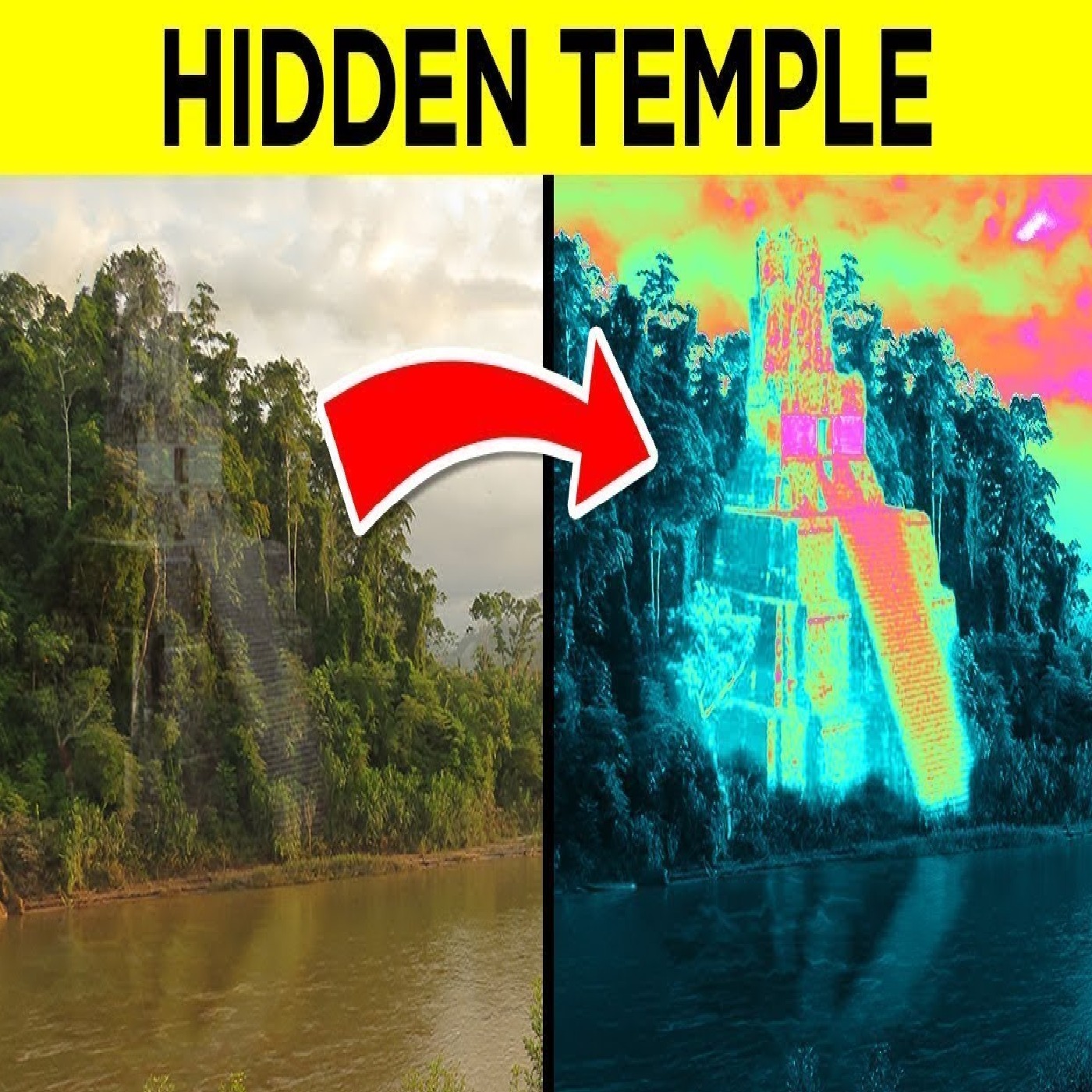
Weird and wonderful artefacts are being found all the time. But it’s hard work learning all the secrets of our forefathers when all you’ve got are two rusty pennies and a bad drawing on a cave wall. Really, it’s no wonder even the white coat wearing boffins get it wrong. So, trowels at the ready! But this is about more than big rocks. There’re also big heads and even bigger heads. What?! Come on – let’s go back in time to the most incredible civilisations scientists can’t explain!
Our Sponsors:
* Check out BetterHelp: https://www.betterhelp.com
Advertising Inquiries: https://redcircle.com/brands
Privacy & Opt-Out: https://redcircle.com/privacy
Get every episode summarized
Each time Be Amazed publishes, we email you a written briefing from the transcript — the topics, who appeared, and any specific claims, with the ad reads skipped.
Email me new episodesFree for 3 shows. No card needed.
Hosts & guests
Transcript ready
388 searchable segments. Every word is indexed and playable.
Full transcript
Be Amazed — Most Incredible Civilizations Scientists Can’t Explain. Machine-transcribed; use the interactive transcript above to jump the player to any line.
After I transitioned from the military, I joined the CIA. Now I conduct strategic operations and intelligence activities globally as a directorate of operations officer. Keep serving our nation. Visit cia.gov slash careers to apply. If you're a podcast host, listen up this once for you. My name is Ally Jackson. I'm the host of Finding Mr. Height, a dating and relationship podcast that I've been doing for four years now, sharing my positive and practical approach to dating that's built on my own life experience. And I wanted to share another experience that I've had, my secret behind monetizing my show. It's called Red Circle. And I was just telling my colleague about how much I love their platform. With Red Circle, not only am I getting a seamless hosting experience, but I also love the support I receive in ad sales. It's not just typical ad sales either. It's targeted opportunities based on my show and my life. And the platform is super simple. You just set your preferences and Red Circle matches you with sponsors that align with your show. You can vet every opportunity, and their platform gives you great analytics. More recently too, my Red Circle team has brought me opportunities outside of my podcast on social media.
To really augment the podcast partnerships, bring them full circle. I just can't recommend them enough. If you want to give it a try, go to redcircle.com to get your free trial. That's redcircle.com for a free trial. Weird and wonderful artifacts are being found all the time, but it's hard work learning all the secrets of our forefathers. When all you've got are two rusty pennies and a bad drawing on a cave wall. Really, it's no wonder even the white coat wearing boffins get it wrong. So, trials at the ready, but this is about more than big rocks. There are also big heads and even bigger heads. What? Come on. Let's go back in time to the most incredible civilization scientists can't explain. Did you know the Amazon rainforest houses around 30% of all plant and animal species in the world?
That's tremendous. However, the history of one native species has eluded scientists for centuries. Humans. Human life in the Amazon was assumed to have never been anything more than a few scattered tribes. However, ongoing deforestation in Brazil's acre state, which was long believed to be uninhabited, has revealed large unnatural shapes in the ground known as geoglyphs. Whilst they look like little more than shallow ditches, they're actually the remains of a vast civilization. Across 5,000 square miles, there are around 450 markings with some measuring up to 1300 feet wide. Damn, the huge geoglyphs probably housed some sort of ceremonial buildings where up to a million people could have congregated as recently as 550 years ago. Holy guacamole, that's insane. And there's much more. Nowadays, thanks to technological advancements like Lidar,
we can explore without damaging the rainforest. By firing a tree-safe laser from directly above the surveying area, a receiver measures the light bouncing back and records a 3D map of the objects in the scene. That's so cool. But not as cool as what's been hiding. In 2019, scans of the southwestern Amazon base and uncovered miles of elevated roads and pathways and even pyramids over 70 feet tall. An astonishing 26 individual settlements were discovered, two of which were at least 250 acres each. That's 330 football pitches. Cheeeeeesh! The mysterious Cassarabe people lived here for hundreds of years and then just disappeared around 1400 AD. The European conquistadors probably drove them out, but we don't know for sure. Still, building a giant jungle community in the thickets is impressive, right? Hold up.
I just had a crazy thought. Think about it. A huge congregation of people living together would need to cultivate tons of food and plants, right? Well, what if the Amazon wasn't originally a jungle? Then after the Cassarabe people disappeared, their crops grew a little out of control. It's just a theory, but an astounding 95% of this green metropolis is still unexplored. Who knows, maybe there's something even crazier in there. Now, you and me, we're pretty smart, but we're not the smartest humans ever. Heck, we might not even be the smartest species ever. Huh? Since 1913, partial skull fossils found across South Africa have provided a potential new brainiest contender called the Boscop Man. This presumed extinct human-like species could have lived as recently as 10,000 years ago. But compared to us, their skulls imply they had unusually large craniums, meaning our big-headed brethren's brains might have been a whopping 30% larger than ours.
Whoa! Their average IQ would have been around 149, putting the average Boscop among the smartest 0.05% of people alive today. Double whoa! But if old Boscop Brainiac here is so much smarter than us, how come we're alive and he isn't? Well, this might with my ex said, bigger isn't always better. Our brains are about fourfold bigger than our aprilatives, but most of this increase happens in a part of our brain called the prefrontal cortex, which is mainly responsible for our highest cognitive function, such as decision-making, working memory, and self-awareness. The actual motor functions of the brain that control our senses and movement don't really change. So it's possible that all that extra brain science just translated to Boscop spending more time crying about the past than going out hunting. Now, this is all speculation. Truthfully, we can't be sure what happened to our clever cousins. In fact, some people argued Boscop wasn't different to us at all. The only evidence we have are partial skull fragments.
Nevertheless, seeing as the Boscop aren't here to collect their clever species ever-award, I guess, I'll accept it on their behalf. I'd like to thank my mom, my dad, and anyone who fell in my podcast and left a five-star rating. It's the only way to stay up to date with all my amazing content. Thank you. Thank you, you're too kind. Now back to the episode. Perhaps the most mysterious ancient civilization is the one we've never found a trace of. Huh? I'm talking, of course, about Atlantis. The once grand city that ended up sinking beneath the ocean. The first records we have of Atlantis were written by the ancient Greek philosopher Plato, who spoke of a great city just outside the street of Gibraltar. However, there was nothing to say Plato's Atlantis genuinely existed. From millennia, people just assumed he'd created an idealized version of his home Athens. So why is it that some 12,000 years after allegedly disappearing we still talk about it,
like it might be real? Well, in 1882, US Congressman Ignatius Donnelly published 13 reasons why he believed Atlantis was far more real than previously accounted for. And no, he didn't scatter them around on little tapes. He wrote a book called the Antideluvian World, which proved to be highly influential. Then in 1965, someone actually found Atlantis. Well, some people think they did at least. They found the reshatch structure a 25 mile wide geological dome found in Mauritania, Africa. It looks like an ominous eye. Check it out when you have a chance. I'm not kidding. This thing is so huge you can only see its full scope from space, which is how it was discovered. Two astronauts flying over the Sahara Desert spotted the giant eye staring back at them and thought they'd stumbled across the most important archaeological find ever. Alas, there's nothing concrete linking it to Atlantis.
It's believed the reshatch structure was formed from volcanic activity around 100 million years ago. But come on, it looks pretty sus. Seems like we're no closer to the truth. What do you think? Is Atlantis real or a bunch of old baloney? Next up, whether you've got a big one or a small one, we all love our hums. In fact, you'd have to be a loony to wish anything bad on your humble or not so humble about. But if you lived with the Cuckoo Tinney Tri-Pillia people who settled in eastern Europe around 7500 years ago, home was less where the heart is and more where the earth is. Why? Because they routinely torch their own villages. Oh, what? Oh, you heard me. Archaeological evidence shows that every 60 to 80 years, they bash out the matches for a spot of accommodation and celebration. The burning question, of course, is why? This was long before home insurance, so they weren't trying to cash in a claim,
and it had been way too regularly to be accidental. We don't know for sure, but one of the leading theories is that they were animists, people who believe objects have souls. So they might have believed their houses were alive. And once it got to the end of a house's life, it was proper send-off time. Still, torching a whopping 3,000 buildings to the ground every 60 years just to rebuild them sounds like a lot of effort. Last time I felt like changing things up, I just turned my bed around. Honestly, I'm such a scatterbrain. I lose things all the time. But even I'd have difficulty losing an entire civilization of people. Like, I don't know, the mycenians of ancient Greece? Despite being the OGs of ancient Greek society and true pioneers in architecture, engineering and language, come 1050 BC they'd managed to totally lose. Themselves? Seriously? They straight up disappeared. Poof, gone.
How does one of the most developed societies of its time suddenly just cease to exist? Well, that's one of history's greatest unsolved riddles. There's lots of possibilities about what could have happened. Maybe it was an invasion from a neighboring civilization like the Dorians. Maybe there was a disturbance closer to home which led to civil war? Or maybe there was a big natural disaster like a volcano or a giant flood which wiped them all out? However unsatisfying it might be, we just don't know. Whatever it was, it was bad, like real bad. The period following the mycenian's disappearance was a total dead zone known as the Greek Dark Ages, and it's like they vanished and took the next 300 years of history with them. Reminds me of that time my dead popped to the shops for milk and cigarettes. All right, moving on. Ever jumped in a puddle and realized it's deeper than you thought? Yeah, me neither.
But if you lived in Xi'an, Baikun village, and Jae-jung, China a few decades ago and did it, you'd have gotten more than a little wet. That's because in 1992, local farmers drained five unassuming ponds and discovered a giant network of 24 cavernous chambers hidden beneath them. Whoa, and I mean giant. Directly beneath the five ponds were five main caves, each dropping nearly a hundred feet underground and averaging a whopping 11,000 square feet. That's over two basketball courts a piece, and it turns out there are 19 other cavernous chambers too, now known as the Long Yu Caves. Most astonishingly though, all of them appeared to be exquisitely man-made. They're held up by pillars, the walls rise at a perfect 60-degree angle, and 23-inch wide bands have been chiseled into all of the surfaces. On top of this, the entrance halls all face south to southwest to draw the most sunlight.
Whoever built these caves must have been highly sophisticated architects, but we have absolutely no idea who they were. Well, almost no idea. Pieces of clay pot were found half submerged in soil that dated back to the Western Han Dynasty, and all mighty 2,000 years ago. Whoa, mama! These caves are old. Aside from that, though, there's nothing else to go off. They don't look like any other caves, quarries, or ceremonial caverns yet found in China, and could have served as anything from mausoleums to military encampments. Man, I'll be waiting with baited breath for any updates. Best gift I ever got? A telescope. Learning about the universe is so awesome. But I don't know nearly as much as the dogon tribe. Despite living largely detached from modern society and the bandiagra cliffs between Mali and Burkina Faso, their knowledge of the planets and stars is incredibly advanced.
In fact, they may know more about the serious star system than we do. Sirius A, the dog star, is the brightest star in the night sky. It's easily spotted with the naked eye, but in 1862, astronomers discovered a much fainter star just behind Sirius A, which they imaginatively named Sirius B. So when French scientist Marcel Gréol made first contact with the dogon in 1933, he expected to stun them with his knowledge. Instead, he discovered they already knew every little detail about Sirius B or to them, Potolo. Despite owning no telescopes and the star being invisible to the naked eye. What? Weirder still, the dogon claim there's a third even fainter star they call Emma-Yah. Astronomers haven't found any signs of this one, but with the dogon's track record, that doesn't mean they won't. So how the heck did they get all this knowledge when they're so isolated from regular society? Well, the dogon insists they learned everything from an amphibian
alien race called Namos, who come from a distant planet orbiting the Sirius system. Not what I expected. Access to affordable credit helps me pay my employees, but I don't really need it. Inflation is killing me! But who cares? Big retailers and making record profits! That's why we support the Durban Marshall credit card bill! See, banks and credit unions help small businesses make payroll. This bill would cut the vital resources they need. While increasing Megastore profits, they deserve it. Don't they? Tell Congress stop the Durban Marshall money grab for corporate megastores paid for by the Electronic Payments Coalition. Virginia DMV and the City of Richmond remind you to drive with care. Slow down and stay alert as you drive. Look for people walking, biking and rolling, especially around schools, crosswalks, parks and playgrounds. We all share the road and we're in this together. Taking a few extra seconds can help prevent crashes and save lives. Let's look out for each other because everyone
deserves to get to their destination safely. Hi, this is Alex Cantrowitz. I'm the host of Big Technology podcast, a longtime reporter and an on-air contributor to CNBC. And if you're like me, you're trying to figure out how artificial intelligence is changing the business world and our lives. So each week on Big Technology, I bring on key actors from companies building AI tech and outsiders trying to influence it. Asking where this is all going, they come from places like Nvidia, Microsoft, Amazon and plenty more. So if you want to be smart with your wallet, your career choices, and meetings with your colleagues and at dinner parties, listen to Big Technology podcast wherever you get your podcasts. Most likely sometime between Sirius B being discovered in 1862 and Greole making contact in 1933, traditional doge and beliefs in modern astronomy hashed together. How exactly? I can't say. Perhaps Greole wasn't actually the first to make contact. But then what happened to whoever was? I don't know. Extraterrestrial fishermen
from stars we can't be sure exists just isn't quite cutting it for me. What do you think? Remember the long you caves from earlier? Well, they're far from the weirdest historical find in China. In 1986, construction workers and she swan province stumbled across a ginormous underground cache of 13,000 eerie artifacts at an ancient site they named Shanji Dui. The pits were full of gold, bronze and pottery unlike anything that country had seen before. Stranger still many of the artifacts appeared to have been damaged and burnt before being purposefully buried. Bigger. Who or what could these have belonged to? While historians reckon their evidence of a mysterious 3,000 year old civilization that existed at the same time as known Chinese civilization yet was separate from it. It was called the Kingdom of Shu and Shanji Dui was one of its cities. One of the most striking finds a huge 400 pound bronze
mask apparently represents Kankong, a semi-mythical ruler with bulging eyes. It could be one of the earliest religious icons in China. Shu fell when the Kin Dynasty united China around 300 BC so they could be responsible for trashing and burying whatever evidence they could have shoe when they took over. But we can't be sure. Unfortunately the Shu people didn't have a written language so their history has been lost to the ages. For now we'll just have to imagine what Shanji Dui and ancient northern Chinese culture looked like. Lucky I've got a good imagination eh? Mom always said eat your veggies or you won't grow big and strong. As you can tell I'm still not keen on the grains. But some 1200 years ago residents of Namadol in ancient city of Pompeii, Micronesia must have eaten better than me. They needed building materials. Only problem was it was all on the other side of the island 25 miles away. Yet these Polynesian powerhouses
tricked all the way there, turned around and somehow brought an astonishing 750,000 tons of heavy basalt rock all the way back. The heaviest cruise ship in the world the wonder of the seas is around 250,000 tons. So imagine looking three of them. That's unbelievable. Honestly I've not got a Scooby-Doo clue how they did this. Pulling all that seems impossible and basalts too heavy to float around the island. Local legends say great birds or giants move them into place which is as good as any guess I've got. And moving it was only the first hurdle. The inhabitants then had to carve and shape all that rock into 100 tiny islands which they built on top of a coral reef off the mainland. Namadol was where the first organized government of Pompeii resided so it was turned into a grand capital city. Even today you can see the remains of stone palaces, ritual sites, temples and tombs that were built hundreds of years ago. Remarkably it was all
achieved without mortar or concrete. The sheer weight of the stones themselves secured them into possession. Some were up to 50 tons. Chinkies. It might not look like much now but in its prime you'd have needed some big stones of your own to go anywhere near this imposingly affluent dynasty. It blows my mind that farming has only existed for about 10,000 years and makes any civilization before it all the more impressive. Take the mysterious Gobekli Tepe. This vast 11,000-year-old site in southeastern Turkey has archaeologists stopped. Somehow people who couldn't grow a potato came together and built the world's oldest known stone megaliths. Masons created 20 circles of tall rock pillars with each pillar weighing up to 50 tons. Many are almost 16 feet high and graved with animal carvings and human forms providing a window into this weird prehistoric world. However, the knowledge of math and geometry required to achieve all this is comparable to that of
the great pyramids and they came some 7,000 years later. Everything we thought we knew about prehistoric civilization says Gobekli Tepe just shouldn't exist. Yet here it is. Some people reckon it was used for religious rituals while others insisted was some form of ancient observatory. Without more solid information though it's hard to be sure who's right since it was discovered back in 1994, only around 5% of the site has been excavated. I guess we've only seen the Tepe of the iceberg. You've got to be a real weirdo to hang around grave sites. That or your Indiana Jones looking for treasure. Who's this say he's not a crepe of zoid too, but some tombs are definitely intriguing such as some massive keyhole shaped tombs that exist only in Japan. They're called Kofun and there are a staggering 160,000 of them scattered around Japan. The largest of which is Daisenru Kofun in Sakai and hits over a thousand feet wide and 1600 feet
long. That's twice as long as the great pyramid of Giza. Oh mama! What 500 foot monster have they buried in there? Well that's the confusing or Kofun thing. Get it? Ironically these keyhole looking crypts are totally locked up. So we're not entirely sure who or what might be inside. It's assumed Daisenru was built for Emperor Ninthuku, the 16th Emperor of Japan, who supposedly died in 399 AD at the grand old age of 109. Geepers. But until anyone goes in and checks can we really be sure? I don't think so. Sadly that's unlikely to change anytime soon. Many are classified as sacred religious grounds and trying to enter them is illegal. Plus Daisenru is completely isolated by three separate modes. There used to be a bridge but it was destroyed by a typhoon back in 1872 and nobody's been on the ground since.
It's a shut out. Still imagine all the untold treasures that might be buried there. They ever do decide to open old Daisenru up? Mark my words. It'll be the historical fight of the century. I like to respect everyone's ideas about the past but some historians make that were really difficult for me. In 1936 an iron hammer was found encased in a piece of rock and London, Texas. Man, it's in some theorist world. Despite modern humans only being around for 200,000 years tests on the rock near where the artifact was found dated back to the Cretaceous period. That's a mind blowing 66 to 145 million years ago. Wait, so does that mean the hammer is that old too? Well, self-proclaimed science whiz Carl Baugh who bought the hammer in 1983 certainly thinks so. And he also believes it's comprehensive proof of an ancient civilization of giants. Okay, I wasted many hours in precious brain cells trying to decipher Carl's crazy theories.
Here it goes. As a creationist, Carl believes the world as we know it was made by God about 6,000 years ago. Therefore, if something is older than that, it must come from an unrecognizable pre-God earth. Still following, tests Carl authorized on the hammer showed it contained iron and chlorine, which he falsely claims can exist organically in our atmosphere. Before God, though, he argues the atmosphere would have allowed this compound to exist naturally and also have turned anyone alive at the time, i.e. the creators of the hammer, into giants. Ah, sorry I tried. As dudes at Angus, there's no proof that Cretaceous rock near where the hammer was found is the same as the rock encasing the hammer itself. Actually, Carl won't let anyone else run test the check. Suspicious? I think so. Plus minerals and ancient rocks can dissolve and re-harden around objects that aren't ancient if put under the right pressure. It's called concretion. So even if it was the same rock, it still wouldn't be proof of a 100 million year old
hammer. Come on, I'd choose science over Carl's quack a crap hole any day. The Roman Empire is one of ancient history's best documented civilizations. But that's not to say we know everything, and Lebanon on the outer edges of the old empire, six hefty puzzles known as the ball backstown, still have us scratching our heads. The Romans carved and shaped these colossal stones from a quarry by hand, which might not sound that impressive until you hear about their size. The smallest is a stalking 800 tons, and the largest is a colossal 1,650 tons, about the weight of 250 elephants. Whoa! For comparison, the largest stone in the Greek pyramids is a measly 80 tons. As if carving all that isn't impressive enough, the three smallest, which are anything but small, were somehow moved about a mile from the quarry to their current location. Phew, absurdly you'd need 40,000 people to move just one block, and that many people couldn't
conceivably fit around even the biggest of them. So it's been theorized that some sort of pulley system was used. By chipping a gap and neat the slabs before they were cut away from the quarry rollers could have been slid underneath them. Then when they were completely removed from the rest of the stone, they'd already be sitting atop the rollers and ready to attach to a pulley system. Like this, it could have taken as few as 144 workers to lug them to their destination as part of the Temple of Jupiter. It's just a theory though, we can't know for sure how the incredible feat was pulled off. We do know, however, that the three biggest stones proved too heavy even for the Romans and are still lying in the quarry today. Sheesh, I guess it's always good to know when you've been beaten. Man, I've been working so hard lately, I need a vacation. Hmm, maybe Sardinia. But if I'd been around 3000 years ago, there's no way I'd want to visit the Italian island. At least not if you believe the legends. Local meds say giants once roamed the
land and human legs skeletons over 13 feet tall were discovered on the island. The evidence is kind of sketchy though and no one's got a big bone to prove it. Even so, there have been some seriously strange goings on that suggests there might be more to it than you first think. Back in 1974, over 5,000 pieces of smashed up stone artifacts were uncovered in an area of the island called Monteprama. But suspiciously, when they were sent to a nearby museum they weren't put on display. Instead, they were immediately stashed in an underground vault where they stayed locked away some 30 years. Seems shady to me. When they were finally removed in 2005, the pieces were reassembled and turned out to be, can you guess? Statues of giant men. 38 of them to be precise. At 8 feet tall, they're a touch shorter than the rumored skeletons, but still mightily impressive. It's believed they were carved by and represent the Nurok people
who lived on the island many thousands of years ago, as well as the giant statues the Nurok also built over 8,000 of these enormous stone buildings. I'm not saying the Nurok were giants, but these people sure seem to like things a little larger than most. I wonder what their civilization would have looked like in its prime. Could even bigger statues have stood guarding the island that have since been lost a time? Ah, I don't know. Maybe I'm getting ahead of myself. Unlike the Nurok, they got the head body and everything else of themselves. I'm so dusty. That's enough oldie-worldly stuff for me today. Thanks for listening to this episode. I'll see you next time. You'll want to be amazed. If you're a podcast host, listen up this once for you. My name is Ali Jackson. I'm the host of
Finding Mr. Height, a dating and relationship podcast that I've been doing for four years now, sharing my positive and practical approach to dating that's built on my own life experience. And I wanted to share another experience that I've had, my secret behind monetizing my show. It's called Red Circle, and I was just telling my colleague about how much I love their platform. With Red Circle, not only am I getting a seamless hosting experience, but I also love the support I receive in AdSales. It's not just typical AdSales either. It's targeted opportunities based on my show and my life. And the platform is super simple. You just set your preferences and Red Circle matches you with sponsors that align with your show. You can vet every opportunity, and their platform gives you great analytics. More recently, too, my Red Circle team has brought me opportunities outside of my podcast on social media. To really augment the podcast partnerships, bring them full circle. I just can't recommend them enough. If you want to give it a try, go to redcircle.com to get your free trial. That's redcircle.com for a free trial. Access to affordable credit helps me pay my employees that I don't really need it. Infliction is killing me. But who cares? Big retailers and making record profits.
That's why we support the Durban Martial Credit Card Bill. See, banks and credit unions help small businesses make payroll. This bill would cut the vital resources they need. While increasing Megastore profits, they deserve it. Don't they? Tell Congress, stop the Durban Martial Money Grab for corporate megastores. Paid for it by the Electronic Payments Coalition.
More episodes


