About this episode
Get every episode summarized
Each time Sidebean publishes, we email you a written briefing from the transcript — the topics, who appeared, and any specific claims, with the ad reads skipped.
Email me new episodesFree for 3 shows. No card needed.
Hosts & guests
Transcript ready
103 searchable segments. Every word is indexed and playable.
Full transcript
Sidebean — Napster: the REAL story of Sean Parker | Sidebean. Machine-transcribed; use the interactive transcript above to jump the player to any line.
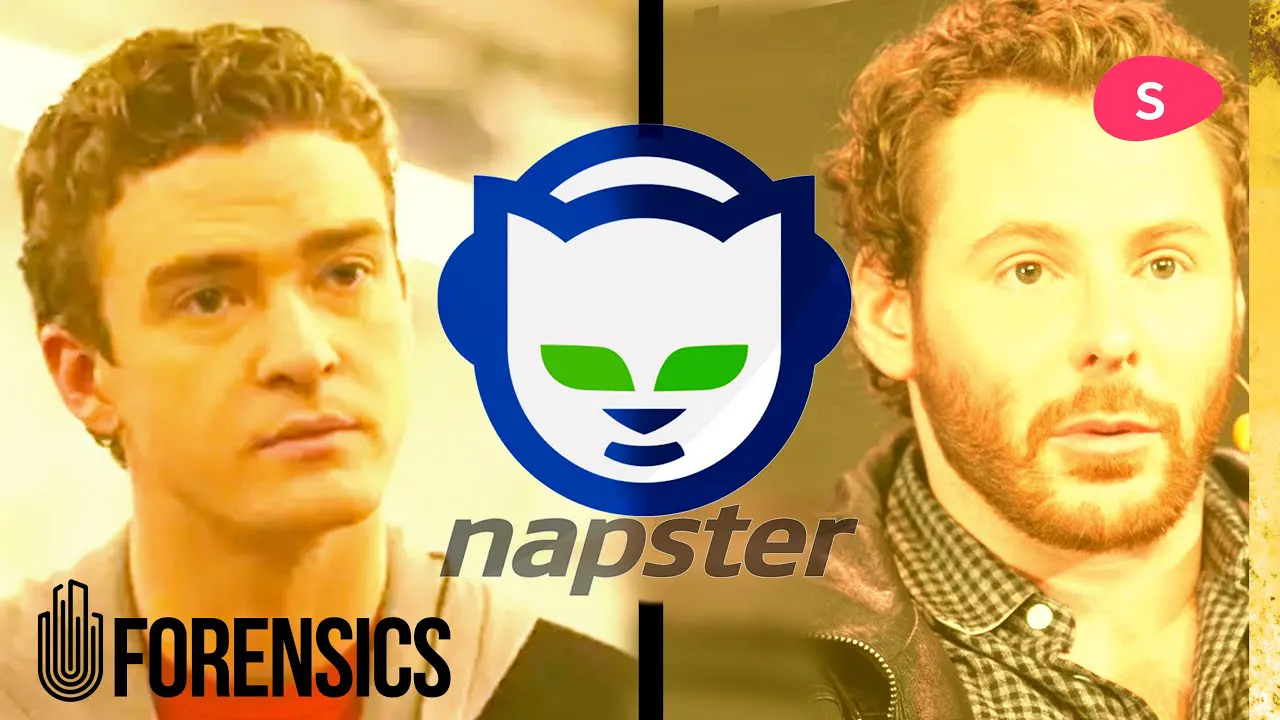
If you're in your early 20s or younger, maps are probably looked like another music app, another competitor for Spotify or Apple Music. And if you're in your early 30s or older, you probably didn't know that maps are still existed. But of course it is nothing like it was back in 1999. Back then, maps were wild and the blue the horns have changed for the music industry. For the internet opening up to the world in the 90s, it was bound to happen. Music was just another industry that was getting completely disrupted by the calm craziness. We have a video on that, by the way. An Napster was revolutionary in its very essence. It was the first time that the concept of peer-to-peer networking, or P2P, was used massively. P2P computing is the infrastructure used today and things like blockchain and cryptocurrency, but let's not get sidetracked. Let's keep to nostalgic vibe and remember Napster, the app to change music distribution for good. Maybe some of you will learn something about why listening to music today is so easy. Others will remember the times of rocking a disc man with a collection of custom MP3 CDs with 200 tracks on each.
Let's talk about Napster, in this company, Forensics. The 90s was a booming time for the music record labels. The golden era of single hits and CDs, music record sales were at an all-time high in 1999. Back when you had to buy a full album just to get the one catchy song that was everywhere and you needed to have it. You'd have to go out to the store, browse shelves with hundreds of CDs, pick up the one with the hit you wanted, pay around 15 bucks for it, and take it back home to your CD player. The other 10 songs in the album? Who knows, you may or may not have liked them. You could store the music on your computer by uploading the CD to your hard drive, but audio files weren't easy to share or do anything else with other than listen to them. That was until some good folks from the Fraunhofer Society in Germany developed a new digital file format for optimized compression, allowing more data to be transferred easier.
That new file was called MP3. It reduced the number of components on music files that were beyond most humans hearing capabilities. And by doing so, MP3 made music files lighter and easier to upload and download, giving music fans an unprecedented superpower. This new way of efficiently transferring music files combined with the booming internet technology connecting the world was the perfect storm. It was all that a couple of entrepreneurs named Sean and Sean needed to create an upsur. Napster came out in 1999 and in a matter of weeks it amassed tens of millions of passionate users. People got obsessed with it, and music flowed freely through the web like water to a river. For them, distributing music in physical devices, keeping it in warehouses, and selling it in brick-a-mortar stores was all becoming obsolete, and they were right. So they stored music on computers and figured out how to simplify the transfer of files across the internet. Napster was revolutionary because it allowed users to connect directly and share their music without a middleman. And most importantly, it was free. It was the first time that a peer-to-peer
network was used massively to connect millions of users that were all stoked to share their music. In a peer-to-peer network, peers make a portion of their resources, like their computer processing power, bandwidth, or disk storage, directly available to other network participants. Cryptocurrencies and the blockchain technology that is destructing the world today are p2p based. And it was Napster that brought this revolution to the world of music first. Users essentially made part of their hard disk in their computer available to Napster to allow the app to extract and install music files between users. So you could make your music library available on Napster for others to download and vice versa. People had never been able to share music like that. They no longer depend on the radio or the label companies to discover and get new music. It became a symbol of digital freedom that eventually got to other media industries like books and movies. Instead of paying $15 for an album to get about 10 songs, people now could download hundreds of them for free in a short time. It was mind-blowing. Did you ever put together
a collection of MP3s and burn them onto a CD so you could listen to them on your disk man? Let us know in the comments. Go on. Tell us at your role without telling us at your old. Oh yeah. Napster turned us all into pirates and got us all thinking that music was meant to be free. But of course it wasn't. As CD sales started falling, the industry took notice. All stories of two sides and not everyone loved Napster back then. The big record labels definitely didn't love it. Sony, Warner, Universal and others were contemplating how the music from their records was flowing freely on the internet. They didn't care about understanding this new technology or the social phenomenon behind it. The only thing they cared about was their sales and they were declining significantly thanks to Napster. So they all went to war with it. And lower CD sales also affected the artists. So big names like Metallica, Britney Spears, Dr. Dre and Manimura also joined the war. A few months after being released and turning into a cultural revolution, Napster was going to deadly legal battles against enormous industry forces. Metallica was among the
first to sue them when they had found out that some of their unreleased music had leaked on Napster and was already on the radio. Manny followed suit and soon an army of artists and record companies files lawsuits against Napster to the recording industry association of America, the RIAA on the grounds of copyright infringement. But the public felt like they were just greedy and didn't understand the new era of music distribution. And in a way it was true, record labels and artists were fighting a losing battle against the new ways. Still, they won that first legal battle and by mid-2001 Napster was forced to shut down its entire network. The company agreed to pay music creators and copyright owners a $26 million settlement for unauthorized music uses. The end was near. By 2002 Napster filed for chapter 11 bankruptcy and was liquidated. But the revolution was already underway and music fans were not going back to old ways. Manny Napster clones started popping up, Morpheus, Kaza, Bear Share, LimeR as well as Tarns sites. Tarns are another form of PDP
networking. So the witch hunt was far from over. Record labels campaigned against piracy in all fronts possible. They went as far as chasing individuals who had downloaded music illegally. Yeah, they filed thousands of lawsuits against teenagers, grandmas and other regular people suing them for thousands of dollars. All this just made people hate them even more. And it was evident that the music record industry was going downhill. They eventually realized they were going against the current and started getting into the digital world coming up with their digital music stories. But people didn't want anything from them. And there was also friction between the tech world and the music industry. One was blamed for facilitating piracy and the other accused of denying new business models. One person came up with a solution. A household name that everyone knows. Steve Jobs. And he did it the right way. In late 2002, he went to the RIA and pitched them the iTunes store. A digital music store never seen before. Of course, the iTunes store was a success. For the first time, people could pay 99 cents for a song instead of
buying an entire album or downloading it illegally. For the record labels, it was better than piracy, but still meant significant losses. But they had no choice at that point. Online music stores were some in-between stage before streaming services came up and proved to be the best solution for everyone. The first music streaming service that broke through was Spotify, released in 2008. It started a new era of media distribution. Soon, companies like Netflix in another industry that was already being hit hard by piracy. The movie industry replicated the streaming model. Record companies and music sites had to come to terms with earning much less money from music sales. Royalties in the streaming business are counted by pennies and divided into money parts. Unlike in the 90s, artists today don't make most of their money with music sales. They have to create a whole business ecosystem around their work. That means tours, merchandise, advertising, sponsorship, and anything else they can come up with to monetize their work. And what about an after? After it was liquidated, it's logo and brand were sold and went from one company to another going through some transformation but keeping its iconic name. Back in 2008,
Best Buy had purchased Napster. After that, it was merged with Rhapsody, an online music store and subscription service. Finally, it was sold to a virtual reality concert company called Melody Vior, not long ago in 2020. But it was never the same. The real Napster had a rather short life, but it was enough to light a revolution in the music industry. It empowered music fans and made music available in ways that was never imagined before 1999. In a way, Napster sacrificed itself for a new era of consuming music. Did you use Napster? What were you listening to back in the 2000s? We'd love to hear from you. Let us know down below in the comments. Like our video, hit the subscribe button and feed the mighty YouTube algorithm and we will see you next time on company forensics.
More episodes
More from Sidebean

How Startups Shaped Silicon Valley | Sidebean
Sidebean

HP’s long term plan reveals what AI job loss really looks like | Sidebean
Sidebean
Google Maps isn’t just a map anymore, it’s your personal scout. | Sidebean
Sidebean

Foursquare: the startup zombie that still eats your data | Sidebean
Sidebean