Loading...
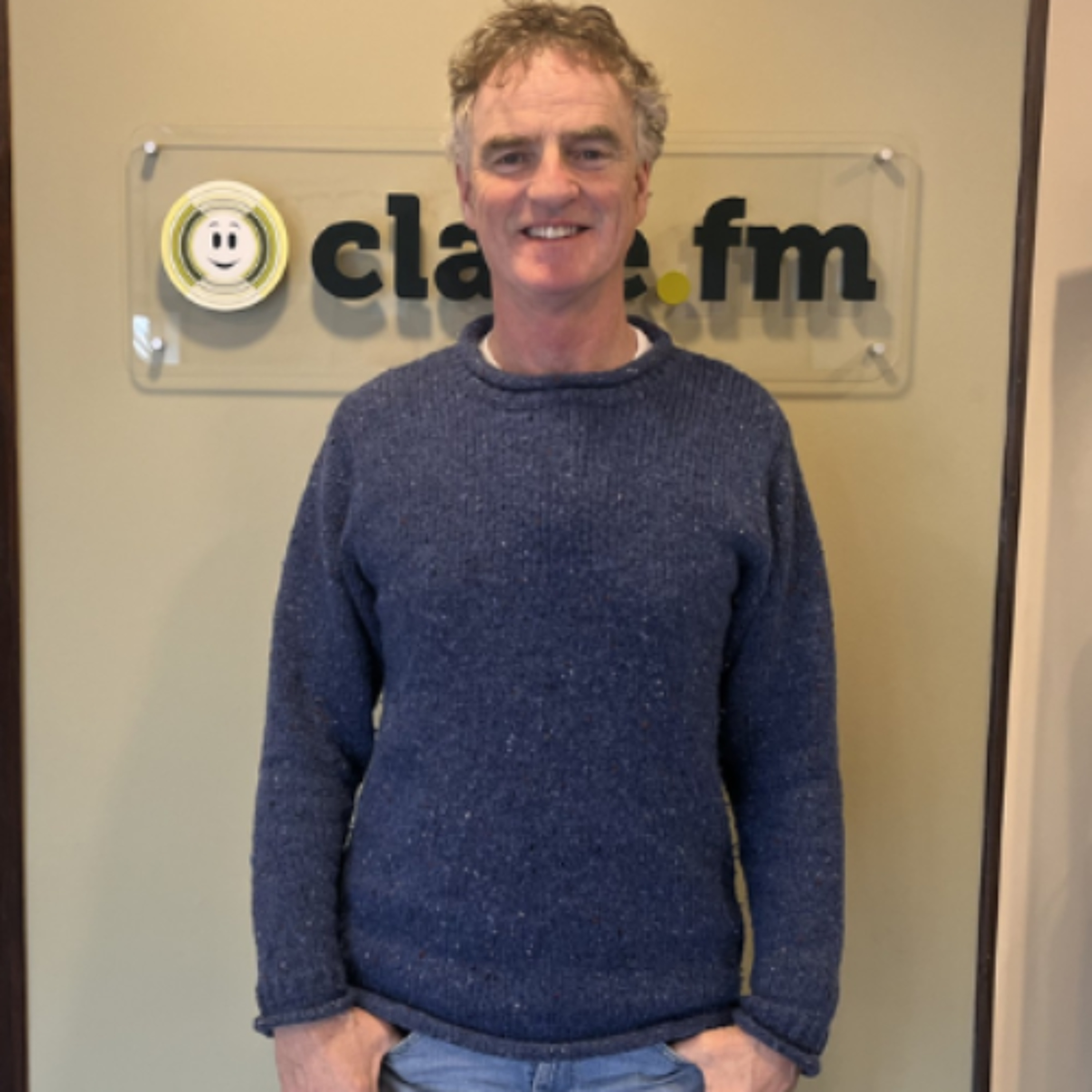
About this Episode
An award-winning Clare filmmaker is bringing audiences on an extraordinary journey beneath the waves with a brand-new live show.
Ken O'Sullivan has spent more than 25 years exploring the North Atlantic, capturing everything from dolphins and whales to the raw beauty of Ireland’s seas.
Alan Morrissey spoke about Stories From The Sea with Ken on Thursday's edition of Morning Focus.
Hosts & Guests
Transcript
Now an award-winning clarifilmaker and documentary makers bringing audiences on an extraordinary
journey beneath the waves that a brand new live show, Kenneth Sullivan, has spent more
than 25 years exploring the North Atlantic, capturing everything from dolphins and whales
to the raw beauty of our seas.
And he joins me now to talk about stories from the sea.
Good morning, sir.
How are you, Ellen?
Thanks for having me.
I'm very well.
I'm glad to have you in studio.
So, I was just chatting with you off air.
I mean, we've had you in before to talk about the various documentaries that people will
have seen on our TV screens.
You were good enough to sit down for an extended chat from profile.
We did that out there, outdoors on a lovely day in the hinge, and I stupidly didn't wear
a hat or sunscreen.
I just remember getting back to the station.
And the next day, looking permanently embarrassed for a few days, I was red raw.
It was worth it.
It was worth it.
It was worth it.
It was worth it.
And I learned a valuable lesson about the need for the necessity of factor 50.
I didn't realize, though, that you did live shows, and this isn't your first rodeos,
they say.
So, it was a bit of a layout for a show in 2023.
So, what's brought you back?
Yeah, yeah.
I did a tour in 2023, 2024.
Yeah, there was a bit of demand.
I suppose people wanted to hear the stories behind the documentaries and some of the scenes
and what goes into it.
And I suppose the documentary is a very different form because you work for maybe two or three
years, and it's all condensed into an hour or two hours.
Whereas the live show, you're kind of talking about a lot of that stuff.
And I love what I love doing them because there's so much interaction with the audience.
You can feel the buzz from people.
And as opposed to a documentary, which I suppose is a bit preconceived, really, in terms
of what it is.
So, I did a tour then, and thankfully we had sold our houses across the country.
Doctor, it's great.
And I got a lot of requests from various venues, was I coming back, was I doing another
one?
So, it's been a couple of years, and I'm doing a few shows this spring, and then a larger
tour later on the autumn.
So, I'll be in lower, which is my home tone.
It's very special for me.
Oh, you've got a great reception there.
I just wonder about the live show.
You clearly enjoy that interaction with the audience, and I guess Q&A is a big part
of that.
When it comes to structuring the show, though, is it just you up there?
You're having to carry the whole thing.
And you've so much material, I guess, from all the documentaries you've made to choose
from.
Does it kind of come a kind of almost, you know, can see the wood for the trees process?
I go, oh God, what do I include in here?
What do I leave out?
Come here, Alan.
It's an absolute privilege and pleasure to stand up and talk for an hour and a half about
something that you absolutely love.
And, you know, if I was allowed to do it for four hours, I'd probably sit there and stand
there and bore people.
So, look, it's just me, my problem is what to leave out because, you know, I have so
much material.
Yeah, but look, there is a lot of, it's a storytelling, and there's one thing about
being a documentary filmmaker is that you're very conscious of story, structure, and
though it might not seem that, you know, everything is put together in terms of an emotional
arc.
So, I show some videos, it's just me on stage, I show some videos, talk about my own family
history and what led me to become a filmmaker and particularly the underwater world.
And just talk about some of the experiences behind that, it's a bit of poetry, you know,
talk about the old people a lot, my father came from Phoenix Island in North Kerry and
I spent my summers there and yeah, he's a great, got a great love of the shore and the
season and the sand fishing and that.
So, that's what inspired me.
Those are hugely deep connections, aren't they?
That history at Phoenix is two and a half centuries old.
Yeah, my family moved, they moved with the landlord from the other side of Trilibay
in 1750 to a beautiful stone cottage on the island and we're there until my uncle
Jack died in the 90s, he was the last of our people.
So, I was kind of, there was a Huckleberry Finn existence for me as a kid, you know, I went
down there probably, you know, as a child, but then I went to my uncle's home from
America, my uncle Jamie and I went and spent about 10 days with him there and I've just
addicted, I used to cycle for menace when I was 15, six to seven miles.
Down there.
Yeah, because I loved it.
No, I did, I did use to race.
Okay.
You're able for it.
No, it's pretty fit, but I got a thought a little bit new, 15 year old kid on the road
for 70 miles.
No, I loved it.
I'd stayed for a week or two just with my elderly aunts and uncles and, you know, got
last.
And the old people had a great love of the shore.
I mean, we look at the Irish language, how beautiful and descriptive it is for all the
creatures and the names and, you know, jellyfish or smuggler on, which is literally seals
bit and great love of the ocean and connection with that, which the old people had.
You've made quite a number of documentaries over the years.
Have you noticed in the 20 plus years, not just the change in how you make documentaries,
but whether the whole natural history storytelling or making natural history documentaries has
changed, if at all, and if so, how?
Oh, look, it's changed, it's changed dramatically.
I mean, we look at the great, if there were Admiral and absolute icon of natural history
filmmaking and BBC, probably more or less invented the genre.
I mean, if you go back to the first big series in 1980, I think it was Life on Earth, that
scene where he's in the Congo holding the baby.
Is it a chimpanzee?
Somebody correct me in that now.
You know, Hogan, this wild animal, while the other animals were there, you know, he wouldn't
do that now.
They were barely cooked orphans, you know, they couldn't show them for years because
they were harpooning seals underwater.
So that's how our perspective in the world has changed.
And look, I've always, always focused on conservation in the natural world.
And, you know, thankfully, it's become mainstream now.
When I started, it wasn't the big iconic BBC's in Nacho, it was just shied away from telling
the conservation stories and the damage that was happening in our natural world.
So thankfully, that's changed now with education and awareness.
And you, you know, you always have to bear in mind that now isn't the end, you know,
go back 30 years, go back 50 years to Edinburgh, Hogan, the chimpanzees, you know, where will
we be in 10 and 20 years' time?
And hopefully that arc will keep going.
Speaking of David Attenborough, an absolute legend, you have a connection with him.
I believe a piece of some of your footage and not just that has ended up in a documentary
with him.
And of course, anything that has David Attenborough's name attached to us, a blue planet
of course, and many more documentaries he's involved with have become famous around the
globe, which means Ken O'Sullivan, you'd be taking your shows to North America and places
like that before too long.
It's a bit fanciful, no, I didn't call it a connection, but I'm not telling you
how he knows me.
I got a text because of mine and I thought it was a wind-up scene, you know, did you
get to meet David Attenborough?
What?
So yeah, our last, our second last series, North Atlantic, was BBC Studios acquired the
global rights and they don't fantastically well, they've sorted solid and 35 countries
for us, which is just brilliant.
And so they took the best bits, they did something about I think the best underwater scenes
since the advent of high definition.
So it was a 90-minute documentary and David Attenborough is there in the fourth scene
and the second scene is our minkey wheels of the coast to carry and we're doing a piece
to camera.
I got a fright when I saw it because they hadn't told me and I was showing it to my daughters
and they said, did you watch the rest of it?
Is there any more?
So they watched it and texted me and said, there's three more scenes, you big eagish.
You were like, I can't even believe one scene, you made the cause, never mind three, that's
absolutely fantastic.
Ah, it's great, very flattering, my flattering that they put us in and the second scene
in, you know, and I mean, all of the BBC work that I've done in the last 20 years, so
it's fabulous.
And it's very special as an Irish person to be, you know, show on the course of Claire
and Kerry and Corrie and Corrie, you know.
That is for sure.
And look, I don't know if you have an agent, I'm not angry with the job, but if I was your
agent, my advice to you would be leave the phone on 24-7, you never know.
You never know.
What's going to come your way?
You're trying to get away from everybody else, but thank you.
So the show, how much planning goes into it, you know, is you say, you're up there for
an hour and a half talking stories from the sea, you've got, you know, footage and
there's, obviously, I imagine the Q&A is really enjoyable because I think a big thing
of what draws people to your shows and hearing you talk is you've lived out experiences
they would love to have experienced themselves.
So what kind of, I'm sure there's all sorts of questions you get.
Have you had any weird and wonderful ones?
Look, you get great questions and kids, kids are the best, you know, there's no filter,
you know, under 12, no filter.
And they'll ask you the straight-out question.
Where do you go to start talking?
I love it.
No, no, I love it.
And the Q&A is nearly the best part.
And what I find people hang on, like I usually say at the end of the show, look as anybody
with kids or anybody that needs to get away, look, please go on out, you know, I'm not
going to be offended.
But usually they don't and the Q&A is quite often going on for a half an hour.
In terms of the show itself, look, there's huge preparation.
I mean, I, so I've done one show already in Mermaid Bray, which, which is sold out in
two weeks and then I'm back then in two weeks again, you know, I've probably spent 10 days
just walking around the house, practicing and talking out loud to myself and learning
enough lines and thinking, but, and there, you know, there's years I've thought gone
into that.
So look, it's an absolute privilege.
I mean, you know, I learned the experiences I have or just incredible, they are the distillation
of years and years.
I mean, you know, how many days we go out to see we don't find anything.
I mean, I'm currently, I've been waiting for conditions to go to school with diving since
October, you know, what we know at the middle of April.
So it's the distillation of a long period of time.
Yeah.
Well, you're going to be quite busy on the road.
So when does it all start and when will you be hitting Glor?
So Glor, I think it's Wednesday week, 22nd, tickets on sale now.
And then I'm doing a second show on Mermaid the week after following 29th.
And then I'll be back around the west later on the year, truly, uh, cork, west cork,
sligo, hopefully, gallway, uh, I've missed a few more.
But yeah, yeah.
So it'll, it'll all be, if you just look me up on social media, Kennell Sullivan, it'll
all be there.
So delighted.
Okay, brilliant.
Make sure you had a long and if you've children bring them to Glor, especially if they're
inquisitive, they fire a few questions I can, uh, check them out there, Kennell Sullivan
app.
I was pleasure having you in a best to look with the shows and the tour.
Thanks very much.
Thanks for having me, Ellen.
There you go.
Friend of David Attenborough, Kennell Sullivan.
I went on some morning focus.