Loading...
newsdaily
New threats and a rescue in Iran: what to know after a busy weekend
About this Episode
American forces pulled off a daring rescue of a downed U.S. airman in Iran. The Wall Street Journal’s Shelby Holliday breaks down the chain of events.
It’s been a year since President Trump’s “Liberation Day,” when he unveiled his signature global tariffs. Courtenay Brown of Axios explains how the tariffs reshaped the American and global economies.
Michigan and UConn face off in tonight’s men’s NCAA Tournament final. Eddie Pells of the Associated Press previews the matchup.
Plus, Pope Leo delivered his first Easter address, and the Artemis II mission prepares to reach the dark side of the moon.
Today’s episode was hosted by Cecilia Lei.
Hosts & Guests

Transcript
Good morning, aviators rescued behind enemy lines.
The Wall Street Journal takes us inside a daring mission.
In any war, if one of your people goes down an enemy territory, the worst case scenario
is the enemy capturing them.
But as Trump celebrated a successful return, he also issued new threats and deadlines
to Iran.
Also, Axios grates the effects of tariffs one year later.
And the Artemis II crew are about to go deeper into space than any humans in history.
Sending for humans 250,000 miles away is a herculean effort, and we are now just realizing
the gravity of that.
It's Monday, April 6th, I'm Cecilia Lay, and this is Apple News today.
It's been a perilous and dramatic weekend in the Middle East.
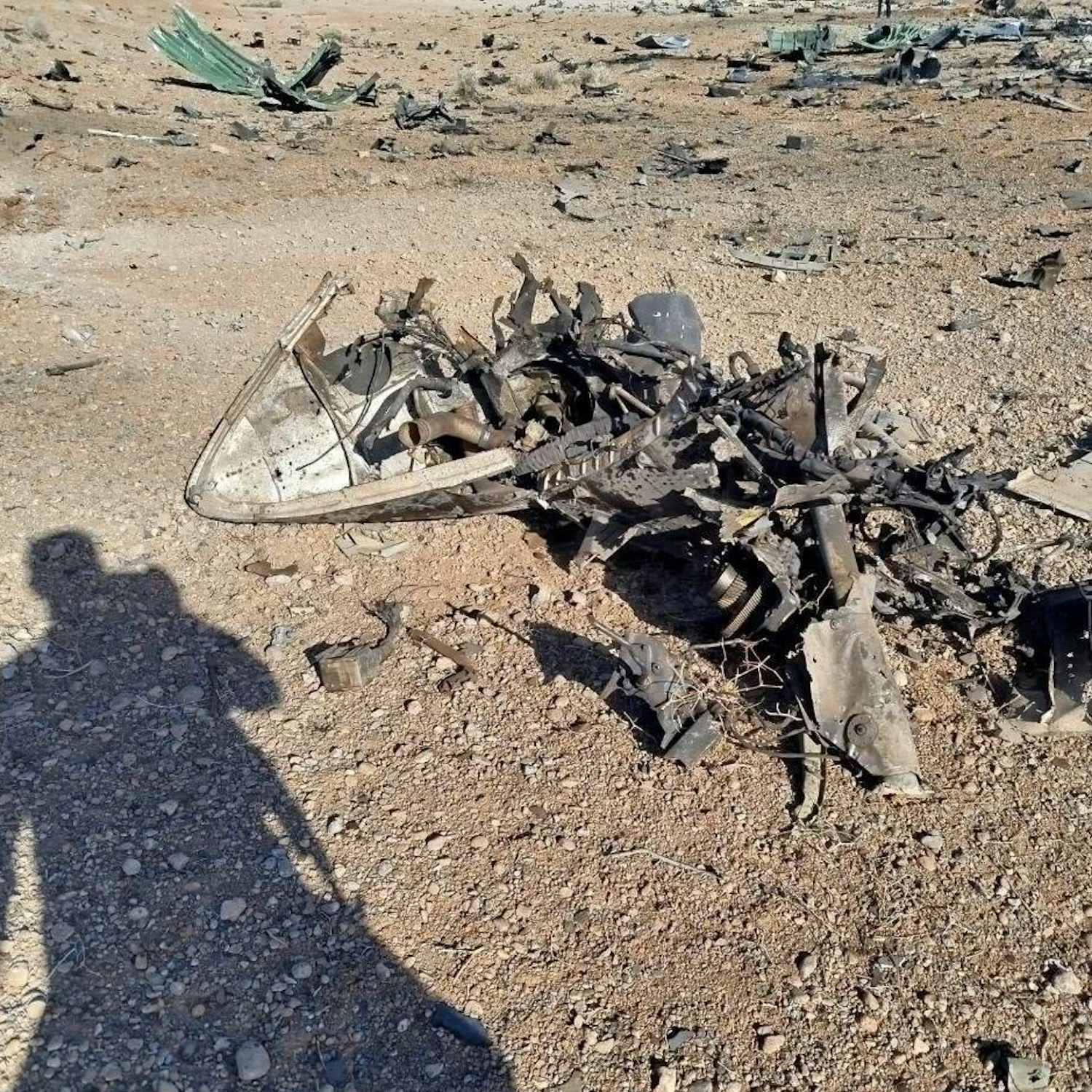
The tension ignited on Friday, when an F-15 US fighter jet was shot down over southern
Iran.
US forces found the pilot quickly, but the weapon systems operator wasn't so lucky.
He spent two days trying to evade capture.
He was in a mountain crevice, essentially, and keep in mind, he had just been shot down
and so he's injured.
Shelby Holiday is a national security correspondent for the Wall Street Journal.
She told us that after the news emerged, Iran put out a reward for anyone who might find
the crew member.
And that set off a scramble.
I mean, it was really a race against the clock for the US to get him before anyone in
Iran could get to him.
If Iran located the US Airmen first, it would have been a worst-case scenario for the Pentagon.
US officials were worried that the regime would use a potential capture for sweeping concessions.
They said that at first, little was publicly known about the crew member's condition.
He's trying to communicate and he's following his training.
He's by himself.
He managed to evade the Iranians.
And it's unclear what kind of injury he has at this point, but we know he was able to
move.
He was able to move to meet the rescue team.
And that in and of itself is described as pretty miraculous.
On Sunday, President Trump posted on social media that the US military had, quote, pulled
off one of the most daring search and rescue operations in its history.
He said the US had been tracking the crew members' whereabouts and that he had sustained injuries,
but, quote, will be just fine.
In total, hundreds of special ops and other troops were involved in what turned out to be
a massive and risky effort in mountainous terrain.
It was the famous SEAL team-6 that ultimately extracted him, a group that was set up in
the wake of the Iran hostage crisis of 1979.
The jet was one of two US planes that were targeted in the battle zone, shortly after
the F-15 went down, and A-10, known as a warthog, was taken out by Iran.
That pilot was able to navigate the plane outside of Iranian airspace and ejected safely
over friendly territory.
Holiday says all of this highlights how Iran, despite suffering heavy losses to its military,
can still do a lot of damage.
The calculation seems to have changed in that the US is feeling more resolved and more
emboldened and more willing to strike targets than ever before, and we've heard that rhetoric
out of the President publicly when he's threatening to bomb Iranian infrastructure and bridges
and oil facilities, and we're hearing it from sources quietly that this may mark actually
an escalation rather than some sort of withdrawal or turnaround in the war.
There were more signs of escalation from Trump's social media feed over the weekend.
On Sunday, he posted a series of profanity-laden threats against Iran's power plants, bridges
and other civilian infrastructure, if the country doesn't open the state of Hormuz by
tomorrow.
In many cases, these could be considered war crimes.
This deadline is one that Trump has issued and extended several times already.
It's another shift in his approach to the closed-off strait.
This week, Trump suggested that the shipping route was primarily a problem for other countries
to solve.
But on Sunday, he told Fox News that he was, quote, considering blowing everything up and
taking control of Iran's oil.
He will hold a press conference later today with the military in the Oval Office.
It's been just over a year since President Trump set out to reshape the American
economy with a wave of tariffs, a moment he dubbed Liberation Day.
This will be, indeed, the golden age of Americans coming back.
We're going to come back very strongly.
Most of those blanket tariffs were eventually struck down by the Supreme Court.
But Trump hasn't abandoned them by any means.
He continues to target countries while shifting to a more industry-specific approach.
Just last week, he signed an order that threatened 100% tariffs on pharmaceuticals if companies
don't reach pricing deals with the White House.
The administration's efforts are ongoing, but the global trading system has already been
upended.
Courtney Brown is a senior economics reporter with Axios and has been looking back on the
impact of so-called Liberation Day.
I think the most significant way that it's reshaped the American economy is really through
the lens of American businesses.
They went from a world where the trade landscape looked super, super steady.
There wasn't a question what tariffs were going to be if you were bringing in goods from
India.
Now it's a totally different story, right?
At a ceremony a year ago, Trump promised that jobs and manufacturing would come back to
the U.S.
and that consumer prices would fall.
Critics meanwhile raised the alarms for a possible recession.
So far, predictions from both the biggest detractors and boosters have not exactly
panned out.
Inflation has remained elevated, but far from its four-decade high in 2022.
And while there are fewer jobs in the manufacturing sector compared to a year ago, the jobs report
on Friday did show some promising signs.
Do manufacturers over the last three months have they been feeling more optimistic?
Yes, does that turn into reinvigorated hiring?
To build more factories, spend more money, the types of things that drive GDP growth will
have to wait and see.
In some ways, Brown said that the economic predictions were based on what was happening
before the Supreme Court's ruling.
At one point, the effective tariff rate was at a peak of 21 percent according to Yale
Budget Lab.
Now we're back down to about 11 percent.
So what would have been the economic effects if we stated that peak we don't know.
As far as what actually happened in the economy, there is evidence, if you look at the consumer
price index, that goods prices have risen more rapidly.
And when you look at some of the anecdotes from U.S. manufacturers, they were in pain over
the past year.
And they've only recently started to recover.
Terrorist generated tens of billions of dollars in revenue for the federal government.
Money Trump has promised will help cover his tax cuts and spending commitments.
But now, after the ruling, about half of that needs to be refunded to businesses.
And the administration is still working on a plan to figure out how to do it.
For businesses of all sizes right now, the challenge is making long-term decisions in
an environment defined by short-term whiplash.
Once President Trump leaves office, what happens then?
Do the floodgates open and all these tariffs are beat back and reduced and I get crushed.
Because now I'm sourcing within the U.S. and it's much more expensive compared to my
competitors that might have just hung on and waited for more tariff relief that may or
may not come in the next administration.
But by then, global trade may already look very different.
As a Wall Street Journal notes in its own analysis, tariffs fundamentally pivoted the U.S.
policy away from cooperation and toward using trade as a tool of coercion.
And in response, countries have moved faster to strike deals elsewhere.
On Sunday afternoon in Phoenix, the UCLA Women's Basketball team beat South Carolina to win
this year's national title.
The blue is the rupture, their very first NCAA national championship.
Now it's the men's turn tonight as the Michigan Wolverines and the Yukon Huskies square off
in Indianapolis for the championship game.
This weekend's final four, the two-seat Yukon beat the three-seat Illinois by nine points.
And in a matchup of number one seed giants, Michigan beat Arizona in a lopsided victory
to win a spot in tonight's title game.
Michigan is the heavy favorite to win, but that doesn't mean you can count the Huskies
out completely.
I definitely think we need to be on upset alert a little bit.
Eddie Pell's is a national sports writer for the Associated Press.
Both of the coaches actually made a good point.
If this were a Best of Seven series, you'd probably pick Michigan to win it 4-1 or 4-2,
but that's the beauty of March madness is it's not a Best of Seven series.
It's one game.
It's who comes in a little bit healthier.
It's who comes in with a little bit better plan, who gets over the jitters.
Pell says a number of key players on both teams are coming into tonight's game with injuries.
Michigan star-forward Yaxxel-Lindaborg is dealing with a bone bruise, but says he'll give
it a go.
Meanwhile, Yukon guard Solo Ball was seen in a walking boot after tweaking his left foot
during the team's final four win.
Tip off for tonight's game is at 8.50 p.m. eastern time.
The matchup brings to a close another year of March madness that featured some amazing
moments like Yukon's Braille and Mullens' last second three-pointer to knock off the
tournament's top seed, Duke.
Despite widespread criticism that college sports is all about money, moments like these
make the tournament special for sports fans.
Pell says this year's matchups have provided a glimmer of hope for the future of the game.
Nobody's against players getting paid, but there's a spiraling financial picture here
that doesn't seem that sustainable.
These players, even though they're getting paid, and even though they might be looking
at another school to go to, what we see during these three weeks is them giving everything
for that team and that school at that time, so it gives you a little bit of hope that
this is something worth saving.
Now, can they save it?
I don't know.
I'm going to find out over the next couple of years, but we love to watch it, and I think
that came shining through this year once again.
And finally, some other stories we're following.
Thousands of worshipers gathered in St. Peter's Square yesterday for Pope Leo XIV's first
Easter Mass as Pontiff.
In his address, Chicago's own Pope Leo called on global leaders to choose peace.
He urged people to quote, abandon every desire for conflict, domination, and power, and implore
the Lord to grant his peace to a world ravaged by wars.
And he borrowed a phrase from his predecessor Pope Francis as he cited the increasing globalization
of indifference.
Pope Leo didn't mention any conflict by name, but he has become increasingly outspoken
about these issues during the U.S. Israeli War with Iran.
And the Artemis II mission is expected to be on the far side of the moon today, the deepest
into space anyone has ever traveled.
The crew of four astronauts are on a lunar flyby trip, providing them a view of the moon
that can't be seen from Earth.
And for a 40 minute period today, the moon will block out connection with mission control,
providing a truly unique moment of solitude for the crew.
Over the weekend, NASA released new images captured by the team, which show the moon oriented
upside down, with its south pole facing upward, and parts of its far side visible.
The astronauts gave interviews with TV networks over the weekend, sharing their observations
hundreds of thousands of miles away from Earth.
Here's Pilot Victor Glover, the first black astronaut to travel around the moon, speaking
to CBS News after being asked to reflect on Easter Sunday.
Like the Pope, he also urged unity and peace.
In all of this emptiness, this is a whole bunch of nothing, this thing we call the universe.
You have this oasis, this beautiful place that we get to exist together.
I think as we go into Easter Sunday thinking about, you know, all the cultures all around
the world, whether you celebrate it or not, whether you believe in God or not, this
is an opportunity for us to remember where we are, who we are, and that we are the same
thing and that we got to get through this together.
The crew said it's been a smooth trip overall, except for a few issues, including with their
onboard space toilet.
If all goes according to plan, they are expected to return to Earth on Friday, with a splash
down in the Pacific Ocean off the coast of San Diego.
To see those captures of the moon from a new angle, check out the link in our show notes.
You can find all these stories and more in the Apple News app.
And if you're already listening in the news app right now, we've got a narrated article
coming up next, Vox reports on the phenomenon known as looks maxing, where people take
extreme measures to improve how they look and what might happen if we lose diversity
of physical appearance.
If you're listening in the podcast app, follow Apple News Plus narrated to find that story,
and I'll be back with the news tomorrow.