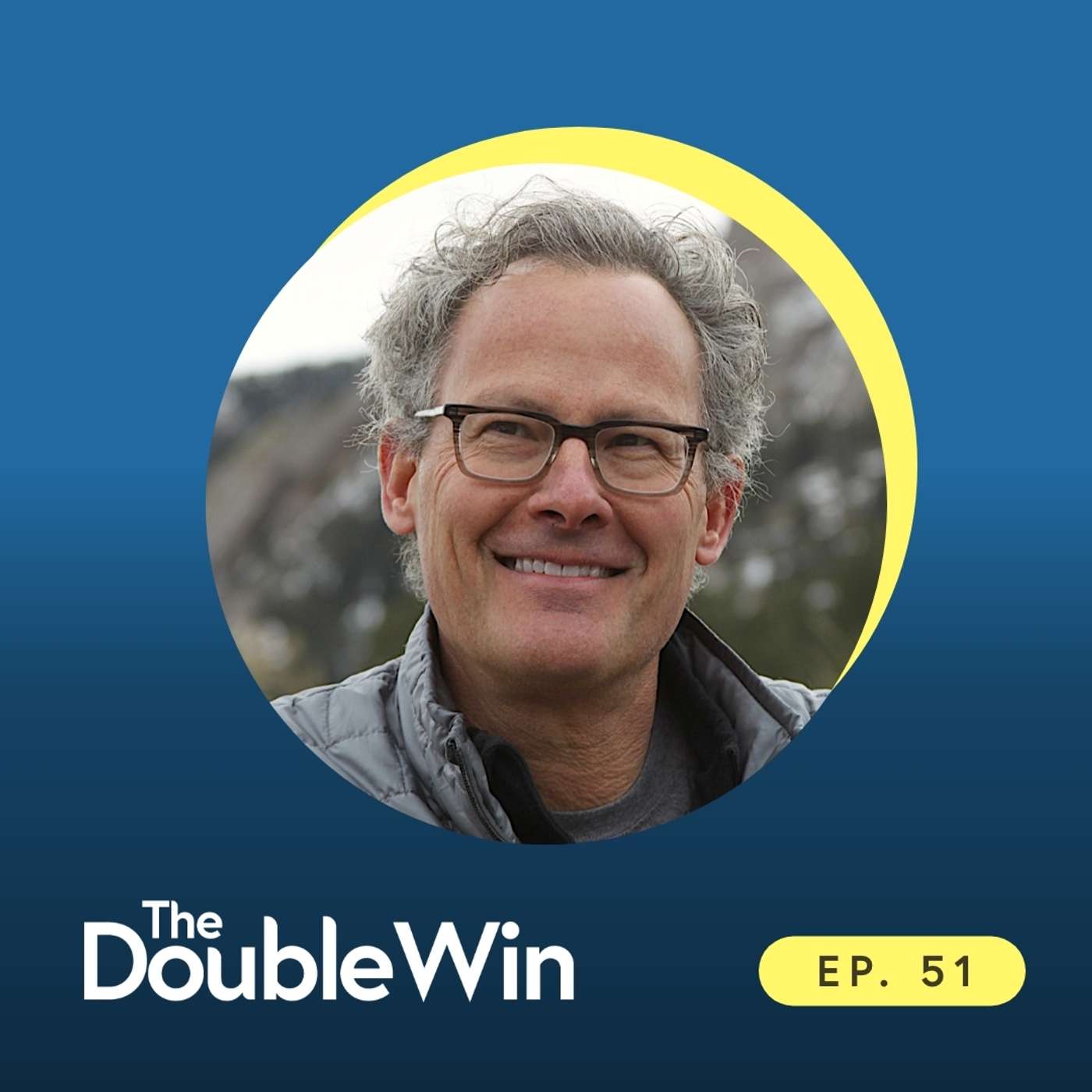
About this episode
We’ve never had more access to information or more tools to make work faster and easier. But according to Nicholas Carr, author of The Shallows and Superbloom, speed and efficiency come with trade-offs we rarely stop to examine. In this episode, Michael and Megan talk with Carr about the paradox of modern productivity: the very systems that help us scale our work can fragment our attention and erode the depth that makes that work meaningful. If you’ve felt stretched thin or subtly less present than you want to be, this conversation will help you re-evaluate your technology—and the life you’re building with it.
Memorable Quotes
- “Many people have this sense that as everything speeds up, we seem to be able to do more. But actually our attention gets fragmented and we're not thinking as straight as we used to…The basic mistake at a personal level is the assumption that human attention, human thought, human communication always gets better as it gets more efficient.”
- “At a certain point, we simply overload our natural mental and psychological capacity to communicate, to process information, to make coherent thoughts. And at that point, a reversal takes place in faster communication: faster flow of information actually undermines understanding, undermines productivity, and in the worst case scenario, can start undermining relationships as well.”
- “As we use the tools, they also shape us. And I think that's particularly true of information technologies, communication technologies, media technologies.”
- “One of the big problems is that [social media platforms] take all friction out of socializing. You think, ‘Oh, we don't want friction.’ But actually, it's… making an effort, having to do some work, maybe even having to pay a little money for a stamp to put on an envelope—all of these things deepen our connection to what we're doing. Getting rid of all the friction makes everything very fast, but it also makes everything superficial.”
- “We're encouraged to take the path of least resistance all the time. And if people can just step back and say, ‘When is efficiency good? When is getting something done as quickly as possible the best way to accomplish it? And when is the product going to be better if I actually put more effort into it, if I work at it?’”
- “The way we master a skill, any skill, is by actually practicing it. Getting in there, coming up against friction, coming up against barriers and overcoming them. That's the only way to raise your level of mastery or expertise… If you just go the path of least resistance at the very beginning, then you never get that deep learning and you never get the joy of becoming talented.”
- “One of the dangers of this screen-based life that we haven't talked about is that it steals from us certain levels of sensory engagement with the world… there's a lot of joy in connecting to the world with all our senses that, if we constantly have this little rectangle of glass in front of us, we're losing.”
Key Takeaways
- Faster Isn’t Always Better. At a certain point, efficiency overloads our cognitive and emotional capacity. More communication can undermine understanding, productivity, and even relationships.
- Tools Shape Their Users. We create technology, but over time, it reshapes how we think, communicate, and experience the world. Texting, scrolling, and AI-assisted writing subtly influence depth and nuance.
- Friction Fuels Mastery. Deep learning requires struggle. When we automate the hard parts—like reading closely, writing clearly, thinking critically—we sacrifice growth for convenience.
- AI Is a Fork in the Road. Used wisely, AI can sharpen ideas and support thinking. Used carelessly, it can replace the very mental practices that build wisdom and skill.
- Replacement Beats Removal. Simply cutting back on technology often leaves a vacuum. Replacing screen time with embodied, social, or sensory-rich experiences creates lasting change.
- Local Community Is a Powerful Antidote. Book clubs, gardening groups, shared meals and other face-to-face interactions restore depth in ways screens cannot replicate.
Resources
- “Live a Quiet Life and Work with Your Hands” (Substack Article)
- Superbloom by Nicholas Carr
- The Shallows by Nicholas Carr
- nicholascarr.com
Watch on YouTube at: https://youtu.be/9afbaUcmvYQ
This episode was produced by Sarah Vorhees Wendel of VW Sound
Get every episode summarized
Each time The Double Win publishes, we email you a written briefing from the transcript — the topics, who appeared, and any specific claims, with the ad reads skipped.
Email me new episodesFree for 3 shows. No card needed.
Hosts & guests
Transcript ready
1,454 searchable segments. Every word is indexed and playable.
Full transcript
The Double Win — NICHOLAS CARR: The Case for Adding Friction. Machine-transcribed; use the interactive transcript above to jump the player to any line.
The more digitally mediated our lives become, the less access we have to the things that make us human. Deep thought, skilled work, genuine connection, physical presence. Why is it that the tools we use to connect, create, and get things done keep quietly replacing the experiences they were supposed to enhance? And what can we do about it? Hi, I'm Michael Hyatt. And I'm Megan Hyatt Miller. And you're listening to the Double Wind Show. We're excited today to share with you our recent conversation with Nicholas Carr. Nicholas Carr is an American journalist and author focused on the human consequences of technology. He wrote Super Bloom, how technologies of connection Terra support, that's his most recent book, his book The Shadows, which I read in 2010 when it first came out, is subtitled what the internet is doing to our brains, and it was a finalist for the Pulitzer Prize in General Nonfiction. He's also the author of the Glass Cage Utopia Is Creepy,
which I just happened to order today, and several other books, but earlier in his career, he was executive editor of the Harvard Business Review. He writes the long-running blog Rough Type, and publishes work on his site about tech, culture, and society. Here's our conversation with Nicholas. Nicholas, welcome to the show. Thanks very much. It's my pleasure. We're very excited to talk about this topic, because we suspect that we're afflicted with some of the things that you talk about. And in fact, the first question I want to ask, I actually wrote down because I want to get this right. So me, just read it, I said, I built a business teaching people how to be more productive, and I spent the last decade using every digital tool available to scale that message. But lately, I've noticed something unsettling. Very systems that amplify my voice seem to be fragmenting my attention and eroding the depth I used to bring to my work. Does that sound like the paradox you're describing in Superbloom?
Or am I just getting older? No, it very much does sound like the paradox I'm talking about it. You know, I talk about it at a personal level and at a social level, but at a personal level, I think that's exactly it. We want everything to be more efficient, and that's kind of natural in the modern world, we're busy, there's a lot going on, there's a lot we have to pay attention to. And so we grab any tool that helps us become more efficient in any way. But I think what we're starting to learn, because many people like you and like me have this sense that, as everything speeds up, we seem to be able to do more, but actually somehow our attention gets fragmented and we're not thinking as straight as we used to or whatever, and I don't think it's age. You know, I think the basic mistake at a personal level is the assumption that human attention, human thought, human communication always gets better as it gets more efficient. What I argue is that at a certain point, we simply overload our natural, mental, and psychological capacity to communicate, to process information, to make coherent thoughts.
And at that point, a reversal takes place in faster communication, faster flow of information actually undermines understanding, undermines productivity, and in the worst case scenario, can start undermining relationships as well. I think for me, one of the things I've begun to realize is the tools we use, and you write about this, shaped the way that we think and behave. And I always thought that the transference was the other direction, that it was me using the tools to make an impact on the world, or on other people, but it's really having an impact on me as well. Yeah, and I think, you know, I'm certainly not the first person to it made this point. It's kind of, if you look at a lot of philosophy about technology and about media, it's kind of an undercurrent of it all, that we create the tools to do some particular function job, whatever it is, but as we use the tools, they also shape us. And I think that's particularly true of information technologies, communication technologies, media technologies,
because these are the tools we use to think with, to express ourselves, to communicate with others. And I think if you stand back, and just think about a simple example, you know, in my lifetime, we've gone, when we wanted to correspond with somebody who wasn't near us, we went from letters or phone calls to emails, and now everybody's texting. And if you look at all of the content of all of those things, it's all us trying to accomplish the same thing. But if you look at a text, it's sloppy, it's short, it's compressed, it's often hard to understand, it's abrupt, very different from, you know, if you sat down and wrote a letter by hand. So that's a simple example of how the technology we use shapes, what we do, what we think, and how we communicate. I love that you brought up the idea of texting, because it made me think of my teenagers, and you know, 90% of our communication, when they're not at home, is through texting. You know, God forbid you have to pick a phone and call your teenager, you know, they're probably not going to answer.
But that made me think about social media. And of course, there's been so much work around the negative impacts of social media on teenagers. And I think for those of us who are parents, this is something we thought a lot about, and we're trying to kind of stumble our way through, you know, because we know it affects how they see themselves, their identity, all of that. But what about adults in social media? And I asked, because about a year ago, I decided to get off of Instagram, and I've not been back on, it's been a little more than that now. I'm still on Facebook, and I was thinking last night, I don't think this is doing meaty favors. So I'd love to just hear your thoughts on that. What I've always been uncomfortable with is, whether we're talking about the internet in general or social media, is framing it in purely generational terms. Because this is not going to wait for adults to say, oh, kids these days, you know, they're always on their phone, they're always texting, they're always using social media. But this is really a society-wide phenomenon. And it's true that the way kids use the technologies
tends to be more intense and tends to be more kind of casual than adults than their parents. But nevertheless, I think use of all of these things in particular social media has similar effects no matter how old you are. And I think we run into this the same problem with adults and in some ways, maybe because adults are pressed to think about their jobs, about politics, about complex things in ways that kids aren't always, that if our dependence on social media, not only to entertain ourselves and inform ourselves about what celebrities are doing, but to inform ourselves as our default way of getting news of hearing public commentary of communicating with colleagues at work, I do think there's a danger here that it does have an effect of creating more superficial exchanges of information. You have to be fast, you have to be compressed, you can't get into nuance. And so here, I think we see this phenomenon that I, that's at the center of my book,
which is more communication means less understanding. We're so drawn to the flow of information, makes everything so easy, but I think sometimes we need to step back and really ask ourselves, is this the right way to communicate? Particularly if I want to, if I'm engaged in some complex task that requires coordination with other people. Yeah, you know, I even had this experience last night at the time of this recording, the kidnapping case of Nancy Guthrie is big news, it's all over social media. I don't know why, but I have been just like glued to that story and I just, I feel anxious about it, but again, at the time of this recording, we don't know how that turns out, what turns out to be the cause and so forth. But I have found that following that story for which I have no personal connection, obviously just my human empathy, but I have also no control over, I feel physically anxious when I think about it. And it was a kind of a wake up call last night as I was following the details of that story and just thinking, this is so easy to get sucked into
and I think so unhealthy. Not that we don't care, of course we care all those kinds of things, but it's a unique phenomenon that kind of doesn't have a human scale to it. Like we weren't meant to be concerned about things at this level, right? Yeah, when we're exposed to them, we're naturally concerned. I mean, it's a compelling disturbing story, but there are no end to compelling disturbing stories in the world and I don't think human beings evolved to have to be concerned about so many different things, most of which are far out of our individual control and kind of be updated on them all the time. And you do get into this loop of kind of, you find yourself scrolling through new stories or whatever you mentioned to Instagram. Instagram is the one kind of social media that I've had for quite a long time. I just used it in the beginning. I had like 12 people I followed, family members, just for photos and stuff, but then Instagram switched to the feed
that just gives you stuff that not from the people you follow, whatever they think is going to grab your attention. And sometimes, even though I know what's going on, I find myself just sitting there kind of scrolling through it without it, even though it doesn't even mean that much to us. So yeah, compelling things like the kidnapping, assuming that's what it is and everything are grabbing our attention, but also a lot of trivia. That doesn't matter that in we have to recognize that these platforms, social media platforms are designed with endless scroll and the endless automatic play loops and stuff. They're designed to very, very carefully to keep us scrolling, whether what we're looking at is important or completely unimportant. The biggest challenge for me is that it's like we're outgunned, outmaned against these algorithms and billions of dollars of research that go into them. And so I'm beginning to think maybe the Amish are right. There's no moderation here because the dopamine is so powerful
that it's not like I can go into Facebook and just say, oh, I'm just going to do this for a few minutes once a week or even once a day. It's just like I get sucked into a vortex where my thinking gets hijacked. I don't know what to do about that. I mean, is there a middle way where there's an appropriate use of social media? And how do you control that and fight back knowing that your brain is being hijacked by the very technology that you're using? It's very different as all through what I've been talking about. We're doing things that we don't really want to do because I think that these technologies and their design tap into very, very deep instincts. One is the seeking instinct. Like other animals, we want to know everything that's going on. I mean, in evolutionary terms, that's how you state a life. So anything new in your environment, you want to know about it. And so we've created this new digital environment where there's always something new. There's always lots of things new. And so it taps into that deep instinct and it also taps into our social instinct. We're very social animals.
And because social media is often about us in some way, how our posts get reacted to and our pictures get reacted to. That's also very compelling. So at this point, and it takes a big effort because in some ways, you're excluding yourself from the social world when you back away from these technologies. But I do think that simply limiting the number of platforms you're a member of or you follow in trying as best as possible to limit your time, you know, our basic things we can try to do. There's also broader issues about how these platforms are designed. There's one theory that's the big, one of the big problems is that they take all friction out of socializing, all friction out of thinking because you think, oh, we don't want friction. But actually it's making an effort when it comes to very human things like socializing, communicating with others, making an effort, having to do some work, maybe even having to pay a little money for a stamp to put on all of these things,
deep in our connection to what we're doing. And getting rid of all the friction makes everything very fast, but it also makes everything superficial. So there's one philosophy is we should put friction back into the design of these things. So there's limits on how often, you know, something can be retweeted or reposted. There's a delay between when you send out a post or a comment and when it appears so you can change your mind and stuff like that. And I think those are good ideas, but here too, we come up against these big, established, powerful businesses. And that's the last thing they want to do is get people to slow down and be more thoughtful. So it's really a conundrum at a personal level and at a societal level about, now that we've enmeshed ourselves in this world, how do we extract ourselves? You know, even just a little bit, not entirely. I'm just curious, just as a follow up, you know, you wrote the Shalos in what 2010? Yeah. And you were talking even then about what screens are doing to our brain. And now we are here 16 years later,
were you too optimistic or too pessimistic? I don't think I was too pessimistic. The Shalos came out of my own early experience spending a lot of time online because I really felt it, you know, I was writing about technology back then, I was spending a lot of time, this was with the laptop, our desktop browsing the web, surfing the web, as we used to say. And I did feel that my ability to sustain my attention was being eroded. You know, I used to love reading books and long articles and it became a real struggle. And so I really do think and continue to think that the more we use the technology, the more it shapes the way we think. So I think if you look at everything that's happened in the last 15 years, we've switched from desktops and laptops to phones, which are always with us, always connected, always pinging us with new notifications, new information. So I think the phenomenon or phenomena of distraction and interruption and how it undermines thought that I described in the Shalos has gotten worse
simply because we've switched to a new device for connecting the phone. And you know, back then Facebook was new and you had to go online in a browser, you know, on a laptop to see it, we switched to a new device, the phone that's always on and always connected. And social media has become much, much more important. It's turned into apps that are always there and it's been ruthlessly designed to grab our attention. So unfortunately, this is one of those things where there's a kind of, in many ways, I wish I was wrong. Yes, my life, and I think society would be better. On the other hand, I'm kind of happy that I was right simply because I was making an argument. But yeah, I think things, I think what I was concerned about then are much magnified today. What do you think will be in five years given the investment that's been made into AI and how fast AI is improving? I mean, I spend a lot of time in AI and it just seems like every day there's a new announcement.
There's something better. So where does this go? Two years ago, I, I was really trying to be skeptical about AI and to argue that, you know, it was being overhyped in everything. And I still think there's probably some overhyped there. There's probably some over-investment, which may play out in nasty ways. But I do think, and I think your experience is representative that it's incredibly useful just on a task by task basis. I might wish that people weren't using as much or won't in the future, but I think they will. And I think that's the reality. So the big question is, you know, there are, I think there are ways to use AI wisely to see it kind of as a testing board to get feedback on your own ideas. But then this is the problem with automation in general. There's also a bad way to use it, which is simply to offload everything onto the machine.
So, oh, I don't need to read anymore. I can get AI to give me a summary. I don't need to write anymore. I can get AI to crank something out. And then, I mean, the danger is it becomes, you stop practicing things that are actually important, communicating, forming your own thoughts, reading, making sense of what you read. And so my fear is that if we simply rush forward and just start adopting it for everything, we're going to become lesser people as a result, less capable, less thoughtful. Again, maybe more efficient, because the machine is doing all your writing and communicating for you. But somehow, you know, my fear is that life, because we're not really practicing the skills that are most fulfilling to us in the long run, that life becomes more efficient, but less satisfying. Okay, I think that is a great place to kind of shift our conversation a little bit to trade-offs.
You know, we've talked a lot about why someone would want to use a lot of digital technologies and screens and AI and all the things. And I think especially as we were talking before we started, our audience feels that tension between the scarcity of time, that is just the reality for all of us and tremendous demands on our life, not to mention our own aspirations and desires and so forth. You know, but for somebody who says, sure, you know, there's downsides, but on balance, I think the trade-offs are worth it. You know, I'm more informed, I'm more connected, more productive than I've ever been. What are they not seeing that you see as you think about human flourishing for people? You know, I'll start by saying that I don't want to, I don't want to say that everybody who has an experience that is different from my own is wrong. A lot of people on the planet, they use these technologies in different ways, they have different personalities, they have different goals for themselves, and for some people it may be ideal and so be it.
But I do think that what people need to pay attention to is being conscious of what gives them satisfaction, what gives them fulfillment. Is it just juggling lots of information and sending out messages very quickly, or is it struggling with difficult concepts? Is it struggling to express yourself in a clear, meaningful way to people who are important to you or to other people in general? Is it, and once you first think about, you know, what gives me satisfaction in life? I think you often find that it's grappling with hard things, mastering difficult skills that you can then build on in the future. It's not simply taking the path of least resistance. And so one of the big problems is because our phones are there, our computers are there all the time because AI now is there all the time, we're encouraged to take the path of least resistance all the time. And if people can just step back and say, when is efficiency good?
When is getting something done as quickly as possible, the best way to accomplish it? And when is the product going to be better in my own experience better if I actually put more effort into it, if I work at it? And just beginning by making those distinctions gives you a sense of, okay, where can I use the technology, whatever it is to automate these things? And where should I step back and either use a different tool or use my own inner resources to get something done? We've fallen into a kind of trap of thinking that, you know, computers and phones are an all-purpose tool. They're always there and somehow because they're more efficient, they're always the best tool to use. And I think that's a false assumption. And if we can get back to thinking more clearly about, you know, what's the best tool for each particular job or task? And when should we use no tool at all? We'd be able to be more diligent and thoughtful about how we use these very, very, very powerful technologies
in a way that benefits us rather than simply undermines our best intentions. Do you have any rules for yourself as you're kind of grappling with those questions like any kind of rubric that you use that helps you to determine the answer, knowing that maybe less for you given all the work that you've done, but for most of us, the impulse is always going to be to choose less friction and more speed, you know, given all the choices on the table. How do you navigate that? I struggle with this too because I find this flow of information and new experiences and novelty, very, very compelling as all people do. But I guess I'll just give a couple of particular ways that I try to deal with it that may be applicable to other people. One thing is that this really, you know, started, I started thinking about this very soon after smartphones arrived. Is that immediately people assumed that this is a device that they should have with them all the time?
They should carry it with them no matter what they're doing. When they go to bed, they'll put it on their bedside table or if you're a kid, you'll put it on your pillow or whatever. So it's always there and it's always, even when we're not using it, it's always intruding on our thoughts because we're thinking about looking at it. And I thought, you know, this is such a powerful technology that this assumption that we should have it with us all the time is a big mistake. So, you know, one thing I do at a very simple level is, I ask myself, do I really need my phone for this next thing I'm going to do if I'm going out to dinner with my wife or a group of people? Do I want to bring my phone? Is that going to make the experience better or should I leave it behind? If I'm going out for a walk, do I want to bring my phone knowing that, you know, I'm going to start pulling it out to do something completely trivial or silly? Or should I leave it behind and simply go out and take a nice walk and look around? So just stopping and saying, you know, does this technology in particular the phone, but it can be whatever, is this technology going to really make my experience
better or is it going to intrude on it and make it worse? And then, you know, having the courage, because nobody likes to be disconnected these days, but having the courage is just say, I'm not going to bring it with me. I'm going to go out and do this on my own without this aid in my pocket or in my pocket book. And then just another one is that, and this relates to AI, and it sort of comes back to what I was talking about earlier, I tried to think about what things are really satisfying for me to do and to struggle with. And I'm a writer and one of the first things AI has been adopted for is doing your writing for you. And it's quite good. You know, for a lot of students, I think they can pump out a paper with AI that's better than they could do, frankly. And so it's very, very enticing. But what I realized is, you know, this work, the work of writing is very important to me. And so I'm going to draw a line there. I'm not going to use, I'm not going to ask AI to write stuff for me. Even if I get stuck as I do quite often, and I have to really work on the words
and try to get them right, I'm not going to bypass that struggle because I think ultimately, even though it takes more time and it can be frustrating, when I get to the end of it, I've produced something better, something that's more my own and something that's more satisfying to me. And so for me, it's writing, but for other people, it might be very, very different things. And if you can just identify what things that I do am I proud of doing and do I really enjoy doing, even if it's frustrating at times, and not fall back on technology to make those activities more efficient. I think what I hear you saying is just that struggle can actually be part of the joy of our work. I think about my marriage, for example, been married for 17 years to my husband Joel, and that has not come without its challenges, of course, or parenting, I five kids. If I could suddenly remove all the friction from those two contexts, in some ways that would be very enticing. On the other hand, the friction has shaped me,
just like these tool shape us, for better or worse, the friction I think also can shape us, probably for better or worse, but it's easy to think that it's always for worse, and that we should try to eliminate it. And I think that's maybe not a nuance enough perspective. And so I appreciate you highlighting that. Yeah, no, I think that's absolutely right. We have to, everything we know about, the way the brain works, the way we learn, you don't learn by having something, having a technology do something for you or ease the work. The way we learn, the way we master skill, any skill is by actually practicing it, getting in there, coming up against friction, coming up against barriers, and overcoming them. That's the only way to raise your level of mastery or expertise, and once you've raised that level no matter what it is, then that gives you a new baseline to raise it again, and that's a very satisfying process, that's how we become masters of some task or experts. And if you just go the path of release, of least resistance at the very beginning
and relieve yourself of having to do the work necessary to have that kind of deep learning, then you never get that deep learning in your stuck at some lower level of effort and expertise, and so you never get the joy of becoming talented. Who would have thought that in 2026, not taking your phone with you, or deciding to write on your own with out the aid of AI or something else, would be an act of courage and defiance. But it kind of is, it's kind of a revolutionary act. And I was thinking as you all were talking, it's almost like there are these two unspoken values that have become the super values, that regardless of your religion, your upbringing, your ethnicity, are sort of the governing values of modern society, and those are fast and easy. And so it's like they operate unconsciously, but we always gravitate toward those two things. I spent most of my career in the book publishing world and various roles as editor and marketer
and chief executive and so forth, but I can remember when the Kindles came out. You know, everybody was forecasting that that was the end of publishing and actually didn't hurt it at all. In fact, I think it helped it. But could be the end of publishing though, book publishing at least, is what AI makes possible with just in time learning. In other words, I read a book in the hopes that somehow this information will serve me in some way in the future. But I don't really have a specific problem I'm trying to solve. It's just information that I'm putting sort of in the pantry in case I need it. But with AI, I find myself reading less because it's right there to inform me on the specific problem I'm dealing with right now. So I don't know if you have any thoughts about the future of publishing or Zidra, writer yourself, where do you think that's going long form communication? Yeah, unfortunately, I don't think it's going in a good direction. And I do have to say, you know, going back to what you just said
about the arrival of a Kindle, when I wrote the Shadows, a lot of which had to do with reading. That was 2010. I think the Kindle would come out in 2007 or something. And if you looked at that point at adoption of ebooks, it was going, it was skyrocketing. And print books were flat. So I actually have a chapter in the Shadows, which is chapter, which I think I get things wrong. Unfortunately, that basically took these trends and thought they'd continue in the same way in that ebooks would just take over because that's what it looked like at the time. And in fact, you know, as you said it, that didn't happen. Ebooks became kind of like audio books. They're out there. Some people like them. Some people who are print readers will get an audio book or a ebook for a particular purpose, but it didn't undermine print books. And I do think print books printed on pages encouraged the deepest immersion in the work. But I think what we're seeing today is one thing exactly what you said, which is you can get an immediate answer without having to go through the process of reading
what might feel at the time like extraneous matter to whatever you're trying to accomplish. And so this is, there's always been attention, I think, infuse of books or essays or whatever, between, you know, the medium of writing as an information delivery device. I'm going to read because I need to get this particular piece of information. I need the author to communicate it really quickly so I can get it and then move on to the next thing. And reading as an experience that the experience can be fulfilling in and of itself. But also, as you said, you're learning things you didn't set out to learn, but it's going to fill your storehouse of knowledge that you can then draw on in the future. And, you know, my view of learning of reading is very much the second thing. There are times when I just want an answer, but you need to learn to appreciate reading not simply to get an immediate answer, but to build up your store of experience, your store of knowledge. And I do think that now, particularly with AI, that the first kind of idea of reading that I talked about,
which is, you know, written materials as information delivery devices like phones or whatever is taking precedence. And so even for kids in college, I need to write a paper. That's the product. I need to get certain amounts of information to put into that paper. So I'll just use AI to do the reading for me, to start making connections for me. And that's actually, ideally, that is not what writing a paper in college is about. It's about grappling with hard ideas that you read. It's about using your own mind to figure out how to put these things together. The paper doesn't really matter. It's the act of being able to write the paper that matters. And we're kind of turning that all around with AI. And so I do really think we're at a crucial point now in the future of books and long form reading in general. I don't think they're not going to survive, but the question is, how big of an audience are they going to have in the future? And I think if you just look at, you know, the recent declines, rapid declines in the number of young people who read for pleasure,
whether it's in the US or the UK, there's a lot of very deep survey research out. It's really plummeting very, very quickly. And to me, you know, I hope I'm, I turn out to be wrong again, as I kind of was with eBooks 15 years ago, but it really seems we're reaching a turning point where, you know, as some put it, we're moving into a post literate society. Well, and unfortunately, that has broad societal implications, including the ability to manipulate the masses because people can't think they don't have the reasoning capability to argue against something, someone who's screaming the loudest or has the greatest reach. And that's to me the ultimate impact of all this, which I don't like a bit. If you don't build up this store of knowledge just through reading and paying attention to other things, you don't build up the context in which to filter the new information that comes to you. So you lose your skepticism, you lose your ability to think critically.
And I agree that has big profound consequences for society. I was heartened by the fact that Barnes and Noble announced that they were going to open 60 new stores this year, which I don't know what's driving that, but bring it on or that. Yeah, and I think a lot of smaller book shops, independents have thrived, but I hope they're still selling books and not just coffee and stuff, but still it is heartening that there is still a literary society out there. How quickly it's shrinking is worrisome to me, but it's there. Nicholas, I was just thinking as you were talking that one of the things I've noticed is that there seems to be a counter movement at play. And I'm sure you've thought a lot about this. I think about sub-stack, for example, a place where, again, long form writing, not only has a place, but I think it celebrated in many ways,
and at least the little parts of that that I'm a part of, I routinely see thoughtful work that people are putting out, for example. Another place we see this is in the analog movement. We love around here books like The Revenge of Analog and The Future is Analog, and those have been very influential in our product philosophy at full focus, to the point that really The Revenge of Analog was heavily influenced the creation of the full focus planner, and we decided not to create an app. That was telling me before we began recording, we spent a million dollars on the development of an app and ended up abandoning it because we felt that it wasn't ultimately in the best interest of the people that we serve, and their attention, and ultimately, they're flourishing, that a physical analog tool is valuable. I'm curious kind of what you're seeing with regard to the counter movement, and kind of what some of the answers that people are having to these issues.
15 years ago, when I wrote the Shalos, there weren't a lot of people worried about what was going on. We were still in the very honey moon phase with Silicon Valley, with the internet, with the web, and so criticizing it, or raising concerns about it, as I tried to do, was seemed weird, I think it's fair to say. And so today it doesn't, I mean, there's much more skepticism, there's much more critical thinking about the technology, there's much more awareness that, you know, for all the good it can do us, it can do us a lot of harm as well. So I think at that level, you know, we are more aware of both the good and the bad of the technology, which is a good starting point for having a counter movement. I still think that the tide is with the technology in the companies who manipulate the technology, but I do think, you know, and you've pointed out some examples, that there are attempts to go beyond simply saying, oh, I'm worried about this, to actually saying, I'm going to change my habits,
or I'm going to change my behavior. I think it's still kind of small, but I think it's growing. You know, I've become, as I've written about this, you know, more and more up to the present, I've become convinced that the problems that the technology creates, there are personal problems and there's social problems. We not only carry our phones with us all the time, society as a whole has decided that everything has to be done online. Even if you want to stop or pull back, you're going to face all sorts of barriers because you're expected to be online. So if this is going to change, it's really going to change because of a counter-cultural movement. Because this is how, this is how these big kind of social things tend to change. And I do think that once you get this kind of orthodoxy in this kind of expectation, this kind of oppressive expectation that you need to use this particular tool for everything, this particular technology, that does often result in a counter-cultural movement, often from the young who just say, no, we're not going to do it anymore. So I do think that's possible.
And I hope that in some form, some productive form, it does emerge because I do think we need more than just individuals at this point making better choices, even though that's important. If we're really going to change the path we're on and use the technology, I think, in a wiser way, it really does have to be a cultural social change. It's funny, yesterday our team, it was a beautiful day, it was an unusually beautiful day here at the end of winter. And we sat outside in that lunch and we were talking about grocery delivery like on Instacart. And I was saying something about, I decided to use it less. And I was realizing it was spending a much money, I didn't need to spend. And our youngest team member, Hannah, and Hannah will listen to this and she's going to chuckle. But she said, guys, I got to tell you, I've never used grocery delivery. And we were all like, what are you talking about? We couldn't believe that anybody, all of us in our 40s and 50s, we're like, this is amazing. Someone's never used grocery delivery. But it reminds me of my 24 year old son
who's very concerned with doing things with his hands. And I just think that 30 and under generation are thinking about this. The ones that grew up with phones from the time they were tiny are like, there's a dark side to this that maybe mom and dad don't even understand fully. But they get it in a unique way. And I find it fascinating. I sent my family last night an article from Substack about a show that I love on the BBC that's called All Creatures Great and Small. I don't know if you've watched it. It's a lovely show. Yeah. I'm going to link to this in the show notes. But there was an article on Substack that a woman named Julie Kilker published called Live a Quiet Life and Work with Your Hands, 12 Lessons on the Good Life from Jane Harriet's Derribee. And it's just a beautiful explanation, I think, of a contrary to perspective to what you're warning against. What this could look like. And obviously, it's not going to look like the Yorkshire Dales in 1930 and 1940.
But I do think we need models of that. What are some models that you have for what this could look like in our modern context? Yeah. As it happens, my wife and I are in the middle of the latest season of the show. Yeah. So I know what you're talking about. And I do think everything you just said there is very important because one of the dangers of this screen-based life that we haven't talked about is that it steals from us certain levels of sensory engagement with the world. We're constantly using our near-focus vision and we're listening to things and stuff. But there's no texture. There's no kind of shifting between the distance and what's close in vision, the smells of the world and stuff are at a distance. And I think there's a lot of joy in connecting to the world with all our senses that if we're constantly, if we constantly have this little rectangle of glass in front of us, we're losing.
So I do think anything that brings us back to using all of our senses on a regular basis. And that can be hobbies. Maybe you knit or maybe you do woodwork or whatever. The more we can achieve a greater balance in our sensory engagement with the world, the better. And I think this is particularly important for parents raising young children is to make sure that they interact with the world in lots of different ways, in lots of ways that are manual, that puts you in touch with the texture of the world and stuff. Because I do think that those habits that you make when you're very, very young tend to stick with you. And so if a child uses a computer, a tablet or a phone for a little bit during the day, that's fine, but make sure that that's balanced with very different ways of interacting with the world and different ways of using your mind
and your hands and all your senses. In Super Bloom, you open with this story about a scene of influencers trampling a poppy field to get the perfect selfie. You know, there's something about digital technology that can make us trample the very thing we came to see. You know, you're in some beautiful situation like we were in Peru a few years ago and it was just amazing. We were hiking like at 12,000 feet. It was absolutely gorgeous and it was amazing how many tourists were experiencing that through their camera, through their phone camera. They weren't even present experiencing it. And it's just such an odd behavior, although I certainly engage in it myself. Yeah. But it's almost like people don't believe that it tells digital. Right. I think we're so immersed in media these days. And it used to be, you know, through television stuff. You were immersed in TV for maybe a few hours,
you know, during prime time, few hours and you were just watching it. You weren't creating it. Now, you know, with the internet and with social media, we're immersed in media as never before and we're producing it, we're consuming it. And I do think that, and I think this, you know, that story of the Super Bloom where people go out, they're drawn to what they think is the beauty of this natural display and they end up trampling it because they want to get a selfie. It shows how very easy it is to start to see the world as something, as the way it will look when it comes through your screen, rather than for itself. And so you begin to see images of things and you lose sight of the thing itself. And I think that's a very dangerous, a very big danger these days. And I think we all fall into it. We've all become kind of, social media has turned us all into kind of media producers in the content of the show is our life itself. And that can lead to this kind of behavior where not only are you portraying yourself through a screen,
but you're thinking of yourself as somebody who's portrayed through a screen rather than as a real person in a real setting. And so yeah, that, I mean, that's why I started with that story because I think if you at a very, very high level of what it means to be, a human being, what it means to have a self, I do think the technology is even intruding on us there and not with our best interests in mind. We're all living the Truman show, right? Nicholas, you talk about something called frictional design. So basically kind of speed bumps for digital life. And like we talked a little bit earlier about delays before posting and limits unfolding and all that. I think you're right, the likelihood that the tech industry does something like that. Maybe we get some of that stuff for kids that slows the kids down. What are some practical ways that we can do that for ourselves that actually work? You know, I know there are just devices, different kinds of devices that you can get that are less smart, so to speak, you know, other things,
but like what actually works here to help us not be kind of zombie in this space? Yeah, I mean, in this is kind of an irony, but there are now smartphones that basically act like dumb phones. You know, people will turn off the color on their smart phones because black and white is less engaging. There's also lots of software programs now that will regulate your ability to use social media, which I think is kind of an irony to use the software to prevent you from using software. And I'm a little suspicious about those things because I wonder how long people really stick with them. I've tried them once and I didn't stick with them. But they work for some people. So I don't want to denigrate them. And if they work for you, they work for you because at least at one level, it shows how powerful a hold the technology has on us. That we have to use more technology just to break that hold even for short periods of time. I do think it comes down to really making some sacrifices in saying I'm not going to have accounts on Instagram
and Facebook and X and Snapchat. And it's pruned away a lot of social media. And I'm using social media because social media, I think is the most aggressively designed to grab and hold our attention. And pruned that away and by pruned away, I mean, closing your accounts and getting the apps off your phone. And then a fairly simple thing, but again, it's the technology industry makes it more difficult than it should be is turning off notifications for a lot of these apps. Because what notifications tend to do is instead of you choosing what you're going to look at for moment to moment and what app you're going to use or whatever, suddenly the technology is controlling what you're looking at because it's constantly beeping at you. It's kind of buzzing at you giving you notifications. So simply giving yourself more control over your experience and what you're looking at for moment to moment and not allowing the technology to do that for you.
And then just going back to something already mentioned is spending a significant portion of your day without the technology at hand. So your experience take on a kind of different tone and a different texture and different pace. You know, if this was easy, we'd all have a really good relationship with the technology. It's very, very hard both because we're up against very sophisticated designs that are based on very sophisticated knowledge of human behavior. And we're also up against a long term social trend that says we need to do everything online. Everybody needs to be accessible all the time and connected all the time. You know, one of the things that I've experienced myself and I've tried a number of different times to dramatically reduce my phone usage. I've tried different apps. I've not tried the dumb phone, but I've tried different apps. I've tried all kinds of, you know, more analog things at one time I was like having the paper delivered to me, you know, and I thought, that's all get my news.
I'll read the paper. And none of it has worked well. I mean, certainly the thing that has worked the best and maybe the only thing that has worked is saying, for example, on Instagram or just not on it, like at all, it's like an auto and nothing. But what I've experienced is when I try to limit my time online, I'm immediately faced with dopamine seeking drive to talk about kind of scientifically with anxiety with a sense of restlessness. It's very unpleasant. I mean, it's like I know why I'm doing what I'm doing, right? What I don't know how to do well and I imagine our listeners feel the same way is put something in that spot, to be able to backfill that time with something that settles me in the same way that honestly, the devices and the algorithms are doing. Do you have any thoughts on that? I mean, there's also another thing that makes it difficult
to back away is that often you face resentment from the other people who are used to interacting with you in these modes. I mean, my classic example is with Facebook, which I stopped using a long time ago. Nobody wishes me happy birthday anymore. You don't get cards or anything. And since you're not on Facebook, it's well to heck with it. Right. I'm not gonna say happy birthday, so there are sacrifices, but it's true that there's this, you often hear, oh, well the computer technology makes everything so efficient. It frees us up to do more meaningful things. And then as you said, what it really, for most people, what it frees them up to do is less meaningful things to go on their phone. And then when they don't do it, then as you said, there's this hole there. And I do think, and again, these things are hard, but I do think seeing that panic and that pain has perhaps an opportunity to say, what can I do that is gonna be meaningful to me? How can I best spend my time?
I often think about kids with phones or tablets. You know, when I was growing up, there was kind of a rhythm to your day that there were times when you were with your friends and you were playing and you're goofing off and you're having fun. And then you'd go home and you'd be in your room and you couldn't socialize. And at first you said, oh, I'm bored. But then you kind of had to learn how to amuse yourself. You had to learn in the act of figuring out how to amuse yourself, often revealed to you activities or hobbies that were fun and that you really enjoyed. And so that kind of sense of boredom or panic or oh gosh, I need to do something that can be an opportunity that motivates you to explore other things you might be doing and you'll probably find something that you really, really like. But it is you have to get over that initial fear of missing out and panic and oh gosh, there's new information out there and I'm not getting it, which is a really, you know, a kind of drag on your nervous system. I mean, it really is.
I think that's really true. What I find is I do well during the day. Like I garden, I love to walk. Like if I can be outside, I'm just fine. I'm my happiest when I'm outside. I'm the most regulated in terms of my nervous system. Like to your point earlier about being in a sensory rich environment. Like that is key where I personally struggle is at night when I'm tired. You know, I put my kids down to bed. It's been a long day at work or maybe something stressful's happened and I just kind of want to zone out, so to speak. That's where it's the heart. Like that's where I'm most vulnerable and I feel like that's where I'm looking for a good solution in those moments because I don't, whereas if it's the afternoon, I might welcome the friction of gardening and the physical nature of that or a walk or doing something outside with our kids. At night, the friction feels like something I don't want and that's an easy place to fall into the trap of the kind of mindless scrolling or consumption of media.
And in many ways, it's the worst time because it's time leading up to bedtime. And so this is a mental stimulant and it gets everything going. You're thinking about the news, you're thinking about crimes that are you're following, you're thinking about people saying things you disagree with politically and so it intrudes on your sleep. And so yeah, that is a big challenge. You can always rewatch the earlier seasons of all things great and so. Yes, actually, and I've watched even the original one from the 80s, I think, and that one is also delightful though harder to understand. Yeah, we have to put on subtitles for sure. So Nicholas, I think as we wrap this up, one of the questions I have, if you could leave us with maybe two or three practical tips that would be guidance for people that are compelled by this, but maybe they've tried not using social media, it hasn't worked. They eventually returned to it. They've tried limiting their screen time, but that really hasn't worked. And asking for a friend, what would you give us to?
Yeah, so we've gone over some of those ways that if you could do them and keep doing them would help, but often we fall back into bad habits. I guess I'll just leave with one thing and this has been a long-term problem that people have been talking about since that book bowling alone a long time ago, is that as media and computer technology and smartphones become more dominant in our lives, we have less face-to-face interaction with people close to us, neighbors and stuff. And so I think one of the most powerful ways to kind of fight back is to join in local groups and get involved and maybe start them. Maybe it's a book club, maybe it's a gardening club, whatever, maybe just going out every once in a while and having a lunch or a drink or something with other people. In some ways that gives you the social interaction that people often become dependent on their devices for. So it fills that hole and it also I think fills it in a richer way than the screen will ever do.
So it's a way to remove yourself from the screen life in a way that's very stimulating in some ways, more stimulating what a screen could ever do. And it also helps with this broader problem of us of society becoming more fragmented and people being less tuned into their local community which I think is another big problem that we face. So somehow going out and being with people in one way or another I think in some ways is the best way because you don't lose anything. You do in fact gain a lot. You know, I've noticed when I try to remove something it leaves the vacuum and it eventually pulls me back into it. But I would replace something with something else. Like last night I met with the men's group we go fly fishing once a year and we get together monthly for just to check in with each other. So we did that last night. And I noticed that I didn't miss social media. I didn't miss any other kind of media during that entire time. I was completely engaged and I went to bed deeply satisfied
in a way that social media and other kinds of media don't leave me. So I think you're spot on there. Thank you. Yeah, we forget about the power of actually being with other people. Nicholas, this has been amazing. Thank you so much for giving us this time. We'll go ahead and talk about your books and the show notes. We'll link to all those. But if people want to find all things related to you today is there sort of a one stop spot that they could go to connect with all the things that you're doing? Yeah, I of course have a website. So you can go to knicklescar.com and that'll tell you what I've written and other things I'm doing. And you'll get a good overview. Fantastic. Thanks again. You're welcome. Thank you. Okay, Dad, what did you think about that interview with Nicholas? I thought it was fantastic. And part of the reason I thought it was fantastic is because I realize how unconscious my use of technology is.
It's become so much a part of how I think and move in the world that the thought of sort of dialing that down and using less technology kind of makes me anxious. Yeah. And I've been a tech enthusiast for as long as I can remember, my dad, believe it or not, who's now 91, got me into tech back in the 70s when he bought a radio shack computer. I've never been the same. I enjoyed it. He enjoyed it and I use tech like crazy now. But I realized that not all the glitters is gold. And that is especially true when it comes to technology. And so I think it's super helpful to have somebody who's kind of a critic of that. He appreciates it and uses it. But he also sees the implications of it. And I found that worth discussing and worth pondering further. Yeah, I feel like I'd kind of go through phases where I'm more and less conscious about my engagement with technology. I find that the more time I'm spending outside,
which I talked with Nicholas about a little bit in one of my questions, the more I don't need technology. And I think the need is a sort of scary word to use. But I think it's right. There's a compulsive nature to it that I think kind of can only be broken with multi-sensory experiences. I can't remember the exact language that he used. But he talked about that. That what we're made for and what we crave are these deep rich multi-sensory experiences. And they're kind of the only thing that can compete with the digital technologies, particularly social media, which is so addictive and so designed to be compulsive by nature. But this was a good reminder that it's time for another check. Yes, another reset. Another reset. Well, I sometimes feel like we're fighting our own biology because digital technologies give us not just a dopamine kit, but we can get from other things
like actually writing or actually working out, those lead to their own dopamine kit, but it's delayed. It's like slowed dopamine. Yeah, slowed dopamine. And so I think all things being equal, we're gonna give ourselves to the things that are fast and easy. And I really think that that two-value system that's governing a lot of our lives is also worthy of examination because not all things that are faster, good, and not all things that are easy are good. And yet we keep advocating. Some people have written books on this about making it easy, making it faster. And I saw an ad in my Facebook feed today where somebody was talking about how you could build a website in 12 seconds. And somebody said, I don't think that's a metric that really matters. If we're gonna build a website, we want a beautiful website. If we're gonna write a book, we want a thoughtful book. And fast is not equal value. You know, it's so interesting. I didn't bring this up while we were talking because it's kind of just occurring to me now.
But at some level, this is an issue of grappling with our own mortality. Yes. The reality, the inescapable reality that we have less time on Earth than we would like or feel entitled to. You know what I mean? Like, I don't care how old you are. If you're 25 or 85 or 45, you probably feel like you don't have enough time. And so we're constantly trying to find ways to do more with the time we have and not have to face the reality that it's just not gonna be as much as we want, no matter what. And I think the refusal to admit that keeps us from being able to enjoy and be good stewards of the time that we have. And by accepting our limitations, rather than pretending they don't exist, or pretending that we can cheat biology or those kinds of things. You know, for example, it would be so much more valuable to have far fewer social interactions
that were meaningful and in person than endless ones online. You know, we say we don't have time to get together with people, but how many hours a day are we spending scrolling on our phones? Like, we do have time. We're just not using the time for the things that really matter because it's so addictive and we don't even realize that we're doing it. But I think that's an important part of this conversation is the only way you can go slower, which I think is we're so much of the juice of life. Like, anything that's actually good is probably slow. Like, what is good that's fast, really? Not food, not relationships, not experiences. Like, none of those things. You're never like, you know what I need? Is a really fast date with my spouse, you know? Or a really fast experience of worship or a really fast meal. It's like, those are compromises usually in quality for speed, but the only thing that allows us to go slow is just say, you know, I'm gonna say, know to a lot of other things so I can say yes to this thing fully.
You know, what kind of creates a witch's brew is this denial of mortality and our own ambition. And let me explain. I think because we're exposed to more things, we have more ambition. Now we see, oh, what is it like to visit Japan or Scotland? And now suddenly that goes on our bucket list. And then we realized that couple with our own mortality. It's like, man, if we're gonna experience all this stuff, we better hurry up. You know, we gotta do more faster. And in the doing of that, we rob ourselves of the joy of the things that we are doing. And I think for me, it manages so much easier said than done. You know, I'm trying to come to grips with the fact that I'm not gonna be able to accomplish everything I dream of in my life. And I'd rather do a few things well than try to do everything poorly and not really be present. And I think all of this wars with presence, with us being present to the people that we love, that we say we love.
And to the experiences that we say we value. You know, if you go to on a tourist trip to some beautiful place and you're just flying from one location to the next, are you really enjoying it? Are you really experiencing it? You know, just because you've got it on your photo reel doesn't really mean much when you can't even remember how you experienced it when you were there. Absolutely. Well, that's kind of what I thought of when I read the substack newsletter or article that I mentioned during the show, live a quiet life and work with your hands. You can look it up if you put it in the show notes as well. 12 Lessons of the Good Life from James Harriet Stereby by Julie Kilker. And that's really what she's talking about. Is like when you kind of make your life smaller in certain ways, you actually make it richer. And it's counterintuitive, but I think there's really something to that. And I just encourage you, if you haven't watched All Creatures Great and Small do it because I think it's a good, it's not a total analog because obviously it's,
you know, almost a hundred years ago, not quite, but you know, 1930s, 1940s. But it's a good picture of what it could look like to have a rich life that's very local. That's not all the things you just mentioned, you know, and it can be deeply satisfying. And I find older, I get the more that's what I want and the less of trying to do all the things in the bucket list. I'm so drawn to that kind of thing. And I think that's why people are watching that, that series is because it does connect with something deep in our experience that we want more of. It's more satisfying than all the short-lived, digital hits that we get. Well, I hope you guys enjoyed the show as much as we did and had some similar ahas. We'd love for you, if you did, rate the show for us. Let us know what you think. That helps us get more visibility for the show so that people who are interested in human foreishing and living a rich life and waiting at work
and succeeding at life, all those things, can find these conversations. So we'd be grateful if you'd help us out by doing that. And we look forward to seeing you next week. Thanks so much for joining us.
More episodes
More from The Double Win

CARL HONORE: Living at the Right Speed
The Double Win

SUMMER REPLAY: RICH LITVIN: Finding What You Want
The Double Win

SUMMER REPLAY: KEN COLEMAN: Find the Work You're Wired To Do
The Double Win

SUMMER REPLAY: DONALD MILLER: Edit Your Life for Success
The Double Win