Loading...
newspoliticssociety
NWJ762- From Psyop to Mindwar: the Psychology of Victory
About this Episode
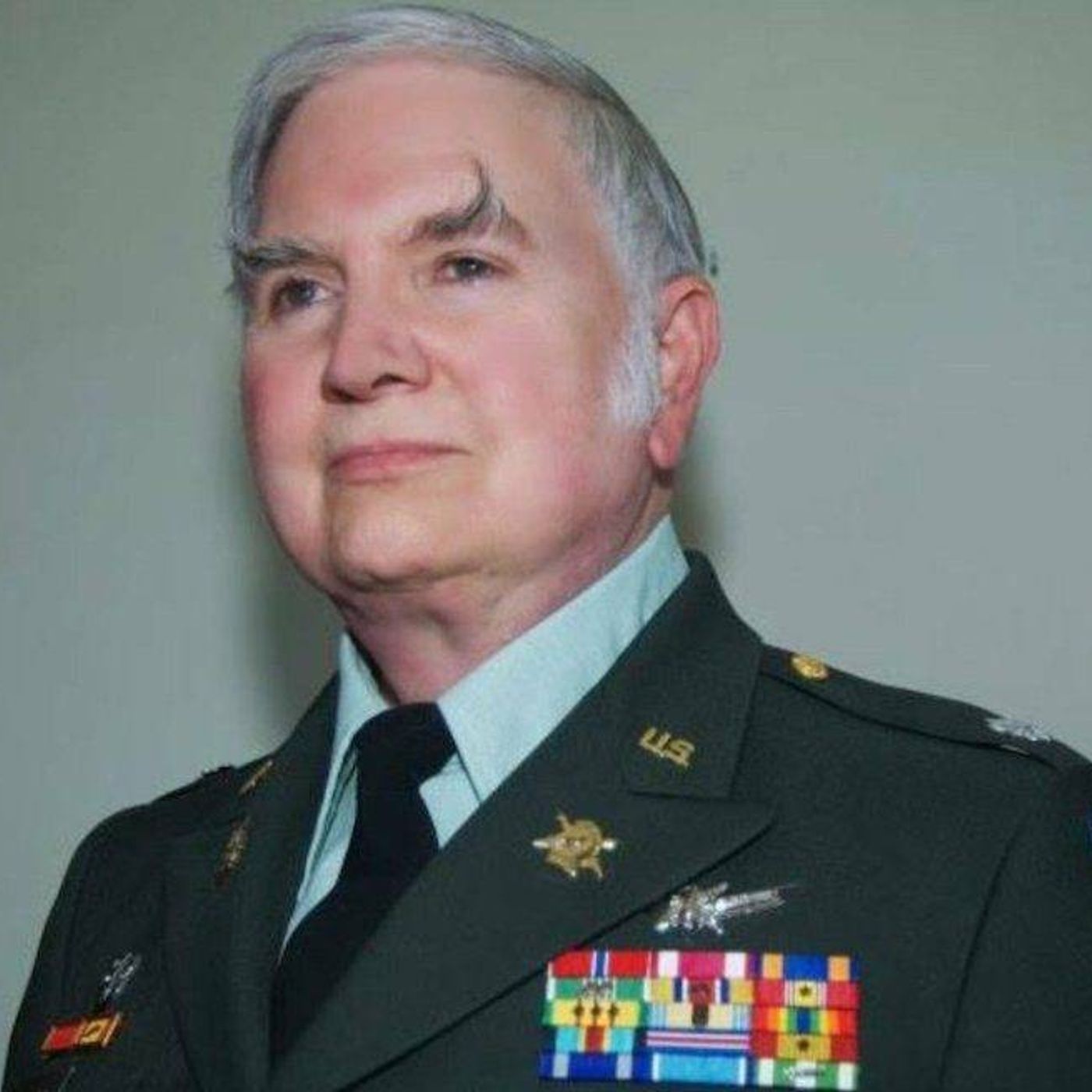
In this episode of No Way, Jose!, host Jose Galison presents a full reading of Michael Aquino's 1980 U.S. Army PSYOP document "From PSYOP to MindWar: The Psychology of Victory", co-authored with Colonel Paul E. Vallely. The paper dismisses conventional psychological operations as weak and reactive—relics of Vietnam-era failures—and instead advocates for MindWar: a radical approach to conflict where victory is achieved not through physical destruction but by decisively shaping perceptions, beliefs, media narratives, and entire information environments. It proposes using sophisticated psychological techniques, environmental factors, and overwhelming "arguments" to compel adversaries to align their will with yours voluntarily, making lethal warfare obsolete and redefining success as total mental dominance disguised as harmony.
This installment builds on the show's ongoing examination of Michael Aquino and the Temple of Set, following episodes such as "NWJ 514: Analyzing the Temple of Set's Beliefs w/Greypilled" and "NWJ 499: Exploring Michael Aquino's Temple of Set." The text stands as a primary source that continues to spark controversy and suspicion, offering a stark look at how military strategy, propaganda, and control over reality itself can converge. Listeners get the unfiltered document to weigh its implications for power, consent, and the mechanics of modern influence—whether MindWar represents innovative "psychology of victory" or a blueprint for something far more controlling. Dive in and see what it reveals.
Please consider supporting my work-
Patreon- https://www.patreon.com/nowayjose2020
Only costs $2/month and will get you access to episodes earlier than the public
No Way, Jose! Rumble Channel- https://rumble.com/c/c-3379274
No Way, Jose! YouTube Channel- https://youtube.com/channel/UCzyrpy3eo37eiRTq0cXff0g
My Podcast Host- https://redcircle.com/shows/no-way-jose
Apple podcasts- https://podcasts.apple.com/us/podcast/no-way-jose/id1546040443
Spotify- https://open.spotify.com/show/0xUIH4pZ0tM1UxARxPe6Th
Stitcher- https://www.stitcher.com/show/no-way-jose-2
Amazon Music- https://music.amazon.com/podcasts/41237e28-c365-491c-9a31-2c6ef874d89d/No-Way-Jose
Google Podcasts- https://www.google.com/podcasts?feed=aHR0cHM6Ly9mZWVkcy5yZWRjaXJjbGUuY29tL2ZkM2JkYTE3LTg2OTEtNDc5Ny05Mzc2LTc1M2ExZTE4NGQ5Yw%3D%3D
RadioPublic- https://radiopublic.com/no-way-jose-6p1BAO
Vurbl- https://vurbl.com/station/4qHi6pyWP9B/
Feel free to contact me at [email protected]
#MindWar #FromPSYOPtoMindWar #MichaelAquino #TempleOfSet #PSYOP #MindControl #PsychologicalWarfare #Parapolitics #ConspiracyPodcast #NoWayJose #NWJ762 #JoseGalison #AquinoSeries #OccultAndPower #Propaganda #InformationWarfare #MilitaryOccult #DeepState #PsychologyOfVictory #Podcast
This installment builds on the show's ongoing examination of Michael Aquino and the Temple of Set, following episodes such as "NWJ 514: Analyzing the Temple of Set's Beliefs w/Greypilled" and "NWJ 499: Exploring Michael Aquino's Temple of Set." The text stands as a primary source that continues to spark controversy and suspicion, offering a stark look at how military strategy, propaganda, and control over reality itself can converge. Listeners get the unfiltered document to weigh its implications for power, consent, and the mechanics of modern influence—whether MindWar represents innovative "psychology of victory" or a blueprint for something far more controlling. Dive in and see what it reveals.
Please consider supporting my work-
Patreon- https://www.patreon.com/nowayjose2020
Only costs $2/month and will get you access to episodes earlier than the public
No Way, Jose! Rumble Channel- https://rumble.com/c/c-3379274
No Way, Jose! YouTube Channel- https://youtube.com/channel/UCzyrpy3eo37eiRTq0cXff0g
My Podcast Host- https://redcircle.com/shows/no-way-jose
Apple podcasts- https://podcasts.apple.com/us/podcast/no-way-jose/id1546040443
Spotify- https://open.spotify.com/show/0xUIH4pZ0tM1UxARxPe6Th
Stitcher- https://www.stitcher.com/show/no-way-jose-2
Amazon Music- https://music.amazon.com/podcasts/41237e28-c365-491c-9a31-2c6ef874d89d/No-Way-Jose
Google Podcasts- https://www.google.com/podcasts?feed=aHR0cHM6Ly9mZWVkcy5yZWRjaXJjbGUuY29tL2ZkM2JkYTE3LTg2OTEtNDc5Ny05Mzc2LTc1M2ExZTE4NGQ5Yw%3D%3D
RadioPublic- https://radiopublic.com/no-way-jose-6p1BAO
Vurbl- https://vurbl.com/station/4qHi6pyWP9B/
Feel free to contact me at [email protected]
#MindWar #FromPSYOPtoMindWar #MichaelAquino #TempleOfSet #PSYOP #MindControl #PsychologicalWarfare #Parapolitics #ConspiracyPodcast #NoWayJose #NWJ762 #JoseGalison #AquinoSeries #OccultAndPower #Propaganda #InformationWarfare #MilitaryOccult #DeepState #PsychologyOfVictory #Podcast
Hosts & Guests
Transcript
¿Quieres mejor internet?
Cox Internet de 300 Megas tiene las velocidades rápidas y confiables que buscas.
Perfecto para streaming y gaming y trabajar desde casa.
¡Todo por solo $45 dólares al mes cuando agregas CoxMobo!
Incluye equipo de Wi-Fi y garantía de precio de 2 años en tu plan.
¡No esperes!
¡Gambia te hoy a Cox!
Requiere CoxMobo que irán a limitar garantía de precio
y incluye impuaces y cargos de la velocidad de datos moviles de reducer después de 20 guías al mes.
All together especially in this current paradigm,
I do think it's worthwhile taking a read again.
But I hope you guys enjoy the show.
We'll see you in...
In this paper detail,
how the CIA's Mind Control Program in K-Ultra
was not stopped in 1973,
as the CIA had told Congress.
Let's go ahead and get into it.
Let me bring up the piece itself.
This is from Syup to Modern War,
the Psychology of Victory by Colonel Paul E. Valley,
with who is the commander of the Time Colonel Paul E. Valley
of the 7th Psychological Operations Group,
with Major Michael A. Aquino,
Syop Research and Analysis Team Leader.
So let's go ahead and get to it.
This is at the headquarters,
as I just said, the 7th Syop Group,
Psychological Operations Group.
This is in Presidio,
which they're not going to open up that can of worms,
but you guys can go look into that in your own.
That was a very notable...
notable...
I don't know,
it gets really kind of shoved
into the Satanic Panic category by many,
but obviously some of us think there was more to the story.
Let's start with the introduction.
This is by Michael Aquino himself.
At the time, now,
or at the time when he wrote this introduction,
he was a Lieutenant Colonel when he initially wrote it.
It was a major.
Most people remember him as a Lieutenant Colonel,
but that's when he was retired.
So this is an introduction in 2003,
much later after the fact,
the initial writing was in 1980.
So let's go ahead and get into this.
Now he was in the reserves retired.
So in the late 1970s,
Psychological Operations,
Syop, doctrine in the US Army,
had yet to emerge
from the disappointment and frustration
of the Vietnam War.
Thus it was that, in 1980,
Colonel Paul Valely,
commander of the seventh Syop group,
asked me, as his headquarters,
Syop Research and Analysis team leader,
to draft a paper that would encourage some future thought
within the Syop community.
He did not want a Vietnam post-mortem,
rather some fresh and innovative ideas,
concerning Syop's evolution and application.
I prepared an initial draft with Colonel Valely,
reviewed and annotated,
which resulted in revised drafts
and critiques until he was satisfied.
The result of that was this paper
from Syop to Mind War,
the Psychology of Victory.
Now I may have said earlier,
I'm going to try to present this with minimal commentary.
I'm still going to continue to try to do so.
But I did want to point out,
this is something that you confuse me initially.
You'll notice here in the introduction,
it's Colonel Valely,
V-A-L-L-E-L-Y.
And in the previous one, you can see,
like in the header or title,
or whatever,
it says Colonel Paul E. Valley.
It's the same person.
I don't know what,
if there's some other reason,
or if it's just a typo or something.
So, in the initial one,
so everywhere else, it's Valely.
For some reason,
and this one is Valley,
so it does kind of left myself,
and I think I've seen others who have kind of questioned,
like, oh, is this the same person?
Yes, it is.
It's the same person.
For some reason,
it's Valley, some places.
The only place I've seen it Valley is in the title,
but within the same exact body,
I guess it's one of the same exact assay
in the introduction and elsewhere,
you see Valely.
So, within itself,
it kind of clears that up.
So, anyways, moving back into it,
Colonel Valely sent copies of it
to various governmental offices,
agencies,
commands,
and publications involved,
they're interested in Syop.
He intended it not as an article for publication,
but simply as a talking paper,
stimulate dialogue.
In this,
it was quite successful,
judging by the extensive and lively letters.
You receive Colonel concerning it
over the next several months.
That should have been the end of Mind War,
a minor staff study,
which had done its modest job.
With the arising of the Internet
in the 1980s, however,
Mind War received an entirely
unexpected and somewhat comic resurrection.
Illusions to it gradually proliferated
with its sinister title,
quickly winning,
it the most lurid conspiracy theory reputation.
The rumor mail soon,
had it transformed
to an Aurillian blueprint
for Manchurian Candidate Mind Control
and World Domination.
My own image,
as an occult personality,
added fuel to the wildfire.
Mind War was now touted
by the lunatic fringe,
as conclusive proofs
that the pentagon was awash
in black magic and devil worship.
Now, this absurdly comic opera
has at least somewhat subsided.
I thought that it might be interesting
to make a complete and accurate copy
of the paper available,
together with an introduction
and some historical hindsight annotations
to place it in reasonable context.
After all it did,
and perhaps still does,
have something worthwhile to say.
Tyler Reddick here
from 2311 Racing.
Victory Lane?
Yeah.
It's even better with Chamba
by my side.
Race to ChambaCasino.com.
Let's Chamba.
No purchase necessary.
VTW Group.
Boy, we're prohibited by law.
CTNCs.
21 Plus.
Sponsored by ChambaCasino.
Yeah!
Within the US military,
Syop has habitually been relegated
to a backseat as a force multiplier.
The principle's strategic decisions
are made in consideration
of traditional political
and military interests and goals.
Only then is Syop invited to the table
to help achieve already agreed upon missions
more efficiently.
Mind War reverses this sequence.
Psychological means for achieving victory,
essentially through convincing the enemy
that he really wants to bring his national policies
into harmony with ours
are fashioned in support of basic political goals.
The use of ordinary military force,
bombs, bullets, etc.
is regarded as a last resort
in circumstances where in mind war
by itself fails.
The advantage of mind war
is that it conducts wars
in non-lethal, non-injurious,
and non-destructive ways.
Essentially, you overwhelm your enemy
with argument.
You seize control of all of the means
by which his government
and populist process
information to make up their minds.
And you adjust it
so that those minds are made up
as you desire.
Everyone is happy,
no one gets hurt or killed
and nothing is destroyed.
Ordinary warfare,
on the other hand,
is characterized by its lack of reason.
The antagonist,
just maim,
or kill each other's people
and steal or destroy each other's land.
Until one side is hurt so badly
that it gives up,
or both sides are hurt so badly
that it greed to stop short of victory.
And after such a war,
there is lasting misery,
hate, and suffering.
The only loser in mind war
are the war profiteers,
companies and corporations
which grow fat orders
for helicopters, tanks,
guns, munitions, etc.
Consequently,
what President Dwight,
Dwight Eisenhower,
referred to as a military
slash industrial complex,
can be counted upon
to resist implementation
of mind war
as a governing
strategic conflict doctrine.
That's the mind war,
perspective,
and its most simplified form.
While in 1980s,
I had no reason to think
that this paper had had
any official effect
upon U.S.
side up doctrine
within or beyond the army.
It was with some fascination
that I saw specific
of its prescriptions applied
during the First Gulf War,
and recently even more,
obviously,
during the 2003 invasion of Iraq.
In both instances,
extreme siop was directed,
both against the object
of the attack,
and upon U.S.
domestic public perception
and opinion.
In 2003,
to the extent of embedding journalists
with military units
to inevitably channel
their perspectives
and perceptions.
The impact
of even these minor
techniques of mind war
was remarkable.
A psychological climb
of inexorable U.S.
victory was created
and sustained in both
the United States
and Iraq,
which accelerated
that victory on the ground,
somewhat less positively,
the failure of mind war
and since,
to be guided
by only the most rigorous
principles of truth
and ethics
had just,
as inexorably led
to substantial
post-war evaporation
of the U.S.
climate.
Therein lies
the Achilles heel
of mind war.
Invoking, as it does,
the most intense emotions
and commitments of its audiences,
it must deliver the goods
as they are judged
by the target audiences.
If the ethical values
of those audiences
are not respected,
if mind wars use only
the service
of ulterior motives
and objectives,
the resulting
dis-intoxication
can be socially shattering.
In 1997,
I wrote a more
extensive research paper
for the National Defense University,
concerning the ethics
of SIOP.
Particularly,
if mind war is actually
to be employed as a feature
of U.S. foreign policy,
I cannot stress too strongly
the need for its subordination
to the strictest
and most enlightened principles
of humanity
as discussed in that paper.
Psychological operations,
the ethical dimension
is also available
for download
at www.xepr.org-
slash
M-A-Q-U-I-N-O.
Now, let's take a look
at the 1980 Mind War paper,
itself.
In addition to the original
footnotes,
I've added a few new ones
to highlight
Sashkartik,
some of its themes,
these new footnotes
are identified
by M-A-2003
at their beginning.
Now, we're obviously
not going to go through
all the footnotes here.
If you guys want to,
this is easy to find
you can just Google,
you can find it all
sorts of different places.
You can look at
just a look up
from SIOP to Mind War,
you can probably
just type in Mind War.
Now, there was also,
I believe, a book
that he made later,
that kind of expanded
on these ideas,
and made it into a full
length book,
which is Mind War,
so don't get the two
confused.
But this is kind of what
started off.
The literary,
the kind of the
literary
beginnings
or genesis
of, I guess,
Michael Aquino,
you could say,
is this piece right here.
But anyways,
let's get into that.
Let me get her.
From SIOP to Mind War,
the psychology of victory,
Lieutenant Colonel
John Alexander,
his military
of you,
article in support
of psychotronics,
intelligence
and operational employment
of ESP
was decidedly provocative.
Criticism of research
in this area,
based as it is
on existing frontiers
of scientific law,
brings to mind
the laughter
that greeted
the Italian scientist,
Balon Zani,
in 1795,
when he suggested
that bats navigate
in the dark means
of what we now call
sonar.
If they see
with their ears,
then do they hear
with their eyes?
When the joke,
but I suspect
that the US Navy
is glad someone took
these ideas seriously
enough to pursue it.
Psychotronic research
is in its infancy,
but the US Army
already possesses
an operational
weapon system
designed to do
what Lieutenant Colonel
Alexander
would like ESP
to do,
except that
as weapons,
systems,
uses existing
communications media,
it seeks to map
the minds of
neutral and enemy
combatants
and then to change them
in accordance
with the US national interest.
It does this
on a wide scale,
embracing military units,
regions, nations,
and blocks,
in its present form,
it is called
psychological operations.
Does psi-op work
or is it merely
a cosmetic
with which field commanders
would rather
not be bothered?
At the question
been asked
in 1970,
the answer
would have been that
psi-op works very well
indeed.
In 1967 and
1968 alone,
a total of 29,276
armed
vietcong
slash NVA,
the equivalent of
95 enemy infantry battalions
surrendered
to ARVN
or MACV,
forces
under the Chujoy
Amnesty Program.
The major
psi-op effort
in the Vietnam War.
At the time,
MACV estimated
the elimination
of the same
number of troops
in combat
would have cost us
6,000 dead.
On the other hand,
we lost the war,
not because
we were out thought,
but because we were
out psi-op.
Our national will
to victory was attacked
more efficiently
than we attack that
of the North Vietnamese
and Vietcong.
Perception
this fact
encouraged the enemy
to hang on
into the United States,
finally broke
and ran for home.
So our
psi-op failed.
It failed not
because its principles
were unsound
as it was outmatched
by the psi-op
of the enemy.
The Army's efforts
enjoyed some impressive
successes,
but our own psi-op
did not really change
the minds of the enemy
populace,
nor to defend
the US populace
at home
against the propaganda
of the enemy.
Furthermore,
the enemy's
psi-op was so strong
that it,
not bigger armies
or better weapons,
overcame all
of the cobras
and spookies
and ACAVs
and B-52s,
we feel them.
The lesson
is not to ignore
the psi-op capability
but rather to change it
and strengthen it
so that we can do precisely
that kind of thing
to our enemy
in the next war.
Better hardware is nice,
but by itself,
it will change nothing
if we do not win
the war for the mind.
The first thing
it is necessary
to overcome is a view
of psi-op
that limits it
to routine, predictable,
over-obvious,
and hence marginally effective,
leaflet
and loudspeaker applications.
Battlefield devices
of this sort
have their place,
but it should be
that of an accessory
to the main effort.
That main effort
cannot begin
at the company
or division level.
It must originate
at the national level.
It must strengthen
our national will
to victory
and it must attack
and ultimately destroy
that of our enemy.
It both causes
and is affected
by physical combat.
But it is a type of war
which is fought
on a far more subtle basis
as well
in the minds
and the national populations
involved.
So let us begin
with a simple name change,
we shall rid ourselves
of the self-conscious
almost embarrassed concept
of psychological operations,
and its place we shall create
mind-war.
The term is harsh
and fear-inspiring,
and so it should be
is a term of attack
and victory,
not one
of the rationalization
and coaxing
and conciliation.
The enemy may be
offended by it,
that is quite alright
as long as he is defeated
by it.
A definition is offered.
Mind-war
is the deliberate
aggressive convincing
of all participants
in a war
that we will win that war.
It is deliberate
in that it is planned, systematic,
and comprehensive effort
involving all levels
of activity
from the strategic
to the tactical.
It is aggressive
because opinions
and attitudes
must be actively changed
from those antagonistic
to us
to those supportive
of us
if we are to achieve victory.
We will not win
if we content ourselves
with countering opinions
and attitudes
and still by enemy governments.
We must reach
the people before
they resolve to support
their armies,
and we must reach those
armies before
our combat troops
ever see them
on battlefields.
Compare this definition
with that of
psychological warfare
as first offered
by General William Donovan
of the OSS
in his World War II era.
Basic estimate
of psychological warfare.
Psychological warfare
is a coordination
and use of all means,
including moral
and physical
by which the end is attained,
other than those
of recognized military operations.
But, including this psychological
exploitation of the result
of those recognized military actions,
which tend to destroy the will
of the enemy to achieve victory
into damages
political or economic capacity
to do so,
which tend to deprive the enemy
of the support, assistance,
or sympathy of his allies
or associates,
or of neutrals,
or to prevent his acquisition
of such support, assistance,
or sympathy,
or which tend to create,
maintain,
or increase the will
to victory of our own people
and allies
and to acquire, maintain,
or to increase,
the support, assistance,
and sympathy of neutrals.
If the euphemism's
psychological operations
resulted from, as one general
officer put it in a 1917 letter,
a grant need for synonym
with which would be used
in peacetime
that would not shock
the sensibilities
of a system of democracy,
that it may have succeeded
domestically.
On the other hand,
it does not seem to have reassured
the sensibilities
of the Soviets,
who in 1980 described
the U.S. Army
Syop, as including
unpardonable methods
of ideological sabotage,
including not just blackmail,
provocation,
and terror.
The reluctance
with which the Army has accepted,
even an antiseptic
Syop component,
is well-documented
in Colonel Alfred Patix,
brilliant treatise
on the history of Syop,
establishment.
And again, and again,
efforts to forge this weapon
into its most effective
configuration were frustrated
by leaders who could not,
or should not see,
that wars are fought
and won, or lost,
not on battlefields,
but in the minds of men,
as Colonel Patix,
so a aptly concludes,
in a real sense,
the manner in which
psychological and unconventional
warfare evolved
from 1941
into their union
as a formal Army capability
in 1952,
suggests a theme
that runs throughout the history
of special warfare.
The story of a hesitant
and reluctant army attempting
to cope with concepts
and organizations
of an unconventional
nature.
According to the present doctrine,
Syop is considered an accessory
to the main effort
of winning battles and wars.
The term usually uses
force more to multiplier.
It is certainly not considered
a precondition
to command decisions.
Thus, Syop cannot
pre-determine
the political
or psychological effectiveness
of a given military action.
It can be only used to point
that action
in the best possible colors
as it is taken.
Mind war cannot
be so relegated.
It is, in fact,
the strategy
to which tactical warfare
must confirm
if it is to achieve
maximum effectiveness.
The mind war scenario
must be preeminent
in the mind of the commander
and must be the principal factor
in his every field decision.
Otherwise,
he sacrifices measures
which actually contribute
to the winning of the war
to winning the war
to measures
of immediate
tangible satisfaction.
Accordingly, Syop
combat support units,
as we now know them,
must become a thing
of the past.
Mind war teams
must offer technical expertise
to the commander
from the outset
of the planning process
and at all levels
down to that of the battalion.
Such teams cannot
be composed
as they are now
of branch
immaterial officers
and NCOs,
who know simply the basics
of tactical
propaganda operations.
They must be composed
of full-time experts
who strive to translate
the strategy
of national mind war
into tactical goals,
maximize the effective
winning of the war
and minimize
loss of life.
Such mind war teams
will win commanders
respect only
if they can deliver
on their promises.
What the army now
considers to be the most
effective Syop,
tactical Syop,
is actually the most
limited and primitive effort.
Do the difficulties
of formulating
and delivering messages
under battlefield constraints?
Such efforts must continue,
but they are properly
seen as reinforcement
of the main mind war effort.
If we do not attack
the enemy's will
until he reaches the battlefield,
his nation will
have strengthened
it as best it can.
We must attack that will
before it is locked
in place.
We must instill
in it a predisposition
to inevitable defeat.
Strategic mind war
must begin the moment
is the moment
war is considered
to be inevitable.
It must seek out
the attention of the enemy
nation through every
available medium
and it must strike
at the nation's
potential soldiers
before they put on their
uniforms.
It is in their homes
and their communities
that they are the most
vulnerable to mind war.
Was the United States
defeated in the jungles
of Vietnam
or was it defeated
in the streets
of American cities?
To this end,
mind war must be
strategic and emphasis
with tactical applications
playing a reinforcing
supplementary role.
In its strategic context,
mind war must reach out
to friends, enemies,
and neutrals alike
across the globe.
Neither through
primitive battlefield
leaflets
and loudspeakers
of SIOP,
nor through the week
imprecise, narrow,
effortless,
effortless,
effortless,
effortless,
effortless,
effortless,
effortless,
effortless,
effortless,
effortsless,
effortsless,
effortsless,
effortsless,
effortsless,
effortsless,
effortsless,
effortsless,
effortsless,
effortsless,
effortsless,
effortsless,
effortsless,
effortsless,
effortsless,
effortsless,
effortsless,
effortsless,
effortsless,
effortsless,
effortsless,
effortsless,
effortsless,
effortsless,
effortsless,
effortsless,
effortsless,
Como el sol de Excalibur, tenemos que encontrarlo y creer esta tuyo.
Y puede transformar el mundo para nosotros si tenemos la currida y la integridad de la civilización.
Si no tenemos el Excalibur, tenemos que relinquir la habilidad de inspirar sus culturas con la moralidad.
Si ellos tienen la moralidad de desayunos, no hay una suerte para encontrarles en un nivel brutal.
Tyler Redic here from 2311 Racing,
another checkered flag for the books.
Time to celebrate with chamba.
Jump in at chambacacino.com.
Let's chamba.
No purchase necessary.
VTW Group.
Point where prohibited by law.
CCNC, 21 plus.
Sponsored by chambacacino.
¿Quieres mejor internet?
Cox internet de 300 megas tiene las velocidades rápidas y confiables que buscas.
Perfecto para streaming y gaming y trabajar desde casa.
Todo por solo 45 dólares al mes cuando agregas CoxMobo.
Incluye equipo de Wi-Fi y garantía de precio de dos años en tu plan.
No esperes.
Cambiate hoy a Cox.
Requiere CoxMobo que irán limitar garantía de precio, no incluye impuaces y cargos velocidades de datos moviles y reduces después de 20 gigas al mes.
Mind War must target all participants if it is to be effective.
It must not only weaken the enemy, it must strengthen the United States.
It strengthens the United States by denying enemy propaganda access to our people.
By explaining and emphasizing to our people the rationale for an act of interest in a specific war.
Under existing United States law, sign up units may not target American citizens.
That prohibition is based upon the presumption that propaganda is necessarily a lie,
or at least a misleading half-truth, and that the government has no right to lie to the people.
The propaganda Ministry of Gebbles must not be a part of the American way of life.
Quite right, and so it must be axiomatic of Mind War that it always speaks the truth.
It's power lies in its ability to focus recipient's attention on the truth of the future as well as that of the present.
Mind War thus involves the stated promise of the truth.
The United States has resolved to make real if it is not already so.
I know he said not to make commentary, but let's just focus on the last sentence.
Mind War thus involves the stated promise of the truth that the United States has resolved to make real if it is not already so.
We'll basically make it reality if it's not actually reality.
Mind War is not new, nation's greatest and least costly victories have resulted from it both in time of actual combat and in time of threatened combat.
Consider the atomic attacks on Hiroshima and Nagasaki.
The physical destruction of those two cities did not destroy Japan's ability to continue fighting.
Rather, the psychological shock of the weapons destroyed what remained of Japan's national will to fight.
Surrender followed along and costly ground invasion was averted.
Mind War's effectiveness is a function of its own skillful use of communications media, but no greater error could be made than to confuse Mind War with merely a greater and more unprincipled propaganda effort.
Propaganda, as defined by Herald last well, is...
The expression of opinions or actions carried out deliberately by individuals or groups with a view to influence the opinions or actions of other individuals or groups for predetermined ends and through psychological manipulations.
Propaganda, when is recognized as such, and anything produced by a siop unit is so recognized, is automatically assumed to be a lie or at least a distortion of the truth.
Therefore, it works only to the extent that a militarily pressed enemy is willing to do what we want him to.
It does not work because we have convinced him to see the truth as we see it.
If his conclusions chapter to the army exhaustive 1976 case study of siop techniques, L. John Martin affirms this coldly and bluntly.
Well, this all boils down to is that if our persuasive communication ends up with a near positive effect, we must attribute it to luck, not science.
The effectiveness of propaganda may be even less predictable and controllable than the effectiveness of mere persuasive communication.
Correspondingly, propagandists are assumed to be liars and hypocrites willing to paint anything attractive colors to dupe the gullible.
As Jacques Alloul puts it, the propagandist is not and cannot be a believer. Moreover, he cannot believe in the ideology he must use in his propaganda.
He is merely a man at the service of a party, a state or some other organization. His task is to ensure the efficiency of that organization.
If the propagandist has any political conviction, he must put it aside in order to be able to use some popular mass ideology.
He cannot even share that ideology for he must use it as an object and manipulate it without the respect that he would have for it.
For if he believed in it, for if he believed in it, he quickly attempt acquires contempt for these popular images and beliefs.
Unlike Siop, mind war has nothing to do with deception or even with selected and therefore misleading truth.
Rather, it states a whole truth that if it does not now exist, will be forced into existence by the will of the United States.
The examples of Kennedy's ultimatum to Khrushchev during the Kube and Missile Crisis and Hitler's stance at Munich might be cited.
A mind war message does not have to fit conditions of abstract credibility to do Siop themes.
Its source makes it credible. As Levy once said,
The terror of the Roman name will be such the world shall know that once a Roman army has laid siege to city, nothing will move it.
Not the rigors or winter nor the weariness of months and years, that it knows no end but victory and it's ready and is ready if a swift and sudden stroke will not serve to preserve until that victory is achieved.
Unlike a little cynical propagandist, the mind war operative must know that he speaks the truth and he must be personally committed to it.
What he says is only part of mind war. The rest and its the test of its effectiveness lies in the conviction he projects to his audience in the rapport he establishes with it.
And this is nothing that can be easily faked if in fact it can be faked at all.
Report which the comprehensive dictionary of psychological and psychoanalytical terms defines as the unconstrained relations of mutual confidence approaches the subliminal.
Some researchers have suggested that it is itself a subconscious and perhaps even ESP based accent to an overt exchange of information.
Why does one believe one television newsman more than the other and another even though both may report the same headlines?
The answer is that there is rapport in the former case and it is a rapport which has been recognized and cultivated by the most successful broadcasters.
We have covered the statement of inevitable truth and the conviction behind that statement. These are qualities in the mind war operative himself.
The recipient of the statement will judge such messages not only by its conscious understanding of them but also by the mental conditions under which he receives them.
The theory behind brainwashing was that physical torture and deprivation will weaken the mind's resistance to suggestion.
And this was true to a point but the long run brainwashing does not work because intelligent minds later realize there's such a suggestibility under such conditions and therefore discount impressions and options inculcated accordingly.
For the mind to believe in its own decisions it must feel that it made those decisions without coercion.
Coercive measures used by the operative consequently must not be detectable by ordinary means.
There is no need to resort to mind weakening drugs such as those explored by CIA.
In fact the exposure of a single such method would do unacceptable damage to mind wars reputation for truth.
Existing psi op identifies purely sociological factors which suggest appropriate idioms for messages.
Doctrine in this area is highly developed and the task is basically one of assembling and maintaining individuals and teams with enough expertise and experience to apply the doctrine effectively.
This however is only the sociological dimension of target receptiveness measures.
There are some purely natural conditions under which minds may become more or less receptive to ideas and mind wars should take full advantage of such phenomena as atmospheric, electromagnetic activity, air ionization and extremely low frequency waves.
At the root of any decision to institute mind war in the US defense establishment is a very simple question.
Do we wish to win the next war in which we choose to become involved or do we wish to do so with minimum loss of human life at minimum expense and the least amount of time?
If the answer is yes then mind war is a necessity.
If we wish to trade that kind of victory for more American lives, economic disaster and negotiated stalemates then mind war is inappropriate and if used superficially will actually contribute to our defeat.
In mind war there is no substitute for victory.
Alright guys that's the entire reading. If you guys like what I'm doing here leave a like, leave a share, or share it around, subscribe, leave a comment, you know do all those little things.
You can find a show on YouTube, rumble, all the major audio pod catchers and Twitter as well.
At towering Jose is where you can find me on Twitter, everywhere else it's no way Jose, that's the name of the podcast, that's the name of it on YouTube, rumble, all that.
Now if you want to support the show the best way you can that's with money.
The top left hand corner you'll see a QR code up there or you can go over to patreon.com slash no way Jose 2020 brings you the same place either way.
And at the low level of two bucks you get access to early episodes you usually do about one to two those per week try to keep up for behind the paywall in a given time.
You also get access to an ad for your assess feed you got access to the telegram.
You get access a pre show post show and prior or any access to video calls in the Austin weekly live call show which on Tuesdays at 9.30 p.m. Eastern.
And also give a big thank you to the highest level in my patreon which is my sponsors is a big thank you for their support at my previous coast and targeting Atlanta to also at aggregate these at ZLV RCK at underscoring to zeal Tim Tull at Joll and Cleveland big fan the show torn may at Wayne Tacos one hard car for kids no free lunch jack and mark vestibule with that guys we're gonna get out of here.
Do all the things love you all we'll see you in the next one bye bye.
Tyler Reddick here from 2311 racing victory lane yeah it's even better with chamba by my side race to chamba casino dot com let's chamba no purchase necessary VTW group boy we're prohibited by mom CT and C's 21 plus sponsored by chamba casino.
Quieres mejor internet cox internet de 300 megas tiene las velocidades rápidas y confiables que buscas perfecto para streaming y gaming y trabajar desde casa.
Todo por solo 45 dólares al mes cuando agregas coxmovo incluye equipo de wifi y garantía de precio de dos años en tu plan.
No esperes gambia te hoy a cox requiere coxmovo gigante de garantía de precio no incluyen puestas y cargos velocidades de datos móviles se reduce después de 20 gigas al mes.
More from No Way, Jose!
View all episodes →
NWJ808- Already Dead: Correspondents' Dinner Shooting, Freemasonic Theatre, Meme...
No Way, Jose!
Apr 30, 2026·1:59:03·failed

NWJ807- The Morning Dump: Another Trump Assassination Attempt?! & More
No Way, Jose!
Apr 28, 2026·1:58:11·failed

