About this episode
Get every episode summarized
Each time Off Grid Christianity publishes, we email you a written briefing from the transcript — the topics, who appeared, and any specific claims, with the ad reads skipped.
Email me new episodesFree for 3 shows. No card needed.
Hosts & guests
Transcript ready
636 searchable segments. Every word is indexed and playable.
Full transcript
Off Grid Christianity — Off Grid Christianity – Episode 166 – David McCauley. Machine-transcribed; use the interactive transcript above to jump the player to any line.
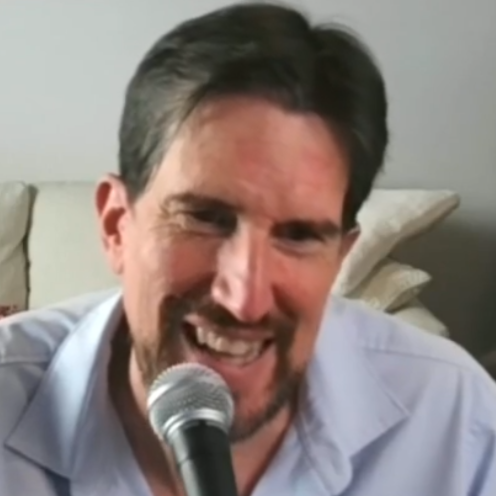
Hi, my name is Martin Pernell, and welcome to Offgrid Christianity. We can podcast for those who go or don't go to church and where we can meet and hear from those that have made their faith count. This podcast series is to encourage our conversation, and you can contact us as well by email OGC at accessradio.biz and beer to spell BIZ. So today's guest who is he? He claims that his life so far has been a wild and fantastic ride. He wrote a book available on Amazon, etc. with a great title where I like it anyway. It's called You Don't Know Sheep. Even the cover looks great, maybe should make a t-shirt of it. I guess there's just left his job of 11 years to set off on a new adventure. He wants to teach leadership principles to people based on the reaction he has been getting from this book. In his words, he is totally stepping out in faith. So why did he write You Don't Know Sheep? An unconventional field guide for today's faith leaders. What similarities are there between faith ministries and his previous role as a
leading consultant and designer in AV systems for venues of all sizes? What has he learned so far regarding leadership principles? What does he think about a previous guest's comment regarding Christian ministries that the way they manage change is appalling. They tend to kick people out rather than honor them. And he went on to say that Christian leaders should not be having a night of the long knives. Those thoughts were from Dave Pope, co-founder of Spring Harvest, founder of Salt Mine Trust, and a pioneer which included the dirty hands nationwide in the mid-1980s. So why and how is our guest going to get his hands dirty in the weeks, months, years ahead? Let's find out and learn more from today's guest. And that is David McCauley. David, thank you so much for joining us today. For those that know nothing about you, first of all, where you based, sir. I am in Dallas, Texas. Have you got traditional Dallas accent? Not traditional, no.
I moved around a little bit. So I grew up in the Northeast, Baltimore, Maryland, Pennsylvania, that area. Most of your people would probably know Washington DC more than the other areas. I grew up about an hour and a half north of Washington, DC, and about three hours south of New York City. Or my mom was from Texas. I moved up there when she was a kid. The Texas pool called me and I said, you know, you got to come down here and get some brisket. That's how I got here. There's a whole funny story about that. But the first time I ever came to Texas, my mom brought me down to meet family. And she took me to this place that is one of the top brisket places where she grew up. And I never had anything like that before. You know, it was, it was a pretty Texas thing at the time when I was young. Yeah. I remember coming back and telling my friends, that's it. I'm moving to Texas. Look at this stuff called brisket. I don't even understand. I have to move. I'm going. And I was old enough. So that's why you moved because of your stomach, which is what I would have done. I must admit it's real. What would you say? Well, it's fun a bit more about you
besides brisket as well, David. Five important or maybe not so important questions to kick off this podcast with question number one. If you can invite anybody from history for an evening meal, a live or dead so that you could ask questions. Who would it be, please? I think I'd be seeing this Lewis. Good. Cool. I mean, there's so many, there's so many people to choose from. But man, like just an impact on me personally, books like The Four Loves and one of my favorite books is actually The Great Divorce. Oh, okay. You know, just this the impact of just how he thinks in just the process that he kind of went through with different things like that. I think is really good. And then you hear about things about how you impacted everybody, you know, in Britain and just in things like that, they're in the war and stuff like that, you know, just just a lot of different things that he did that were just yeah, I just thought would be very, very fascinating to hear his perspective of how he thinks through that stuff. Well, that's a great call. I mean, obviously in my time machine that I bought on eBay, I'll be able to bring him back. Yeah. No problem at all. And that would help him out with his science fiction books. So that'd be good.
That'd be really good. Yeah. Of course, you might want to ask him about Joy, his American wife and how that worked out. And yeah, yeah, you see, I love the thing about CS Lewis, the fact that he had a pub in Oxford, where he was based and they affectionately called it the the inklings. Yeah, yeah, sit down, have a pint and old CS, old Clive Staples, who's from Northern Ireland wildlife now as well. Of course, so yeah, that'd be a great evening. Obviously, you'd have to cook him a meal though. So what would you cook him? Briscuit. I mean, we could go down and get some briscuit. And man, he'd be like, I'm moving to Texas. That's what he would say. I know he would. He'd be like, Oh, wait a minute. They have this. Oh, I'm in. Question two. Who's your favorite biblical character or favorite biblical story or favorite power, please David? You know, not just because my name's David, the whole story of David just fascinates me. You know, how he's a broken character that messes up so much, but still, you know, has a heart for God and yeah, he's got a stuff of the consequences and different things like that as as you should, you know, but it just shows like for me, it's kind of a forward picture of Christ's relationship versus a lot of times in the Bible, especially in the Old
Testament, you just kind of have this thing of, Hey, you messed up. You're dead. You messed up. You're dead. You do that. You're dead. Hey, if your ox kills somebody, we kill you or whatever, whatever. But in that story, man, he messes up. He probably should have died a bunch of times. Like he should have probably been killed a bunch of times for various reasons. Most of them is his own doing. You know what I mean? And so that to me was just an interesting picture of what's to come, you know, in the New Testament relationship. So that's part of that. And obviously, there's a whole lot of other reasons and stuff like that. But I think that's that's probably my my favorite biblical character. That's a great answer. Thank you. Question three. If you were prime minister for the day, but as you are an America in Texas, you can be presidents in the United States for the day. And you could change any law or impose a new law. What would it be, please David? I think the thing that popped in my head was currently in the US, they teach evolution as the scientific method. And I would probably say, I would make a law that says, you have to look at both things. You have to look at creationism.
You have to look at evolution or at least intelligent design, right? Like I mean, so intelligent design and as evolution, because I believe that both of them are just as faith-based as the other. And I think it's unfair to say one science based on one's not, because there's so much faith that goes into the evolutionary side. Just as much or more, they don't have any more real data, like hard data that that happened. Then others do about intelligent design, you know what I mean? So I think that that's probably where I would go with it. That's the thing that popped in my head, just like, that's what I would change. That it's this equal playing field. You got to talk about all of it. Well over here, you know, it's supposed to be a theory. It's nothing but so, yes, you've got a big arm end from loads of people over here. Yeah. Level playing field and talk about it. Very good. Thank you. You make a great president. Question four. Outside of family events, what has been your most enjoyable day out, please? I do a lot of off-roading. Oh, do you? Yeah, four by fours and things like that and that kind of stuff. And so my happy place is the mountains.
And it's an interesting thing. So most people when they think of mountains, they think of like the Colorado Mountains, like the Rocky Mountains, you know, kind of picture mountains. And I get to the Rocky Mountains a lot. But what people don't understand is in the Seattle area up in the Pacific Northwest, there's mountains up there that are just as tall. But the difference is is in Colorado, you're starting at 5, 6,000 feet above sea level. Yes. You know what I'm saying? So you know, you go to a, you know, a 12,000 foot mountain, you only see half that mountain. And it's still huge. Don't get me wrong. You know, it's still huge. But when you go west, and that was the thing that I found when I was able to go and actually explore out west and go up the northern cascades and that area and rainier and different places up there, you're at sea level. And you're seeing a 14,000 foot mountain from sea level. And it could be an hour or two drive away. And it works like it's right there in front of you. It's that big. It's insane.
And just being able to do that kind of stuff because there's actually a place up there up in that area where they have rainforests. So like in a day, if you did it fast enough, right? You could be in a rainforest. You could step in the Pacific Ocean. You could be on top of a mountain having a snowball fight because that's all. And then you can be in the desert all in a day. There's so much terrain up there that's different. You know, just as you go inward, it gets drier and more desert-like. It's just such a fascinating place. That's probably one of my favorite places. And probably one of my favorite trips I did with a friend using news and news ago. So that's just what that brings the mind and that kind of adventure. That's brilliant. The trouble is, did they have any good brisket up there? Did you not? You see? So it's not perfect then. Is it really? It's not perfect now. What was the fish guy? It's supposed to have good fish, but I'm not a fish guy. I'm all right. I'm a brisket guy, you know. Fish kit. Great. The last question before we then get into the meat of the subject today. What has been your most embarrassing moment to date, please, David? Oh, you know, there's so many. I stick my foot in my mouth daily.
I think the biggest one that was really just kind of an interesting thing is, is I was actually, this is a few years ago. There's actually a video of it. They edited it down, thank God. But for some reason, I speak in front of people pretty often. Yeah, yeah. I kind of got out of the practice for a little while for a couple of years and somebody had me come in for a keynote. So there's about 1,500 pastors and leaders in this event. And I'm doing the keynote. And I get about, I don't know, two minutes in and I have a panic attack on stage. And God bless them. They were really amazing because they were like, at first, the people were calling up and going, Hey, are you okay? Like, so when people in the crowd start calling up and going, you're, are you okay? That's kind of a thing when you're in the middle of a talk. And then at some point, like, I was just like having a bad one. And man, they just came running down and just prayed for me. And some other person came up and just kind of started talking a little bit, that kind of thing. So I was able to kind of walk it off a little bit. And then I was able to get my breath and get my, you know, get myself back and then came back up. And then they, you know, they kind of helped me make sure I was good. And
then I was able to actually finish it out. But yeah, that was the strangest thing that's ever happened. And it was so embarrassing. But it's just, but it was good. It was humbling. Let's put it that way. That's definitely humbling. Wow. So what caused it, you think? Actually, it's one of those things that I don't like seeing myself on video. Right. And the room itself had a pretty long echo. And I didn't test it like before. So when I walked up, they had this big iMac picture of myself from a camera. So all I saw was basically me on video on this huge screen in the back of the room. And the delay from my voice when I spoke would come back to you like two seconds later. You know what I mean? So it just kind of gives you that interrupt. And then you just start spinning. And then your anxiety just picks up. And that's just what happened. I wasn't prepared in that way for what I saw and heard. You know, usually it's just notes up there. I didn't expect me on video. And typically that's just I kind of clam up on videos sometimes when we're like, here's a camera. Put it in front of your face. And you're like, so it's like that
of 1,500 liters. But the other thing of course, David, for those that don't know really, is that you are big in the audio visual side of the market. And so to hear you've always come back two seconds later, that would have set me off again. What is the monitor guy doing? What's the front house guy doing? Right. Right. Right. Right. Right. And it's a new thing. And again, like I, and I was kind of part of the thing. I started kicking myself going, I should have tested this. I should have, like you know what I mean? You know, I should have been up on stage last night and just kind of did a couple of things just to get used to it. You know how that kind of stuff goes, you know, but I was, I was just being cocky and just like, oh, that. I don't have to. This is going to dinner. It's fine. You know, it's great. Yeah. Well, I don't know that. I haven't actually spoken in front of 1,500 people. Not for a keynote anyway. Yeah. That'd be interesting. Martin, you can speak on anything that you want. Don't think so. And I did. Just because my memory went off a trail, you know, it's great. Yeah. Didn't do well. Let's put it that way. It actually, I would get back on track. Well, that's good. And do the last 45 minutes. Pretty solid. And, and everybody seems to enjoy that.
So that was good. Yeah. It's just that 15 minutes on the front end was, yeah, pretty exciting. Yeah. But the thing is, like you said, it taught you humility. Yeah. But it also, I would have thought broke the ice completely because unless you really hard knows dub and type person, like J.R. and Dallas. Where you wouldn't have given them monkeys. This is like to 99% of the people were going, wow, he's real. What's going on here? I want to listen now. I want to learn. This, if that's OK, because I really do know what to know why you wrote the book. You don't know sheep. Yeah. And obviously, on the back end of that, a keynote speaker. Let's talk about what led up to you writing that book in the first, the first instance. So tell us more, please, is to how you got involved, not just with AV, but how you got involved with speaking and wanting to write a book. Yeah. Yeah. It's kind of an interesting thing. So I've always been into the AV side of things ever since I was a kid. And then actually, when I was about 16, this kind of
an interesting thing, I started touring with bands and different things like that. So I used to sing and do some things like that. But then I got into the thing where I figured out that the actual technical people actually got paid, where a lot of times the van never got paid, either how that goes. I switched over to that a little bit more. And I did a lot of regional touring up and down these coasts and things like that. But it was interesting because there's a lot of bars and clubs and that kind of thing. So I always kind of make fun because I tell people, I've been in more bars and night clubs before I was 21 than I have been since. I was a pretty wild and rough kid at that point. You know, nothing too crazy, but crazy enough. So it was one of the things that I kind of grew up in a Christian home. My dad was Catholic. My mom was assembly a god or or Penny costume. So that was an interesting thing that I got to see both sides of that. And then I did the protocol something when I got to be a teenager and kind of walked away from all that. And then kind of came back through. So it's a long story, but it's a good story at some point.
But came back into church probably when I was around 20, 19, 20 or so. And I got mentored by a pastor. And I was in school for psychology at the time, just at one of the state schools for psychology and also working, you know, working other things. And he kind of mentored me and I thought, well, maybe I'll try and give this pastor a thing a bit ago. And so I got a scholarship to a university over here for theology. And so I went there for a couple of years. And I learned so much on a lot of different levels. And at that point, my mentor who I've been back in the ministry, you know, still in the ministry, I got a call that he had a total mental breakdown. And I kind of came back to that. I saw how the church kind of handled that a little bit on certain levels. And that just really kind of put me in a tailspin of, I don't want to do this. And if that's how they act, you know, with the people they're supposed to love, I don't know if I'm being a part of that. You know, so that kind of started some of that journey as it were.
Fast forward, I was doing other things with bands and things and I started my faith walk again and doing doing good things on that side. And I kind of got burnt out of doing the touring stuff and doing that type of things. And I landed at a place called Slate and Sound theaters. And Slate and Sound theaters is just to give you kind of an idea of what it is. They do biblical shows. So it's kind of like a Broadway type thing, but it's all biblical shows. And the scale of it is that the front curtain of a typical Broadway show is about 20 foot tall by 40 feet wide. That's what the front curtain is. The front curtain at this place is 40 feet tall by 100 feet wide. Then it has 100 foot side stages. So it's 300 feet wrapped around the 2000 seed audience. Wow. 300 feet of stage wrapped around it. And there's two of them in America actually. So anyway, I'll have to say they were doing things like Noah and things like that where like it's at scale. You know what I mean? The whole second half of Noah, you're actually inside
the yard. 300 feet wrapped around like 40 feet tall set. It's pretty impressive. It's a pretty cool place if you ever ever get a chance to go to any other shows. But I was sitting there and I'd never been around sheep very much. And this is kind of where it all started because it was it for these shows, these biblical shows and they were doing Christmas shows and different things like that. They had a lot of animals, you know, in the show incorporated in. And at some point, they had a lot of sheep. And I remember sitting on deck one day and just kind of thinking about some different things and I'm watching the sheep and they're falling into this and that and they're real life sheep, not actors just up a sheep. No, this is real life sheep. So I just kind of going, oh, okay, that's interesting. Yeah. And so I remember like I'm just start watching them just because, you know, what else is there to do with that particular moment? And they're kind of cute, but they can kind of be nasty to each other. You know how that goes, you know, that kind of thing. I'm watching it and watching it and then all of a sudden it just hits me. I just start laughing. I'm going, okay, God, I get it. This is kind of a joke. This is kind of a polka people. We didn't get that context because we don't really hang out with sheep too much. But the people you were talking
to at the time, that's what they did. You know, they lived with like, you know, and even with the sacrifice type thing back in the day, you had to have a sheep or a lamb at least in your household. Like, you know, I mean, so you knew what that thing was. So I'm watching them. I'm going, okay, so they're always falling into this. They're always getting tangled up into this. They're always in trouble. They're always crying out for help in the shepherd person. They have to come and grab them and pull them out of the light pit or untangle them from whatever they were tangled in on the set. And you know, that kind of stuff, like I said, they can be mean or they can be, you know, sweet depending on what they're doing, you know, you know, you see them kind of walking around in groups, which is good, you know, that type of thing. And then, but then I noticed too, which is really, really rung at for me was they're constantly pooping. Apparently so. Yes. Yeah. And so when it's on a stage, you really see how much you know what I mean. And so like, it was just one of the things I said, okay, now I really get it. And I get the joke. It's like, you know, wherever they go, they leave a wake of poop. Yeah. And I'm like, okay, God, yes, I totally get it. That's funny. And so that's
where the name of the book came from. Then later, it kind of dived into you. Again, I'm just a auto-died act. So it's kind of one of those things where you just I'm constantly learning and self-taught of a lot of things. So so I'm always still in the psychology and different things like that. And leadership. And a lot of the times throughout this thing, I've either led the company I was with or I've been a part of probably five church upstairs, you know, hoping to try and lead those type things. I've led a couple of different multi-million dollar companies over the years, actually grown some of them five times. So like, taking them from a certain certain size to, you know, $25, $30 million. So I have that side of it as well that that have been the leader in those aspects. But then I'm also doing what I do. I'm around leaders a lot. So I'm around pastors and leaders and then type stuff. So I get to kind of see the back, the backstage side of things like sometimes.
So you can see where people are actually real and then what they are in their persona, you know. So anyway, about, I don't know, maybe 12 to 15 years ago, I started, I just felt this calling with God just said, yeah, I need you to write this book. And I'm like, okay, I never wrote anything before. I'm terrible at writing. It's just what is this thing. So I got it about 80% done and it's just kind of just kind of fizzled and I didn't really touch it for, I don't know, 12 years, maybe 10 years. And I use to teach it a lot of conferences. I used to, and that's kind of a lot of where this came from because I developed theories and that kind of thing is actually teach it at conferences, whether it be leadership conferences or tech conferences or whatever. I used to do about 30, 30 a year, you know, it was probably about 15 years ago. So a lot of this is a combination of those things. But then a couple years ago, probably about two, three years ago, I was teaching, teaching somewhere just a small little thing. And somebody comes up to me and he's like, hey, you should write a book. And I'm kind of like, that's funny. You say that. I kind of have like 80% of one done. And
then she's like, well, hey, I'm a publisher. Would you mind like send me what you have? And like, I'll see if it's good. And let's see if we can do something with it. And so anyway, I sent her what I had. And she calls me back and is like, oh, my gosh, like this is better than I thought it was going to be in better than weathering heights. She said, right, right. And so she's like, hey, can we, can we do this? So anyway, we spent about two years, you know, editing and rewriting some stuff and getting it going. And then released it last year. So it's been out about a year. Yeah. And so it's been an interesting journey. See, thank you for sharing that because obviously, I'm big into facilitating and getting people to come board and help out. And the fact that she said, well, let me help out. You gave it to all 80% that you had written so far to see what could come back. So it could be improved, you know, or refine as flyer for whatever better sort of script you take on it. Because of my brain and the way that I work, any bands that you worked with that we now know, nobody of like a lot of them kind of ruse and fall. They were kind of probably
more like B and C artists kind of kind of bands and stuff like that, you know, hopefully to make it. I worked with some, you know, one off type stuff I worked with bigger bands. Like, you know, I mean, yeah, but I wouldn't call that really working like, you know, I mean, working with them. It was like, hey, they showed up at a place and they needed somebody to do something. And, you know, yeah, Gucci, someone's actually worked with were a lot of Nashville touring bands, but none of them that ever really got to any kind of real start on before they broke up or imploded and, you know, that kind of thing. There was some definitely promise in some of them, but, but nobody really got to that level. That's the thing, you know, you might be the next Taylor Swift. You might not be next Taylor Swift. Sometimes you need that fortunate break. Sometimes you just need someone to come and board and say, look, I think you can make it. You've got to trust me and take it from there. And I think in your case, the fact that you are going and speaking to people in these big venues, you know, 1500 people at a time, that obviously says a lot about your integrity and what you can offer. And I did notice that when I was reading out at the front end, the show notes for one
of her better word, when I quoted something, well, a few things from Dave Pope, who over here in the UK, certainly my age and above will know who Dave Pope is. Okay. And he also then went to help out big time with a checker Billy Graham. Yeah. But anyway, the comments that I then read out to you was that the way that Christian leaders manage change is appalling. They tend to kick people out rather than honor them. And also that they're not supposed to go around having a night of the long night. I saw your facial expressions, your body language, as if it's it was something that resonated with you. So tell me more, please. Yeah. I think that's the definite thing. So there's a story in the book, actually, I talk about, but I've seen that in action in a lot of different places. And it's one of those things. I think it's just bad leadership. I agree with him on a lot of those type things. There's something to be said. If you're starting something and you're going after a certain demographic to be able to have a little bit more like this is who we're going after and this is what we're doing. And that might not upset, but just offset some people that they probably
aren't going to go along with that. And that's fine. But when you haven't established community, and then all of a sudden, somebody gets this brilliant idea that we need to change everything, and if it dumps half the people off the boat, and so what, that kind of stuff, I think that's bad leadership. That's just kind of where I'm at with that. I remember a story where at one point, this pastor called me and said, hey, we're going to build a new facility. It's going to be great. That kind of thing. We want you to come and help. It's exciting. And it tells me all the stuff that everybody always tells you. And I was like, great. I'll come in and check it out. And I show up to the place that they're at and I walk in and I'm surprised because what typically would be not a what you would call a hot like skyrocketing type ministry as you would call it, you know what I mean? It looked like my grandpa's church basically is what I'm getting at. And there wasn't really anything, you know, to do on stuff. And it was one of the things that, you know, it was just a piano and organ. And that's it. Not the typical what you
think of big, huge churches kind of growing, you know, but this place was packed. And I'm like, going, oh, interesting. That's fascinating. And it kind of devils into two different stories, but with this story, I was just kind of sitting back kind of noticing and talking to them and they're like, yeah, you're going to build this new one because we got so many people coming in, so many people want to come. And I'm like, oh, okay. And I'm looking around and I'm going, there's a lot more older people in this church than especially the growing church, right? Like, you know what I mean? And what is that? And so I started investigating and asking people, you know, what's the story with that and talk to some of the patrons there. And they just tell me the same story of, hey, they were at this other church and all the sudden this church decided to go a different direction. And they got displaced and they just felt lost. And they all floated over to this church. So now this church is growing like crazy because of all the leadership of the other churches in the area just dumped them off the boat, you know? And I'm like, wow.
And so I contrast that with a different church. There's a church up in Connecticut. And in Connecticut, it's a little bit more, I'd say it's a little bit closer to Europe as far as churches go. There's like a halfway line in America between the North and the South. And below that line, when you meet somebody, the question is always, hey, where do you go to church? Yeah, yeah. And north of that line, it's, do you go to church? You know, I mean, you know, and so it was interesting. There's a church up there that I thought was that did leadership really well in this fact that they had, they had five different services. And each service was progressively more rock and roll contemporary type things. So the first service was very traditional. And the second service was a little bit less to the end man, they're rocking like you know, I mean, so this is one of those things. And I was talking to the pastor about it. And he's just like, yeah, you know, this is what we do. And so what he does is he tells him straight out, hey, people, we love you in this first service. We said, we love you. And we're willing to do this extra service. So you guys are comfortable and get what you need.
He goes, but we're not doing it for free. You need to stay after service and greet the people coming into the next service. You need to build into them. You need to talk to them. You need to hug their children. You need to this and this and this. You're the patrons of this place. Like you're the legacy. And these people that are coming after you are your legacy. You need to breathe into them. We're doing this for you. You need to do it for them. Otherwise, no deal. So then what you started finding was some of the people that come to the early, early service would stay all day, loving on people because they got progressively younger as the music got louder and whatever. And they wouldn't go into the actual service. They stay in the lobby all day and just love on the people. And you start seeing these relationships with these older people, talking to teenagers and just having these interesting relationships that we're building and stuff like that. And it's like, that's good leadership to me. Like, you know, that's the way the church should be going. You know, that's the way, you know, when I look at this, I go, okay, that's how this thing is supposed to be community. And you learn from the people that have been there.
And the people that have been there that are lonely a lot of them are in retirement homes or whatever and they don't get to see people. They're staying there all day, church fed them to care of them, did all the things. And they're getting loved by people and given love all day long. So now, Sunday is their favorite day. They live for Sunday. And a lot of them live a lot healthier of lives because they got a place to be because they got a mission. And to me, I'm going, that's a leader. That's a leader that says, Hey, before you die, you got a mission. You can't die yet. Now, you can't just go sit sitting at room or whatever. No, no, no, no, you got something to do. The trouble is that it's so blatantly simple. And yet, probably the most difficult thing to bring in because we live in a very selfish society. And I think what you're saying here is that the first church you went to, they were like, I can call steeple chasing. Right. They've got their clipboard. They've got everything they want in a church. But as soon as they can no longer put a tick in a particular box, they go elsewhere. Right. It might be flagging up to you. And this is where I'd like to hear from you now. That's
right. That the pastor number one that you went to actually, it wasn't because of what he was doing or saying. He just happened to be in the right place at the right time and the result of which is nothing to do with his, his ministry at all. That is it. What do you think? Tell me more. I think that's 100% correct. And the thing is is that church is going to die because it wasn't investing into the younger generation. It was just saying, Hey, this is what we like. And if you don't like it, that's fine. And these are all these people like it. So it's growing right now. But all those people are dying and going to be dead soon. And all that to me, that's the fail. Right. To me, I'm going, think about all that knowledge, think about all that, you know, love that needed to be given, you know, think about all that type stuff that was taken away from those other churches and those churches or whatever and put into this thing, okay, now there's just clicks in a thing and any of them can have fun with each other. And that's fine. But what about the younger generation? There's such a disconnect. And that's where I think the other one and that's what church is supposed to be is,
is again, you know, where you take the wise, the wisdom of the older people and you bring it down to the people that are younger. That's the whole reason to go. That's the big part of that. Having mentors and having those type of relationships where people were in trouble and there's people that walked through that trouble and you can go actually talk to those people that have walked through that trouble. That kind of community is what I think the church has as a whole forgets about that that's what church is is that guiding principle. But also that thing of like, you know, again, you have people that have walked through that before and it's a whole lot easier to walk through it when somebody's already been there and can look at it from a 30,000 foot view while you're down in the trenches. You know what I mean? I go, no, no, no, no, no, turn right, that's the beauty that we're missing. That's why, like, so when you say that kind of stuff, like, you know, early that quote from the other person, that was my gutter reaction. I'm going, yeah, oh, that's exactly what this book is about. That's exactly what this is about. So it's be blatantly honest with them. It's that's what the book is about. People should
be sure to be buying the book. Leaders should be buying a book, but they're not. Or maybe they are, with not, why aren't they buying it? Well, this is, this is the funny part, right? So it's hilarious. The book sales actually going pretty good and more and more people are getting it. But what I find is this, like, I'll talk to people and they're like, oh, man, I got your book. I'm like, oh, cool. Did you read it? They're like, yeah, I haven't read it yet. I'm about to you, you know what I mean? And then I talked to them once later and I'm like, hey, man, so what do you think? Yeah, I was reaching for it just yesterday. Like, you know what I mean? So it's there. They bought it. It's looking at them. They just happened, you know, what helped with that is is I got a good voice actor out of California to read the book. So now it's unaudible. Very good. And again, it's fully distributed, by the way, too. So any bookstore of any type can get the book. So it's not just like, you know, but it's unaudible now, too. And that's what I'm starting to find more people now. They're like, hey, I just listened to your book. Like I bought the book, but I ended up downloading it and listening to it. And it's like, oh, okay, now I'm really getting it. And that's
where I'm right at the moment is starting to get more people reaching out going, hey, I need to come talk to our team or I need you to come speak at this event, you know, and kind of come. And because it's such a different, my take on things is a little bit different than everybody else's such as I don't want to steer a certain way. I was just going to say, they kind of give you an insight on on some of it. This is kind of the thing that's really different, but it's very interesting. It's the way that God, I feel created people, but also animals. And I know I might get some flag for this, but I don't care. But it's just one of the things that, you know, we're all his creatures. You know, I mean, and he designed him in a certain way, you know, and blood flows through everybody the same way and that kind of stuff. And yes, we're not animals, you know, we're different creatures than that. But there's still points that everything kind of has the same thing running through them, right? Like, you know, I mean, yes. And the reason he talked to these people about sheep, because Jesus knew that Jesus knew that these principles are the same. And so when you look
at sheep as a microcosm of people, you can see a lot of different things where sheep by nature, if they stay in a group, that's what that's where their protection is, right? Yeah. So if you keep them moving, they stay in a group, you know, if they if you keep them led well, they stay in a group. If you leave them sit somewhere too long, what happens? They start killing the grass, they start killing everything around it and they start spreading out. But what happens when you start spreading whether you're a lot easier for the enemy lions, tigers, bears, whatever to pick off. So this is kind of thing. It's up to the leader to keep them moving, keep them in fresh pasture, keep them in this, keep them in that. Because when they're led well, they're together and whether together, they support each other. And that's hell of. So just by looking at that and seeing these different things, if you take that as a microcosm of people, just like we talked about these two different leaders, one was like, hey, we're going to stay here and you know, all the people are just going to come and come and they have their own things and they're going to start spreading out and not
really doing anything because they're not being led really, you know, and they're already spread out because they left their flock to come over to this other thing where the other ones leading going, no, no, no, you know, we're all coming together and we want to build something and we want to we want to grow something and and be healthy. And so it's an interesting thing. I kind of take it from sheep because maybe really understands sheep and the and the whole difference between sheep and goats just as a real quick thing for people that don't know. Yeah. Goats, they, you know, they always say sheep go to heaven, goats go to hell or whatever, you know, the the thing is is it's not the goats are bad, but it's a definite thing if you've ever been around goats is that sheep kind of stay in tight approximately to each other. They stay in groups more as soon you stop goats and even just have goats in general, they spread out just right away. Boom. And they're all into everything. They're always testing stuff, they're biting whatever, they're eating all the things they shouldn't eat, they're falling off stuff, but they're out by themselves and they get picked off a lot easier because they don't have that group dynamic, you know, and that's what God was trying
to talk to people about at that time. Like it means I was like, hey, it's not that goats are bad, it's the way that they act is the same thing. So if you if you want to be good in this, it's going to be, hey, you stay with the pack in the tribe and and have the protection of that, or you can be a good and you're going to be off on your own devices, prodigal son falling into whatever and doing whatever and being out there with nobody to help. And so that's kind of the thing of that. So I kind of modernized it and I said, and sorry for all the cat people, but now I just said, if Jesus came back today, you probably talked to everybody about cats and dogs. Very true. When you think of that dogs, you think of loyal pack, they want to be a part of the pack. They're always there. They're always with you. They're always, you know, they want the leader. They want, they want to be near the leader. You know, as it should be, it's kind of a picture of Christ, right? Like, you know, I mean, if you look at your dog, the way your dog looks at you, that's how you should be looking at Jesus. Yes. Yes. Yes. Yes. Whatever you want. You know, when Jesus says, hey, go and he throws a ball somewhere, you go,
and you run off and get the ball and you come back and it's great. Like, you know, I mean, that should be the relationship kind of thing. You know, very good. Where is a cat? You don't even have to go there. Right. You don't mean, but it's the same thing. Yeah. Yeah. So to them, back in the day, they knew, excuse me, says sheep and goats. They knew what he was talking about. Yeah. They're modernizing today. We go dogs and cats and we go, oh, yeah, you don't even have to, you know, you have to finish that sentence. Yeah. So if it's a relationship thing, what happens with cats? Well, they come in like you when they need something, but the rest of the time, you can go fall off the earth. Yeah. And a lot of people treat you this that way. Very good point. Well, what I want to do, because this is just brilliant, what you're sharing. It's really encouraging me. Nothing else. So there you go. There's a feather to put in your cap. My work is done. What's interesting with Dave Pope, and you didn't know this? I mean, Dave Pope is in his retirement years. He studied psychology originally, like yourself. You've obviously become a pastor, gone through it. So when you go and speak to pastors, and I want to go back to that fantastic
story that I could really follow, pastor number one and pastor number two, then all south of I'd, and I don't know whether this is in the book or not, because I hopefully it's not, so that people come by the book. Right. That's what I want. You were able to walk in, and the minister, the pastor that church number one, he can't really pull the wool over your eyes even such a way, because you'd already been there. You'd already learnt some stuff that God wanted to use. And for those listening today, it might not be on that subject, but God can use what you've gone through in the early years. But like myself, radio, music, everything else is culminating in this. Minister number two, above the north south divide, completely different mindset. But then as we know to our costs, sometimes churches will say, we do better than you, Mr. Leader. Right. You're not doing it the way it should be done. We're going to oust you. And unfortunately, where I live, that's all to a common and a thing. So what happened to those two ministers,
and what do you share with them so that maybe they could get back on track? Yeah. No, that's good. That's good. One thing is, is at a certain point, you can only do what you can do. Like, you know, so if you're an ousted minister or anything like that, you know, you can learn from what you can learn from. And you can look back and go, Hey, what could I have done better to lead them into a way or into a thing that made more sense? Like, you know, I mean, if I had more time, or if I was able to do it again, you saw the outcome of this. So what could you change to make the outcome better? So that's your bottom line thing. You can't blame yourself for it because people are people and people are selfish. And they're going to want what they want. And if you have a different vision for that, that God gave you that vision is not just some personal vendetta or whatever thing that you did, like, you know, to mean that you think should be good. Then you just go to trust that God is going to continue that in some way. And, and you're going to be able to get to the next thing that God wants you to be at. And I go back to this really quick. We're so
easily caught into like a hero trap, basically, as it were. Whereas we beat ourselves up after we do something wrong. So bad because it's like, you know, we're expecting ourselves to be Jesus. Yeah. You know what I'm saying? And that's the thing. It's like, with those people at a certain point, you as a leader cannot change their minds. It's not even your job. That's the Holy Spirit's job. Your job is to connect with them the best that you can and love them the best that you can and guide them the best that you can. That's your job. And you need to figure out, did you do that well? And if you can go, yeah, I felt like I did that well, then happy day. You know, it might not have ended the way you think I'd have made it or should have ended, but that's okay because God's got a plan. And the thing I look at it too is, as I see this all the time, where God gives somebody who goes, Hey, I need you to start this church, whatever it is, or I need you to be a part of this ministry. And the person goes in and starts this ministry and all of a sudden, you know,
it's going good or whatever and everything's cool. And they start going, Oh, well, no, I need to make this ministry the biggest ministry. I need to make this thing better and I need to make this better blah, blah, blah. And oh my gosh, it's going to be the huge thing in the world. Oh my gosh, you know, and they get caught into this thing of that. And God's just going, Hey man, I didn't ask for that. He said, I need you to just go there and love these people for a while. And the people yeah, the person that doesn't see is that God had a plan for this and the plan might have been that there was some kid or some young person or some old person who knows that was there. And they needed love in a certain time and a certain thing in a certain way, whatever that only you could give at that time. And so he needed you there for that. And you might never know who that person is. But that might change the trajectory of that person's life which changes the trajectory of the world. That person that you might have hugged or helped or forgave or whatever or taught this
little tiny thing for that moment might have changed their trajectory and they could change the world. So you might not be the one changing world. So you got to get that out of your head. And that's okay that you're not changing the world. But if you look at things through the thing of God wanted me here for this reason, for this time, to meet this person or whatever. And you might never know who it is. But just know that you were there for that. And then when he calls you to something different, you can go keeping your screaming or you can go happily. And I find so many get wrapped up into how I'm going to do this for God that they neglect their family, they neglect their friends, they neglect themselves, they neglect everything around them to do this thing for God. And it's like, wait a minute. If God wants to done is going to get done. You know what I mean? So are you really doing it for God or are you doing it for you? Again, not to be hard on anybody or or anything like that. It's just that kind of thing you just want to check it out and just go, Hey, am I doing what I'm supposed to be doing? And at a certain point,
you leave your hand open and go, Okay, God, what's next? Where else do you need me to change the change that life or to help that person to just speak life into somebody. So the Holy Spirit has an open door to go work on them. And then they turn into whatever that right there, that to me is the goal of anybody that's that's burnt out of church or in a bad position. And in the bottom line, too, is I'm going to say it, if you really have something from God and people don't want it, brush the dust off your legs and move on. Let them sit in whatever they're sitting in and let the Holy Spirit deal with them. Done. And I'm not saying that they're wrong. I'm not saying they're right. I'm just saying, it's not your business anymore. It's time to move on. And it's time to go, Okay, God, what's next? So that's what I would say to those people that are in that, in that place. Wow. Two things, first of all. Yeah. Just to wrap up the mystery number one, past number one, past number two scenario. Sure. Whatever happened to those
guys. Yeah. And then I'm going to lead on to what I think is going to happen to you. And how you're going to get your hands dirty in the future. More about that in a few seconds. But first of all, okay, that great story because I've rebought into it, Mr. One and Mr. Two, whatever happened to those two guys and the churches. Yeah. So the one minister I know, the one in the north, the second one, I know he continued on for years. And just recently retired and actually turned it over to some people that he was mentoring and stuff like that. And it seems to be a good turnover. And that place is blowing up. I mean, just in the northeast, it's just reaching so many people in a new way, in a place that just wasn't being reached before. So his legacy is strong. You see, the problem is with that is that he did something radical by handing it over, which is almost unheard of. I mean, I'm sorry. But then he's like, wow, you did what? You know, holding onto it. Yeah. That's brilliant. But that's the thing too. Like he's one of those
ones that would open hand things. Like, you know, I mean, is this like, hey, this is what I feel God saying. Like, you know, I mean, you know, so that's brilliant. I'm going to follow that. Because you can't, I don't think you can do radical things without having an open hand. Because if if you're too in on the consequences, you'll never make those choices. He just can't. You know, I mean, you got to be open like, Hey, God said to do this. I'm going to do it in that. Whatever happens happens. Yeah. You know, he just said, I've closed my back and food in my belly. I might not have a flashy car. I might not be known by anybody else. But this is what I'm supposed to do. And again, it could be what you're supposed to do just to find that one person that's going to change the world and you're not it. And you got to be okay with that. You got to be okay. Yeah. I'm okay with that. I know it's not me. Yeah. But the other pastor, I followed it a little bit, maybe two or three years after that. And I saw some decline in that. I don't know that they ever actually built the building that they were planning. Because I think it just kind of did a rise
and fall. Yeah. And when it came down to brass tax and again, a lot of just people were just like, you know, but they were dying off. So there was no legacy. So why invest in it? Yes. Well, here we go. Then drum roll time. I've never met you before. But I am such a big fan of Dave Pope and how he so impressed me as a very, very young Christian back in the 1980s, waited a nationwide tour to like the main venues of each major city, to like 2000 people. And going on about the dirty hands tour. And it was a bit like a review. You'd have a poet, you'd have a band. And then you'd have Dave talking about getting hands dirty for Christ. So affected me. I'm still here. The sheep you've rent the book. Yeah. You've now made that decision to sort of, hey, do you know what? I'm going to step out in faith and live by faith. Yeah. So over to you then, how are you going to get your hands dirty in the future, please?
Yeah. Yeah. So it's interesting. So I have a couple of different things I have to go on on. I own a couple of businesses. And one of those businesses is actually helping Christian business people figure out leadership. So as a business leader myself and helping with that kind of thing. So one of us actually doing that and actively working with businesses across the country and and I mean across the pod as it were, I'd be happy to come over, you know. So there's that side of things. And then, you know, just kind of the book type thing. I've been looking for opportunities to speak and help people doing some consulting with some bigger ministries and some smaller ones. So a lot of the bigger ministries are, you know, flying me out to kind of talk to their leadership teams and helping them with some things. Just kind of look at things from a different perspective. And a lot of smaller ones are, you know, just kind of reaching out and asking for for help on stuff. And I'm trying to help them the best of the can. I'd love to be able to find some places that, you know, would be good to speak and speak more about some things. And
and again, you know, get my hands dirty a little bit more of just like, you know, getting into this and and really having some good hard conversations with people to go, hey, you know, what where is the church as a whole supposed to be going? You know, what is the church supposed to be doing? Let's try and get our head out of the dogma of us other thing and out of the, you know, and into more of hey, let's just look at this and go, what is it supposed to be about? You know, it's supposed to be about loving people. How do we make it more about loving people and get out of these other things that keep on dividing this? You know, that's that's that's what I'd like to do is be able to have more opportunities to just be can encourage and and have these, you know, have these conversations. But how difficult is it though to do that? VA personally. You know, it's one of the things it's an interesting thing because I'm not a self-promoter at all. So I think that's the hardest part. Like, I don't want a self-promote. I mean, it's one of the things that I could, I know how to. I've done it
for from a business standpoint on certain things and I've been successful at that. But for this, I'm kind of going, okay, God, if you want this message out, then you find the people you connect them with me and we'll get it out. And if, if not, it maybe it's maybe it's you. Like, you know what I mean? Maybe you are the one person that I was supposed to write this book for and this is going to change your life for the foreseeable future and then you're going to impact people. That'd be great. And if that's the first day, it goes, I'm pretty open-handed on that. I don't need it to be some big thing, but I'm ready for it to be if it needs to be. So that's just kind of how I feel about it. So it's not very difficult for me. I'm very flexible on things because again, I position myself in a place that I have flexibility. I don't need money from this really. So it's God's blessing me in other ways to support me being able to do, you know, this things and so when the opportunity comes,
I go, okay, God, I'm in and I just kind of leave it open-handed. See what happens. And if God said to you that I want you to give up everything and go for this, go and speak to the penguins of South America and penguins of Antarctica. Would you be in that position whereby you could actually say, do you know what? I would give up everything and go talk to the penguins. Yeah. I'd like to think that I could, you know, until you actually get that call, it's kind of hard to go. Oh yeah. I mean, it is. So I want to be careful. I mean, I'm not like, you know, whatever, but I feel like what I've noticed in the past is that he gives me what I need through other things to be able to do this more. You know what I mean? So he'll bless other things to give me, rather than me having to ask for for a lot of money from people and drumming up this and this and this. And my mind is that the other things that I'm attached to will do so well that they're going to support and pay for this.
You know, that's just kind of how I see it. And again, like I said, I'm not opposed to covering expenses and things like that and not kind of stuff. But as far as asking for like a bunch of money to come and speak somewhere or something like that, it's not, I don't see it as a job in that regard. Like, you know, I mean, I think it's a calling more than a very good more than a thing like that. And again, I'm not saying the people that do that and need to have that money for speaking with like, I'm not coming down on them at all. That's not a thing. I'm just saying in general the way I'm, I'm trying to set this up is that other things finance that so I can bless people when I need to bless people and when people have the money to pay for it and that money that they paid will bless other people that don't have the money. You know what I mean? I'm going to have to stop you there David using wisdom again. We won't have it on this. I know. I know. I know. It's not crazy. I don't know. No more wisdom, please David. No more. We can't, we can't cope with it. But absolutely right. And yet, in essence, basically God gave you those businesses to fund these things. And if people cannot afford it, great. And if they
can't afford it, great, because you've got your business to do it. Exactly. Yeah. It's a tent ministry. If we're going to get scriptural. Right. There you go. Let's do it. Yeah, get your hands dirty in a tent ministry. Yeah, it's right. All across Ireland. Let's go. And Europe and those penguins. You mustn't forget those penguins. They're very important. You got to see the penguins. Exactly. And so I keep saying it's not a black and white issue moving on drum roll time, please. David McCawley, a fort worth in Texas, home of Sergeant Bilko, my hero. That's a face. Something isn't it? It explains it a lot. Who is your Christian hero, please? I got to say, again, I go back to this. I called him out earlier, but really, I think CS Lewis is just somebody that has really impacted me over the years. You know, some of the things he wrote, some of the books he wrote, you know, have been impactful from an allegory standpoint and just from a thinking standpoint.
But also just the way he lived his life from what I know of he and his wife, also an American. You know, some of the things that happened with them and the way that he loved her through a lot of pain and a lot of different things and a lot of a lot of things that happened and, you know, just just kind of served and shown himself as a what I would say is a good man of God, you know. So let's say that's probably, you know, one of my ones that come to mind that isn't like a biblical kind of hero or anything like that, you know. Of course, he's from Northern Ireland where I now live. Yeah. And the Eagle and Child Pub and Oxford, I will go there one day when it reopens just to be a member of the Inklings. David McCordy, thank you so much for joining us today. It's been a privilege. And yeah, I look forward to having many a conversation with you in years to come. Thank you so much for joining us today. Thanks. And if you haven't already hit the like and subscribe button, please do mean so a lot. Thank you. Next time on off-grid Christianity, it's Ari's to special. So much of my ministry has been with folks around the margins of faith,
wrestling and struggling with what do I have to believe? What should I believe? Can I still believe this? And so I think starting with this idea of do I think it's literal or not may not be super helpful? Now, I do believe that it is literal. I think it is physical, all those things. But I don't know that I would start with that binary. I would start with what is this story that I'm captivated by? And how might it change if it's real? Like what might that actually mean if it actually happened, if it's really real? And then lean into that. And I just encourage people to protect themselves from sometimes when you believed in something and they feel like you don't anymore or you're not sure if you believe something there can be a sense of shame that comes along with that and guilt of like, why can't I just figure this out? And I just would encourage people like with the story of Jesus, lean into the story. Listen, you know, live into it and then begin to ask those questions. What would it mean if it was really true? So please join me with a repeat from last year's Easter podcast with Preston Sharp. And wow, it is well worth listening to again. Until then, Cheerio!
More episodes
More from Off Grid Christianity

Off Grid Christianity – Episode 181 – Stuart Pascall
Off Grid Christianity

Off Grid Christianity – Classic Final Episode For The Summer Break – Ke’Erron (p...
Off Grid Christianity

Off Grid Christianity – Another Classic Episode For The Summer Break – Martin Fa...
Off Grid Christianity
Off Grid Christianity – Another Classic Episode For This Summer – Christian Cryd...
Off Grid Christianity