Loading...
newsdaily
One Thing: Inside the ‘Casino-ification’ of Everything (Including War)
About this Episode
Prediction markets are opening new doors to bet on pretty much anything - even outcomes during war. But things can get pretty heated when money is on the line, and now at least one state is stepping in to accuse a major prediction market of running an illegal gambling operation. WIRED’s Kate Knibbs talks about the “casino-ification” of everything and what this could mean for the future of politics and betting.
For more: Iran-related bets on prediction sites scrutinized over ‘death markets’ and possible insider trades
---
Guests: Jesus Martinez & Kate Knibbs, WIRED Senior Writer
Host: David Rind
Producer: Paola Ortiz
Showrunner: Felicia Patinkin
Photo: Daniel Heuer/Bloomberg via Getty Images
Learn more about your ad choices. Visit podcastchoices.com/adchoices
Hosts & Guests
Transcript
This is one thing, I'm David Rind and war, what is it good for?
To some, the answer is easy money.
It's definitely part of this larger thread of the casino vacation of everything in the
US.
Stick around.
I'm pretty bothered.
I'm a little hot and bothered if I'm going to be honest, because if it says someone's
going to be out as a prem leader, it doesn't matter how they're out.
If they're out, they're out.
He's this Martinez is what you would call a cryptocurrency influencer.
He told me he's always willing to explore new kinds of fintech financial technology,
but he's never been much into sports gambling apps like Fandool and DraftKings.
Lately though, he's been seeing a lot of ads and stories about prediction markets, like
Polymarket and Calche.
There's no chance he will.
She has to be releasing an album this month.
The AI bubble will pop soon.
Everyone has an opinion.
Make money on yours.
We're going to dive deep into what prediction markets are and whether it is even technically
gambling in a minute.
But for now, just know how they work is you put money on whether or not a certain event
is going to happen by a certain date.
It's as simple as yes or no.
So I had to test it.
I very recently decided to get on to Calche because they're the biggest prediction market
out there.
Well, a few weeks ago, Jesus was intrigued by one event that was very much in the news.
The title of the market was Ali Hamanay out as Supreme Leader.
Basically traders were deciding whether the Supreme Leader of Iran would still hold that
position by March 1st, pretty straightforward.
This is breaking news again, coming from Israeli sources that the Ayatollah, the Supreme
Leader of Iran, is dead.
Hamanay was killed by an Israeli airstrike on the first day of the war with Iran, February
28th.
So naturally, Jesus thought he was going to make a nice chunk of change.
My expectation was no matter the condition, if he was out of the Supreme Leader that
I would get my payout.
Irregardless of death or not, if he got captured, if he decided to step down for whatever
reason for a son that I would be paid out, yes.
But that's not what happened.
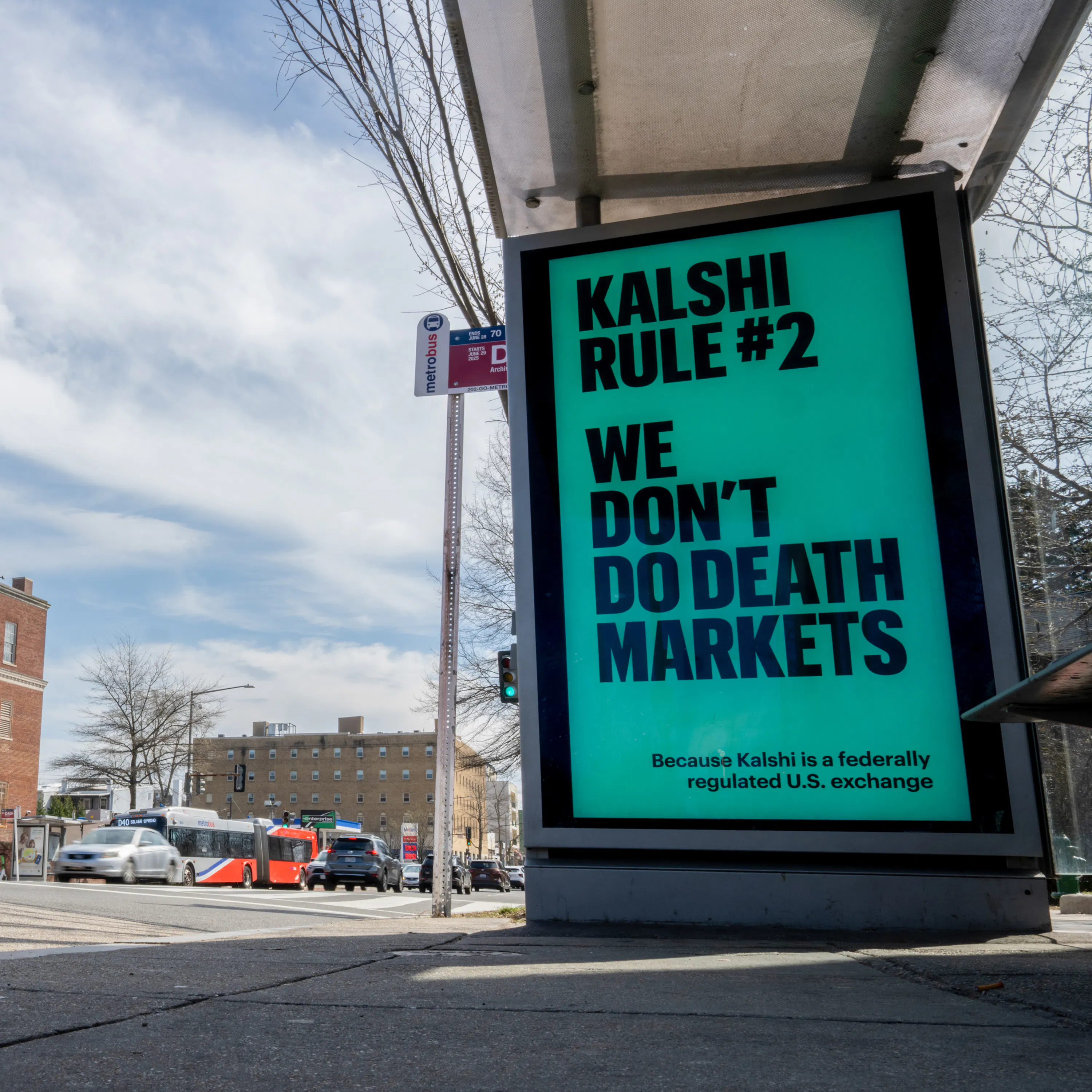
He didn't get that payday because buried in Calche's fine print is language that says
they don't list markets directly tied to death.
In fact, under U.S. law, it is illegal to bet on death or assassination.
So because the Supreme Leader was killed, those who held a yes position like Jesus were
out of luck.
How much money did you put down?
I put like $2,000 and nothing crazy.
$2,000.
Yeah.
That's like a lot to me.
Well, yeah.
And they should have paid us out $4,000, but they didn't.
Traders were outraged.
They said any caveat that major should have been more clearly listed, a class action lawsuit
that Jesus is not part of, followed.
Eventually, Calche refunded trading fees and paid out the positions based on what they
were trading at before Hamanay's death.
They promised to be clearer about the death carveout.
But this whole incident has lawmakers paying closer attention.
They're worried about the implications of not only being allowed to bet on major geopolitical
events, they're also worried about the morality of incentivizing someone's demise.
Do you find any queesiness with that idea?
No.
I mean, people do it all the time in Wall Street.
And for example, there's the Cuban President Miguel Diaz Canal.
I'm Cuban-American.
I'm very interested in this topic.
He has a 70% odd on polymarket right now that he's going to be out.
That's where I'm getting a lot of my information on this developing situation.
So I actually think it's very important to be informed.
That's very key in saying, well, what are people thinking is going to happen here instead
of just listening to regular social media channels?
So you're kind of using it as a barometer of like what people are feeling because they're
putting money on it.
Yeah.
Exactly.
Are you in the, um, the Cuban President market over on, on polymarket?
No.
No, I'm out.
I'm scarred.
It's your scar.
So it burned hot and fast.
Yeah.
No, I'm done.
I'm not into this whole gambling thing.
I'm out.
So what kind of regulations exist around these markets?
And what does it mean for you and me if you can put money on just about anything?
From what someone will say during a speech to war in the Middle East?
Let's turn to an expert.
My name is Kate Nibb's.
I'm a senior writer at Wired.
Kate says prediction markets have been around in various forms for a while.
Recently, they've exploded in popularity.
I came back from an extended maternity leave.
And the first thing I did when I got back was present my bosses with a memo explaining
why I thought we should be covering prediction markets more seriously.
And they said, go for it.
And so I just sort of dove in.
Well, yeah.
So that's why we wanted to talk to you.
So can you just explain for like those who have not been as deep into this world as you?
What exactly is a prediction market?
OK, so what a prediction market is is a little bit up for debate because in popular culture,
they're being talked about as basically a new way to gamble on sports.
Most people who are using them are using them to place wagers on the outcome of sporting events.
There's a lot of people in high places that would like to see them regulated like
other gambling companies and as betting platforms.
However, if you talk to the prediction markets themselves or if you talk to some federal
agencies, including the commodity futures trade commission, which is what regulates these
platforms, prediction markets are not gambling spaces.
What they are are new opportunities to trade financial products legally right now in the
US.
What these companies are offering are financial tools called swaps or derivatives on their
contracts using that lens.
This is like less of a betting thing and more of just something more like a stock market
or a commodities market.
But like how you use these things is you put money into an account and you buy a contract
on the outcome of a future event, whether it's what happens in the Super Bowl, what happens
in a presidential election or whether the Supreme Leader of Iran will remain in power.
It seems like it really runs the gamut in terms of what you can actually place a contract
on.
Is there anything that you can't bet on or should I even be saying bet, I guess is my
question.
I sometimes I go back and forth, you could say bet I think, yes, the United States does
have laws about what you can do with these contracts.
There is already a law that says you cannot make a features contract about war assassination
death, that sort of thing.
You're not allowed to do that randomly because of some sort of arcane happening in the past.
You also can't make a contract or place a bet on onion futures, something about the price
of onions.
My get rich quick scheme has been foiled then.
And you can't legally place a bet on box office outcomes.
There's like weird arcane carveouts.
Right now there's some confusion about this though because there's two main prediction
markets that are popular in the US.
Colchie is US based and is also fully licensed through the CFTC and operates as this swap
market.
It abides by these rules.
Policy market is also US based and it has a small part of it that operates within the
US sort of like Colchie.
But most of the volume that's taking place on polymarket is outside of the US.
It's like an offshore platform that people in the United States technically are not allowed
to participate in.
However, anyone who knows how to use a VPN and wants to, I believe is.
So the offshore version of polymarket does not consider itself beholden to these
rules.
And so that's where you're seeing markets on missile strikes, etc.
Well, say more about how this relates specifically to the war in Iran because we did see this
big dust up over Colchie specifically and people who bet on the outcome of the Supreme
Leader.
How does the place like cash lead deal with the idea of betting on death or betting on
war?
So Colchie had a pretty rough learning lesson with this particular market because it's
users revolted.
It's already facing a class action lawsuit over this and people were just absolutely furious
at how it handled the situation.
But you know, moving forward, I think it made it very clear that they need to be more careful
on how they present these markets or they're going to face more user backlash.
And they're going to see more people just jumping over to polymarket because polymarket
did had a similar contract and they resolved, yes, when he died as he was removed from
power.
So they did an opposite approach.
And again, that's because they are operating outside of the United States and are not paying
attention to the no betting on death thing.
So you have like these two main players operating with kind of different rules.
So what does the future look like in terms of regulating markets like that or just, you
know, making sure that people aren't trying to go to these places to bet on something
that is honestly seems pretty ghoulish to bet on the outcome of whether someone is alive
or dead at the end of a certain period at time.
So right now, there were five bills introduced just in the past few weeks, attempting guard
rails on these prediction markets.
Some of them are kind of introducing legislation that would is a little redundant, like there's
one of the bills says no, no death contracts and it's like, well, that's already illegal.
But it just speaks to how politicians and regulators are aware that this is an issue and are
searching for solutions.
I don't really think that there's going to be any major crackdowns on how these are operating
as long as the Trump administration remains in power.
The CFTC, which is right now the federal agency that regulates these markets has made
it quite clear that it doesn't intend to put a bunch of new guard rails up.
It's sort of looking at the polymarket outside of the U.S. is outside of its jurisdiction.
So I don't think there's going to be any major changes.
Unless there are, I believe, well over 30, possibly over 50 ongoing lawsuits happening
right now between prediction markets and state regulators and state attorneys and state
gambling commissions.
Well, and we saw just this week, Arizona became the first state to file criminal charges
against one of these markets.
It alleges that Cal State is operating in legal gambling operation in the state.
Cal State denies any wrongdoing and says only the federal government can regulate prediction
markets.
What would happen though if Arizona was successful here?
Well, they file misdemeanor charges, so it's not like they're going to haul off the
CEO of Cal State of jail or anything.
I suspect it would probably have to pay fines, but it might be banned from the state and
have to geofence the state.
Many different states are attempting to ban it, like especially Nevada, you know, gambling
is very important to its state revenue.
It wants to make Cal State and other prediction markets abide by its state gambling laws
and also so it can get a cut of the tax revenue.
Those lawsuits might end up making these prediction markets play by their rules, but
it would be on like a state-by-state basis.
It would be very hodgepodge until the federal government changed its state.
And that's obviously something Cal State wouldn't want to have like this patchwork of
regulations.
And that's, it reminds me of the conversations that we've been having on this show about
AI and the efforts from states to reign it in, the Trump administration trying to stop
that, it just seems like this is kind of a crux point of where this could possibly
go.
Yes, and to make things even more complicated, CFTC Chairman Mike Seeleg here.
Over the past year, American prediction markets have been hit with an onslaught of state-led
litigation.
The CFTC has come out and filed an amicus brief in support of the prediction market
companies and one of these lawsuits and probably will do so and more.
Current market aren't new, the CFTC has regulated these markets for over two decades.
They provide useful functions for society by allowing everyday Americans to hedge commercial
risks like increases in temperature and energy price spikes.
They also serve as an important check on our news media and our information streams.
It firmly believes that it is the exclusive authority that should be regulating these
and so it's sort of like a showdown between the federal government and these various states.
To those who seek to challenge our authority in this space, let me be clear.
We will see you in court.
And one interesting thing about this moment is it's like a very bipartisan hodgepodge coalition
on each side.
We have Democrats that support the prediction markets.
We have Republicans who are staunchly opposed, like Chris Christie, Governor Cox in Utah,
like there are Republicans on both sides and Democrats on both sides.
Former Trump chief of staff, Mick Mulvaney, right?
Yes, I talked to him.
He actually is leading a new lobbying group called gambling is not investing that exists
basically to support all of these state authorities that are trying to reign the prediction
markets in.
So it's a fascinating moment from the political perspective.
Let me come back.
Slippery slope doesn't quite cover where this all is headed, stick around.
My day kicks off with a refreshing Celsius energy drink, then straight to the gym, pre-gift
pickup, back home to meal prep, time for my fire session shift.
One more Celsius gotta keep the lights on.
When the three alarm hits, I'm ready.
What happens if this does start getting regulated like gambling because it's not like we've
seen sports betting cleaned up or less prone to bad actors just because it's allowed.
In fact, it seems like it's only gotten worse with the proliferation of all the apps and
all these companies that offer a super easy way to do this.
It seems like that could be a slippery slope as well.
Yeah.
I mean, if it's regulated more like gambling, it will likely push the age that you can participate
from 18 to 21.
But other than that, you will still be in a circumstance where you can wager a ton of
money on your phone in this frictionless way that is probably pretty bad for people who
are prone to gambling addictions.
It's important to note here that CNN has a partnership with Kalshi and uses it
to cover major events, editorial employees are prohibited from participating in prediction
markets.
And I guess the fact that I even have to say that just kind of underscores what a weird
wild west moment we're in, right?
Totally because honestly, I don't know if I'm allowed to participate in a prediction
market.
No one has come mad at me that that's against the rules.
I've been assuming I'm not allowed to.
So I had, I am.
Because you're a good journalist.
Yeah.
So what's fascinating is the, just the banality of some of the stuff that is available
on there.
Like I was looking this morning.
It was, so there was a market on what Jerome Powell would say at a Fed meeting.
Good morning was the favorite in the house.
It seems like it.
It seems to be fed.
I know.
But, but like, where does that lead if you can literally bet on just about anything you
can think of?
I mean, it's definitely part of this larger thread of the casino vacation of everything
in the US.
I think it changes the way that we, like, interface with reality kind of because, you know, you're
watching Jerome Powell speech.
First of all, I have some questions for you about, but, you know, maybe all of a sudden
you are super hyped to watch him speak because you've put $10,000 on whether he's going
to say good morning.
That's called a mention market if you're betting on what someone's going to say.
And there are already all these ways to hack it.
Like there's people doing data analysis on past speeches to come up with the probability
of him saying good morning versus, like, hello, ladies and gentlemen.
And then there's also people who are, like, attempting to do arbitrage by seeing if they
could have someone in the room.
And then there's a delay on when it goes online so they get the information gap.
And what is to prevent someone with information, sensitive information about stuff that is
going on, logging on under a pseudonym and trying to make money.
Like we saw this one user named MAGA, my man, made $1,000 from Iran bets before the
war.
Oh, I mean, there's rampant insider trading taking place in the prediction market space.
And I think the only thing really preventing people at this point is their own sense of
right and wrong because there isn't a lot of enforcement action going on.
All she flagged a few cases to the CFTC and the CFTC did say that they fit the fact pattern
of illegality and that it would look into it.
But those specific cases were pretty small potatoes, like they weren't a ton of money.
They didn't seem to be organized actors.
We're seeing all these other wallets placing what really look like insider trades mainly
on polymarket because polymarket uses crypto.
So you know the wallet address, but you don't know the person's identity.
And what we haven't seen is the United States arrest anyone for insider trading yet.
Israel looked into two people and I believe did make arrests, but so far, no one in the
US is getting punished for this.
So there's a lot of incentive to do it and not a lot of deterrence.
We should say the White House has denied that anyone affiliated with the Trump administration
was involved in the early Iran trades.
And speaking of Israel, Kate says a reporter there recently discovered firsthand just how
scary things can get when a bet doesn't go someone's way.
A reporter correctly reported a story about a missile hitting a building and then went
into this nightmare scenario where there were all of these people reaching out to him
and threatening him unless he updated his story because they had wagered that the missiles
would be intercepted and they were trying to convince him that a shard of the missile
had hit the school instead of the whole missile, which was not what he had observed.
And so he was reporting that was affecting the prediction market.
Yeah.
Wow.
And they were a lot of money was on the line.
And so this poor reporter was being threatened with bodily harm for accurately reporting
something and I was disturbed by this story, but not surprised at all.
I think we're going to see more of this in the same way that we're seeing athletes get
threatened by sports gamblers who are upset with their performances.
And now that there's all of these different markets for geopolitics and current events,
a lot of times the contracts will even say this will resolve based on the four reputable
news outlets reporting X, right?
So it places reporters in this sort of perilous position where if they report something
unpopular with the traders, they're likely going to face increased vitriol and maybe even
threats.
I mean, like you and I know for reporting language matters, the precision matters and that
is being carried over into how these markets resolve.
So it would make sense that traders would have a vested interest into what that language
says.
Yeah, it's absolutely wild.
And yeah, I think we're going to see more of that.
I am also just waiting for the first big insider trading journalism scandal to take place.
I just think that as a class journalists are so underpaid and have access to so much
advance information, that the temptation is going to be too great for somebody.
And if I was going to bet on it, I would wager that in the next year or two, we're going
to find out something, something crazy happened with a journalist placing a skirless trade.
Now we're getting really meta talking about betting on an event that would happen in
the British market.
Kate, thank you very much for walking me through all this.
This is wild.
I appreciate it.
Anytime.
Polymarket condemned the harassment directed at a manual Fabian, the Times of Israel reporter
who wrote about that Iranian missile strike.
It says the behavior violates their terms of service and attempts to pressure journalists
undermines the integrity of the markets.
They ban the accounts for all involved.
I also reach out to this support group gamblers anonymous.
They told me while it's still very early, they are seeing more people starting to approach
them after struggling with prediction markets.
They stress they make no judgments about what type of gambling people are doing and just
try to provide a welcoming and compassionate environment.
If you're looking for resources, they have a list of state hotlines on their website,
gamblersanonymous.org.
That's all for us today.
Thank you.
As always for listening.
We'll be back on Wednesday with another episode.
I'll talk to you then.
I'm CNN tech reporter Claire Duffy.
This week on the podcast, Terms of Service, there's a growing category of products aimed
specifically at addressing women's unique health needs.
These tools and services are sometimes known as FEM tech and they can provide big opportunities
and benefits, but they can also come with some risks.
To walk us through all of this, I spoke with Bethany Corbin.
Bethany is an attorney and CEO of FEM Innovation, where she advises startups, clinicians and
healthcare organizations.
In my opinion, what it really does is gives us a collective language to talk about women's
healthcare innovation and the tools that are out there so that we can take control of our
healthcare experiences and know how to advocate for ourselves in a system that's probably
not been designed to advocate for us.
Listen to CNN's Terms of Service wherever you get your podcasts.

