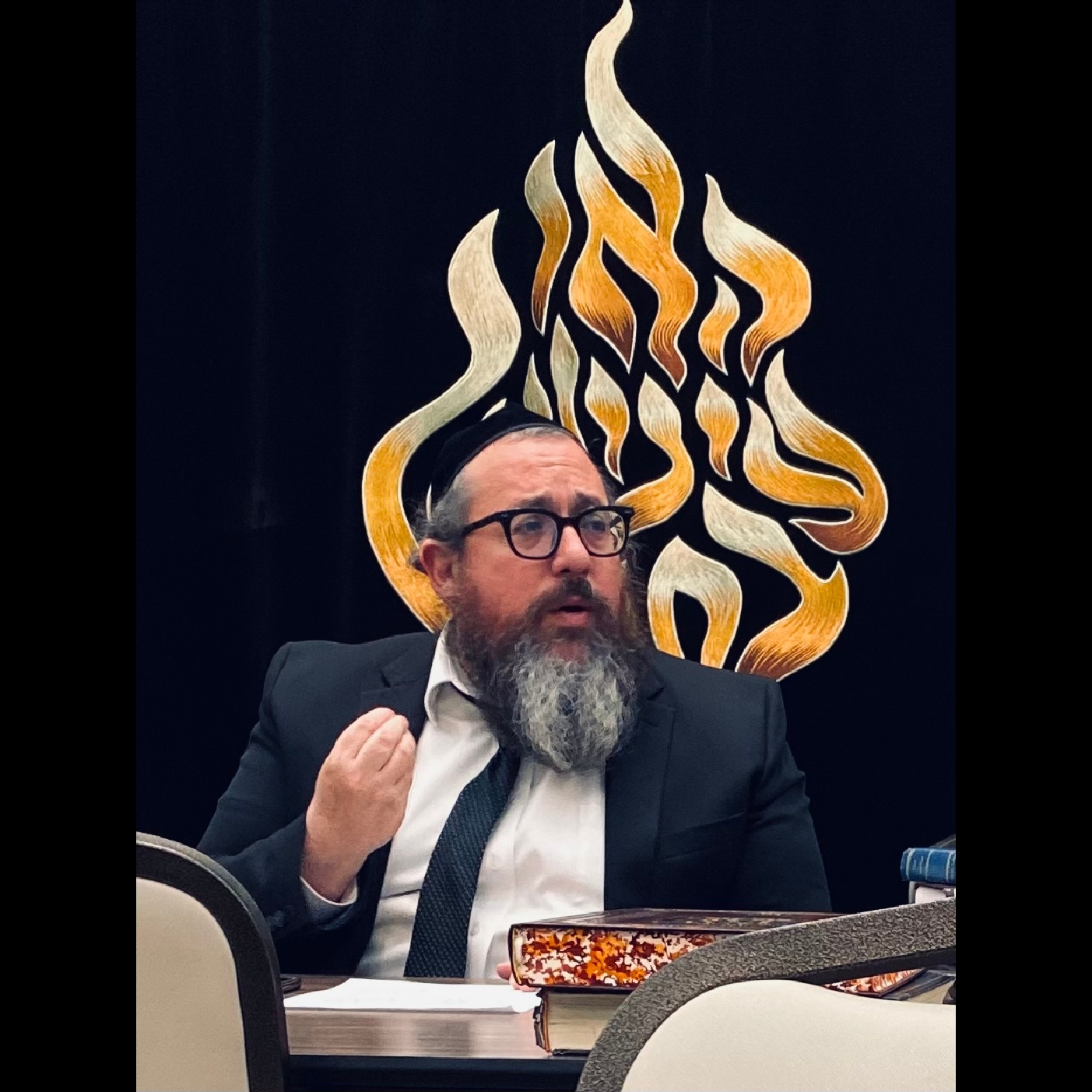
About this episode
Get every episode summarized
Each time Rabbi Roizman Thursday Night Shiur publishes, we email you a written briefing from the transcript — the topics, who appeared, and any specific claims, with the ad reads skipped.
Email me new episodesFree for 3 shows. No card needed.
Hosts & guests
Transcript ready
566 searchable segments. Every word is indexed and playable.
Full transcript
Rabbi Roizman Thursday Night Shiur — Parshas Nitzvavim-Vayeilech. Machine-transcribed; use the interactive transcript above to jump the player to any line.
So tonight's year is sponsored by the Gelfand family. Mitsashaem and the Sخus of the Limitatoid of Shireb, she's not from his children and panasaba, Hava, and continued sponsoring many Shirea among all different types of Mitsashaem. This week's Pasha is the Tsovim Vayayilich and Pasha's the Tsovim comes after the Tsovim, and it says, what to say, what's the Hiddish, I tell Mitsashaem that you're Mitsashaem, that you're standing here, is that you heard this unbelievable rebuke of 98 different curses, but you're still here, you're still made it, it's going to be okay. I tell Mitsashaem Vayayilich, that's a simple understanding of it, but we see that there is some sort of relationship between Tehukha and the Pasha of Mitsashaem. If there's one thing, there's a Hiddish and Pasha's the Tsovim is the Mits of Chuvo,
at least according to most of the Rishayidam, the Ramban, and others, the Ramban, Rashi, that the Mits of Chuvo is in Pasha's Mits of him. So what is the idea of Chuvo relates to the concept of the Tehukha? There's a Tehukha, there's a rebuke with things which are awful, and things that I had my Zaidah, my grandfather, when they used to lay in the Tehukha, in sure he would walk out. So I asked them Zaidah if I was going to stay at Rose, why are you going outside? He said, I was a designer, man, I saw it with my own eyes. I can't listen to it. I can't listen to something that I saw with my own eyes. I was in Auschwitz, I was in Mydeneck, I was in Mathausen, and I saw the Tehukha, I saw it with my own eyes. I can't listen to it. So we went through it not so long ago, two years ago. There's a Tehukha, they killed Yidin, they left them in the fields for the animals to eat.
This is part of the Tehukha, the idea of the surprise, the idea that nobody had any idea and we were left defenseless. It's part of the Tehukha, it's part of what Ashem is telling us. So how do we understand that? How does that relate to the concept of chuvah? What does it mean? Is it a simple cause and effect? Trying to understand that. So tonight we're going to do something a little bit different. Usually I don't ask to learn inside, but I want to learn with you two halochas in the Rambam, in Hirhus Chuvah. And I want to show you two things that are remarkable, things that are real khi-du-shin. So the first halochas, if you look at Perikriyishan, Hirhus Chuvah. The Rambam says, call her Mitsus Shabbatoyro, Bainase, Bain Loisa Asae, all the Mitsus in the Torah, where the Mitsus Asae, where the Mitsus Loisa Asae,
im'ovar ordam al-akhasmehem, if a person transgressed one of them, Bain bezodding, Bain bezoggo, whether he did it intentionally or he did it without intent, khi-yasetruva, the Yashavmichetoy, when he does chuvah, and returns from his sin, khayevli, his vada isifnaya, qelbharuhu, what is wrong with the Rambam? What's wrong? What did the Rambam say now that doesn't make sense? I read the words, khi-yasetruva, what does that mean? Is there a mitzvah, an obligation for a person to chuvah? No. No. No. Because if the Rambam would say that there's a khi-yuf to chuvah, the Rambam should say, khayevli has to chuvah. Some of the Rambam says, Rambam says, if you decide to chuvah, khi-yasetruva, then you have an obligation,
your obligation is to do vidui, that's the obligation. But it doesn't say, khayevli has to chuvah, but it's vada, it's not what he says. The Rambam says, khi-yasetruva, khi-yasetruva, if a person decides. So comes out a remarkable thing that the Rambam seems to hold, that there is no obligation to do chuvah. It is simply like a mitzvah kiyumas. For instance, there are certain instances where a person gives a stalker, right, he's not obligated. Sometimes you're obligated to give a stalker, but sometimes you give a stalker, it's a mitzvah kiyumas. Does a person have to wear tzitsas? Don't have to wear tzitsas. If you wear a dollar canvas, then you then you then you fulfill the mitzvah tzitsas, the mitzvah kiyumas, shakhting, except for bucharians. There's no khayev to shakh, yeah, there's no khayev to shakh, you don't have to shakh, you know, there's no mitzvah, if you want to eat meat, there's a mitzvah of shhita, one hakhta. The Rambam seems to say,
I can go my entire life, do a various on top of a various, I have no obligation to do chuvam. I have no khayev. If you do it, then it activates obligation of saying vidu. What in the world is the Ramam saying? It's a tremendous khidush, what the Ramam saying. That's question number one. Question number two, if you look in parake base, if you look in chapter two in the Ramam, Halahabay's, the Ramam is gonna tell us the gather, Mahi chuvam, what is chuvam? Mahi at chuvam. Yeah, you see it parake base, Halahabay's. There's a few copies over here, I don't know, the God stuck over here. If anybody wants to see parake base, Halahabay's, pass it over there. Okay. Zagda, I'll go Ramam, umahi chuvam, what is chuvam? Who shayyazov hakhoyte khaytoy that the person should leave the sin. So step number one of chuvam is what?
Stop it, just stop it. Yeah, just stop doing that. Yeah, that's number one. The Yasi renu ma'kshafte, and he should stop thinking about it. The Igmo beliboy, and he should accept in his heart shaloyah sayu oiit. So what the Ramam say? What are the first two parts of the Ramam? What's the first two parts? A person should stop doing it, and he should be resolute. He should accept the part himself, not to do it again. So far, so good. What's missing? Khairata is missing, and what else is missing? Vidu. Khairata is Vidu, so let's see. The Ramam say shanema, Yasi rashadarkav, isha vaat matra vaisav. The khayn ishnakha, masya avar, and then he should regret what he did. Okay? Everything is going great. Stop doing it,
accept in the future, not to do it again. And what regrets ishnakha masya avar. Kyi aksh uvinikham tivakhe hoodoi si pak te alyerach. He says after I did the avar, I regretted it. Si pak te alyerach, after I figured out, I slapped my thigh because I felt bad about what I did. Now listen to this. Now I want everybody, now you have to think. I'm going to read the words, explain to you the words. Says the Ramam, it's he, listen to this. So far, yeah, listen to this. You're going to, it's he's very bright, listen. But if you don't have this kasha, I'm going to slap you across the face. Where's your father? Father, where's your father agrees, masya avar. Now, once or twice, he's marocked him twice. Vaidas, listen to Yatsuk, the mids of Chuvah, two things. You have to stop doing it. No more, even though you can hack in, don't do it. Number one, number two is accept upon yourself
not to do it again. Then you have to regret. But now listen. The yad alav yoydaya talumuis. And the one who knows all secrets should testify about him. Shloryoshu vlazaya, khetla oilong, that he should never return to this sin. Shnema, valo, valo, nema ar oid alakain alamasya, yadainu, asha bechai yirucham yasum. Wetzalichh, lizwado is besvatov, and he has to save either valo, or my inyon is alushagama velibar. Okay, let me ask everyone here. This thing that it says, shayyayid alav yoydaya talumuis, shloryoshu vlachatoy, what is that talking about? What is that? It says, I would testify, it says, the one who knows all secrets, who is that? God will testify that you should never return to that sin. Okay?
Now what is that concept? What concept is that? What? It's not vidui, because I'm so resolute about what I'm going to do. The God himself testifies about me that I won't do it again. What is that talking about? What? It's talking about what? But in what? In the future, in the past? In the past, why? Hashem is testifying about me that I will never do it again. What's that talking about? The future? So listen to the order. Number one, it says, stop doing it. Number two, accept upon yourself. Number three, have regret. Regret is about the past of the future. The past. And it says, and God will testify about you that you'll never do it again. So asks, Rebits on a blaser, he asks. He says, the order of the Rambam doesn't make sense. Hashem the Rambam, written the aloha.
He should have started with regret. Then he should have said or stopping to do it. And then he should have spoken about the future. And then he said, and you know how resolute, you know how resilient you are, you know with what great conviction and for did you do, you accepted upon yourself, never to do it again, to such an extent that God himself testifies that you will not do it again. But that's talking about Kabbalah, that's talking about accepting the future. But why does the Rambam, when he writes this in the middle, before he's talking about accepting the view, he starts talking about regret. What does the one have to do with the other? There are two separate things entirely. You understand the question? Everybody has said. Simple question, what does the Rambam interject with regret, with karate before he talks about Kabbalah, Labah? This is the question that it's a la blaza asks in the saifa called Koi Khaweir. That's what he asks. Everybody got the question?
We have two questions. Question number one, or at least the kiddish, the Rambam seems to say that there is no obligation to do chuvah. And question number two, when the Rambam writes down the process of chuvah, he mixes jambals everything together. He puts Kabbalah, Labah, and karate, and shawarma, he takes the resolution of the future and regret for the past. And he mixes them together into one challenge. Why is the Rambam doing this? Those are two questions we're going to answer tonight. And this is a very impactful idea. OK. Let me ask everybody the following question. When it comes to Elor, comes to Roshaniyum Kippur, who is the one that's trembling and afraid of the Yoyah Madan? Who do you see takes the Yoyah Madan very seriously? What? Lithvaks add? I don't know. I don't know.
You go to visionates, still in four o'clock in the morning. But who's there? Who's showing up for the hill? Who's showing up? What? Desire this end? All the khnaks. All the people, all the front people, are the one that take Roshaniyum Kippur very seriously. What about the people that are sitting and talking and showing who are not here at this year? Are they taking Roshaniyum Kippur seriously? It should be the other way around, no? Who should be afraid? Who should be afraid? The people that have what to be afraid about. But the people that are afraid are in Las Vegas. And the people who have nothing to fear about, they're waiting, yeah? The whole month. The rice doesn't taste so good right now, no? Yeah? You hear?
I was once I learned in Panavitch, and I went. I took the bus early in the morning to Davinates by the castle. And I'm waiting for a ride from the Tanganama Kazid to a ride to go to the castle. So a car pulls up and there's an old man in the car. And he says, are you going to the castle? Ternacella, La Coycelle says, yeah? So I'll get in the car, I'm sitting in the back. And the person in the front starts to make brothels, the passenger. And every time he would say a shem's name, the entire car would shake back and forth. The entire car. You'd say a shem's name. Boruchato, you say Havaya, the whole car shaking. It's always raining cars, that's what we do. Whatever. And I'd say, you know, in cars, it's all long moors with engines, you know, the whole thing. But the whole shit. When I got out of the car, I realized it was Rupdon Segal.
Rupdon Segal was in the car. So when he says a shem's name, he shakes. He trembles from the impact, from the impression that it makes on it. But what's the truth? If I know the Kamsa Shashana, I call this Boruch who's going to look at me, and I have a very long list, I have a lot of my case file is packed. I should be trembling, no? But we see the opposite of this truth. The people that are deficient in their relationship with a shem are quite comfortable. And the people that are very close to God are so afraid. Why is that the case? Why is that the case? So I want to share with you something that I think is quite profound. And most people miss this point. What creates an esthesia of the soul?
Why don't we feel? Why do we feel empty? And why do we feel detached and disconnected? So a person doesn't understand the following thing. The moment that I go ahead, and I do something that I'm not supposed to, it's not because now I'm a bad person. I'm not. I'm a very holy person. Every morning we get up and we say, like I in the Shaman Shabitari, at the Barossa. We are all, I'm a Kuran Sadikin. We are all Sadikin. But what's the impact of what happened? The moment I went ahead and did something I'm not supposed to, it has created a paralysis and an anesthesia that I cannot feel God in my life. It creates darkness in my life. The impact of sin is not the fact that I rebelled against Hashem and Hashem is angry with me.
Hashem loves me. The main impact is I don't feel it. I feel dead. I feel disconnected. And that is the main tragedy of the entire thing. God loves us. He wants to have a relationship with us. What is that nature of that relationship? 613 intimate connections. Intimate connections. And when a person says, I'm not interested in this. What he's really saying is, I don't want to have a relationship with you. And the impact of that is the attachment and distance. Why is there no obligation on the midst of truva? Because the moment that I went ahead and I engaged in the concept of an Avera, I have identified myself as somebody that is not commanded.
I can't command you to do truva. I can't command you to love me. All I can ask of you is that you should choose to choose truva. You need to choose it. You need to come back to me. I can't command you to do truva. Because the moment that you ran away from me, there's been a separation between us. Chirota regret and Kabbalah La Bar are one and the same. Why does the person not feel regret? Why does the person not feel regret? Because he doesn't have an understanding of what he did. He doesn't feel God in his life. He feels nothing. So when the Rambam talks about the concept of Kabbalah of the future, he ties it into the concept of regret, the deeper the regret, the deeper I feel what I have done,
the more I have a future relationship with Hashem. It's very easy for me to make resolutions to the future. But if I have no understanding of who I am and what my relationship to Hashem is, there is no place for the future for me. There is no Kabbalah La Bar. The two things are related to each other. So I want to share with you a simple idea. This was Hashem when a person is contemplating his life. He has to ask himself, how can I feel more where I really am? I want to share with you something. The Piazzatuna said something shocking. And I see it all the time now. The Piazzatuna writes, the Shabashuva drush, I want to read it to you. He says the following thing. There is more mental health issues among Jews than amongst non-Jews.
That's what he says. We don't see it by any other nation. The extent of anxiety, the pressure that amongst Jews is more than by any other nation. Why is that the case? This is the Piazzatuna wrote in 1928. Haseebal Akakhli, the cause of that is, Shenef Esha Yelada Yerudi Adina Beemis Witsnuwa. Because the soul of a Jew is very gentle and very sensitive. He should have faced the Torah, have led us to avoid this Hashem. The soul of every Jew desires purity and a character that is elevated and refined. O Kashyayah Yelad Shabaya, and when a child hears, or Roya, or he sees, Dover Makhur, something that's ugly or disgusting,
or he snagos hofches, or he sees hedonistic behavior, Nafshoi Nifzas, his soul is wounded. Buhul-louike Az-Bezazua, and then he is hit with a trauma, with a shaking. And that's what causes the... It says, when the child is a child, you can't tell. Al-Piroyev, Ayma Freenin, Bizam Yad, Akhamachshavus, Matheel Esquat, Sayyad, Yalazali, Zbalba. A child is pure. He sees his parents in the middle of davening, talking like they're in the middle of a shuk. It creates damage in his soul, and he has a traumatic event by it. A child sees a husband talking to a wife like she's a slave, and this creates in him a trauma.
And you can't see it, not when he's 8, when he's 9, when he's 10, but when he's 15 and 16 and 17, that's when it comes out. What's the reason? The reason is, is because the purity of the soul is so gentle, is so refined, that it creates a spiritual trauma, which we view as having as a mental illness. This is what the Piazzat narrates in his Shaboshuva Dhrosh. We see from here the following idea. When we talk about the oilom Hachuva, the concept of chuva, the primary, the Mabit, I mentioned this in shou, the Mabit defines chuva as what? Kira, Sala, Kim, Laakh, Rikhuk, Akay, closeness to Hashem after the distance from sin. The purpose of regret is not that I should feel guilty,
or I should feel shame. Those are damaging emotions. The purpose of Harata is to feel where I need to be in relationship to Hashem. Why do I feel dead when I dive in? Why do I feel that there is no elevation, or I'm not in a state of Tikkun Amidus? Why do I feel that Toyota has nothing to do with me? I want to feel. I want to feel a sense of love and reverence. And that's real Harata. The regret is not what I did. The regret is why I feel the way I do. That's real Harata. Why do I feel this way? Why am I so far? And the deeper a person has a desire to have a relationship with Hashem, the more profound, the more potent is his future.
The more resolute is his future Tikkun. When we talk about the concept of the clovers, I want to tell you something about the clovers that's fascinating. I said Hashem wants to have a relationship with us. What's Hashem's relationship with us? He gave us 613 mitsus and he gave us the story of a generation. He says, I love you. I love you. This is what I want to give to you. But what happens when we reject that? Hashem says, I'm still going to have a relationship for you. You don't want Kriishma, your body will lie in the field, but at least we'll have a relationship. You don't want Limudatoyra, your star, but at least we'll be connected. The idea of the Tehukha is the replacement of relationship
when a person turns his back on God. It's not punitive. There's no angry God. I want to have a relationship with you. But you turn your back on me. Instead of filling, you took a... I don't know, whatever people do. You cheated in your business. Instead of learning Tehukha, you spent hours watching all kinds of disgusting things. And instead of correcting yourself and working on the way you speak, you said all kinds of things that your person should never say. But I love you. I want to be connected to you. What did you do with our relationship? And in its place comes great suffering. But that suffering is Hashem's suffering, because he wants to have a relationship with us. This is what the Kajaglova writes. That's why the midst of a truver is an impassioned servant. After 98 Klollas, he says,
But you're still here, because I want to have a relationship with you. The real relationship I want with you is filling, and tell you, and chess it, and kdusha. That's what I want. And if you don't want that, I have no choice. We'll have to have a different relationship. But you can't get away from me. You can't escape me. You can't turn your back on me. On the holiest day of year at the height of the holiest right before the evil, we talk about Yoyden, a person who tried to run away from God. Because ultimately, the greatest truver is to run towards Hashem. That's real harata. That's real regret. Which direction am I going in? Where am I running to? This, if a person would take the time,
every single day we have not all of them, come to Raschshan. I think this is life transforming. Person says, where am I running to? What is my real relationship with the Baeroyden? This is what I want to share with the oil of them. Next week is going to be Thursday night. It's going to be a mamesh before Hashanah. There will be a shear, but as it's Hashem, I want to thank everybody. We're going to start a new year. Next, it will be a special shear. Next, it's going to be a honor for Hashanah. We'll try to make it extra special. Every share of a Mauryat is a shout.
More episodes
More from Rabbi Roizman Thursday Night Shiur
Parshas ki savo
Rabbi Roizman Thursday Night Shiur
Parshas Mattos masai
Rabbi Roizman Thursday Night Shiur
Parshas Chukas Balak-The importance of ulterior motives
Rabbi Roizman Thursday Night Shiur
Parshas korach-The connection to tzaddikim
Rabbi Roizman Thursday Night Shiur