About this episode
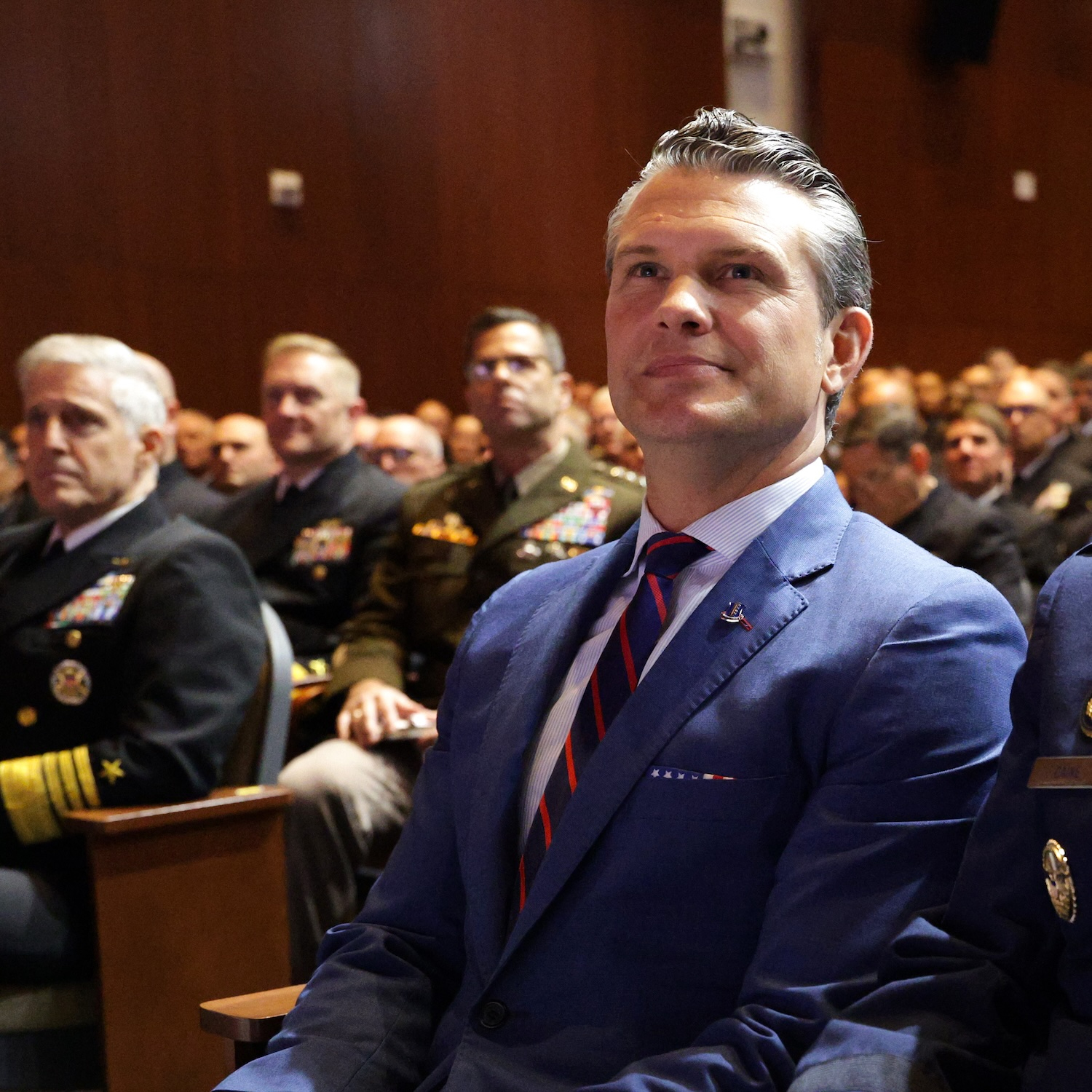
NBC national-security reporter Gordon Lubold discusses the U.S. military’s growing leadership vacuum under Defense Secretary Pete Hegseth.
A federal whistleblower says the Postal Service has been secretly working to overhaul mail-in voting to comply with one of President Trump’s executive orders, despite a judge recently blocking it. The Washington Post’s Patrick Marley explains how the system could prevent thousands of Americans from receiving ballots for the midterms.
Plus, how around 900 students barely escaped deadly flash floods in Nepal, a judge ruled that the man accused of assassinating Charlie Kirk will stand trial for murder, Germany is blaming Russia for an attempted airport drone attack, and how an MLB team swung its way to the top of its division.
Get every episode summarized
Each time Apple News Today publishes, we email you a written briefing from the transcript — the topics, who appeared, and any specific claims, with the ad reads skipped.
Email me new episodesFree for 3 shows. No card needed.
Hosts & guests


Transcript ready
118 searchable segments. Every word is indexed and playable.
Full transcript
Apple News Today — Pete Hegseth’s purge of the U.S. military. Machine-transcribed; use the interactive transcript above to jump the player to any line.
Good morning. The U.S. Army Secretary resigned after reported clashes with defense secretary Pete Hegseth, raising questions about his leadership. A whistleblower at the Postal Service says President Trump's changes to vote by mail could wreak havoc on November's elections. The person who provided this information said they were very worried there could be a catastrophic failure that would result in many people being unable to vote by mail. And how a principle saved 900 children just minutes before the deadly floods in the Paul sweat their school away. It's Wednesday, September 2nd. I'm Gideon Resnick. This is Apple News today. The U.S. military carried out additional strikes on Iranian targets Tuesday in response to the regime's attacks on commercial shipping in the Strait of Hormuz. More than six months into the war, the Army has very few top leaders left after a slew of firings and resignations.
Which in turn has led to questions about defense secretary Pete Hegseth's leadership at the Pentagon. The latest resignation came from Army Secretary Dan Driscoll, who has had a lot of friction with Hegseth in recent months. I think they had butt heads over some of those personal choices. I think they'd butt heads over army modernization efforts. Gordon Loubold is a national security reporter for NBC News. One of his sources says Driscoll clashed with Hegseth over the direction of the Army. And he disagreed with his decision to fire top generals in the service, like former Army Chief of SAF Randy George. Chief staff of the Army, General Randy George, he and Driscoll were moving out more so than other leaders and other branches of the military on army modernization efforts. They were focusing on drone technology and how to combat drones from adversaries. You're left with this idea that for whatever reason Hegseth didn't like George and made it that much harder for Driscoll to kind of stay on.
George was fired in April and the army has not filled his position full time. Between his firing and half a dozen other senior officers who have been forced out, the army has its lowest number of four star generals in decades. Michigan Democratic Senator Alyssa Slotkin, a former CIA analyst and Pentagon official, told CNN that they can seize or political and inexcusable. We're on this never ending purge and if someone disagrees with him or undercuts him or makes him look somehow weak, then he gets rid of them and we're in the middle of a war. Lubold said Hegseth can make changes where he wants and that experts and members of both parties have questioned if the army does have too many senior officers. Last year, Hegseth announced a plan to shrink the number of generals and admirals by 10% overall. But Lubold says it's less clear what he wants to do next.
Right before Driscoll, the former army secretary resigned. The Washington Post reported that several military officials told Hegseth that the longer the war in Iran continues, the greater the risk of weakening their ability to confront threats elsewhere. President Trump wants the U.S. Postal Service to roll out a brand new system for voting by mail in time for the midterms. But a federal whistleblower is warning that doing it so quickly could prevent many Americans from ever receiving their ballots, potentially threatening the way that people vote. Trump signed an executive order in March to overhaul the vote by mail process,
which is put the Postal Service in the position of trying to build a system in months that typically would take at least a year or more. This new system was supposed to be up and running as of yesterday, but Trump's order has been temporarily blocked by a federal judge. Patrick Marley who covers voting issues for the Washington Post told us how the system works. They want the states to upload lists of voters who are eligible to receive mail ballots through a new, as yet unseen, online portal to the Postal Service. It would include a complex voter verification process where postal workers cross check that the people on their lists to receive mail ballots are also on the state's voter rolls. State and local officials often send mail ballots in large batches. In some cases, even to all registered voters. And then when they bring in their ballots in large quantities to mail, the Post Office would scan barcodes on envelopes of those ballots and compare them to the list that they had been provided. But the whistleblower says if this gets
rolled out and there's even one mismatch between the lists, the entire batch of ballots could be rejected and go back to the state, which means voters might either receive their ballots later or potentially not at all. If you had a batch of 10,000 ballots and one questionable ballot or problem with the address or the name in there and 9,999 ballots that were perfectly valid, if that one ballot were found by the Postal Office, it would hold up the entire batch of 10,000 ballots. And because states are constantly updating their voter rolls, the information they share with the Postal Service could get out of date quickly for totally mundane reasons. Say for example, when a new voter registers or someone changes their registration after they move. The federal judge that temporarily blocked Trump's order is set to decide on possibly extending the hold after hearing on Thursday. It's not clear how the whistleblower's disclosure could factor into the ongoing legal dispute. There are several lawsuits that have been happening at the same time and they overlap in lots of ways, some of them before the same judge,
some of them before other judges. There's appeals. The Supreme Court has already weighed in on one sort of procedural element to it all and it very well could return to the Supreme Court. Rescue teams are still searching for thousands of missing people in Nepal, where over a thousand were killed and flash floods caused by a collapsing glacier. The wall of ice, water and debris released into the Himalayan Valley below moved so quickly, people had very little time to react, let alone escape. But one story has emerged in recent days as a striking example of how quick and decisive thinking can and did save lives. Regendro D'Auadi, a local principal, managed to evacuate roughly 900 students safely, not long before the school was completely submerged. D'Auadi told the Associated Press that he started to get nervous when a colleague told him powerful floodwaters were advancing. Then another teacher said something that a parent arrived to pick up her child.
No threat had been officially confirmed at that point, but D'Auadi decided that he had to act. He told Reuters his thinking at the time. He says there that they decided that if the information was wrong, they would lose just one day of lessons. But if the flood warnings were right, lives would be lost. So he made the call to evacuate everyone to higher ground, and just in time too. As the kids and teachers walked up and nearby hills, safe from the disaster, D'Auadi told the Associated Press that he watched the floods tear through the school, speechless. I've been the head teacher of that. He says the school was a huge part of his life, that he went there as a child and had taught there for decades. His community is hailing him as a hero, though the AP reports he's reluctant to accept the role.
D'Auadi says he just wants to see his kids back in the classroom as soon as possible, and he's urging the government to do everything it can to rebuild quickly. According to the A group saved the children at least 69 schools were destroyed by the floods, and almost 19,000 kids are out of school. Here are a few other stories we're following today. A judging Utah rule that the man accused of murdering conservative activist Charlie Kirk will stand trial. And if the defendant Tyler Robinson is convicted, he could face the death penalty. The judge sided with the prosecution who say they have overwhelming evidence that Robinson shot and killed Kirk on a college campus last September. After the decision, one of Robinson's attorneys entered a non-guilty plea, and Kirk's family called the ruling to hold a trial, an important step in our family's pursuit of justice. In Germany, officials are blaming Russia for an attempted drone attack at an airport in
Leipzig last month. On August 4, a drone filled with military great explosives struck the wing of a Ukrainian airplane at the airport, though it didn't explode. And another drone with traces of explosives was recovered nearby, just days later. Germany's interior minister said the drones carried hallmarks from similar operations carried out on behalf of Russia during the war in Ukraine. The government announced that it would close a Russian consulate in Germany and retaliation, and it summoned Moscow's German ambassador to Berlin. A spokesperson for the Kremlin denied Russia was behind the attacks, and accused Germany of further escalation. And finally, after a few dismal seasons, one major league baseball team wondered, what if we just swung the bat harder? And it worked. The Wall Street Journal reports that until this past winter, the Chicago White Sox had the slowest average swing speed in the league. Then their general manager decided to pick up the tempo, putting players through special trainings. Now their scoring has gone up, their swings are almost one mile per hour faster on average,
and the socks are at the top of their division. Which all maybe goes to show. Sometimes the best fix is the most obvious one. You can find all these stories and more in the Apple News app, and if you're already listening in the news app right now, we've got a narrated article coming up next. McLean's looks at the love story between American pop star Katie Perry and former Canadian Prime Minister Justin Trudeau. If you're listening to the podcast app, you can follow Apple News Plus narrated to find that story, and I'll be back with the news tomorrow.
More episodes
More from Apple News Today

The dark side of America’s obsession with the Lindsay Clancy trial
Apple News Today

JD Vance makes his big pitch to the GOP base
Apple News Today

This state offered universal child care. Here’s what happened.
Apple News Today

The race for the Senate has become a toss-up. Here’s why.
Apple News Today