Loading...
societyculturedocumentary
Preacher’s Baby Girl/Gangster’s Wife
About this Episode
The Trial & Travails Of Norma Brighton Millen
Jump to the AD-FREE Safe House Edition
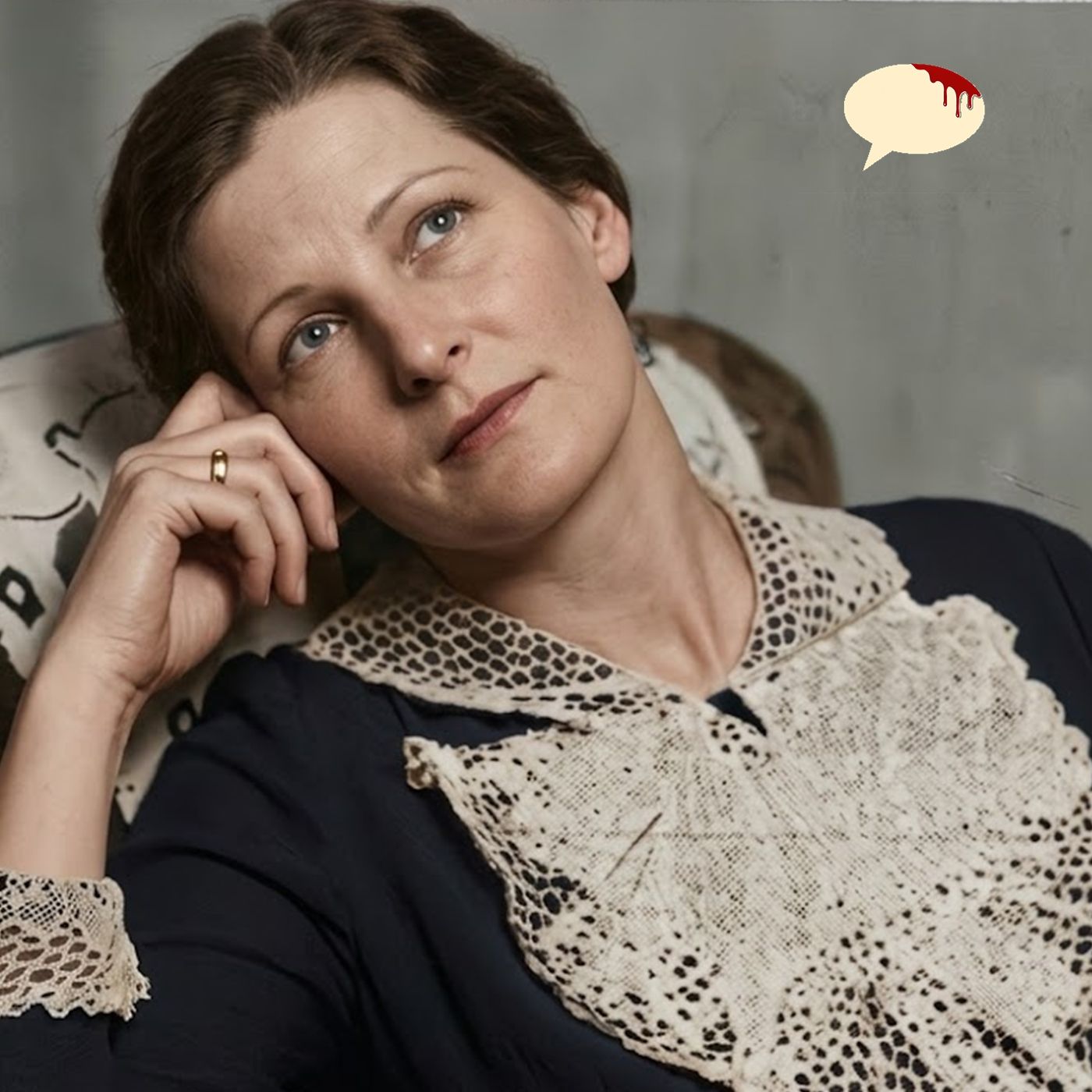
Episode 43 is the story of a young girl, the daughter of a prominent minister and graduate of a fine finishing school, who fell into the wrong crowd and married a man who would be executed for the crime of the gang he was trying to build. The papers never said, but I can’t help but think the Millen-Faber Gang fancied themselves to be the Dillingers of the East Coast. The story grabbed my attention because of the way Norma Brighton Millen presented herself after her capture. Is she the innocent dupe as she proclaimed? Or was she using her pretty face and sophisticated air to disguise her inner bad girl and get off easy?
Hear about more FEMMES FATALE!!!
Become a supporter of this podcast: https://www.spreaker.com/podcast/true-crime-historian--2909311/support.
You can pay more if you want to, but rent at the Safe House is still just a buck a week, and you can get access to over 400 ad-free episodes from the dusty vault, Safe House Exclusives, direct access to the Boss, and whatever personal services you require.
We invite you to our other PULPULAR MEDIA podcasts:
If disaster is more your jam, check out CATASTROPHIC CALAMITIES, telling the stories of famous and forgotten tragedies of the 19th and 20th centuries. What could go wrong? Everything!
For brand-new tales in the old clothes from the golden era of popular literature, give your ears a treat with PULP MAGAZINES with two new stories every week.
Jump to the AD-FREE Safe House Edition
Episode 43 is the story of a young girl, the daughter of a prominent minister and graduate of a fine finishing school, who fell into the wrong crowd and married a man who would be executed for the crime of the gang he was trying to build. The papers never said, but I can’t help but think the Millen-Faber Gang fancied themselves to be the Dillingers of the East Coast. The story grabbed my attention because of the way Norma Brighton Millen presented herself after her capture. Is she the innocent dupe as she proclaimed? Or was she using her pretty face and sophisticated air to disguise her inner bad girl and get off easy?
Hear about more FEMMES FATALE!!!
Become a supporter of this podcast: https://www.spreaker.com/podcast/true-crime-historian--2909311/support.
You can pay more if you want to, but rent at the Safe House is still just a buck a week, and you can get access to over 400 ad-free episodes from the dusty vault, Safe House Exclusives, direct access to the Boss, and whatever personal services you require.
We invite you to our other PULPULAR MEDIA podcasts:
If disaster is more your jam, check out CATASTROPHIC CALAMITIES, telling the stories of famous and forgotten tragedies of the 19th and 20th centuries. What could go wrong? Everything!
For brand-new tales in the old clothes from the golden era of popular literature, give your ears a treat with PULP MAGAZINES with two new stories every week.

Transcript
Teleredic here from 2311 Racing.
Game night's fun until someone spends five minutes
lining up one shot.
Chalk, breathe, re-chalk, still aiming.
While they figure it out, I fire up Chamba Casino.
I can spin anywhere, anytime,
and there's always a new social casino game every week.
Spins happen way faster than that shot.
Play now at chambacasino.com.
Let's chamba.
Sponsored by Chamba Casino, no purchase necessary.
VGW Group Voidware prohibited by law, 21 plus terms
and conditions apply.
Needham, Massachusetts.
February 2, 1934.
One policeman was slain, three other men shot,
and $10,000 stolen from the Needham Trust Company today
by four bandits.
Two of them armed with what bank employees
described as submachine guns.
Forbes, MacLeod, policemen shot through the stomach
as he answered the bank's burglar alarm,
died shortly afterward in the Glover Hospital.
They came into the bank just after we had opened for business,
said Miss Elizabeth Kimball, secretary.
There were four of them, dark, foreign appearing men.
Two had what looked like solid-off machine guns,
and two others had pistols.
There were 11 of us in the bank, but no customers.
Mr. Bartholomew didn't make a move,
but they shot him just the same,
as if they wanted to show that they meant business.
We were forced to stand with our hands up at our desk,
while Reardon had to hand over the money,
a little more than $10,000, I think.
Mrs. Martin E. Gaken, a bookkeeper,
managed to sound the alarm bell,
and as the bandits backed out, taking Macintosh and Reardon
with him, forged MacLeod, one of the policemen,
came running toward the bank, and they shot him down.
Macintosh said that after being forced to stand
on the running board of the car for a mile or two,
he was pulled inside the car as it drew near Needham Heights.
A short distance away, the bandits pushed him from the vehicle.
At the hospital, Haddock and Kaufflin
were described in serious condition.
The names of both men were put on the dangerous list.
Haddock had been notified at the fire station
of the likelihood that the bandits would pass there,
and as the car tore down the road,
he opened fire only to fall wounded as they returned the shots.
From Boston, came word that General Daniel Needham,
state commissioner of public safety,
and as such, commander of the state police,
had taken personal charge of the state police investigation.
The general told newspaper men he believed
the machine guns used in the holdup
might have been some of those stolen
from the state police's exhibition
at the Boston Auto Show early last Saturday morning.
A state police warning flashed throughout the east,
described the bandits' car as a large black automobile
of expensive make.
It was reported headed toward Providence, Rhode Island,
but there are many sparsely settled districts
between this town and the Rhode Island line.
Evidence that the holdup was carefully timed
to coincide with the arrival of the Needham Railroad station
across the street from the bank of a gasoline train
equipped with an automatic bell.
Police believed the bandits counted on the clang
of the train's bell, drowning out that of the bank along.
True Crime Historian presents yesterday's news,
a reading of historical newspapers from the Golden Age
of Yellow Journalism.
It's the story of a young woman,
the daughter of a prominent minister
and graduate of a fine finishing school
who fell into the wrong crowd
and married a man who would be executed
for the crimes of the gang he was trying to build.
The papers never said,
but I can't help but think that the mill and favor gang
fancy themselves to be the delingers of the east coast,
or wannabes anyway.
The story grabbed my attention
because of the way Norma Brighton-Millin
presented herself after her capture.
The question came to me,
is she the innocent doop as she proclaimed,
or was she using her pretty face
and sophisticated air to disguise her inner bad girl
and get off easy?
I'd like to hear your thoughts,
so leave some comments on my Facebook page after you listen
if you're so inclined.
I'm True Crime Historian, Richard O'Jones,
and I give you preacher's baby girl slash gangster's wife,
the trial and travails of Norma Brighton-Millin.
Boston, Massachusetts, February 19th, 1934.
The Reverend Norton Brighton and Nadek Pastor,
today joined in the search for clues
in the recent $14,000 robbery at the Needham Trust Company
during which two Needham policemen were slaying.
The pastor said he was the father of Norma Brighton-Millin,
19-year-old wife of Merton-Millin,
who, with his brother Irving,
is being sought by police for questioning.
The millen brothers, police said,
disappeared a week ago,
and the hunt has been fruitless.
Reverend Mr. Brighton, a member of the American Christian
Missionary Society, told state police
that his daughter eloped with Millen last October
and that he had not seen her since.
The pastor said his daughter was born in Des Moines, Iowa,
where he was pastor of the Park Avenue Christian Church.
Police said that the pastor and his wife were divorced
in Boston in 1921,
and that he retained custody of their three children.
Yesterday, Mr. Brighton volunteered his help
in locating his daughter and the two men sought for questioning.
New York City, February 26th, 1934.
At 3.30 this morning,
in the office of Assistant Chief Inspector John J. Sullivan
at Manhattan Police Headquarters,
there was a strange reunion.
In the presence of a policewoman and a lieutenant of Boston police,
these two met.
The Reverend Norman Brighton,
pastor of the Church of Christian Disciples of Natick, Massachusetts,
and his daughter,
young Mrs. Norma Brighton Millen,
the three-month spried of one of two brothers
who were arrested yesterday on charges of bank robbery
and murder after a spectacular battle
in the lobby of the Lincoln Hotel in Manhattan.
The two faced each other for a moment.
They embraced.
Father kissed daughter on the cheek.
How are you dear?
Said the clergyman.
All right, daddy replied the girl.
No word of reproach.
No questioning or cross-examination.
She was not under arrest
and was allowed to go to a hotel
after greeting her father at police headquarters.
Police said she had agreed to return to Boston voluntarily
and was willing to tell everything she knew about the case.
The girl told police she had graduated
from a fashionable finishing school
and had married the elder millen brother three months ago
after a romance that began last fall
at Hampton Beach, New Hampshire.
The millen brothers had been traced to this city
through the interception of telegrams,
but their presence at the hotel Lincoln was not known
until a watchful detective spotted
Merton's new automobile,
which he had purchased in Washington earlier this month.
Policeman descended on the hotel
and a short time later,
Irving Millen was arrested when he went to the hotel desk
to inquire about a message.
Merton entered the lobby an hour later
and when a policeman stuck a gun at his back,
the elder millen turned around and grabbed the barrel,
the weapon discharging a bullet into the floor.
Millen dashed for the street door
but was pounced on by other detectives.
The two brothers struggled for freedom
and in the scuffle both received considerable cuts and bruises.
The sum of $700 in currency was found in their room
and police said this money corresponded
to that taken in the holdup of the Needham Trust Company
in which $13,200 was stolen.
Question at headquarters,
the millen brothers steadfastly declared
their innocence of the robbery.
Policeman said Merton, Mill and Young Wife
had not been present at the holdup
but was a witness to the burning of an automobile
which figured in the robbery.
It was through the automobile's battery,
which was not destroyed by fire,
that the police picked up the trail
which led to the arrest of the brothers.
Irving Millen, in whose name the battery was registered,
explained police said that he was walking in Needham
the day of the robbery.
When he saw a man he knew only his Joe
trying to fix his automobile
which was the same make as the one burned.
Being an automobile mechanic Irving said,
he went over to help Joe
and found that the battery was at fault.
In order to help Joe Irving said,
he took the battery out
and substituted that from his own car.
A short time later,
police said he told them.
A man unknown to him handed him a package
containing some money
and warned him to get out of town
because police were looking for him.
He gave the money to Merton, he said.
Police quoted Merton as saying
that after Irving gave him the money,
a man warned him to get out of town
where he would be taken for a ride.
The brothers then decided to come to New York,
they said.
Dedham, Massachusetts, February 26th, 1934.
Abraham Faber, 24, a young employer
of the brother's Merton and Irving Mellon
was charged with murder while he sat
closeted with the district attorney here.
Faber had been arrested first.
He was taken into custody early yesterday afternoon
in Boston and immediately taken
to the state police headquarters at the state house.
Developments came quickly after his arrest.
The Mellon party was taken into custody
at a New York hotel and a raid on a garage
in the doorchester section of Boston
yielded a large quantity of arms and ammunition.
This supply had been stolen by gunmen
who raided a state police exhibit
in a public hall in Boston
a few days before the need of robbery.
Descriptions of the automobile cause
chief godly a lot of trouble.
He secured the number of every
Packard automobile in the state and eliminated all
except those which had spare tires in the rear.
All the Fitchbird witnesses were sure
such a car was used.
Faber said the car burned in Norwood
was the same one used here in Lynn and Needham.
That car had spare tires on the running boards
and a trunk rack in the rear.
Faber first came under police observation
when the battery was traced to Milan.
Police knew Milan worked for Faber
in question Faber in regard to Milan's habits and haunts.
Faber became nervous under constant and frequent questioning
and then began to visit the state house
without being asked to volunteer
a peculiar and unusual information.
February 28th, 1934.
Chief godly secured a complete
and detailed confession from Faber.
An MIT graduate and reserve army officer,
he told state police and other policemen
a story of wholesale murders, dastardly plots,
crime campaign and robberies
that rivaled the wildest imagination
of the most sensational movie or novel.
The story told by Mr. Faber was almost unbelievable
but the police were able to check on his statements
and verify the truth of even the wildest detail.
Chief godly did not try to talk to Faber Monday night
when state, Lynn, need him and other officers
descended on the deadham jail
and then never to get him to talk.
He waited until five o'clock yesterday morning
and then chatted with Faber.
In a few minutes, the alleged leader of the gang
began to talk and before he finished,
the chief had a long, complete and astounding statement.
Boston, Massachusetts, March 2nd,
1934.
Norma Millen, a beautiful minister's daughter,
19-year-old bride of Merton Millen,
was arrested here tonight as an accessory
in the Needham Trust Company murder
which cost the lives of two policemen.
She was placed under arrest at the state house
where for hours state police had grilled her
in connection with the machine gun slangs
with which the Millen Faber gang is charged.
She previously had told a story which implicated her husband,
his brother Irving, and their pal aid Faber in the murders.
Tonight, it was her turn to speak for herself.
Following her arrest, she was taken to deadham jail.
Tomorrow, she will be brought into deadham court
and arraigned on the murder charge.
Murder indictments have already been returned
against the Millens in Faber for a series of crimes.
Boston, Massachusetts, March 6th, 1934.
Were it from the pen of a writer of lurid crime fiction,
the story of the crime wave that swept over New England,
which was the work of the so-called Millen gang
would be criticized as being too full of improbabilities.
The center of the spotlight at the moment
is Norma Brighton Millen, 19-year-old bride of Merton Millen
who, with his brother Irving and Abraham Faber,
is held charged with the bank robbery at Needham,
Massachusetts, in which two policemen
were machine gunned to death.
The Millen brothers and the young bride,
who is the daughter of an attic, Massachusetts clergyman,
were arrested in New York following a gun battle
with police in a hotel lobby.
Faber was arrested later near his home plate.
Soon after his arrest, Rose Neller of Dorchester,
Massachusetts, presented herself to police
to return some of the loot taken from the Needham bank.
She said she was Faber's fiance and was innocent
of any wrongdoing, but she, too, was placed behind bars.
By far, the most interesting of the group of alleged bandits
is Abraham Faber, graduate of the Massachusetts Institute
of Technology and Phi Beta Kappa.
Although regarded as the most intelligent of the suspects,
Faber is the least surest.
It was his snarled confession that implicated Norma Millen
as an actual participant in the gang's crimes
after she had been released into the custody of her father
as a material witness.
The result was that Mrs. Millen was re-arrested
and is now charged with being an accessory to robbery
and murder.
Apparently, the state believes it can secure convictions
without her aid.
And contrast to Faber's attitude is that of Irving Millen,
brother-in-law of the young bride.
Even after he had learned that the girl
was willing to turn state's evidence against him
and his brother, Millen persisted in his declaration
that Norma had nothing to do with it.
He also declared himself willing to take any punishment,
only if Norma is left out of it.
But despite the chivalrous assertions of Millen,
police say they have evidence that the young
and beautiful Mrs. Millen was really the brains of the gang
and that her husband, Merton, reputed leader of the mob,
hasn't enough intelligence to come in and out of the rain.
Following the millen roundup, police investigations
revealed the gang had been well-equipped
for the campaign of crime they allegedly intended to wage.
In various hideouts in and around their Massachusetts headquarters
and even as far afield as Washington, DC,
quantities of criminal equipment were brought to light.
There were machine guns, rifles, pistols,
some of which had been treated in such a manner
that ballistic experts would be unable to identify bullets fired
from them, gas masks and gas bombs,
house breaking and safe wrecking tools, and hand grenades.
Despite the serious predicament in which his daughter finds herself,
her father, the Reverend Norman Brighton,
who is called the wealthiest churchman in America,
retains implicit faith in her.
He never approved of the girl's marriage to Millen,
but he said he did not want to stand in the way of her happiness.
Two women who are innocent victims are Mrs. Margaret Brighton,
Norma's mother, divorced from her father,
and Mrs. Norman Brighton, her stepmother.
All assert they will stand by the girl to the last ditch.
Datum, Massachusetts, March 13, 1934.
Norma Millen, whose soft-voiced, soft-eyed beauty and innocence,
caused her confessed gangster bridegroom to name her kitten,
is held in Datum jail on three charges
of helping her handsome mate, Merton Millen,
commit the chain of crimes to which police say he has confessed.
Prison bars, grillings,
but beautiful 19-year-old Norma,
the cultivated daughter of the Reverend Norman Brighton of East Natic,
whose violet eyes are wide and tearless,
baffles authorities with her poise, her happy smile,
her continual sweet voice message.
Tell, Mert, I love him, that nothing else matters,
that prison bars cannot make me forget
all the happy times we have had together.
Norma said she never was in love
until she met Merton 31, well-educated and nice-mannered.
A few weeks after Norma had met Merton,
she ran away and married him.
She left her minister father's home for him
and a brief period of madness.
Merton and his brother Irving and their chum Abe Faber,
graduate engineer, have confessed to having organized a gang,
which they hoped would master an empire of crime,
and police say, although the brothers later denied
their confession.
The child woman who sat through long evenings
in her father's study reading the classics
and longing for a life of excitement and adventure,
whose head was bowed often in prayer
through the religious teachings of her parents,
is as mysterious as she is beautiful.
Try to analyze this starry-eyed bride,
her enduring love for this man.
She says, I love my husband,
I know he loves me,
why he could have found lots of other girls to love,
and if he had wanted someone to help him
in all these dreadful things,
he would have gone out and married some sophisticated girl.
But Abe Faber, who stalks in the same prison
where Norma is held, said Norma was the lookout
for the gang.
There is a child like sweetness and innocence about Norma,
when confronted with Faber's accusation, she said,
that isn't true about me.
When the eyes of her grief stricken father rests on her,
she says, Daddy, I'm sorry I hurt you
when I ran away and married Mert,
but Dad, please try to understand how much I love him.
Norma has talked long and earnestly to me.
She has told me things very near her heart.
I have tried to look into the smiling clear depths
of her violet eyes and understand,
see the way she sees.
The man who promised to love and cherish her,
the man who wooed her from peace and security,
Mert and Millen, has caused her
by his alleged confessed yearning for thrills
to be locked in jail.
Yet, even when Norma mentions Mert and's name,
her lips tremble and her eyes shine brighter.
Is she a shy, soft voice child,
or is she the clever, scheming lookout,
which Faber calls her?
When Rose Neller, the pretty girl to whom Faber was engaged,
was found to have in the parcels Abed given her,
not to be opened until our wedding in June,
thousands of dollars, which police say
had been stolen in a bank robbery,
when Rose's plight reached Norma's ears, Norma said,
Oh, Rose and I used to go to the movies
when Mert and Annabee and Irving said
they had business to attend to.
We never knew what they were doing.
They would meet us later, and sometimes we would go dance.
I never knew what was in the parcels Abed Faber used to give Rose.
She often told me he gave her parcels.
She was thrilled that he gave them to her.
But I just suppose that she did, that they contained gifts.
Certainly not money.
Datum Massachusetts, April 30th, 1934.
As the state drew toward the end of its case today,
against Merton and Irving Millen and Abe Faber,
it seemed probable that 19-year-old Norma Millen,
pretty bride of Merton,
would appear only as a ghost witness for the defense.
Over the weekend, Norma, jailed on the charge
of being an accessory after the fact,
submitted hysterically to an examination by an alienist
for the defense.
She bared the details of her romance and married life
with the 24-year-old youth identified by witnesses
as handling the machine gun,
which took the lives of two policemen
during a hold-up of the Needham Trust Company.
Norma, daughter of a minister,
analyzing her husband's actions since she alloped with him
after meeting him in a nan-tucket dance hall
until his arrest in a New York hotel.
The story told by Norma will be translated
from the witness stand for the defense
by the psychiatrist who listened to her.
He is Dr. Max Bennett of Boston.
It is unlikely that Norma will take the witness stand herself
until she is scheduled to go into court on her own behalf.
She told me definitely she does not want to be a witness
at the Millen Faber trial, said George Douglas, her counsel.
While Norma, with her attorney objecting frequently
to certain questions, was undergoing examination
by the psychiatrist,
the Millen brothers and Faber were being examined
by three other alienists.
The defense claims that all three defendants are insane.
There's nothing like my American Express Platinum Card.
I love that I can earn hotel credits when I travel.
I can also earn resi credits,
so you know I'm in the restaurants everyone's talking about.
Plus, with the digital entertainment credit,
I'm even more excited to catch my favorite shows.
All in all, I can access over $3,500 in annual value
with benefits and eligible purchases across a travel,
entertainment, and more.
Learn more at americanexpress.com slash explore dash Platinum.
Enrollment requirements, monthly and other limits
in terms of apply.
In a world of endless notifications,
there could be an important one you're missing.
Your kidneys may be signaling in SOS.
With high blood pressure or type two diabetes,
your kidneys could be warning you of early signs of damage,
which may put you at higher risk for events
like heart attack or stroke.
But there's a simple test that can help spot a hidden signal.
Ask your doctor about a urine test called UACR
to help detect kidney disease and heart risk early.
To learn more of visit detect the SOS.com today.
You can pay more if you want to,
but rent at the safe house is just a buck a week,
and you can get access to over 400 episodes
from the dusty vault,
plus content not available anywhere else on the internet,
direct access to the boss,
and whatever personal services you require.
Just hop on over to www.patreon.com slash true crime historian
and register now.
www.patreon.com slash true crime historian.
The past is present.
Gatam Massachusetts, June 25, 1934.
Norma Brighton-Millen,
looking like a chastened schoolgirl.
Today told the world of her only romance.
A romance that ended in Traveille.
Red-eyed and flushed of cheek,
the 19-year-old daughter of a former minister
took the stand in her own defense
and datum superior court,
where she is on trial,
charged with being an accessory after the fact
of robbery and murder.
Her husband, Merton-Millen,
his brother Irving and Abraham Faber,
were convicted of murder in the first degree
in connection with the slaying of a policeman
in the robbery of the Needham Trust Company.
Two policemen fell in that robbery,
and Norma is accused of having guilty knowledge
of their slaying as well as of the robbery.
Norma said that after a dispute with her father,
she left home and that Merton,
who was courting her at the time,
loaned her money and got her a room in Boston
where she lived alone until they were married.
She told of meeting him in a nantasket beach dance hall,
how he took her home that night,
and how he took her driving on following days.
She brought out that she followed his suggestions
most of the time.
Every seat in the courtroom was filled
and hundreds clamored for admittance on the outside
as the slim 19-year-old bride of a convicted slayer
slowly walked to the stand.
She was dressed in the blue polka dot dress
she had worn ever since the trial opened.
Her pretty face showed signs of strain.
As she awaited the opening of court,
seated in a chair in the center of the courtroom,
she wept intermittently.
A matrix sat beside her
and a deputy sheriff stood behind her chair.
A breeze blowing in through open windows
brought partial relief to the stuffy courtroom.
On a bench directly behind Norma,
sat her father Norman Brighton,
his second wife Mrs. Muriel Brighton
and Norma's brother Clarence.
Inside the bar enclosure sat Mrs. Margaret Smith Brighton,
Norma's mother.
A look of fear crept into Norma's eyes
as the jury filed in.
The matron handed her smelling salts.
Just before she took the stand,
Judge Nelson P. Brown told the packed courtroom
that court was convened for serious business
and that it was no social event.
He said the courtroom would be cleared
if any demonstration occurred.
As Norma took the stand, she started to sob.
Asked her name.
She could scarcely talk through her choked throat.
George A. Douglas, her attorney,
asked her to talk louder,
but she seemed unable to do so.
She said she was born in Des Moines, Iowa
and came east when she was five.
Norma said she was kept back in the fifth grade in school
and that two summers she was obliged to study
so that she might advance to the next grade
when she returned to school in the fall.
Norma looked toward the floor as she testified,
her head now and then wagged
as if she was very tired.
She told of living in Natic with her father.
Only one other girl lived nearby.
She said she worked in a tea room
and Hampton Beach, New Hampshire,
but that she was discharged in two weeks
because she couldn't keep the money straight.
She denied she was discharged for dishonesty.
District Attorney Edmund R. doing continually asked her
that she speak louder.
Douglas said she is doing the best she can, Mr. Doing.
Well, she studied dramatics, said the prosecutor.
Douglas asked that this be stricken from the records.
It was, and then he asked Norma,
did you ever study dramatics?
Answer, no.
Turning to doing, Douglas said curtly,
the answer is no, Mr. Doing.
The witness told of meeting Merton Mullen at a nantasket beach.
She said that up to that time she never drank
or smoked in her life.
She said she met Merton at a dance hall at nantasket.
She said that after she had told Merton she lived in Natic,
he told her he had seen her there.
Question, did he take you home?
Answer, yes.
Question, how did he treat you?
Answer, nice.
Norma seemed to gain strength as the questioning progressed.
Her eyes brightened, some of the flush left her cheeks,
and she now and then glanced up as she answered
the questions of her attorney.
Her attorney phrased his questions
so that it was seldom that her answer was any more than yes or no.
Norma said that after she left her father,
she drove by his place of business several times,
trying to get up the courage to go in and see him.
Norma said that when she asked her mother's advice
about getting married to Merton,
her mother said, quote,
it was the best thing for me to do, unquote.
Since she borrowed money from him,
it was the best thing to do.
She quoted her mother as saying
that her writing around in Merton's car looked bad.
She said that she did not want to marry Merton at the time.
She said he proposed to her twice.
Norma said that Rose Neller,
sweetheart of Abraham Faber,
had tried unsuccessfully to find work for her.
Norma said that on November 12, 1933,
Merton came to her with Miss Neller in favor
and suggested that they go off and get married.
She said that she didn't want to get married,
but that she liked Merton and didn't know what else to do.
She said Merton told her he was in the radio business.
The witness said that about two weeks before they were married,
Merton bought her an engagement ring.
Norma said she went to New York sometime previous to her marriage
with $50 that Merton had given her.
She said that she told Merton
she wanted to buy some things for their apartment,
but that in reality,
she wanted to think it over alone.
Were you then trying to get away
from Merton Millen, Douglas asked?
Yes, replied Norma.
Did he come after you?
Yes.
The reference seemed to make her grow weak.
She turned appealingly to Judge Brown and said something.
He then called for a recess.
When court reconvened,
Norma was given a chair on the witness stand.
Norma said that when she went to New York,
Merton followed her and asked her to, quote, come back
because he didn't want me to be there alone, unquote.
They returned.
She said.
She said her mother had bought her a new wedding dress,
but that she did not wear it on the day they were married.
She said it was after Christmas
when Merton, quote, started not being nice, unquote.
She said he didn't seem pleased to see her brother clearance
when the latter came to visit them.
One day after Christmas,
he hadn't been talking to me nearly all day.
He brought me some psychology books
and told me to read them.
He told me I was too dumb to live, she said.
She was crying.
One day he dragged me into the bathroom by the hair, she said.
Then he refused to let me drive anymore.
She said he got more inconsiderate of her as days went by.
He talked little, she said, got sullen and glared at her a lot.
Question, were you afraid of him then?
Answer.
Yes.
Douglas was stressing the element of fear in their relations.
There was one time he was talking about the marriage duties,
Norma said, and he told me I was to love, honor, and obey.
I said they didn't obey anymore, but he said, oh yes, you do.
She said he glared at her as he said it.
She said she did not go to her father or her mother
and tell them of her troubles because she did not think
they would want to hear them.
She said she told Mrs. Joseph Millen, mother of Merton,
that she and Merton were not getting along together
and that she wanted to leave him.
She said Mrs. Millen, quote, did not seem to take me seriously.
Unquote.
Norma said that on the night the car used in the robbery
was burned in an isolated section of Norwood.
She followed her husband, Irving, in favor,
who were riding in the car to be burned.
She was driving a smaller machine.
She said she had become lost, but that she finally picked up
the trio and then moved over in the seat
while Merton drove them home.
She said that she had been told that, quote,
bandits who had been mixed up in the Needham job
have been after Irving to burn the car, unquote.
She said she believed it.
She testified that once she walked into a room
and she heard Merton say duck that machine gun
and that Irving pushed her out of the room.
She said that she saw something that looked like a rifle
on the bed, but that when she asked her husband about it,
he said, quote, mind your own business.
Unquote.
Datum Massachusetts, June 28, 1934.
Norma Millen dawned the somber gray of prison
garb today as the convicted accessory
to the machine gun murders of two policemen.
The polka dot dress she wore during her trial
was put aside for a regulation prison uniform of cotton.
Low-heeled shoes supplanted more dainty slippers.
She was awakened at 7 a.m. for a simple prison breakfast
of which oatmeal with milk was the most important item.
Her first meal since the jury last night
affirmed her guilt was partake enough, but lightly.
Norma faced the possibility of wearing just such garb
and breakfasting as simply for 21 years.
If Judge Nelson P. Brown decides
to impose the maximum prison sentence within his discretion.
There are many alternate sentences open to the justice,
dwindling all the way down to a reformatory sentence,
probation, or a nominal five.
J.L. attendance said Norma cried herself to sleep last night,
but that today she was more composed
and appeared somewhat reconciled to her fate.
During the morning she read and sewed in her cell,
and in the afternoon she was permitted the liberty
of the jail yard for exercise.
There was little likelihood that she would glimpse
her husband, Irving, or Faber,
who are confined in another part of the jail building.
No visitor sought Norma or the three murderers she aided
during the morning hours.
Her father, Norman Brighton, former minister,
was reported ill at his natic home as a result of the verdict.
The Norfolk County jury had deliberated more than seven hours
before it sent word that it had reached a decision.
Judge Brown was summoned in Norma at the gray stone jail
that rises above the trees not far away,
made ready to hear her fate.
The dimly lit courtroom,
foul of air and humming with excitement was crowded.
Outside a crowd of more than 3,000 persons
strained at ropes strung along the rear entrance
to the building.
Norma came on the arm of the deputy.
Her pretty face often stained with tears during her trial
was dry, resolute.
In her hazel eyes, there seemed a trace of hope.
The jury filed in, then the judge.
The clerk arose, gentlemen, have you reached a verdict?
A hush as though the room suddenly became empty,
fell over the scene.
We have, said Arthur J. Estes, Foreman.
What do you say, Mr. Foreman,
is the defendant guilty or not guilty?
Guilty.
The word seemed to unleash a torrent of emotion.
Grones startled cries swept across the courthouse.
Interspersed were sounds of approval.
Norma, standing erect, stared straight ahead.
It seemed that she had exhausted her capacity for dismay,
that the past four months of incarceration
culminated by her grueling trial had drained her completely
of emotion.
Deputies rushed forward to support her,
but their help was not needed.
She was unmoved, even as her husband had been,
when he heard the sentence that probably meant death
three weeks ago.
If Norma was listening at that moment,
she could have heard the soft sobbing of her brother,
who sat with her bowed father just in back of her,
and the size of her mother divorced from her father,
who sat in the bar enclosure.
No sentence was pronounced, and court was adjourned swiftly.
She will come again before the bar next fall,
to hear the sentence.
Norma walked from the courtroom,
and the courthouse maintaining her composure.
She even tried to force a smile on her wand unruged lips,
as cameras flashed in the moonless night at the front entrance.
Back to the jail she went,
back under the same roof with her husband
that she could not ask for comfort.
Boston, Massachusetts, June 7th, 1935.
The millen-favor trio of machine gun killers,
the brothers Merton and Irving Millen,
and Abraham Faber met swift death in the electric chair
at the Massachusetts State Prison early today,
for the murder of policemen Forbes McLeod
in the hold-up of Needham, Massachusetts Trust Company,
on February 2, 1934.
As clocks on nearby buildings told the hour of midnight,
guards led the leader of the gang,
Merton Millen, 25, from his cell,
13 paces from the electric chair.
He was strapped quickly to the chair.
The current applied at 12.05 a.m. Eastern Daylight Time,
and at 12.10.03 a.m. was officially pronounced dead.
Merton's brother Irving, 21, was the next to die.
The only one of the trio to make a final statement
in the electrocution chamber was Irving,
who said,
I salute my brother Merton.
He took his seat in the chair
and the brilliantly-lighted death chamber at 12.13 a.m.
and was pronounced dead at 12.31 a.m. Eastern Daylight Time.
The last of the trio, whose brief but deadly career
of crime horrified the East, was Abraham Faber, 25,
who only a few years ago was graduated with honors
from the Massachusetts Institute of Technology.
Faber walked into the death chamber
wearing his prison hat, a striped cloth cap,
such as his worn by mechanics.
The hat was hung above the electric chair
after he had been seated and strapped in it,
and it was left there until he had been pronounced dead.
Earlier in the day, Rabbi Moses L. Cedar,
Jewish chaplain at the prison,
told prison authorities that Faber wished to wear a head
covering to his death in keeping with a ritual
of the Jewish faith.
Merton shook hands with Irving in favor
as he began the start of his last walk
and Irving similarly bade farewell to Faber
when he followed his brother, the rabbi said.
Merton's death automatically removed legal restrictions
imposed upon his 20-year-old bride, Norma Brighton-Millen,
now serving an indeterminate sentence in Deadham Jail,
as an accessory.
The killing of a policeman, Forbes McLeod,
during the robbery of a suburban bank in February 1934,
was the crime for which they paid the penalty,
but against them are charged three killings
for which they were never called to answer in court.
Deadham, Massachusetts, August 21st, 1935.
Mrs. Norma Brighton-Millen,
attractive 20-year-old widow of an executed robber
and killer, and an accessory to his crimes,
was released from Deadham Jail today.
She was whizzed out of sight and an auto
brought to the prison by her father, Norman Brighton,
former Natick, Massachusetts clergyman, and another man.
She had served a one-year sentence,
less 36 days given for good behavior,
for her part in the hold-up killing,
for which her husband, Merton, his brother Irving,
and Abraham Faber, paid with their lives
in the electric chair, June 7th last.
Testimony was given that Mrs. Millen
accompanied her husband in the hold-up.
Her destination was a mystery.
That was preacher's baby girl, slash gangster's wife,
the trials and travails of Norma Brighton-Millen.
A year after her release,
while studying at a beauty college in Greenwich Village,
Norma met and married a jazz musician from Boston.
She stepped into the spotlight for a brief moment in 1939,
when she told her story to a newspaper syndicate
to earn a little extra money
to support her musician husband and infant son.
Then she faded into obscurity, music by Chuck Wiggins.
This is True Crime Historian Richard O'Jones
signing off for now.
Tyler Reddick here from 2311 Racing,
another checkered flag for the books,
time to celebrate with Chamba.
Jump in at chambacasino.com.
Let's Chamba.
This is Alex Cantrowicz, I'm the host of Big Technology podcast,
a long time reporter and an on-air contributor to CNBC.
And if you're like me, you're trying to figure out
how artificial intelligence is changing the business world
and our lives.
So each week on Big Technology, I bring on key actors
from companies building AI tech and outsiders trying to influence it.
Asking where this is all going, they come from places like Nvidia,
Microsoft, Amazon, Amazon,
and plenty more.
So if you want to be smart with your wallet,
your career choices, and meetings with your colleagues
and at dinner parties,
listen to Big Technology podcast wherever you get your podcasts.


