About this episode
Total Sports Recall (TSR) is part of the Sports History Network - The Headquarters For Sports Yesteryear.
EPISODE SUMMARY
NOTE FROM HARV: In the Harry Greb discussion the year 2013 was mentioned several times mistakenly. The year mentioned should be 1913.
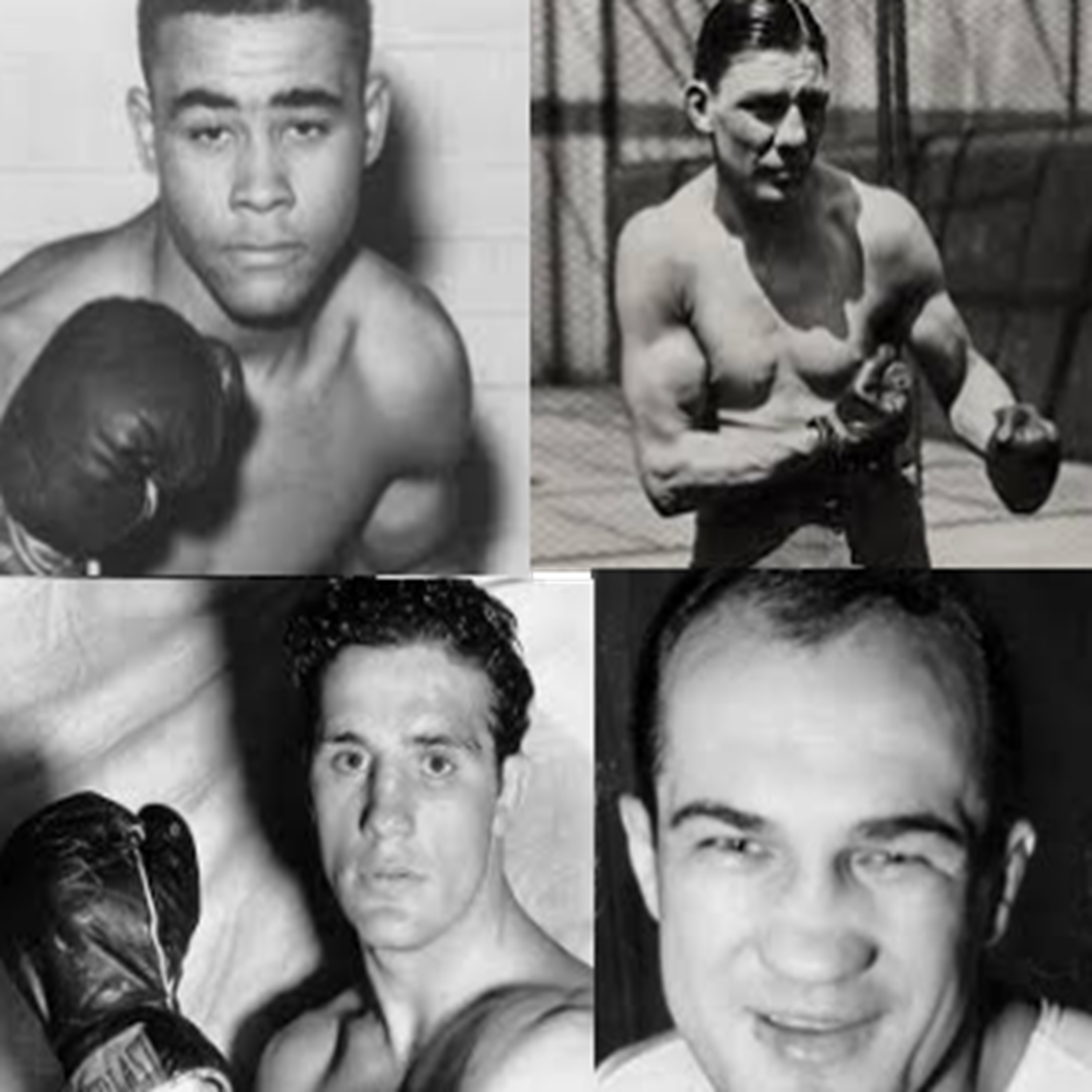
This episode looks back at some of the greatest professional boxers that were born and raised in Pittsburgh or nearby towns. This conversation peaks to the venues where boxing matches were held and these fighter's records, accomplishments, and some of the details of their lives.
TOTAL SPORTS RECALL BACKGROUND
Harv Aronson was born and raised in Pittsburgh and now resides in Jacksonville, Florida. You can listen to the Total Sports Recall Podcast, which is also available on Spotify, iHeart Radio, Google Podcasts, Apple Podcasts, and Amazon Music.
Harv currently writes for AbstractSports.com, the Sports History Network, and the magazine Gridiron Greats. Harv wrote the published book "Pro Football's Most Passionate Fans" and as a professional writer has had articles published in an array of sports publications.
Harv loves all sports but football and baseball are at the top of his interest. His passion is for sports history. Visit Harv’s portfolio at https://www.clippings.me/totalsportsrecall. You can contact Harv using his official podcast email address which is [email protected]. You may also reach out to Harv on X using the handle @TotalSportsRecl.
Get every episode summarized
Each time Sports History Network publishes, we email you a written briefing from the transcript — the topics, who appeared, and any specific claims, with the ad reads skipped.
Email me new episodesFree for 3 shows. No card needed.
Hosts & guests

Transcript ready
502 searchable segments. Every word is indexed and playable.
Full transcript
Sports History Network — Professional Boxers from Pittsburgh. Machine-transcribed; use the interactive transcript above to jump the player to any line.
[♪ OUTRO MUSIC PLAYING [♪ This is Kent Washington, the first of American and Black basketball player to play professionally behind the Ion Curtain and Thomas Poland. You are listening to the Total Sports Recall Podcast of the Sports History Network. Now here's your host, Harp Aronson. Welcome to the Total Sports Recall Podcast. I am your host, Harp Aronson, and in on this episode, professional boxing will be the topic as many of my listeners may know, the title of the show includes sports with a Pittsburgh
twist. As I was born and raised in the great city of Pittsburgh, obviously my favorite sports teams make their home in the steel city. But aside from the major teams, the Steelers, Pirates, and Penguins, there have been other professional athletes that were born in the Berg. With that said, I turn my attention to the sport of professional boxing as I'll discuss seven great fighters who grew up in towns around Pittsburgh or in nearby counties. When you bring up the topic of pro boxing to anyone that knows Pittsburgh's sports history, the first name that will probably always come to mind first is the Pittsburgh Kid Billy Khan. As he is one of my seven, the other six are Charlie Burley, Sammy Angott, Harry Greb, Teddy Oros, Fritz Zivik, and more recently Paul Spatafora. Instead of covering the entire records of these six men, only fights held in Pittsburgh will be discussed. I'll tell you where these fights were held, whether they were tidal fights, some dates will be provided, and what each fighter's record was when fighting in front of the hometown
crowds. While Forbes Field was home to the Steelers and Pirates, it also became the venue for other events such as boxing. Other arenas and buildings in Pittsburgh that hosted pro boxing in the early decades of the 1900s were Hickey Park in Millvale, the Motor Square Garden, Islam Grotto, the North Side Arena, Duquesne Gardens, Ergon Gardens, and even the Moose Lodge in the city held events. There was also Greenleaf Field, Carniotatorium and nearby Eerie Pennsylvania and back in Pittsburgh the Academy Theater. East Liberty Hall often held a fight card as did exposition hall. At one time, the National Athletic Club in the city was a host for fights as the old City Hall and Orphium Theater in Mecky's Port. Also in that town was the Palisades Ring where Harry Grab wants fought. The power auditorium was home to Bouts and the skating rink in Charlery held fights. Not too far from Pittsburgh is the town of Johnstown where the South Side casino was a
boxing venue. So what's point stadium? The South Side Market House in Pittsburgh found themselves hosting boxing matches as did the tariff club in Waldemir Hall. In Conaldsville, Pennsylvania, the West Side basketball hall was a location for fights. Another close by town to Pittsburgh and home to former Steelers quarterback Terry Hanrady is Butler. There, the Armco Armory held boxing matches and in Youngstown, Ohio is also within decent driving distance from the Steel City and there, Bouts were held at Eidora Park. Another close down is New Brighton and at Junction Park you can see Pro Boxing. No city about an hour or so outside of the Berg, hosted fights at the Knights of Columbus Auditorium and at the State Armory. Over in North Braddock was the Myers-Bull having fights and in Franklin, the nursery army was home to some matches. Washington, Pennsylvania is an area outside of Pittsburgh where you could have gone to watch some Bouts at the Coliseum. Not just the Moose Lodge in Pittsburgh, but the Moose Temple saw fights there among others.
More recent places were like the AJ Palombo Center. Avalan Hotel and nearby Eerie, the Chevrolet Amphitheater, Heinz Field, the IC Light Amphitheater, Lawrence Convention Center, Melon Arena, Monzo's Palace in the Minervaville, Riverscasino, Sheraton Station and the Peterson Center. Now I'd like to focus on some of the venues and arenas that are no longer around. One such building was the Duquesne Gardens which is intriguing to me because it was located at 110 North Craig Street. My late grandmother lived on that same street nearly across the street from where Duquesne Gardens once called home. The facility dates back to the ground breaking for the site in 1886 and it held events until it was torn down in 1956. Hickie Park in the Bill Vale section of Pittsburgh held many fights but the Motor Square Garden on bomb boulevard in Pittsburgh is historic in several ways. Not only did the Motor Square Garden hold boxing matches, it was once home to the University of Pittsburgh basketball team.
The facility was financed by the famous Melon family and is listed on the National Register of Historic Places. The garden was built between 1898 and 1900 and was designated to the historic register on December 12, 1977. Aside from boxing and basketball, auto shows were held there as well as dance marathons in the 1930s. Today this facility is home to the American Automobile Association or as you may know it, AAA. Other venues in Pittsburgh included Academy Theater, AJ Palumbo Center, Aragon Gardens. This was the same location as the moose lodge which I will detail ahead. Armco Armory and Butler, this building appears on the list of National Register of Historic Places. Built in 1922, there was a marathon dance contest held there in 1928. In 2010 it was dedicated as the Butler Readiness Center, the Avalon Hotel in Erie, the Butler Streets Sports Arena, Karniata Torium in Erie, the Chevrolet Amphitheater, Ex-Position
Hall, another historic facility here. This one was constructed on the shores of the Allegheny River and opened in 1889. It stood until 1941 when the first music hall was demolished and the machinery hall a year later. Then the entire facility was taken down on July 2, 1951 to make room for the development of Point State Park, which today is a much-visited site. Greenleaf Field, this is a remarkably interesting baseball stadium that was located in the Hill District in Pittsburgh. And at the time it was constructed in 1931, it was the only baseball field owned and built by African Americans. The architect was Lewis Arnett Stewart Belinger. The field was home to the Negro League Pittsburgh Crawfords from 1932 to 1938, as well as the homestead grays in that same time frame. With those two teams sporting such major players as Josh Gibson and Satchel Page, both being a couple of the greatest baseball players in history.
Like the Motor Square Garden, Greenleaf Field has been marked as a Pennsylvania historical site, so designated as on July 17, 2009. Hines Field VIP-10, the Hilton Garden in Cannesburg, IC Light Amphitheater, Adora Park, Youngstown, Ohio, and Islam Grotto, Junction Park, and New Brighton, the KFC Hall and Oil City, Cap-Hans Arena, Knights of Columbus Auditorium Oil City, the Lawrence Convention Center, Majestic Theater in Butler, opened in 1905, closed in 1952, Melon Arena, Myers Bowl, North Braddock. Then now the Myers Bowl was an open-air facility that opened in 1929. It was located at 6th and Baldrige Streets in North Braddock and specialized in promoting box matches led by matchmaker Jules Beck with the stadium managed by Atrio Meyer Brothers. Monday was the night for fights there, Monzo's Palace in Monroeville. The Moose Lodge. It was located on Penn Avenue in Pittsburgh stretching from 628 to 634 on Penn Avenue.
From 1915 to 1943, it was home to the Moose Lodge number 46 for Pittsburgh and held boxing matches in another entertainment. It was demolished in 1984. The National Athletic Club, Northside Arena, Nursery, Armory, and Franklin, Oil's Old City Hall, Orphium Theater McKeesport, the Palisades Rink in McKeesport. This ring still operates today, but was only a roller rink from 1945 to 1976. Now it's the McKeesport Palisades and is used at an entertainment center for an array of events. Before the roller rink was established, it was a car dealership and in 1920s a dance golf and also for boxing matches. The Peterson Center. Point Stadium in Johnstown, Power Auditorium, Rivers Casino, Sheraton Station Square, Skating Rink, Charlotte Wright, Southside Casino, and Johnstown, Southside Market House, State Armory, Oil City, the Tariff Club, the Colosseum in Washington, Waldemir Hall, and finally the West Side Basketball Hall in Connellsville.
Now let's talk about the boxers from Pittsburgh. All summarized each of the fighters I mentioned earlier by the earliest boxes up to the most recent Paul Spadafore. Harry Greb will be the first and was known by his nickname the Pittsburgh Windmill. Greb was an amazing fighter. He took on all comers in the Windmill and was also called the Smoke City Wildcat, obviously because Pittsburgh was a steel making town. If you include bats that were not official, his record was an incredible 100-nade victories and just eight defeats, there were also three draws. Back then there was such a thing as the newspaper decisions, and if you add those in, Greb finished his career with a record of 261-18 and 19 draws. When it came to fighting in his hometown, Harry Greb fought 103 times, won all but seven while another eight resulted in draw. One fight was a title about that came on December 3rd, 1923, when as the NYSIC and MBA middleweight champion, he won an Anonymous decision beating Brian Downey at the Motorsquare Garden.
While that was the only title fight in the Berg, Greb was a world champion and his last fight in Pittsburgh for his career came on October 25th, 2013 when he defeated Tony Marulo in a 10-round decision. That place took place at the Motorsquare Garden. Greb's very first bout at home came on May 8th, 2013 at the East Liberty Hall in Pittsburgh, any debuted with a victory of a red cumston knocking him out. More of a grinder, a fighter who would wear a bonus down, Greb only scored 49 knockdowns in his career. The only time any fighter knocked out Harry Greb was in the year of his debut, 2013, when Joe Chip took out Greb in the second round, spoiling the fight in front of a hometown fans at the old City Hall in Pittsburgh. A fight that was scored at TKO went to Kid Graves on December 16th, 1915 at the Power Auditorium in Pittsburgh, as Greb had suffered a fractured left arm, it could not continue. Tragedyly, with eye problems, Greb retired from boxing and opened a gym in his hometown.
In September of 1926, he underwent eye surgery and his right eye was removed and replaced with a glass eye. Then while in Atlantic City visiting a clinic to have his nose repaired from damage due to fighting, which resulted in respiratory issues, the complications occurred during the operation and Greb died of a heart attack on October 22, 1916. He was only 32, and for many of the fighters can be of a prime age, he was laid to rest at Calvary Cemetery in Pittsburgh. Moving ahead in a career that started in 1929, Teddy Euros, born in Pittsburgh, began his pro boxing career that was highlighted by his winning the World Middleweight Championship in 1934 by beating Vince Dundee at Forbes Field. Euros is in the boxing hall of fame and in 63 bouts held in or near Pittsburgh, he won 58 of those. Overall, his career record was 168 with 3 draws. The year before defeating Dundee, those same two fighters faced off to Forbes Field with
Euros winning the title fight. The 1933 fight was for the vacant Pennsylvania State Middleweight title. Perhaps the greatest fighter out of Pittsburgh was Billy Conn, who I will speak about shortly, but Teddy Euros and Conn fought on September 30, 1937 at the DuKengarden and the result was a split decision victory for Conn. They would fight twice that same year and a third fight in 1938. In those two fights, Euros won one and Conn the other. Most other common opponents in Pittsburgh, Teddy Euros split fights with Babe Risco, lost once and drew with Eddie Wolfe, beat Jackie King three times as well as three victories over Jimmy Belmont. He would defeat Johnny Brown twice and Larry Madge the same. Arrival re-existed for Euros with Tiger, Joe Randall, who he had fought four times and won them all. Facing young Rudy, Teddy Euros won all four of those fights. Euros fought most of the venues mentioned before, seven times along at Forbes Field.
In his post-career life, he was the first athlete honored with a membership what is known as the Polish Falcons, this given to him for life. This organization was founded in 1887 and presented to those of Polish heritage in an effort to promote their ancestry, physical fitness, and community support. Euros lived out his life in the town of Monika, where he passed away in 1974 at the age of 63. Here is the broadcast of the final moments of the fight with Euros and Vince Dundee, also called by the famous boxing announcer Don Dumpy. It's been a long hard fight, Dundee literally leaping at Teddy Euros. And that's it, it's all over. Just for the decision, referee Greybar and Judge Macbeth voted for Yarros. Judge Hope cast his ballot for Dundee as Judge Greybar, the referee totalling up his scorecard.
As the fighters wait, Teddy Euros, in the far corner to our right, Vince Dundee, the defending champion. And the announcement is that Yarros wins the title on a split 15 round decision. Teddy Euros, the winner and new middleweight champion of the world. Our next fighter became known as the Crote Comet, and he was an amazing boxer, Fritzie Zyvik, and was born to a father who was Croatian and his mother Slovenian. In five sons, the Zyvik boys all boxed, but Fritzie was by far the most successful in the fight game. Fighting out of the Lawrenceville section of Pittsburgh, Fritzie Zyvik's career as a pro began in 1931. He would capture the world welterweight championship over the course of his career, but also fought in the lightweight division. His record was not as shiny as some of the other boxing mentions in this podcast, but Zyvik fought professionally in an incredible 233 times.
While he lost 65 of those bouts, he won 157. Fighting in Pittsburgh, he had a record of 58-15 with one draw. Fighting other Pittsburgh-born boxers, Zyvik defeated Charlie Burley, but lost to Billy Khan. He did defeat the previously mentioned Sam Yangot, but in perhaps his biggest fight, he defeated Henry Hammer and Hank Armstrong in 1940 in which he won the welterweight title. He was a 4-to-1 underdog in that fight. Zyvik also fought the great Sugar Ray Robinson, but lost that bout. For those who have seen the movie Raging Bull, the life story of Jake Lamana, Fritzie Zyvik owns a victory over him, and in his career that ran until 1949, Fritzie Zyvik fought seven Hall of Fame fighters and nine boxers who at one time held a world title. He ducked no one. Zyvik is famously quoted as saying about his sport, you're boxing, you're not playing the piano. At the age of 84, Fritzie Zyvik had been battling Alzheimer's disease in that costume his life as he passed away on May 16, 1984, weird that his age actually matched the year
of his death. Zyvik died in the town where he came from and is buried in St. Nicholas Cemetery. In 1993, he was inducted into the International Boxing Hall of Fame. Just two years ago, he was added to the Croatian American Sports Hall of Fame. Zyvik had two sons and a daughter as well as four grandchildren. He reached the point to go discuss perhaps the greatest boxer in Pittsburgh's fight history, Billy Conn, the Pittsburgh kid. While Conn's boxing record pales and compared to others, he fought only 76 times, but he won 64 of those fights. One of his losses is historic as he took on heavyweight champion, one of the greatest fighters ever, Joe Lewis. Conn took the legendary fighter into round 13 after having won most of the first 12 rounds, but in the 13th, he made a terrible strategic mistake and thought he could knock out the champion. That backfire when Lewis hit him with a terrific counter punch, knocking out the Pittsburgh kid. Up to that point, most score cards had Conn ahead seven rounds to five on some, seven
to four on others, and an even fight by some. The first fight took place on October 1st, 1959, and three years later, came a rematch with a completely different outcome as Lewis knocked out the challenger again this time in the eighth round, Billy Conn's fighting career lasted from 1934 to 1948, but when fighting in Pittsburgh, he had 51 fights winning all but seven, one of which was a draw. Conn lost the Ralph Gris Gizzy in 1935 by decision to sole cragger in 1937, he had several fights with 10 eros losing in 1937, a loss came to Teddy Moman in 1935, and yet another loss that same year at the hands of Ray Eberling. On a personal side, Conn married another Pittsburgher, Mary Louise Smith on July 1st, 1941. Smith's father was a professional baseball player named Jimmy Smith, who had a nickname Greenfield Jimmy. Apparently, he did not care for Billy Conn, and the two got into a fist fight just before Conn's rematch with Joe Lewis. Conn landed a punch to the head of Jimmy Smith, which broke the fighter's hand, postponing
the Lewis rematch. Just a few years before he passed away in 1993, Conn was trying to be a good Samaritan by interrupting a robbery in progress at a convenience store in Pittsburgh, and took a swing at the Woodby-Rober, missing and landing on the floor instead, said Conn about the incident. You always go with your best puns straight left, I think I interrupted his plans. In fact, Conn was able to strip the coat off the man which had in it the suspect's name and address, which led to his arrest. Conn's wife was with him at the time, and also tried to intervene. Her reaction to Billy Conn was this. My instinct was to get help. Billy's instinct was to fight. Up until he passed away, he became a close friend of Pittsburgh Stewards owner, Art Rooney Senior, and he took part in several HBO documentaries as well as course attending boxing matches and activities. He became a member of the International Boxing Hall of Fame, and his longtime wife Mary passed away in 2017 at the age of 94. I found several clips on YouTube, centered around Billy Conn.
Next up is the call of the knockout of Conn in their first fight in round 13, and then the post-fight comments from both Conn and Lewis. Well, best round, this is being for Joe Lewis, but quite some time. I'm getting through now with impunity here against Billy Conn, and he's gone over! Billy Conn on the floor in round 13. Knocked out in the big fight, Billy Conn was asked afterwards about the rumors that he was going to quit the game. My mind last night after the terrible fight that it's time to quit. Joe Lewis, still a World Heavyweight Champion at the age of 32, spoke with considerable zest about his future fighting career. Well, to last night I felt good as ever, and I just was sharp, so I don't know, I felt late now, I've been fighting for a long time yet. Then as mentioned earlier, that incident in the store where he punched the robber Conn's take on those short moments. I interrupted him, I mean, I fixed him. He won't be robbing a store for a couple of days, I think. Was it a left or a right?
I think it was a left hook, you know, you have to hit him with your favorite punch. It's just one of those things that I had once in a while. There are four fighters left to discuss, and we begin with previously mentioned Sammy Angott. With 24 pro fights in Pittsburgh, Angott, this lightweight boxer was born outside the Bergen Washington, Pennsylvania, and close to California, Pennsylvania. He had multiple nicknames that included the clutch, the Louisville slugger, the Washington and Windmill. His birth name was Salvatore and Gotti. His overall record was not great, but in 131 fights he won 94 and lost 29 with eight draws. For almost a year, Angott was the World Lightweight Champion, holding the belt from December 19, 1941 until the following November. Like some of the previously mentioned boxers, Angott ducked no one. He climbed into the ring with the likes of Sugar Ray Robinson, Bojack, Fritzy Zivik, Henry Armstrong and Ike Williams.
In his 108th fight, he would face Robinson one of the greatest fighters ever, at the Duquesne Gardens in Pittsburgh, but he lost a 10 round decision. The fight took place on Monday, March 4, 1946. That was also Angott's final fight at home. His first fight in Pittsburgh came on July 22, 1935, when he lost the unanimous decision to Jackie Wilson in his sixth pro fight. In his retirement from the sports, Angott was employed at the Eastern Corporation in Ohio, was forced to quit that job due to poor health in 1967. 13 years later, he passed away after battling along in illness. He was just 65 at the time. Hailing from Besummer, Pennsylvania and Lawrence County, not far from Pittsburgh, was Charlie Burley, a middleweight and welterweight fighter. Burley fought 98 times as a pro and 183 of those bouts, 50 of them by knockout. Burley's career began in 1936 with his final fight in 1950. Fifty fights were in Pittsburgh, Burley won 43 of those with one draw.
Charlie Burley might be the best non-champion of this topic. Never getting a title shot, Burley defeated the likes of previously mentioned Fritzy Zivik and Archie Moore. Despite losing, he also fought the great Ezred Charles. One proudful thing for Charles Burley is that in 98 fights, he was never knocked out. Not nearly as bad off as Joe Lewis became financially burly, also struggled financially after boxing. He lived to be 75, passing away in October 16, 1992. The only title he held was what was called the World Colored Work Welterweight Title, which he won on August 22, 1938, when he decided to Herbert Lewis Hardwick, better known as the Coco Kid at Hickey Park in Millvale. Burley's final bout in Pittsburgh came on March 2, 1951, defeated Buddy Haudenette, knocking him out in the 6th round at the air guard gardens. Charlie Burley passed away at the age of 75 on October 16, 1992. His early life is interesting as he was born to a black hole miner and a mother who was
an Irish immigrant from County York, in Ireland. At the age of 7, he and his six siblings moved to Pittsburgh after their father was killed in an industrial accident in 1925. Burley started boxing at the age of 12, finding out of the boys club in the city. It would go on to win a city, state, and national junior boxing title, as well as a golden glove senior title in 1936 he lost in the national senior championship in the final battle of the competition. That same year, he was invited to the Olympic trials for the United States, but refused because of the Nazi regime. They still talk about you having men and soldiers. Yeah, when he was out there, they tell me he was out there knocking out every week. The only thing I'm so sorry to just want to get me a chance to be at the title in the end.
We go back to the year 1910, and that is when Thaddeus Euros was born on the north side of Pittsburgh. More commonly known, was Teddy Euros this middleweight fighter as a pro would win the world middleweight title in 1934 and hold on to it through 1935. After 128 professional fights, Euros won 106 losing 18 times and drawing it through others. He was knocked out just once in his career by Babe Risco in 1935, and when fighting in his home city, he would appear in several venues 58 times losing four and finishing one fight in a draw. At the age of 10, his family, which included six siblings, aside from Teddy moved to nearby Monica because of family finances, Euros dropped out of a high school at the age of 17 to pursue a pro boxing career. When he won the world middleweight title, he did it in Pittsburgh at Forbes Field defeating Vince Dundee by split decision. Those two fighters had been a year before we were winning that fight as well on points. The Risco fight was also at Forbes Field.
On a personal side, Euros married to Pittsburgher, Eugene Lesniak, who was from Lawrenceville, and their marriage came in 1940. Once retired from boxing, he opened a bar in Potter Township called Teddy's Inn, and then he became a police officer. He was also a caster for the aliquipa works of the Jones and Locke and Steel Corporation, and in the end, Cancer got the best of Teddy Euros, and he died on March 29, 1974, and he was only 63 years old. In 2006, he was inducted into the International Boxing Hall of Fame. Euros did fight some big name fighters, including Billing Khan, who he had lost his split decision to, and he met to Pittsburgh kids several times, beating him in 1938. On a unanimous decision, but he had lost twice to Khan in 1937, both fights rendering a decision in favor of Khan. All those fights were in Pittsburgh, two at Forbes Field, the other at DuCane Gardens. To end this podcast, I closed with another fighter from Pittsburgh, who began a pro boxing career in 1995, but also had a personal life that spun out of control.
That would be Paul Spadafore. By the time he began, his career Billy Khan was long gone, but Spadafore went by the same nickname the Pittsburgh Kid. He had a successful boxing campaign losing just one fight and 51 bouts. There was one draw, but that one loss came in his next to last fight to oh, Johan Perez in 2013, and a fight held at the mountain near Consino in West Virginia. The WBA in term super lightweight title was at stake, and Spadafore had lost a majority decision. At the time of the Perez fight, Perez had lost just once. As for Spadafore, who grew up in the McKee's Rocks area of Pittsburgh, he would fight in Pittsburgh and nearby area 23 times and never lose. His one draw was against Leonardo Doraff Tai at the Peterson Center while he held onto his IBF lightweight title and lost a chance at winning the WBA version of the title. While Spadafore upped his record to 26 and oh, he challenged Israel Cardona for the IBF
lightweight championship and won the vacant title by unanimous decision. He would finish his career without ever losing that title and defended it eight times. In the Pittsburgh fights, he scored a TKO or KO ten times in the 24 fights held in Pittsburgh. The venues he fought, they included the AJ Poulombos Center, the Avalon Hotel, the Chevrolet Amphitheater, Heinz Field, the Hilton Garden Inn, Cannonsburg, the IC Light Amphitheater, and fights took place at the Lawrence Convention Center and in the Melon Arena, inside Monzo's Palace in Monroeville and at the Rivers Casino Sheraton Station Square and in venues located at Washington, Pennsylvania. But Spadafore's personal demons began early in his life. His father died from a drug overdose when Spadafore was just nine. As a teenager, he found himself homeless at one point and the ninth grade he dropped out of school to take on boxing. Spadafore has a history of alcoholism and drug use. In 2003, he took a gun to his then girlfriend, a Dean Russo, shooting her in the chest and
pleading guilty to their crime. In February 2005, he was sentenced to six months at a rehabilitation center. Spadafore made a man's strengths enough to his former girlfriend Russo who would get engaged to and then have a child with. He did get prison time for the shooting but twice in 2011, in September and then a month later, he was arrested on DUI charges. In 2012, he was sued by his manager for breach of contract. The problems didn't stop there. After his retirement from boxing in 2014, 2016 became a nightmare year for Spadafore. In April, he was charged for an assault after an altercation with a woman in craft of Pennsylvania outside of Bar there. In December of that same year, he was arrested due to another altercation with his brother, whom he stabbed in the leg and then kicked his mother in the back. In March of 2018, he pleaded guilty to simple assault, resisting arrest and terroristic threats. Because of the time served, he was released on parole. The latest word I can find on the fighter is that as of 2024, he is now living in Las Vegas out of a gym in his garage and training boxers.
The final insult to injury is that in October of 2024, Spadafore's dog bit him on the left arm, severing an artery, forcing the former fighter to pay a visit to the hospital. Who fan out, Paul Spadafore, obviously let a life that he could have lived better and more successfully? I did find the following audio from Spadafore while he was driving and talking to an interview about his life now in his addictions, but he advised he does not be advised. He does drop some f-bombs in this interview and in this short clip, he uses several other curse words. Before that's played, here's the announcement of his victory, winning the NABF title title about on April 6, 2013, defeating Rob Frankel by decision.
97-93, just James Teele, 98-92, while Ricks at 3-4-999-91, all three judges for the winner and the winner. 10 hard-fought rounds with no plan. I'm going to have to give up on the fair for this.
He's right out. He's going to the best of me. And he needs to hell of a fight. All right. Now, what was your game? How do you wake up in a good mood like the way I wake up today? You know, I did everything right yesterday. It's the bottom line. You got to do the right thing yesterday. Like, today, I got to do the right thing. Tomorrow, I wake up. I feel like no one can handle. I'm like that. I feel like that. I mean, I would never lie to you about that. I don't give a fuck. I'm the person that really don't give a fuck. I love life. I love God. I don't do anything for anybody. You know what I mean? So I don't know. I bet with that type of spirit, I'm willing to do what I have to do to get what I need. You know what I mean? That's just how I feel. And I think, and that's the thing though, sometimes I'm a greedy motherfucker. And I have an addiction, an alcohol addiction. That's where everything fucks up. You can't ever, and they always say it.
I go to them rooms. And they say you can't pick the first one up. That makes this podcast a wrap, talking about boxers who were born in Pittsburgh or nearby. All having treating stories. All were champions. Who was the best of the bunch as an all around boxer? That's hard to say. But in my opinion, that would need to be Harry Greb or Fritz Zivik. Look them up on the internet and just take a gander at their photos. They simply have that tough guy look. Those two men look like a couple of characters you would not want to bump into a dark alley. Tough and gritty and ready to kick your ass. So what is the next four of the total sports recall on this podcast? Around April 15th, I'll be talking about the wrestling family, the Von Erichs, and how tragic and sad their story is. If you have not seen the movie, The Iron Claw, starring Zac Efron, you must see it. It's not so much about the sport of pro wrestling, but also very much about personal demons and situations this family faced. Future podcast topics will include a review of some of the great voices of Pittsburgh sports radio.
And a follow-up podcast that we'll discuss some of the greatest sports speeches in history. I've also planned a podcast on three extinct football leagues. So I hope this podcast was a history lesson of sorts for those listening, especially for anyone calling Pittsburgh home. It's always my hope that you enjoy the topics covered here. And as always, I welcome comments and suggestions to the podcast email address, which is total sports recall at gmail.com. I would love to hear from all of you, and I want to extend thanks once again to the sports history network for hosting this podcast. Until my next episode, this is Harvarenson, bidding you a do, and welcome you back again in a few weeks. Everyone stay self safe, happy, and healthy. The contents of this podcast do not represent the opinions of others, and are solely the opinions of Harvarenson based on his experience, knowledge, and research.
Thank you very much.
More episodes
More from Sports History Network

Baltimore Sports Coming Through In the Clutch-Pt 1
Sports History Network
Central Michigan's Untimed Game Winner, Largest Crowd to watch a College Footbal...
Sports History Network
Arthur Ashe's Historic Win, Theft in Munich, and the beginning of 'Spygate' - Th...
Sports History Network

Predictions Unveiled: Who Will Prevail in This Week’s NFL Matchups?
Sports History Network