Loading...
news
Proposed Gas Terminal Off Kildysart Described As A Step Backwards On Climate Action.
About this Episode
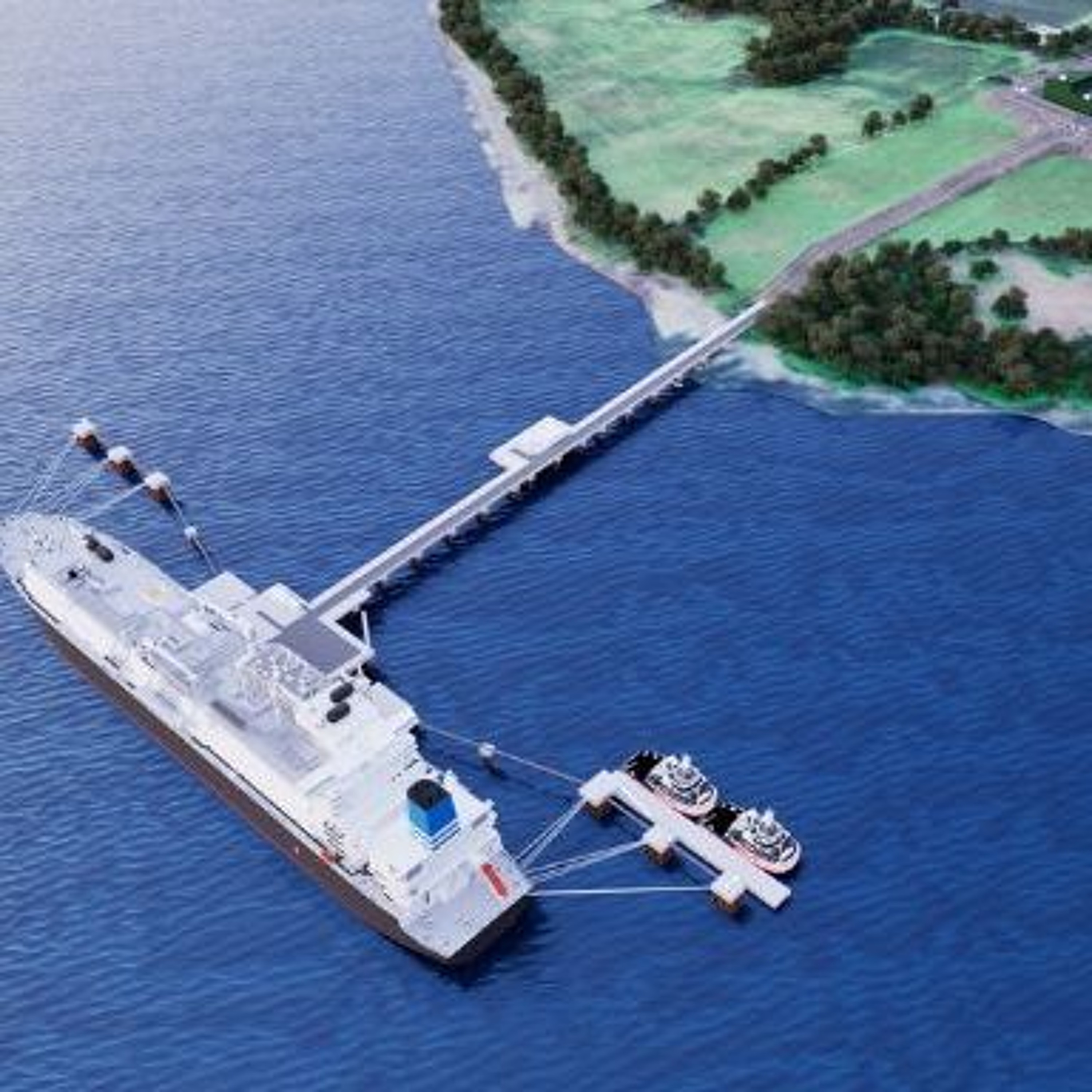
Plans for a major gas facility in County Clare are continuing to generate debate, with a proposed floating LNG terminal in the Shannon Estuary being described by supporters as vital for energy security—but criticised by others as a step backwards on climate action.
A public meeting on the issue is taking place this Sunday in Ennis, aimed at informing people and building opposition to the project.
Alan Morrissey was joined by Dr Sinéad Sheehan from Futureproof Clare on Monday's Morning Focus.
Photo (c) Gas Networks Ireland
Hosts & Guests

Transcript
Plans for a major gas facility in Claire are continuing to generate debate with a proposed
floating LNG terminal in the Shannon estuary being described by supporters as a vital
for energy security, but criticized by others as a step backwards on climate action.
A public meeting on the issue has taken place to Sunday in NSA, and informing people and
building opposition to the project and for more in it.
I'm joined now by Dr. Schneidsheen from Future Proof Claire.
Shanei, good morning to you.
Good morning, Ellen.
Thanks very much for being with us.
So just look for listeners who might be 100% clued in on this yet.
Can you explain what exactly is being proposed for Kiladiser and the Shannon estuary and
what a floating storage and regassification units is and what it would do?
Yep.
So there has been a proposal in Kiladiser for a floating strategic regassification, sorry,
a floating storage regassification unit.
What that would do is import a liquefied natural gas, and it would then, because gas is
not usually liquid, the facility proposed would then use a process to regassify it, and
then supply a gas to Ireland.
OK, so why do Future Proof Claire and why do you believe this would be a negative development?
Well, first and foremost, it's a fossil fuel development, so at a time when we know that
we have to reach our climate targets and we have to reduce our emissions, this particular
type of gas that will come, but it's highly likely to be fracked gas from the US because
that's really what's for sale.
You know, around St. Patrick's Day, there were conversations in the Oval Office about energy
Trump specifically asked Michal Martin to take the energy, and when he talks about what
he specifically referring to there is fracked gas from the US, and that's been shown to be
about 33% higher in more bad for the environment, basically than coal.
So it's not just any fossil fuel, it's one of the worst fossil fuels you could possibly
imagine, and to bring that to Kiladiser, it could have very severe consequences, not
just globally, but also locally as well.
I know, look, I'm to be plenty of people listening, who'd agree with you on that.
Shaneid, but I'm just thinking about the chat I had at the top of the show with Michael
McNamara and Billy Keller, her about rising energy costs and what will be done at European
level and indeed very soon from our government to address rising energy costs and fuel prices.
The government would say this kind of project is about energy security in the case of supply
disruption, which of course we're greatly seeing happening, and we don't know how long
that's going to last for and we do need to plan for alternatives, including this, even
if it does have issues, do you accept that argument at all?
And is there a risk that opposing projects like the one proposed for Kiladiser could leave
Ireland vulnerable if this supply shock continues long term?
I think I would completely disagree that this is a form of energy security, because if
we become reliance, which we already are, if we stay reliance on energy that we have
to import, then that's not very secure.
And we can see that now that cheaply, everything energy is becoming more volatile, it's a target,
so energy itself is a target.
So if we already have a supply of gas coming from the North Sea through Scotland, through
the Muffet Interconnected, which are underground, so if they're saying that that is not a
secure form of energy, then it doesn't make any sense that they're saying, you know, a
big, you know, floating strategic regasification unit would be less of a target.
So what I would say is the fact it would be more of a target.
The other thing is that if you wanted to have real energy security, then you would have
a dispersed community-owned energy, so not necessarily, you know, a large, corporate-owned
you know, gigantic wind farms, but smaller, locally-owned community renewables, which would
be indigenous energy.
Once you're importing from the United States, do you not accept it as well as you then
could potentially become the target, especially given that there is other strategic U.S. related
interest in that area, and I refer there to Shannon Airport as well.
Yeah, and that could be a concern on the flip side of that, I guess, people who would support
this project would also point to the jobs during the construction phase, hundreds of jobs
would be created, dozens long-term.
How do you respond to that?
Well, if you have a LNG terminal in the area and a floating strategic regasification
unit, it's not pretty, it's not very good for tourism.
So if you decide to go with the LNG route, then you've prevented that area from going
for the tourism route, it's very difficult to do both unless you want to do toxic tourism,
which is actually a thing, but it's not a very nice thing.
There might also be concerns about safety, noise, industrialization, I mean, what kind
of soundings are you getting from people in the Kildizer area?
Yeah, I definitely don't want to speak on behalf of the people of Kildizer, so that we
have had a public meeting to share our concerns with the local people there, because we wanted
to make sure that people were fully informed, because we feel that I suppose the news about
the LNG terminal has been very one-sided, with, except, of course, the Claire of M.
It's been very close to both sides of the story, and we really do appreciate that.
But I suppose the point is we have a meeting, and we are having meetings, we'll be having
continuous meetings around Claire, we've had one in Kildizer, we'll be having one in
NS, and I'd encourage people to come along and listen to what we have to say and make
their own decision, because it's close to NS as well, I mean, Kildizer is only 20 minutes
away, so it will affect the area, and I think people should be aware of what's going
on, and listen to both sides of the story.
Okay, so this public meeting is happening, as I said, next Sunday at the Temple Gate Hotel
at 7pm, and Claudia Camparo, the climate activist from Mexico, will be there, just to finish
your group, the future of Claire intends to object when planning is submitted, so what happens
next in the campaign?
Yeah, I mean, I think, so you probably know, but we lost. The NS data center case that we
took was thrown out by George Humphreys, the infamous George Humphreys, who, you know,
grants permission to data centers, plus, you know, doesn't allow a family to stay in their
own home and in, well, in fact, your inferences, the George, they're not here at the moment
to defend themselves, but are you suggesting that, are you suggesting that losing that
case doesn't give you more choke for winning another one on a different issue?
I, I'm not saying we won't go down that route, that route is becoming more complicated
as the minister, Darryl Bryan is putting more measures, or trying to bring more measures
in to make it more difficult for groups like ourselves to take cases, but I suppose I
have lost a bit of faith in the judicial system to, you know, decide for the well-being
of the people and for the climate as well. So I'm, I would say that the campaign would
have to involve multiple facets of, I suppose, people coming together and, and campaigning
in as many different ways as possible, including the legal route, if, if that's possible as
well. Okay, we'll watch the space on that, but before that is the public meeting, fossil
gas, the Clare plan, this coming Sunday from 7 p.m. at the Temple Gate Hotel, and Dr.
Chen from future proof, Clare, thanks for joining us tonight.
Thank you so much.