About this episode
What Next | Daily News and Analysis is made possible by:
While the What Next team enjoys the holiday, hear this episode from our friends at Question Everything. Mary will be back in the feed with a new episode of What Next tomorrow.
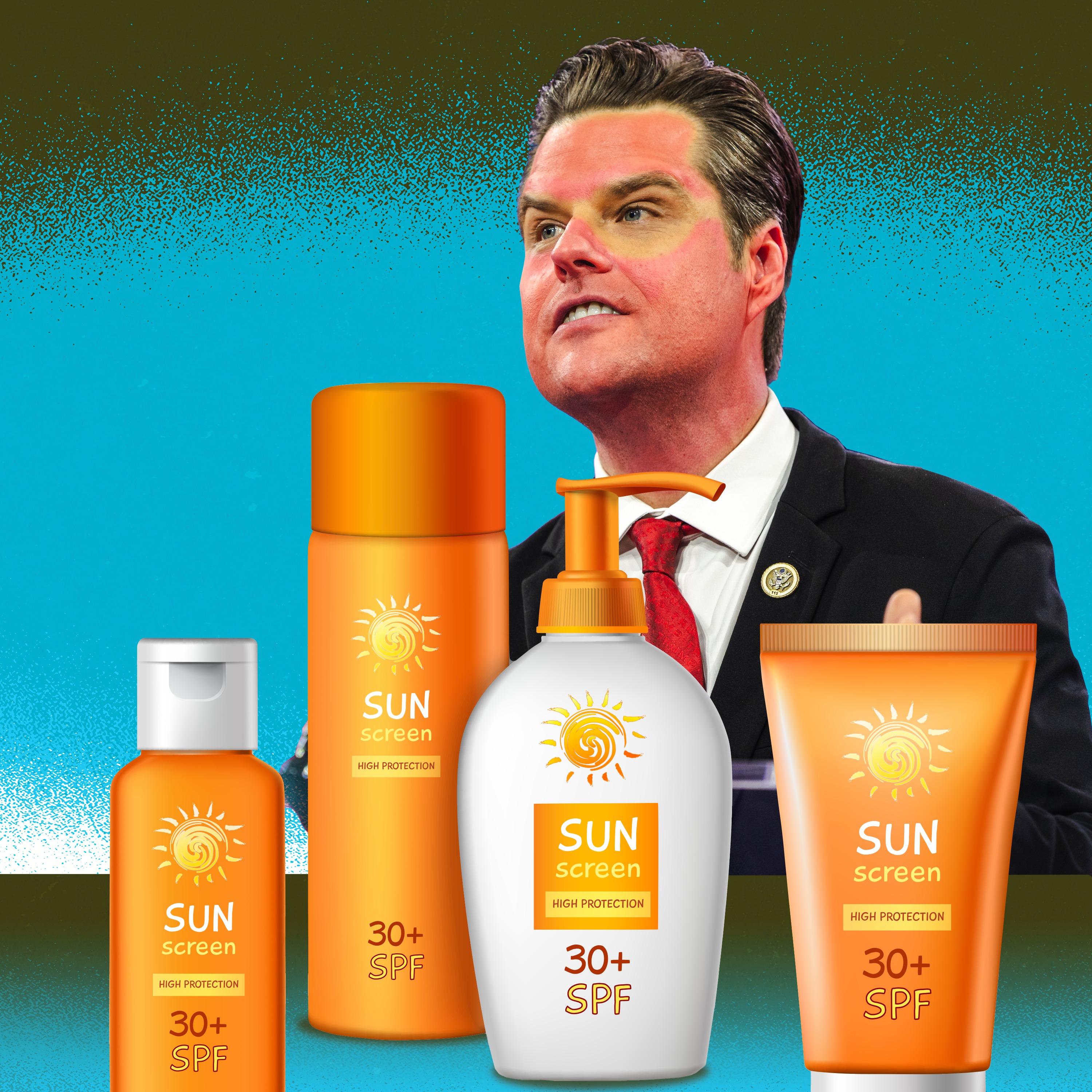
In June, disgraced former Florida Congressman turned right-wing One America News Network anchor Matt Gaetz peddled a novel and dangerous conspiracy to his audience: that using sunscreen causes skin cancer. Gaetz’s guest was Nicholas Hulscher, a prominent voice in the COVID anti-vaccination movement and co-author of one of the most prolific medical disinformation newsletters in America. Within days, this false claim had reached millions of viewers and dozens of countries – and was popping up in the comments of innocuous mommy blogger videos about applying suntan lotion to kids.
NewsGuard health editor John Gregory explains how Hulscher’s false claim metastasized throughout the internet, and how he sold it to the world by twisting the surprising findings of a legitimate scientific study.
Hosted on Acast. See acast.com/privacy for more information.
Get every episode summarized
Each time What Next | Daily News and Analysis publishes, we email you a written briefing from the transcript — the topics, who appeared, and any specific claims, with the ad reads skipped.
Email me new episodesFree for 3 shows. No card needed.
Hosts & guests
Transcript ready
358 searchable segments. Every word is indexed and playable.
Full transcript
What Next | Daily News and Analysis — Question Everything: The Sunscreen Paradox. Machine-transcribed; use the interactive transcript above to jump the player to any line.
500 orders a month was manageable. 5,000 is madness. Embrace intelligent order fulfillment with ShipStation. The only platform combining order management, warehouse workflows, inventory, returns, and analytics in one place. What used to take five separate tools, ShipStation does in one. Automate fulfillment and rate shopping to ship up to 15 times more with up to 90% savings. Go to ShipStation.com and use code Audio to try ShipStation free for 60 days. Decisions made in Washington can affect your portfolio every day. But what policy changes should investors be watching? Listen to Washington-wise, an original podcast for investors from Charles Schwab to hear the stories making news in Washington right now. Host Mike Townsend, Charles Schwab's managing director for legislative and regulatory affairs, takes a nonpartisan look at the stories that matter most to investors, including policy initiatives for retirement savings, taxes and trade,
inflation concerns, the Federal Reserve, and how regulatory developments can affect companies, sectors, and even the entire market. Mike and his guests offer their perspective on how policy changes could affect what you do with your portfolio. Download the latest episode and follow at Schwab.com slash Washington-wise, or wherever you listen. Hey everyone, it's Mary Harris. And it's Labor Day, which means the staff is closing up the summer with a day off. Hopefully you are too. But even though we're out, we wanted to still share something great with you. This is an episode of KCRW's question, Everything Hosted by Brian Reed. Earlier this summer, the folks over at Question Everything started seeing weird rumors online about how sunscreen actually causes skin cancer, which is obviously wild to say and not true. So the show investigated where these rumors came from. Turns out it involved Matt Gaetz's television show?
So why are the beach, hopefully using sunscreen? Please enjoy Question Everything. And what next? We'll be back here tomorrow with our regularly scheduled programming. There are these videos I saw last week on Instagram, a couple people I know told me they've been popping up in their feeds. And they seem innocuous enough, mommy bloggers showing how they prep their kids for the summer sun. Happy music playing. One of them is using a makeup sponge to put sunscreen on her little kid. Caption, my favorite hack for applying sunscreen to my kids. Another's brushing sunscreen on her blonde toddler's head. Cut. But then in the comments of all these videos, something strange and kind of alarming. People claiming that using sunscreen will give you cancer,
rather than prevent it. Do not put some block on your baby, says one commenter on one of these videos. It causes cancer. Another recent scientific studies prove that there is a link between sunscreen use and cancer. Another commenter, no thank you skipping that toxic crap. Another sunscreen is harmful for humans. And as one person said rather simply, sunscreen is cancer. Sunscreen for the record is not cancer. It does not cause cancer. In fact, use properly. It can save you from cancer of the skin. So where the hell does this idea come from? And why is it gaining traction on the internet right now? Because it has taken off in just the last few weeks. According to experts who monitor online misinformation. It turns out this is not some naturally occurring viral delusion that is sprung up organically as people head to the beach. There are actually two specific guys who are behind it. From Placement Theory and KCRW, I'm Brian Reed.
This is question everything. We investigate how the truth gets buried, distorted, and denied. And the ways people are finding to make it matter again. Today on the show, a little ditty about summer disinformation. We find out who's responsible for injecting this odd and dangerous lie into the social media bloodstream and the surprising scientific phenomenon. They are weaponizing to do it. Stick around. This episode is brought to you by Belt. Doesn't it feel like the cost of housing is kind of never going to get better? Like there's the whole post-college six people in one bedroom experience. To now, maybe you're owning, but always a little worried what your interest rate is about to do. But that's why there's Belt. A coming a Belt member means you can earn points on every housing payment. Whether it's your rent, your mortgage, it doesn't matter. You're paying it anyway, so you should get something for it, right? Built points can be redeemed for flights, hotels, lift rides, Amazon.com purchases, future housing payments, and more.
Personally, I'd use built points for travel. You can use their points to book a trip with any airline or hotel brand directly through Belt's travel portal. You can even transfer points one to one to Belt's network of airline and hotel partners. Every Belt member also gets access to its agentic neighborhood concierge through the Belt app. The concierge doesn't just give you information about your home in neighborhood, it's connected to your home and over 50,000 merchant partners. Here's how it works. First, you download the Belt app. Second, you link it up with a credit or debit card. And third, you ask the neighborhood concierge in the app pretty much anything. It'll tell you about exclusive member benefits or restaurants or fitness studios or on your lift rides. Then you can ask it to do those things like pay your rent, make a dinner reservation, book a fitness class, schedule a lift. Yeah, for the homeowners out there, built works for mortgages too. The housing payment is one of your biggest monthly expenses, so why wouldn't you want to earn points on it?
Download the built app and join the membership for where you live. At joinbuild.com slash what next? That's j-o-i-n-b-i-l-t.com slash what next? Use our link so they know we sent you. This episode is brought to you by Monarch. What is the story you tell yourself about your relationship with money? And are you interested in taking control of that story? Monarch is the personal finance app that tracks everything. Accounts, investments, savings goals and spending. It's there for when you are ready to take control of your full financial picture. Here are a few things Monarch can make a little simpler for you. You can use the app to check out all your accounts and see where your monthly income is going. You can make sure your savings are on track. But more than all that, Monarch is always there in your pocket when you need an update. You want to catch some spending spike before it throws you for a loop? Want to see if your investments are keeping pace with the S&P 500? It is all right there waiting for you.
So you can be the author of your financial future. Most apps only tell you what you've already spent. Monarch helps you set goals, map out big purchases, and see if you're actually on track before it is too late to adjust. Our producer Patrick has been using Monarch already. He says he loves it. It helps him track his finances. You can ask Monarch's AI assistant anything about your finances. Like, how much did I spend on travel last summer? Or can I afford this vacation without touching my savings? So write your own money story with Monarch. Use code whatnext at monarch.com to get your first year of Monarch Core half-off at just 50 bucks. That is 50% off your first year at monarch.com with the code whatnext. With almost half a million customers and over a trillion dollars of secure payments, Bill isn't new to intelligent finance. It's the proven way to simplify bill pay and maximize cash flow. Want to learn more? Visit bill.com slash proven for a special offer.
Now and again on this show, we like to check in with the folks over at news guard. A fact checking company that each week chooses a false claim of the week and debunks it. When they do this, I like that you get to see where the false claims originate and how they grow online. The paths these things take often are telling. And last week, I saw that the false claim of the week was... A study found that sunscreen use increased your risk of skin cancer. This is John Gregory, a health editor at Newsguard. He's worked there for eight years, debunking health misinformation online. John says this claim that using sunscreen can give you skin cancer started flashing on the news guard radar screens about three weeks ago. Their team regularly monitors certain search terms. Skin cancer, cancer is one of those that we monitor and these posts started popping up. More than 17,000 posts to be exact. In seven languages across 44 countries. Spreading this fabrication of millions of people.
And as someone who spends every day ingesting health misinformation, John says this claim stuck out. This kind of, you know, really out there health misinformation. One that is not focused on vaccines, not focused on kind of a core issue of RFK Jr. and the Maha crowd is a special kind of circumstance. We usually don't see conservative media telling you, hey, don't wear sunscreen at my cost skin cancer. And the risk involved, I mean, you're telling people to potentially adopt a dangerous behavior. Go outside in the sun, unprotected for hours on end. Right, like this could have real impacts on people. Absolutely. That risk of harm also factors into how we pick the false claim of the week. As they looked at the activity on social media boosting this claim. John and his team saw that many of the posts were resharing or referencing this one clip from cable news.
One American news network featured it on Matt Gaetz's show, Forger Congressman Matt Gaetz, who was at one point set to be president Trump's attorney general. He has a show now on one America. He's an anchor. Yeah, he does have a show on OAN. If you don't know it, one American news network is like a more extreme and less factual network than Fox News. And Matt Gaetz, you might recall, is a former Florida congressman who eventually withdrew himself from the running to be attorney general. Because a House ethics committee found evidence that he'd paid women for sex and had sex with a 17 year old, which is statutory rape in Florida. He said these findings are untruthful and defamatory. Now he's a news anchor. The guest Gaetz had on to talk about sunscreen. A anti-vaccine epidemiologist by the name of Nicholas Holser. Gates asked Holser, have I been lied to as a Florida man about sunscreen protecting me from cancer? Holser responded, yes, it appears we've all been lied to unfortunately.
The claim that was being spread was based around a November 2023 study done in the UK. This massive study of over 470,000 people confirms it when they compared sunscreen users to non-sunds screen users. The sunscreen users faced increased risks of all the major skin cancers. Well dig into that study in a bit, but that interview happened on June 26th. The guest, Nick Holser, posted a clip of it on X and got 2.9 million views in four days. He also went on other shows like comedian Jimmy Doors podcast, which has nearly 2 million subscribers on YouTube. Nick Holser was out there pushing this claim. And did you know who that guy was? Oh yeah, he's a very frequent purveyor of health misinformation. Often in the anti-vaccine space, he's also a big promoter of Ivermectin as not only a treatment for COVID-19, but also as a cancer treatment. Ivermectin used to deworm horses, also used to treat some conditions in humans, not supposed to be used to treat COVID-19 or cancer.
But since the pandemic, it's become gospel amongst some people on the right that it's a go-to cure for just about everything. John says Holser got his master's in public health from the University of Michigan. And on paper, he's sort of unremarkable. When you google him, he seems like a relatively normal researcher. He has a whole profile on a research website listing scientific journals he's published in. But it's who he works with that's noteworthy. He's one of the writers on a substack called the focal points has about 138,000 subscribers. Wow. The more famous author on that substack is someone that Holser has worked for for a number of years named Dr. Peter McCullough, who's one of the big sources of misinformation from the COVID pandemic. If I was not listing them off, he'd be in the top five in terms of like sources of bad information, particularly about COVID vaccines. If you look at Nicholser, the sunscreen guy's resume, John says his entire professional career is an epidemiologist,
since graduating just a few years ago, is working with Peter McCullough, who is a real doctor. He's a cardiologist. He know it had affiliations with major institutions like Baylor University prior to becoming this big misinformation purveyor. He left in early 2021 and Baylor later had to sue him in order to get him to stop mentioning his affiliation with them as if it were current because they didn't want to be associated with the claims he was starting to make about COVID vaccines. Together, Dr. McCullough, Nicholser, write this prolific newsletter on substack, focal points. This substack alone is responsible for you know, dozens of false health claims. I'm probably being conservative with that. It's not 100% in line with RFK Jr. We've had some articles that are a little critical of RFK Jr. for basically not moving fast enough on issues they, I mean, these are people that want to see
COVID vaccines 100% hold off the market because in their eyes and their claims, it's killed millions of people. That's what they claim on this substack. Yeah, they have actually claimed that it's killed more people than you know, in the world, we're two in Vietnam combined, at least for the US death toll. So back to the sunscreen. A few weeks before he went on Mac Ates' show on June 9th, amid all these other focal points articles about vaccines killing people and the government doing bio-warfare experiments with ticks and vaccines causing autism. Nicholser published a substack post about sunscreen. The headline is study finds sunscreen use linked to higher risk of multiple skin cancers. And then further down, he's got this graphic that says sunscreen use linked up to a 292% higher risk of multiple skin cancers. There's an image of a man and a woman in their bathing suits slathering sunscreen on their skin, oblivious to the danger.
Next to them are dermatological sketches of the layers of skin with cancer in it. The substack post centers on a study of more than 470,000 people in the UK. And what did it find? So it did find that people who reported using sunscreen more frequently did also report having higher rates of skin cancers. What was that? It's not what it sounds like. We'll get into it after a quick break. This episode is brought to you by Article. Article is an online furniture store that sells you furniture that no one will guess you bought online. I say this because Article sent me a couple of pieces to try out until you would I thought. I gotta say, we live in a world full of easy to assemble, easy to forget furniture. The stuff at Article stands out to me. Article pieces feature thoughtful design, mid-century modern coastal, scandy inspired stuff, stuff that'll fit in anywhere.
Pieces that look intentional and will keep you comfortable. Pieces that when your parents show up for a visit and you explain, hey, that mattress and bed frame, they are brand new from Article. They'll say, wow, that's great. At least that's what happened to me. Article offers fast, affordable shipping across the US and Canada with options for professional assembly if you prefer a hands-off experience. There's even a 30-day satisfaction guarantee, so you can shop with confidence, knowing that if you're not completely in love with your new furniture, you can return it. And if this sounds good to you, I have news. Article is offering our listeners 50 bucks off your first purchase of $100 or more. To claim, visit article.com slash next and the discount will be automatically applied at checkout. That's article.com slash next for $50 off your first purchase of $100 or more. This episode is brought to you by Omaha Stakes. I'm going to tell you the story of what happened the night Omaha Stakes arrived at my house.
This was a few weeks back. It was a Thursday. My kids were like, what's for dinner? And I was like, just wait. Then the Omaha Stakes guy arrived. Not just with stakes. There was chicken in there, pork, some burgers, all of it vacuum sealed and on dry ice. All of a sudden, we had options. My older kid invited some friends over. He was about to leave for college. It felt like the best way to celebrate was with a stake. The rest of us had burgers, and it all got on the table in a snap. In one box, we had something for a special occasion, and something for everyone else. If you've never tried them, you might want to start out with the burger perfection flight. It is a good introduction to everything Omaha Stakes has to offer for $79.99 to get 20 premium stake burgers. Crafted from five distinct cuts of stake, each with its own unique flavor profile and texture. The burger perfection flight includes four pure ground filet mignon burgers, New York strip burgers, ribeye burgers, brisket burgers, sirloin burgers.
Yeah, all the burgers. Try the burger perfection flight at OmahaStakes.com today. That is 20 premium stake burgers for just $79.99. Plus you get $35 bucks off with promo code next. That's OmahaStakes.com, promo code next for $35 off at checkout. Terms apply, see the site for details. I don't report it anymore. So this epidemiologist Nick Hulscher, who's spreading the claim about sunscreen causing skin cancer, he's basing his claim on a 2023 study in the UK, which was investigating a very technical scientific question related to skin cancer. But as part of the research looked at the correlation between people who self-report using sunscreen and the occurrence they have of skin cancer. This is a real scientific study conducted by real doctors and published in a peer-reviewed journal called Cancer Epidemiology, BioMarkers and Prevention. But did find that people who reported using sunscreen more frequently did also report having higher rates of skin cancers.
But the study was very clear right as they made that finding that this was a paradoxical finding that's the exact terminology they use. It had been seen in similar studies because people who report using sunscreen more regularly also might tan more regularly and or a lack of re application of sunscreen throughout the day. This so-called sunscreen paradox. Wait, this is a thing like in science, the sunscreen paradox. Yeah, apparently this is a recognized phenomenon that scientists have seen in multiple dermatological studies, not just this one. I just want to make sure I'm getting this right. Basically the sunscreen paradox is people who report higher use of sunscreen tend to have higher instances of skin cancer. But the understanding of scientists doing this research is that that might be happening because people who report a lot of sunscreen use might just go in the sun more. And so they have skin cancer for that reason or they think they're using it properly.
They're staying the sun a long time feeling they're safe and they don't reapply it. And so they do have higher instances of skin cancer, but it's not because of the use of the sunscreen. Right, they've given themselves kind of a false sense of protection by just saying, oh, will I use it? But like, you know, they're applying it once and then staying out for hours and hours on end and spend more time out in the sun without really using the sunscreen properly for the amount of time they're in the sunlight. And so, John says in other studies where instead of simply asking people to say how regularly they use sunscreen, researchers are following people over time and checking that they're using it properly, applying enough, reapplying it over the course of the day, the sunscreen paradox goes away. And in fact, the results show that sunscreen use properly decreases instances of skin cancer. And Australia showed daily use of sunscreen reduce the incidence of melanoma by 50%. On Norwegian study found using SPF 15 lotion reduce melanoma risk by about 30%.
There are similar findings for other skin cancers too. But Nick Holster's sub-stack post concluded the exact opposite that sunscreen use can cause skin cancer. John and his team at Newsguard contacted one of the authors of the UK study, Dr. Ivan Lipinoff at McGill University, who told them Holster's take was a misrepresentation of their findings. He said, quote, the proper use of sunscreen combined with other sun protection measures reduces the risk of skin cancer. But again, he and his co-authors also said this in the study itself. The very study that Nick Holster is supposedly reading and summarizing on the focal point sub-stack and later on one American news. Does he ever report in this sub-stack post that the authors of the study have said that their study should not be interpreted this way? No. And should not be interpreted to link skin cancer to use of sunscreen? No, he never, he never provides that countervailing information. There's no mention of what's in the study about the paradoxical finding or the comments they made since then.
He cherry picked and just worked around that. So Nickle is Holster. Do you have a sense like does he believe that sunscreen causes cancer? It's hard to discount with any single health misinformation source whether or not they believe this stuff. His motivation seems to be railing against vaccine in mainstream medical opinion. Whether he actually believes in it or not, I think someone would have to be inside his head to really get into it. The explanation here is he either he either didn't read the whole study or he did and specifically left out the really important information that the authors of the study said the opposite thing is true than what he's saying. Right. Yeah, and it's just, you know, only he would know whether he deliberately cherry picked or he just stopped reading at a certain point when he felt like he had his narrative set in stone. We emailed Holster and McCullough to ask if they believed it or were purposely deceiving people.
They didn't answer us. There is a profit motive behind a bunch of the disinformation Holster and McCullough push on focal points. For one, they have subscribers to the newsletter nearly 140,000 of them some portion of those paid. But more important McCullough and Holster are involved in a for profit company called the wellness company, which sells certain prescription drugs and other medical products online. And on the sub stack, they're like encouraging people to go buy stuff from the wellness company. They do talk about their products, provide links to it and they have put up stuff that we would consider frankly just advertising for the wellness company. It might be kind of couched in an article that's about like, you know, if they're talking about Ivermectin, they probably will insert by the way you can go buy it here and link out to their the wellness company site. Which of course sells Ivermectin. Any sense of how much money they're making?
For them, no, we don't know exactly how much money they pull in. But you know, you can look at their website and see they're selling drugs that are, you know, generic drugs that probably cost, you know, sense to produce at this point things like Ivermectin. And they're selling them for hundreds of dollars. So I would imagine while I can't put a round number on it, their margins are extremely high. But here's the interesting thing about the Shoddy sunscreen claim. Holster and McCulloch don't appear to be leveraging that to sell any specific product. It's not like Ivermectin where they're claiming falsely that it cures cancer and then directing people to go buy it from their website. I didn't see any skin cancer or sun-related products that they might be trying to trick people into paying them for. They're not selling hats or rash guards. In fact, Holster doesn't tell people to swear off sunscreen totally.
He writes, Sunburns are clearly harmful, aimed for sensible sunlight exposure, spending enough time in the sun to reap the benefits without reaching the point of burning. He suggests mineral sunscreens for long sun exposure. Quote, the takeaway is not to fear sunlight, but to respect it. John says, in his near decade covering health disinformation, this actually tracks. I think there's sometimes a misconception that health misinformation like this always has to be based on for one a consistent agenda that doesn't contradict itself or that it's selling something. And in this case, it's not doing either of those things. It's really just about, seems to be just about contrarianism, that whatever mainstream medical science says, whatever health authorities say, people like Nicholas Holster have to have a counter narrative. They have to say no, they're lying to you. And this is the real secret truth that you're being let in on.
They are trying to keep that audience engaged with them that is expecting to hear an alternative view on everything that comes out of mainstream medicine and mainstream news. The misinformation itself is the product. That's John Gregory and news guard. Since we're on the topic, a few quick tips for proper sunscreen application from the American Academy of Dermatology. For adults, use a broad-spection formula, at least SPF 30, on all exposed skin, 15 minutes before you head into the sun. Most adults need to use at least one ounce, a shot glass, for all skin that's not covered by clothing. Not as much as I thought, but that's why I'm not a dermatologist. The American Academy of Dermatology also says, make sure to reapply every two hours, or after swimming or sweating. If you found this episode edifying, please send it to a friend. And if you're new here, go check out our recent episodes about chatbots and conspiracy theorists, Ashley St. Clair, Mehta, and also our two-partner from earlier this year about deported journalist Mario Guevara.
Another request, please follow, question everything, wherever you get your podcasts. It helps us reach more people who should hear the reporting we're doing, and follow us on Instagram, at questioneverything.podcast. Today's show was produced by Sam Egan and edited by Jen Kinney, Robin Simmy and I are the executive producers of Question Everything. Our team also includes producers, Axaint Lewis, managing editor Kevin Sullivan, contributing editor Neil Drumming, and associate producer Kevin Shepard. This episode was fact-checked by Anika Robbins, mixing and sound designed by Brendan Baker. Our music is my Matt McGinley, heavy quong manages our social media, special thanks to Dana Chivis. Our partners at KC are W include Arnie Cypill, Tageel Edge, and Mara Natalie Hill, and Jennifer Farrow. We'll see you next time. As a fitness coach, my act of soriatic arthritis can slow me down. With SkyRizzy, RisenKizumabRizza, I'm treating my skin and joint symptoms so I can keep moving.
SkyRizzy, a prescription only injection for adults, helps me move with less joint pain, stiffness, swelling, and fatigue. And for those who have plaque psoriasis, 90% clearer skin is possible. With SkyRizzy, there's no daily dose. It's just four doses a year after two-starred doses. Don't use a allergic to SkyRizzy, serious allergic reactions, increased infections, or lower ability to fight that may occur. Before treatment could check for infections and tuberculosis, tell your doctor about any flu-like symptoms or vaccines. Thanks to SkyRizzy, there's nothing like clear skin and better movement. And that means everything. Ask your doctor about SkyRizzy. Visit SkyRizzy.com for called 1-866 SkyRizzy to learn more. 9-8 of the top 100 US accounting firms trust Bill to handle bill pay processes. Why? Because our tools are built on over a trillion dollars of secure payments. We're not just moving money.
We're powering financial workflows for half a million customers. That's a level of expertise. You just can't fake. Ready to talk with an expert? Visit bill.com slash proven to get started. And grab a $150 gift card as a thank you. Terms and conditions apply. See offer page for details.
More episodes
More from What Next | Daily News and Analysis

The 9/11 Panopticon
What Next | Daily News and Analysis

Did ICE Drive Him to His Death?
What Next | Daily News and Analysis

Dems Can Beat MAGA. Here’s How.
What Next | Daily News and Analysis

Meta Settled. Is it a "Reckoning?"
What Next | Daily News and Analysis