Loading...
About this Episode
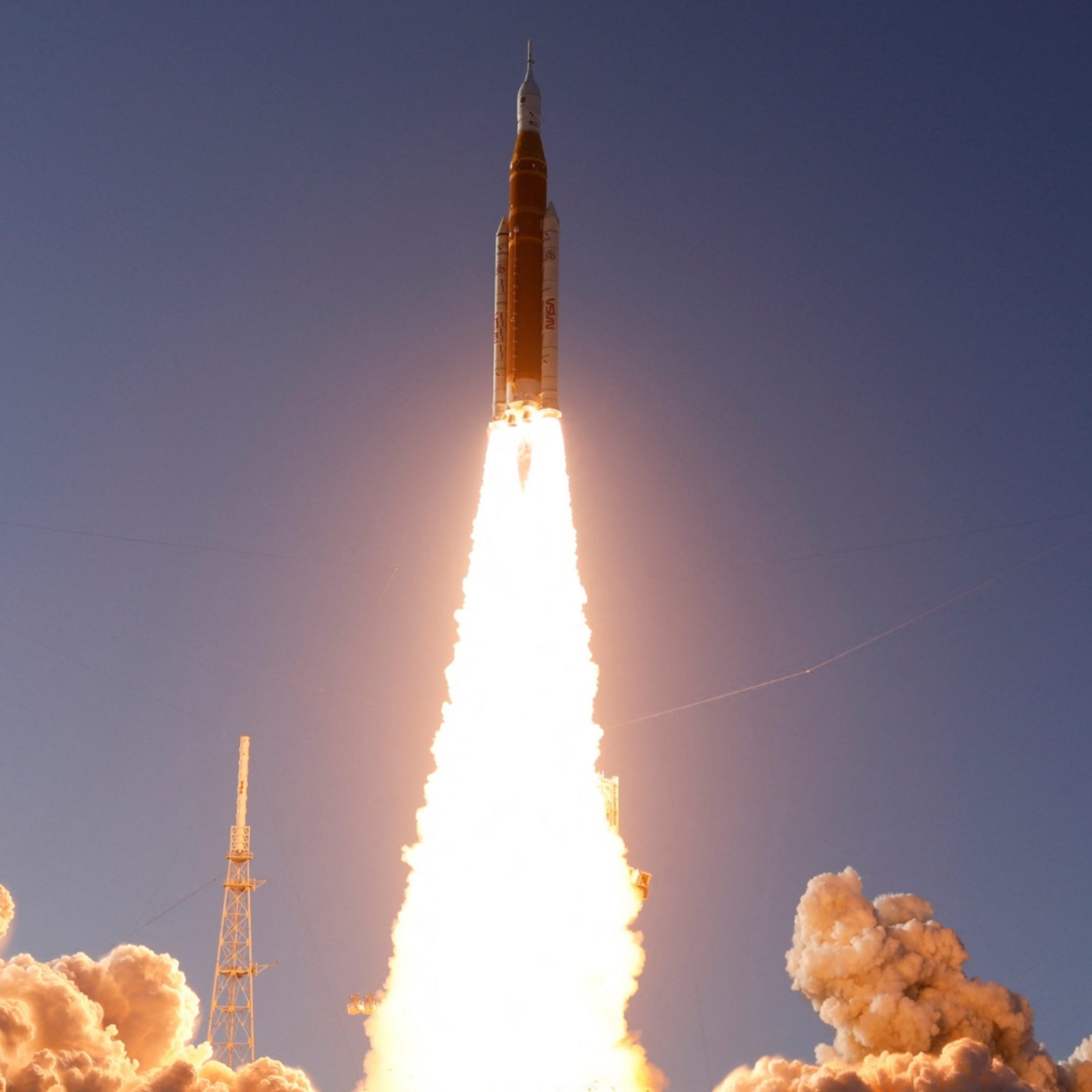
Nasa has said it's back in the business of sending astronauts to the Moon, after the Artemis II mission successfully blasted off from Cape Canaveral in Florida. It said there had been a temporary loss of communications but all was now well, and the four astronauts on board were safe, secure and in great spirits. The spacecraft is expected to circle the far side of the Moon and eventually return to Earth. In other news, in a TV address President Trump has said the US is close to meeting its objectives in the war against Iran. And police in the Chinese city of Wuhan are investigating a malfunction which led to at least 100 self-driving cars stopping in the middle of the road.
The Global News Podcast brings you the breaking news you need to hear, as it happens. Listen for the latest headlines and current affairs from around the world. Politics, economics, climate, business, technology, health – we cover it all with expert analysis and insight. Get the news that matters, delivered twice a day on weekdays and daily at weekends, plus special bonus episodes reacting to urgent breaking stories. Follow or subscribe now and never miss a moment. Get in touch: [email protected]


Transcript
This BBC podcast is supported by ads outside the UK.
Puerto Rico is having a moment of global attention.
As companies reassure and rethink supply chains,
they're choosing a US jurisdiction operating under federal law
with competitive tax incentives designed for long-term growth,
not culture or business, culture and business.
Puerto Rico, it's not what's next, it's where.
Visit investpr.org forward slash business.
This is the Global News Podcast from the BBC World Service.
I'm Alex Ritson and in the early hours of Thursday,
the 2nd of April, these are our main stories.
NASA's Artemis 2 mission successfully blasts off
for its historic trip into deep space and around the moon.
Donald Trump tries to convince America's TV viewers
that the US is close to, as he puts it,
finishing the job in Iran.
Also in this podcast, one thing we should be worried about
is that because these things operate as fleets,
that that presents an additional risk, a cybersecurity risk.
Traffic chaos in the Chinese city of Wuhan
as more than 100 self-driving robot axes suddenly stop.
A Cape Canaveral in Florida at 6.35 pm local time on Wednesday,
there was a roar that reverberated far beyond the launch pad.
And here we go, 10, 9, 8, 7, RS 25 engines lit, 4, 3, 2, 1, booster ignition,
and liftoff, the crew of Artemis 2 now bound for the moon,
humanity's next great voyage begins.
And so, Reed Wiseman, Victor Glover, Christina Cook from the United States,
and Canadian Jeremy Hanson blasted off on an historic mission,
which will see them travel further from Earth than any human before,
406,000 kilometers.
It's the first time NASA, the US Space Agency,
has sent anyone around the moon in more than 50 years.
NASA's Artemis program has been years in the making,
struggled with repeated setbacks and huge financial overruns,
its estimated cost over the last 14 years,
has been at least $93 billion.
But for the National Aeronautics and Space Administration,
it was worth it.
Three minutes 50 seconds into the flight of Artemis 2,
Wiseman Glover Cook and Hanson crossed the boundary to space with good comchecks.
I'll stand and extend, we see the same,
and we have a beautiful moon rise, we're headed right at it.
Approaching five minutes into the flight,
Commander Reed Wiseman confirms he can have visuals of his destination,
GPS guidance navigation and control software finishes internal checks
and sends to navigation channels.
The mission will last 10 days during which time the spacecraft Orion,
which the crew are traveling in, will swing around the moon but not land
on Earth's natural satellite.
The main aim is to make sure that this capsule and the new rocket which launched it
can be used again, paving the way for a NASA moon landing in 2028.
The U.S. is in a race with China which wants to land humans on the moon by 2030.
For these people watching close to Cape Canaveral,
there was euphoria.
To hear that rocket engines roar,
all from Cape Canaveral launch complex,
I just have emotions running down to my spine.
My female astronaut going up and it is just really incredible to see,
just to see the diversity, just going up into space and even having someone from Canada.
I drove eight hours from Carolina to be here with all of you.
It's such a beautiful event and this event can bring this beautiful country together.
NASA said there'd been a temporary loss of communications after liftoff but all was now well
and the four astronauts on board were safe, secure and in great spirits.
In the moments before takeoff, they said they were going for their families,
for their teammates and for all humanity.
Jonathan Amos was for many years the BBC's science correspondent.
I asked him what he made of the launch.
Spectacular, fire and fury, the noise, the light, just amazing.
And we were expecting that from this rocket.
I mean, it's so big, you know, it's 98 meters tall.
It's full of cryogenic fuel, something like an Olympic size swimming pool full.
Two and a half million litres of liquid oxygen, liquid hydrogen,
then supplemented by these crazy solid fuel boosters.
And it was an amazing sight watching it go up into a blue sky.
And it just went up and up and up and up and eight minutes later.
They were in a stable orbit moving at, I don't know, 17,000 miles an hour,
27,000 kilometres an hour.
I mean, the sheer power of it all.
I mean, this rocket that NASA has procured produces 39 mega-neutons of thrust
lift off, which will mean absolutely nothing to you.
Right? But imagine, you've flown on an A320, Airbus A320.
Imagine 160 of them all thundering down the runway to take you on holiday,
all at full power.
That is the equivalent thrust of this rocket.
Yeah, it was spectacular.
There were some issues, though, in the last few hours running up to the launch.
Were they expected and how worried was mission control?
Well, any new rocket, and this is only the second time this type of rocket has launched,
any new rocket can be a bit finiquity.
This design, as well, has proven to be very finiquity.
It's had leaks and all sorts going on.
And we were all quite surprised, I think, that it went through the fueling process
without any issue at all.
And then one or two sensors started playing up.
We thought, oh dear, are we going to be held?
Are we going to miss today and have to come back tomorrow?
There was one extraordinary moment where they had an issue with the flight termination system.
This is a system that blows the rocket up if it veers off course.
They've got a system to take the astronauts off the top before that happens.
But if the rocket veers off course, they have to destroy it.
In case it comes down on a populated area.
And the piece of equipment that they needed to check this issue
was an old piece of shuttle hardware, space shuttle hardware.
And somebody had to run off and get this piece of hardware
from a building behind the launch control center
to check that everything was all right.
And it was all right and the count proceeded.
So when can we expect a Ryan to reach the moon?
And presumably you're going to see some extraordinary footage.
Yeah, you're right. We've now got 4K video cameras.
And we can stream all of that back.
They'll be back on the 10th.
It's called it a 10-day mission.
So, you know, within about sort of four or five days,
they'll be getting very close to the moon.
They'll go around the back.
They'll see the far side.
They'll see places that know human eyes have ever seen before.
And so there's about 60% of the backside of the moon
that has never been seen by human eyes.
For sure, we've had robot spacecraft taking pictures
of the backside of the moon.
But it's human eyes. I've never seen it.
And, you know, they'll enjoy that.
And then they'll gently swing back to Earth
and we'll see them on the 10th.
It's a lovely thing to do. It's terribly exciting.
But what's the point of it?
Been there, done that, got the t-shirt, right?
Yeah, 50 years ago.
I'm 62.
I can just remember that the latter stages of Apollo
as a very small boy.
But I'm not the Apollo generation.
You know, every new generation needs its own narrative.
We're making that narrative now.
And it's a different one to the Apollo one.
Because back then it was all about footprints and flags.
Now it's about settling further out into space.
Taking the human species beyond, not just the moon,
but to Mars and maybe even deeper into space.
An Artemis is trying to set up that trajectory, right?
It's trying to do it in a sustainable way
so that we go to the moon.
And we stay there, build a moon base,
build the technology then to go to Mars.
You know, who knows?
Have cities on Mars one day.
You know, we've been to the moon before.
But there's newer things and better things
that we can be doing if we get this program right.
Jonathan Amos.
Now to the war with Iran.
President Trump has given a televised address
to justify his decision to stop the conflict.
During the course of the fighting,
Mr. Trump has, on many occasions,
confusingly suggested the war was nearing its end.
Before going on to say it could last for some time.
He did that again.
On Wednesday, firstly saying it was nearly completed.
I made clear from the beginning of Operation Epic Fury
that we will continue until our objectives are fully achieved.
Thanks to the progress we've made,
I can say tonight that we are on track to complete
all of America's military objectives shortly, very shortly.
But immediately afterwards,
the President threatened to escalate the conflict.
If during this period of time no deal is made,
we have a rise on key targets.
If there is no deal,
we are going to hit each and every one of their
electric generating plants very hard
and probably simultaneously.
We have not hit their oil,
even though that's the easiest target of all,
because it would not give them even a small chance of survival
or rebuilding.
But we could hit it,
and it would be gone.
And there's not a thing they could do about it.
Our correspondent in Washington,
Jimmy Joller, Ocho,
listened to the address.
What did she make of it?
It's kind of what we expected him to talk about,
basically, to tout the US military efforts in Iran,
to talk about the objectives that the administration has in the
swall, which is degrading Iran's military,
degrading their nuclear capabilities,
as well as destroying Iran's relationships with their proxies.
And then spoke about how the US
isn't dependent on the Strait of Hormuz
and urged other countries to take it.
He said to take it and to cherish it
and all to buy oil from the US.
And then he spoke about the state of the US,
saying that it was a dead,
encrypled country,
but now it's the hottest country in the world.
And then he said there's no inflation
and that the US is experiencing
its highest stock market ever.
But I think that's something that a lot of the public
disagree with, especially with the increase in gas prices.
This could have been an opportunity for President Trump
to speak to the American public
who are feeling the increase in gas prices
who are kind of wary of this war
and wondering when it would end.
And it doesn't feel like he truly did that,
truly gave an idea of what victory would be
and when this war would end.
I thought it was interesting how he compared the timeline
of this war to the Korean War,
the war with Iraq saying this is only 32 days
and calling this war a little journey to Iran.
So it feels like he's basically saying,
look, things are going to continue.
The US is yet to achieve all its military objectives
in Iran unless a deal is reached
and kind of just wait and see what happens.
And I don't think that's what people would have wanted
from this address.
Yeah, this address was heavily telegraphed.
Was there anything in this that we didn't know already?
No, no, not at all.
It feels like a sort of repeat
from what we've been hearing from President Trump
and members of his cabinet for the last few weeks,
boasting about the US military destroying Iran's navy
and killing their leaders,
trying to justify this war by going on
about the core objectives of the war
and saying how Iran is close to building
a nuclear weapon close to building a huge stockpile
of missiles that could have soon reached, he said,
anywhere on Earth.
It doesn't feel like we've learned anything new.
This is what we've been hearing for the past two weeks.
Simee Jolla Ocho in Washington.
To China, where an incident involving robotaxes
has sparked debate about the safety of driverless vehicles.
On Tuesday, about 100 self-driving Apollo Go Taxes suddenly stopped
where they were in the road
in the city of Wuhan, following what's thought to be a system malfunction.
Police said there'd been no reports of injuries,
although one video on social media appeared to show at least one collision.
The taxes are owned by Chinese firm Baidu.
James Menendez spoke to Jack Stillgo,
professor of science and technology policy
at University College London.
He gave his take on the incident.
The first thing to say is that we don't know exactly what's gone on here
and whenever a technology like this goes wrong,
there's a real need for these incidents to be investigated
and done so in a transparent way.
And I think incidents like this show you quite how dependent the technologies are
on a sort of behind-the-scenes infrastructure
as sort of support network that keeps the whole thing functioning.
And when that goes down, we see moments like this.
Is it your best guess that this was some kind of software failure, then?
I think it's impossible to say.
It could have been a connectivity failure.
It could have been a software failure, a bug in the system.
It could have been a failure of the power system that supports the whole fleet.
But what it tells you is that the connectivity
between these vehicles and the base back home matters.
Yes, and you mentioned the word transparency at the beginning.
Will we ever know what went wrong here?
We can first of all recognize that there are all sorts of competitive pressures
with all of these companies that might lead to them being a bit cagey
about what's going on.
They want to preserve the magic.
They want to give the impression that there's some sort of
magical AI driving the cars.
There have been lots of examples of where companies haven't been
totally forthcoming about how the cars really work.
So how much they depend on people behind-the-scenes
able to take control of things go wrong.
And I think it's the job of regulators
to demand more from those companies to say,
actually, tell us more about how these things work
so that we can work out what the risks really are.
And then when they go wrong,
we need to understand exactly how they went wrong.
I think there is a temptation to compare the technology
of a computer-driven car to a conventional human-driven car.
And I think if we do that, there might be a trapping
that will miss the new possible risks
presented with this technology.
There might be other either cybersecurity risks
or risks that come from these technologies
being decked in dozens of cameras.
They are sort of CCTV on wheels,
which does raise some serious privacy risks as well.
Jack still goes speaking to James Menendez.
Still to come in this podcast,
but there were fears
that if they were forced to send these papers,
there's diaries back to China.
Like what happened to other documents
like in the foreign ministry documents in China,
90% of them vanished.
A US court rules Stanford University
can keep the controversial diaries
of the secretary to former Chinese leader, Chairman Mao.
Hey, it's Ryan Seacrest for Albertsons,
Vaughn's, and Pavilion's.
You don't want to miss the annual beauty event
for big savings on all your favorite beauty products.
Now, through April 28th,
spend $25 on participating products
and save $5.
Shop in store or online for items like
Billy Women's Razors,
Billy Body Buffer or Body Wash,
Native Handsome,
Neutrogena Makeup Remover Talents,
and Qtips and save $5 when you spend $25.
Offer ends April 28th.
Restrictions apply, offers may vary.
Visit Albertsons, Vaughn's or pavilions.com for more details.
Every soda next to Mr. Peeb got something to say.
The classics reminisce about the glory days.
The doctors give an adissitation.
The prebiotic bubbles.
Giving TED talks.
Then there's Mr. Peeb.
Sweet cherry up front.
Bold fears on the follow.
No pitch.
No promises.
Just bold cherry bringing the flavor.
Some soda's top big.
Mr. Peeb backs it up.
Bold kick of cherry.
Oh, you missed the Peeb.
Spring is calling.
Wedding Spadio Sessions.
Barbecues.
And you want that drink vibe without sacrificing tomorrow.
That's RK-0 Proof.
As the world's first zero-proof spirit's bread.
RK created the warm molecule.
Giving you the smooth kick of whiskey or tequila
with zero alcohol.
Zero calories.
Zero sugar.
And all the peace of mind you need to enjoy every moment.
Step into the zero-proof season at RK-0 Proof.com.
At Verbo, we understand that even the best of plans
sometimes need a little support.
So we've planned for the plot twists.
Every booking is automatically backed
by our Verbo care guarantee,
giving you confidence from the very start.
Whenever you need help, it's ready.
Before you stay through the moments in between
and after your trip.
Because a great trip starts with peace of mind
and maybe a good playlist.
But we've got the peace of mind part covered.
This is the Global News Podcast.
President Trump has ignited debate
around whether someone born in the United States
should automatically become an American citizen.
On his first day back in the White House last year,
he signed an executive order banning
birthright citizenship for children born to parents
in the US illegally or on temporary visas.
It was a key part of his tough new immigration policy
but was immediately challenged
as a violation of the US Constitution.
The US Supreme Court has begun hearing
legal arguments in the case,
while Mr. Trump was sitting in the audience.
Oliver Conway spoke to our Washington correspondent,
Ioni Wells.
She was outside the court and took us through the case.
The Trump administration argued that despite
this having been in a constitution for hundreds of years,
they feel that this has been interpreted incorrectly,
that this was put in the constitution
essentially to protect, for example,
the children of people who had been formally enslaved.
They argue that it doesn't say explicitly in the constitution
that this should apply to people who came to the US illegally
or who are here temporarily.
They feel that in order to be eligible,
people should prove that their parents are domiciled here
at the moment and that they have what the lawyer described
as allegiance to the United States.
Now interestingly, that was something
which some of the judges picked up on,
questioning whether allegiance is really something
that comes with permanent residence and questioning,
whether it was fair to suggest that undocumented migrants
or those who may be here on a more temporary basis
couldn't still have that kind of allegiance.
Yeah, interesting that some of the conservative
justices seemed skeptical,
but what are the overall counter-arguments?
Yeah, that's right.
One conservative justice even picked up on this point
about slavery and said that some of those who came
to the United States as saves came at a time
when it wasn't legal for slavery to exist.
Outside the court, though, I spoke to many people
who are in a big crowd of protesters.
A lot of them were concerned about what would this
would mean for people given that many of them
were first, second, third generation immigrants
and said that the point of the Constitution
is to ingrain these rights,
arguing that Donald Trump didn't have the authority
to just rip that up without a robust procedure through Congress.
I think it would create two different classes of citizens.
I feel really scared about what that might mean
for children in the future.
This particular case attacks the very Constitution itself,
and it is so completely illegal that if a Supreme Court
finds this not part of the Constitution,
they're effectively saying that the Constitution
is unconstitutional.
My grandfather's a birthright citizen.
My mother was able to immigrate to the United States
because of my grandfather.
The only reason that I was able to serve
in the United States Air Force was because of my grandfather.
That diversity, that's what makes America what it is.
Now, only President Trump has already lost one major case
at the Supreme Court this year.
How important is this one?
Well, it is important because he's made it
a really flagship part of his immigration policies.
He posted on True Social after we heard the oral arguments
lashing out essentially saying that the United States is stupid
to allow birthright citizenship.
So for him, this is a really important part
of reducing immigration in the United States.
I only wills.
A week has passed since Metta and Google lost their court battle
in Los Angeles against a young woman who claimed
they had harmed her mental health
with their social media platforms.
She argued they had failed to protect her
from becoming addicted.
Gideon Long asks if social media companies will now change.
This is a landmark moment.
It will reverberate.
I'll tell you this.
If the jury had returned to know the champagne
corks would be popping in the boardrooms of Google and Metta.
Lawyer Mark Lanier talking outside the court house
following last week's verdict in the case involving
Kayley, a 20-year-old woman, and Metta and Google.
It's been described as a tobacco moment for big tech,
similar to when cigarette companies were forced to acknowledge
their products were harmful.
Metta and Google deny the accusations against them
and have said they will appeal.
The court case dealt specifically with Kayley,
who said that she became addicted to social media platforms as a child
and that it seriously impacted her mental health.
But hers is just one case and it's still not clear
that social media impacts all young people negatively
or that the negatives aren't outweighed by positives.
After all, some young people say social media platforms
help them find like-minded souls online
or discover communities where they belong.
Victoria Goodyear is a professor of physical activity,
health and well-being at the University of Birmingham in the UK.
It's not clear-cut, so we don't have a consistent pattern
in the evidence that basically says that it causes harm
or it promotes benefits.
At a population level, the evidence doesn't support
that there is definite or definitive harm,
but individual level cases, there is some evidence
and the challenge is if we wait for better evidence,
this could also cause harm.
So it's a real challenge for decision makers.
And we've seen countries around the world
starting with Australia but many other countries are now following suit
saying that they are going to ban social media platforms for young people.
Blanket bands of some of these apps,
do you think the evidence is there to support that kind of policy?
Not yet, I don't think the evidence is there yet.
If Blanket bands aren't the answer, then what is?
Clara Chappas is France's ambassador for tech and artificial intelligence.
She's working closely with President Emmanuel Macron
on implementing a French social media ban for under-15s.
But also on encouraging companies to make practical changes to their platforms.
The European Commission has started an inquiry on TikTok infinite scroll
saying that this fails to protect miners.
As a result of that TikTok is acting and changing their functionalities,
so each company needs to go and assess what are the risks
that I'm causing to under-edge kids.
And what are the specific reforms and regulations
that you think are needed to bring big tech into line?
Well, I think the first thing is the below-15 ban.
Why? Because that gives everyone families, childrens themselves,
teachers, a simple rule whereby they can say,
okay, I know this product is bad for a kid under a certain age.
And then I mean, there's a ton of things that also need to change.
And if everyone pushes in the same direction,
we can make the internet the safe space for children.
With thousands of cases against big tech already filed in US courts,
and at least 30 countries considering bans on social media for teenagers,
like Australia's, it does seem that change is coming.
And parents say they're willing to work with tech companies.
Laurie Schott's 18-year-old daughter, Anna Lee,
took her own life in 2020,
and Laurie blames social media for making her daughter feel inadequate
about the way she looked.
When the verdict came out in Kayleigh's case,
Laurie was outside the court and had this message for everyone involved.
Let's fix this. Big tech us. Let's make this world a better place.
But parents, we need you to join in with us because it stops today.
Big tech, your gig is over.
Yeah. Yeah.
Parent Laurie Schott ending that report by Gideon Long.
One of the most important insider accounts of elite politics in modern China,
including details of the Tiananmen Square massacre,
comes from a series of diaries written by a former senior official called Li Re,
who was once Mao Zedong's secretary.
The diaries were donated to Stanford University in the United States,
following legal arguments in a US court.
A judge has now ruled it can keep them.
Now, Global Affairs reporter Anne Barra-San Etirajan told us more about Li Re and his diaries.
It was the top official from the Chinese Communist Party.
He was also a critic. He was more of a reformist.
At one point, he became a personal secretary to Chairman Mao.
So, you know, if you can reach that level, you can, as well imagine,
is growing influence from the party.
What he did was, he was meticulously noting down what was happening around him,
about his meetings, what was happening within the Communist Party.
He was a first-hand witness to what happened in Tiananmen Square in 1989,
because he was standing in a balcony, and we was writing down what he saw.
What he was explaining was how the soldiers were firing in the air, on the ground.
I mean, this is one event, you know, which shook China and no one in China now wants to talk about it,
because it is kind of a taboo subject, where thousands of people were killed.
So, he was an eyewitness account, and that's why he was one of those
who wanted to bring in more reforms into the Chinese Communist Party.
So, his diary is proved valuable insight into what was happening in China at that time.
How did they come to be in the US, and tell us about this court case,
the dispute over who should actually have them?
According to his daughter, Li Nanyang, he wanted these documents, his diaries and notes,
should be donated to somebody.
He was always worried that all his accounts would be taken out,
redacted, or completely disappeared from any of the archives.
So, his daughter, she began donating his papers to Stanford in 2014, when he was still alive,
but he didn't leave any will or note giving her the full authority.
After he died, his Lee Ruizh's second wife, Zhong Yu Shen,
she filed a lawsuit against Li Nanyang, the step-daughter in China,
saying, these diaries consist of some personal intimate accounts between them.
So, she wanted those papers to be brought back, and she filed this case in China,
and the court ruled in her favor.
So, that's when the Stanford University filed this lawsuit in California.
Now, this ruling affirms that they are the rightful owners of this document.
There were fears that if they were forced to send these papers,
the diaries back to China, like what happened to other documents,
like in the foreign ministry documents in China, 90% of them vanished,
because China doesn't want any of the records during the cultural revolution,
or the Great Leap Forward, to come to light because of what happened during that time.
So, because these documents were given by Lee Ruizh's daughter,
and they wanted to have some legal sanctity, saying they are the rightful owners of these documents.
Ambassador Sun at Eurasian, speaking to Oliver Conway.
Back to our top story, the Artemis mission.
Its crew will circle the moon rather than land on it.
The BBC has spoken to one of the four astronauts still alive,
who have walked on the moon.
Ninety-year-old Charlie Duke was part of the Apollo 16 moon mission.
On April 21st, 1972, he became the youngest man to walk on the moon.
A title he still holds.
Jamie Kumarisami asked Charlie if he could recall how he was feeling just before liftoff.
We were getting suited up and very excited,
and then we got out to the launch pad and got in the spacecraft,
and strapped to him, lay there, ready to go.
And what we were thinking about was, we'll go be on our way, keep counting.
Keep counting, keep counting.
Let's don't scrub this.
And you didn't.
And what sort of conversations that you had,
I mean, with your family just before then.
Because sometimes, you know, those must have been quite poignant, quite tricky, perhaps.
Well, we were in quarantine, as they've been, and we could only see our spouses.
My kids could come, they had to talk to me through a window,
and so we had a short visit with the boys.
They were very young at the time, five and seven,
so they don't remember very much.
But Dottie and I had some very poignant conversations,
and we were both very excited about it.
I had my twin brother and my mom and dad, and her mom and dad.
We had half a South Carolina, I can't show up for the launch.
So it was exciting, really.
We were so excited to get going.
And then off you went, and I mean, what do you recall of the journey, first of all?
Lift off, you got your attention.
You had seven and a half million pounds pushing six and a half million,
and the rocket was shaking like crazy from side to side.
And I didn't remember anybody telling me,
it was supposed to shake that hard, so I got a little nervous.
Later on, I found out my heartbeat was way up, like 140,
and John Young, the commander on the left side, he was 70,
so he was the cool one, and I was excited,
but ready to do my job if we had an emergency,
and but things went really smoothly as we lifted off right on the second.
So you are on the moon, you step on the moon.
What is that experience like?
There aren't many people I can ask that too, and you're one of the few.
Well, it was a tremendous feeling of satisfaction.
I felt right at home.
We recognized the landing area from where we stepped out.
You could see the main objective to the south was stone mound.
On the other side, on the north side was the smoky mountains we called them.
We are really going up the hill, I'll tell you.
What a view, isn't it, John?
It's absolutely unreal.
I have never seen how I can say it spectacular,
and I know y'all are sick of that word.
And so we knew where we were, and we recognized the craters,
is the main craters as we came in,
and the surprise was there were a lot more craters than we expected
because of our photographs only had 40 feet resolution,
so we didn't see the smaller craters till we got close.
Charlie, Duke, one of the last surviving astronauts to walk on the moon.
And that's all from us for now.
If you want to get in touch, you can email us at globalpodcast.bbc.co.uk.
You can also find us on X at BBC World Service.
Use the hashtag globalnewspod.
And don't forget our sister podcast,
the global story which goes in depth and beyond the headlines on one big story.
This edition of the global news podcast was mixed by Holly Smith,
and the producer was Daniel Mann.
The editor is Karen Martin.
I'm Alex Ritson, until next time, goodbye.
The Ralph's Pharmacy team is here to help you navigate your GLP1 journey.
With our selection of GLP1 medications,
including the new oral medication for as low as $149 per month,
and while you're here, Ralph's pharmacists can help you find
lower prices on your other prescriptions too.
So whether you're already on a GLP1 or simply exploring your options,
Ralph's Pharmacy is here to help.
Visit Ralphs.com slash RX Savings to explore more ways to save.
Prescription required restrictions and exclusions apply.
Visit Ralphs.com slash RX Savings for details.