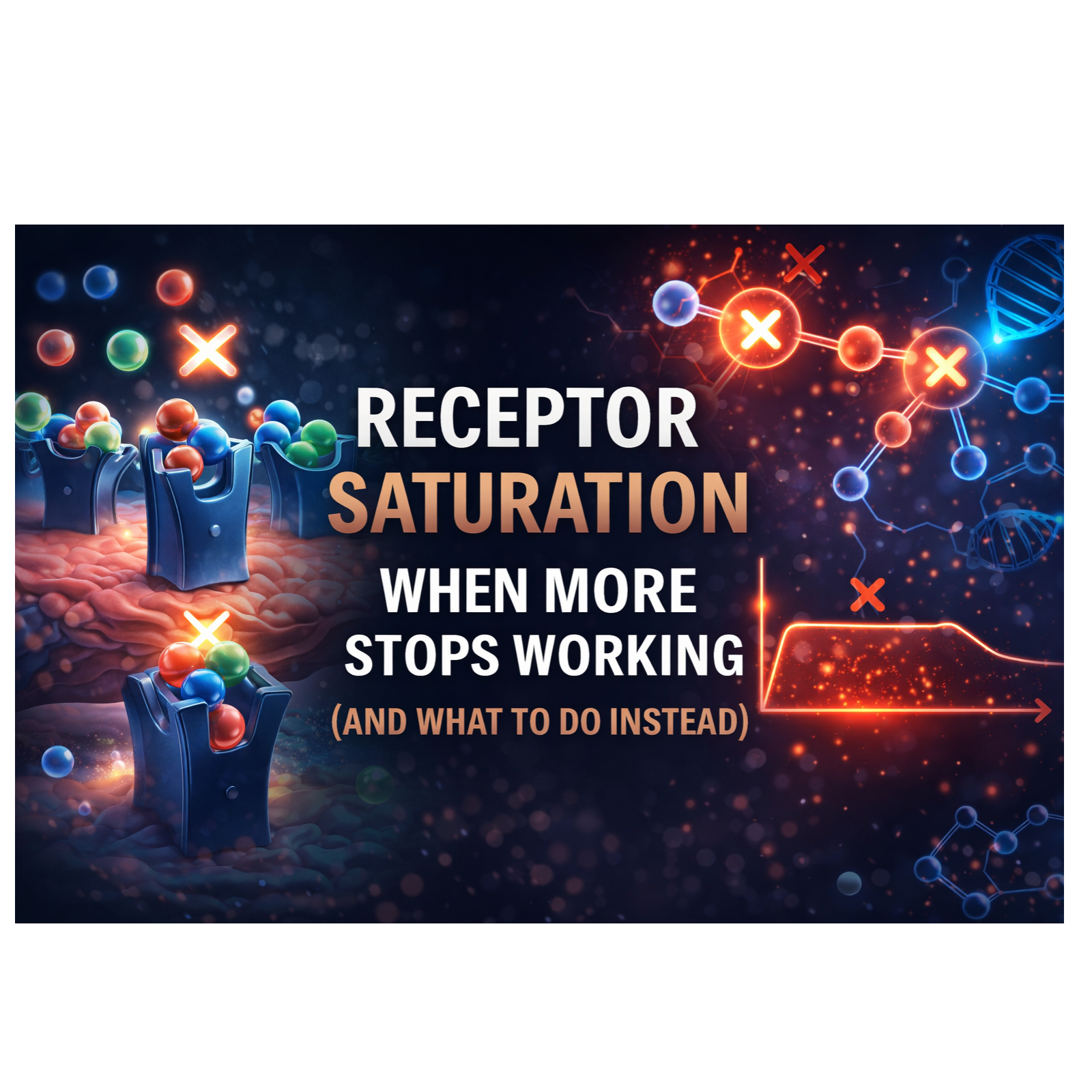
Receptor Saturation: When More Stops Working (And What to Do Instead)
About this episode
In this episode, we break down receptor saturation in a way that actually makes sense and why more isn’t always better when it comes to signaling compounds. You’ll learn how receptors work, what happens when they become saturated, and why increasing the amount can lead to diminishing returns or even reduced effectiveness over time. We also cover downregulation, competition between pathways, and how to recognize when you’ve hit a plateau. If you’ve ever wondered why something worked at first but stopped, or why taking more didn’t improve results, this episode connects the dots and gives you a smarter way to think about it.
Get every episode summarized
Each time The Peptide Effect publishes, we email you a written briefing from the transcript — the topics, who appeared, and any specific claims, with the ad reads skipped.
Email me new episodesFree for 3 shows. No card needed.
Hosts & guests

No transcript yet
This episode has not been transcribed. Request it and it moves to the front of the queue.
More episodes
More from The Peptide Effect

The Hidden GLP-1 Switch: How These Drugs May Reprogram Pancreatic Cells
The Peptide Effect
The Science of Peptide-Based Myostatin Inhibitors: Can We Unlock More Muscle?
The Peptide Effect
Apolipoprotein-Targeting Peptides: The Future of Cholesterol, Brain Health, and...
The Peptide Effect

Border Seizures and the Peptide Market: What’s Happening to Supply, Pricing, and...
The Peptide Effect