About this episode
Get every episode summarized
Each time Covenant College Chapel publishes, we email you a written briefing from the transcript — the topics, who appeared, and any specific claims, with the ad reads skipped.
Email me new episodesFree for 3 shows. No card needed.
Hosts & guests

Transcript ready
380 searchable segments. Every word is indexed and playable.
Full transcript
Covenant College Chapel — Redeeming Peter. Machine-transcribed; use the interactive transcript above to jump the player to any line.
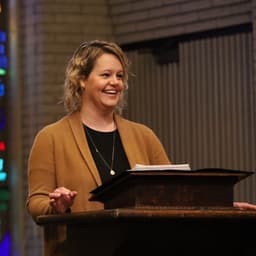
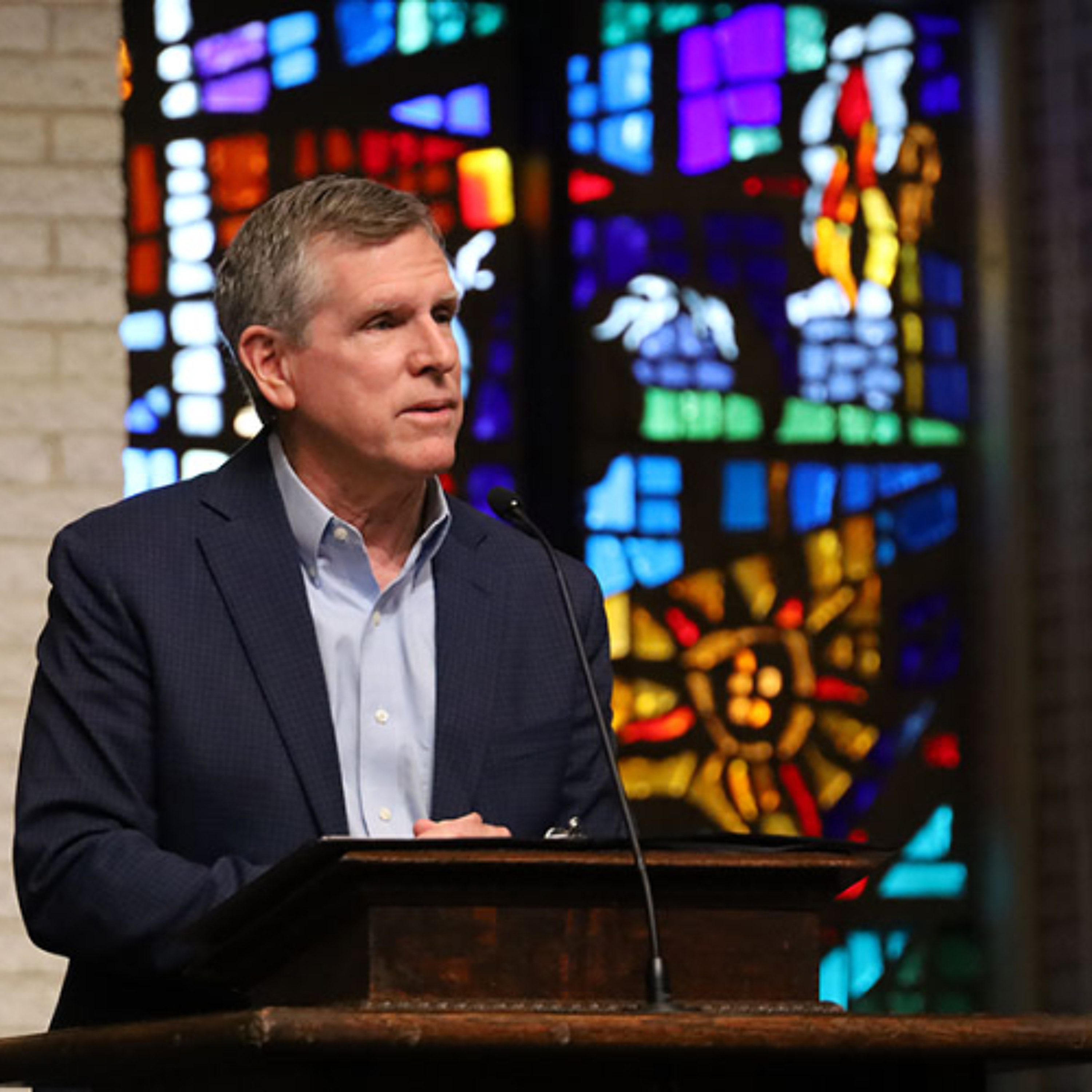
Good morning. It really is great privilege and I'm very excited to introduce our speaker for this morning, Pastor Eric Irwin. Pastor Irwin served as the senior pastor of Covenant Presbyterian Church in Issaquah, Issaquah, Washington for 26 years. He and his wife Lisa moved here to Chattanooga and he's currently serving part time as the executive pastor at Chattanooga Valley Pres, which I'm starting to get the feeling if you're a student here, you are required to attend there at least partially sometimes. Eric and his wife Lisa have three kids, Hannah and Abby and our own Professor Luke Irwin. Please give a warm scots welcome to Pastor Eric Irwin.
Thank you for that welcome, it's good to be here. This is from John 21, this is Jesus Restoration of Peter, beautiful passage. We have small groups in our church and some Covenant people in our small group and I was having a conversation with one young woman and she said, I saw that you're going to speak in chapel in a few weeks and I said, yeah, I said my primary concern is I don't want to bring shame on our son, Professor Irwin, and she said, no, you should totally do it. I just want to say I have a picture I could have brought this morning and there's no time and it probably wouldn't have been good but if you really need something against him, I've got it so there's an awkward tension in the Christian life, the God we love is the
God we betray, what a strange thing, I'll say this a couple different ways. The one we offend is the one we go to for forgiveness and find it. Even more strangely we grieve the spirit of God and then it is the spirit who come and process for having grieved him. The older I get, the more emotional I get so hopefully I can keep the time but just warning you, Peter so clearly loves Jesus in this passage you can feel it in the way, just throws himself out of the boat into the water and wades the shore to Jesus, there's a kind of desperation in Peter for Jesus and still. He denies Jesus at the worst possible moment and he does it just to save his own hide. Then when everything is seemingly lost, Jesus comes to him and everything is restored
so the one that he denied is the one who restores him, beautiful truth, I'm going to read verses 1 through 14. I was actually going to go to Luke because John is his specialty and see what his ideas were but I was worried his ideas would be better than mine and then I would have to make my ideas sound like his or vice versa and it'd be like having AI write your paper and then you have to fix it so that it doesn't sound like AI. After this Jesus revealed himself again to the disciples by the sea of Tiberius, that's Galilee and he revealed himself in this way so this is an intentional revelation that's happening. Simon Peter, Thomas called the twin Nathaniel of Cana and Galilee, the son of Zebedee and two others of his disciples were together, Simon Peter said to them, I'm going fishing and they said to him, we will go with you and they went out and got into the boat but
that night they caught nothing. Just as day was breaking Jesus stood on the shore yet the disciples did not know that it was Jesus. Jesus said to them, children, do you have any fish and they answered him, no. He said to them, cast the net on the right side of the boat and you will find some so they cast it and now they were not able to haul it in because of the quantity of fish. Let the disciples whom Jesus loved therefore said to Peter, it is the Lord. When Simon Peter heard that it was the Lord he put on his outer garment for he was stripped for work and he threw himself into the sea. The other disciples came in the boat dragging the net full of fish for they were not far from land but about a hundred yards off. When they got out on land they saw a charcoal fire in place with fish laid out on it and bread and Jesus said to them, bring some of the fish that you have just caught. So Simon Peter went aboard and hauled the net ashore full of large fish, 153 of them.
And although there were so many the net was not torn, Jesus said to them, come and have breakfast. Now none of the disciples dared to ask him, who are you? They knew it was the Lord. Jesus came and took the bread and gave it to them and so with the fish. This was now the third time that Jesus was revealed to the disciples after he was raised from the dead. Let me pray for us quickly. Father we pray that you would allow us to see things that we have not seen, maybe in this passage in particular. We pray more broadly than that, more importantly than that, allow us to be people that we have not yet been. We ask Father that these things would be true for your namesake and for your glory and we ask it in Jesus name. I want to give us one comment before we dive into this, Jesus has come to Galilee to find Peter who is still reeling from the fact that he's denied him.
That's the case I'm going to argue, I think that's what's really going on inside him. So whatever is going on back in Jerusalem with the church in Jerusalem, Peter walks away from all that and he goes all the way back home and now he's in this place where Jesus has to go and find him. Jesus said, suppose one of you has a hundred sheep and loses one of them doesn't he leave the 99 in the open country and go after the lost sheep until he finds it. Chapter 21 is Jesus hunting down that one lamb who got away. Even in our sin, even in our avoidance of God, even in our fleeing from God, God pursues us and comes and finds us. A preacher that I like calls this the invasion of grace, the grace of God often comes to us when we least expect it, sometimes when we don't even want it. I think Peter is probably both of those. I think he very much wants to find out that Jesus is alive.
I don't think he's especially interested in talking to him, at least not yet because he feels that what the obstacle, this is in his own heart, the obstacle that he imagines is there because of his denial. And I want to set this up just by giving us some backstory and I'll go through these quickly but I want to just show us how we got to this place. The last significant dialogue involving Peter was in chapter 13 when he promises the Lord he'll lay down his life for him. And then it's in chapter 18 that you have the account of Peter's catastrophic failure of courage and integrity when he denies belonging to Jesus. And Peter's not present at the crucifixion in chapter 19. He shows up in chapter 20 at the resurrection. I know you all know this but we'll go through it quickly. Mary comes back from the tomb to tell Peter and the others the tomb is empty. Peter and John run to the tomb and in short John sees the empty tomb and he believes but
the text is silent about Peter. We don't know what Peter's thinking. We get the impression that things are kind of hanging in the air for him. Jesus appears to the other disciples shortly after that kind of resolves issues with people like Thomas but Peter is the unresolved narrative. Peter's the one for whom all the questions are still there and that brings us to Galilee in chapter 21. Let me give us a few more things and then some of this I'm going to give you is conjecture. This is what I think could be happening. You can't really prove it from the text. Galilee was a three day march from Jerusalem for a Roman legion but for this little band of disciples it's probably four or five days. Four or five days on foot if you've ever gone backpacking or on a hike or anything like that. Four or five days on foot is a lot of time in your own head. Again, this is the conjecture part but I'm going to take a stab at some of the things
that I think are in Peter's head. I'll give us three of these. The first is that Peter is in trauma. It's probably too little to say that Jesus has changed Peter's life. It's probably more true to say that Jesus has redefined what life is for Peter. So in John 6, this is an example, Jesus asks the disciples. This is where Jesus teaches that you have to eat his flesh and drink his blood. A huge part of the crowd walks away and Jesus says to the disciples, are you going to leave also? And Peter says, Peter says to whom else would we go? Peter doesn't have a life outside of Jesus. Jesus is his life. Jesus has redefined what it is to be alive for Peter. Peter has no one in his life that he loves as he loves Jesus and yet he denies Jesus in the bleakest hour of Jesus' life.
I heard on a podcast about a year ago, the worst thing that's ever happened to you is the worst thing that's ever happened to you. Our own trauma is the only gauge we have to measure pain in our lives. And Peter's failure of Jesus is the worst thing that's ever happened to him. So that's the first thing I think is in his head. He's in trauma. Second thing is Peter's disillusion. For three years of Jesus' earthly ministry, Peter had lived in a world of almost unbelievable promise and hope. He's eyewitness to healings and miracles. He hears Jesus. This may have been the most powerful thing. He hears Jesus say things to the Jewish leadership that nobody had ever had the courage to say, I mean, he had to be thinking early on about Jesus. You can't say this stuff to these people. And Jesus says it anyway. And at some point, and it's hard for us to imagine this because we know the story, but Jesus, you know, we know from Isaiah 53, Jesus just looked like an ordinary man
that was nothing unusual about him. But Peter commits to saying that this ordinary looking rabbi is actually the Messiah, the Son of the living God. There's so much risk in that. There's so much of an immense step of faith, so much mockery he probably received for it. And now that person, the person who had not only promised eternal life, but spoke of himself as the resurrection in the life, that person is dead. And whatever Peter's dream was, it dies when Jesus dies. So that's the second thing he's disillusioned. And the third thing is, he's in retreat. 60 mile walk is an act of determination. What he's determined to do is to go home. In failure, we go back to things that we're good at. We go back to things that are familiar to us. We go back to things where we feel like we have a greater sense of control and failure. I think that's how we should understand verse three.
Peter's one bit of dialogue there as I'm going fishing and all the drama and the cataclysmic change. He pulls back to something familiar and safe. That's fishing for Peter. So he's gone to something, you know, some place where he can find a little bit of haven. That's the last thing I think that's in his head. He's in retreat. So here's the picture that John chooses to give us of Peter's starting over back in Galilee. This is verse three. They went out and got into the boat, but that night they caught nothing. In a way, this is a small thing, but you probably all know this or you're learning this. Small failures on top of great failures. Create an echo of that greater failure. If you have studied PTSD, that's how PTSD works. After everything else that has happened, he's failing at the one thing he's confident.
He knows he can do. He goes back to fishing because he knows how to fish and he fails at it. Light and darkness are very important in John's gospel. Peter and the others labor all night in the dark and they catch nothing. So this is a night of defeat and weariness. All of us have had nights like this and a crowd this size. There are probably some people for whom last night was a night like that. It's in verse four that everything changes. It's in verse four that at this moment in Peter's life, his life changes. Verse four says this. Just as day was breaking, Jesus stood on the shore. I doubt Peter ever forgot this moment for the rest of his life. The appearance of Jesus and the appearance of daylight are the same thing in the text or
you could say the arrival of Jesus is the banishment of darkness. From the shore Jesus urges them to try again. This is verse six. So they cast the net and now they're not able to haul it in because of the quantity of fish. So you get this picture of darkness and failure and despair and then comes Jesus and you have light and abundance. Remember this is this is verse one. This is how Jesus chose to reveal himself. John is saying let me tell you what hope looks like. Hope is Jesus standing on the shore after a long night of misery. John is the spiritually intelligent one and he recognizes that it's Jesus. He says to Peter it's the Lord and then we get this. When Simon Peter heard that it was the Lord, he put on his outer garment for he was stripped for work and he threw himself into the sea. The other disciples came in the boat dragging the net full of fish for they were not far
from land but about a hundred yards off. In verse seven, strip for work as a euphemism the word is actually just naked. So Peter puts on his outer garment because he's naked and he throws himself into the sea and he swims and he wades about a hundred yards back to the shore. If you grew up in or around water this makes zero sense. No one puts on a long loose fitting tunic to swim and wade a hundred yards. You're a lot faster. It's a lot easier if you're naked. Peter has been in and around water his entire life not giving any counsel there. Peter has been in and around water his entire life. He knows this bear with me for a second. This is Genesis 3.7. Adam and Eve knew that they were naked so they sowed fig leaves together and made themselves loin claws. This is Conjecture 2 but I think John is just giving us a picture of Jesus. I'm sorry Peter's shame before Jesus.
Peter puts on the outer garment because he's about to stand before the one that he abandoned and he doesn't want to be naked standing in front of Jesus. There's another thing here. I'm not sure if I have time for it. I'll do this quickly. In verse 9 Jesus is standing by a charcoal fire. The word for charcoal is used one other time in the New Testament. It's back in chapter 18 where Peter is standing by the other charcoal fire and that's the fire where he denies Jesus. I think it's pretty clear that John means to give us a parallel. Jesus comes to restore Peter in the same setting in which Peter had denied him. He's replacing what would have been a memory of misery for the rest of Peter's life. He's replacing that memory with this new one of him being face to face with Jesus by this other charcoal fire.
As much as hope is beginning in this moment when Peter is back on shore to flood into his soul, it's still an awkward moment for Peter when he wades ashore and Jesus is standing there. He hasn't spoken with Jesus since the night that he promised he would lay down his life for him. So when Jesus tells him to go back and get the net, this is in verses 10 and 11, it's probably a relief to Peter. I don't have to stand here and talk to him. Peter goes back to the boat and the next thing we have is Jesus saying to all of them together come and have breakfast. I don't know how exactly do you imagine this moment. However you imagine this moment playing out, here's what's missing. Jesus never even mentions Peter's denial, never even mentions it. There's no record of it at all, it doesn't say anything. He never demands his pound of flesh, he never makes him pay for his own cowardice.
In fact, there's nothing here. It's difficult to believe that God remembers our sins no more, but you should believe it. In chapter 15, Jesus said to all the disciples, you are already clean by the word I've spoken to you. Peter's already clean, Jesus doesn't have anything to talk to him about. They finished breakfast and then the famous conversation where Jesus restores Peter to himself. Jesus says to you, love me and Peter gets to say three times, of course, as many times as he denied him, I think it was Augustine who first recognized that. Peter gets to say, Lord, you know everything, you know that I love you. Finally, at the end of that section, there's a veiled comment about the death by which Peter will glorify God.
Remember, Peter said he would lay down his life for Jesus. I really think this is Jesus giving Peter his integrity back. Jesus is telling Peter that in fact you will get to die a death that glorifies me, which I think Peter very much longs to do, so he's kind of giving his manhood back to him. So much to say about this, I'm going to wrap it up with just this one comment, which the last paragraph of which I don't like, and so I'm going to have to make it up when I get there, but here's what I've got. When Peter promised Jesus he would lay his life down, he had a vision of himself as a certain kind of person, right, a person who had a certain nobility about himself, a certain courage about himself and that when the difficult moment came, he was willing to lay his life down along with or for Jesus himself for another person.
And then he has the bitter discovery, right, by that first charcoal fire, he has the bitter discovery that he's not that person. And I think that's such a necessary discovery for all of us. We all have an ideal in our minds that we would like to be, and it's important to discover that you're actually not that person. So it's not just that we're not the person who God calls us to be, we're not even the person that we would like to present to others as who we really are. And I think we all have some element of that. I'm not saying we're not genuine people, but we also tend to project an image that we want other people to accept. This is who I am. I think it's good to know early that we fall short in that. But here's the important thing. There's a sense in which none of that matters very much. Here's what matters. What matters is regardless of our failure before God and how far we flee from Him.
Jesus comes to find us, right? Jesus is the one who hunts us down. We so often look for adequacy and competency in ourselves, but all of that is actually in Christ. The second thing, and I'm just reciting all the points in the text, but it's the presence of Jesus that banishes the darkness. It's not that Jesus brings the light. It's that Jesus is the light. That's how John began this gospel, right? In Him is life. The life is the light of man. The light shines in the darkness, and the darkness has not overcome it. Thirdly, Jesus doesn't want to talk about your sin. It's confess it and be done with it, ask for the strength to not do it again, but he doesn't want to grind on it. The one who wants to grind on your sin is the enemy, and he will grind on you incessantly. But it's not Jesus. Jesus doesn't want to talk about your sin. I say, a 38 says he has cast it behind his back for all intents and purposes.
It's of no further interest to him, who just doesn't care about it. Again, the enemy is the one who condemns. Jesus is the one who came that we would not live in condemnation. Fourthly, and this is probably the most important thing, he has worked for you to do. And this is a paragraph I don't like, so I should just close this and forget it. But you know what he does with Peter is he doesn't deal with the past with him. When he's asking Peter, do you love me? And Peter says he does, what he then says is, well, I've got a mission for you. Let's, we're moving on. There's stuff that needs to happen, and you're going to be part of it. The gospel is going to go from Jerusalem to Samaria to the ends of the earth. And your job is to feed my sheep. And so he commissions him to that work, he weaves him into this much greater plan, that plants much greater than Peter's own life. He weaves them into that plan for the work of his own kingdom.
And I think this is so important for us. My generation was very guilty of psychologizing the gospel, and saying that what Jesus came to do was to solve all my existential psychological problems. Well, he does that. Jesus comes to Peter, he does solve all of his existential problems. But then he says, now, I have a work for you. And he takes them, far beyond, ultimately far beyond Jerusalem and Galilee, and takes them out in that work out through wherever he's taking them and his kingdom. The same is true for you. He has a work for you. We were talking about this on the way up. I said, it's not like he chose you before the foundation of the world. And then he got confused and didn't know what he was going to do with you. He's got something in mind for you. He's got a work for you. I'm not crazy about the language of a plan. It feels like if you take one step outside the lines,
then somehow you'll get scorched for it. But he does have a vision for you. He does have a work for you that he's gifted you for. And that's the thing that he takes us to after all of the hardships that shape us and instruct us and form us. He's going someplace with us. Let's pray. Father, we pray just this one thing. Show us that vision and keep us on that vision through whatever comes. We ask it in Jesus' name and for his sake. Amen. In Jesus' name and for his sake. God willing us to pray. We pray. Amen. Amen. We pray, Amen. Amen. Amen. Amen. Amen. Amen. Amen. Amen. Amen. Amen. Amen. Amen.
Amen. Amen. Amen. Amen. Amen. . . . . . . . . .
More episodes