About this episode
This episode was produced by Elena Burnett, Lauren Hodges and Karen Zamora, with audio engineering by Éowyn Fain and Ted Mebane. Our director is Jonas Adams.
It was edited by Mallory Yu and Tinbete Ermyas.
Our interim executive producer is Courtney Dorning.
Support public media with NPR+ and enjoy perks for over 25 podcasts like this one. This show’s perks include bonus episodes and sponsor-free listening. Learn more at plus.npr.org.
See pcm.adswizz.com for information about our collection and use of personal data for sponsorship and to manage your podcast sponsorship preferences.
NPR Privacy Policy
Get every episode summarized
Each time Consider This from NPR publishes, we email you a written briefing from the transcript — the topics, who appeared, and any specific claims, with the ad reads skipped.
Email me new episodesFree for 3 shows. No card needed.
Hosts & guests

Transcript ready
171 searchable segments. Every word is indexed and playable.
Full transcript
Consider This from NPR — Remembering feminist trailblazer Gloria Steinem. Machine-transcribed; use the interactive transcript above to jump the player to any line.
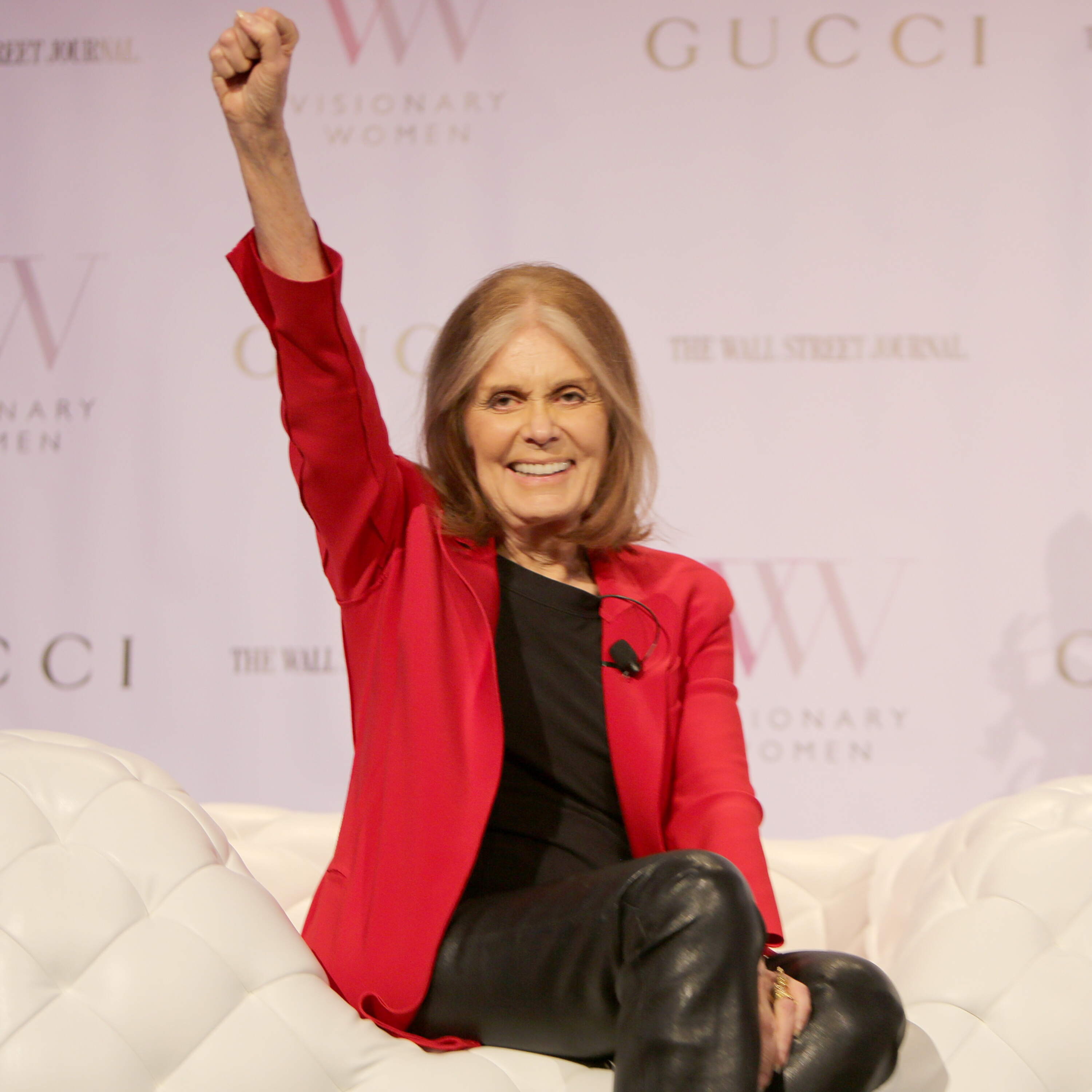
It's consider this where every day we go deep on one big news story. Today, remembering a feminist icon. It's just the radical idea that human beings are all equal and we can dispense with the labels of gender and class and race and begin to realize our unique individuality. Glorious Steinem, the trailblazing journalist and women's rights activist, has died. She was 92 years old. Here's how Steinem described feminism to Ted Woman Curator Pat Mitchell in 2020. Of course, feminism was misunderstood in the beginning as if it were about female superiority or it was a movement for lesbians only, not for all women. I mean, I used to just send people to the dictionary to look up feminism, very helpful. Throughout her life, Steinem pushed back on gender stereotypes, advocated for women's equality and founded many feminist organizations.
And in doing so, she inspired generations of women, including myself. She made it okay to be a feminist for people who fought, you know, all feminists were manhaters and all feminists had hairy legs and, you know, all the stereotypes we have all lived through. Eddie Cotton Pograban was a friend and co-founded Mismagazine with Steinem. Consider this. Glorious Steinem was a major figure in the feminist movement. What will her legacy be? We'll hear from one of her close friends. From NPR, I'm Elsa Chang. As the political landscape shifts beneath our feet, we're all vulnerable to a well-funded distraction economy determined to take our eye off the ball. Our weekly politics series, if you can keep it, is here to help where our focus is not the horse race, but the state. We tackle the big political stories of the day and why they matter for our democracy.
Join me, Todd Zwillich and me Jen White on the 1A podcast from WAMU and NPR. Hey, you know that nagging voice in your head? You want telling you to put the phone down and stop doom scrolling? Well, it's time. Look up. Take a daily curiosity break with Shorewave, NPR's science podcast. Let your mind wander to the edges of outer space or wonder about what's lurking in the depths of the sea floor all in under 15 minutes. Shorewave, your daily mental reset. Listen on the NPR app or wherever you get your podcasts. Instead of scrolling mindlessly, engage mindfully with the NPR app, with a mix of on-demand news stories from the station and your favorite podcast, you can relax without shutting off your brain. Download the NPR app today. It's consider this for NPR. For many people, glorious Steinem's name became synonymous with the fight for women's rights. For others like filmmaker and activist Abigail Disney, Steinem was also a personal friend
and mentor. Abigail Disney joins us now to remember Steinem. Thank you so much for taking the time to speak with us and I'm very sorry for your loss. Thank you and I'm just so happy to talk about Gloria. Thank you. Well, what did it feel like when you first heard this news today? I've been in Ireland for a lot of the summer but I did last week get on a plane and go see her before it was too late. So I'm really happy I had that little moment with her even if it was just so brief but I was so blown away that she was, you know, just as gracious and funny and smart and she always was. Well you have said before that you grew up in a household where feminism was criticized. Like where Gloria Steinem's name was spoken about as if she were some sort of cultural villain and then I understand that you met her for the first time at an event in 1993. Tell me what surprised you the most when you finally met her in person?
Her hilarity. You know, I told her sometimes I picture you with a grouchy marks cigar in your hand because she would make, she would wise crack like that all the time and I did not see that coming, you know. I was just cracked each other up and had a great time together because she was so funny. Wait, how is it that you came to be such close personal friends with her as an adult? You know, it's funny because yeah, I didn't meet her until I was 33 or 30 some odd years ago and I said would you ever have lunch with me? I mean, like I wasn't in awe as everyone is, you know, I was in awe of getting the chance to meet her and she said yeah, that would be great and it's so strange because she just made room for me in her heart and she's open wide up to me and then we have a series of things like I was in the hospital for quite a long time in 99 at Lennox Hill, which is right around the corner from where she lived and she would come two or three times a week
to visit me and a couple Starbucks isn't in her perfectly manicured hands and we would just sit there because what are you going to do among bedrests for 10 weeks, you know. And she understood really understood that just how terrifying the situation was for me and that the only only way to help me was to just come and talk and shoot the breeze with me and she took that really seriously and you know, I came from something very different than what she came from and and there was a lot to sort of dig my way out from under. What do you mean as a Disney? Yeah, as a Disney and from a very politically conservative, socially conservative family, you know, I was really of all the issues flying around in the 60s and 70s. Famous and was the one that got my family most worked up in anger. Great, interesting. Wow. You know, and so, you know, and my mother used to say things to me like women make terrible
friends, never trust a woman and things like that. I mean, a lot of what came out of her mouth was just the polar opposite of what Gloria thought. And so that's why I was so drawn to her from the beginning because she felt like another mother who might be better for me than the one that that I was assigned, not that I didn't love my mother, but you know, it was just she could look at a person and see everything she thought possible that they were capable of and then she would just be bent on helping you understand how capable you were of things, big changes, big things. And so every time I was maybe having doubts or not sure the next thing, you know, she was there with the right sense and the right encouraging emotion. Was Gloria ever uncomfortable? Did she ever discuss this with you about being uncomfortable, being treated as like the embodiment, the face, the spokeswoman of feminism, that it was all her?
Yeah. How did she carry that? Yeah. No, she hated that. She really hated that because she felt, you know, she got too much credit for things that weren't necessarily all her doing. And that worked badly in her life because then people would pin every problem on her, the hostile people would. And there were plenty of women in the feminist movement who thought she was problematic because she was pretty, that she was, you know, kind of putting forward, you know, a pleasing face that a lot of feminists didn't want out there. A conventionally attractive female face. Exactly. And it felt like- Maybe didn't represent the diversity of the movement. Yeah. Well, yeah. And, you know, by the way, she got a lot of hostility as a white feminist, but, you know, what is so interesting was she was the white feminist who was the first white feminist who was from the beginning saying this is not a white movement, you know, if the vast majority
of feminists are black women and we need to be listening to women of color. And so she wouldn't go speak. If somebody invited her to speak just her, she would bring someone with her. It was a woman of color. She had partners who would travel with her to everything. And she was constantly insisting on like, don't leave people of color out of this story because they are everything. How do you want women now and in the future to remember and to honor Gloria Steinem? Or how do you think she would want to be honored to be honest? You know, I've told her, I think the word mench is for men, but I think she's a wench, you know? That's kind of wench. I can imagine. That would be, you know, if she could like get everybody to recognize how mutual and cooperative all social movements need to be to really make a change, that there doesn't need to be a hero at the top of the hill.
And she didn't need that. If everybody would recognize their own power and pitch it together, that was all she wanted to help people do. And women do have it better, believe it or not. It's hard to imagine right in this moment the way people are talking about it. But we do have it better because we have more rights and we have more recourse. So I think of that kind of movement as the heart of how Gloria wanted to change the world and then she had a big part in it. Filmmaker Abigail Disney, remembering her very good friend Gloria Steinem. Thank you so much Abigail for talking to us on such a difficult day. It was a lovely conversation. Thank you. Thank you so much. This episode was produced by Elena Burnett, Lauren Hodges, and Karen Zamora with audio engineering by A.O.N. Thane and Ted Meabane. Our director is Jonas Adams. It was edited by Mallory U and Timby Airmius. Our interim executive producer is Courtney Dornie.
As consider this from NPR, I'm Elsa Chang. This week on NewsMakers, after more than a decade in comedy, I wasn't sure that we would get here. Robbie Hoffman is fearless. I had a small feeling I wasn't sure. And fully herself. My line, Lord. Hello. You can go out and flash. Well I'm not home now. I'm doing something. We plunge into comedy and success with Robbie Hoffman on NPR's NewsMakers. How do products end up on big box shelves? Well, we have Planet Money, pitch the Planet Money Board Game. I'm trying not to think how much of a big deal it is and how much work has gone into. It's really big. Is it helpful if I remind you how big it is? It's sort of the whole thing. We go inside the minds of the people who decide what goes on store shelves. Listen to Planet Money on the NPR app or wherever you get your podcasts.
More episodes
More from Consider This from NPR

25 years after the 9/11 attacks, where does the trial stand?
Consider This from NPR

Are big AI companies gambling with our lives?
Consider This from NPR

After a difficult trial, how do jurors move on?
Consider This from NPR

The Smithsonian's leader is stepping down. Where does the Institution go from he...
Consider This from NPR