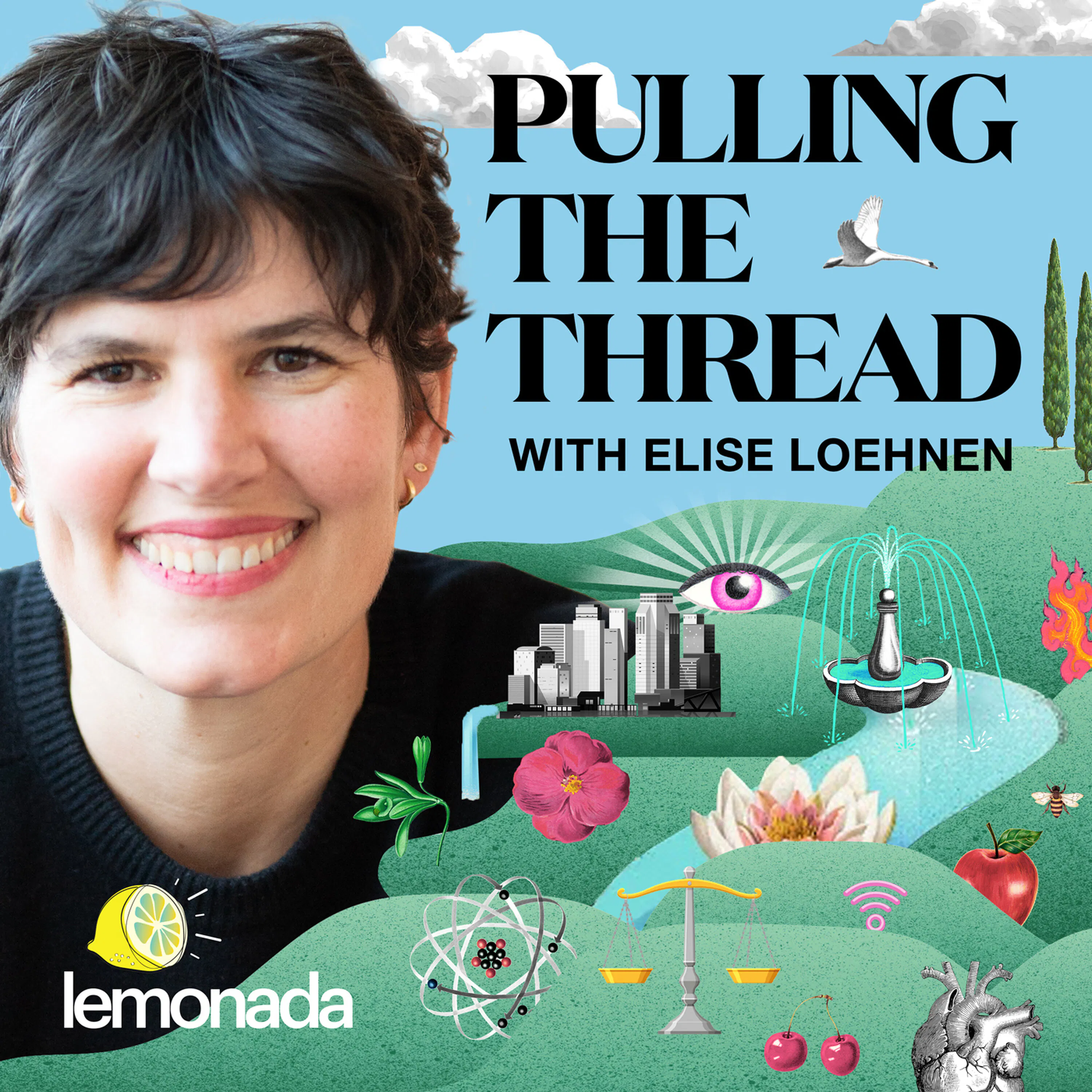
Remembering How to Play—Even When We're All Grown-Up (Cas Holman)
About this episode
Get every episode summarized
Each time Pulling The Thread with Elise Loehnen publishes, we email you a written briefing from the transcript — the topics, who appeared, and any specific claims, with the ad reads skipped.
Email me new episodesFree for 3 shows. No card needed.
Hosts & guests
Transcript ready
663 searchable segments. Every word is indexed and playable.
Full transcript
Pulling The Thread with Elise Loehnen — Remembering How to Play—Even When We're All Grown-Up (Cas Holman). Machine-transcribed; use the interactive transcript above to jump the player to any line.
Last fall, I had Katie Hendrix on the podcast to talk about her concept of the Zone of Genius, which is essentially the idea that we should try to spend more time on things that light us up and allow us to make our greatest and most unique contribution. If you're a therapist, your Zone of Genius likely centers around the work that you do when you're in session with the client. Paperwork is probably not your Zone of Genius, although that may fall into your Zone of Competence, or maybe not. With simple practice, you can spend less time on paperwork and logistics and more time in your Zone of Genius. Simple practice is an all-in-one EHR that is HIPAA compliant, high-trust certified, and built specifically for therapists. It simplifies the work that needs to happen before and after a client session. It helps with scheduling notes, client communication, billing, and insurance follow-ups. It brings everything into one streamlined system so that you don't have to juggle multiple platforms. You can use it for automated appointment reminders
and to speed up your documentation. If you're working toward opening your practice or trying to grow it, there's a credentialing service for insurance enrollment as well. So, if you are ready to simplify the business side of your practice, now is a great time to try simple practice. Start with a seven-day free trial, then get 50% off your first three months. Just go to simplepractice.com to claim the offer. Again, that simplepractice.com. Pulling the thread is brought to you by progressive insurance. Fiscally responsible, financial geniuses, monetary magicians. These are the things people say about drivers who switched their car insurance to progressive and save hundreds. Because progressive offers discounts for paying in full, owning a home, and more, plus you can count on their great customer service to help you when you need it so your dollar goes a long way. Visit progressive.com to see if you could save on car insurance. Progressive casualty insurance company and affiliates,
potential savings will vary, not available in all states or situations. Hi, it's Elise Loonon, host of Pulling the Thread. Today, I'm talking to designer and play expert Cas Holman. Hi, it's Elise Loonon, host of Pulling the Thread. On this show, we pull apart the web in which we all live to understand who we are and why we're here. My hope is that these conversations spark moments of resonance and plant tiny seeds of awareness so that we might all collectively learn and grow. Here is today's guest designer, Cas Holman, and how she decided to help adult shift their mindsets so that we might find our own ways of playing in our everyday lives. This is, I think, when people need more help remembering how to access their play or kind of letting themselves play. Because adults do play. This is one of the things that I'm glad you caught
this in the book. I think the adults who've been coming to me for, you know, the time that I've been doing this and saying, Cas, what about adults? When are you going to design something for adults? And, you know, for the first decade, I was kind of like, ah, get some therapy. I don't know. We don't. I don't think it's in the design. And then I kind of took it seriously and was like, okay, this is the recurring as much as I, you know, love children and designing for children. I also love adults. Why don't I shift my attention there for a second? And what is it? What do we need? And I knew it wasn't a design. I, of course, as a designer and my design ego, I'm like, oh, I could design a thing that would be great for it. And it would not matter as much as the mindset that an adult brings to play. Cas Holman is a world-renowned designer whose work focuses on play, playful learning, and the value of play and many aspects of life. She's the founder and cheap designer of the toy company, Heroes Will Rise, and a former professor of industrial design at RISD, some of her more well-known designs, including toys like Rigamajig and the play experiences
at the Highline in New York City. For a long time, Cas' work was focused on kids. And today we talk a bit about her unique approach to designing conditions that allow free play to arise for them and why this is so important and cool. But we mostly talk about how Cas has been helping adults to remember how to access their play and to find age-appropriate play that we genuinely enjoy. This is the mindset shift that's at the heart of Cas' book, playful. How play shifts are thinking inspires connection and sparks creativity. As part of all of this, we talk about why Cas is shifting away from problem-solving and an alternate meaning for figuring things out. Cas explains a name by function exercise that you can use any time you're trying to figure out what your goal is. She gives the example of a dinner party. We also talk about how it can be fun to notice and break norms. Cas' approach to the inner critic or what she calls our adult voice and the upside
of resisting the inclination to only continue doing things we're really good at. I think Cas' approach to play is essential medicine for our times. As she says, play can be a way for us to find each other, care for each other, care for ourselves, remember we're human and keep on keeping on. All right, let's get into it. Well, thanks for joining me. I'm not sure exactly when this episode will come out, but I can just assume that everything will feel as dark and humorless in our world, maybe as it is right now, and there'll be some new evolving disaster, which makes this conversation more imperative than ever. Right. Yeah, I will say I think that one of the things in New York, and sorry, where are you right now? I live in LA. Oh, okay. Yeah. One of the things that I think
in for New Yorkers, what makes the sustaining possible is play. And so in the midst of the world falling apart, also being snowed in in such a serious way, I think is having an impact on the mental health of everybody I know. You know, we're somewhat used to kind of getting through and being resilient with the politics and the terrifying state of things as they are, and being able to kind of go outside, be in the park, you know, and even when there's snow, we play in the snow. But this last couple of weeks of really being, you know, it was like below zero and walking the kids to the subway. They're crying, but you know, it's worth it. They're just like so cold, but they're like, yes, we will go to the museum, you know. So even accessing play when it's this cold, it feels like it's own kind of risk. Yeah. No, 100%. I think too, I lived on the New York for a really long time, but the durability, I feel like, of places like New York, less OLA,
because we're insulated in our cars, but just that force confrontation with other people is really good for us. Absolutely. Absolutely. This morning, and actually right before this conversation, kind of as a reset, I took the dog out kind of for him, but more for me, because I hadn't actually interacted with any strangers yet today. And that's a huge way that I play. I have to interact with strangers, even if it doesn't go well, even if it's somebody who's like, stop talking to me, get your dog out of my way, you know, and we have these very narrow paths right now. So there's always kind of a negotiation. You can't just walk past someone because the sidewalk is 18 inches wide right now. So I went out to take him out and also to kind of remind myself that I love people. By having some kind of interaction with them, even if it's to make fun of my dog and myself, as we's trying to slide out of the way of anybody else walking past. We will talk about breaking norms. There were moments in the book when I was like, oh my god, I cannot, I cannot imagine. So I'm going to put that in the parking lot and we'll come back to it. But just this core idea play
and the foundational idea of creativity, too. I did this book with the psychiatrist named Phil Stutz. I don't know if you saw the documentary that he did and he wrote, he co-authored this book originally called The Tools. And anyway, we did this book called True and False Magic and he works with lots of creatives here, screenwriters and whatnot. And his point is that the antidote to evil is not good, it's creativity. And it's continuing to make things in spite of forces that would suggest that you not, that you stop. And I love that and hold that so dear and creativity, I think for each one of us is so wildly different. But if that spark goes out, then we're really lost, right? Right. And I think you could substitute, you know, a lot of it is semantics and a lot of it is how each of us experiences or frames it in our own reflection or understanding or metacognition of what's happening, right? What we're doing or what we're learning at any point. But I think
you could sub out creativity with play. I mean, for me, one of the primary ways that I play is through my work, which is the creative process of designing things or testing things or observing play in order to design something or revise the way that the playground or an interaction or a curriculum, even it's not always an object. But that, to me, is where I think is one of the primary ways that I connect with my play. Yeah. So, yeah, I think creativity and player interchangeable for many. Yeah, yeah, agree. And I think that even thinking about on a meta level, thinking about the playgrounds that you construct or that the, I don't know how to pronounce it, Onya play in China, just based on your system or the yards that are constructed from found objects and things that are dangerous feels like in a meta way, curriculum for our entire culture as we think about this period of dismantling and disorder that we're in. And as it feels hard, I don't think that we're
close to understanding what things might look like on the other side of this. I think mostly people are like, is there going to be another side of this? I think there's going to be another side of this. And thinking about what you distill in the book is what we need in some ways for saying, okay, our organized play structure has been demolished. We didn't really like it. And here are all of these parts. How are we going to reconstitute this? And how can we reimagine and revise what this looks like in the future in a way that maybe hopefully better meets our needs? So I'm excited for design thinkers to rearchitect our world. Yeah, it's interesting. Well, I'm just, I'm thinking about a few things. For me, I think the recent turmoil is a continuation of a system being, it's the system that would be like, ah, the system is bringing down. That hasn't served many people for a very long time. Agree. So I think, you know, queer people, people of color, people who were not
born into wealth, people who, who people who aren't in the F10 files, we can just leave it at that. Right. So that's one thing. It's not like there was a system that worked and now it doesn't work. It hasn't worked. It didn't work. From the minute we landed on the shores of this continent, it's been not working for many people. And obviously before that, we fled something that didn't work. So I don't know. There's maybe something inherent in the nature of humans trying to civil, I make civilization, right? What is civilization? But the other thing that comes to mind is, I haven't actually been thinking about the other side of this, I think in part because the, what is this isn't something that just started happening when Trump was elected for in my reality and my community of queer people, friends who are not white. So it feels like we're this period of what does it take to sustain is what we're thinking about. I don't think we're looking for that there's going to be a fix. I think that something that I realize in my own kind of mental health and
my own approach to how I live and what I'm designing isn't, I'm trying to shift away from problem solving, which is interesting because designers love being, ah, I'm a problem solver. And also, as a human, I'm a problem solver. As a child, I would create problems in order to solve them, right? And this, even I talk a lot in my work about letting kids figure it out, but figure it out doesn't necessarily mean to an end. Figure it out and then you're done with it, right? I think that because of uncertainty, because we evolve and we keep everything as soon as you understand it, it changes. It was just with my mom. She understood her phone and then there was an update and now her phone is confusing again, right? So there's, if nothing else, we have to embrace learning and love learning and expect things to change. We might understand that operating system, but what we really need to understand is how to understand a system, right? How to learn. So I think this idea of imagining what's on the other side and like, oh, yeah, let's imagine what's on the other side. I haven't even gotten that far and I don't think it's just because it's so intense to be in it.
I think it's because I don't, I a little bit think that I would be kidding or we would be kidding ourselves to think that this is just going to end. Which sounds super bleak, but it's actually just saying uncertainty is baseline reality. Yeah, yeah, it's much more dramatic. It's very dramatic right now in a way that is really impacting entire, there's a global impact that's very visible in part because of media. And also I'm more interested in thinking about and focusing on how we sustain while we're in it. Then being like, let's hurry up and get through this hard thing so that we can imagine what's on the other side. I don't think there's going to be any time that will feel like, and now we're on the other side, right? Yeah, like eventually Trump will die, so that'll be a start. And also, there's all of this, even when that happens, we're not going to, we're not going to have escaped the fact that, you know, that global warming is real and we've already done immense amount of damage to our home, our home being the country, being democracy,
being the planet. So I think within that, I'm interested in, okay, how do we take care of these, how do we take care of ourselves and each other? And that's in part through play. And then extend that, okay, now, then we're capable of taking care of and being mindful of our home at the various stages of what that means. Yeah, no, there's no doubt that we're facing any number of existential crises and existential crises that we don't even know about at this point, right? And I agree, it's not an end. There's no end point. It's this continually unfolding process where we stay in motion and we stay creative and we stay agile. I think what I see as happening is, well, I think there's an instinct, right, to hold on to what was and status quo and warfare of the unknown. And you could say all creativity in some ways lives in the unconscious and it's scary to bring it over the threshold. But I do think what is exciting is this, what feels like a new collective awakening
where just many of us, I put myself in this camp were somewhat complacent, right? And tell, I was like, oh, Hillary's going to figure this out. And then, no, that's not happening. And she wasn't going to figure it out, right? This is an evolving, ongoing, iterative engagement that I think part of, part of what we're seeing crumble is this idea of those people will sort it out. And that would have felt a lot different. Yeah, I think that if it had been Hillary or Bernie or Kamala Harris, it would have felt a lot different to be in it. I think we would have been in it figuring out different things together, right? I think now we're like, it's just feels terrible and everybody's at odds. And we think that we're the enemy when in fact, you know, it's all a distraction for all distraction, making us hate each other. But I think you're really, you're right that what's come of it. And I also want to come back to the value of hope, right? And the importance of maybe we're not designing for or waiting for what it'll be on the other side of it.
But I think imagining what it could be and remembering that it doesn't have to be like this is also a huge part of getting through. Yeah. And being okay while we're in it, you know, in my early 20s, when when I kind of first started realizing, oh, well, there always seems to be something that we keep thinking as soon as that's over, it'll be utopia. Just around the corner. Yeah. And then kind of thinking, oh, wait, hold on, there's now there's a new thing that ended and now there's this. Oh, we got gay marriage. But then this other thing. And oh, wait, was that that maybe that wasn't the thing we needed? You know, was also, you know, realizing that that we can shoot for ideal. And if we're not imagining what we really want or trying to get towards something, we're not going to maybe get anywhere, right? So we have to kind of shoot for ideal. But also realize that when we wind up somewhere that's less than what was ideal, but closer, right? I think maybe somewhere in there is acknowledging that it's different or better without getting hung up on. Ah, but we designed this one thing and we need to get to that, you know, along the way we're
getting somewhere and the propelling ourselves toward this idea and imagining and having conversations about what it might be other than what it is also makes us like look at what we actually want or need in any moment and continue re-evaluating, okay, how are we and we're at least in dialogue, right? In a way that also feels productive. And of course, there's all kinds of science of hope, right? Yeah. The importance of, well, and I think part of it is one thing that feels and I loved in the book how you write about observing the people interacting with what you've made and then learning and evolving whatever it is. But so often, I think we live in this disrupted feedback loop where I'm just talking about this recently with someone where we don't ever know the impact, right? Of what we've done. We don't hear about the good things. We don't hear about what's been reversed or what's been saved, which I think is also devastating to hope, you know, when
you're like, oh, actually that really worked, you know, or that seedling is a tree. And so I hope that we can find ways as we move forward to close those loops because it feels difficult to sustain feeling like everything that crosses the news transom is written in stone. When in reality, it's like there are lawyer, you know, there are people who are finding back, productively and effectively against some of this stuff that is exactly what you're saying, this iterative movement in the right direction. And yeah, we have to keep sustaining hope and keep, and I think mostly it's like through staying creative, staying engaged, staying playful. Yeah. Yeah, absolutely. Anytime that I get a chance to observe, and in some cases, it's built into my project, the exhibit I did for the Queens Museum that was last spring, and it was called prototyping play. And what was fun about
that process as well as the piece itself is that it assumed that we were going to learn from it and change it as we went. And that had a little bit to do with budget. You know, there wasn't time or budget to do a lot of prototyping and revising. So the prototyping was the process, you know, so what we put out on the floor to open the show was something that we had tested with kids in bits and pieces, but it was a large, well, two of these 20 foot by 30 foot drawing pads on the floor that people kind of danced around on with these big crayon drawing tools, which were kind of often, you know, imagine a broom with crayons on the end, right? So you kind of through moving, we're making marks on the floor. And it would have required a whole different project schedule and budget to kind of test that before installing it, which typically I would. But so we prototyped bits and pieces of it to see how children interacted with them and, you know, does this work, right?
Is it engaging? Will a child play with it for more than 20 minutes, which is a pretty big win, really? And so that project was fun because it assumed that we were going to be observing and learning as we went, right? In most things that I design, I design things that are for other people to design with, right? So the child or often if it's a workshop, they're adults, but I kind of create the conditions for free play to arise. Or I may create the conditions for, you know, collaboration in free play to arise. If it's in the case of when I work with business leaders and design teams, you know, depending on what they want, like, ah, we need to understand each other, we're all kind of disconnected right now. Let's do a workshop that helps, you know, we help my team connect. And so I'll create the conditions for specific types of collaboration or I'll create friction so that communication has to happen, which is not typically what we think of designers doing. I will design a way that there will be conflict, but it'll be conflict that will come up in the process of play and in particular with children so that they are really incentivized because they
want to keep playing or they may not really even notice or have called it conflict, but it'll be a moment where there's not enough resources. So they have to share, right? So the typically, and as designers, we think, oh, we'll, you know, give them more. If there's conflict and they, you know, there isn't enough, then let's just give them more of that nut or that bolt. But then they don't have a chance to say, okay, hey, are you done with that? That thing looks like it's already built or can we revise that so that I can use two of those bolts, you know, do you really need that the third tail on your dragon? Can I take that board and use it over here? And that's actually the really good stuff, right? When we just design for everything to be ideal and unlimited resources and there's no conflict and they can, you know, work together if they feel like it, but they don't really have to because there's enough for everybody to have their own build. Then they don't have a chance to get into this stuff that's hard to do when they're not playing, but when they're playing, it happens quite, quite organically and it's really, that's the good stuff. I love it. And then the idea of scaling that to adults is amazing, but that's life, right?
I mean, that's really what we're talking about is how do we, there aren't enough resources and how are we going to take care of as many people as possible with what's present? It's on a grand scale, exactly what you're talking about. And, you know, I know you're not a child psychologist, but I can only imagine how the abundance and the wealth that's offered to most kids these days, right? That instinct, oh, you don't, there's, I'll just get more, as a kid, I have two Lego, I had a bin of Legos, but I had two things that I could build from and I had a book of ideas and my kids, I mean, it's disgusting. And partly I blame my husband, who's a Lego husband, but also I'm like rebuild and make things that don't have directions, you guys. What are you doing? No constraints, right? When we were working on the imagination playground, the big blue blocks early on, you know, was very iterative and early on somebody said, oh, well, obviously they need some kind of connector, so that it doesn't
fall apart. And I was like, no, I think it needs to fall apart. You know, immediately, I was like, no, this needs to fall apart. Also, for one reason, because it's a shared resource in a public playground was the design intention. And for a child to have ownership over something because they've worked really hard and they are expecting it to, to, to last longer, they're going to be less likely to let someone else, a stranger come in or less likely to want to leave it behind, right? Whereas if they know that it's like somewhat ephemeral, it's there for as long and part of the fun is when it falls apart. So they're not building something with this sense of permanence. They're building it knowing it might fall apart. And when it does, then that's part of the fun and they get to rebuild. I think the assumption that if a child works really hard on something that has to last forever is actually it's the opposite. You know, what happens when they work really hard on something knowing it's not going to last forever and let it fall apart and let another, let it evolve into something else. Yeah. So that was a really interesting process of gauging. How will, how can the design, how can the literal shapes of these parts facilitate the type of play where a child will be invested
and want to keep playing with it, but also be comfortable when another child walks up and wants to add to it or leave it behind. I observed many, many times in museums where children, they don't want to, especially with rigamajig because it does have connectors. So there's nuts and bolts. And they would love the process and be there for over an hour. And I heard so many stories from parents who were like, well, now what? How are we going to pull them away? Or they'd want to go back and check on it to make sure nobody messed it up. So we made posters with language about letting it evolve and parents how to talk to your kids about that they worked hard on something and someone else is going to come and change it. And also they get to walk up to someone else's design or someone else's creation and add to it and change it. And you can be invested in something without owning it. It doesn't have to be yours, you know, it's everyone's. It's yours and it's everyone's. But again, a lot of observing and feedback from museum directors and teachers saying, hey, Cass, what can you design to fix this problem of kids not wanting to leave their creations behind
because another child will change it? You know, and I was like, I fascinating. I mean, I'll take that on as a design problem. And also, I think that's a cultural problem, really. I think that's how life works problem. So this is actually a learning opportunity. And adults too, you know, we all have the kind of the instinct to be in. Well, it's wild. I'll check in. Right. If you're a regular or even an occasional listener, you probably know that I love to interview the wise elders of our culture. And many of these luminaries have made me excited to get older, and I hope wiser too. As I attempt to do both, I've become interested in a few things that can support me on a deeper level as I age. One simple habit I picked up in the physical realm is taking mitochondria's longevity gummies. They're designed to support your cellular energy so that you feel stronger and vibrant as you age. They contain the only clinically proven form of uralithin A shown in human studies to help renew mitochondrial function, which is a key driver
of healthy aging. Mido peers longevity gummies are backed by more than 15 years of research in mitochondrial health. They've been studied in multiple human clinical trials, including older adults, and the gummies deliver a precise standardized dose that's used in research. Also, the formula is clean label project and NSF contents certified. Support your cells and how you age with mitochondria gummies from timeline. Visit timeline.com slash thread and save up to 39 percent off your mitochondria gummies. That's timeline.com slash thread. There are a few things that can prompt us to get a full financial picture, and one of those is tax season. If you're trying to wrap your mind around your earning, spending, budget, savings, and investment opportunities, I highly recommend trying out the personal finance tool called Monarch. And in the event that you're getting a tax refund, Monarch can also help you see where it will have the greatest impact. Monarch is the all-in-one
personal finance tool designed to make your life easier. It brings your entire financial life, budgeting, accounts, and investments, net worth, and future planning together in one dashboard on your phone or laptop. Feel aware and in control of your finances this tax season and get 50 percent off your Monarch subscription with code thread. Personally, I love how clearly Monarch shows where our money is going. I find this view so soothing, but Monarch isn't just about tracking. It gives you agency and helps you to be more proactive and less reactive. With Monarch, it's easier to plan out financial goals that you feel good about, and it's easier to make decisions that actually move the needle for you and help you to hit your financial milestones. Achieve your financial goals for good with Monarch, the all-in-one tool that makes money management simple. Use code thread at monarch.com for half-off your first year. That's 50 percent off at monarch.com. Code thread.
I'm a huge fan of audiobooks. I love to listen while I'm traveling, driving, walking, cleaning up the house, or even shocking. Sometimes just sitting still. Some of my favorite authors and titles are in Audible's Wellbeing Collection. These include many pulling the thread gas like Gabby Bernstein, Self-Help, Financial Feminist by Tori Dunlop, Cherish Belonging by Father Gregory Boyle, Hope for Sinix by Jamil Zaki, Magic Pill by Johan Hari, and now there are so many more classics in the collection. Whether you're looking to take better care of yourself or want some parenting advice, career help, finance tips, a new perspective on relationships, or sleep support, the Audible Wellbeing Collection has something for you. Kickstart your Wellbeing journey with your first audiobook free when you sign up for a free 30-day trial at audible.com slash thread. Membership is $14.95 a month after 30 days and you can cancel anytime. So head to audible.com slash thread
to start your free 30-day trial and get your first free audiobook. Growing up, I don't know how old you are. I'm in my, how old am I? mid-46 or 47. Growing up, things were more precious and we just didn't have as many artifacts, right? We didn't have this digital record of our lives. We had maybe some physical photos that nobody really wanted to look at after. I remember my dad, they would go on vacation, and then they would invite people over and do a slideshow. Oh yes, yes, the slideshow after dinner. My dad's a great photographer. And he would set it to music. It was a whole thing. Oh, amazing. Amazing, but now I'm like, what are we going to do with all this detritus, right? We're drowning in artifacts, both that we've recorded, and also that we've theoretically, it's like that hoarding instinct is so intense in all of us and that unwillingness to let things
be impermanent and let them be a memory or let them be a moment, right? Yeah, this feels like cultural medicine, right? Yeah, I made a prediction at it. I have a New Year's Eve ritual of predicting, you know, this is going to be, stay in, this will go out, everything from light-up shoes to food trends. But I predicted that, and this came out of a conversation because we have a small apartment and I have my studio upstate, but it's like I said, it gets a little bit tricky to get to. So I'm very aware of how much stuff I actually need because I'm surrounded by it in a Brooklyn apartment. But my prediction was that in 2026, there will be therapy based on what your relationship to stuff is, you know, because I think we all have very psychological, why is it my friends who are minimalist? I'm like, tell me everything, how do you, how, why do you, how do you exist? But what if you need that glue in 10 years, you know? So I think that there's something there, like our relationship to what we can let go of and what we think we're going
to need and it's about money, it's about resources, it's about, you know, probably where you were in your sibling, if you had siblings and so yeah, I think that are especially as a maker, it's hard to let go of things because everything has potential, you know, everything has potential, you don't want to waste the beautiful things about adventure playgrounds and junk playgrounds is that kids learn to appropriate things for what they need, right? Objects have affordances in a way that you don't necessarily need a stepping stool, you can just use a milk crate or you can roll a stump over and step on that, right? So they learn to see things not as what their original design intent or functional intent is and see them more as what does that lend itself to? Yeah, which is a little bit, I think one of the one of my favorite exercises that I think I automatically do in my own thinking, but that I integrated into the book for adults and playful thinking is the kind of name by function exercise where you step back from a moment whether you're
designing something or you're just trying to figure out what to do for dinner and say okay, what is the goal here, right? What is actually the goal, right? So in the case of a playground, do we need a $300,000 playground that's attached to the ground or can we give them a bunch of long sticks and a stream or a waterhole, some old tires? What does it take to facilitate play, right? And we see with junk playgrounds what they need is the space, you know, a play worker who is an adult who's looking out for general safety, but mostly they need freedom and then they'll play. And with adults, I think backing up and saying in many parts of our lives, I'll go with the dinner example. If I'm having people over for dinner, but I had to work later or there's too much snow, I can't get to the ground, you know, is the goal that I serve this elaborate gourmet thing in which case I'll probably be kind of stressed out and less present for my guests or is the goal that we
all have time together. All right, so I'm just going to tell them so they can lower their expectations. This is not going to be a gourmet meal, but we're all going to get to hang out and I'll be a much better guest because I'm not running all over the place trying to find the perfect filet of fish, you know, and we're going to eat what's around and hang out because that's actually what we want to get out of this dinner party is quality time where I'm not stressed out and you're all comfortable as my guests because I'm not a stressed out host who's in the kitchen the whole time, you know. So there's, yeah, there's ways that we can be playful in our thinking and approach things, prioritizing that rather than some of the other kind of assumptions that I think go into how we think we're meant to be as adults. Yeah, well, and I think that that it's funny because as I opened the book, I approached it with trepidation and fear. I mean, I majored in English and art, which is hilarious, but I love theoretically, I love making things. My husband went to RISD and yet, as an adult, I just never enjoyed. And I loved at the beginning when you're like,
so many adults are like, I don't enjoy play because the play is not necessarily age-appropriate play. So that was very reassuring to me, but as I went deeper into the book too, I was like, I love this is a meta way of thinking about your life to introduce, as you were saying, disrupt question normal, normalcy and violate norms. I know you like to do that. Some of those suggestions like singing, what was singing in the grocery aisle? I don't remember, but yeah, although Blake McGrath on Instagram, have you seen his videos where he discerns dancing? He's an amazing dancer and he dances in the frozen food aisle. They're great videos. And just who gets into it? I would only like that better if he did that if he, as a bad dancer. Yeah, no, because it's also one of the things I'm trying to get people to do is as adults, we get very attached to being good at things. And we continue doing what we're good at, right? Based on, you know, if you played soccer in sixth grade, but you weren't that great, you probably didn't
keep playing into junior higher high school, even if you loved it, which makes no sense. So I think we learn through childhood to keep doing what we're good at, right? And we're narrowing down. I believe in this. I know a lot of parents who are like exposure therapy. We got to try everything, you know, which is wonderful. So long as we don't then edit it out based on what the child is good at, let's edit out based on what they enjoy. You can keep playing the piano, even if you're not going to be a concert pianist, right? And you can't keep playing soccer. Well, but I mean, that is, it seems fairly obvious. And also, that is kind of how we make decisions. I find myself doing it for, you know, for myself. And returning to things now, I'm 51. So I returned to things not from the expectation of being good at it, but from, is this fun? Or is this going to keep my joints flexible, you know? So it's kind of, you know, we have a different goal going in and let ourselves do it, even if it's not. I think there's, as we age out of thinking
we're going to be a professional many things. Yeah. Which then takes the pressure off of drawing. I mean, I think I know a lot of adults who are terrified of art making in the broader sense. And I always try to kind of separate what is art making from creativity. You can still be a very creative person without, you know, kind of making art per se. And it might be really fun to doodle. Yeah. Yeah. And drawing, drawing with kids is pretty fun because again, there's no expectation. They're definitely not judging your drawing. And hopefully you're not judging there. So everybody can just be in it and play with, you know, with what different paintbrushes do and different line strokes. And maybe you make a grocery list on it afterward or maybe you turn it over and use it again for, you know, you're to do this. No, it's so true. I mean, I'm just thinking now, I went to boarding school. And art was my therapy. I would take Kupash everything with Moj Paj. And I would, I mean, my dorm room was wild and it was pre-urban outfiters when they started
using toys. But I would, I don't know, I mean, it was just fun. It was therapy. I stayed up late doing it. I'm Moj Paj, my college application and got amazing. I know. And then I was an art major. Not, I was very clear. I am not an artist. No, I am not seeking gallery representation, but this is really where I want to spend my time in the darkroom or painting. Not because I'm very good at it. Technically, I was quite terrible, but I thought it was fun. And that's wonderful. Yeah. Well, you know, you were representing yourself in a way, right? So if you take Kupash your portfolio or your submission, you know, you were like, here's who I am, right? That was a way of you saying, I am more than words on a page. It was, but also I love that you were like, I'm words on a page and also some color, you know? I mean, I think that an English finite major makes perfect sense. Yeah. Exactly. It was like two different parts of my brain, but I spent more time on art than I did on English. But reading your book, I was like,
I got, I got to sort of, I got to pick up my embroidery. I got to, I like making things. I think partly I, and I married an incredible crafts person and have sort of fled the scene, deferred. Yeah, yeah, to him. But it is so, it's healthy. The pressure of beautiful, like, you craft is beautiful. I mean, also having been a professor at RISD, I had to, the first year that I was there. I came in with a great, you know, I'd been designing playgrounds and play spaces and had my own art practice. But I never considered myself kind of a crafts person or an artisan in RISD is very rigorous in the crafts. And at some point I had to teach a woodworking class, which was wood one. So there was planning and carving. And I was like, oh, I can whittle, what? And so I had to take the class. I was sat in on, on another faculty's class and learned from him on Tuesday so that I could teach it on Friday. And I would always say, I'm a designer
who uses wood. Like, I'm not a woodworker per se. I'm a designer who uses wood. You know, so we had the skills, but in a kind of different context of, let's just see how these are going to be useful in our processes in a broader sense, not just to make this really incredible joint out of, you know, the perfect section of this chunk of walnut, you know. And it was, so it was, we're going to learn these tools, these skills and have these tools on hand so that we can use them however we want to or even misuse them. But it's funny. I think that, again, this is why I love, I kind of embrace the tinkerers. And maybe you are ranging your room until late at night. That was played. You were intrinsically motivated. Something inside of you was like, do this thing, it'll feel good. And probably if you hadn't let yourself do that, maybe you would have been harder to write your paper or you would have just not felt as good the next day, right? So anything that you're intrinsically motivated to do into adulthood, if you can let yourself keep doing that and understand that it's not about efficiency, you know, there's, it's not, it maybe
isn't seen as productive. I think efficiency and productivity really have a very unfortunate impact on people letting themselves play this first that everything we do has to either be efficient or productive in some way. And then I can also frame it as productive. I can say, okay, if you don't let yourself play for a couple hours, you're not going to be able to, you know, to actually find the point of the paper you're writing or you're not going to understand the conversation you're about to have if you're not in yourself the way that you would be if you let yourself dilly dally for a while. Go watch some birds or tinker with your plants. I tinker with my plants quite a bit. And so this, yeah, I try to parse out the crafts, the beautiful craftsmanship for whom many people that is play, but it doesn't have to be at that level in order for you to let yourself do it. Yeah. I'm just laughing thinking about my husband Rob, we have a house and we have a car port, which is more or less his shop. And yeah, four, five months, he speaking of craftsmanship, he's so compulsive, but he has been making daft punk Halloween costumes for the family to the
point of figuring out the exact right chrome paint, etc. I mean, they will be, they will be amazing, but yeah, that's his version of play. I mean, it makes him so happy. And it is theoretically an incredible, it is not productive and it is not efficient. And yet it's I think a pillar of his mental health, right? Absolutely. Yeah, I wonder if finding the perfect word or asking the perfect question is your equivalent of that matching that red or what might seem obsessive to an outsider, whereas you're like, no, that's not the right word. And somebody else is like, what, you know, do you need the source for everything? And you're like, yes, yes, we do. We need to know the knowledge of every word. Yeah, you're crafting an idea using words as your material. So, of course, every single word matters, you know, yes. No, I love that. And I think that one thing that you do so beautifully in the book, and I think, and hopefully people who are listening are getting too,
is that often you hear creative and you think, oh, a craftsman, but that there are these incredibly creative finance people, incredibly creative teachers certainly cooks, whatever it is, that it's a quality, an ephemeral quality, not a product that requires, yeah, disrupting norms or thinking about how you might do something differently or that goal or, you know, that that's something that's belongs to all of us. It's events. Yeah, I think also one thing that happens when the story of oneself is that we're not creative or we may not say we're not creative, but we don't think of ourselves as creative. I think that that there's a certain amount of judgment in that we're part of what might keep someone from doing something weird or different is the fear of judgment. And so, we spent a lot of time, my co-writer Lydia Denworth is a science writer, so she did all kinds of fabulous research to find, you know, in backup neuroscience and psychology, a little bit of
anthropology in their around play, what we know and what we found about adults in play, and then trying to apply that to who we are now. And what is the world? What are the conditions? What is the world that we're trying to play in as adults? And just in the 25-something years that I've been doing this and talking to adults about play so much of what I hear from people is that they are afraid, right? And it's something that I think people experience with art making a lot, right? Art inner critic, but that's also the voice I call it your adult voice. So when you're in the when you're in the grocery store and your favorite song comes on and you're just like it's Friday after noon and you're excited to, you know, go play with your, you know, friends this weekend. And your song comes on and you might kind of start to dance and realize, ah, I'm in public, I can't do that. People will think I'm weird or all look bad or I'm a bad dancer or no, I need to be efficient. I have ice cream in my cart, you know, whatever it is for whatever happens when your play voice just starts to make you move and then your adult voice is like, don't do it,
to kind of be aware that that's not always real. The adult voice is trying to protect you, right? I think that our adult voice is something that we learn kind of around puberty. I talk about this in the book also that I think that will not just me, but science also shows that when we stop playing is, you know, related to what we get in school. And also when we start to have a hyper awareness of social, like the social cues and being aware of what other people are thinking and then also very conscious of wanting to be accepted, wanting to behave in a way that we work in society, right? So there's an assumption that if you behave strangely, you won't be accepted, right? So that's your adult voice trying to protect you from rejection. And also, it's maybe gone a little far. You can dance in the aisle and still be safe and not lose any friends and probably not get fired. And the people around you might really appreciate it. So I found and retold stories of people who kind of made that first brave step into
playing in public or doing yoga at the airport feels like not that complicated. And yet probably 90% of people at the airport would really benefit from yoga. And how often do you see it? Right? Right. So that felt like something where I was like this seems not that revolutionary. And yet it makes such would make a huge difference. And we don't do it because we have this adult voice that says you shouldn't there's no there are no signs in the airport that say don't do yoga, you know, yeah, yeah, we perceive there to be. So thinking about judgment and where is it coming from and being aware that you have this adult voice and kind of hearing it and then saying, oh, and I think it's safe right now. So I'm going to go ahead and listen to my playboyce instead. Or cost benefit analysis. It's a little bit of a risk. Maybe my pants will get a little bit wet if I go lay in the sun and the grass. And I think it's worth it. So I'm going to go lay in the sun and the grass, you know, yeah. Yeah. It is true though when you start thinking about norms and
you're like, why is that? Why would that be weird to do a downward dog? We watch people work out all the time. It's not like something we only do in the privacy of our homes, right? Well, yeah, gyms have these huge windows. We're supposed to be watching people work out, but only in that one building that's specifically a gym or only when you're wearing the right clothes. Oh, I'm not allowed to move my body if I don't have four-way stretch on. Yeah. And also, I'm like, is it that we perceive an airport floor to be filthy? I'm like gyms are filthy. The whole thing is, yeah, it's an interesting. It's nice. I love the moment. Speaking of pulling the thread, when you pull the thread and everything just comes entangled and then you're kind of left with cool, great. I want to stretch because my body feels weird, you know? Yeah. Totally. I've actually been making some progress on getting more protein in my diet this year, which is mostly thanks to Kachava's nutritious whole body shakes. Each shake includes 25 grams of
100% plant-based protein. Plus, I've got fiber, probiotics, enzymes, and a bunch of key vitamins and minerals like the B vitamins, vitamin C and zinc. There are no artificial flavors, colors, or sweeteners. The shakes come in several different flavors. A few of my favorites are chocolate, vanilla, and chai. I love that these shakes are easy to thread together at home. I'll often mix in a nut butter and some frozen fruit for my breakfast or snack in the afternoon. And when I'm traveling, I'll just bring the powder packs with me and shake or blend with water. I find the shakes to be really filling and satisfying. They make it so much easier to get the proper amount of protein and daily and they help to keep my energy, metabolism, and digestion going throughout the day. So stick with your wellness goals. Go to kachava.com and use code thread for 15% off. That's kachava.kac.com code thread. I've been upping my game on master class with their newer
audio mode, which means I can take far more classes. The videos are obviously great and well done, but it's nice to have the option to just listen to lessons away from a screen. In general, though, what I like about master class is that the lessons are designed to be bite-sized and digestible. It feels realistic to fit them into my schedule and they deliver untruely actionable takeaways. Also, I love the breath and depth that you find on master class. You get access to over 200 classes taught by some of the most fascinating people in the world from writers to financial experts, comedians, chefs, scientists, designers, and doctors. Master class plans start at 10 bucks a month, build annually. Every new membership comes with a 30-day money back guarantee. Right now, our listeners get an additional 15% off and the annual membership at masterclass.com slash thread. That's 15% off at masterclass.com slash thread. Masterclass.com slash thread.
Okay, I have two new, somewhat related, somewhat unrelated favorites from my beloved cozy earth. First are the cozy earth comforters. They are so incredibly comfortable. I wish we had been sleeping with them before this. Cozy earth comforters are made with naturally breathable temperature regulating materials. They are luxuriously soft. You know that cloud-like feeling you get when you settle into the very best hotel bed? It's like that, but at home. I like that the comforters aren't too heavy, so you're not prone to overheating. They're just the right weight. Then the second very comfortable upgrade I've made is refreshing my sock drawer. I know extremely exciting stuff, but these are the most comfortable socks I've ever worn. They're soft, cushioned, breathable, and thoughtfully designed. They come in four different styles or lengths, calf, quarter ankle, and no show depending on your preference. So sometimes, yeah, it's the little things. This comforter and these socks are bringing much joy to my every day. But as you may know, cozy earth
also makes excellent pajamas and has much more in the bedding and sleep category. You can make your picks at cozyearth.com. Use my code thread for up to 20% off. That's cozyearth.com and use code thread for up to 20% off. And if you get a post purchase survey, let them know you heard about cozy earth right here on pulling the thread. It goes back to where we started the beginning of the conversation when all the norms, when all the institutions that are dismantled and then there's a wrecking ball to not only the East Wing, but other parts of our world or the structure what's left and what's important and what can we resurrect and then how do we change it and what's the next iteration of this as we move forward knowing that this is impermanent too. I think that's the other big lesson has been, God, we really were so certain, right, about how the world
worked and how things would move going forward and all of those things are being tested and proven to be otherwise, which we can either be scared. I don't know. I feel like there was research in the book too about how hard it is to play when you're scared, right? Or you can manage the internal fear, help each other do that and shift into me. I think the thing that marginalized communities have known and so we kind of came into this type of scenario, a little more practiced maybe, is that I never expected the broader system of government to protect me. It's a club that I mean I came up and gay marriage was illegal. We didn't have all of the tools we now have to bear children, all of the things. We were doing them by hooker by crook, but not with any support. So marginalized communities are a little more practiced with we have what we need
because we have our own community, whether it's your family, community of friends. For queer people, I was with my girlfriend for many years owned the Lexington Club, which was a lesbian bar in San Francisco, and she refused to close. Seven days a week, year round, Christmas Day, New Year's Day, always open because for her it was a community space. It was a business, but primarily she was like, this is a thing that we all need to have and we're going to provide it for people who don't have somewhere else to go in any day of the year. So holidays especially, we're a huge party at the bar, whether or not you were drinking because it was a space we needed for community and play. So we had, we play. And so coming into this, I think it's a huge bummer and we also need to, you know, a broader support system that theoretically our tax dollars is meant to be providing. And I think that I didn't ever expect it to work for me. So the fact that it's now not working for me or anybody else is less, I think I'm less thrown by it and more like, right, okay,
find your people, how am I supporting my people, you know, and look around what can I do with what's here and what can I do for who's here and find the people that I'm afraid are going to get lost in the cracks who aren't reaching out or who don't, you know, have as strong a sense of a community and make sure that there's, you know, mutual aid and care. And we do continue to play. Yeah. Yeah. Because that's how it's also how we find each other in these times. And, you know, remember, we're human. I wrote a piece in the, for the Guardian about the role of play as protest. And that what we saw in Portland, right, with the frogs and the music and even within Minneapolis, there's people playing music outside of ice centers so that they can't sleep. I know, the sucks about, or not know, the two, but I can't remember. Yes. Yeah. Just being loud. Right. Yeah. They're making everyone's lives uncomfortable. Let's make their lives here. You know, so being playful in the approach also to undo these weird narratives about who we are and saying,
you actually don't define us. We're going to keep being who we are and fighting, but we're going to fight in our own way in a way that's sustainable for us, which I think in many cases has to involve play. Yeah. Well, and I think we've seen through the requirement of these times, but also incredible creativity within communities in terms of knitting together systems of support, kind of overnight, right, that then are models for other communities across the country. And then in those moments when your community is not under direct threat, making sure you really can play, find joy so that you're resourced, you know, that's so imperative, right, to sort of collective resilience. Yeah. And maybe that again, in the kind of rethinking the goal sort of thing, also in there is reframing success, which maybe brings us back to the beginning of the conversation where I think that success doesn't look like overthrowing and then everything is utopia. Success
looks like we're going to be able to sleep and show up tomorrow. Yeah. For whatever tomorrow brings. You know, you could describe that as managing expectations like this isn't going to make it go away. Also, I keep hoping that I keep hoping, oh, this is such a strong showing he's going to give up and pull everybody out of Minneapolis. Maybe, right, we can and also realizing that success is maybe not that that would be success and success field is I am resource to come back and keep keep showing up and in a way that helps me sleep at night. If I didn't show up, I don't think I could sleep at night. Yeah. Even though it's exhausting and hurts your soul to show up and it's cold. Every protest for the last month has been so cold. Yeah. And I sleep better when I show up. Yeah. No. Yeah. God bless everyone in Minnesota. I mean, it's Arctic and inspiring and I know it's not over. Well, this was so fun. And it's interesting. I wonder if the book, I mean,
this is exactly when we need the book, but I think about when we were talking about the book and we've been writing it for over five years. Yeah. And there was a moment when we could have pushed and launched it before the election. You know, it could have used a little more finesse thing here in there. And also, we were like, will anybody want to talk about anything? And in my mind, I was like, maybe after the election, everybody will be for some reason. I thought, first of all, I thought I had any control it. The thought that I had any control at all was that's on me. But in a way, this is exactly when we need the book, even though at for a moment, I was going to say, oh, I wonder what our conversation would have been like if we could just just talk about play. But like, it's, we always need play. And also, this is, I think, when people need more help remembering how to access their play or kind of letting themselves play because adults do play. This is one of the things that I'm glad you caught this in the book. I think the adults who've been coming to me for, you know, the time that I've been doing this and saying, Cass, what about
adults? When are you going to design something for adults? And, you know, for the first decade, I was kind of like, ah, get some therapy. I don't know. We don't. I don't think it's in the design. And then I kind of took it seriously and was like, okay, this is reoccurring as much as I, you know, love children and designing for children. I also love adults. Why don't I shift my attention there for a second? And what is it? What do we need? And I knew it wasn't a design. Of course, as a designer and my design ego, I'm like, oh, I could design a thing that would be great for it all. And it would not matter as much as the mindset that an adult brings to play. So regardless of how incredible my or somebody else's designing for adults to play is, it's still about the individual. And so this was my attempt at, you know, shifting a mindset so that adults can find their own play all around them and not need to go to some, you know, there's a whole universe of adult toys right now, which are, you know, fun and there's an
nostalgia in there and puzzles are really satisfying. Even three-dimensional puzzles, immensely satisfying. Follow instructions, you did it right, it's done complete, there's so much meditative play in that. You're using your hands, which is wonderful. Maybe you forgot to look at a screen for a while. All of that's great. But my hope is really that adults will, in reading this, will realize that you probably are playing in ways that you could lean into a little more. Let yourself watch the birds. Recognize that as something that you're getting an immense benefit from. And by the binoculars, just do it, you know, they're like, on the subway, most people look at their phones. And when I don't, when I say, you know what, whatever's in there can wait. And I'm probably not going to find what I'm looking for anyway. When I look around and kind of hang out and people watch, I feel so much more connected and safe in the place that I live by remembering and observing the people who I live around. Yeah. Which is not to be underestimated, you know. Totally. And people are fascinating. Yes. Very. We are, we are funny ones. Yeah. Well, thank you for your work. Thank you for your
book. Hopefully people feel slightly inspired to get out there. I think it's essential medicine, particularly now. That was really fun and hopefully a bit of a solve for all of you who are likely feeling at best burnt out by this new cycle and feeling like things are chaotic and out of control or at worst, just wanting to spend your days with blankets pulled up over your head. I really, I keep coming back to Phil Stutz and his belief that creativity is the antidote to evil. And I just think that that's true. If evil feeds off of sort of apathy, fear, sort of a spiritual laziness, you know, I don't talk about laziness lightly. I'm not talking about needing to sleep in on the Sunday, but just disengagement, really, apathy.
If that's what evil needs in order to survive, play creativity and energy around making new things is how we fight back and we will really need the creativity of all of us, every single one of us. I think in these coming months and years, to envision what's next, to reimagine what we have, to stay connected to each other, to use catharsis as a way to release anxiety and pain. And in that sense, I think Kaz's book is a really vital guide to re-engaging with those energies in your life and to figuring out how to spark that, whether it's through creating constraints or imagining the goal or disrupting norms. She has so many different strategies and examples and stories to get us all started. All right, friends, I'll see you next time.
If you got something out of today's episode, I would so appreciate your help spreading the word. Please rate and review the episode, follow pulling the thread on your preferred podcast platform and share this episode with a friend who would also enjoy it. That's how we grow this thing. It's so helpful. Thank you. If you want more in this world, please sign up for my newsletter at aliceloonin.substac.com or consider picking up copies of my book on our best behavior and the new workbook choosing wholeness over goodness. Thanks again, friends. You know, when you're just going about your busy day and a voice asks you something like, why do people have crushes? Or do dogs know their dogs?
The brains on podcast is here to help. Every episode answers tough questions with funny skits, cool facts, and more. It's a science show for kids of all ages, whether you grew up with JFK, MTV, TLC, or TMZ, brains on is for you. Listening may induce uncontrollable laughter and turn back seat squabbles into harmonious car trips. Find brains on wherever you get your podcasts.
More episodes
More from Pulling The Thread with Elise Loehnen

How to Pursue Your Goals—Without Suffering (Angela Duckworth, PhD)
Pulling The Thread with Elise Loehnen
How This Hamster Wheel Stops (Monthly Solo)
Pulling The Thread with Elise Loehnen
How Do We Help People with Addiction? (Stephanie Wittels Wachs)
Pulling The Thread with Elise Loehnen
Why Do We Devalue Aesthetic Intelligence? (Chloe Redmond Warner)
Pulling The Thread with Elise Loehnen