Loading...
businessmanagement
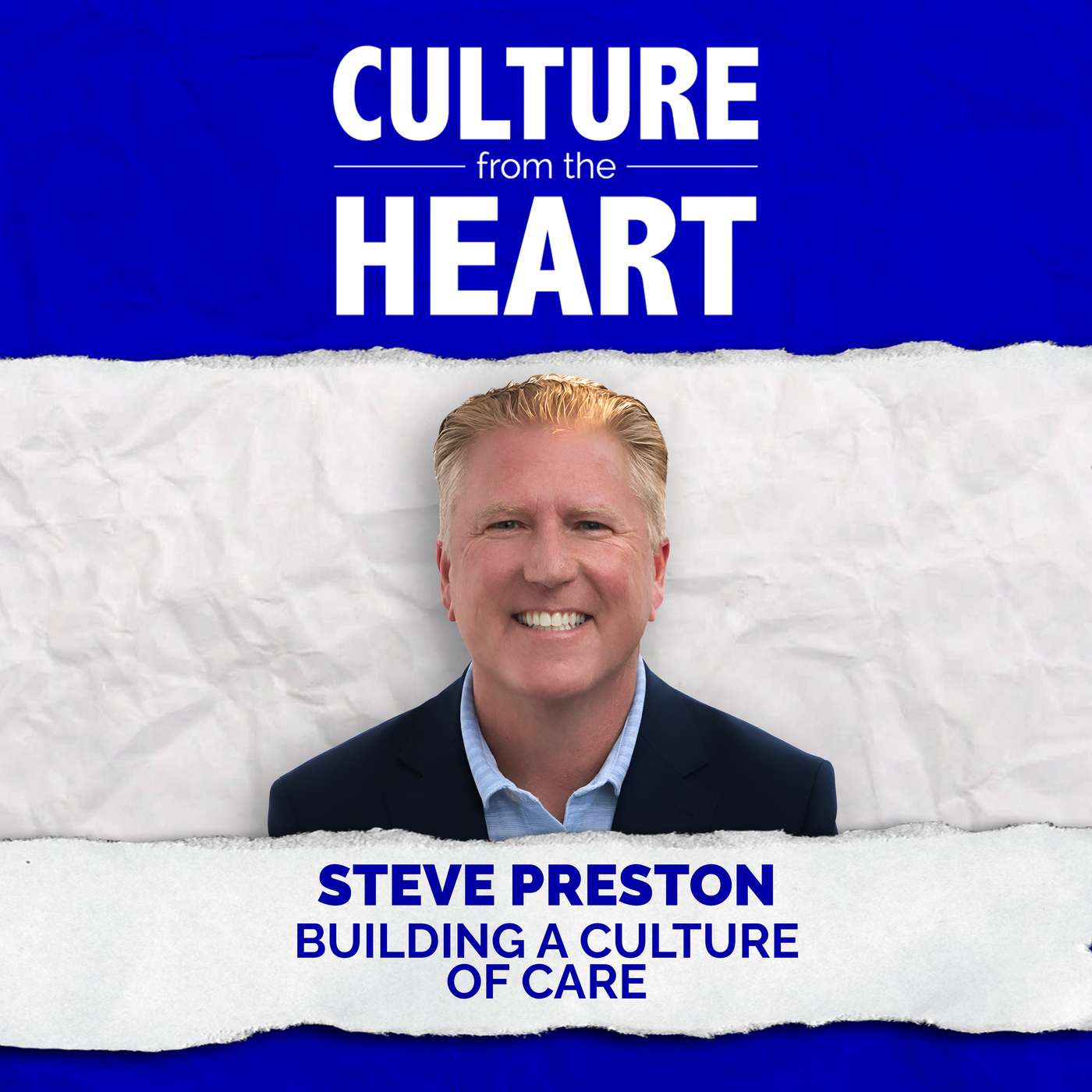
REWIND: Building a Culture of CARE featuring Steve Preston
About this Episode
In this episode of the Culture From The Heart Podcast, hosts Larry Levine and Darrell Amy are joined by Steve Preston, the president of Performance Food Service, Fairfield, Ohio. Steve discusses his leadership philosophy focused on genuine engagement and care for employees. He emphasizes the importance of eye contact, listening, and leading by example. Steve explains the acronym 'CARE,' standing for Communicate, Awareness, Responsibility, and Energy, and how it serves as a guiding principle for creating a positive and engaged company culture. The conversation covers practical strategies for implementing and maintaining a caring culture, including the role of leadership, the significance of communication, and recognizing and celebrating employee contributions.
KEY TAKEAWAYS
- Importance of Leadership by Walking Around: Engaging directly with team members shows genuine care.
- Role of Care in Culture: The acronym CARE (Communicate, Awareness, Responsibility, Energy) is central to the company’s values.
- Building Authentic Relationships: Regularly engaging, listening, and showing empathy to employees creates stronger bonds and trust.
- Recognizing Positive Behaviors: Celebrating small wins and positive behaviors reinforces the desired culture.
- Consistency and Visibility: Leaders must consistently embody and communicate core values to instill them in the organization.
QUOTES
- "Leading by example, showing up means a lot more to people than dictating to them what you want them to do."
- "It's all about giving a rip about your people."
- "Feedback is a blessing."
- "Do the right thing when nobody else is watching."
- "Energy is very contagious, positively and negatively."
- "If your employees are happy at what they do, that's going to spill over to the customers."
Learn more about Darrell and Larry:
Darrell's LinkedIn: https://www.linkedin.com/in/darrellamy/
Larry's LinkedIn: https://www.linkedin.com/in/larrylevine1992/
Connect and learn more about Steve Preston and his works.
https://www.linkedin.com/in/steve-preston-45194494/
https://www.performancefoodservice.com/
Ready to begin realizing the full potential of your sales team? Hire Great Salespeople with Confidence. SCHEDULE YOUR EXECUTIVE BRIEFING.
https://sellingfromtheheart.net/hiring
Unlock The Power of Team Growth with Learnit’s Live Training Platform. CLAIM your 45-day trial of unlimited training now!
Hosts & Guests

Transcript
What I see happening here is kind of leadership
or culture development by walking around.
And I know there's a temptation, I think, to stay.
I know you engage with your people.
Can you just walk us through like in Steve's head?
What's engagement look like?
Behind all of this is the word care
that keeps coming up in our conversation.
Most important thing is that they're the most important
person of that time.
I try to keep good eye contact with them.
I listen, they want to be heard.
Try not to be distracted on emails or anything else.
Phone rings and not like that.
One way we could just talk about culture.
Culture is a transfer of energy.
You know, we want our team to be energetic.
We want them to be engaged.
We're talking about the word care.
And I think that is such a powerful word
when it comes to culture.
When you literally pour yourself into people,
not only will they pour yourself back, right?
In other words, no pour right back at you,
but they take that out into the field,
and they pour that into their customers.
I always felt that, you know, leading by example,
showing up means a lot more people
than dictating to them what you want them to do.
These conversations so far really, really good.
They're tight.
Everyone we talk to is bringing out
a different aspect of culture.
Welcome to the Culture from the Heart Podcast
on the From the Heart Business Network.
In a business world where employees and customers
crave authenticity and trust.
Host Larry Levine and Darryl Amy are on a mission
to find and showcase heart-centered executives
and the companies they lead.
You are about here an inspiring conversation
with a visionary leader that's bringing heart
into the workplace, empowering employees,
serving their clients and uplifting communities
all to create true success.
This is Culture from the Heart.
The movement starts here.
Let's begin.
Welcome to Culture from the Heart.
I'm your co-host, Darryl Amy.
We're here today with Larry Levine
and we're joined by Steve Preston.
He's the president of Performance, Food Service,
Fairfield, Ohio, a leading food distribution company
delivering high-quality products,
innovative solutions, and exceptional service
to restaurants, healthcare facilities, schools,
and all kinds of food service operations.
Steve, welcome to Culture from the Heart.
It's great to have you here.
My pleasure.
Thanks for the invite.
Hey, by the way, Darryl, we're in for a treat.
We're in for a treat.
No question about that.
You're going to love this conversation
and as we kick it off, Steve,
you know the question that every guest
on the Culture from the Heart podcast answers.
And that is, what does Culture from the Heart mean to you?
Well, I think you're from the heart
can mean a lot of things, but the number one thing
it means to me is, how do we engage with our employees
and how do we make sure that they understand
that we care about?
And what does that look like?
To me, it's simple leadership skills
as far as listening more than you talk,
understand what their priorities are,
understand what motivates them,
and you know, arrange the opportunity for them to grow
and making sure that they understand
that we do care about their success
and their growth over long term.
And that's how we continue to grow as a company.
As we continue to grow our business,
we're always looking to develop new leaders,
new associates to their next goals and help support them.
And to me, you can't do that if you really don't have
a genuine feel and care about what's going on with your employees.
Oh, this is so good.
And no, we're going to unpack care
and you'll see Steve's wearing it proudly on a shirt care.
But I want to go back to where to use,
it starts with the e, it's engagement.
And I know you engage with your people,
but can you just walk us through,
like in Steve's head, what's engagement look like?
When you're engaging with somebody, walk us through
what's really true engagement?
What's that all about?
Your engagement, Larry, is really focusing on the associate
that they're the most important person.
So if I'm having a one-on-one meeting
or if I'm in a group session,
it's going to be a little bit different when I engage with them.
But being showing up, pre-shifts,
at their startup meetings,
getting their feedback, talking to them about the business
and group settings means a lot to associates.
I really want to know where we're at, what we're working on,
and what they can do to improve.
But when I'm working with people individually,
what I found that the most important thing is
that they're the most important person at that time.
I try to keep good eye contact with them, I listen,
they want to be heard, try not to be distracted
on emails or anything else, phone rings, I let it go.
To me, it's really shown that person
that this conversation is important to me and to them.
And all that's better way to do that
than to engage with that person and give them
your on-about attention from that period of time.
You know, Steve, as you're sharing this,
I'm thinking back to business school.
I think it was Peter Drucker
that coined the term management by walking around.
What I see happening here is kind of leadership
or culture development by walking around.
And I know there's a temptation, I think,
to stay sequestered in the executive suite,
in the office and all of that.
I just got to say hats off for going out
and truly engaging with your people as a leader.
I'm curious, what inspired you to make culture
such a priority in your leadership style?
Well, you know, you come up in the organization,
you learn a lot from great bosses
and you've been ordered sometimes more
from that sort of great bosses.
So I always felt that, you know,
leading by example, showing up means a lot more to people
than dictating to them what you want them to do.
Stay in their positions, if it's getting on a truck
and riding with a driver for the day,
building those relationships with them,
finding out what's important to them,
what we can approve on, well worth the investment time.
And it's easy for us to stay here in the back
and say this needs to be done and that needs to be done,
but we really need to understand
what are the obstacles that our associates run into?
You know, what's holding them back
from breakout performance?
Are we doing the right amount of training?
You know, we set them up to be successful.
So I'd like to walk, as you say,
walk, manage by walking around,
it's to see them in action one,
and then two, get to know them personally too,
especially on Mondays, I'll do the rounds
and, you know, they've got activities with their children,
we talk about the weather, the snowstorm or whatever it was,
it just kind of sets your leadership aside
that you do generally care,
how things are going through the pound side of work.
And that's important.
And as I was up in coming,
I had a lot of bosses that didn't really care about that.
And I found myself not as motivated
as I had other great bosses that really were generally
cared about being just not at work, but also outside of work.
Try to take that leadership,
and I think people respect you more
when you show them that care,
and then you go out of the way to also understand
what they do every single day.
And you know what I like about this,
and I've always said this, Steve,
is when you pour into people,
would you literally pour yourself into people?
Not only would they pour yourself back, right?
In other words, they'll pour right back at you,
but they take that out into the field,
and they pour that into their customers.
And it all starts from the top is, you know,
it's all about giving a rip,
we've used this, that selling from the heart,
we're gonna use it here in culture from the heart.
It's all about giving a rip about your people.
And that's, I applaud you for this.
I really do.
Well, Larry, you know what,
I learned a long time ago,
if your employees are happy at what they do,
that's gonna spill over to the customers.
Right, if our customers feel energized
and important or involved,
and they know they're making a difference,
the customers are gonna feel that.
And the same thing with our sales reps.
And if they get treated with respect in here,
and it's vice versa throughout the whole company,
they're certainly gonna pour those type of values
when they're dealing with customers.
Yeah, you know, it's just saying that,
I'm just thinking, one way we could just talk about cultures,
culture is a transfer of energy.
And, you know, we want our team to be energetic,
we want them to be engaged.
You know, if we want our team to be engaged,
quite sure makes sense that we engage with them, right?
And that is so simple, but I love all of it.
Behind all of this is the word care.
It keeps coming up in our conversation.
And what I'm so excited for our listeners to hear
is how you have taken the word care
and turn that into an acronym
that guides the culture, the organization.
So we're gonna take a brief break to hear from our sponsors.
And when we come back,
Steve's gonna unpack the word care
and how that's impacting the culture
at performance food service in Fairfield, Ohio.
Let's be honest, finding the right people
and building the right culture,
that's the holy grail for every leader.
That's why we recommend Titus Talent
because they don't just fill seats.
They help you build teams that thrive.
With their partnership plans,
you get more than just hiring help.
You get a committed team by your side
that helps you attract top performers and retain them.
They bring strategy, data, and a human touch
to talent optimization.
No guess what, just results.
So if you're ready to invest in your people
and create a culture where everyone wins,
head over to culturefromtheheart.com slash talent
to learn more.
That's culturefromtheheart.com slash talent.
Your culture is your competitive advantage.
Design it with Titus Talent.
At Culture From The Heart,
we believe that great leaders put their people first,
leading with empathy and purpose.
That's why we're thrilled to partner with LearnIt,
a global leader in learning for over 30 years
to bring you an exclusive offer,
45 days of free, unlimited training for your team
with a minimum of five participants.
This isn't just about skills,
it's about creating a culture
where your people feel valued, supported,
and empowered to grow.
Did you know that 94% of employees
are more likely to stay at companies
that invest in their development?
Culture From The Heart means giving your team
the tools they need to thrive,
not just for today, but for the future.
LearnIt's course is help your team
master essential skills like communication,
collaboration, and emotional intelligence,
all foundations of a people first workplace.
It's about fostering resilience, connection, and growth.
Don't wait, visit LearnIt.com slash culture
to claim your 45 days of free training
and start building a workplace
for your people and your business can thrive.
That's LearnIt.com slash culture.
Start enhancing your learning culture today.
Thank you for listening to that quick break.
Let's get back to the heart of this discussion.
We've got Steve Preston in the studio,
President of Performance Food Services in Fairfield, Ohio.
And Steve, right before the break,
we were talking about the word care.
And I think that is such a powerful word
when it comes to culture.
But you've got to take this to the next level
at your company, unpack for all of us
what the letters of the word care stand for
and how that's rolling out inside your organization.
Yeah, thank you, Darryl.
Yes.
So one of the things when I arrived here
was trying to understand, what do we stand for?
What's our legacy?
What's our mantra?
How do we want to treat each other?
How do we want to treat our customers,
our suppliers, et cetera?
So we started down this path
and trying to figure out what that would be.
And over nervous meetings,
you know, different mantras came up,
but the word care kept popping up in a regular meetings.
And I would hear the word used in a very positive manner.
And then I also would sometimes hear it
in a national positive manner.
I, this person really cared about this.
They went above and beyond.
They did something extra for our customers.
Or we would hear, well, maybe they don't care
as much as they should.
And it started registering with me
that this word care we use a lot, but what does it mean?
How do we break it down and really live it in the value?
So we spend many, many hours breaking it down
and there's numerous things you could come up with.
But what really worked for us
was four things of care.
And that's communicate, awareness,
responsibility, and energy.
And communication, and we all know it's without it,
you have more relationship.
And how we communicate it with each other internally,
how we communicate externally,
how do we communicate bad news?
How we communicate good news?
And there's lots of different ways to communicate.
And there's magical phrases that give me an example
of a couple of things that really came to mind
that we use as a team and you'll hear it
if you run the building.
And it's the kindness words, or I call magic phrases.
And it's simple as, it was my pleasure.
If somebody gives you a compliment a lot of times
in this world, we hear, well, no problem.
Well, of course, we know it's not a problem, right?
Well, why don't we say no problem, right?
And it's kind of a negative in a way,
but it's used in a language is not as a bad word,
but hey, no problem, I'm happy to do it,
but how about if we just switch that up
and say it was my pleasure to provide that to me
for you?
That is a game changer.
And I've had people look at me kind of weird
when I say that from the first time to them.
And then they start to smile and they start to get it
because it's not just about it work,
but if you can use these types of thoughts
in your own life, in your personal life,
it also registers there.
It makes a big difference.
Feedback, feedback is a blessing.
And a lot of times people shy away
from candid feedback on results.
Where I say, look, if feedback is a privilege,
we need to take an open mind to it.
And when something comes where we've either made a mistake
or there's a better opportunity to improve on something,
when somebody brings you that information,
and you're trying to give you that coaching,
human nature a lot of times people want to get negative,
right, defensive, I should say.
Let's not get defensive,
let's thank them for bringing it to our attention.
Because you know what, now I can become a better leader
or I can fix this problem or this opportunity.
If you didn't bring it to my attention,
I wouldn't have been able to do that.
So, little words like that
and how we communicate day in and day out
makes a difference of how people feel when they come to work.
Awareness to me is really just understanding
a lot of different things of what are your goals,
what are your priorities, what are your strengths,
and what are you needing coaching,
what do you need in training?
Self-awareness, I call that.
And Larry would say this, we're always growing,
we're always trying to aspire to learn something new.
And are you aware of what those opportunities are to do
and how can you grow?
Responsibility, the simple thing to sum that up,
do the right thing when nobody else is watching.
All right, we all want to be responsible.
But really, the team really, the employees,
when they're doing the right thing,
when nobody's supervising them,
that's when you know you've arrived.
So, we talked a lot about that, right?
Be responsible to your numbers,
be responsible, be competitive.
Wanna know where you stand?
And then energy, I look at energy, it's very contagious.
Positively and negatively, right?
If you watch winning teams in any sports,
you watch their energy level on other body language
and how they expect to win.
You can see it in their faces.
And if you fast forward to a losing team,
you'll see the negativity, the body language,
the oh my goodness, here we go again,
that's also contagious.
So, if you have a workforce
that's gonna talk about all the problems,
it's gonna start to bring down the culture
of all the players.
So, let's focus on what's positive,
let's focus on what we can control.
And let's bring positive energy.
We can choose every day our attitude, right?
That's one thing it's free.
And we all have bad days,
we bring positive energy,
other people respond to that,
and they will inspire to do better
when you're using a positive approach,
when you're dealing with people.
So, that's a quick summary of it,
but it's something that we rolled out in a peril.
We choose a letter each month,
and we catch our people using these things live.
So, one of the challenges
that I always wanna see our leaders as every month,
you should have a logbook,
let's tell me how you caught your people caring.
Somebody that did great communication,
great awareness,
showed responsibility above and beyond,
they made me their role,
or is energizing other people
that helped push them to be successful.
So, we try to capture those little nuggets,
and then recognize those people on a regular basis.
Oh, this is so, so good.
But I got a question for you, I'm just curious,
as you were rolling this out in the very beginning,
I'm sure there are some people in the back of the room,
arms folded, things like that going,
I've heard that one before.
So, how did you, as a leader
in side performance food service in Fairfield,
how did you start to overcome some of this
to break it all down?
Because I know now people are on board with care,
but what was it like in the very beginning?
Yeah, it was, you're right,
there's the, on the fence folks, right?
Let's kind of wait and see.
Yeah, your cheerleaders,
and then you've got some people that have that on work,
or I'm not quite sure.
And so, for me, it's redundancy.
A lot of our associates in the past
will say, well, that was flavor of the month.
Just wait, it'll pause, it'll go away.
I used to hear a lot of that,
but in this situation,
it's every meeting, every time we're together,
we're talking about care and what it means.
And we don't try to make it overwhelming.
We just try to share little things in our dialogue
that catches somebody doing something right
among this area.
So, it's a redundancy thing that we continue to work on,
and then we came up with the idea of the apparel,
and you'll see our drivers of these.
We also have the hats.
And so, when we're handing these out,
I always say to them, remember where it, where this,
okay, and understand what it stands for.
Walk the talk, okay?
Don't just walk into a customer with a care thing on
and don't generally care.
And I hope that customers will ask,
hey, what does that mean?
And so, we can just give our guys a little nuggets,
so you don't have to memorize the whole thing,
but just don't want or two things that's important to you
on the care, and it'll continue to thrive.
So, it's something you gotta stay after.
It's gotta be important to us every single day.
And then, again, trying to reward the right behavior
with the apparel, cups, those type of things.
We got people walking around with care cups now,
and I know it was, we're green.
We're taking out the waste,
and we got the cups and everybody's walking around with care.
So, just a little thing, right?
We're responsible, but at the same time,
we're walking around with it.
So, it's, I love it.
Getting in becomes a habit, per se.
But it does take time.
It's, we're not there yet.
It's a journey.
We got a lot of new associates.
The other thing that we figured out
is as new associates come on, I meet with them,
one-on-one, or as a group as the new associates,
and I walk them through care.
That way they hear it directly for me,
and understand it even before they start to get into the role.
So, that's another nugget.
We figured out that, hey, let's not wait
until we have another town hall.
Let's make sure when they're walking in the door,
they understand exactly the expectations of care.
I love it. I love it.
And I like the apparel, by the way.
It looks fantastic.
If you're listening on audio,
you just gotta subscribe on YouTube
to culture from the heart, and you can see
what's going on here, but I think it's so cool
because normally,
the someone that's wearing a company shirt
is gonna have the logo on their chest,
but you actually have the letters,
care on your chest.
I see the logo on your arm.
So, you're branded.
It's good.
I think.
And I still gotta do everything.
There you go.
That's great.
I think that's fantastic.
That's fantastic, though.
That's right, but everywhere you walk in,
people are gonna ask about,
what does that mean?
And you're being benchmarked against that.
You mentioned that you have your town halls
where you celebrate each month a different letter
in the care acronym.
I'm just wondering if you could share with us a story or two
about how you recognize someone
and what that look like here
and maybe one of your recent town halls.
Yeah, absolutely.
Day shift, it was a big one around awareness.
And we've been really working hard
to reduce damages in our shrink.
And as we know, there's 24 hours seven.
There's forks in and out of very busy warehouse.
And you had an individual that went outside
of their normal realm.
They work and drive,
but they were helping another associate in the cooler.
And they found a pallet that was damaged.
And so they took it upon themselves
to bring it to the attention of the supervisors,
even though it's not there, generally their area.
That was a product that we were able to recoup
and probably see.
If you were buying a company,
you wouldn't just glance at the website and say,
looks good, let's buy it.
You do your due diligence.
You'd review the books, check the leadership,
dig into performance history.
Exactly.
You'd never spend millions on a company
without knowing what you're getting.
Yet, most CEOs hire salespeople
with nothing more than a resume and a gut feeling.
That's why we recommend sales index
unlimited candidate assessments.
It's like due diligence for your sales hires.
Each sales candidate is evaluated
across 21 course sales competencies.
Because a crucial role like sales
requires more than a personality profile.
Sales index compares candidates against a database
of 2.5 million sales people.
You'll know exactly who has the drive,
the grit, and the skills to perform
before you bring them on board.
Because in sales, a bad hire doesn't just cost salary.
It costs momentum, margin, and morale.
For just $299 a month, you can protect your growth engine
and make every sales hire a smart investment.
Do your due diligence before your next hire.
Go to unlimited.salesindex.ai.
That's unlimited.salesindex.ai
and hire with confidence.
Just about 2 or 3,000 hours, if we
wouldn't have brought that to our attention,
because those boxes would have continued to get crushed.
And at some point, they would have been just
a complete write-off and a loss.
So that's the kind of thing that we were trying to find.
Just one little nugget here and there,
where we kept somebody doing right.
And again, that's the operations guys doing that,
documenting it, and celebrating those wins.
Beautiful.
Hey, Darrell, you know what I just saw it real quick?
Here's the next realm on care.
It's more gear for you, Steve Preston.
It just put OUT hyphen, out-care.
How do you like that?
Out-care.
That's right.
All right, here you go.
That's the next phase, right?
There you go.
I love how this is so practical.
Sometimes you think about culture
and it gets just kind of theoretical,
but you've made this super, super practical.
So I'm looking forward to our next segment,
because I want to dive into what you would say
to other people who are curious about,
OK, how could I implement something like this
in my organization?
So let's do that.
We're going to hear a quick word for our sponsors.
And when we come back, Steve's going
to share some practical advice for other leaders
on how you might implement something like this
in your organization.
At Culture From The Heart, we know
that hiring the right sales people and leaders
for your company is about more than just resumes.
It's about finding individuals who have what it takes
to succeed.
That's why we're excited to offer candidate assessments
from selling from the heart to help ensure
you make great hiring decisions for your sales team.
Based on data from surveys of over 2.2 million sales
professionals and sales leaders, these assessments benchmark
your candidates against the core skills
of top performing sales people and leaders.
You'll gain unparalleled insight into their potential,
uncovering whether they have the mindset, abilities,
and behaviors needed to thrive in your organization.
It's not just about filling a role.
It's about ensuring that every sales hire
aligns with your culture and contributes to your success.
Don't leave your next hire to chance.
Visit sellingfromtheheart.net, slash hiring,
and discover how candidate assessments can help you
build a winning team.
Make your next hire with confidence
because your business deserves the best.
And we're back with Steve Preston.
Let's dive into this concept of culture and caring culture.
Steve, I love the stories you shared
in the last segment of how this rolled out inside your company.
And I'm curious, other leaders are listening in,
thinking things like, how could we do something like this
in our organization?
And how could this roll out?
So what would you say to other leaders
who are inspired by the story of what's going on
at PFS Fairfield, and thinking,
honor if we could do something like this in our company?
Yeah, thanks.
I would recommend first that it's an understanding
from your whole leadership team.
What differentiates, or what you want
to differentiate yourself?
It's so competitive out there, especially
in food distribution.
At the end of the day, what's going to be your competitive
advantage?
And to me, I went right to culture.
But to develop it, it was very important to me
that it wasn't my idea.
Because I didn't know what we were going to come up with.
Oh, I know, as I wanted to get feedback from my senior leadership
team on what's important to them.
What are they proud of?
What motivates them in the past and in the future?
And then we started to just plot out what those things were.
And again, then you'll start to just see little things
will start to come to life.
And you'll start to feel like, hey, that word or this symbol
means a lot to us, right?
We can resonate with this.
And that's how we started building it.
It took multiple, multiple sessions.
But the key to this was that my team was part of it.
And we came to the solution of care together.
We also were able to get some feedback
from our sales leadership, other people
internally, where we would just ask questions.
When we started to come together and we started
feeling, hey, this is the way we want to go.
We wanted to test that and make sure
that it was relevant for all associates.
So we got a lot of good feedback
and what they would think of this and that.
And that's how it came together.
So when we did roll it out, we're
able to talk about this isn't a depressing thing.
This is our company.
This is what we stand for.
This is how we're going to go to market internally
and externally with our folks.
And it's something that we made a commitment together
that it's not going to be just roll it out and then move on.
It has to be something that we're going to dedicate
ourself to and hold ourselves accountable
to practicing what we put together.
So in a nutshell, I would say opinions matter,
as much feedback as you can get, brainstorming
on what you want to stand for and what that mantra can be for you.
And you get a lot of great input from your team.
They feel like, hey, this is mine.
We all own it.
And we're all kind of walking in the same wine together.
So that would be my recommendation.
I'm center listening to what Steve was saying.
I had flashbacks, Steve.
And this goes back, this is a shout out to Todd Beerling
and Todd's the CEO of Enviro Masters.
And he said this and he said it so eloquently.
He goes, the person in the chair is not
the person with all the answers.
And he leaned into his leadership team
to find some of those answers.
So I applaud you because you said,
Steve Preston's not the one with all the answers.
You got your leadership team together
to come up with all of this.
So hats off to you.
But it was just a stroll down memory lane, Darryl.
Thank you for allowing me to go to the festival.
Well, we also have a saying,
we don't close too many new accounts
or new customers sitting in our office.
Don't remember getting any big, big contracts
sitting in here looking at emails.
So, you know, we got to meet out supporting the sales
and working together as a team.
And that's really what cares all about.
Yeah, I think that's great.
You mentioned earlier in the last segment
about how, you know, it's so common inside companies
as leaders we come up with new ideas.
And we start with, I mean, we're leaders.
We come up with ideas we roll about
and everyone starts rolling their eyes, you know,
then thinking inside or maybe out loud,
this too shall pass.
But you have, and we've witnessed this,
you've taken this care concept
and it has become part of the culture.
I can tell just from our interactions with you
and people in your company
that this is more than a t-shirt that people wear.
So I love it if you could give us some more insight
and our listeners some more insight into how you keep
something like this from being seen
as the flavor of the month.
Oh, Steve went to a meeting, Steve read a book,
Steve had some bad Chinese food
and all of a sudden we're doing, you know,
couldn't sleep and we're doing something new.
How do you navigate that inside the organization?
Because you know people are thinking it, right?
Yeah, I think we mentioned that.
Hey, if we just, I've seen this come and go
and it will pass and there's some of that.
But how do you keep it alive?
One, one, you walk the talk, right?
And I love, you guys probably get tired
and a Larry probably gets tired
every time we do a conversation
or we're working on improving our sales organizations.
You gotta look at the same damn thing.
You probably think, you wear that same shirt every day?
Steve just washes it every day.
Son of a no, okay.
A wardrobe.
That's good to know.
So yeah, but it is.
It's that there's no magic here besides just living in every day.
And what I do is the way I've been able to keep it alive
is that I inspect what I expect
and I ask my leaders that every month,
I wanna see what you've learned from the past month
around these values, right?
And how are we recognizing the behavior that we want?
It's easy in our business.
We're having service issues
or things aren't going right
is to focus on everything that's going wrong.
And in food distribution, there's errors.
I mean, there's errors for a thousand that are acceptable.
There's errors for a thousand that aren't, but there's errors.
And it's a not a perfect science.
So that's one of the challenges
that we're really trying to work on going forward is
let's spend as much time
on the things that we're doing right
as we are the things that we need to improve on.
Because we need to celebrate more.
We were just talking about this.
We were looking at our service excellence numbers
and they've got significantly better.
More of the better improvements in the company
over the last three months.
And we need to celebrate that.
We still got a long ways to go
because we aspire to be top 10.
But at some point you gotta take a little break
and recognize them come a long way.
So same thing with care.
We continuously to try to focus on a different ladder.
So it's just not the care in general.
It's just really talk about responsibility.
Let's focus on that.
And then it pretty much now starts to become
a regular language.
We still got opportunities with our magical phrases,
but it is.
And it's one of those things where you have to be committed
from the top down that it's going to be important today.
It's going to be important in six months from now.
Not easy to do, but we work out it every day.
Oh, this is so good.
So, okay, Steve, you're in the hot seat on this one
because I'm pulling a question out of right field
on this one, but I know Steve Preston can handle it.
You're not in the room.
Everybody else is in your room in the room
at PFS Fairfield.
From your director sales, all the way down
your district sales managers, your AMs,
ops, everyone's sitting in the room, but Steve Preston.
What words would these people be talking about
when it comes to Steve Preston?
What would you hope they would be saying?
You're not in there.
I'm throwing you on the hot seat because I know
you can handle it.
Yeah, yeah.
You can help this culture.
Now, you're not in the room.
What are they saying about Steve Preston?
I think they generally would say that Steve,
the type of guy that puts others before him.
My main objective here is if I help everyone
of my associates, my staff, their teams meet their goals,
I'm going to meet mine.
No different than a customer where we go out
and we wouldn't need to understand,
we'll keep some up at night.
What are their business needs and how can we partner
with them to achieve those goals?
So if we achieve their goals,
you're automatically going to benefit from it
because the trust is going to go up
and they're going to want to give you more business.
And I think they would say that
that I generally have their backs.
I want to support them in their development.
I'm also a guy that'll jump in the car
or jump on a truck and very engaged and involved.
And I think they would also say that that's different.
Some would say I'm too involved,
but I would beg the differ that knowing
what's going on in the warehouse,
what's going on in the field,
our customers really feels important.
And sometimes I don't want to be told that.
I want to see it myself.
And I mean, that to me is,
I think those words I probably would say
in a little demanding as well,
but can't be perfect at everything.
Ah, I love it.
Well, Steve, I thank you so much
for sharing all of this today on behalf of our listeners.
He can tell that you are truly someone
who's built a culture from the heart.
And it's been like a master class here today,
having this conversation.
So thank you and we're cheering you on.
That was been my pleasure.
Thanks for having me.
Awesome.
We'll talk to you soon.
Hey, you know what, a great conversation.
I mean, this was a great conversation
and the whole acronym is fitting.
Hey, by the way, Darryl, I have a care shirt.
I'm just letting you know.
I'm a little jealous, Larry.
I'm a little jealous.
I think I might know where I can get you on.
Yeah, absolutely.
I love, I think as simple as that is,
the shirts, every time I've seen Steve,
he's got that shirt on, it's consistent.
You know that he's, as he's out with his people
in the field or in the warehouses you talked about,
that this is a topic of conversation all the time.
And so I think what he has built
and what is being built inside the company
by really rallying around these core values
is just brilliant and simple and profound at the same time.
And I've seen the effects of it.
I think what Steve's come up with is incredible.
You know, absolutely.
And here's what I'd ask everyone to think about.
Take our conversation today
and just take the acronym care,
break that down inside your organization.
What does that really mean and implement it?
Bring your leadership team together, talk about it.
What do we stand for?
Because we do know this, Darryl,
these small little changes that you can make
inside your company create massive ripples
that cascade out into the marketplace
that affect how you interact with your customers.
And by the way, if you're listening
and you go, what was care again, the good news is
our team puts together leader guides
on every episode of the podcast.
So you'll find it in the show notes
right below your podcast listening device.
Just scroll down and it'll take you to culture
from theheart.com.
And you can download leader guides
and you'll get the notes from this episode
and you get the notes from every episode.
We're committed here at culture from theheart
to finding and featuring heart-centered cultures
and their leaders all over the country.
If you know someone who'd be a good fit,
we'd love to hear from you.
Go to culture from theheart, nominate them.
Thank you for joining us today on culture from theheart.
Until next time, lead with your heart
and watch your culture thrive.
Thank you for joining us on this journey
to discover heart-centered leaders
shaping extraordinary company cultures.
To access a leader guide with notes from this week's episode,
simply click the link in the show notes
or visit us at www.culturefromtheheart.com.
Do you know a CEO who's built a culture from the heart?
We'd love to hear their story.
Head over to www.culturefromtheheart.com
and click the nominate your CEO button.
Until next time, remember, great cultures
start with the heart.


