About this episode
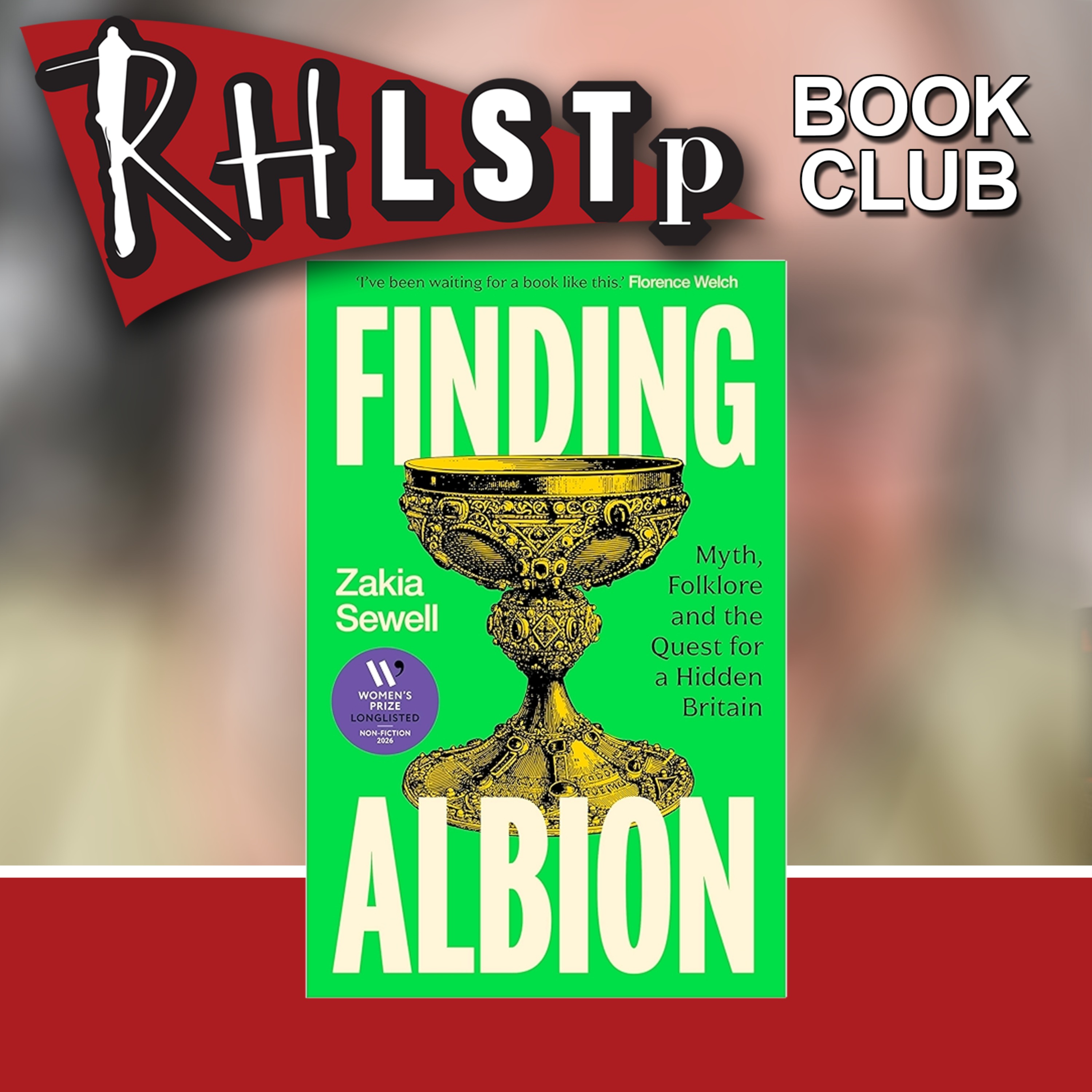
RHLSTP Book Club #174 - Finding Albion - Richard is back at the Podcast Room talking to DJ and probably the coolest person who has ever been on Book Club (not much contest) Zakia Sewell. They chat about her quest to discover the roots of Britishness in our folk traditions, whether Morris Men are good or evil and why some of them refuse to give up the dodgier aspects of the craft, Cheddar Man and how little his family travelled in 10,000 years, what the idea of indigenous Britain might even mean, confronting the less admirable aspects of British history and present, dressing up as a wolf in Cornwall,why the rest of the world should be grateful to England and what are Zakia’s hopes for the future?
Buy the book here - https://uk.bookshop.org/p/books/finding-albion-myth-folklore-and-the-quest-for-a-hidden-britain-longlisted-for-the-women-s-prize-for-non-fiction-2026-zakia-sewell/ac1b8680af0c4bba
SUPPORT THE SHOW!
See details of the RHLSTP LIVE DATES
Watch our TWITCH CHANNEL
Become a badger and see extra content at our WEBSITE
Buy DVDs and books from GO FASTER STRIPE
Hosted on Acast. See acast.com/privacy for more information.
Get every episode summarized
Each time RHLSTP with Richard Herring publishes, we email you a written briefing from the transcript — the topics, who appeared, and any specific claims, with the ad reads skipped.
Email me new episodesFree for 3 shows. No card needed.
Hosts & guests

Transcript ready
1,215 searchable segments. Every word is indexed and playable.
Full transcript
RHLSTP with Richard Herring — RHLSTP Book Club 174 - Zakia Sewell. Machine-transcribed; use the interactive transcript above to jump the player to any line.
Yo, yo, rap fans. Thanks for downloading my podcast. You know the drill by now. Look, there's a few Rahalustapa gigs coming up. Head to rigidherring.com stash. Rahalustapa for all details. March the 16th at Lesquad Theatre with David Mitchell is sold out. There is some gigs. April the 20th at Lesquad Theatre. And there's a couple of new ones in July at Lesquad Theatre. July the 1st and 8th, I think. Also, I will be playing Droid Witch, is part of the Rick Mayl Festival with Rahalustapa, that details of which will be up very soon. Head to gofastestripe.com if you want to buy one of my downloads, or one of the very rare, can I have my more back DVDs, only a few copies left? Or the fantastic autobiography of a testicle. I write Pollock. All the money from that will go to make him more podcasts. You can support us with money. You can support us by telling your friends about us. You can support us by just listening to some adverts and keeping your bloody gobshut. All right, sit back relax and enjoy another Rahalustapa, my fan. Hi, this is Hannah Burner from Giggly Squad.
Have you ever put on a bra that makes you feel like a goddess? Prepare to be obsessed with the Dream Angels Wicked Braf and Victoria Secret, the iconic brand behind the world's most comfortable bras. And I only wear the most comfortable bras. The best seller features an innovative sling for perfect lift without padding. And the fit is chef's kiss. Awake in your inner goddess with new colors and super femme lace embroidery. Find out why this bra has thousands of five star reviews and counting. Shop it in stores and online at VictoriaSecret.com. The Bleacher Report app is your destination for sports. Right now, the NBA is heating up, March Manus is here, and MLB is almost back. Every day there's a new headline, a new highlight, a new moment you've got to see for yourself. That's why I stay locked in with the Bleacher Report app. For me, it's about staying connected to my sports. I could follow the teams I care about, get real-time scores, breaking news, and highlights all in one place. Download the Bleacher Report app today so you never miss a moment.
Hello, welcome to another Roloster Baba Club. This week I've been reading Finding Albion by Zakia Sewell. Women's Prize longlisted nonfiction front 26. That's how it hasn't even come out yet. I know. That's amazing. Are you sure? Are you sure? How are you, Zakia? I'd love to see you. Very well. It's a beautiful springy day out there, so I'm feeling quite jolly. It is, and we're both in jumpers, and I'm already too hot. I'm going to be discussing our jumpers. We won't do that on the podcast. That would be ridiculous. So look, Zakia, first of all, just tell us a little bit about yourself. First of all, I have to say you're the coolest person we've ever had on the book club, and I don't think all people should be allowed to write books, because it's not for cool people. You're a DJ, first of all. So tell us about your pre-author life for all this book. Well, yeah, so I'm a DJ broadcaster. I've been hosting kind of music radio for the last 10 years or so. Currently, I do a show on six music,
called Dream Time, which is every Sunday night, playing all sorts of kind of dreamy music for more around the world. Before that, I was on a stage called NTS, but I've always been really drawn to, as well as house music and jazz and all the rest of it, folk. And for a long time, this was something that I kept private, because it maybe didn't fit with my cool exterior. In recent years, it sort of, yeah, I've sort of come out as a die-hard folkie, and this book is kind of the product of that love and that exploration. And so was this a radio, do you do something on Radio 4 about this subject first? Yeah, so 2020, I did a series called My Albion. And that was really kind of born out of, it was sort of in the aftermath of the murder of George Floyd and the Black Lives Matter movement. And I had this opportunity to make a radio series. I've been sort of producing radio documentaries for a while before that. This was the first time for me to sort of make something of my own. And I thought, well, what do I, you know, given that I have this platform,
given that I can access the radio for audience? What do I want to tell them and communicate to them in this moment? And really, that was the kind of, that was how the idea formed, and it was sort of like, well, I've had this fascination with folk culture for a long time. Why is it? And what can it teach us about Britishness? And what are the kind of naughty, difficult aspects of folk? And so, yeah, so My Albion came first, and there was such a kind of unexpectedly positive response to it, or really people that I wouldn't ever have imagined been inter-folk kind of crawled out of the woodwork and said, this really spoke to me. And so, the book kind of came off the back of that. I just thought, this is a story that I need to sort of run with, and sort of research more, and here we are. Yeah, well, it is about going back into the sort of the folk roots, and the folklore roots of the United Kingdom, the Caribbean as well, and trying to assay. I mean, I think that's probably what's interesting, people, because all of us, I think, in the UK, at least are a little bit lost about what I...
Who we are, especially, I have to say, in England. And there's some very unpleasant elements of Englishness, which you cover in this book as well. And I think the rest of us aren't either... I mean, there's sort of shame about being English on the other side, isn't there sort of extreme pride and refusal to accept, and any fault in our history, and then there's sort of shame and refusal to accept anything good. So it's sort of, I mean, and often, it's sort of interesting in this book, because you're looking back into the past, and looking back into the roots of what makes our country. But obviously, that's something that also the bright wing people are very keen to do as well, which is a point you make in the book. But it's sort of looking backwards, can sometimes be like an... And try to forge your idea of what we are from that, and sometimes be a negative thing. I don't think this book is negative. Well, absolutely. I mean, I think when I first started writing the book, and there was a hope, perhaps, that I would find this utopian vision of England,
like the pagans frolicking stone-hend at the solstice, or that somehow through an exploration of our folk culture, our older customs and stories and songs, that I would sort of find a kind of unsullied, uncomplicated vision of Britain that I could belong to. And of course, inevitably, my quest for Albion and my journey through the nation's folklore has kind of been an initiation into the shadows of the nation, as much as it has been a kind of celebration of it's more hopeful and inspiring tales. You know, I encountered quite early on, you know, Blackface in Morristan, the fact that folk throughout the centuries has been co-opted by fascists and the far right. It is not a utopian vision, but I hope that we can just be a bit more honest about who we are. Yeah, there's the darkness. Yeah, there was the empire and, you know, a lot of dark sort of aspects of our history, but can we still hold a sense of hope
in kind of alternative stories, stories of radicals throughout the ages and, you know, an embrace of the kind of weird, magical, eccentric aspects of who we are. And so, yeah, the book's really an attempt to sort of find that in-between space, which is quite uncomfortable, you know, in-between the dark and the light. It's really fascinating when it's as a historian and I've had it very interesting. You know, there's a big part of me that thinks looking backwards is, you know, or looking back at ancient texts where people didn't really understand anything about science is sort of a foolish, you know, like I grew up near Glaston Bracer, I know, you know, I know all that kind of- You've seen the woo-woo extremities. I've seen the hippy-dippy side of it, which I'm not a hundred, you know, I like it. I like a lot of it, and I really love the people of the West country so much. And the further west, the south-west, you go, the better, really. But, you know, there's an album where you go, look, in everything, in religion, and everything, we're looking back at stuff written by people who were struggling to understand the world. But then in a way, that's what makes this interesting. And I think also, you know, I did a show a few years ago
called Hitler of a Stash in which I looked at symbolism and where the UK was, and British National Party and things like this. And I did a bit based on something that a poet called Francesca Beard did, but she would ask her audience, you know, to stand up, put the hand up if both their parents from the UK and then all their grandparents were and all their great-grandparents were. And very quickly, you know, we're a nation of immigrants, really, you know, you can't really find, it would go, when I did it in my show, I'd go down very quickly to five or six people, including myself. I am Irish, if you go back enough generations, but I'm sadly, I'm a very, you're like, a kingdom person, which I'm ashamed of. I'd love to have something more. I'd love to have something more exotic in there. I think you might, at the DNA, I've got some Italian in there somewhere way back, but that's not enough. But, you know, I think that, you know, we are such a nation of people, throughout history, which you do talk about, is coming into this country, a very mixed group of people. And your dad is Welsh and English,
or English from English and Welsh, and your mum's Caribbean. Yeah. So, you know, it is, you know, that is sort of tip, that's tip more typical of what being English is, I think, than from my experience, than finding someone who can go all the way back, and have a boring family, that I've never moved anywhere. But, yeah, so it's, you know, I think that's really fascinating to sort of explore that, and to certainly in the light of, again, you know, reform, and all those British national parties, and all that sort of thing, to work out what Englishness is. And, you know, the book's great, because you basically take a year, and go to various places that are celebrating things. Are you starting, and the Glastonbury Tour? Yeah. Are there spring equinox? Spring equinox, yeah. Yeah, yeah, yeah. So, it kind of follows the wheel of the year, which is a seasonal cycle of celebrations, from equinoxes, solstices, and there in between points. And like many of our folk customs, you know,
they're sort of a little bit made up. They kind of have their origins in some Celtic practices, but it's kind of a, it's kind of a 20th century phenomenon, ultimately, to kind of follow them as one kind of cohesive wheel. But it was, it was a wonderful kind of experience, just to really tap into that kind of, that seasonal shifts, to kind of follow the, and be really reconnect to that kind of seasonal sort of cycle. And to travel around the country, and to sort of see how, you know, in one sense, there are these kind of commonalities that we find in these traditions all across the country. And yet, they're really kind of rooted in the specific kind of localities, and really kind of small intimate communities. One of my, one of the highlights was going to Penzance in Cornwall for the Winter Solstice, and the tradition called Montau, which is a kind of, yeah, Winter Solstice tradition that again, is a little bit made up. It's, I think it's about 20 years old, and basically everyone just parades through the streets using masks and disguises with fire,
and it's all a bit kind of unruly. And I had planned to sort of like watch from the sidelines, kind of taking notes as I had done with a lot of the other traditions, but I got invited to be part of the parade. So I was there with like a wolf mask, howling at children, you know, under the moon. But it was, it was really, that really taught me a lot about what these customs are about. And I think it's, it's ultimately about community. And I think that is something that we're really kind of missing in Britain today, that real sense of local identity of kind of like, yeah, let's get together. And you know, whether we believe, you know, you don't have to believe that it's gonna bring about a good harvest as our ancestors might have done. Really, it's like, let's use our creative kind of skills. You don't have to be particularly good as an artist or a singer, but you know, let's all do our bit, let's muck in together, let's fund it kind of between ourselves and put on something for our local community. That's really ultimately what, when you boil it down, this is often what these traditions are really about. And I think there is, there's something radical in that, especially in our kind of consumer capitalist world, where you've got to pay to have fun or do anything.
It's like, yeah, that real kind of DIY spirit, I think, is what is at the heart of a lot of these traditions? And I think I find that personally quite inspiring. I think you're right. And it's, you know, is it because I'm a bit older than you? And so I remember, you know, like again, in some of that, there would be made a, you know, you go to a made a, it's like, I don't, I mean, I've not, I haven't seen that ever recently. I'm sure it must go in some way, but there would, there'd be may polls and people dancing around, you know, and it was a, it was a thing that you would do. And it's just that it is an excuse just to get drunk, not burn anyone in big wicker, in a wicker. And you can do that if the wrong person turns up. But, you know, it is, it's just a fun thing to do. And I think that is, and that, that, the Cornish one is a great example of that. And what I like about this is, is you're open to everything without being, you know, too so open that you're just going, yeah, this is amazing. I think you understand it. And you know, I've just sent you before. I think like when, you know, I am quite skeptical and scientific and, and I completely get where you're coming from with what you're saying.
But like when I, when I drive past Stonehenge or go to Stonehenge, I absolutely sort of feel that, my soul being drawn into that. And that, that's Stonehenge, which again, you just, you taught me, you mentioned and you go to in the end, the final chapter, but it's, you know, that's interesting because as we're discovering all those stones come from all over the UK, which, and then, you know, right, when people are saying this is proof that we were in indigenous culture, trying to... Even though it was built by Turkish immigrants. Yeah. But it's an amazing thing to think that, you know, that, and it, that, this amazing place, which does have this such a feeling of magic because it's so weird and inexplicable. And, you know, but those things that some of it came Scotland, some of it came from Wales, it's, you know, and that is, we have sort of lost that a little bit within the, within our, our current culture. And so it is, it's a very interesting to go into that. I like the fact that you, you also mentioned Chetaman, which I think is, again, not necessarily in a, there's a sort of negative conversation.
I grew up in Chetaman. As an example of how little people move around, my history teacher, Mr. Target, is a direct descendant of, I think, the mother of Chetaman. Wow. So through the female life, he's, and he lived about half a mile from Chetacave. So within 10,000 years, his family had moved from the caves into a house. Wow. Very, very near to the opening of the gorge. So I loved Chetaman, and, you know, Chetaman is, you know, the more right-wing elements, again, are perplexed by him, as at least the initials, DNA evidence was this, this was a black, black man with blue eyes. But, you know, again, if you're what the kind of person who thinks, you know, we were here first, then that's a very challenging, because obviously, no one was here first, whether we did, is no one with no human beings were created in England, as much as we'd like to have giants and King Arthur, all that sort of stuff going on. So, you know, it's, that's very interesting, isn't it,
to think of this, potentially, these early sessions? This ancestor. Yeah, yeah, yeah. That's one of the things I was thinking about, you know, one of the things at the far right, like to talk about is the sort of indigenous Britishness or Englishness and indigenous Englishness. And, you know, there are places in the world where we can definitively say, yes, they, you know, there is an indigenous community, think about, you know, Aboriginal people in Australia, they have an unbroken generational connection to land that spans, you know, hundreds of thousands of years, I think. And, you know, at least tens of thousands. Don't quite roll that. And, you know, of course, like in the Americas, and we just don't have that in Britain, and with the further back you look, you think, oh, these were the indigenous Brits, and then you kind of pill back a leg, and you think, oh, no, they came from Turkey or, you know, Cheddar Man, I think it's, this is, this is the, obviously, there was a danger when we look back into the past and romanticize the past. And I guess this is sort of, you know, like I kind of write about in the book, in a sense what my kind of vision of Albion might share with someone like the far right, you know, this kind of hope that someone that might, from the far right,
this hope that we're going to look back and find this, this Britain and this Britain that we long to go back to, right? But the truth is that when we look back into the past, we can find examples that kind of challenge those exclusionary narratives, and that trouble the dominance of stories about who we are. And I think that's ultimately what I'm trying to do in the book is to just say, there are all of these other stories out there that have kind of been left, you know, could consign to the margins. And when we bring them back into view, we end up with a much more vivid and complex sense of what it is to be British, than anything that offered by, you know, kind of the amantras like Rule Britannia or kind of dominant stories about us being this great nation and our great empire. And I think one of the reasons that folk culture, in particular, is a good place to look for alternative stories is that folk traditions, it's quite hard to sort of define folk, but if you're going to give a kind of definition, it's ultimately the kind of cultural expressions of people who have been disenfranchised, you know, the working classes, women,
people who've had to find other ways of telling their stories because they've not had access to high forms of culture. So really when we're looking at folk culture, when we're looking at into the kind of the body of folk song, when we're looking at kind of strange old kind of seasonal customs that have been practiced in villages for generations, really there is incredible resource for different kinds of stories and the perspectives of people who've been traditionally excluded from dominant narratives. Well, you know, again, it's a miss. I mean, if you understand history of this kind of weird, they should be living. I mean, the part of the reason of our success, I think is just because we're just constantly overwhelmed by the next wave of people. So I mean, I think again, within this, you are talking about people in the Hebrides in Scotland and Wales and Cornwall, who might have like some claim to being almost indigenous, if you're going back a certain distance, but not a part of it, most of us have just been overwhelmed again and again by different invasions.
And I think, and it's, and it is that melting parts of all these different types of people, including of course, which again, no one likes to talk about, those kind of people don't like to talk about many different ethnic minorities throughout history. So whenever that happens in a BBC drama or a BBC history program, people get furious and they're like, why is there a black person in my, in New York? No, because there was, there was. Because there was a North African empire who ruled from New York, yeah. And the misunderstanding, you know, and, and, well, you get into especially with the Notting Hill chapter, obviously, the Notting Hill Carnival, you know, there's a misunderstanding of what we have, what the reason we have, this very mixed population now is due to the empire, which is entirely of our own making anything. But, yeah, so it is, you know, I think that's, it is such a big subject. And I think you cover it so well. And like it's, you know, you get the fun of it all, you get, as you say, the fun of being a wolf
and then also, you're able to really cover these, in the Notting Hill, one, for example, talking about Notting Hill kind of on the history of that and how it started and where it came from. That's a real, you know, social history lesson as well, isn't it? Yeah, well, that was one of the, you know, that was probably the chapter that I had the most fun writing or that I kind of, it was a kind of real personal sort of journey of discovery for me. Because in that chapter, as you say, tracing the kind of origins of the Notting Hill Carnival, obviously, which have their roots in the Caribbean carnivals, but like the first Notting Hill Carnival parade, the first carnival to actually happen in Notting Hill was kind of weird. It was sort of set up or kind of described as a kind of old English fare. And it was kind of like CND activists and Bohemians and radicals mixing up with the Caribbean community and sort of creating this strange hybrid tradition that sort of harked back to fairs like Bartholomew Fair, which used to happen in Smithfield, which was this kind of like, you know, back and alien celebration that had been happening
since the 12th century. So even that, you think, I had no idea. And I go to the carnival all the time that it had these sort of like weird English fare roots. And when you go even further back, the early carnivals in Trinidad, on which the Notting Hill Carnival is based, were actually, they actually started off as forms of entertainment for the white planter class. And the enslaved people were absolutely not permitted to partake in them. And during those carnivals that kind of fused sort of Roman Catholic traditions with sort of made-day traditions, planters would black up and mimic their slaves. So there's this kind of really dark history. And yet, you know, then after emancipation, the enslaved people turned the carnival on their head and they used it as an opportunity to kind of stick to fingers up to their former masters. And they dressed in highland garb and sort of mocked English kings and queens. It was the became this subversive festival that was all about resistance and survival and a kind of reclaiming a new identity.
So even just in that one example, you've got all these twists and turns in the way that these traditions have sort of morphed and evolved. And it's a fascinating story. And there are lots of other weird examples that I discovered as well in that chapter, like Maple Dancing and Jamaica. I had no idea that Maple had traveled, but it's like, it's a huge thing. In Jamaica, in Jamaican schools, it's kind of like classic. And they dance it to this kind of Jamaican folk music called Mentos. So it's got a totally different feel to the Mayday celebrations you describe. But yeah, and I think that, you know, to me, these examples, they're about creativity and hybridity and cultural fusion and exchange. And I feel like there's so much more inspiring than some of our kind of more conventional, kind of traditional symbols. And I hope that people read the book and hear about these things and sort of realise how kind of connected we are. Yes, there is this dark history that connects us with the former empire and the former colonies. And yeah, there's been so much kind of creative brilliance that has come out of that. And I find that personally quite hopeful.
Yeah, I mean, but you do say in the base that we don't, there isn't a proper folk, I mean, beyond morrismen, which I'm very glad that you have a lot of critiques. I mean, you never tried it. I have my friend, my friend, who sadly passed away. Tony Braden University was one of the guys who would dress up, well, he was a morris man. He was a tiddly-wink champion and a morris man. I mean, he was tiddly-wink. You know, if you don't play tiddly-winks. Wow, he was, I mean, it's so, he's so English that he was not allowed to live beyond 55. So you have a big, you have a big counter and then you try and flip little counters into a box. tiddly-winks. He was a half-blue of Oxford and tiddly-winks. Amazing, man. We're done to work in the foreign office. He was incredible. He was too incredible to be allowed to live. But yeah, so it's, you know, it is nonsense. But it's kind of interesting, even like King Arthur is, as you say, kind of nicked off of, probably off wealth, wealth tradition.
There is this hole and it is sort of filled with just nonsense of like red pillow boxes and foam boots which you don't even have anymore and beef eaters. And, you know, there's very little that we actually have. Unless you go looking for it in these, in these little, these places. Hi, this is Hannah Burner from Giggly Squad. Have you ever put on a bra that makes you feel like a goddess? Prepare to be obsessed with the dream angels wicked braf and victorious secret, the iconic brand behind the world's most comfortable bras. And I only wear the most comfortable bras. The best seller features an innovative sling for perfect lift without padding and the fit is chef's kiss. Awake in your inner goddess with new colors and super femme lace embroidery. Find out why this bra has thousands of five star reviews and counting. Shop it in stores and online at VictoriaSecret.com. The Bleacher Report app is your destination for sports. Right now, the NBA's heating up, March Manus is here
and MLB is almost back. Every day there's a new headline, a new highlight, a new moment you've got to see for yourself. That's why I stay locked in with the Bleacher Report app. For me, it's about staying connected to my sports. I could follow the teams I care about, get real-time scores, breaking news, and highlights all in one place. Download the Bleacher Report app today so you never miss a moment. It's a huge enterprise for you this because you're not only writing a book, you're spending a year. I mean, how much of your time, how much of your year was taking up traveling doing this, was you're doing your job and then going away for a couple of days to do these things? Yeah. I mean, the way that it was bloody expensive, a train ticket's getting me on the country, and no wonder no one knows about any of these traditions, no going forward to get around to it. It was fun, it was, I can't explain it. It's like I just, it's like this book, it had to happen. And for a long time, I kind of resisted my love of folk culture. You know, at school, I was like a bit of a rude girl.
You know, I used to have my hair scraped back and I was listening to, like, Grime and R&B and Big Who Peering. I was not folky. I didn't grow up in a kind of folky environment at all. And for a long time, I think there is, a lot of people do feel a sense of kind of embarrassment or even shame about, you know, our folk culture in Britain. You know, there's something, like you say, Morris, something sort of like, a lot of people find it really cringey. And so for a long time, this was something that I kind of just, thought I cannot, I cannot share this with anyone. It will be the kind of end of my career and any kind of cool factor that I may have had. And yeah, yeah, it's just, it just felt like a story that needed to be told and somehow the fact that I am kind of of this place and not of this place. Kind of, it felt, I wondered why. You know, there are lots of people who've kind of gone in search of Albion, like William Blake, you know, Pete Dockative and the baby shambles, you know, was obsessed with Albion. I think he's even set up an Albion hotel somewhere on the coast. You know, I'd sort of looked around and thought, no one else is, he was into this looks like me. And yeah, and yeah, as I,
yeah, as I sort of journeyed around the country and as I sort of, you know, when I was spending hours and hours researching the library, it sort of made a bit more sense that like these traditions, they got a way of connecting different cultures. That there was this sort of way that, you know, watching more of dancing or going to a Spring Equinox kind of tradition in Glastonbury sort of reminded me of things that I knew of back in the Caribbean. And, and, and I think this is something that I've spoken to lots of other people about as well, but there is this kind of way that these traditions, yes, and they are very much rooted in specific communities and histories. And yet, they kind of connect a shared sense of identity, you know, human beings living in landscapes, try to make sense of it all and tell stories about who they are through dance and song and story. Like this is the kind of most fundamental, one of the most fundamental things that makes us human. And so I think that was really the main takeaway. Like it was, it was so worth it. The, the expense of train tickets, the journey around, a lot of early starts, you know, often you're getting up at 4 a.m. to kind of watch the sunrise or whatever.
But I kind of left, I kind of rounded off feeling a bit more at peace with my British-ness. Like, more at peace with the two aspects of my identity that for a long time sort of felt like they were, you know, opposing factions at war. And, yeah, I don't know if I'd go as far as say I'm proud or patriotic, but I feel more comfortable in expressing like my love of Britain. And that's a love that includes and like knowledge of the bad stuff, you know. Like I'm aware of the dark histories and legacies of colonialism and, you know, the contemporary horrible-ness about fascism and whatnot. But somehow that doesn't take away from the fact that I feel connected to my British-ness and I love Britain in a way. And I think that it was worth it. It's a lot because then you've got to write a book about it as well. I think what's not lovely is everyone's, you know, because you would expect anyone going into these different places from outside and outside are coming in and going, I want to take part in this.
You're feeling might be, oh, you know, the local people might go, I don't want you Londoner here or I don't want you, you know, but everyone's really keen, I think, to Al A, welcome you, but be explained what's going on, right? They all want to share what they've got. Yeah, but I'm sure there are traditions that I probably could have gone to where I might not have had such a nice time. Like, you know, the bake-up coconutters, for example. I don't actually write about them. It sounds like a ridiculous name. They are a kind of, they're not Morris dancers. They're kind of like a Morris adjacent group in a kind of former coal mining region of bake-up. And, you know, they black up still. And so the Morris Federation, after 2020 and the Black Lives Matter movement came out and said, we're going to outlaw the practice of blacking up because we recognize that all traditions sort of evolve and develop over time. And we don't want to exclude anyone or make, I'll cause any harm or a friend's to anyone. And most people within the Morris tradition were up for this, you know, in the recognition
that as we've explored, you know, traditions always change. That's part of the beauty of them. And, you know, they kind of opted to paint their faces dark green or dark blue instead. But the bake-up coconuts were one of the main groups that said, no, you know, this is our tradition, we're going to continue it. It connects back to the coal, you know, our ancestors, you were coal miners who would come out of the pit with black faces. However, the research suggests that actually, you know, this is about, it was really something that happened after the minstrel craves, you know. But, so, you know, there are more troublesome traditions where maybe I might not feel as welcome. I didn't, I'm not quite ready to put myself in the middle of the bake-up coconuts in tradition. Maybe book two, now that I've gathered some confidence. But on the whole, you know, Penzance was a great example. I'd heard that they were, like, a bit protective of Montal and they might hate me now that I'm talking publicizing all the time, because it's really for the locals. But they invited me to get stuck in. So, yeah, it was really, yeah, I was, I was surprised, actually, by that. I found that it was a lot more welcoming than perhaps I thought it might.
And not because of my race or anything to do that. Yeah, purely just being a Londoner is enough to make people pissed off of the fact that you're there. Absolutely. It's a, you know, it's a, it's a really fascinating book and like you say, we're covering a lot, you know, even within this, this limited subject, we're covering a lot of different things. And that's what's lovely about it. And, you know, yeah, absolutely just the community, the history and then and all of that. How was it when you came to try and write this all down and get this into a book? Because it feels like, well, you know, you're immediately saying, here's something I didn't do. But even when you're writing about it, you know, because they're quite succinct, you know, they're chapters. There was, there were a lot you had to leave out. Was it, was it a lot, a lot, a lot arduous process of getting this down? Because it's beautifully written there, absolutely. Thank you, thank you. Yeah, I mean, yeah, I mean, I'm barely recovered. I'm sort of like, oh, I still want to lie in bed and yeah, get over the writing process. It was fun. And I did, I felt really grateful that I could spend time like reading word books about, you know,
strange customs from the 14th century or ever. But yeah, I think the structure, so, you know, as we've mentioned, it follows the Wheel of the Year. And that was quite useful as a device. Because it's sort of, there was this sort of journey, you've got this journey, you start off with, at the Spring Econox, it's all hopeful. You know, you're in the peak of summer. Then you go into Sarwin, which is the kind of festival that there's sort of the roots of Halloween, which is a kind of ancient Celtic custom that's all about the darkness and the dead and the kind of veil between the world of spirits and the dead and the living being thin. And that was a kind of beautiful opportunity to explore those darker aspects of our past and our history. But then you come back around to Spring and that as a kind of structure was really useful because it sort of helped me to, it kind of, yeah, it helped me to, it kind of gave me an arc. Yeah. And yeah, like sometimes you just have to choose a structure and even if it means that there's loads of stuff that you can't include or you have to stick
with quite a rigid order. It that kind of helped me to kind of create a map of the traditions. And I knew that I wanted to sort of start with hope, get into the nitty gritty and those, there's sort of slightly more depressing aspects and then end again on a hopeful note. And that really helped me to sort of shape the book. Yeah. And there's a lot of research in there, because some people will go, I'm writing a travelogue and that's great, I can just write about stuff there. But the history is really well researched and there's a lot going on, that sort of, it feels like a labor of love and you put a lot of work into it, which sometimes I don't feel that good. But really? And sometimes you don't, you know, it's always hard writing a book, I think I'm gonna have all the things to write. It's the hardest thing. But I think, you know, you can see where some people might go, oh, I can make this a bit easier for myself. I feel like you haven't made it easy for yourself. No, no, and I've said we've got quite a few more gray hairs to be writing the process. But I mean, I think I felt this was my offering, right?
And I think it really comes very much, this book is very much born out of my position of someone of mixed heritage. You know, I grew up loving Britain, going to Wales to visit my grandparents and being these magical forests and feeling really connected to the land and going to castles and feeling like super, super connected to Britain and then sort of getting older and realizing the fact of my race and what that meant in the society in which we live. And being really torn, you know, how can I love this magical place of enchanted forests and pubs and midsummer mergers and, you know, tea and biscuits and all that, and love the Caribbean too. And that place and all that complex history. And I've sort of experienced first hand the kind of legacies and the effects of colonialism in my family, you know, the severance, the intergenerational trauma. So it's like, that's my heritage, that kind of difficult, complex blend. And so really, this book is my sort of way of,
the blood sweat and tears in this book and the love in this book. It's like me trying to figure it out for myself, you know. And to try and make peace and make sense. And I hope that people reading, you know, through that struggle and people will kind of hope, I hope people can sort of make peace with their own identities and really question them and challenge them because as you say, we're all mixed up. And even if you might be English all the way through, but surely there's going to be people from one village and another who absolutely hated each other over the years. Yeah, we've got to go to Bitt Scotland and Wales. We go back far enough and then Ireland, if you go back far enough. But it's very British, I'm very British as well. But it's the, that's the Welsh side of you is just as interesting because that is an incredible relationship between the English and the Welsh, which is again, has similar historical horrors going through it. We would consider ourselves to be friends of the English and the Welsh. Depending who you are. Depending who you're talking about. But more than the English and the Scots, I think, would consider, I mean, there's a sort of friendly rivalry
mainly between our countries. But there is also some deep resentments and some deep bits of history which you go into as well. That, you know, I think, I mean, definitely in Scotland, you forget within Wales how deep that runs and how, you know, and it felt like it was sort of also more effective, the English more effectively almost wiped out that Welsh heritage, I think. But then the Welsh have managed to bring it back. But it's incredible to see that even so, I spent a lot of time in Wales growing up and it was where I kind of, yeah, first sort of witness to sense of national pride that didn't feel threatening. It was sort of like, you know, my grandparents' friends would be in the pub and they'd be singing Welsh hymns. And it was like, it was infectious. It was like, and, you know, when you see the Welsh flag, you know, outside someone's front door or from a castle parapet on the back of someone's car, it kind of, it makes me, it's a positive feeling. Not, I don't think, oh god, I don't belong here, you know. And in the book I was really asking, well, what is that about?
And it's the sense, this idea that, so it's an identity that's been forged in opposition or in despite of a kind of an opposing dominant neighbour. And, yeah, and when you sort of go into the, you know, although some of the Welsh symbols and stories might seem to be ancient and enduring, a lot of the kind of symbols and Welshness that are most recognizable today were actually kind of like consciously constructed after the union. You know, this was a kind of collective endeavor to sort of think, well, who are we as the Welsh? And how can we sort of forge a sense of identity that can sort of survive this relationship, not only with England, but with, you know, with Scotland too? So, yeah, I think that was quite formative for me, having and feeling this sort of a sense of kinship between people that I knew in Wales and in the Caribbean and wondering what that was about. And I think it's, and I don't think that, I don't think that, yeah, I think that the English
for many years sort of almost sacrificed their sense of individual identity for the kind of British project, you know, like the English didn't go back to their old ancient myths or their folk traditions for a sense of identity because there was sort of idea of Britishness that was being promoted. And that's where you get the red phone boxes and whatnot. And, yeah, so I don't think all hope is not lost. I think this book, I hope that it's like an invitation for people to really kind of look for alternative sort of stories and more hopeful visions of Englishness, so that, yeah. England doesn't have any kind of national identity, but by existing and by pressing everyone, we've created all these identities for everyone else. So, you know, we, in a way, everywhere in the world, I was in England for that, and should be much more grateful to us because we've given up a lot for you guys just to make you all break easily. Yeah, our great sacrifice. To guys who really hate the English. So, is there, is there, is this made you want to,
you mentioned it to, I don't know if you were joking really, but is it made you want to explore this more or have you got another idea for a book to follow this one? Yeah, I would like to, I'd like to sort of delve a bit more into some of those Caribbean traditions and folklore. It feels like there's been quite a lot of research into like the folk customs that traveled across the white colonies, you know, like the Americas and Australia and whatnot. But there is this rich tapestry of traditions in the Caribbean that are the kind of result of this exchange of cultures happening through colonialism. I'd like to sort of learn more about those. Yeah, I'm not quite ready. And there's a grain of an idea, but I'm still in recovery mode. My idea is, no, you can make yourself very difficult propositions. Just make something up, write a story, write something up, and you don't have to be all factual or this research. Is there an audio book version like this? The book is not out as we're speaking. Usually I listen to the audio book. And are you doing the audio book?
I have voiced it. I have voiced it and thought, oh, God, that's a mistake that shouldn't be in there. Yes, so I've done, and there's some lovely, there's a very nice young man has done some lovely folk composition for it as well. So it's got a bit of a kind of pentangly mystical vibe. Yes, so there's an audio book. Did you enjoy the process of doing an audio book? It's kind of slightly odd to be forced to read your whole book out loud. Well, especially when you know that you can't change anything, you're like, oh, God, I left that in there. It was meant to come out. I did enjoy it. I mean, yeah, it's surprisingly tiring, sort of weirdly exhausting. All I'm doing is sitting here reading, but I sort of had to go and sleep for 10 hours off. The trick is, this is what I've learnt, and not enough people know this. Do the audio book as early as you can, and then if you find him, it's like you can change it in the actual book. Yeah, that way around. That is great advice. It's very, very early. It is just horrible, I think, after all. It's a bit like sort of having to listen to yourself back or watch yourself back on TV. Yeah. You've got very dry mouth. Yeah, make sure you stay hydrated anyone who has to do an audio book out there.
It is, but no, I do love the audio book. I almost want to listen to the audio book, as well, because I'm sure it's beautiful. But I don't know. I've got to read a book of work. And I ask everyone, is there any books you've been reading recently? Are you a big reader generally? And is there anything you've read that you'd like to recommend? I've had to take a break. I've sort of like, I can't do words. I can't do words. So yeah, I've just kind of read so much through writing the book. So I'm having a bit of a pause. But currently, there's a book that I've sort of just started to reread by an Aboriginal Australian writer called Tyson Young Caporta. And it's called Sand Talk. I think how indigenous thinking can change the world. And I was recommended it by someone when I was in Australia a couple of years back. And it is incredible. It's all about sort of rethinking kind of some of the key principles and tenets of Western thought from an Aboriginal perspective.
And he talks, you know, all the kind of dream time, the story time aspects. And he kind of threaded the way through. And it really just sort of, it was a real challenge to a lot of kind of things that I'd just sort of taken as truth being brought up here in Britain. And it was just a fascinating read. And he's really funny as well. So I would recommend that. That sounds good. Well, no one's recommended that one before. And not that we get many repeat recommendations. Terrific. So are you, I mean, ultimately, sort of, are you hopeful for the future of our islands? And do you think we're going to? Because we feel like we're on a potential precipice. Yeah. Do you think that we can get things moving in the right direction again? To me, it feels like, you know, most, the majority of people of this country are decent-ish. Yeah. But there's a big proportion of people who maybe aren't that decent in the way that you and I are.
That's very polite. Yeah. It's very polite of you. I am ultimately hopeful because I believe in people. I think, like, I think that, and I hopeful about the state of politics, not necessarily. Am I still hopeful about the kind of, the ultimate kind of good nature of people, yes. And I hope that I think, like you say, I think most of the people in Britain are empathetic, are curious, are kind of interested. And we're dealing with, I think, what is challenging is the fact that when people's material circumstances become more challenging. When people are broke, people's bills are going up. In moments like that, it's hard to sort of hang on to your morals and your hope and your empathy. But ultimately, I do believe that there are lots and lots of people in Britain who do, who can embrace a kind of more diverse, and more progressive, and inclusive sense of who we are.
And even just like the Greens doing really well, whether or not Zach Polanski is going to be Prime Minister, I think it's evidence of the fact that there are people who are still engaged and want to better the environment and want a kind of more progressive politics in this country. So yeah, I have hope, I have hope. And for all its faults, London, where we are currently situated, is a huge melting pot of different cultures. And largely speaking, I think it operates so well, and we're so much better off for the ice level and the uxperish roads in Chappersbush. And just the fact you could walk down that road and experience all basically every continent within 10 yards of the next place. But the amount of choice you have and the amount of cultural influence. And again, I remember written in the 1970s, and it wasn't good, it wasn't good. So I just sort of feel like everything that's going to go, they're not a Hill carnival, curries.
These things that people actually do associate in England as well. But if that all that would, if someone came and said, that's all going away, the country would be a lot, I think we would have, no one would stand for that, would they? Well, certainly, the palettes would be a lot less refined. But it was quite a fun, in the kind of bleak aftermath of the big far right rally that happened last year. There are all these funny photos popping up of people wrapped in their England flags down at the food market in Waterloo, buying their samosas and curries. How could we not see the ridiculousness of that? But yeah, I believe in the richness of diversity. I think we're better when we recognize what we share. And again, going back to folk culture, I think one of the things that I took away from this journey is that this sense of particular customs and traditions being rooted in really specific landscapes and at the same time
connecting to a much broader sense, a universal sort of identity. Like, can we be in our difference? Can we kind of honor our difference? And at the same time, recognize the fact that we're equal. And there's actually more that we share than what divides us. And that might sound a bit wooer and a bit utopia than hippie. But that is who I am. I don't know. You are a little bit, but you know, you're little. I've certainly got friends who are more wooer, a lot of comedians. And there's this, like Bridget Christie's doing stuff about this and Mackenzie Crook's doing stuff about this. And it's all amazing, but it's, you know, it is, you can get very woo-woo with this. But I think, you know, I think there is a, there definitely is a problem with, especially English, but British identity, because we have to accept, you know, we're not the Victorian empire anymore. We're not the night, and we're not 1950s. And we wouldn't want to go back to that. I mean, again, we haven't got time to talk about Rillington Place and everything. But like, it's interesting with Notting Hill, where that was in the 50s, and Notting Hill coming out then, how awful that it was and how,
and now it's one of the richest areas in London. But, you know, I think we, there is an element where we need to work out who we are. And, you know, we could be, we could be quiet, and we could be nice for us. We could be nice. We could be quiet nice. We could be quiet nice. People might like us again. But it's a, it's a big undertaking. You know, you can see why people don't want to do it. You've got this idea. We are the Great Nation. We are, we rule the waves. And then, you know, you know, it's been really important what's been happening in the last few years of, you know, all these kind of dark histories of empire coming out and counting that vision. But it's a long way to drop, you know, you've gone from being the hero to basically being the villain. Yeah. And I think that what we need to do is find that middle ground, you know, and I'm not, Germany is obviously not, there's some problems. Well, there's some problems with them now, but they, you know, there was the whole kind of cultural sort of movement after the Second World War to sort of like come to terms with the darkness of their past and their history. And it might not have worked. But, you know, I think that we could do with something
like that in Britain today, a cultural reckoning. But it's, you know, this is your job. The music that's coming out of this and the art and the culture that's coming out of these islands is spread around the world and is, you know, incredibly a force for good. And, you know, there's so much good about what this country does. And, you know, we can hopefully get to some with that. But, you know, we, everyone hates us around the world. And rightly so. But, you know, give us 50 years. We might be, my kids might, might be okay. Zachary is really lovely. Thank you for coming in there. Thank you too. Go out and buy. It's out now, finding Albion or get the audio book. It will be, you will enjoy it very much. Thank you very much. Well, thank you very much to everyone at the podcast room and Chris Evans and Ben Evans, not those two. And we'll see you next week. Hi, this is Hannah Berner from Giggly Squad. Have you ever put on a bra that makes you feel like a goddess? Prepare to be obsessed with the Dream Angels
Wicked Braf and Victoria Secret, the iconic brand behind the world's most comfortable bras. And I only wear the most comfortable bras. The best seller features an innovative sling for perfect lift without padding. And the fit is chef's kiss. Awake in your inner goddess with new colors and super femme lace embroidery. Find out why this bra has thousands of five star reviews and counting. Shop it in stores and online at VictoriaSecret.com. The Bleacher Report app is your destination for sports. Right now, the NBA's heating up, March Manus is here and MLB is almost back. Every day there's a new headline, a new highlight, a new moment you've got to see for yourself. That's why I stay locked in with the Bleacher Report app. For me, it's about staying connected to my sports. I could follow the teams I care about, get real-time scores, breaking news, and highlights all in one place. Download the Bleacher Report app today so you never miss a moment. Thanks so much for listening to the podcast.
Please listen to as many more as you can. Please tell your friends about the podcast. We need all the support we can to keep going. You become a badger at GoFussasStripe.com such badges. And you can buy tickets to see the shows. See the links anyway at richetowning.com slash rahelesterpe. Now, listen to another of my podcasts. No one else is only me. You must have only one true king of the world.
More episodes
More from RHLSTP with Richard Herring

Rachael Stirling on All About My Mother - Book Club
RHLSTP with Richard Herring

Mhairi Black - "Maths is Sh*te"
RHLSTP with Richard Herring

Rich and Ally's Craven Newsround Compilation - Aunty Christ
RHLSTP with Richard Herring

Thanyia Moore (Retro) - "The Drug Rats of Porthcawl"
RHLSTP with Richard Herring