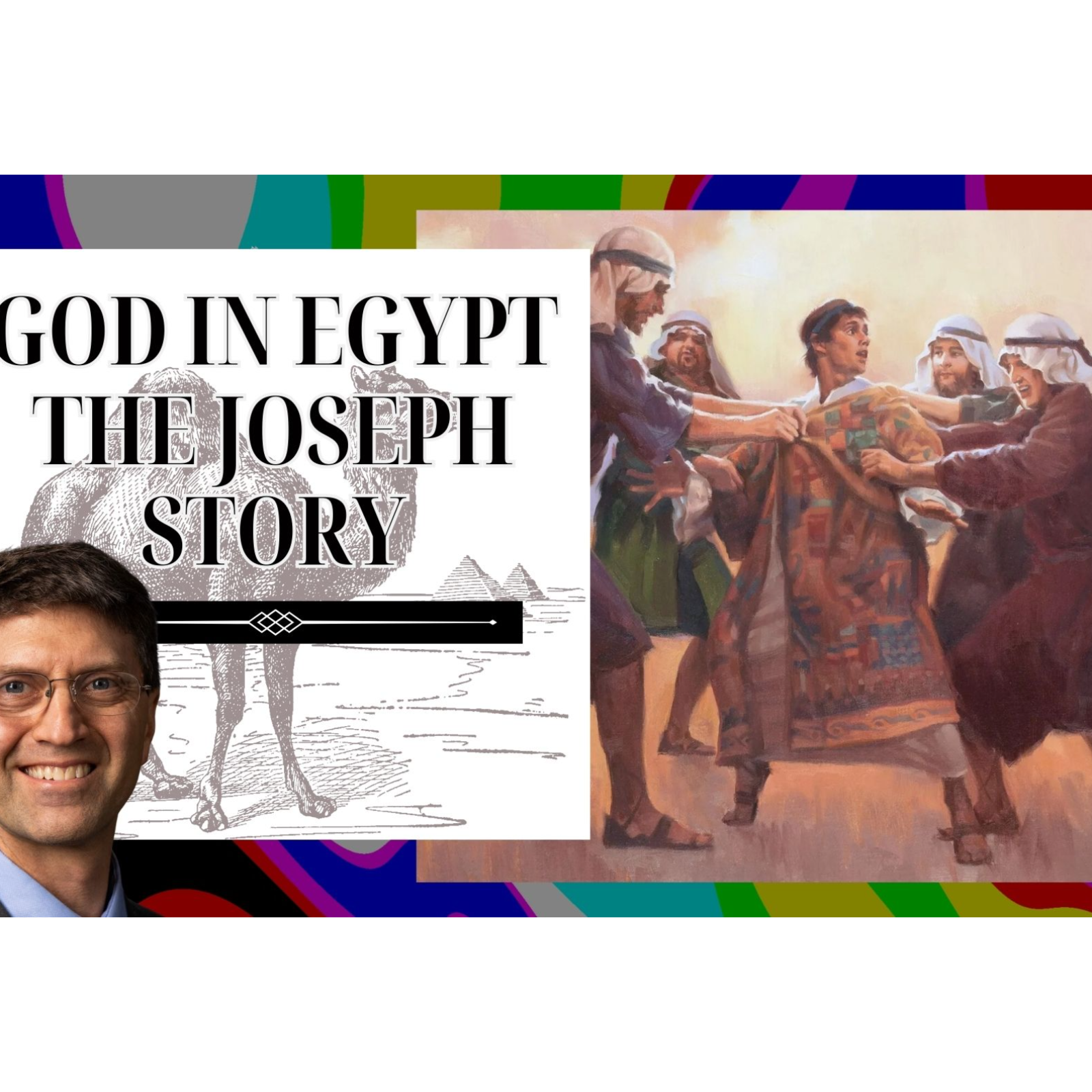
S5 E20 God in Egypt: The Joseph Story told from Egypt (Genesis 37-41)
About this episode
We have fantastic extra content for you that you will love on our Patreon Website / enlightenedgeedu . Please join us there so that you can participate in our in-depth lessons. This week we will use footage and maps and pictures to help the story become real as we learn lessons from the text.
Join us for our Palm Sunday walk. Learn more at https://www.facebook.com/events/1567692857885760/ . Also check out the performance of The Redeemer by Jenny Oaks Baker at https://www.jennyoaksbaker.com/.
In this episode Kerry records in Egypt at the site of the canal that tradition says Joseph built as part of the seven years of plenty. He shows and explains some Egyptian elements from the Joseph Story. Then Kerry and his wife Julianne walk along the Nile as they explore some of the elements of the Joseph story that are applicable to all of us. Then Kerry dives into the Judah and Tamar story to help us see why it is there, to understand it in its original ancient context, and how it will help us understand Christ and many other things we will encounter later in our Old Testament reading.
We are grateful for our executive producers, P. Franzen, J. Parke, D. Watson, B. Van Blerkom, the Dawsons, M. Cannon, M. Rosema, B. Fisher, J. Beardall, D. Anderson, M. Zitar, J. Edwards, A. Dixon, and H. Umphlett, and for all our generous and loyal donors. We are also very grateful for all our Patreon members. We are so thankful for Beehive Broadcast for producing the podcast and for Rich Nicholls, who composed and plays the music for the podcast.
Get every episode summarized
Each time The Scriptures Are Real publishes, we email you a written briefing from the transcript — the topics, who appeared, and any specific claims, with the ad reads skipped.
Email me new episodesFree for 3 shows. No card needed.
Hosts & guests
Transcript ready
685 searchable segments. Every word is indexed and playable.
Full transcript
The Scriptures Are Real — S5 E20 God in Egypt: The Joseph Story told from Egypt (Genesis 37-41). Machine-transcribed; use the interactive transcript above to jump the player to any line.
Hello, and welcome to the Scriptures, a real podcast. I'm your host, Kerry Mielstein, and I am so excited about this week's episode. I'm also so excited about what is coming up just this month in general in the beginning of next month because we are entering Easter season. And I have been so in love with making it a real season where we are focusing on Christ and what we can learn about Christ and celebrating Christ and being grateful for Christ during this Easter season. We're going to in next week's episode highlight elements of Joseph being a symbol or a type of Christ. We're going to highlight that as we go through the Exodus story as well. We're going to have during Holy Week, we're going to have special episodes each day where we help you to come to appreciate Easter and that Holy Week and what you can do each day of the Holy Week and how you can celebrate and worship Christ.
And as part of that, I actually want to let you know about an opportunity, a couple of opportunities. One, there's going to be a Palm Sunday walk. My wife and I put this on every year. So I'll give you more details about that towards the end of the podcast or maybe part way through. But be ready for that Palm Sunday walk. But another one is a series of performances that are being put on by my friend Jenny Oaks Baker. And many of you have heard of Jenny Oaks Baker. She is often called America's violinist. I'll let her tell more of her own story. But she is someone who, like Joseph, is consecrated and Joseph of Egypt I'm talking about. And when things she had choices to make, she chose to follow God and to use all of her talents and abilities to bring people to God. And so she does remind me of Joseph of Egypt in that way. Part of that is that she does these shows that help us come to Christ. And she's doing a special Easter shows of a fantastic,
fantastic production called the Redeemer. So I'm just going to read this a little bit through you. She's a Grammy nominated violinist, Jenny Oaks Baker, Emmy Award winning composer and conductor Kurt Bester, acclaimed narrator and tenor, Dalland Veil Bayless. Is it also a dear friend of mine used to live in my stake before I went out to Southern Virginia University, a fantastic person. Tony Award winning soprano, Lisa Hopkins, Seagmiller, Baratone Silhoues, Preston Kevin Yates, and cellist Sarah Baker, Soros, or Nicole Pinnell. So it depends on which performance you'll get. Join to present this glorious multimedia musical journey. Audiences will be thrilled and inspired by beloved hymns, so filling original compositions and magnificent sections from Handel's Messiah, Messiah. So this is, it's really a fantastic show. I've seen much of it. I'm going to see all of it this time, but I've seen much of it in various settings. It makes me think about Christ, brings me to Christ in fantastic ways. She's having shows March 14th, March 16th, March, oh, sorry, let me tell you, March 14th in Las Vegas, March 16th
in E from Utah, March 30th in Salt Lake City, Utah, April 2nd in Nampa, Idaho, place that's near and dear to my wife's heart. She grew up near there, April 6th through 7th in Cedar City. So all you have to do is go to genioxbaker.com. That's genioxbaker.com for tickets. For those of you who are in this area, you can really enjoy this as part of your holy week celebration as part of this Easter season. And then don't forget that we're going to be helping you with this Easter season. We've got all sorts of things on websites and we'll be doing special podcasts as I said and so on. But let's talk about this week. This week we're doing the Joseph story. I love the Joseph story. I'm so excited about the Joseph story. You're going to be able to join me as I walk around in Egypt, showing you some of the fertile areas there, near what is called the Bar Yusuf or the Joseph Canal. And I'll talk about that while I'm in Egypt. There is a segment with my wife as we walk along next to the Nile where we explore the Joseph story. And then I have a special part of the podcast where we talk about the Judah and tomorrow
story in ways that will help you understand Christ and understand the importance of that story. And you'll need it if you're going to understand a lot of other things that happen for the rest of the Old Testament. So you've got to get that Judah and tomorrow section in as well. And then on the Patreon website and I know not everyone can join that. I want you to know I don't make any money at all off the podcast zero money, but it does take money to run the podcast. And I wish it didn't I wish I didn't have to do fundraising. I wish I didn't have to do anything. I would so much happier. Be so much happier if I didn't, but we do have to have some money to make the podcast go. And the Patreon website is what makes the free parts possible. So I'm sorry that not everyone can be on there, but there would be no free parts. And most of what we do is for free. There would be no free parts if we didn't have some parts that raise money so that we can produce the podcast. And so we're we are grateful for those who would love to, but can't join the Patreon website. It is like the cost of for going out if you skip one or one and a half times going out to eat fast food this month. You can join the Patreon website. But whatever works for
you, those who can and support us, we're grateful for that. We are going to go through kind of in depth the nuts and bolts of what life is like in Egypt. I show a video of making bread and pictures from ancient Egyptian inscriptions and maps that I've made and so on. And we go through the history of Egypt and and try and fit Joseph in there. And we also draw some lessons from the Joseph story and that special Patreon lesson. Go to the collections, click on the collections link at the top and then you'll find these special lessons. They're not things you download. They're not like paper things. It's videos that I've put together. So we're going to have a great week. Let's jump in and and do this as we go through the Joseph story. As we start talking about the Joseph story, which is such a rich story, I'm going to start it here in Egypt. I'm in Egypt near our excavation site. And we'll see a little bit of kind of where that is in a little while. But I wanted to show people some of the things that might make this story be more real for them because after all, this is about the scriptures being real.
Now I know that more than half of our audience only listens and I pretty much just listen to my podcast audio. I don't have time to get on YouTube and watch. And so I know many of you won't be able to see this and that's fine. I'll try to describe it as well. And you may want to just take five or ten minutes when you get home from exercising or the car ride or something to just watch the first part of the YouTube video of this. We'll also put in some pictures that I've taken over the years and that will help you as well. Then for our Patreon class, I'm going to have lots of visuals. We're going to go through some of the detailed history of a little bit of what I'll touch on. I'll touch on just a little bit here and then we'll do detailed history and pictures of Egyptian elements of this and so on. So we'll talk about all sorts of things. We'll have maps and what not in our class. We'll do a little bit of that here, but a lot more of maps in the class. So we excavate in an area called the phyume. It is a depression that is south and west of Cairo.
It was a lake at one point, an inland lake, much like Lake Bonneville. It wasn't a lake. It was a sea and you'll find out that desert coral remains of coral and so on. It was a huge inland sea that has since been drained out in many ways. It's kind of what there is a salt lake here. It's not as big as the Great Salt Lake, but there is a very large salt lake that is left over. I just want to show you before I start to walk back. Some of the areas around here, it is a huge and incredibly fertile region. Part of the reason I'm talking about this is because of this canal that I'm walking along here that they've recently dredged. You can see the big pile of mud that's become a bank for it, as they were recently dredging it. They have to do that every now and then. In any case, this is a really, really fertile area and this canal is called the Bar Yusuf, or in other words,
the canal of Joseph. Based on the idea that Joseph built it, I don't think he really did, but we'll talk more about that in the patronage just lightly here. I don't think he really did, but there is a chance, but that's the idea. You may not know that Muslims believe in the Bible and the stories of the Bible. They don't believe that Jesus is the Son of God, but they believe he was a great prophet, but of course for them, Muhammad is the great prophet, but they believe in the Bible and the stories of Joseph mean something to them. Bar Yusuf, the canal of Joseph, their belief is that he built this canal to make this area so fertile as part of that story that we get of his preparing the land for the years of famine. Well, this canal certainly does help make this area fertile. There are springs here in the fayum, but this is built off of the in ancient times. This was built off of the Nile, so that you get lots of water coming to make this very, very fertile. And so you'll
get all these fields of wheat all over here. So I'm here. This is February 2nd, actually. So Happy Groundhog Day, but February 2nd, so the wheat is still young. We will put in pictures from the wheat harvest in these fields right over here. We're also there. They grow a lot of cabbage here. You can see lines of cabbage out there, a little bit huge cabbage. They grow all sorts of things. We're going to go pass some broccoli fields in just a minute. That's a new crop that they've just planted on land that we had to negotiate whether it would stay part of the archaeological concession or not. And it wasn't part of our concession already. And we didn't find any remains there. So they became cabbage or broccoli. Sorry, I said cabbage broccoli fields. In any case, this area is incredibly fertile. And that's part of what is worth thinking about that this may have been part of the biblical story, this area. So let me talk just a little
bit about the faiyum. We're going to talk in the lesson about the Patreon lesson. And by the way, our Patreon channel, we try and put all sorts of stuff on there. We've got the links from Michiel Gatto with the art symbolism lessons. And art and symbolism is important to help us understand what really understanding symbolism is an important part of understanding the Bible. But in any case, we also have all these lessons and all sorts of other material on there. You can even find stuff for mental health and whatnot. We try and have all sorts of edifying educational content on our Patreon channel. So we'll talk about the Hicksus there and the political situation a little bit. But I wanted to talk a little bit about this faiyum area and the geographic situation. So each and just the history of Egypt in general, Egypt, by the way, what we're seeing right here and up here along these ditches, all along here, these are ditches. They're irrigating today. So they
even in ancient times today, they have modern pumps, of course, but in ancient times, they had this kind of lever system that would help them bring water from the canals into the ditches so that they could irrigate. And they did in a lot of areas. It was just by flooding, but in areas like this, they also move the water. These are what are called bull rushes. So when we get to the Exodus story, and well, in the King James translation, it's translated as bull rushes. When we get to the Exodus story and it says he was left in the flags or the bull rushes, the little ark that had the baby Moses in it, what I'm going past right now is exactly what you should picture. In any case, the history of Egypt is such that we have the really ancient times. We call that pre-diagnastic. Here's a beautiful field of wheat. So the pre-diagnastic period is when Egypt is just coming together, then you get into a period of strong centralization that we call the old
kingdom. That's an Egyptological term. We just made that up as Egyptologist, but it's a handy one. The old kingdom, that goes for a long time and is before the days of Abraham. So this is the days of the great pyramid or the great pyramid. So for example, the pyramid I excavate was built by Snifru. He built three other pyramids. He's the first king of the fourth dynasty. Three other huge pyramids. Mine was his smallest by far. Well, it's not mine. It's the Egyptians, but the one I excavate. Then his son, Kufu, built the great pyramid. His son, Kufu's son, Snifru's grandson, Kaffrey built the next largest pyramid, and also the Sphinx, and then his son. Snifru's great grandson, Menkallari, built the last pyramid there at Gisa. That's the old kingdom era. That's free Abraham. Very, very old part of history. So my pyramid was probably built
around 2650 BC. So it was about 4,650 years old, roughly. So just to give you an idea, then we have the centralized government falling apart for a little while. We call that the first intermediate period, probably some periods of issues with the Nile flooding and some low agricultural or economic years. Then we get what is known as the middle kingdom. The middle kingdom roughly coincides with Abraham's life. Abraham lived about 200 years according to the numbers we have in the Bible now. Those numbers may not be completely accurate, but I think they can be accurately that he lived for a very long time. And if those numbers are accurate, then he is roughly contemporary with the middle kingdom of Egypt. So here we're coming up on some of the broccoli fields as well as some more wheat. In any case, and you can see that they have cabbage in here as well.
Anyway, so the middle kingdom coincides roughly with Abraham's life. Abraham, well, so the middle kingdom was the shortest lived of the three major centralized periods of Egyptian history, which we call Old Kingdom, Middle Kingdom, and New Kingdom. Moses is alive during the New Kingdom. In any case, the middle kingdom just towards the end of it, the centralized government starts to fragment. They follow a part a little bit and you get Egypt having fragments. And you get lots of little areas of Egypt where different people call themselves king of Egypt, sometimes even king of all Egypt, while it's clear they're king of only a small part of Egypt. I don't know exactly how Abraham fits into that chronology, but he probably makes his visit just to Egypt just as it's starting to fragment. Beautiful fields of broccoli,
right? This is a really fertile area and there you can see all the fields of wheat for about as far as the eye can see. That's just a lot of beautiful wheat that would feed a lot of people. In any case, Abraham may have visited Egypt and the Pharaoh he visits may not have been a Pharaoh of all of Egypt, but just of a small part of Egypt. And we'll go into that more in depth in our Patreon lesson. But that's probably Abraham's life. I'm not completely sure. It's hard to figure out this chronology exactly. Well, it is during the middle kingdom that they start to go through what we would call reclaiming this land. This area was not very inhabited. There was certainly a strong presence in part of it for the old kingdom. That's why there's a pyramid built here. There's a cemetery near our pyramid. The work I'm doing here is part of our figuring
out that there was more going on in the biome during the old kingdom. Then we had often thought of, so I'm a part of that conversation Egyptologically. But in any case, there was something going on here in the old kingdom, but they really do a lot of work here in the middle kingdom. And it starts to become a land that is associated with the pharaohs. There are a lot of crocodiles here. The crocodile becomes strongly associated with the pharaoh during that time period, which is interesting in terms of fact, similarly one. But in any case, this area becomes very important and very fertile. Now, Joseph may have been part of the very, very, very tail end of the middle kingdom or more likely right in the middle of what we call the second intermediate period. And this is what the patron lesson will be on where we go through this in detail. But just to, to say,
briefly here, and we will also go into other elements of Egyptological elements of the Joseph story, including talking about prisons and what we know of them and how that fits into the story. And so on so that it will make a lot more sense to you. The story will make more sense to you. In any case, very briefly, the Joseph story probably includes an element of Joseph helping this foreign group that will rule Egypt called the Hixos and what we call the second intermediate period Egyptologically. They will take over and rule Egypt. And in my opinion, that's most likely the setting for the Joseph story. And he is probably part of what helps him become the rulers of the land. And so as I said, we'll go through that with maps and everything else on the Patreon website. But this area, the Fahum, may have been part of that. And so there is a small chance that that Bar Yusuf really is the canal of Joseph. It's unlikely, but maybe because this very fertile land
could be a real part of preparing for the years of famine and that we read about in the biblical story. So as we get closer, we're coming right here to the end of, and these fields are one year old, by the way, last year. Well, two years ago, when I was working in this area, in fact, we went into some areas right up there that are not part of my excavation site. So that our concession, I'll show you, I'm going to walk along the boundary of that in just a minute. But right up in here, there were, they'd heard there were some little tomb things that had been found. And they wanted me to go and investigate it. And so we had to take a four-wheel drive up into the mountain up there. And we did find a tunnel where I literally had to get a rope and lower it down on a, well, I lowered a flashlight down first to make sure things were all right down there. And then went down to student and I, Jen and Moritz. She went down first. She really wanted to. So we let her go down.
She's adventurous and fantastic doing her graduate work at work right now. In any case, we had to climb down on a rope and check it out. It certainly were some plundered and empty elements of a tomb there. But nothing that would prevent them from doing archaeological work down here. That was all up in the hillside. In any case, at that point, this was just desert area. But they've now been able to, and it's a friend of mine who works for us sometimes hauling sand on the excavation. He owns this land or at least farms this land. I don't know if he owns it. And he's planted this big broccoli field. I was talking to him just a few minutes ago. So he drove past on his motorcycle. So, but the part of the reason I'm showing you that is as we get here to the edge of the excavation site, you can see. So we call it a desert and it is. And there is sand and really Egypt is kind of the edge of the Sahara. But there is sand in this area. Lots of Egypt has nothing but sand.
But where we're at, there's sand, but there's also a lot of dirt on top. It's a dust thing. We get filthy just walking around and moving things because it's a powdery dust. And so what it means is that if you, if you can get water to it, the crops will grow. Now, that's not the case here, but along the Nile Valley, that's partially because for thousands of years, every year it flooded and deposited this beautiful, rich alluvial silt that was fantastic. Fertilized great ground with nutrients, new dirt with great nutrients deposited every year. But the fact of the matter is that here in Egypt, if you can get water to it, it will grow. So what I'm showing you, we're now walking up the little road that is the border between the agricultural land and our concession. There's little building over there. You can see that's a guard tower that we built before I was part of the dig, but where they can kind of keep watch over. And there's another one
right here where they can keep watch over the archaeological site and make sure no one's doing anything there. But I want to show you right here, you can see the line where you've got agriculture and that it ends and it doesn't. And whoever built that canal, Joseph or whomever, and Joseph certainly did something to help with the agriculture, if you're going to have really good years with lots of water, you can't just say, okay, get more out of the same bit of land. You've got to expand the land you're farming on. And so they must have done some kind of what we call reclamation, some kind of expanding how far out they could get the water while they had an abundance so that they would have great yields of harvest for a time period. So they must have done something like what has happened here. Oh, and I can see now it's actually created a drip system. Look at that. It's got water
that comes out through these little plastic lines. I don't think they did that in ancient times, but they got water by means of a canal like this, whether it be in the phyum or in the Nile Valley, and it's probably both. And they expanded the land so that there was less of this desert and more of this fertile land. And that's what makes the years of plenty in Egypt work so well so that they can get through the famine and the people around them can get through the famine. Now that is a lot of technical explanation, but hopefully it helps the scriptures become more real to you, both by seeing it and thinking through what Joseph had to do in his historical setting. So we'll do more of the historical setting and the symbolism and what the art in Egypt can tell us about this period and so on. We'll do more of that in the podcast. But for everyone, I hope that you're thinking through really what is it like for Joseph in Egypt? What is this harvest like? What is the famine like? When
you can't get water out to this land, it ends up looking like this land. And that's what they're going to have to deal with everywhere as that famine happens. So I'm now going to take my walk back over to the site and get back to work. They're over there working without me and I need to be part of the tomb we're working on. But I hope this was helpful for you. All right, I hope that was useful for you to picture that. And now please join my wife and I as we walk along the Nile River and talk about the Joseph story and I think this will help you explore it and then make sure you tune in after that for the next section and for information about the Palm Sunday walk. Welcome to the scriptures are real. Here we are in Egypt today walking along here along the Nile. You can see the Nile right to the side of us. We'll continue to kind of see the Niles walk and we're here
enjoying Egypt and we thought it would be a great location we will talk about the story of Joseph. This is one of the best stories in the world. Like this is fantastic literature, even if it weren't true, it is true. But fantastic literature and part of the reason for that is because of the real human element and real human drama in this combined with one of the great miracles of God. It's just a me. And since this is the scriptures are real, I thought maybe we could start out talking about some real elements, right? The story starts out. We'll do a separate segment on the Judah and Tamar part of this. So I want to make sure we help our readers for our audience understand that. We're going to do a separate segment on that. The story starts out with Joseph and his brothers in the conflict with these brothers. And this is just a family. I've said so many times people probably tired of me saying it, but one of the great things about reading the Bible, especially Genesis, is that we see some of the greatest people still had difficult
family situations, right? So I don't know if you have thoughts about Joseph and the difficulties with his brothers. I know you and I both get really tired of our kids asking about who's the favorite or someone does something. Oh, see, they're the favorite. I don't know. Absolutely. You know, and once your parents, I think in most cases, you understand you just love your children, your heart is able to expand. And you may have like slightly different relationships or things that are involved, but it's not about favorites. It's about, I don't know, relationships and those can be even different with one child at one point in life versus another point in life. And yet we have this complication in the Joseph story. And I agree with the 100 percent, but in the Joseph story, you have the added dynamic of Rachel was the woman that Jacob
fell in love with. He wasn't able to have children for so long. When she finally does have children as Joseph, this is the child Jacob had been dreaming about when he started working seven years to be with Rachel, right? And so that does seem to affect things a little bit, at least in terms of birthright. And I think that's the issue that we often miss here is that that talks about Joseph being favored. Does that mean Jacob loved Joseph more? I don't think so. Does it mean he treated Joseph nicer? I don't think so. But he's clearly chosen him as the birthright child. And a lot of people go through all sorts of things like, okay, well, the birthright child is supposed to be the oldest son. I'm going to look at the full admission. I'm the second oldest son in my family. So I'm right, we'll highlight this part. But in Genesis and Exodus, at no point ever is the oldest son, the birthright song that just never happens. God seems to be making the point. We're going to choose to son that this should go to who will do what he should do best. And we'll talk about what he
should do the second that the birthright is something that we often misunderstand. And it's because of our human nature. And I think even though culturally it was more normal for them, I think they didn't think of it correctly most of the time either. We, because the world influences us, tend to think of any kind of leadership position as an element of prestige and power. But it's about the person and their prestige and power. That's not how God thinks of it. And we'll have this discussion again a little bit next week because we'll be talking about the blessings to the tribes. But the way God thinks of this is you have leadership as a call to circle. It's not about the person it's about them representing God to people and serving them in a way they should, right? Right. And that's why the double portion is given is for a greater ability to
to serve and take care of the family. All right. So we decided that in Egypt, they honk every when you're trying to let you know that you're there. Well, we didn't decide that. Well, we decided that we would come down here to get away from it a little bit. So it won't be too loud. So anyway, we're something going on here but anyway. So we were talking about the birthright. And with the birthright, the idea is that you serve other people. And so in ancient times the birthright child would be given a double portion because they were supposed to take care of family members. When a family member died, they'd take care of the family. If someone had problems with their crops or whatever and we'll talk more about the specifics of it when we get the blood Moses no more specifics. But we know at this time and all times, the birthright child was supposed to take care of the family on behalf of the parents basically to take that parents role and take care of the family. So that's the point of the birthright. And Joseph has clearly been chosen
as the birthright son. And we sometimes get into things like okay. Ruben was supposed to be the birthright son because he was supposed to be the birthright son because he was all this but because of his sins with his father's concubine he couldn't and then it was supposed to be others and they had sins and so on. So it fell to Joseph. Maybe that's true. We actually have no idea. We're making that up based on the story. And it makes some sense for the story and our assumption that it should go to the oldest child which is typical. But it's also very possible that Jacob just said this is the oldest son of the wife I intended to marry. Therefore he's the birthright child. For whatever reason he just decides or Jacob Joseph is clearly being given the treatment of the birthright child he's being given. Clothing that designates he's the birthright child we don't know if it's really many colors or long sleeve or something but clothing that designates it he's being
treated differently in a number of different ways. And this really bothers his siblings. Yeah. Maybe Jacob is not performing this ideally. Maybe he is if I think he's just trying to figure it out. Maybe Joseph I mean like you very said like the stories in the Bible and stories in all scriptures just show messy families not necessarily not perfect people but how how lives were in the mistakes even they made whether that's a mistake or not you know it's hard to say like you're saying it might have been a cultural thing it could have been lots of things but yeah and I can certainly look in our family lots of times when I was trying to do my best and in hindsight I think I'm thinking maybe if I'd done that a little differently this would have happened a little bit better right we can all see that yeah sorry in the end you were saying I mean I don't need to say go ahead okay so and there's a part of me that wants to say Kate Joseph when he's coming out
and saying hey everyone I dreamed dream that says I'm going to be in charge that maybe that's not wise and yet at the same time I don't know that he wasn't inspired to do that right and I don't know that Jacob wasn't inspired to be being clear he's the birthright child and I need to teach him certain things and do certain things differently right I we just don't know well and it seems with the story in the storyline how things went he was inspired not not in a way that removes all complications right but that gives us the story that the Lord seems to maybe have intended to have happened yeah there's no doubt this works out the way God wanted it to work out does that mean everyone had perfect motives all along no clearly when they're selling Joseph into slavery they don't have perfect motives there there are a lot of elements of this story that that are difficult and people aren't doing well right his brothers struggle with the way that Joseph is treated
there's some jealousy there Ruben I think sometimes doesn't get the credit that he deserves I want everyone and we want to be clear about this I try and say this often and I haven't as much lately because we've got all these segments instead of just one long episode we want you to go back and read the scriptures we I do fear that we become a replacement for scripture reading we don't want that we want to assist and get you back into it so I'm going to encourage you to go back and and read the story and you'll see if you read carefully that Ruben did not want Joseph to be sold into slavery it almost seems like I mean I read this through this way but I can't say for sure that he's trying to talk them into throwing him in the bit with the intent to come back and rescue him later and then he comes back and finds they've sold him with Judah I'm not even 100% sure because that that Judah was all terrible about this it may be that some of the brothers were saying let's kill him and Judah's solution is let's sell him so at least we don't kill him in the end I don't know but they didn't have pure motives
that's that's for sure and Joseph gets sold and we get this little insight it will encounter it in the reading for next week but it really applies to this week so let's talk about it this little insight when the brothers come down and meet Joseph and Egypt and Joseph is playing a little game with them that we can talk about next week but they they see things aren't going well for them and the first thing they say is this is happening because of what we did to Joseph and they also say didn't we see well let me let me find out and read it because it's really it's really quite touching they don't understand that Joseph or they don't know Joseph can understand them they said one to another we are very guilty concerning our brother in that we saw the anguish of his soul when he besought us and we would not hear therefore is this distress come upon us so they well this is the little insight we have to the anguish of Joseph's soul like can you imagine really like I understand you're upset you threw me in a
bed yeah acts like you're going to sell me but really you're selling me don't do this brothers don't how can you do this to me that anguish of so yeah help me don't you you're doing it to me rather you should be helping me please and and it's haunted them ever since well and I'm sure that that pleading started from being thrown in the pit yeah yeah I'm sure you're right but then I think it became much more real as he was being sold into slavery and and it's haunted them ever since every bad thing that happens to them they think well this is because of this you will see from Judas response later they feel terrible about what it did to their father that it is the next verse so and I know this is next week's reading but it so applies these verses so apply to this one Ruben answered them saying speak I not under you saying do not stand against the child and you would not hear therefore behold his blood also his blood is required so Ruben was sticking up for Joseph didn't want this to happen right but it's it's crazy drama and and now Joseph is sold
in slavery and I can't even imagine that and this story is so interesting because at every turn it seems like Joseph is punished for obedience exactly right he's he's doing what he should and this makes his brothers mad so he's sold into slavery I've thought of that quite a lot right like you you he's this favored child and he has this dream that is supposed to have him be ruler and have you know these great outcomes and instead he's thrown into a pit you know they're talking about you know letting him die then they sell him into slavery then he goes into Egypt and he's in prison he then he's then he's able to be out and see if I think things are going well again and then while he's trying to do the right thing yeah see resist plot of first life yep
and then he's thrown back into prison and and I like you're saying like he's doing all the right things and he is told that things are going to be different than this and I think it's easy when we're in situations like this to feel like angry at God or like what why has God left me and if if Joseph had acted on those types of feelings um you know he would have been left in despair in prison things wouldn't have turned out the way they had because he had to continue to trust in God in order for the outcome to eventually come if you would have given up on God it would have been different you know that and it made it rough what your thoughts were but they're along this similar vein right yeah yeah that's exactly right I mean you think about especially you can see it throughout the whole story but especially the part where he flees plot of first wife so he has done exactly what God would want him to do and that results in his
being thrown in prison right he got into where things were better and it results in his being thrown prison so it seems like okay I'm serving God God's blessing me at least things were pretty good here on this household for a short time yeah for a short time and in the patreon episode we'll go through some of the details and what this would have looked like in the details of prison and what this would have looked like but for a short time it goes well and then because he's obedient now he's in prison which is just to be clear on this what we'll talk about more I mean prisons are labor camps all right so it's not just sit around and you're right not only it's hard when you feel like you're doing everything right and things fall apart and you ask yourself what God why did this happen I think it's even harder when it's happened because you were doing everything that was right you know I know people who because they they donated money to the church in support of certain political things happening in California they lost their job when the names were
released that were public of it right so they did what was right and lost their job and never did get it back and ended up with having to take it early retirement so on right it's really hard when you feel like you're being punished for it but as you said yeah that is in some ways when you you deepen your faith in God it's that Abrahamic sacrifice that's that test that we're all supposed to go through and and you see it throughout scripture not just with Joseph Egypt Joseph Smith and again and again you see this kind of example but when it happens to us personally then we think somehow it should be different somehow if I'm doing these things then this should be the immediate outcome which is you know prosperity of some sort not not always financial but some like life is going well things are coming together for us doors are opening for us because we're doing the right thing which is very tempting it seems right and an internal perspective as thinking
celestial it is the truth and what will happen but the question is is do we fall apart and do we turn away you know where else do we go well sometimes it's going towards thinking well if I've done these things and it's not turning out then maybe this isn't the right church or maybe you know there's you know there's something else that will give me more happiness and then we fail our test yeah fail that fail that moment of being tried and staying true what and let's be clear when we talk about a test it's not a like oh God doesn't know and it's not even a oh God needs us to know it's a we become something different right so you say fail a test and it's not that once you failed you can't have Christ change that you become something different again right we always have a second chance there's no only one test but but he puts us in these situations and if we respond by turning to him we become more like him and if we respond by turning away from him then we become
less like him and so it's these crucibles and I know we've both felt it I we both know that at a time when we felt like we were really concentrating ourselves to God I just then started serving as a bishop we had chances to do this with that and we felt like we okay we will do whatever God wants and it took from wild to figure out what God wanted but we did that we were doing everything we could in all sorts of ways including having started this podcast and all sorts of other things just fully giving our lives to God and right then is when the hardest things that have ever happened to our family and yeah and it was easy to say why now right what we're we're more dedicated than we've ever been in our lives why would the terrible things happen now instead and I can't say that you know it was this way every second for me it probably was for you because you're always better than me but probably I don't know what you're gonna say but I I'm not saying that there were no times where I didn't have some questions so for example and I think I've shared this on the
podcast before but I I can't remember we took our our daughter who was just struggling so much and we took her to a vocal point concert that's a knock-a-pele group of BYU and she liked them and and wanted to have a moment of happiness and one of the people we know came out and saying what has been my favorite hymn which is nearer my God to be and he gets that part where he says even though it be across it raises me and I felt like I was drawing closer to God through this experience through across but the cross was my daughter suffering yeah that doesn't seem fair and that doesn't seem right and for about a day and a half I hated that song and and I struggled with the idea like wait can this be right that I draw closer to God because of my daughter suffering is that fair to her and and so and I had to work that out because it wasn't really you know anyway I won't get into all of that but I had to work that out with God but I could have
easily turned away from God instead of turning to God and that's been the case all throughout I drew closer during that experience I don't know about you I think I know the answer but I'll let you speak for myself but I know for me I drew closer to God because of that trial than I've ever been and I and sometimes I think okay I'm not as close now as I was to him but I know I'm different I'm closer and better and more like God because of that experience of being forced to turn to him when I when I had leveled up in being close to God he gave me the terrible opportunity and wonderful opportunity to level up even more and I think that's what's happening for Joseph yeah I think you're right that you know the life experiences that we have help us to real to decide more fully that we want to that is a choice that we want to turn to God and trust him and and making that choice gives opportunity to move from being having like a more a more simple
testimony to the other side of complexity where that faith is deepened the understanding and that access that we gain to the atonement is greater but sometimes it feels I guess maybe there's an awareness also that's added of how much further we have to go and that's what can also add to a feeling of a little bit more distance even though it might be closer one of the things I was going to say is there is an irony in that we often have have something that pushes us away from God that then actually propels us towards God including coming to earth right or Adam and even the fallen and so on and so those moments where we felt like wait God you abandoned me that's kind of a pushing away but yet if we do it correctly it propels us to God and to me that's one of the great stories
in in the Joseph story or one of the great elements of the Joseph story Joseph decides to turn to God through everything he gives credit to God for the dreams and his ability to interpret dreams he doesn't take credit for himself he has complete faith in God that this is a gift and that he can interpret these dreams and even when he's forgotten he tells the Butler to remind Pharaoh about him or tell Pharaoh about him and the Butler forgets and tell the Butler needs him but through all of this through all of this Joseph stays faithful to God and it's a long time this is years and he still remains faithful to God so what an incredible example really truly which is you know those types of things where you can look at the story and see what we can personally learn from it and how we can grow from it and understand how we can be better disciples
of Jesus Christ this is a powerful story to look at amen so what we'll do now is we're going to have a segment on the Judah and Tamar story and we'll talk about how that teaches us about Joseph but some other things and it sets up some things we'll see for the reading for next read and I'll also just touch on this topic just a little bit more when I can show you some things in the next segment but before we do that really and I thought maybe I'd just tell a funny story that is from a Muslim tradition about Joseph because we like to make the scriptures real and even though I don't doubt it's true but it's a longstanding tradition it helps me at least start to think about the realities of things so in this story and we have to remember who the Joseph's parents are right so you've got great grandma Sarah so beautiful everyone wants to marry her great grandma Rebecca so beautiful everyone wants to marry her grandma or I just said great grandma
Rebecca I mean grandma Rebecca and then mom Rachel doesn't say a lot about her beauty but dad falls in love with her immediately right Joseph according to this legend is just one hunk of a guy like he is to die for when you see how how beautiful he was so in this story hotifers wife she she falls for Joseph right she's just dying for Joseph and word gets out and her Egyptian friends are making fun of her for falling for this fever and so she makes this plan to show them how they don't know what they're talking about so she invites them all over to her house for a snack and the snack is going to be some fruit that you have to cut and she makes sure that they sharpen the knives as sharp as they can and she gives them all the fruit to cut and says okay start to cut your fruit and arranged to have Joseph come in right at that moment
and in the story they all are so distracted with how handsome Joseph is that they all slice their hands and and that's when they realize that they they won't blame her for falling in love with Joseph I think it's a silly story fun story it is a fun story I mean it's a silly fun story but the the point is that it's worth thinking through like what what does this look like how uncomfortable is this for Joseph it what is he doing what what is she doing how is he how is he praying God I've got this problem with this girl what do I do about it what steps do I take and and so on right I mean I don't know that we need to think through all the details of that but I hope we can think through it enough to realize how real Joseph is how real the people around him are we all have to deal with some kind of drama with the people in our lives all around us whether it be people we have to work with people in our work or whatever God gives us this life as a lab he puts us around
imperfect people because that's what we need to learn how to be Christ like and we're the imperfect people for the people around us to teach them how to be Christ like as they deal with us and you know that well but anyway and so you may not have a lot of first wife but you've got someone everybody listening to this has someone that is part of their lab that you just keep going to God like I don't know how to deal with the situation I don't know what to do and it may go terribly before it goes better as it did for Joseph it went terribly he did everything good the best way you could and it went terrible and yet God made that workout well I cannot tell you how many times in in our life we've had things where I thought God put me in this situation so this would happen and I was working so hard to make that happen I'd been inspired to go into that situation or you'd been inspired or we'd been inspired together to go into that situation and then it turned out so not how we thought but in hindsight years later you can see oh well it was really
God didn't put me in this situation not to do this but so that this could happen it turned me here and then this could happen right which is what happens with the Joseph story and that's one of the things we have to have faith in as well as this story becomes real for us we have to have faith that the Lord knows what he's doing and we often misunderstand what he's doing and we'll just be patient and wait on the timing of the Lord we jump with our judgment to an outcome at an end result that we think well if he's sending us here this is what it means and we can get really kind of stuck if if we can't let go of realizing that that was our interpretation of how you know why we're receiving that particular prompting or direction it was for a certain outcome but to keep trusting in the Lord and keep making the steps as we are guided to see what the Lord actually had in mind versus our interpretation yeah and remember
it's the process this is about as President Oaks has taught us it's a gospel of becoming it's about what we're becoming so it's the process not the outcomes and you've said this better and more times than I it's the process not the outcomes we need to remember God is focused on the process only one outcome he's the final outcome making us godlike that's that's what he's really working towards so everything else is the process towards that and we want all these little outcomes along the way where God's happy for us to go through the process alongside all right that was kind of a a funny way to record that I was an adventure now we're back in my studio or my my office and you I want to talk to you about Judah and tomorrow you really have to understand this to understand so many things about this story and the rest of the Bible but I also want to tell you about the Palm Sunday walk we hope that if you're anywhere near the Orom Utah or Lyndon Utah area that you'll be able to join us it's a fantastic way of being able to celebrate kick off the Holy Week and
really focus on Christ we do this long walk that ends at the Lyndon Temple which will be just very close to being dedicated the open house will be going on so this is on Palm Sunday which is March 29th Sunday March 29th and you can join us at 325 Canal Drive in Lyndon, L-I-N-D-O-N 325 Canal Drive in Lyndon Utah all right it's going to be at 3.30 pm and it will take about an hour so March 29th 3.30 pm it's at 3.25 Canal Drive in Lyndon Utah that's going to be at a church you can park there and then we'll walk along the Murnau Canal Trail I'll give us a little bit of a send-off and then do some teaching when we get there at the temple that's where Christ Palm Sunday original event ended it was at a temple so we're ending at a temple and we hope that you'll join us we'll have some palm fronds there but if you can bring any kind of
greener you want or or bring nothing at all or you can just like bring a paper palm or something like that anything that works for you we'd love to have you join us and be part of worshiping Christ as we celebrate the Palm Sunday walk so thank you and now let's jump in and talk about Judah and Tamar and symbolism of Christ in that story in this section we're going to talk about Genesis 38 the story of Judah and Tamar a story that seems out of place and many people will be tempted to just skip but I feel like we need to cover it because it will help us understand some things that happen in next week's reading in the Joseph story and a number of things that happen in the Bible including in the Ruth story so we need to set some things up if we're going to really understand this it is an odd story and yet an important one so its placement is odd above all things it's just you get the Joseph story started in chapter 37 and it continues in chapter 39
but chapter 38 is this weird interruption with this story meanwhile back at the ranch Judah's having problems kind of story and yet that must be intentional it's not just oh we forgot this let's stick it in right here I believe that the authors did this intentionally and Judah will in this case serve as a foil for Joseph you will also serve as a foil for his future self and we'll talk about that for next week's reading but in this case he's serving as a foil for Joseph because right as we get to this part in the Joseph story Joseph has just come in he's been sold by Judah and his other brothers to the Midianites or it changes whether it's Ishmaelites or Midianites depending on where in the chapter you're reading but anyway so maybe they it's immediately to one group and then they sell them to another group or maybe they just got the name wrong some point I don't know but in any case he is sold then to Potapher who is an officer in Pharaoh's court in Captain of the Guard we have
that at the very end of chapter 37 the Hebrew word that we translate there is officer is a he's a eunuch a eunuch is a castrated male so this is worth knowing there you have lots of eunuchs in lots of parts of the the ancient world that serve in trusted positions because one they're not going to have offspring and so they're not going to be working to try and make things work well for their family or or so on like that they they have to be more of a loyal to the king they also can be trusted around the king's harem his wives because they're not going to do anything with them now this is a part of the story that may help us understand why his wife is so interested in Joseph but really it kind of sets up what will happen in the Joseph story which is where Joseph proves amazingly faithful he will not be immoral with Potapher's wife given whatever comes his way whatever pressure comes his way whereas Judah that's not going to be a case with Judah
but we need to understand a little bit more as we get into the Judah story and what we need to understand is what is called the leverate law of marriage coming from a kidding word lavere which means the husband's brother basically brother in law we could say so here is the issue and this is going to seem like a weird thing to a lot of people and if you think about your own family life it's going to seem weird we need to take off the glasses of modernity more modernity and your own life and put on the lenses of their lives and in their lives the important thing is to take care of people who can't take care of themselves in a very different cultural and physical world so one of the most vulnerable people is a young widow a young widow because when you get married you move away from your family and you move in with your husband's family and you become part of that husband's family you know if your young widow you either don't have children or you have children
that are too young to help you support yourself and so you need someone to help support you both in terms of for most people supporting yourself involves a certain physicality that was difficult for a single woman to pull off and also in their culture representation in society didn't work as well for a woman with no male to represent her usually you have your father to represent you or your husband to represent you in this case she has neither if you're if you're someone whose husband has just died you've moved away from home and you're not really technically part of your father's household anymore you are part of your husband's father's household in a way but because you were married and your husband was married you've started your own household so you're not really quite part of their household and that's a really terrible place to be and especially if you're not going to have someone to care for you when you're older this is something we have to think about there's no social security there's no 401k plans and there's no pension plans
and so on when you're older and you can't take care of yourself in terms of all of that physicality the the manual laborer that you need to go through to support yourself the typically what you do is you rely on your children you take care of your children when they're young they take care of you when you're older that's the way it works but if you don't have children to take care of you then you're in trouble what is going to happen to you when you're older that you're in a terrible position and so being widowed without children or especially without a male child because of course your daughters will be part of a different household when they get married so this is a terrible situation so the lever at law of marriage means that when you if if you are a a woman who is married and your husband dies that your husband's family is responsible for taking care of you the it's really whoever has the birthright and so in some cases that will be the father father
and law in some cases it will be the brother-in-law if the father-in-law has died or has already delegated this to his oldest son or whichever son becomes a birthright which is typically the oldest son so they are supposed to take care of you this is part of why receiving birthright blessings is so important you're given a double inheritance your job is to use that inheritance to take care of people that need to be taken care of so you're supposed to help let's say that you are the brother-in-law your brother has died he has a young widow if he has a young widow that has a child that has a son then your job is to take care of them until that son is old enough to inherit his father's land and goods and provide for the family if there is no son then you provide for the family and you provide a son that's that's really what this is about so you have to take care of those people and you provide a son which is technically not your son so if you are the brother-in-law
your brother dies and then you're if you're the birthright brother-in-law it is your job to take care of that that widow your sister-in-law your brother's wife and in a way she is technically your wife or really more technically you are your brother in terms of being her husband and you are responsible for making sure she can eat and take care of land not loose land but also for providing her with a male heir that will take care of her when she's older and that will inherit your brother's inheritance so that's the the job and it in a way you are a husband and that's what you're doing now we get to the story of Tamar Judah has a son and there is his son uh it has uh she marries Tamar and Tamar dies right so that's the problem now what is supposed to
happen with Tamar well what's supposed to happen is that Judah or his sons and typically in terms of providing an heir it will be the younger sons that will will take on that responsibility although Judah is certainly still the one who has most of the resources and is taking care of people so it will be in some ways his responsibility to make sure she's not starving but it's going to be his son's responsibility to be the leverate husband for Tamar so what happens is he uh his son dies and so he tells one of his sons that it's time for him to go and uh provide an heir or impregnate his leverate sister-in-law or leverate wife right and the problem is so this is O'Nan and the problem is that O'Nan is willing to go through the pleasurable part of that act but does not want to take on the obligations of that act remember this son will not be considered his and so his the inheritance is going to go to the son
in an away if if if Tamar never has a son then O'Nan's children get more inheritance right that's part of what's a play here and so he's willing to go through part of that act but not the obligation part and as a result he dies and so now they've got another son that is a little bit young for taking on this responsibility so Judah says let's not have him do that but he's doing it because he's like wow I've already had two sons that have died when they're involved with Tamar not sure I want to do that anymore but after a while Judah's wife dies and he is out and about one day and Tamar hears about it and by now she thinks either Judah or his remaining son should have given me a child by now that's their obligation that's what they're supposed to do she is in a way married to whichever one is going to come into her to help her have a child so
this is something that she realizes that Judah has decided he's just going to skip out on he's not going to be part of that responsibility it's not going to send another son in he's not going to take care of it himself so she takes matters into her own hands and she dresses as a harlot and convinces Judah to come into her so she must know something about Judah's character fairly well that she can get Judah to come into her now this is worth stopping and thinking about technically neither one of them are committing adultery Judah has a responsibility to provide her with a child through himself or through one of his sons so technically he's not committed adultery she knows that this is what's supposed to happen and that she should have a child either by Judah or his son so she is not committing adultery that's the technicality but God is not so worried about the technicality is about the intent of our hearts so this is one of those rare cases where two people are doing the same thing the same thing and I think one is guilty and one is not in my view and I'm not the judge and I'm glad to not be the judge but in my view Judah is guilty of adultery because
that's his intent intent or not adultery but fornication his wife has died in any case immorality he intends to sleep with someone he is not married to whereas tomorrow intends to sleep with someone she is really married to and so in the same act I think tomorrow is innocent and Judah is not in any case tomorrow is very clever she makes sure that she gets a pledge from him so he doesn't have anything to pay her with she says get me something and I'll keep that until you come to pay me he can just come to pay her later and she's not there because she's not really a harlot so she's back to her normal life but then when he finds out she's pregnant in a fantastic act of hypocrisy and I don't mean fantastic is in that it's a really good thing I mean it's fantastically terrible and an amazing act of hypocrisy Judah is ready to kill her for having played the harlot on his dead son and she is able to produce his sickness the the pledges that he gave her and she so that he
knows suddenly oh I'm the father she did what she was supposed to do in order to have an air she forced me or tricked me into honoring the obligation that I was supposed to honor by the way the honoring this obligation is so important and there is that pressure of well that will take away from my children's inheritance it's so important that someone who is not willing to do that it's the only punishment I am aware of in the law of Moses that involves public shaming if you are not willing to take by yourself this leverant duty you are publicly shamed for running from that obligation that that's how serious this is to be taken and so Judah recognizes that Tamar has done what she should do and that he should not kill her and then she goes on and has a child interestingly this child's descendant will be David which means also that this child's descendant
will be Christ and I don't think that that's a coincidence and in fact David will also be a descendant of another leverant marriage so he and Christ are descendants of two leverant marriages I don't think that's a coincidence because remember the point of a leverant marriage is to take care of someone who cannot take care of themselves and to make sure that people have the opportunity for for seed for hair heirs for family going forward and so on this is what Christ does he provides for us what we cannot provide for ourselves he takes care of us in the ways we cannot take care of ourselves and he gives us the opportunity to have eternal increase in family for forever so it's not a coincidence that David and Christ are descended from not one but two leverant marriages including this one here we're reading Matt with Judah and Tamar it's it's not a coincidence I believe it's intentional it's part of the symbolism that helps us understand who Christ is and so this story is worth understanding so that we can recognize that element of Christ that when death
robs us and death will rob us all Christ can still provide and take care of us and bless us with a future that's really what the leverant marriage is about and Christ the product of two important leverant marriages and who knows maybe more but two important ones we have in the scriptures that he fulfills that role I think that's important and that's beautiful but it's also important to recognize this in the story because again we have Judah who is intentionally or intending to be immoral and the next thing we read is Joseph intending to be moral and so he's a contrast with Joseph this may also be a little bit of a turning point for Judah something is a turning point and next time we'll discuss several different things that I think are part of being a turning point for Judah but I I think it's important for us to recognize whether this is the turning point or not and it may be where he realizes okay I've been messing up I need to straighten up it certainly
we'll see a contrast between the selfishness he demonstrates in this story and the unselfishness he will demonstrate in future stories and so it's important to recognize how the literary intent of the author and helping us to see or to highlight the goodness of Joseph and the change in Judah and as I said the importance of knowing who Christ is and what he does for us we hope you've enjoyed this episode we hope that you'll help share the goodness from this in a number of ways please do like and download and share and comment and help people learn about this podcast so that they can get more out of the Old Testament and please reach out to someone in person whether in person or via text or however you can take something you've learned and uplift and edify them and study the gospel together or just bless people's lives with something you've learned today this has been
the scriptures are real a beehive broadcast production
More episodes
More from The Scriptures Are Real

E60 What Is a Prophet Then, What Is a Prophet Now? Thinking About Prophets in Ou...
The Scriptures Are Real
E59 Wisdom Distilled from God Explained by Scholars and a Rabbi (Proverbs & Eccl...
The Scriptures Are Real

E58 Nathan Pacheco, Jenny Oaks Baker & Rabbi Grover on the Power of God in the P...
The Scriptures Are Real

E57 Casting Your Burdens and Being Cleansed with Nathan Pacheco, Jenny Oaks Bake...
The Scriptures Are Real